
'K팝 데몬 헌터스', 아카데미 장편 애니메이션상 수상… "이것은 한국과 전 세계 한국인을 위한 것"
by
2026년 3월 15일

Bridging the Living Room and the Store: The Trinity Strategy of AI Agents, CTV, and First-Party Data
■ Executive Summary
The retail media landscape is undergoing a seismic shift. What Walmart unveiled at CES 2026 is not merely an advertising platform upgrade—it is a declaration of a fully realized closed-loop advertising ecosystem that connects viewing data with purchase data in real-time. With weekly purchase data from 150 million omnichannel customers, viewing data from 65 million VIZIO households, and real-time optimization through AI agents, Walmart is launching an 'offline + CTV' integrated model that even Amazon cannot easily replicate.
📊 Walmart Retail Media Ecosystem by the Numbers
• Weekly Omnichannel Customers: 150 million | U.S. Store Locations: 4,600
• VIZIO TV Streaming Time Share: 65%+ | Avg. Home Screen Dwell Time: 30 minutes
• Incremental Reach vs. Linear TV: Up to 55% | ROAS vs. Digital Benchmark: 2.5x
• AI Agent 'Sparky' Product Discovery Rate: 81% | 'Marty' New Inquiry Rate: 97%
• AI Creative Generation Time Reduction: 80%
LAS VEGAS — Walmart's retail media platform 'Walmart Connect' and its smart TV subsidiary 'VIZIO' delivered back-to-back interviews at the CES 2026 C Space Studio, unveiling their next-generation retail media strategy powered by AI agents and Connected TV (CTV). Their message was crystal clear: Connect the two most powerful consumer signals—'Viewing' and 'Buying'—into a single, measurable closed loop.
The announcement centers on three pillars: First, dual-sided market optimization through consumer-facing AI agent 'Sparky' and advertiser-facing 'Marty.' Second, a full-funnel solution integrating brand and performance marketing via the VIZIO CTV platform. Third, a vision of 'Experience Continuity' that bidirectionally connects the store and the living room. This signals that retail media is evolving from mere 'shopping ads' into a platform that reshapes brand marketing as a whole.
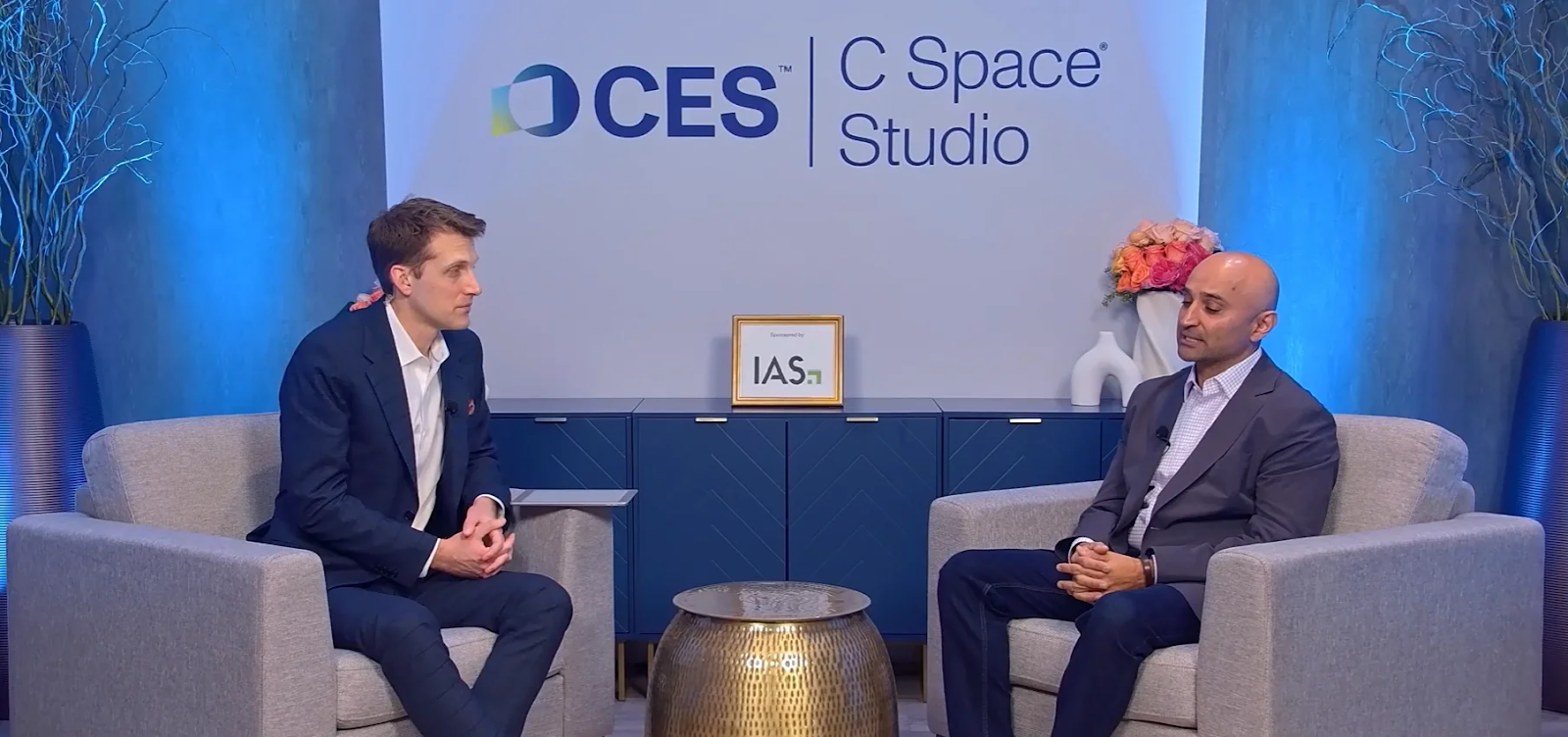
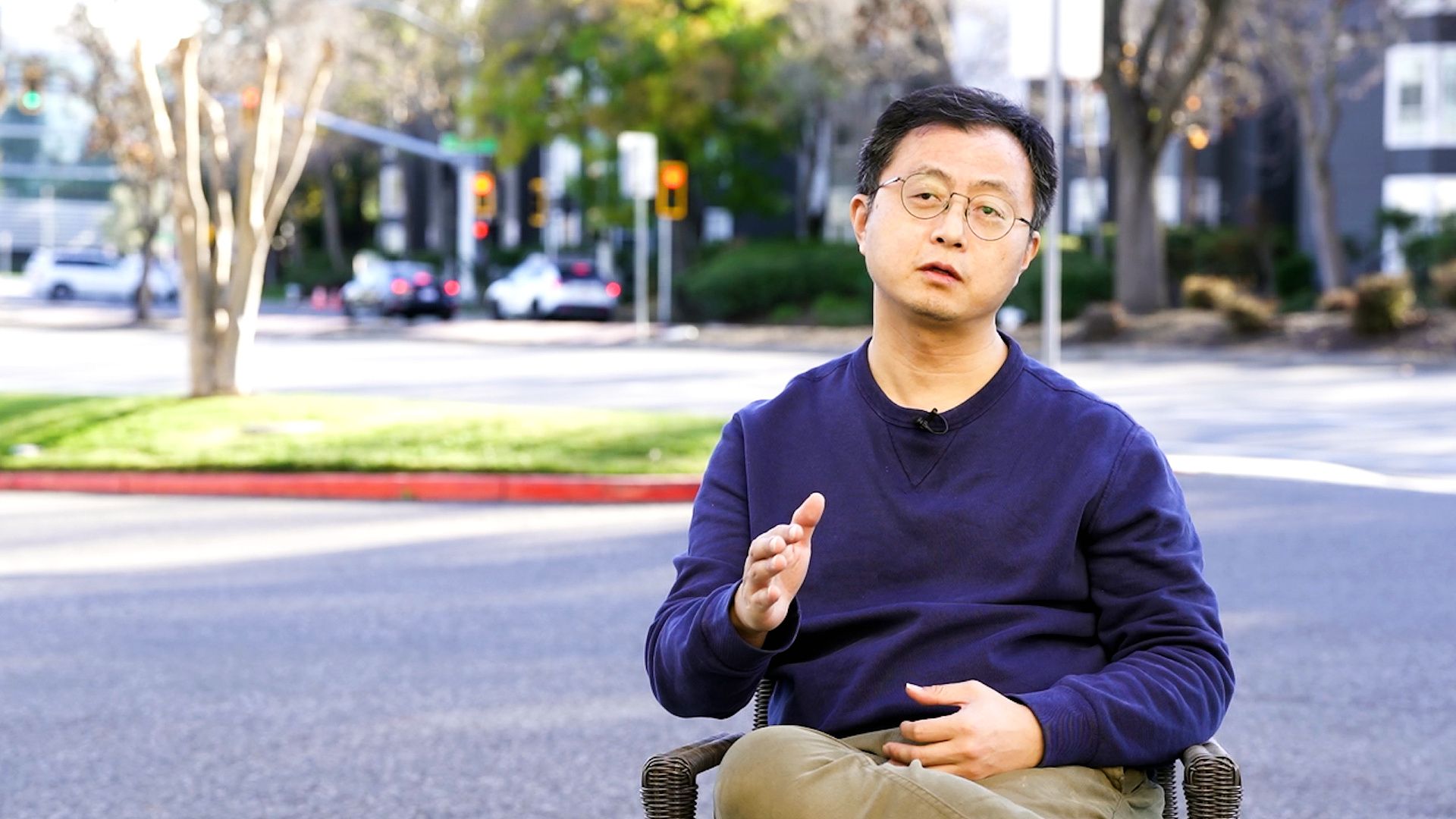
▲ Khurrum Malik (right), VP of Business and Product Marketing at Walmart Connect, during the CES 2026 C Space Studio interview. (Photo: CES)
📺 Watch: https://www.youtube.com/watch?v=RlE5Mdvxkmc
Khurrum Malik, VP of Business and Product Marketing at Walmart Connect, opened with a clear message: "Our primary message is 'Let's Spark Sales'—to spark sales for advertisers and build the future of retail media together." He outlined three core pillars: Scale, Full-funnel Solutions, and Performance.
1-1. 150 Million Weekly Omnichannel Customers: The Power of Unmatched Scale
Walmart Connect's greatest weapon is its unparalleled reach. Every week, 150 million omnichannel customers visit 4,600 stores across the U.S. and engage with online platforms. "We have the scale that very few platforms have," Malik emphasized. "This scale is the foundation for connecting advertisers with consumers across every touchpoint—from in-store to websites, mobile apps, and CTV."
He also highlighted Walmart Connect's proactive moves in the industry's hottest topic—'Agentic' experiences. "We're expanding our scale to new advertising surfaces. We're there in customer-facing agentic experiences as well."
1-2. AI Agents 'Sparky' and 'Marty' — Dual-Sided Market Optimization
The most notable aspect of Walmart Connect's AI strategy is the simultaneous deployment of AI agents on both the consumer and advertiser sides. The consumer-facing agent 'Sparky' serves as a shopping assistant through a chat interface, supporting product search and recommendations. According to Malik, 81% of Sparky users utilize it for 'Product Discovery,' providing advertisers with golden exposure opportunities right before purchase conversion.
The advertiser-facing agent 'Marty' is an advertising assistant that helps small businesses optimize their ad campaigns on Walmart Connect. After months of testing, Marty guides users through campaign setup and optimization via chat. Malik noted, "97% of inquiries coming through Marty are new asks—this means there was significant unmet demand." He explained, "Advertisers can comfortably ask AI questions they might have been too embarrassed to ask, thinking they were 'silly questions.'"
1-3. AI Creative Generation — 80% Time Reduction, But Sales Remain the Bottom Line
AI technology has also been applied to creative production. The Automated Creative Generator can reduce display ad production time by 80%. Malik shared a personal anecdote: his kids used AI to create images of their dog breakdancing that made the whole family laugh, though video of the same dog still looked awkward. "Display is more mature; video will follow." However, he never lost sight of the fundamentals: "Whether AI creates it or humans create it, what matters is one thing—does it drive sales? Walmart Connect delivers 2.5x incremental ROAS compared to digital media benchmarks."
1-4. VIZIO CTV — The Secret to 55% Incremental Reach vs. Linear TV
VIZIO, acquired by Walmart in 2024, has emerged as a core asset for full-funnel solutions. Combining VIZIO CTV—the #1 TV operating system in the U.S.—with linear TV advertising can deliver up to 55% incremental reach according to iSpot research.
Malik emphasized the importance of data while maintaining a realistic perspective: "There's a saying, 'Water, water everywhere, not a drop to drink.' The same applies to data. As consumers experience products and services through new touchpoints, we need new data." He analyzed, "CTV being added to linear TV buys is a spreading trend, and incrementality in both reach and sales is becoming an increasingly important metric."
1-5. "Retail Media Is More Than Performance — Stories that Sell"
In closing, Malik addressed a common misconception among brands: "Many brands perceive retail media as merely lower-funnel performance advertising. But we can be a full-funnel partner that delivers both brand solutions for storytelling and performance solutions for driving sales." He encapsulated this as 'Stories that Sell.' "It's not your same old retail media."
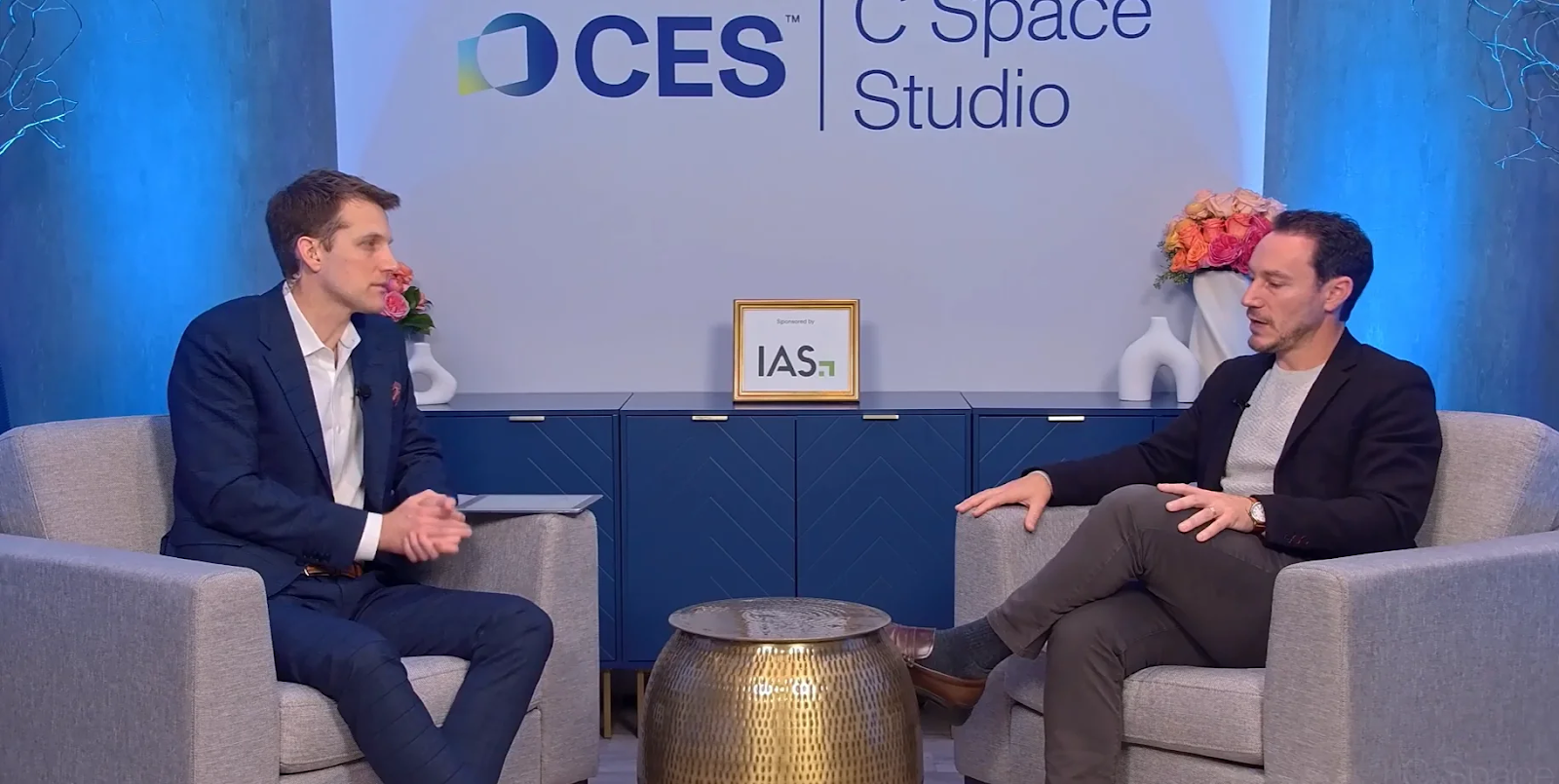
▲ Adam Bergman (right), Group VP of Advertising and Data Sales at VIZIO, during the CES 2026 C Space Studio interview. (Photo: CES)
📺 Watch: https://www.youtube.com/watch?v=wmVDuv_FMis
Adam Bergman, Group VP of Advertising and Data Sales at VIZIO, detailed the strategic direction as the company enters its second year under Walmart ownership. His opening words addressed VIZIO's identity: "VIZIO has been building high-quality televisions for 23 years now. We are so dedicated and obsessed with the customer experience. When you sit down and want to find something to watch, our job is to help navigate you through that search and discovery process."
He explained the significance of joining Walmart: "We now have the power of one of the most important enterprises in the world. Creating connection between what happens in the living room and what happens in store—that's what enhances customer success."
2-1. Year Two — Shifting from Merchandising to Advertising Solutions
Bergman revealed the two-year roadmap post-acquisition. Year one focused on merchandising integration. Walmart's top priority was delivering product assortment to customers across all categories, and consumer electronics and TVs were no exception. They enhanced VIZIO's in-store presence at Walmart and completed deploying VIZIO's operating system to Walmart's private label TV brand 'onn.' The onn brand TV has been one of the best-selling TVs in the country in recent years, and now both VIZIO and onn hardware can deliver the same streaming, search, and discovery experience.
Year two (2026) focuses on enhancing advertising ecosystem services. Bergman stated, "We're enhancing how we service marketers, advertisers, media buying agencies, and everybody in that ecosystem." He summarized the core value proposition: "What you buy in store and what you watch—those are two really powerful signals. When you think about those together early in the planning process, you unlock tremendous opportunities from understanding consumer behavior to execution, advertising, and measurement."
2-2. Streaming Surpasses 65%, Smart TV Home Screen Becomes the New 'Prime Time'
Bergman presented data on structural shifts in consumer behavior. Today, more than 65% of viewing time on VIZIO TVs occurs within VIZIO's operating system (streaming). "Streaming is here might sound like old news," he noted, "but remember, just 5 years ago, traditional cable or satellite feeds were 70-80% of time on a television."
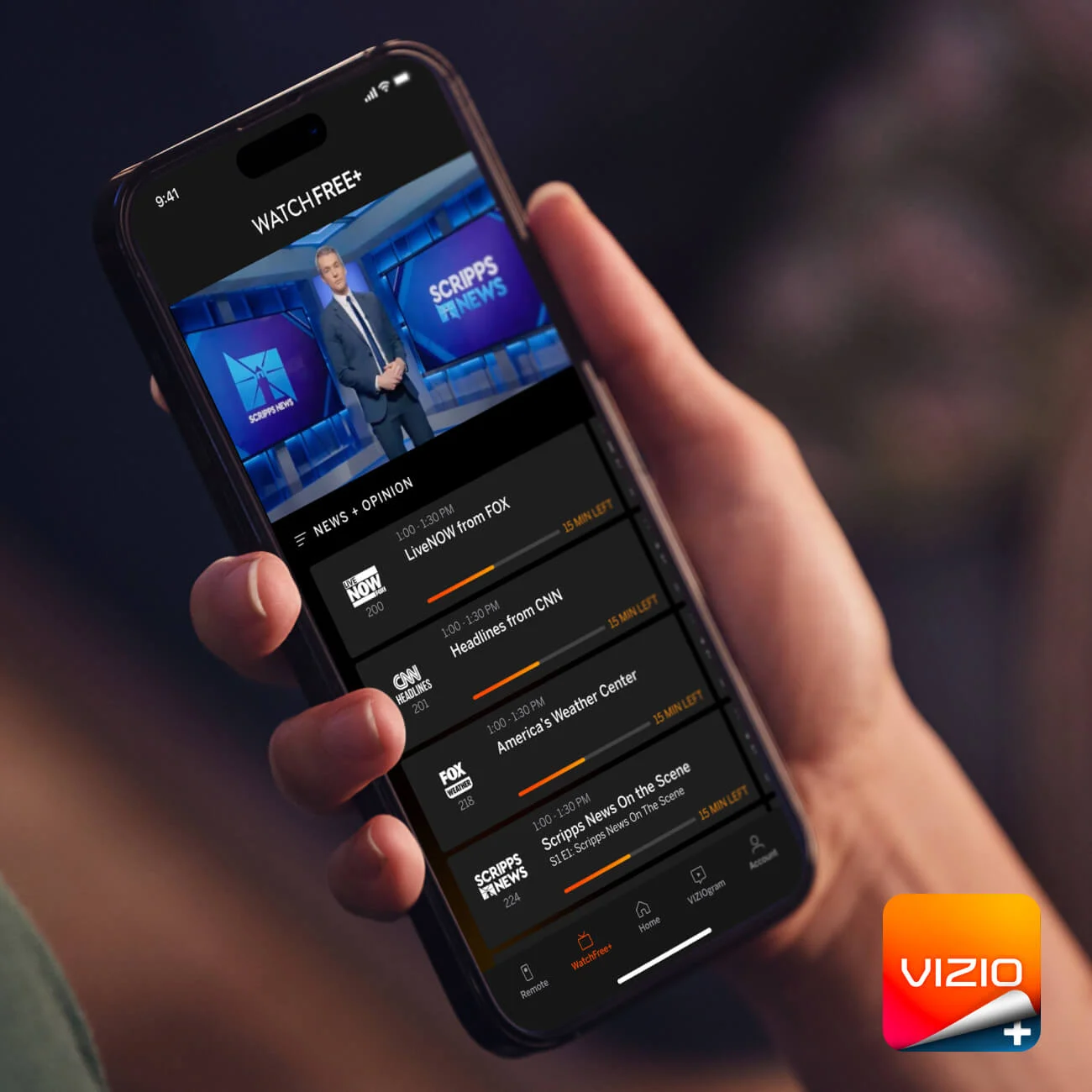
Particularly noteworthy is the rise of the smart TV home screen. The average consumer spends approximately 30 minutes on the VIZIO smart TV home screen. Bergman clarified, "What we're actually measuring is when they're out looking for content—not when the TV is left on idle." This indicates that VIZIO is effectively providing personalized content recommendations based on viewing history and offering diverse options. The 'Sport Zone' launched last year—a curated collection of live and upcoming games from major sports leagues worldwide—has contributed to increased home screen dwell time.
2-3. Non-Entertainment Brands Enter TV Home Screen — A New Advertising Frontier
A new trend Bergman highlighted on VIZIO smart TVs is the entry of non-entertainment brands into home screen advertising. Previously, studios, TV networks, and streaming platforms used the home screen to promote their content. Now, CPG (Consumer Packaged Goods) brands are beginning to run ads on TV home screens by combining in-store purchase data with viewing data. "A personalized experience will always outperform something that's impersonal," he emphasized. "From the consumer standpoint, we're creating connectivity between the store and the living room. From the advertising standpoint, we're being more efficient and more acute with delivery."
2-4. Bidirectional Connection Vision — TV→Store, Store→TV Experience Continuity
Currently, the 'Store→TV' direction—using in-store purchase data for TV advertising—is predominant, but VIZIO is preparing the reverse connection as well. Bergman stated, "We're thinking about what experiences mean on the television home screen and in store—how do we deliver value that transcends both canvases?"
He presented a specific scenario: "When I can see something on my smart television and actually walk into a store and connect that experience simultaneously—that becomes really interesting. When I can go to a store and have a meaningful, tangible, material experience with a brand, then go back and watch related content on my television—that's truly customer-centric." He described this as 'Experience with a capital E.' "It's not just that you're going into a store—the experience itself is elevated. It's more fun to go to the store."
2-5. 2026 Outlook — "The Year of Connecting Puzzle Pieces"
Bergman characterized 2026 as "the year of connecting puzzle pieces that are already on the board." "The Walmart enterprise organization, Walmart Connect, VIZIO—we've built a lot of solutions that the advertiser marketplace has asked for. This year is about adding sophistication to it." He previewed, "The media buying community and creative community will see an expansion of fantastic canvases—from VIZIO's branded content offerings and home screen offerings down into Walmart's retail media expertise. There's a connectivity that will transcend the entire marketing funnel."
On data sufficiency, he expressed confidence: "I would be incredibly selfish if I said we need more data. Knowing what people are buying in store, shopping for on their mobile app, and watching on their television—we have some powerful signals. We're in a really powerful position right now, and we're really excited about building for this year."
━━━━━━━━━━━━━━━━━━━━━━━━━━━━━━
The CES 2026 announcements from Walmart Connect and VIZIO signal a structural inflection point for the retail media industry. This can be called the dawn of 'Retail Media 3.0.'
① Completion of the Closed Loop — Real-Time Connection of 'Viewing' and 'Buying'
If Retail Media 1.0 was centered on search ads and sponsored products, and 2.0 was about first-party data-based targeting, then 3.0 is the real-time integration of 'viewing data' and 'purchase data.' Through the VIZIO acquisition, Walmart has secured ACR (Automatic Content Recognition) data from 65 million households. Combined with weekly purchase data from 150 million offline and online customers, advertisers can now run TV ads and directly measure whether households that saw those ads actually purchased the products in store. This enables precise tracking of 'Offline Conversion'—something digital advertising platforms like Google and Meta cannot provide.
② Dual-Sided AI Agent Deployment — A New Dimension of Platform Efficiency
Operating both consumer-facing 'Sparky' and advertiser-facing 'Marty' simultaneously is not merely a feature addition. It is a strategy to simultaneously reduce friction costs on both sides of a two-sided market. When Sparky improves consumer product discovery efficiency, purchase conversion rates rise. When Marty lowers the entry barrier for advertisers (especially small businesses), ad supply increases. Marty's '97% new inquiries' figure suggests significant latent demand from long-tail advertisers who wanted to run retail media ads but were deterred by complexity. Their entry raises overall inventory monetization rates.
③ 30-Minute Home Screen Dwell Time — The Birth of a New 'Prime Time'
VIZIO's 'average 30-minute home screen dwell time' data demonstrates the value of new inventory to the advertising industry. These 30 minutes are fundamentally different from the 'channel surfing' time of the cable TV era. The home screen of the streaming era is a space for Active Discovery. It's the moment when consumers actively choose what to watch—a 'high-engagement' state similar to just before a purchase decision. The entry of non-entertainment brands signals that the smart TV home screen is emerging as a new prime time not just for 'content advertising' but for 'product advertising.'
④ Experience Continuity — A Vision Beyond O2O
The bidirectional 'TV→Store→TV' experience connection vision Bergman presented evolves the existing O2O (Online to Offline) concept one step further. It's not simply about seeing something online and buying it offline, but about creating a virtuous cycle where experiences in both spaces reinforce each other. For example, a consumer watches a brand's content on TV, visits that brand's experience booth in store, and that experience connects back to personalized TV content. This demonstrates ambition to redesign the consumer experience itself, beyond just advertising efficiency.
⑤ Shifting Competitive Dynamics — A New Front in Amazon vs. Walmart
This announcement could reshape the Amazon-Walmart competition in the retail media market. Amazon possesses overwhelming e-commerce market share along with Prime Video and Fire TV, but its offline store network is incomparable to Walmart's. Combined, Whole Foods and Amazon Go stores number fewer than 500, while Walmart has 4,600. The offline purchase data from 150 million weekly visitors is an asset that purely e-commerce-based platforms cannot easily replicate. For CPG brands especially, offline store purchase data is far more representative than e-commerce data—over 80% of U.S. retail sales still occur offline.
The implications of Walmart Connect and VIZIO's CES 2026 announcements are clear. Retail media is no longer just 'ads in the shopping mall.' It is evolving into new infrastructure for brand marketing—connecting consumers' viewing experiences and purchasing experiences into a single continuum.
2026 will be the inaugural year of this transformation. As Walmart begins executing its vision of 'integrating the living room and the store,' other retailers will have no choice but to pursue similar strategies. Expect intensified CTV strategies from offline-based retailers like Target, Kroger, and Best Buy, while Amazon will likely respond by expanding offline touchpoints or through partnerships.
For advertisers, especially CPG brands, this announcement signals a media mix realignment. Moving away from the practice of planning TV advertising and retail media separately, integrated full-funnel planning will become the new standard. As Malik's 'Stories that Sell' concept suggests, an era is dawning where brand storytelling and sales performance are pursued simultaneously within a single campaign.
To borrow Bergman's words, 2026 is "the year of connecting puzzle pieces already on the board." When that puzzle is complete, the retail media landscape will look considerably different from today.
━━━━━━━━━━━━━━━━━━━━━━━━━━━━━━
Source: CES 2026 C Space Studio Interviews (January 6, 2026)
Interviewees:
• Khurrum Malik, VP of Business and Product Marketing, Walmart Connect
• Adam Bergman, Group VP of Advertising and Data Sales, VIZIO
Host: James Kotecki (CES C Space Studio)
Video Links:
• Walmart Connect: https://www.youtube.com/watch?v=RlE5Mdvxkmc

![[투비]The Stream 2026: When Intention Becomes Attention](https://cdn.media.bluedot.so/bluedot.kentertechhub/2026/03/6h3xe4_202603220154.png)
![[SXSW2026]에이미 웹 트렌드 리포트(Convergence
Outlook 2026)](https://cdn.media.bluedot.so/bluedot.kentertechhub/2026/03/kty3s8_202603152312.png)

![[보고서]전통 언론사의 크리에이터 전략 대전환](https://cdn.media.bluedot.so/bluedot.kentertechhub/2026/02/0nwc9z_202602100212.png)