
![[CES 2026] “Screens Are Too Small, Their Destination Is ‘Theme Parks’” - Welcome to Entertainment Tech](https://cdn.media.bluedot.so/bluedot.kentertechhub/2026/01/zf3ts9_202601031114.jpg)
In 2026, global entertainment companies are entering a new competitive phase, expanding their digital IP beyond streaming screens into physical spaces. Major players including Netflix, Disney, Warner Bros. Discovery (WBD), Universal, and iQIYI are aggressively increasing offline experiential spaces featuring their flagship IPs. George Lucas’s $1 billion Lucas Museum of Narrative Art and Las Vegas’s Sphere are emerging as symbolic pinnacles of this trend.
The world’s largest innovation platform, CES, is no exception. At CES 2026, the paradoxical theme permeating content companies is “Post-Screen.”
The “streaming subscription war” that dominated the media industry for the past decade has now reached a critical point. Global content giants like Netflix, Disney, and iQIYI no longer fight within narrow monitor screens. They’ve torn through the screen and moved the battlefield to “physical spaces” where consumers eat, drink, and walk.
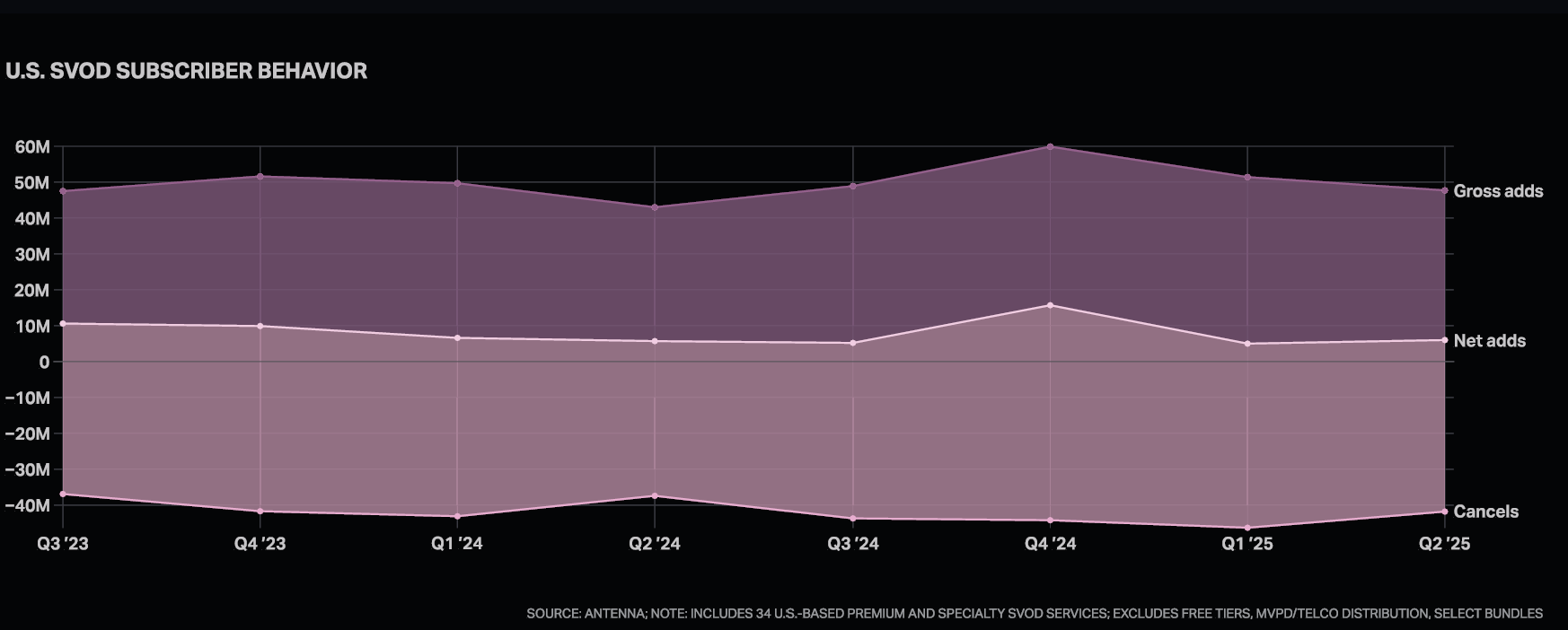
“From content you watch to content you live in.”
This CES has become a showcase for AI (Artificial Intelligence) and Immersive Tech that will make this great migration of digital IP a reality. Our publication conducted in-depth coverage of the four major battlegrounds of the “2026 Offline Experience Revolution,” designed by AI and completed by tech.
PART 2: [Space Revolution] ‘Mega-Experience’ Crafted by Technology
Recently Content industry leaders are aiming to convert online traffic into “offline dwell time” and “on-site revenue.” To achieve this, the cutting-edge hardware technologies of CES 2026 are being fully mobilized.
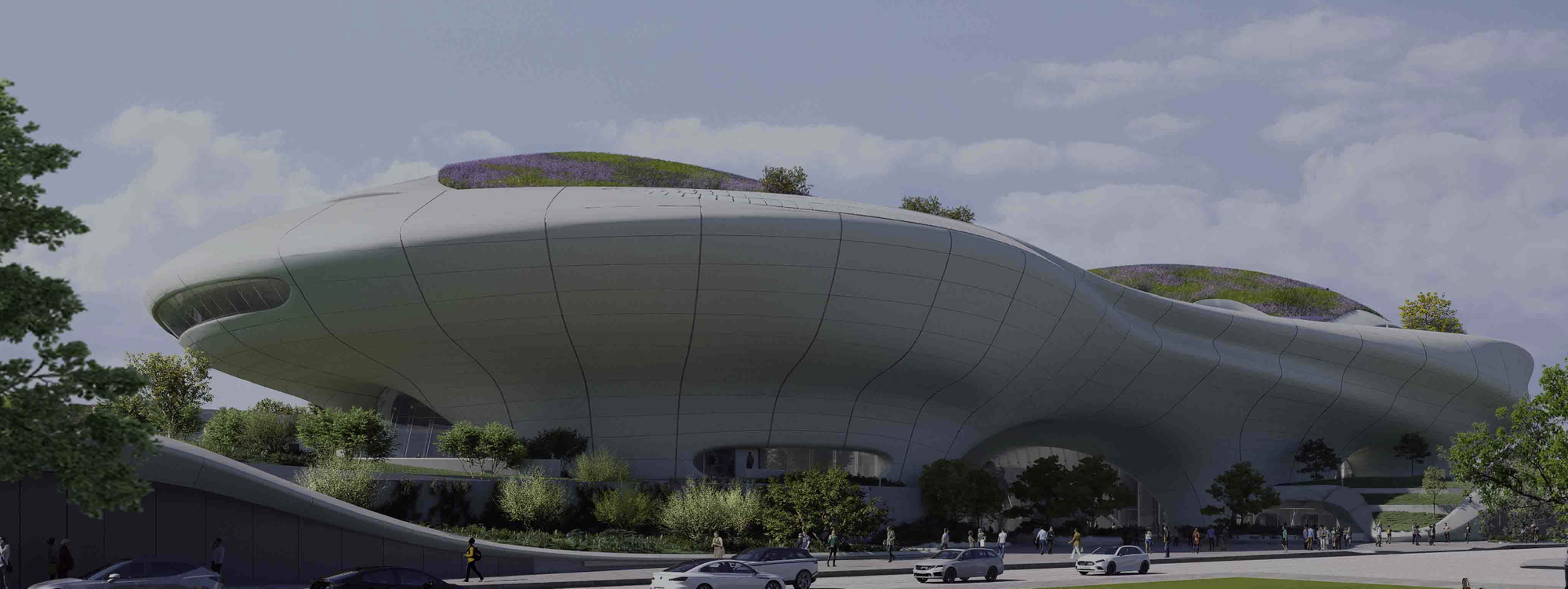
Studios and content platforms are formalizing long-term strategies to convert worlds and fandoms built through content into “offline dwell time” and “on-site revenue.” Within this trend, the Lucas Museum stands out as an IP experiential space in a public museum format based on a massive personal collection and film archive. Whether this project will be recognized as a serious cultural institution or evaluated as a “giant personal exhibition of a star director” will likely serve as an important touchstone for how global content companies will design offline IP spaces within cities.
🏛️ Lucas Museum of Narrative Art: Myth Restored by Technology
“Star Wars Gains Immortality as a Museum”
On September 22, 2026, George Lucas’s dream will be realized at LA’s Exposition Park. The streamlined building designed by Ma Yansong (MAD Architects) is itself a massive “entertech sculpture.”
Space Revolution: Situated on an 11-acre site, this museum displays Norman Rockwell paintings alongside Star Wars props. It’s an attempt to elevate commercial IP to the level of “fine art.”
🪄 Universal Epic Universe: The Apex of Capital and Engineering
“Physical Transportation to a Magical World”
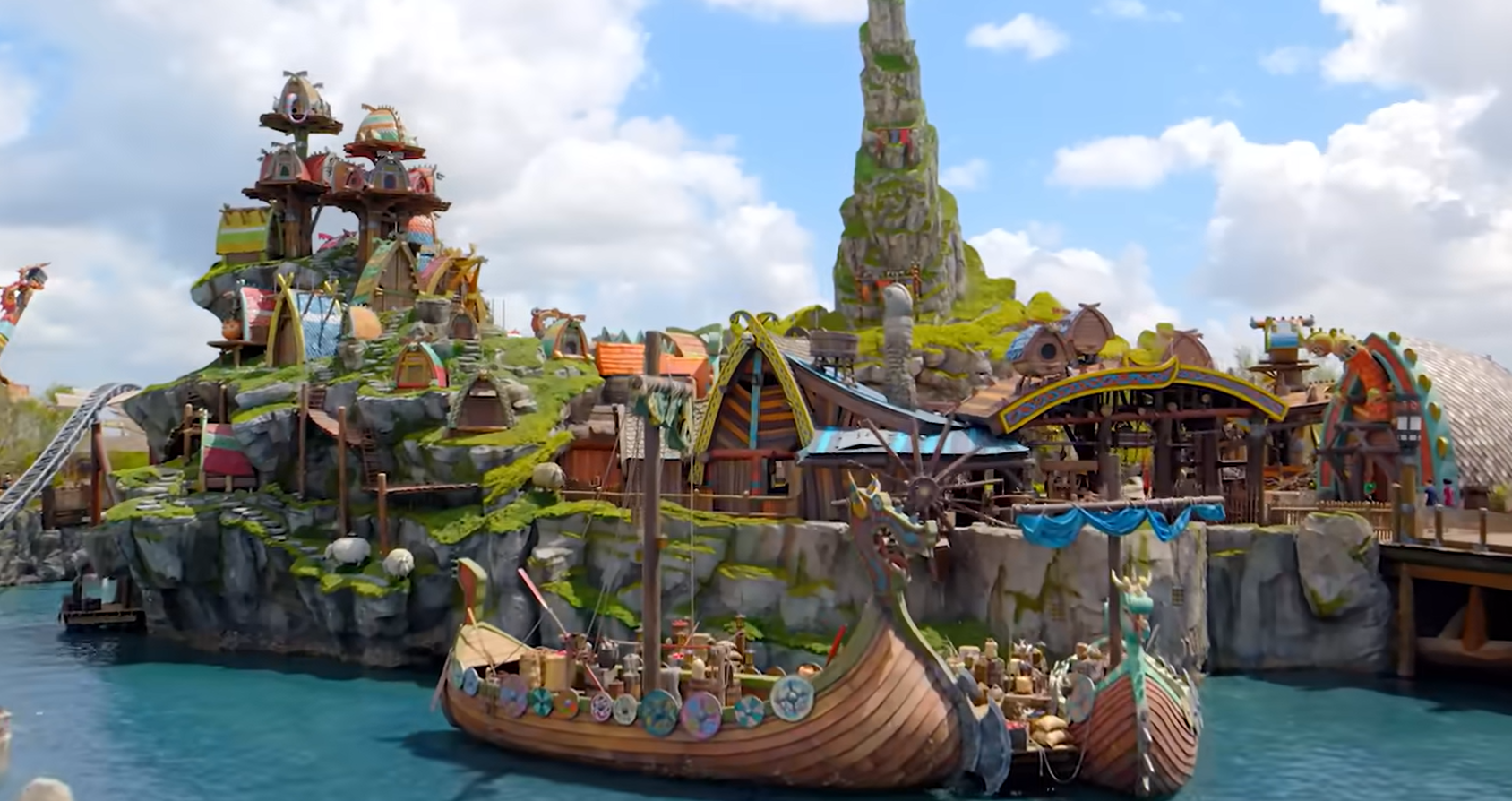
Universal’s “Epic Universe,” which opened in May 2025, is the ultimate heavy asset strategy.
Ministry of Magic: The core attraction “Battle at the Ministry” features an innovative ride system capable of omnidirectional movement. This proves how powerful immersion can be when precision control motor technology and haptic (vibration) technology seen in the CES mobility hall are applied to entertainment.
🧠 CES 2026 Solutions: Display & XR Technology
CES 2026 showcases a large number of display and XR technologies that can be directly applied to spaces like the Lucas Museum. Ultra-high-resolution LED and microLED walls are presented as solutions that transform architectural-scale walls into single screens, such as LG’s “Magnit Active Micro LED” and Hisense’s 163-inch RGBY microLED. Swave Photonics’ HXR (Onyx), a nano-pixel pitch holographic SLM, was selected as a CES 2026 XR & Spatial Computing Innovation Award Honoree, attracting attention as a next-generation chipset implementing true 3D holograms.
With CES 2026 XR award-winning products like Galaxy XR and Mojie combining XR, smart glasses, and spatial computing, the “spatial reconstruction display” scenario that redraws entire exhibition spaces with AR layers is being presented as concrete product roadmaps. When these technologies enter archive spaces like the Lucas Museum, 1970s Star Wars props and concept art will be displayed with physical objects overlapping their digital doubles through 3D scanning and holographic restoration. Visitors will experience “walking directly into the archive” in spaces where media walls and AR overlays combine.
PART 3: [AI & Agile] AI Becomes the ‘Brain’ of Theme Parks (Light Asset)
If America competes with massive capital (infrastructure), Asia and tech companies compete with a “light asset” strategy utilizing AI and software. This is where “AI practicalization,” the core of CES 2026, is most evident.

🇨🇳 iQIYI LAND: Planting AI Instead of Machines
“AI Immersive Theater Where Audiences Become Protagonists”
iQIYI LAND, opening in Yangzhou in February 2026, has destroyed the grammar of traditional theme parks. Instead of giant mechanical devices like roller coasters, the space is filled with VR, generative AI, and proprietary game engines.
Introduction of AI NPCs: Visitors perform missions conversing with AI NPCs (non-player characters) on drama sets. These aren’t robots repeating scripted lines, but generative AI creating dialogue in real-time and branching stories based on audience reactions.
Agile Operations: Themes can be changed with software updates alone, without massive construction. This is an optimized model for the content market with rapid trend changes.
🧠 CES 2026 Solutions: NVIDIA & Unity
The backend stack to make this type of “AI theme park” a reality is already being proposed at the center of the CES 2026 exhibition floor.
NVIDIA ACE (Avatar Cloud Engine) is a cloud engine for digital humans/AI NPCs integrating generative AI, speech recognition/synthesis, facial animation, and emotional expression, demonstrated as a solution for deploying characters capable of real-time interaction in games, XR, and theme park spaces. Like iQIYI LAND’s AI NPCs, it becomes the foundational technology for characters that converse with visitors and guide quests throughout venues.
Unity, Unreal-based real-time 3D engines and NVIDIA Omniverse/XR collaboration solutions provide pipelines for creating a single virtual set and simultaneously deploying it to VR, AR, LED walls, and mobile, enabling light asset operations that quickly swap theme park stories and environments aligned with IP update cycles.
The AI, real-time 3D, and digital human stack presented at CES 2026 accelerates the transition from “theme parks built with steel and concrete” to “theme parks evolving with code and models,” acting as the brain.
PART 4: [Hybrid Biz] Retail + Entertainment Integration: “Shopping Malls Become IP Playgrounds”
“Space upcycling,” remodeling idle spaces (shopping malls) into IP experiential spaces, has emerged as a new business model.
🛍️ Netflix House: Becoming a ‘Giant’ Through WBD Acquisition
“Play Squid Game, Buy Harry Potter Merchandise”
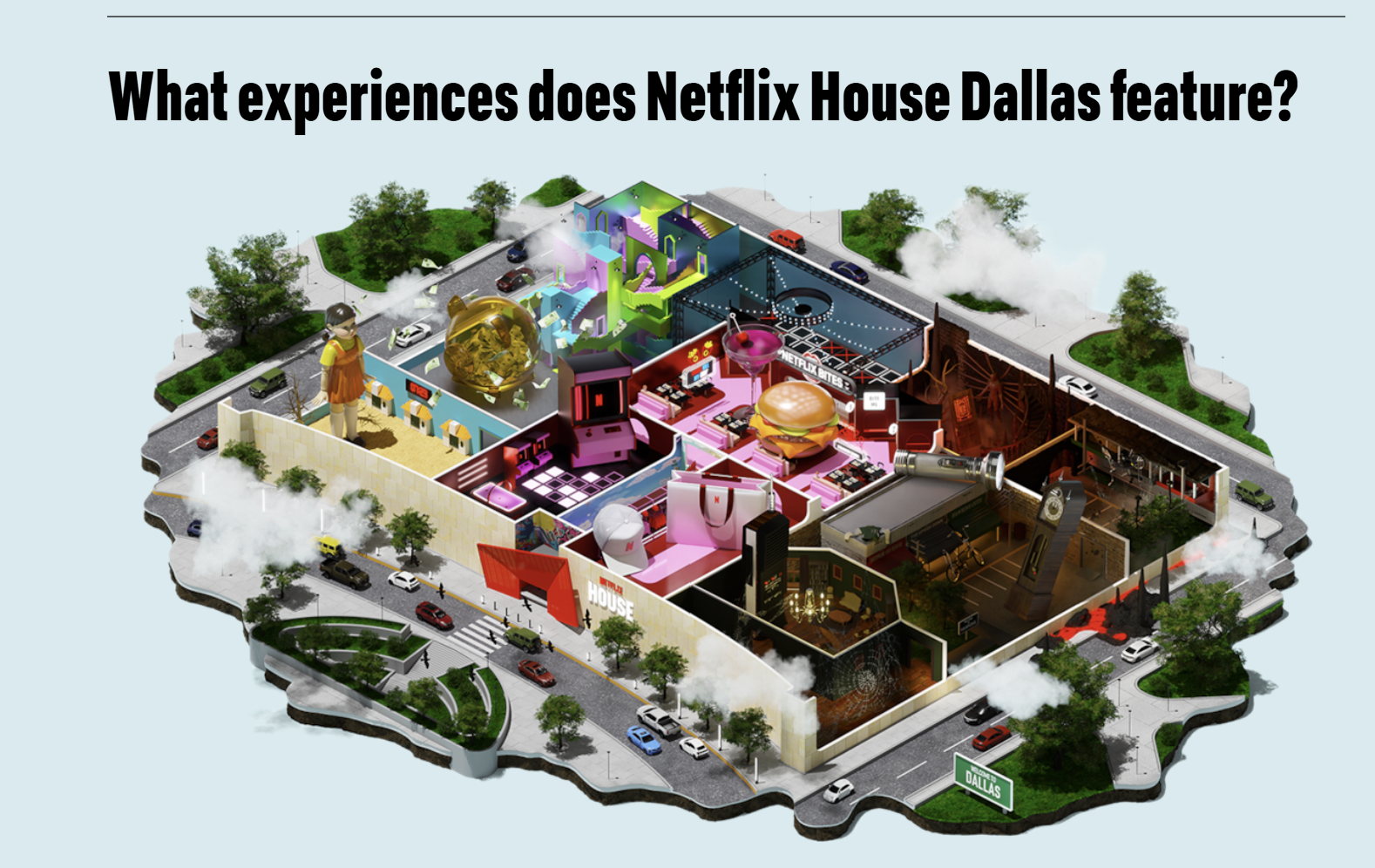
Netflix House, which opened in Philadelphia and Dallas in 2025, is preparing for Las Vegas expansion in 2027. Particularly, the Warner Bros. Discovery (WBD) asset acquisition agreement from December 2025 (approximately $82 billion) added nuclear-level destructive power to this strategy.
Strategic Evolution: Netflix’s “Squid Game” and “Stranger Things” combine with Warner’s “Harry Potter,” “DC,” and “Game of Thrones.” This isn’t just a popup store. It’s an urban version of Disneyland combining “free entry (traffic) + paid experiences (experience) + F&B/merchandise (revenue).”
This trend aligns with display and spatial presentation trends confirmed at CES 2026. Samsung Electronics unveiled a transparent microLED commercialization roadmap at CES 2026, prominently featuring B2B scenarios “making space itself a screen” by embedding transparent displays in shopping malls, lobbies, and partitions. Transparent microLED has already been pilot-installed at KT’s new headquarters lobby and India’s Reliance Group shopping malls, and Samsung plans to exhibit these as real-space case studies combined with windows, glass walls, and circulation structures.
🔮 Sphere: The Melting Pot of IP + Performance + Brand
The Las Vegas landmark Sphere is a place to benchmark this trend. It’s not just a performance venue. It’s a massive entertainment tech platform combining 16K internal displays, thousands of directional speakers, and 4D effects (wind, scents). From U2 concerts to corporate brand showcases, it’s the future of “spatial media” showing all IPs in the most overwhelming form.
PART 5: [Strategy] Recommendations for Korea’s Content Industry
The global “space war” provides clear implications for K-content companies:
Adopt “Light Asset” Strategy: Benchmark iQIYI’s case. Instead of hardware investments costing hundreds of billions of won, embed AI storytelling and XR technology into existing spaces. This is the optimal strategy for flexibly implementing offline content like K-pop and K-dramas with fast cycles.
Design Hybrid Monetization Models: Don’t rely solely on admission fees. Build complex cultural spaces combining F&B (food & beverage) and retail (merchandise) like Netflix House to secure profitability.
Diversify IP Licensing: Just as Harry Potter has expanded into Universal (theme parks), Lego (toys), and Studio Tours (exhibitions), K-IP must partner with various offline partners beyond single-platform exclusivity.
Anchor for Inbound Tourism: As shown by Seoul Tourism Foundation’s KCON LA achievements (Seoul merchandise sold out), offline IP spaces must become core tourism infrastructure attracting global fandom to Korea.
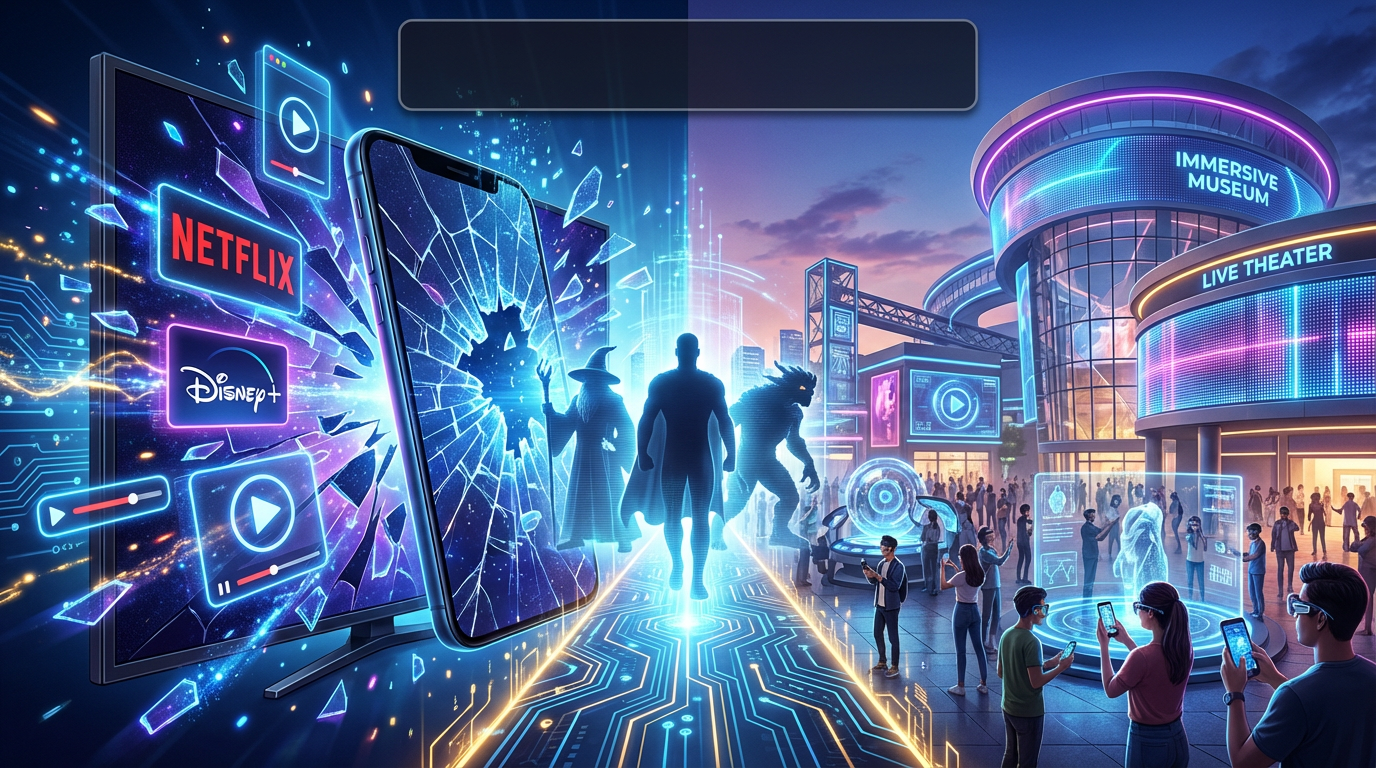
[Editor’s Note] Content Is the Protagonist of ‘Living Theme Parks’
The future shown by CES 2026 is clear. Entertainment is no longer confined within square frames (screens).
The artistry of Lucas Museum, the commerciality of Netflix House, and the technology of iQIYI Land are permeating throughout cities. AI has breathed “intelligence” into these spaces, and fandoms eat, play, and consume within them.
“How do you move digital IP into physical space and create magical experiences there with AI?”
Only companies that find answers to this question will be winners of the 2026 entertech war. Korean content must also formalize strategies to convert global fandom into physical experiences within this trend.
Ultimately, the core question of the 2026 offline experience competition is: How do you translate IP into physical space? And can that result provide fans with continuous relationships and meaningful experiences rather than one-time consumption?
Lucas Museum, Netflix House, iQIYI LAND, and Universal Epic Universe are each answering this question in different ways, and their success or failure will determine the direction of the content industry’s offline strategy going forward. K-content must also formalize strategies to convert global fandom into physical experiences within this trend.