
'K팝 데몬 헌터스', 아카데미 장편 애니메이션상 수상… "이것은 한국과 전 세계 한국인을 위한 것"
by
2026년 3월 15일

How Immersive Dome Technology Is Reshaping Entertainment Economics and Opening New Frontiers for Korean Content
"What do fans want? What was it going to take to get them off the couch to go out and interact and experience things?"
As streaming markets enter maturity, the entertainment industry is searching for its next growth engine. With subscriber growth slowing at Netflix, Disney+, and Amazon Prime Video—and questions mounting about content ROI—the industry's attention has turned to the "Experience Economy."
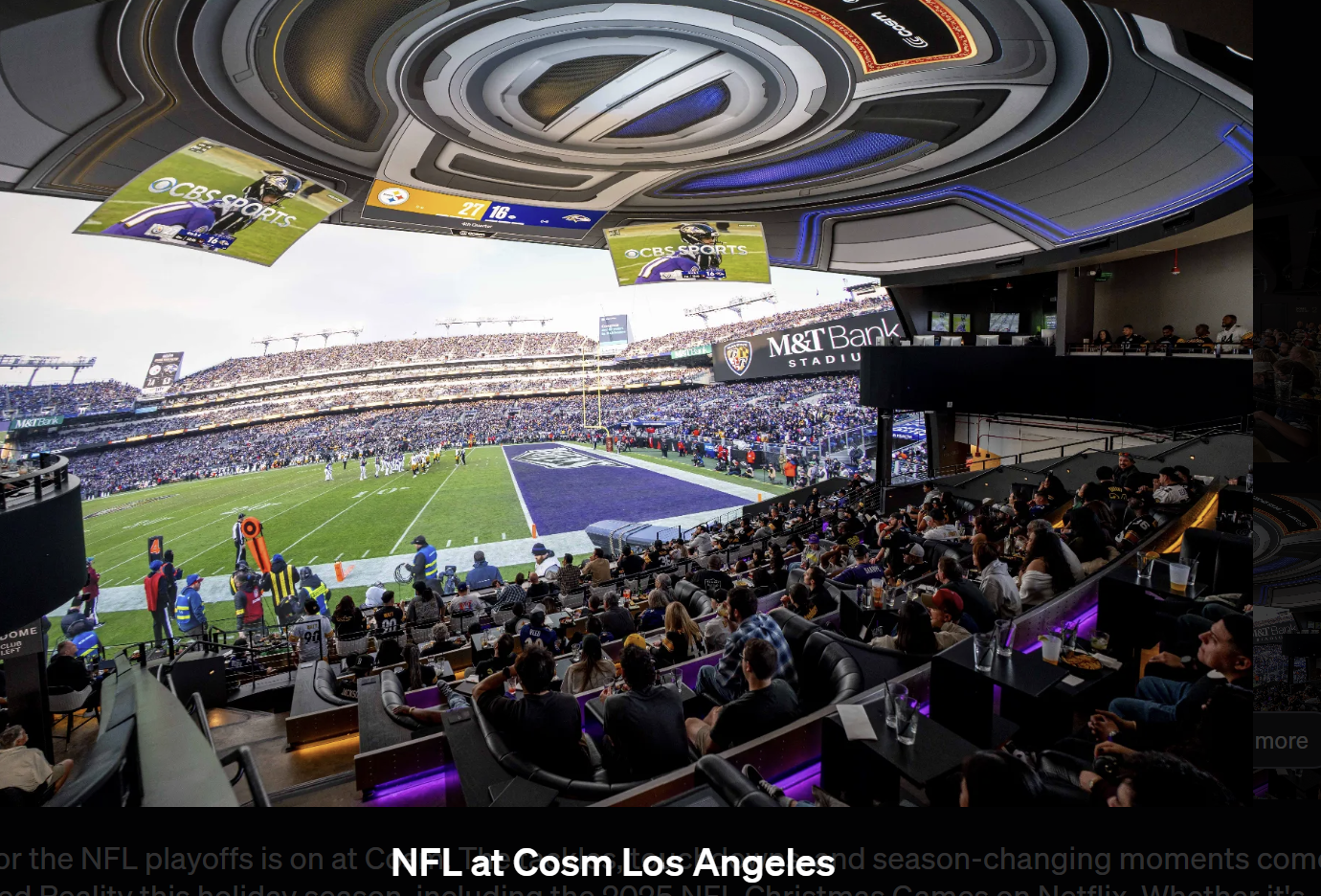
In an age of infinite content at our fingertips, what can draw people out of their homes? Cosm, a startup that adapted planetarium dome technology for sports and cinema, offers an answer through "Shared Reality"—a new form of immersive, collective experience.
| Metric | Figure |
|---|---|
| Investment raised (2024) | $250 million |
| Wizard of Oz revenue at Sphere (4 months) | $130 million |
| Annual events per Cosm venue | 1,200+ |
| Traditional stadium events per year | 40-80 |
| Ticket price range | $11 - $200+ |
| Dome diameter | 27 meters (87 feet) |
| Resolution | 12K |
| Field of view | 180 degrees |
Planetarium technology is leaving the cosmos behind and descending to the sports sideline. Originally developed for celestial observation, dome projection technology is evolving into the next-generation immersive media platform for entertainment.
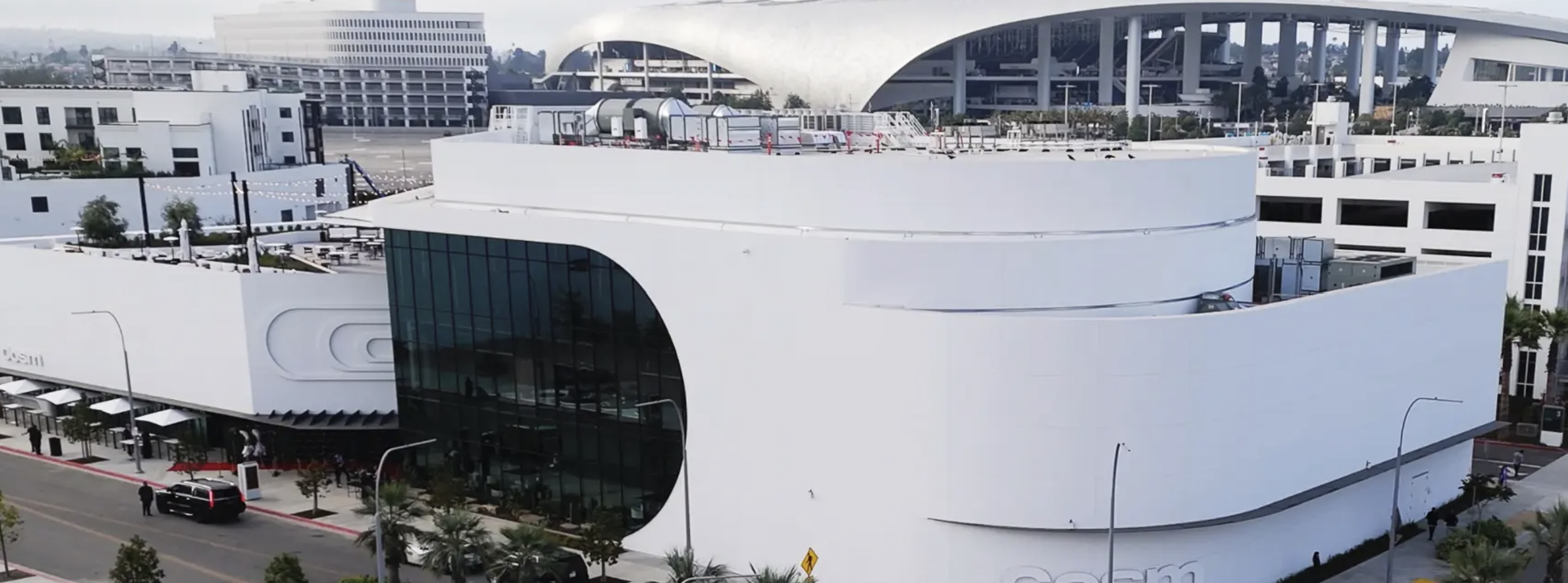
Cosm's journey began in space—literally. In 2020, the company acquired the world's largest planetarium company, inheriting decades of expertise in projecting stars, galaxies, and the birth of the universe onto massive dome screens.
"We've been making dome displays for a long time. That was our foundation," Cosm executives explained. "And we thought: 'Can we use the same technology that took people on journeys through space to recreate the baseline of a basketball court or the sideline of a football field?'"
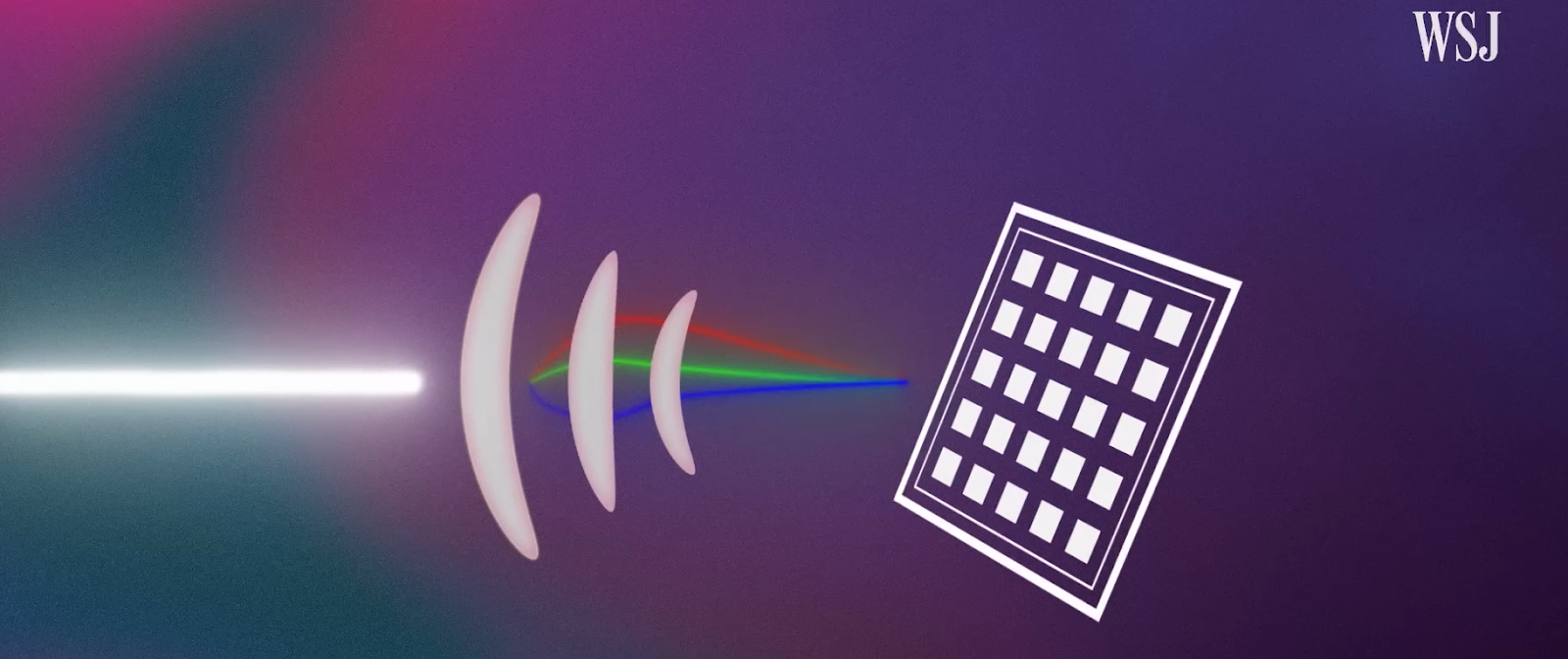
The Lens Challenge
The answer was yes—but the journey was far from simple. The biggest technical hurdle was the lens itself. Using standard fisheye lenses to project sports footage onto massive dome screens caused chromatic aberration—light wavelengths refracting differently, causing colors to bleed and ball trajectories to blur. What appeared as minor imperfections when viewing stars became critical flaws in sports broadcasting.
Cosm's engineering team spent two years developing custom-curvature lenses with high-transparency glass structures that precisely align wavelengths, maintaining clarity even at 180-degree viewing angles.
Revolutionary Camera Placement
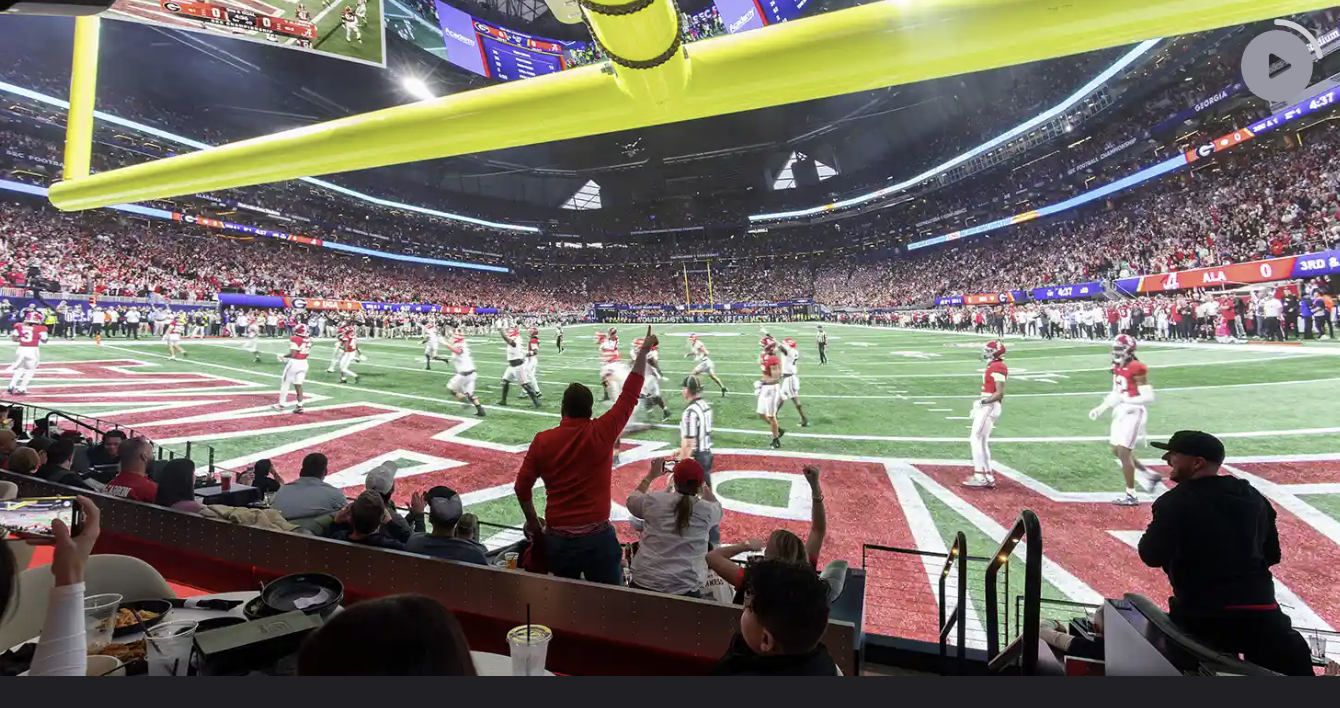
Another innovation lies in camera placement. For NFL games, Cosm deploys 4-5 ultra-compact 8K cameras in locations impossible for traditional broadcast equipment: inside field goal pylons, on mobile Chapman carts, and above the 50-yard line.
"Standard broadcast cameras are too large. We couldn't have provided fans this kind of access with that equipment."
These compact camera kits give viewers a perspective akin to sitting in a VIP suite—seeing players' facial expressions and the subtle spin of the ball in ways even stadium attendees cannot.
Cosm's business model resembles traditional stadium operations—but with crucial differences.
Pricing Strategy
Tickets range from $11 general admission to several hundred dollars for premium seating, with dynamic pricing based on demand. "Price needs to be accessible—that's key. But we also need to be flexible with market conditions. It's a delicate balance."
The Premium Experience
The critical difference lies in seat quality and viewing experience. Cosm doesn't offer bleacher seats—it provides suite-level premium environments. Seats are wide and comfortable; staff deliver food and drinks directly to guests. It's the energy of a stadium combined with the comfort of a luxury lounge.
Content Programming Density: The Core Competitive Advantage
Cosm's true competitive edge is content programming density. While typical professional sports venues host 40-80 events annually, Cosm venues handle over 1,200 events per year.
"We're not doing 40 or 80 events a year. We're doing over 1,200."
This represents a fundamental difference in space utilization. Traditional stadiums are tied to specific teams and seasonal schedules. Cosm's spaces are not bound to any single league or sport. Starting with NFL, NBA, and College Football Playoff events, programming has expanded to documentaries, films, concerts, music, and art experiences.
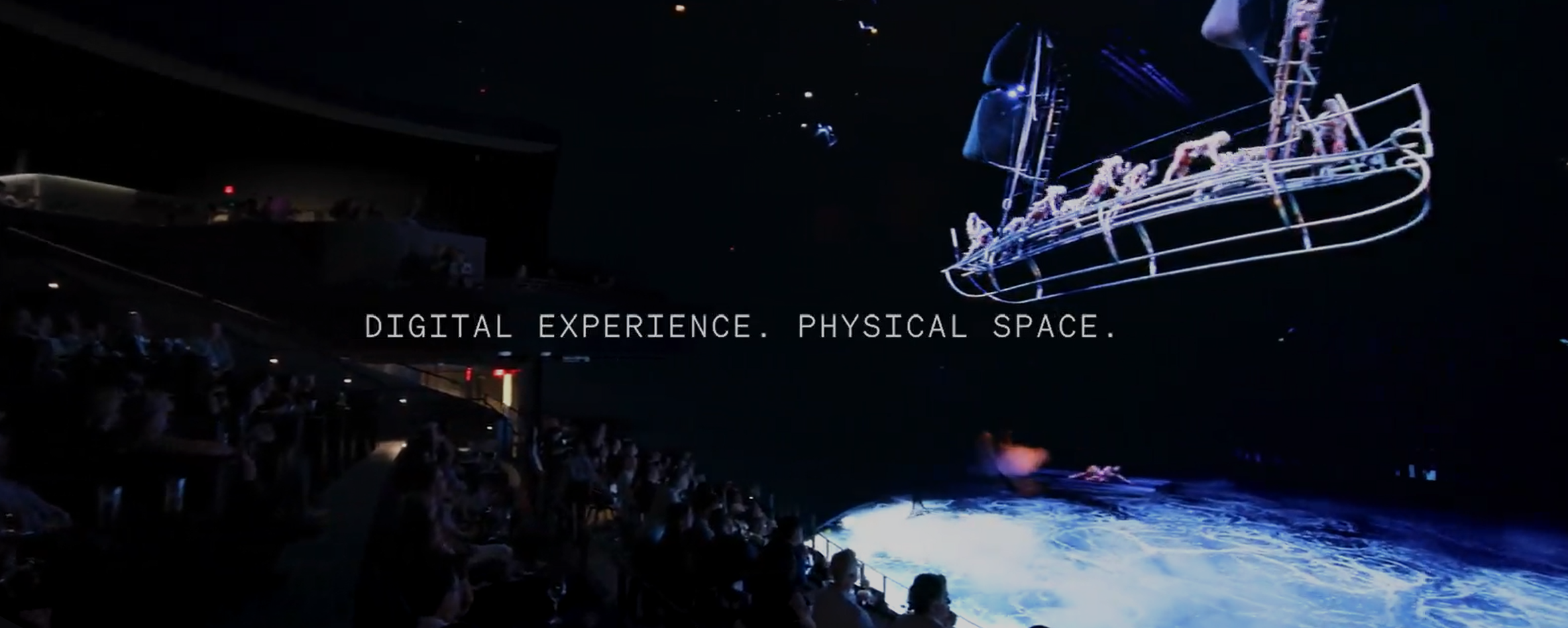
Actual programming has included Cirque du Soleil's "O," the surfing documentary Big Wave: No Room for Error, and immersive art experiences like Orbital & Liquidverse.
Cosm's positioning is clear: they're not trying to replace the live stadium experience.
"We can't compete with the fan experience of being at the venue. We don't want to. That's something really special. But we want to be the next best option for fans who might not be able to get to that venue."
This humble positioning is paradoxically Cosm's strength. Rather than competing with stadiums, they're creating a new option for millions of fans who can't attend in person—those without travel budgets, those who couldn't secure tickets, those with mobility limitations. For them, Cosm provides "the next best thing."

Real-Time Technical Challenges
In live sports, delay is fatal. If cheers erupt at the next table while your screen still shows the ball in flight, immersion shatters instantly.
"We can't have a 5-minute delay that takes you out of it."
And there's another critical detail: "If you see the LED modules in display, you're toast."
The dome screen comprises magnetically connected LED panels—a testament to Cosm's planetarium heritage. The moment viewers perceive the boundaries between LED modules, it's no longer a "stadium" but a "giant screen." The magic of immersion breaks. Cosm solved this by minimizing panel boundaries and precisely calibrating resolution and brightness.
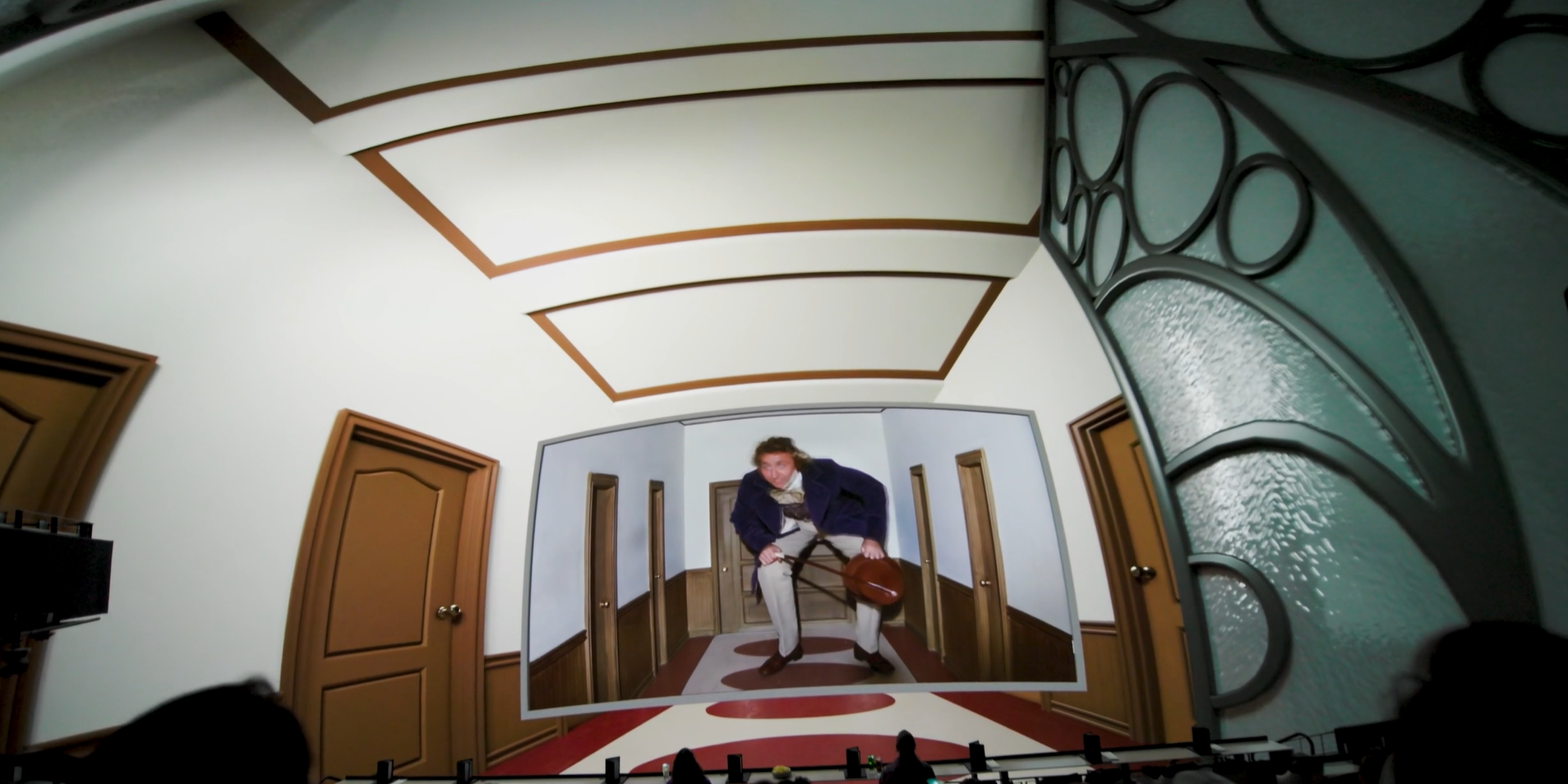
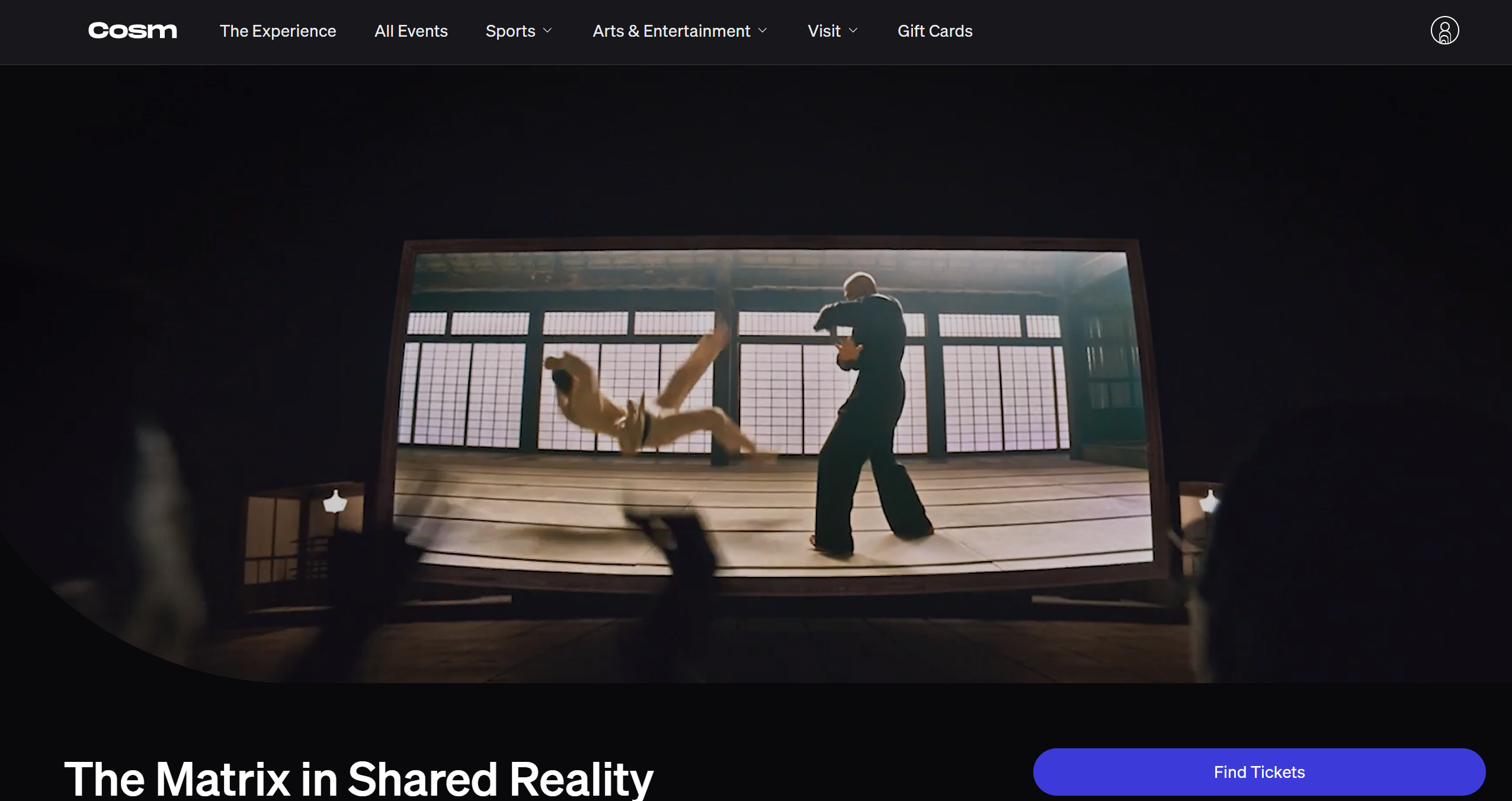
Cosm's ambitions extend beyond sports. Expansion into film is already underway through a "Shared Reality" partnership with Warner Bros., bringing iconic titles like The Matrix and Willy Wonka & the Chocolate Factory to new life.
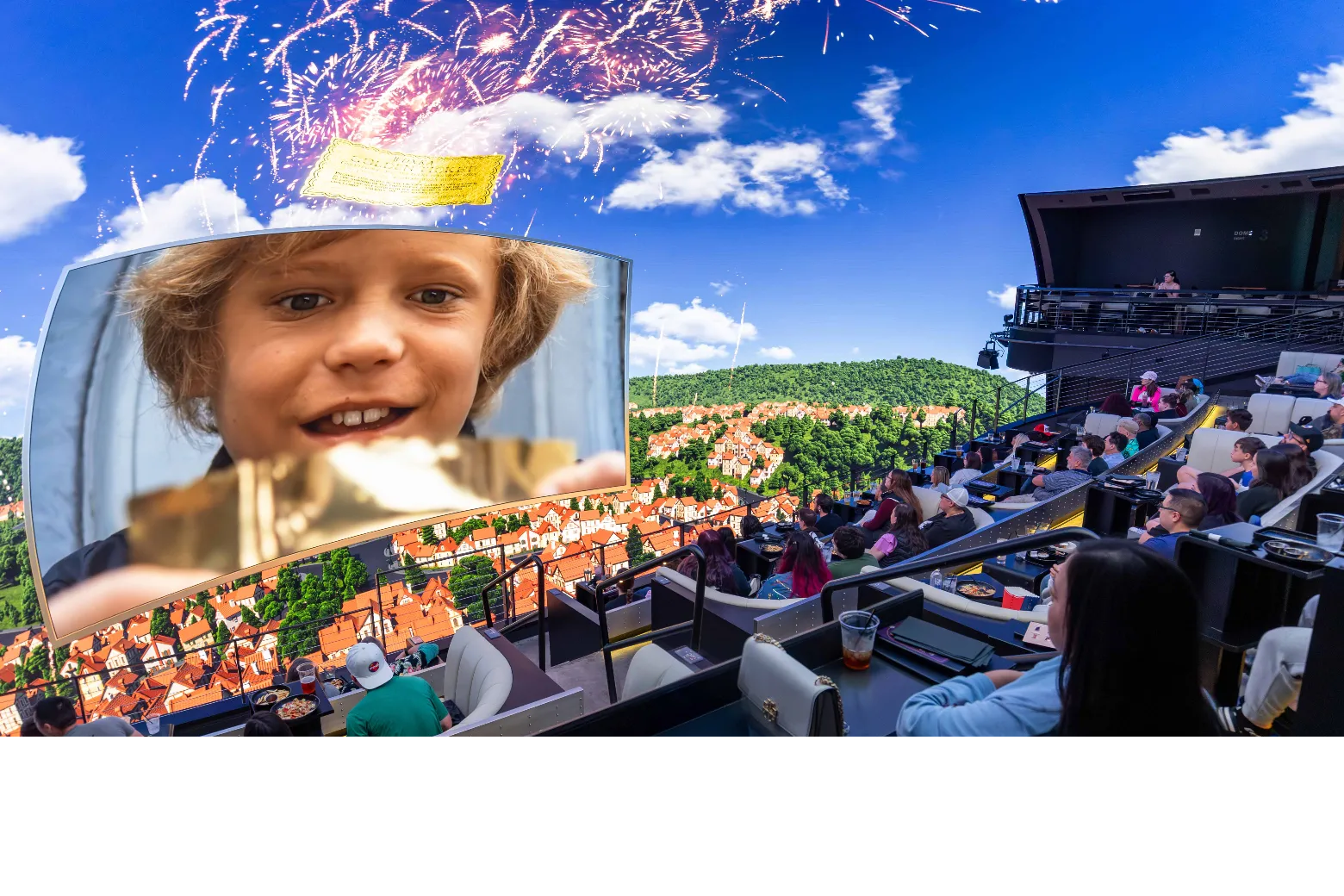
On a 27-meter, 12K+ resolution LED dome screen, audiences don't simply "watch" a screen—they step into the film's world. Collaborating with Little Cinema and MakeMake Entertainment, Cosm projects video, sound, lighting, and spatial graphics across the entire dome, creating a 360-degree immersive cinema environment.
In 2026, a 25th-anniversary screening of Harry Potter and the Sorcerer's Stone is planned. The timing is strategic: HBO Max's Harry Potter reboot series launches in 2027, and Warner Bros. is rolling out a global commemorative re-release campaign starting late 2025 to elevate IP value.
Cosm CEO Jeb Terry explains: "Cosm is reinvigorating the movie-watching experience. We're taking fans directly into the worlds of films they love."
Jeff Goldstein, Warner Bros. Pictures' President of Global Distribution, adds: "Our collaboration with Cosm is redefining the very concept of movie experiences. It allows us to celebrate our legacy library titles in entirely new ways for new generations of audiences."
Cosm's creative philosophy is clear: "The film is the star, and we don't violate the film's intent."
Creative Director Jay Rinsky describes Shared Reality production as existing "somewhere between traditional cinema, Broadway musicals, and theme park rides." This hybrid form's power lies in reactivating legacy IP for modern audiences without remakes.
For Willy Wonka, Cosm reimagined the film not as mere retrospective but as an "event experience product." Audiences enjoy Wonka-themed cocktails and desserts while watching, spending time at popcorn bars featuring extended film elements. The context before and after the film—"audience dwell time"—becomes as important as the film itself.
Las Vegas's Sphere offers another case study. The remastered Wizard of Oz, also involving Warner Bros., achieved remarkable results: over 1 million tickets sold and $130 million in revenue within four months of its August 28, 2024 premiere.
In a landscape where global theatrical exhibition hasn't fully recovered from the pandemic, these figures clearly demonstrate the market potential of immersive screening. Studios, IP holders, and theater chains are all watching the Cosm and Sphere models closely.
The message is clear: People are still willing to go out for movies—if the experience is worth it.
Cosm's vision isn't about competing head-to-head with streaming. It's about providing what streaming can never offer: the sensation of being together.
"The whole core of Shared Reality is about how we can get people to enjoy things together again."
Cosm's production head Shintani points to the isolated viewing culture of the streaming era. Watching alone on a living room couch—or with a few family members—is convenient, but lacks shared communal emotion.
Alexis Scalise, Cosm's content strategy lead, explains: "Shared Reality isn't competition—it's complement. Studios can release new content while simultaneously revitalizing classics. This strengthens long-term fan engagement."
This philosophy extends beyond differentiation strategy to redefining content consumption structures. If streaming provides "instant choices" through personalized recommendation algorithms, Shared Reality pursues the resilience of stories experienced collectively across generations.
Cosm's experiment can be evaluated as a model that monetizes emotion, not just technology.
"The clearest indicator of success isn't technology or ticket sales. It's the reaction," says Scalise, citing audience applause after screenings as the ultimate performance metric. "When applause breaks out after a screening, you know you've done something right."
His words contain the recovery of primal emotion that the entertainment industry had lost. Streaming is convenient, but doesn't share emotional moments. Nobody applauds after binge-watching a Netflix series. But when hundreds of viewers watch The Matrix's bullet-dodging scene together in a dome, applause erupts naturally.
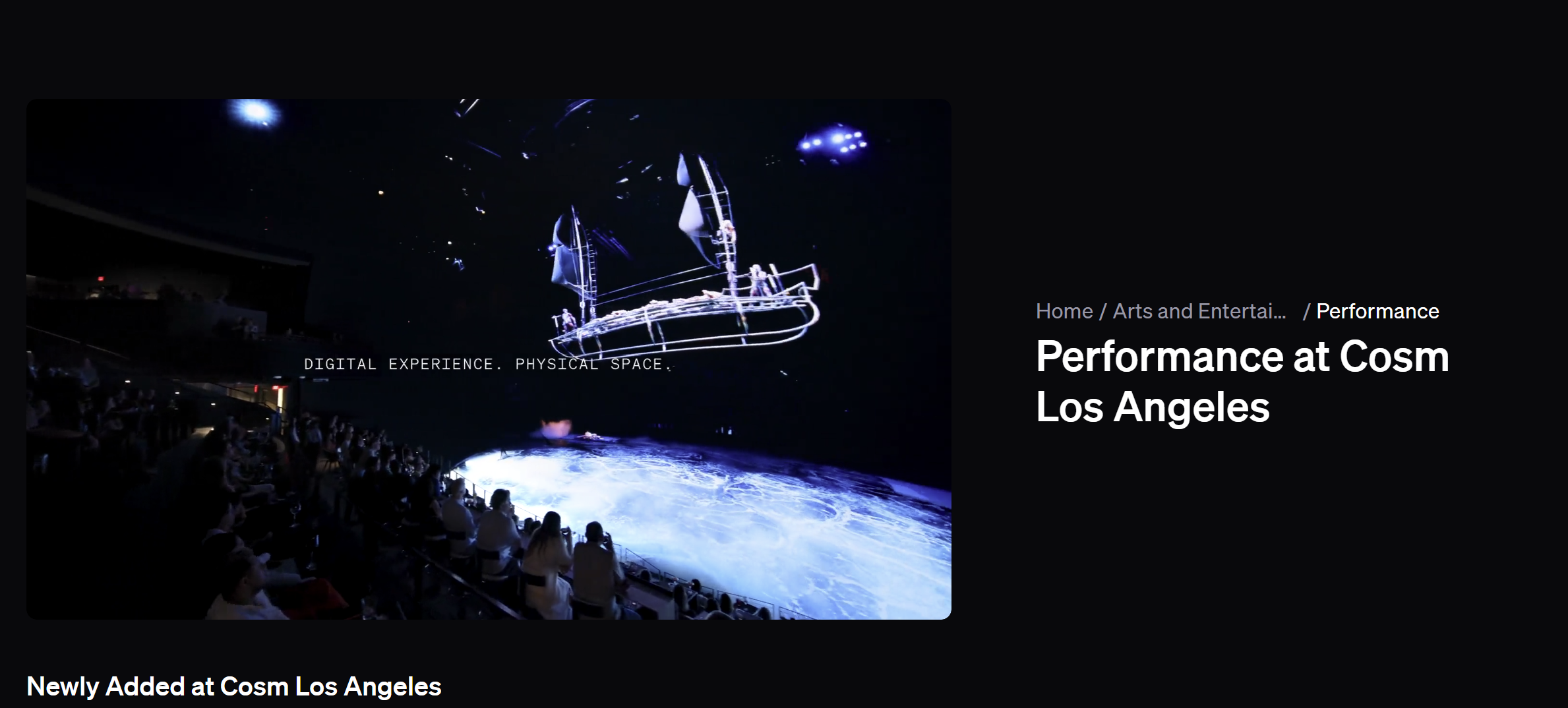
This is the power of "Shared Reality" that Cosm and Sphere symbolize. Not a return to technology, but a return to emotion. Not rediscovering content, but rediscovering connection.
Cosm currently operates in Los Angeles (Hollywood Park, Inglewood) and Dallas (Grandscape, The Colony). Planned expansions include Atlanta and Detroit in 2025, and Cleveland in 2027.
"These don't build themselves. They require massive capital. But we're going to expand this experience globally. That's our ambition."
The ambition is backed by verified funding. In 2024, Cosm secured $250 million from an investor roster featuring sports business heavyweights:
That these sports industry veterans bet on Cosm carries significance beyond mere investment. It signals that "digitization of the stadium experience" will be central to next-generation sports business.
Cosm's success offers important implications for Korea's content industry. While K-dramas, K-pop, and K-movies spread worldwide through global streaming platforms, what should K-content that's "experienced together" look like?
K-Content IP and Immersive Technology Potential
Imagine K-content's rich IP library meeting technologies like Cosm or Sphere:
Squid Game in 360°: Picture the tension-filled game scenes surrounding audiences completely. The giant doll from "Red Light, Green Light" dominating the entire dome. The dizzying glass bridge choices unfolding beneath your feet. Audiences would feel the fear and tension of being participants themselves.
BTS Concerts Worldwide: Seoul's Jamsil stage transmitted in real-time to Cosm domes in LA, Dallas, Atlanta, and Cleveland. ARMY members in each city experiencing the same moment, the same performance, as if from front-row seats. Time zones and distance become meaningless.
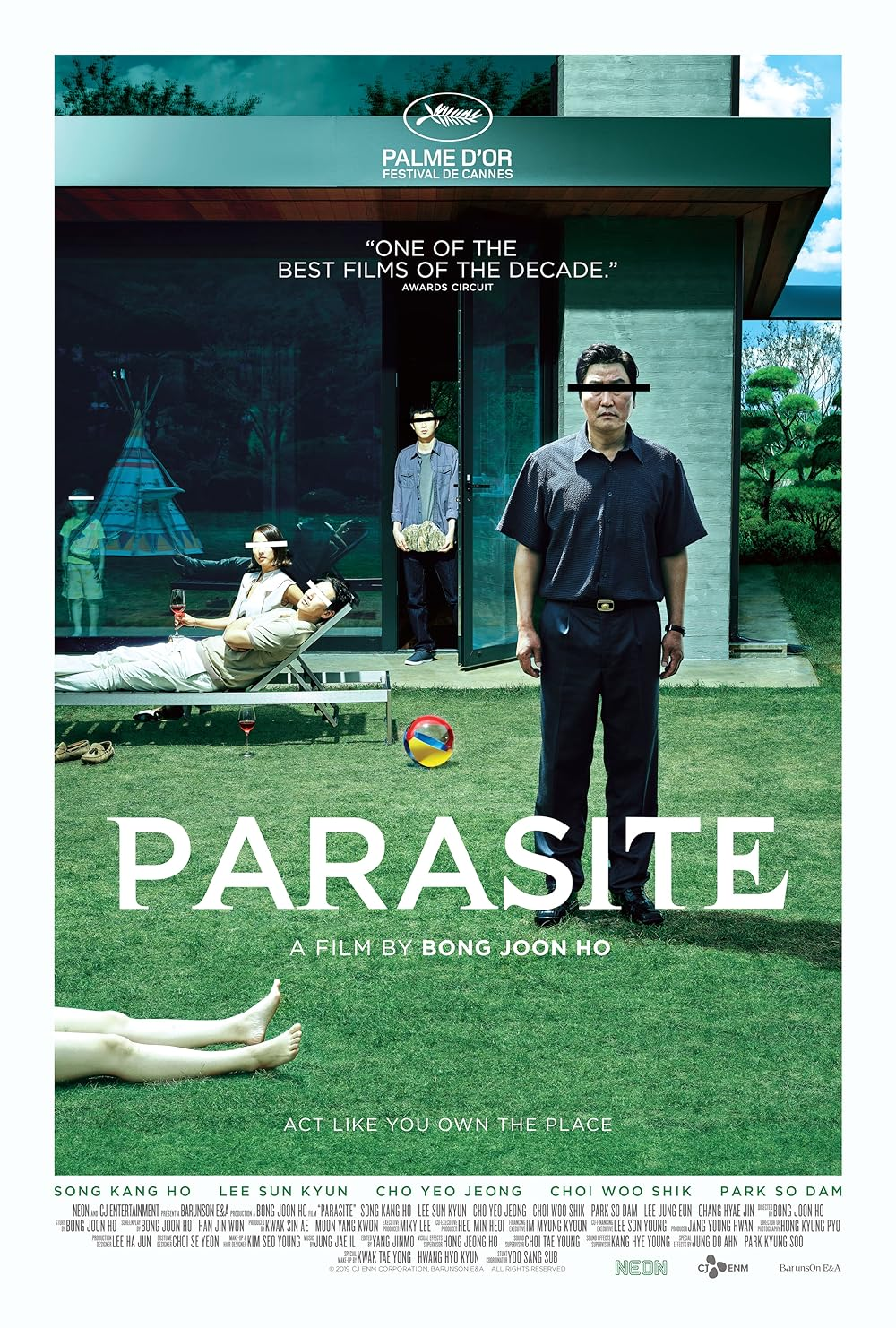
Parasite's Spatial Class Divide: The semi-basement and mansion expanding across the entire space. The narrow, damp alley visible through the basement window spreading overhead. The Park family's expansive garden extending to your feet. The class gap overwhelming audiences visually and spatially—Bong Joon-ho's spatial metaphors transformed into physical experience.
The Future of Experience Economy and K-Content
K-content already possesses powerful assets in global superfandoms. ARMY, BLINK, CARAT—K-pop fandoms don't just consume content; they crave experiences. The fierce competition for concert tickets, fan meetings, merchandise purchases, pilgrimage trips... K-content fans already open their wallets gladly for experiences.
The problem is the absence of infrastructure and platforms to provide those experiences.
What Cosm demonstrates isn't simply technology's growth potential. Fans paying $200 to watch sports in a dome. Applause erupting when screenings end. People who can't afford Philadelphia travel budgets willingly opening wallets for "the next best thing."
All of this says one thing: People still crave—perhaps more than ever—moments of shared experience.
If streaming competes on convenience, physical spaces must compete on the value of "being together." Cosm clearly points this direction. In the rising Experience Economy, content value no longer lies solely in "what you watch." "How and with whom you watch" emerges as a new value axis.
K-content has already captured hearts worldwide. Squid Game became Netflix's most-watched series ever. BTS redefined music's language while filling stadiums. Parasite claimed the Academy Award for Best Picture.
But as streaming markets mature, questions about the next growth engine arise. Global expansion through FAST channels, advances in AI dubbing and translation, and now convergence with immersive technology—K-content's next chapter is being written.
The Cosm model shows that K-content must transform into an "EnterTech (Entertainment Technology)"-centered industry.
K-content's next growth axis is EnterTech—a convergent industry combining story and technology, art and systems. Cosm's "Shared Reality" experiment clearly indicates the direction K-content must evolve: toward becoming a "experience technology industry" in global markets.
When K-content meets this technology, Hallyu's next wave will envelop not just screens but entire spaces. The day when Squid Game unfolds in 360°, BTS shakes domes worldwide simultaneously, and Parasite's class spaces embrace audiences physically—we might find ourselves watching K-content instead of stars in a planetarium.
And when the film ends, applause will erupt. In Seoul, LA, Tokyo, Paris. Thousands sharing the same moment, the same emotion. That's the future Shared Reality promises—and the next chapter K-content will write.
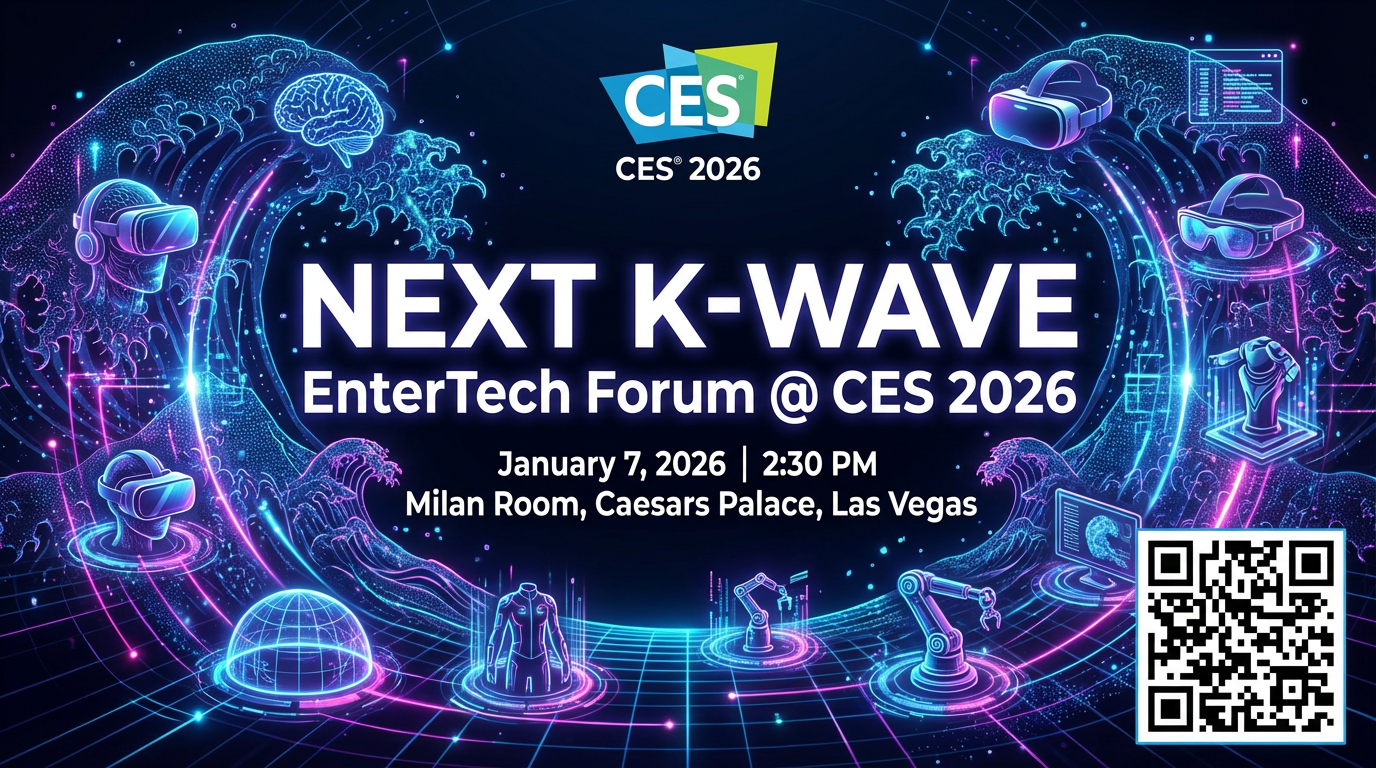
Experience the Frontlines of Entertainment Technology
A forum to directly discuss these entertainment technology frontiers is coming. On January 7, 2026, during CES 2026, K-EnterTech Hub hosts the "Next K-Wave Entertainment & Tech Forum" at Caesars Palace Milan Room in Las Vegas.
Under the theme "Where K-Content Meets Frontier Tech," this 4-hour forum (2:30 PM - 6:30 PM) will spotlight K-content's evolution and global strategy in the AI·XR era.
Program Highlights
Keynote Speech
Samseog Ko(Presidential AI Strategy Member, Dongguk University Distinguished Professor) delivers the keynote on "Next Hallyu Initiative"—presenting the future of technology-driven Hallyu 3.0 and K-content's evolution in the AI·XR era.
Special Address
Del Parks, Technology President of Sinclair Broadcast Group speaks on "Cloud, AI, K-Content, and the Future of Broadcast"—exploring cloud-based broadcasting infrastructure evolution and AI-K-content convergence.
Panel Discussion
"AI-Transformed Content Production: XR and Immersive K-Content's Global Expansion"
Topics span streaming services, AI virtual production, AI dubbing/translation, to Meta Quest, Apple Vision Pro, and Sphere platform strategies accelerating K-content's global expansion.
K-Entertainment tech Strategy Session
June Park CEO of NEW ID (Korea's #1 FAST platform aiming to become the global #1 K-Culture platform), shares K-content companies' Entertainment Tech strategies.
K-Nevada Gateway Startup Pitching
Korean startups preparing for U.S. market entry through the K-Nevada Gateway program present their innovations:
Nevada Business Environment Introduction
Nevada Governor's Office of Economic Development (GOED) and Nevada Film Office present:
Forum Details: https://www.kentertechhub.com/next-k-wave-forum2/

![[투비]The Stream 2026: When Intention Becomes Attention](https://cdn.media.bluedot.so/bluedot.kentertechhub/2026/03/6h3xe4_202603220154.png)
![[SXSW2026]에이미 웹 트렌드 리포트(Convergence
Outlook 2026)](https://cdn.media.bluedot.so/bluedot.kentertechhub/2026/03/kty3s8_202603152312.png)

![[보고서]전통 언론사의 크리에이터 전략 대전환](https://cdn.media.bluedot.so/bluedot.kentertechhub/2026/02/0nwc9z_202602100212.png)