
The Storm Is Coming. Are You Ready? Amy Webb kills the 19-year-old trend report — and launches the age of Convergence
by
2026년 3월 15일
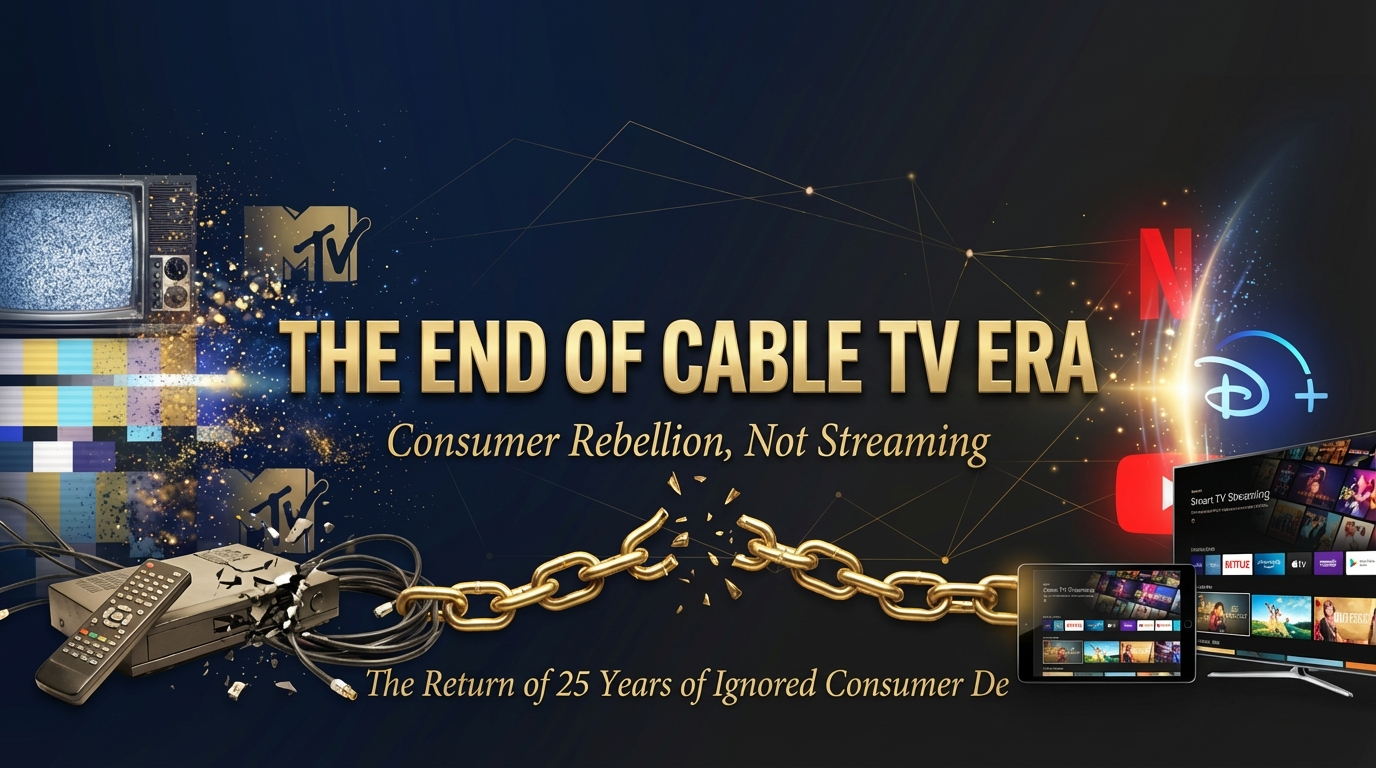
Consumer Rebellion, Not Streaming, Is the Real Cause
Lessons from 50 Years of American Cable TV and Implications for Global Pay-TV Markets
【USA】 2010: 105M → 2025: 66.1M → 2026: 54.3M
Half of Subscribers Evaporated in 15 Years — The Collapse of American Cable TV
【KOREA】 H1 2025: 36.23M Pay-TV Subscribers (↓138,546 vs Prior Period)
Declining for Over a Year Since First Drop in H1 2024
• Cable TV subscribers: 66.1M households (down 3.7% YoY, down 34.6% from 2010 peak of 105M)
• 2026 forecast: 54.3M households (projected 17.8% plunge)
• Traditional Pay-TV penetration: 34.4% (down from 80%+ in 2011)
• Cord-cutter households: 77.2M (projected 80.7M in 2026)
• Streaming viewership share: 44.8% — First time exceeding Cable (24.1%) + Broadcast (20.1%) combined (44.2%)
• Pay-TV revenue: 2017 $100B → 2025 $83.4B ($16.6B evaporated)
• Average cable fee: $147/month (premium $200+) vs. multiple streaming under $70
• Cord-cutting reason: 86.7% cite 'high price'
• Traditional Pay-TV (Q1 2025): 49.6M households (less than half of 101M from 11 years ago)
• Streaming penetration: 99% of U.S. households subscribe to at least one streaming service
Source: Korea Communications Commission (November 24, 2025)
• Total Pay-TV subscribers: 36,226,100 (down 138,546 vs prior period)
• IPTV: 21,414,521 (59.11%) — +104,270 (only segment growing)
• Cable TV (SO): 12,091,056 (33.38%) — -182,044
• Satellite: 2,720,523 (7.51%) — -60,772
• Decline trajectory: Continuous decline for over a year since first drop in H1 2024
Historic Turning Point: Streaming Surpasses Cable + Broadcast
In May 2025, a historic turning point was reached. According to Nielsen's integrated viewing share Gauge, streaming viewership (44.8%) exceeded cable (24.1%) and broadcast (20.1%) combined (44.2%) for the first time ever. This is not a temporary phenomenon but a structural shift. Over the past four years, streaming viewership increased 71%, while broadcast declined 21% and cable dropped 39%.
By December 2025, the gap widened further. Streaming services reached 47.5% while cable TV fell to 20.2% — an all-time low.
According to S&P Global Market Intelligence, pay-TV's nine consecutive years of subscriber decline shows "no indication of stabilization." As of Q1 2025, traditional pay-TV (cable + satellite + telco) subscribers stood at 49.6 million — less than half of the 101 million from 11 years ago.
Paramount recently announced it is seeking strategic partners to revive MTV. This is the latest sign that the era of cable networks — once core assets of the media industry — has come to an end.
Hank Price's Analysis: "Consumer Rebellion Is the Real Cause"
Source: TV NewsCheck "The End Of The Cable Network Era" (January 22, 2026)
URL: https://tvnewscheck.com/journalism/article/the-end-of-the-cable-network-era/
TV NewsCheck columnist Hank Price offered a contrarian analysis of the cable industry's collapse: "It would be easy at this point to say that streaming killed cable, but that would not be the full story."
"Cable and satellite were killed by their own abused customers, tired of paying huge monthly fees for channels they did not watch."
The term 'abused customers' is a direct criticism of the cable industry's decades-long practice of ignoring consumer choice and maximizing profits through forced bundling. Indeed, 86.7% of cord-cutters cite 'high price' as their reason for canceling. The price gap — $147 average monthly cable fee vs. under $70 for multiple streaming subscriptions — is accelerating defection.
U.S. Cable TV Subscriber Trend (2010-2026)
Sources: eMarketer, S&P Global, Evoca, IBISWorld, nScreenMedia (2025)
The Golden Age of Cable Business Model: Era of 'Perfect Control'
Just a few years ago, cable TV networks were the most profitable assets a company could own. Led by ESPN, The Weather Channel, and HGTV, they generated massive margins through the combination of subscription fees and advertising revenue. Pay-TV revenue exceeded $100 billion in 2017.
During the cable/satellite dominance era, the revenue formula for MVPDs was simple. Price explained it as follows:
"Viewers were forced to pay for a wide array of channels whether they wanted them or not. Like Home and Garden TV? You had to also buy all the other channels owned by the same company. It was a perfect world of complete power over the consumer."
CNN: Birth and Fall of Cable News
Source: Variety (January 20, 2026) | https://variety.com/2026/tv/news/cnn-profit-warner-bros-discovery-1236296152/
When Ted Turner launched CNN in 1981 — Price quipped, "You remember CNN — it used to be a news network" — it took years to become profitable. But profitability grew alongside subscription fees.
CNN Profitability Collapse: $400M Evaporated in 10 Years
2016: ~$1B → 2026: $600M (Operating Profit)
Variety reported, citing WBD's SEC filings, that CNN's projected 2026 operating profit is approximately $600 million. Compared to the nearly $1 billion in gross profit during Trump's first presidential election in 2016, this represents $400 million (40%) evaporated in 10 years.
Sources: Variety, WBD SEC Filing, Washington Post (2026.1.20)
According to WBD's SEC filings, CNN's core business revenue is expected to decline at -4% CAGR from 2026-2030. To offset this decline, CNN launched 'CNN All Access' streaming ($6.99/month) in Fall 2024, targeting approximately $600 million in 'new platform revenue' by 2030.
President Trump stated at a White House briefing in December 2024: "CNN should be sold. The people currently running CNN are either corrupt or incompetent."
The Weather Channel: From Near-Shutdown to Cash Cow
The Weather Channel case dramatically illustrates the essence of the cable TV business model. Price shared a story he heard directly from a Landmark executive:
"A Landmark executive once told me that the company lost so much money launching the network that they were on the verge of shutting it down when the cable industry offered to start paying a small subscriber fee just to keep it going."
Landmark Communications was a family business whose core operations were newspapers and local broadcasting. In the early 1980s, they bet on packaging weather — a very simple utility content — into a 24-hour channel distributed via national cable networks. In the early days, with only hundreds of thousands of subscribers, they had to absorb massive losses monthly. Internal discussions even raised the question: "Should we just shut this down?"
But Landmark pushed through with the hypothesis that this channel would become an essential part of basic cable packages. Once The Weather Channel secured national distribution, this modest 'weather information' content became a utility installed in every living room, transforming into a solid cash cow combining per-subscriber retransmission fees with stable advertising revenue.
This small per-subscriber fee grew over time until The Weather Channel generated more revenue than all of Landmark's other business units combined. Price noted: "The Weather Channel became so profitable that Landmark, in what turned out to be an inspired move, cashed out at the peak of its value."
Scripps: Pioneer of Spin-off Strategy
Scripps is cited as another early success story in cable network strategy. HGTV entered the market quietly, launching "to almost no applause," but Scripps didn't obsess over short-term results and absorbed losses for a considerable period until the channel got on track.
More importantly, Scripps was among the earliest generation of operators to boldly launch multiple spin-off networks like The Food Channel.
"Instead of licensing programming, it bought shows outright. That meant episodes could be aired over and over without paying residuals."
Like Landmark, Scripps "saw the writing on the wall and sold before it was too late." Because they recognized early the growth limits and structural changes facing traditional cable networks, Scripps is recorded as one of the few players that successfully exited when asset values were near their peak.
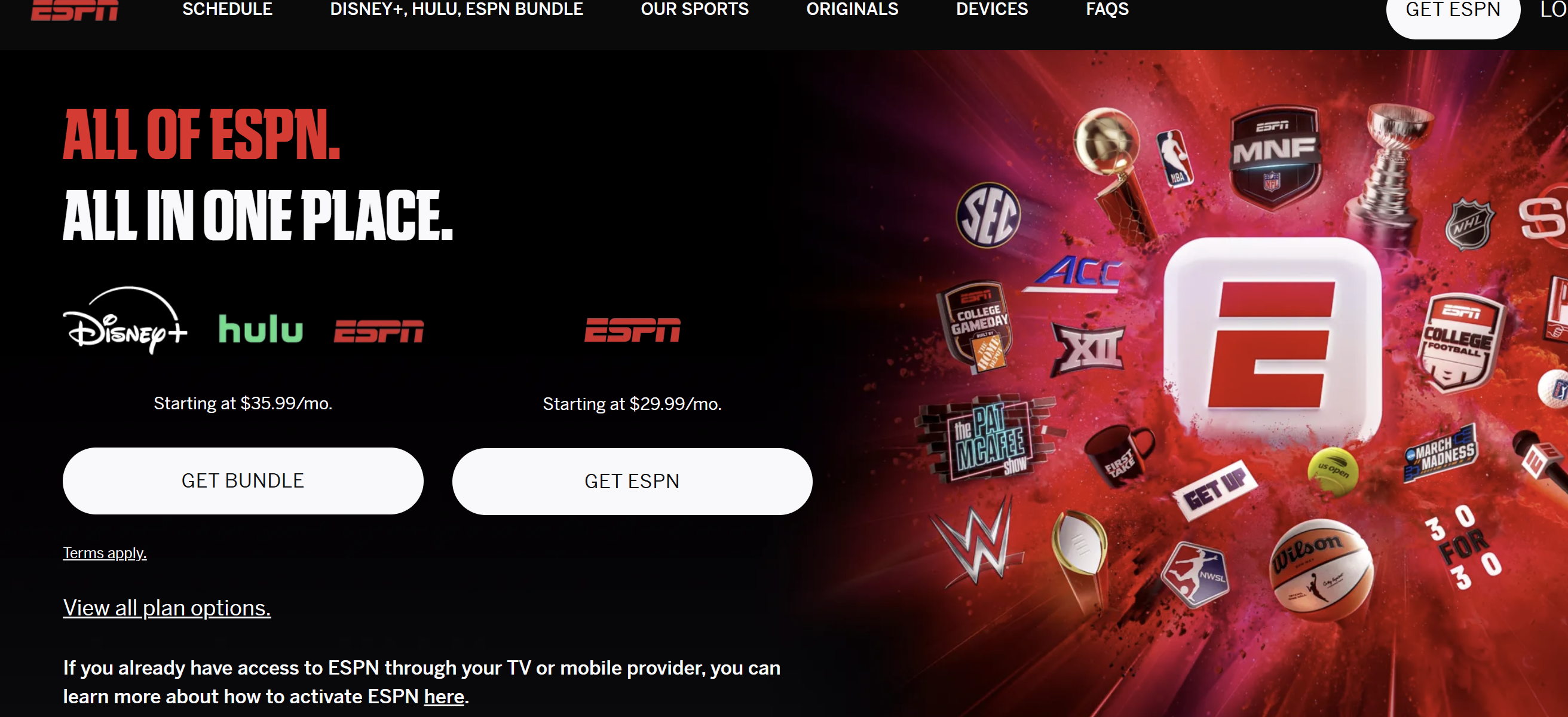
ESPN: Rise, Fall, and Rebirth of Cable's Greatest Success
In cable history, ESPN transcends simple success — it's closer to mythology. Two entrepreneurs from non-media backgrounds (an ophthalmologist and an insurance salesman) built the network from nothing, but it was ABC that properly interpreted this potential and perfected the business model. ABC is credited with nurturing ESPN into the representative brand for premium live sports broadcast across multiple channels.
"At its height, ESPN produced not millions in yearly profit, but billions."
At its peak, ESPN was overwhelming in scale. Annual profits were counted not in 'millions' but in 'billions,' functioning as the core cash cow driving all of Disney's results. During cable bundling's golden age, ESPN reached over 100 million households, collecting around $7 per household monthly in subscriber fees, building what was effectively a 'money printing' business model when combined with advertising revenue.
However, this success also became a trap that squeezed ESPN itself. Over time, ESPN's organization and cost structure ballooned rapidly. As Price pointed out, expansion reached the point where it became "so fat that expenses got out of control." This included overspending in all areas: excessive talent fees to secure star commentators and on-air personalities, ultra-premium live sports rights fees, and investments in large headquarters and production infrastructure.
When cable subscribers plummeted, ESPN was forced to implement massive layoffs and salary cuts — what amounted to a "public humiliation" and symbolic loss of face.
Nevertheless, Price gives clear credit to Disney's recent moves. He highly praises Disney's decision to not keep ESPN locked in legacy cable packages but to reconfigure it as an on-demand streaming service offered bundled with Hulu and Disney+ or as a standalone product — calling it "another choice to embrace the future."
"Want to see the majority of SEC or Big 10 football games? ESPN is your only choice. In fact, I would argue that ESPN on demand has the potential to become a far more valuable asset than the cable side."
The Fall of Cable TV: Consumer Voices Ignored for 25 Years
The most central argument in Price's analysis is that the cause of cable's collapse is not streaming technology itself, but the explosion of long-suppressed consumer demand.
"For more than 25 years, research showed that viewers wanted the ability to buy programming a la carte. Study after study indicated customers would jump at the chance to make that kind of change. Streaming exploded because it satisfied that long-held desire."
This is a rebuttal to technological determinism — the view that new technology replaces existing industries. According to Price's analysis, streaming was not the cause but the exit for consumer dissatisfaction. It implies that if the cable industry had listened to consumer demands, the outcome could have been different. The fact that 99% of U.S. households now subscribe to at least one streaming service proves this point.
The Rise of vMVPD: YouTube TV and the New Equilibrium
Price explains the growth of vMVPDs, noting: "Interestingly, there is still a place in many homes for basic cable service, which is why YouTube TV is on track to become the dominant player in the cable space." vMVPDs — which schedule live channels like cable/satellite but deliver them via internet — have no physical infrastructure or set-top box supply costs, allowing them to provide the same 'channel bundle experience' with a much lighter structure than traditional cable.
This enables them to pursue 'skinny bundle' strategies, offering 80-100 channel bundles at "sub-$100" price points, making them an acceptable alternative for households wanting to maintain some level of live channels.
As of Q1 2025, U.S. vMVPD subscribers are estimated at approximately 20.7 million, up from about 18.1 million in the same period last year. YouTube TV is the overwhelming leader in this market, with approximately 7.9 million subscribers as of 2023 and over 8 million in 2024, accounting for around 40% of total vMVPD subscribers.
While traditional pay-TV (MVPD) operators suffer subscriber declines, YouTube TV has established itself as "the representative digital pay-TV replacing cable," with analysis suggesting it has grown to become the 4th largest pay-TV operator in the U.S. However, Price notes that "whether this business model will be sustainable long-term is questionable," pointing out that rising content costs, sports rights fee burdens, and price increase pressures could threaten long-term profitability.
YouTube TV's rise is not just due to price/cost structure, but also product/experience innovations. YouTube has continuously introduced features like multiview functionality, sports-focused interactive viewing, and personalization. They applied the multiview feature — allowing simultaneous viewing of up to four channels on one screen — to sports first, then expanded to news, weather, and entertainment. For 2026, they announced plans to offer "fully customizable multiview" experiences where users can freely combine their preferred channels.
Future Outlook: The Coming Era of Individual Content Licensing
Price presented two continuing truths about the media industry:
"The first is that the power of media is always in the content, not the technology. The second is that the only decision maker who actually matters is the consumer."
Combining these two principles reveals the outline of the future media environment:
"Putting those two things together, we can easily see a future world in which every program is individually licensed and available on-demand, including local news. That is not a world our industry wants, but it appears to be where the consumer wants to go, and I, for one, would never bet against the consumer."
"Want to know the future? Just watch the American consumer. It works every time."
Facing the cable TV crisis, media giants are responding with different strategies. Industry analysts characterize cable's decline as "the most significant media shift in decades."
Paramount: Considering Complete Cable Network Exit
Paramount is considering the most radical approach. Shutting down all cable TV networks and converting to digital-only brands is on the table. Paramount urgently needs cost cuts, which could put MTV, Nick, BET, and many other channels on the chopping block.
Warner Bros Discovery (WBD): Cable Division for Sale
Warner Bros Discovery has put its cable TV networks up for sale as part of an auction to sell all or part of the company. This is another signal that traditional cable TV business value is plummeting rapidly. According to WBD's SEC filings, Discovery Global (including CNN, TNT Sports, Discovery channels, etc.) division revenue and profits are projected to decline steadily through 2030.
Disney: Selective Consolidation
Disney is maintaining core assets with exclusive sports licenses like ESPN while consolidating non-core channels like Disney XD and Disney Junior into Disney+. The strategy of offering ESPN bundled with Hulu and Disney+ is yielding results.
Charter-Cox: $34.5B Mega Merger
Another signal of crisis in the cable industry: Charter (Spectrum brand) announced a $34.5 billion acquisition of Cox Communications. After the merger expected this year, a telecom giant with 38 million customers nationwide will be born. This is a strategy to survive the cord-cutting era through economies of scale.
Source: Cord Cutters News (January 10, 2026)
URL: https://cordcuttersnews.com/top-10-cable-tv-networks-most-likely-to-shut-down-in-2026/
Based on projections that cable TV networks could lose up to 20 million subscribers in the coming years, some channels face inevitable restructuring or shutdown.
Source: Cord Cutters News (2026.1.10)
Big Picture Interpretation:
The overall diagnosis: as cable bundle dissolution and cord-cutting acceleration simultaneously shrink both advertising revenue and subscriber base, many channels can no longer maintain their past structure.
Children's/youth channels, sub-brand channels, and rerun-focused category channels are easily replaceable by streaming/FAST/AVOD, making them primary targets for consolidation, sale, or shutdown.
Conversely, channels with survival potential will converge to "a handful of brands that can drive direct paid subscriptions" — exclusive live sports, strong news/current affairs, and major franchise-level IP.
Case Study: MTV UK Channel Shutdown
URL: https://www.syracuse.com/entertainment/2025/01/5-mtv-channels-are-shutting-down-after-more-than-40-years-on-air.html
Paramount Global announced in October 2025 that five MTV music channels operating in the UK and Europe would shut down effective December 31, 2025: MTV Music, MTV 80s, MTV 90s, Club MTV, MTV Live.
This isn't just a UK phenomenon. Paramount simultaneously shut down MTV Music, MTV 80s, MTV 90s, Club MTV, and MTV Live across major European countries including Austria, Poland, Hungary, Germany, and France. In some markets, TeenNick, NickMusic, Comedy Central Extra, and Paramount Network were also closed.
Behind this cleanup is the massive cost reduction and portfolio restructuring following the Paramount-Skydance Media merger. The newly launched 'Paramount Skydance' is boldly cutting unprofitable traditional cable/satellite channels amid intensifying streaming competition, while repositioning the MTV brand around online platforms like social media and Paramount+.
Will Korea Repeat the Same Mistakes?
Korean Pay-TV Market Status: Decline Has Already Begun
Source: Korea Communications Commission (November 24, 2025)
URL: https://www.korea.kr/briefing/pressReleaseView.do?newsId=156730933
Contrary to the conventional wisdom that "Korea won't collapse because fees are cheap," the Korean pay-TV market has already entered a phase of structural decline. According to the Korea Communications Commission's 'H1 2025 Pay-TV Subscriber Count and Market Share' released November 24, 2025, Korean pay-TV subscribers stand at 36,226,100 — down 138,546 from H2 2024. The decline has continued for over a year since the first drop in H1 2024.
Source: Korea Communications Commission (2025.11.24, H1 2025 basis)
Why "Cheap Fees Are Fine" Is a Miscalculation
Some operators and industry insiders have maintained the optimistic view that "Korean pay-TV fees are much cheaper than the U.S. and Europe, so subscriber defection will be slower."
However, subscriber decline is determined not by 'absolute fee levels' but by consumer perceived value and changing usage behavior. When streaming services like Netflix, Disney+, YouTube, Tving, and Wavve encroach on 'actual viewing time,' it's natural for people to first cancel "services they don't watch much" regardless of how cheap they are.
The Essence of Cord-Cutting: Behavioral Change, Not Price
The U.S. cable TV collapse didn't start with "leaving because it's expensive" but with time being distributed across smartphones, streaming, and social media services — "less time to turn on cable."
As price increases accumulated, dissatisfaction with "the structure of paying monthly fees for something I barely watch" exploded, and cord-cutting accelerated. Since streaming and YouTube have already become 'basic utilities' in Korea, there's a high likelihood of following a similar path.
Korean Streaming Market: Netflix Dominance
As of December 2025, Netflix recorded an all-time high MAU of 15.16 million (Wiseapp·Retail). The gap with #2 Coupang Play (8.53M) is 6.63 million. Tving (5.25M), Disney+ (2.39M), Wavve (2.35M) follow.
In H1 2025, Netflix subscription rate reached 54% — first time breaking the majority (Consumer Insight). Coupang Play 35%, YouTube Premium 21%, Tving 21%, Disney+ 13%. Tving and Wavve are pursuing merger after receiving conditional approval from the Fair Trade Commission in June 2025.
The average number of overlapping subscriptions for Korean paid OTT subscribers is 2.7 — similar to the U.S. (2.8). This means consumers are flexibly moving based on content rather than being loyal to a single platform.
1. Expand Consumer Choice: From 'Forced Bundles' to 'Flexible Selection'
U.S. Lesson: After ignoring 25 years of research showing consumers wanted à la carte options, when streaming emerged as an alternative, consumers immediately defected. 86.7% of cord-cutters cite 'high price' as their cancellation reason.
Application: Current IPTV/cable TV channel package structures resemble the past U.S. cable TV model. Actively introduce 'slim packages' or 'individual channel purchase' options.
2. Content Differentiation: Korean Application of the ESPN Model
U.S. Lesson: ESPN maintains value in the streaming era because of exclusive sports licenses. "Want to see the majority of SEC or Big Ten football games? ESPN is your only choice."
Application: Live sports rights for KBO baseball, K-League, esports can be differentiation points. Securing exclusive content is key.
3. Re-establish Price Competitiveness: Reference the vMVPD Model
U.S. Lesson: YouTube TV became the dominant player in the cable space because it has no infrastructure costs and can offer bundles under $100. vMVPD subscribers reached 20.7M (Q1 2025) and growing.
Application: Prevent consumer defection with 'all-in-one' packages including streaming subscriptions. Value for money is key.
4. Coexistence Strategy with Streaming: Partners, Not Enemies
U.S. Lesson: Disney adapted to the streaming era by offering ESPN bundled with Hulu and Disney+. CNN also launched 'All Access' streaming ($6.99/month), targeting $600M in new platform revenue by 2030.
Application: Strengthen partnerships with domestic streaming (Tving, Wavve, Coupang Play) to position IPTV platforms as 'super aggregators.'
5. Consider Timely Sale or Business Restructuring
U.S. Lesson: Landmark sold The Weather Channel "at the peak of its value" in "an inspired move." Scripps also "saw the writing on the wall and sold before it was too late."
Application: For independent cable TV operators, consider strategic sale or consolidation while market value remains.
6. Strategies for Single-Person Households and Younger Generations
Given the increase in single-person households and mobile-centric viewing habits of younger generations, service innovations matching young people's viewing patterns are needed: strengthened mobile IPTV services, expanded short-form content, social media integration. The fact that Korean paid streaming subscribers average 2.7 overlapping subscriptions shows content differentiation is key.
USA: 105M (2010) → 66.1M (2025) → 54.3M (2026E)
More Than One-Third Evaporated in 15 Years
In May 2025, streaming viewership (44.8%) exceeded cable (24.1%) + broadcast (20.1%) combined — a historic turning point. CNN's operating profit is projected to decline 40% from $1B in 2016 to $600M in 2026.
Korea is no exception. According to the Korea Communications Commission, pay-TV subscribers as of H1 2025 stand at 36,226,100 — down 138,546 from the prior period. The decline has continued for over a year since the first drop in H1 2024. Only IPTV slightly increased; Cable TV (SO) lost 182,044 and satellite lost 60,772.
"The power of media is always in the content, not the technology. The only decision maker who actually matters is the consumer."
The U.S. cable TV industry is paying the price for ignoring consumer voices for 25 years. Pay-TV industries worldwide should take this lesson to heart.
What consumers ultimately want is to watch the content they want, the way they want, at a reasonable price. Business models that ignore this basic principle are unsustainable regardless of technological innovation.
"I would never bet against the consumer."
— Hank Price, TV NewsCheck
As Price says, "Never bet against the consumer." This is the most expensive lesson from 50 years of U.S. cable TV industry history.
━━━━━━━━━━━━━━━━━━━━━━━━━━━━━━━━━━━━━━━━
Sources & URLs
• TV NewsCheck - "The End Of The Cable Network Era" by Hank Price (2026.1.22)
https://tvnewscheck.com/journalism/article/the-end-of-the-cable-network-era/
• Variety - "CNN Projects $600 Million in Profit This Year" (2026.1.20)
https://variety.com/2026/tv/news/cnn-profit-warner-bros-discovery-1236296152/
• Cord Cutters News - "Top 10 Cable TV Networks Most Likely to Shut Down in 2026" (2026.1.10)
https://cordcuttersnews.com/top-10-cable-tv-networks-most-likely-to-shut-down-in-2026/
• Syracuse.com - MTV UK Channel Shutdown Report (2025.1)
https://www.syracuse.com/entertainment/2025/01/5-mtv-channels-are-shutting-down-after-more-than-40-years-on-air.html
• Korea Communications Commission - 'H1 2025 Pay-TV Subscriber Count and Market Share' (2025.11.24)
https://www.korea.kr/briefing/pressReleaseView.do?newsId=156730933
• Nielsen - Streaming Viewership Data (2025.5)
• S&P Global Market Intelligence - Pay-TV Subscriber Report (2025)
• eMarketer, Evoca, IBISWorld, nScreenMedia - US Cable TV Statistics (2025)
• Wiseapp·Retail - Korea OTT MAU Survey (2025.12)
• Consumer Insight - OTT Subscription Rate Survey (H1 2025)
• KOCCA - OTT Trend Report: https://www.kocca.kr/trendott/



![[투비]The Stream 2026: When Intention Becomes Attention](https://cdn.media.bluedot.so/bluedot.kentertechhub/2026/03/6h3xe4_202603220154.png)
![[SXSW2026]에이미 웹 트렌드 리포트(Convergence
Outlook 2026)](https://cdn.media.bluedot.so/bluedot.kentertechhub/2026/03/kty3s8_202603152312.png)





![[보고서]전통 언론사의 크리에이터 전략 대전환](https://cdn.media.bluedot.so/bluedot.kentertechhub/2026/02/0nwc9z_202602100212.png)