From Tubi's ChatGPT app to Beehiiv's MCP integration — streaming, newsletters, ticketing, and music converge on a single conversational interface
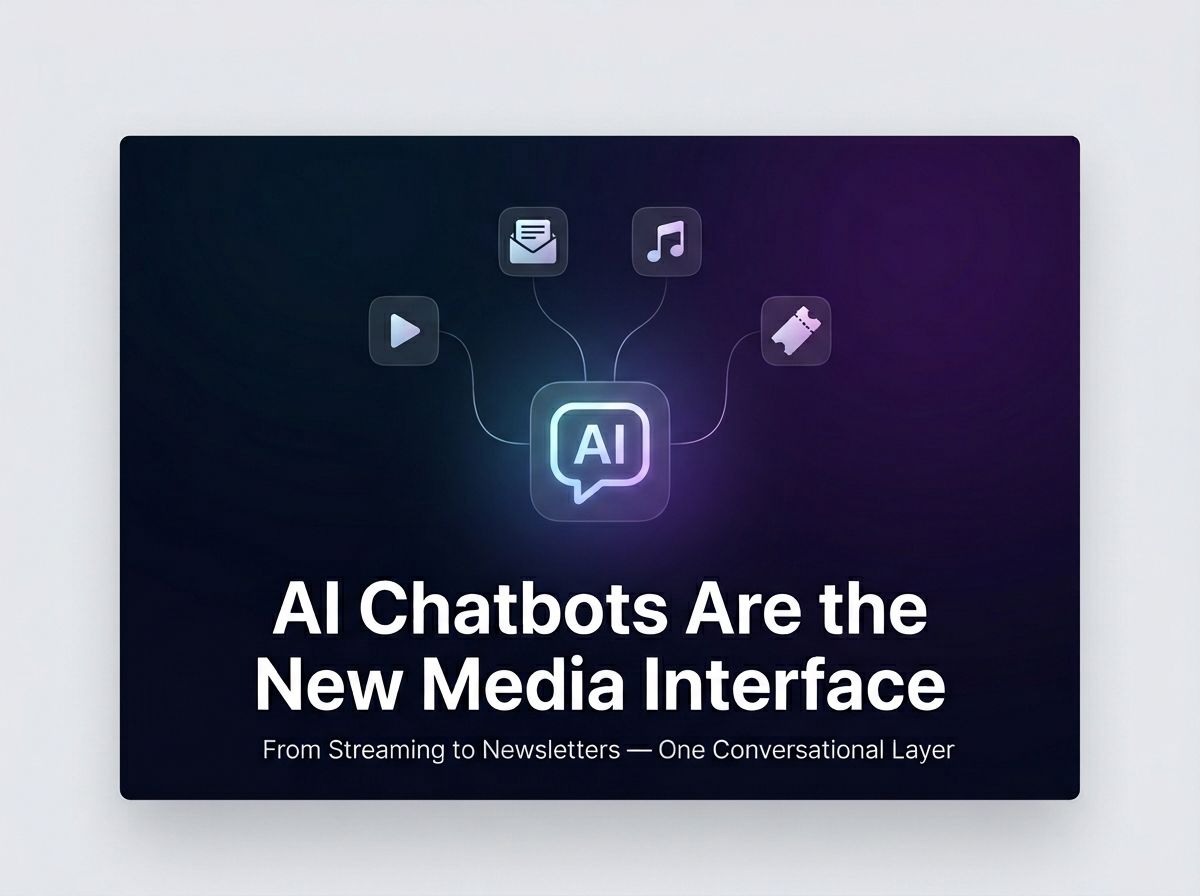
AI chatbots are no longer merely advanced search engines — they are rapidly evolving into universal media interfaces capable of supporting the full spectrum of media habits: discovery, creation, and consumption. Where traditional search engines ended at pointing users toward content, AI platforms can now guide them through it, help them make it, and deliver it directly.

Tubi's native ChatGPT app and Beehiiv's Model Context Protocol (MCP) integration confirm that this convergence is now spreading across every corner of the media industry. The structural forces driving this shift are the maturation of large language models (LLMs) and the aggressive expansion of OpenAI's GPT Store and agent ecosystem.

1. Tubi: The First Streamer Inside ChatGPT
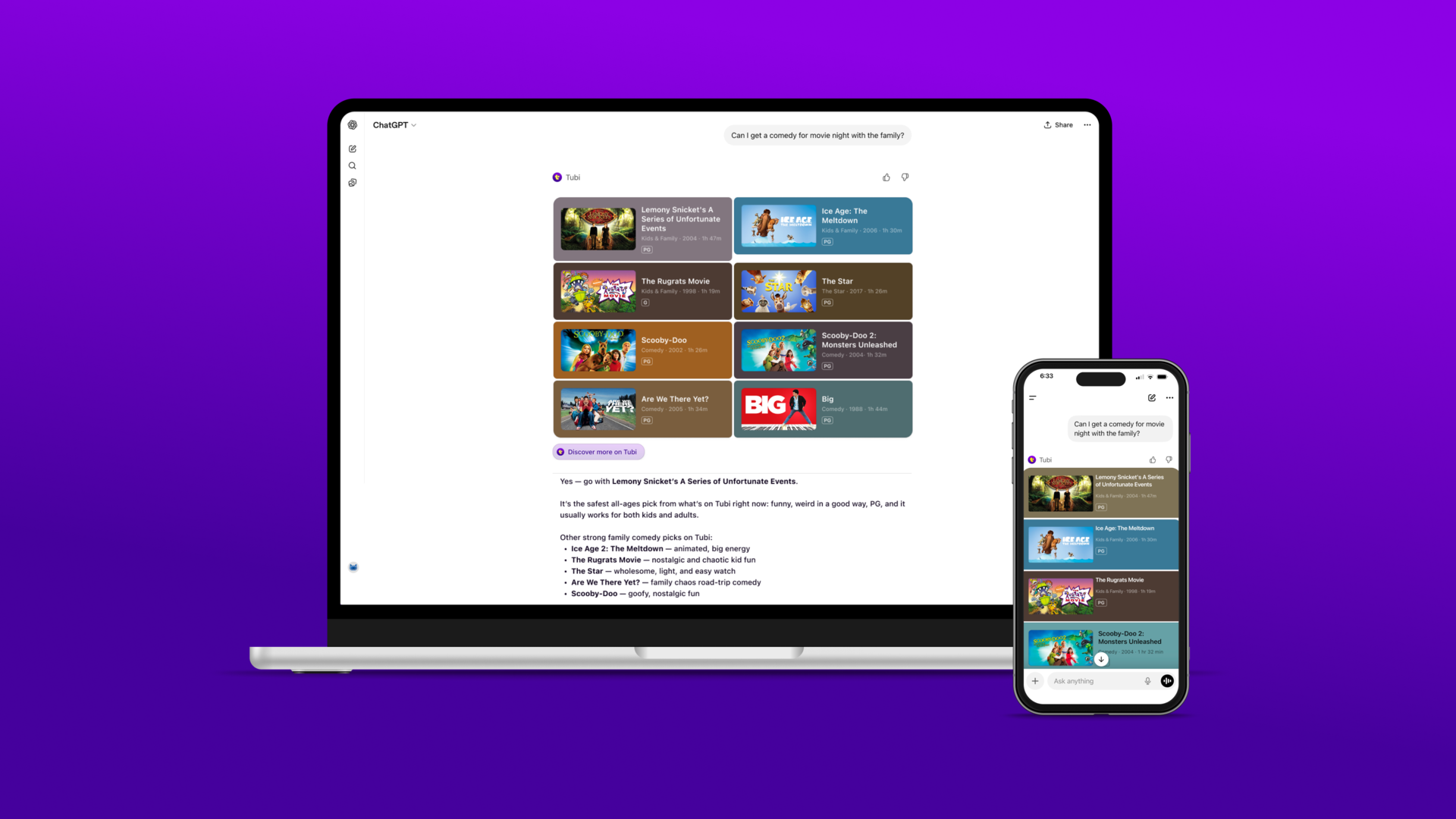
On April 7, 2026, Tubi — Fox Corporation's (NASDAQ: FOXA, FOX) free streaming service — became the first major streaming platform to launch a native app within ChatGPT. Users can add the Tubi app and invoke it via "@Tubi," making requests in natural language — from vague emotional cues like "a movie that feels like a fever dream but isn't horror" to direct asks like "a thriller for tonight" — and receiving curated results from Tubi's library of over 300,000 titles.
Tubi's CPTO Mike Bidgoli described the integration as bringing the company's core personalization engine — trained on over 1 billion monthly viewing hours from 100 million active users — into a conversational interface. Tubi's ability to move first stems from its FAST/AVOD model, which carries fewer licensing constraints than premium streamers like Disney+ and Netflix, who remain cautious amid unresolved fair-use and data-sharing concerns with AI companies.
2. Beehiiv: Creators Take Control via MCP
In March 2026, Beehiiv — the newsletter platform for independent creators and publishers — introduced an update built on the Model Context Protocol (MCP), allowing users to manage and optimize their accounts directly from the AI platform of their choice. CEO and co-founder Tyler Denk shared the details exclusively with Axios.
Why It Matters
Independent creators on Beehiiv are responsible for far more than just writing. Email list analysis, marketing outreach management, and SEO optimization all fall on their shoulders. Denk said the update is designed to "make all of the jobs around creating easier" — and noted that AI chatbot account access was "one of the most commonly requested features on X and LinkedIn."
"What we're hoping this will do is make all of the jobs around creating easier."
— Tyler Denk, CEO & Co-Founder, Beehiiv
MCP v1: Backend First, Direct Writing Support Next
The first iteration of the Beehiiv MCP focuses on backend functions: subscriber analysis and SEO optimization. As a practical example, Denk noted that AI tools can analyze what high-churn subscribers have in common, helping creators adjust their marketing outreach accordingly. Beehiiv plans to expand the technology to include more direct writing support in future iterations.
On privacy: users can prohibit AI chatbots from using their Beehiiv account data to train large language models — an opt-out available directly within profile settings.
3. Ticketmaster, Spotify, and Apple Music Join the ChatGPT Ecosystem
Alongside Beehiiv's MCP launch, several other platforms announced ChatGPT integrations:
▪ Ticketmaster: Integrated its services within ChatGPT, enabling users to browse events and purchase tickets entirely within the conversational interface.
▪ Spotify and Apple Music: Both launched ChatGPT integrations allowing users to connect their accounts and request songs, podcasts, and curated playlists via natural language.
4. Implications for the K-Content Industry
For Korean media companies, this shift presents challenges on two levels. First, major AI platforms must now be treated as active distribution channels — not just discovery tools. After Netflix, YouTube, and Amazon Prime Video, ChatGPT is emerging as yet another critical layer for K-content reach. Second, the industry urgently needs to establish fair-use frameworks and data licensing models with AI companies. As the Tubi and Beehiiv cases demonstrate, flexible licensing structures in FAST and AVOD models may hold a competitive edge in AI-integrated ecosystems. Leading Korean broadcasters — KBS (Korea Broadcasting System), SBS, and MBC — as well as content companies such as Kakao Entertainment, CJ ENM, and SM Entertainment — should be proactively developing AI platform integration strategies before the window narrows.
The Bottom Line
Media companies have long depended on third-party app stores for distribution. The rise of AI chatbots adds yet another layer to navigate. As Tubi connects streaming and Beehiiv connects newsletters to the AI interface, the next content war's front line may be decided not by subscriber counts — but by discoverability inside a natural-language conversation.