
Politicized antitrust, Hollywood megamergers, and Big Tech's AI ad dominance are reshaping the US media landscape — with direct consequences for Korea's content industry, negotiating leverage, and revenue models.
March 5, 2026. A White House conference room. Just five days into the Department of Justice's antitrust trial against Live Nation, CEO Michael Rapino and Attorney General Pam Bondi sat across the same table. By the end of that meeting, a settlement agreement had been signed. The DOJ's lead trial attorney told the judge he had only seen the term sheet that morning. It was a scene that encapsulated a new era in US antitrust: not the law regulating corporations, but political connections determining corporate fate.
That scene is just one episode of a sweeping structural transformation playing out simultaneously across the US media industry. Hollywood is executing its third studio megamerger in six years. Local broadcasters are racing to consolidate under a permissive FCC. Google, Meta, and Amazon are deploying AI to monopolize advertising revenue, crowding out traditional media publishers. WPP Media data captures the shift in stark numbers: media publishers' share of top-25 advertising revenues has collapsed from 27.84% in 2016 to just 7.3% in 2024 — a fourfold decline in eight years.
 Jung Han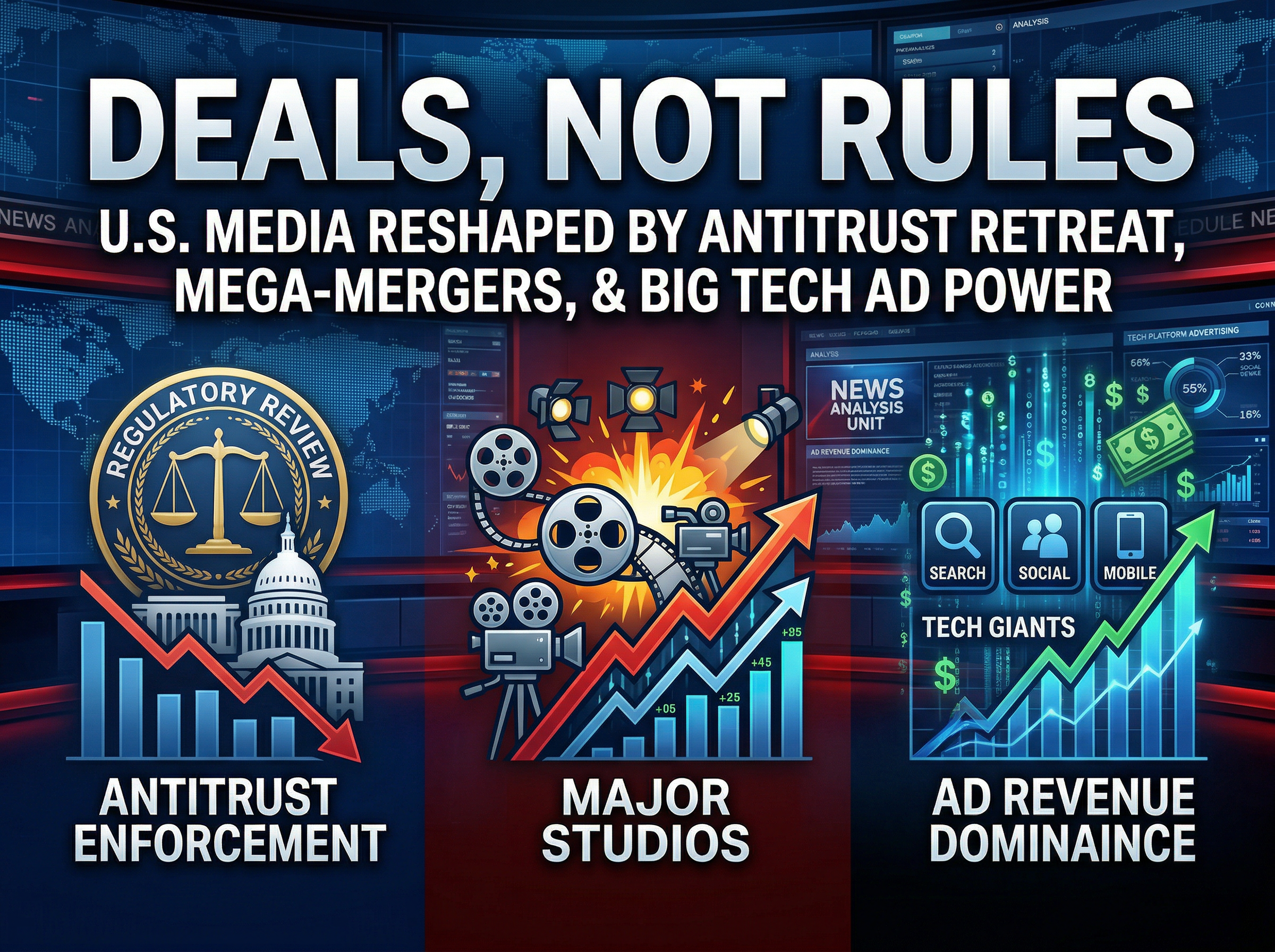
For Korea's media and entertainment industry, these are not distant US-market developments. The negotiating landscape for K-pop concerts, K-drama IP deals, Korean broadcasters' advertising revenue, and FAST channel distribution — all of it is shifting beneath the industry's feet. This report maps the transformation sector by sector, and draws out the strategic implications for Korean players.