
[Special Opinion]Korea's Cultural Destiny: From a Patriot's Dream to Global Platform Power
by
2026년 3월 23일
![[Special Opinion]Korea's Cultural Destiny: From a Patriot's Dream to Global Platform Power](https://cdn.media.bluedot.so/bluedot.kentertechhub/2026/03/vjxdyq_202603231241.jpg)
Editor-in-Chief with Zero TV Experience Declares Plan to Reinvent CBS News for the 21st Century
Just one day after declaring her vision to transform CBS News, voluntary buyouts announced for Evening News staff
Evening News ratings plunge 20% year-over-year—the steepest decline among Big Three networks
Staff report 'chilling effect' in newsroom: 'Everyone fears retaliation for speaking up'
CBS News finds itself in the eye of a transformational storm. Just 24 hours after editor-in-chief Bari Weiss declared her ambition to build a "CBS News fit for the 21st century" at her first company-wide town hall, news broke that the network's flagship CBS Evening News is pursuing voluntary buyouts.
According to The New York Times, Weiss addressed hundreds of CBS employees gathered at bureaus worldwide on Tuesday, acknowledging the turbulence surrounding her appointment. "There has been a lot of noise since I took this job," she said. "I understand. I also understand that in the midst of all of this upheaval, you might feel uncertain or skeptical about me."
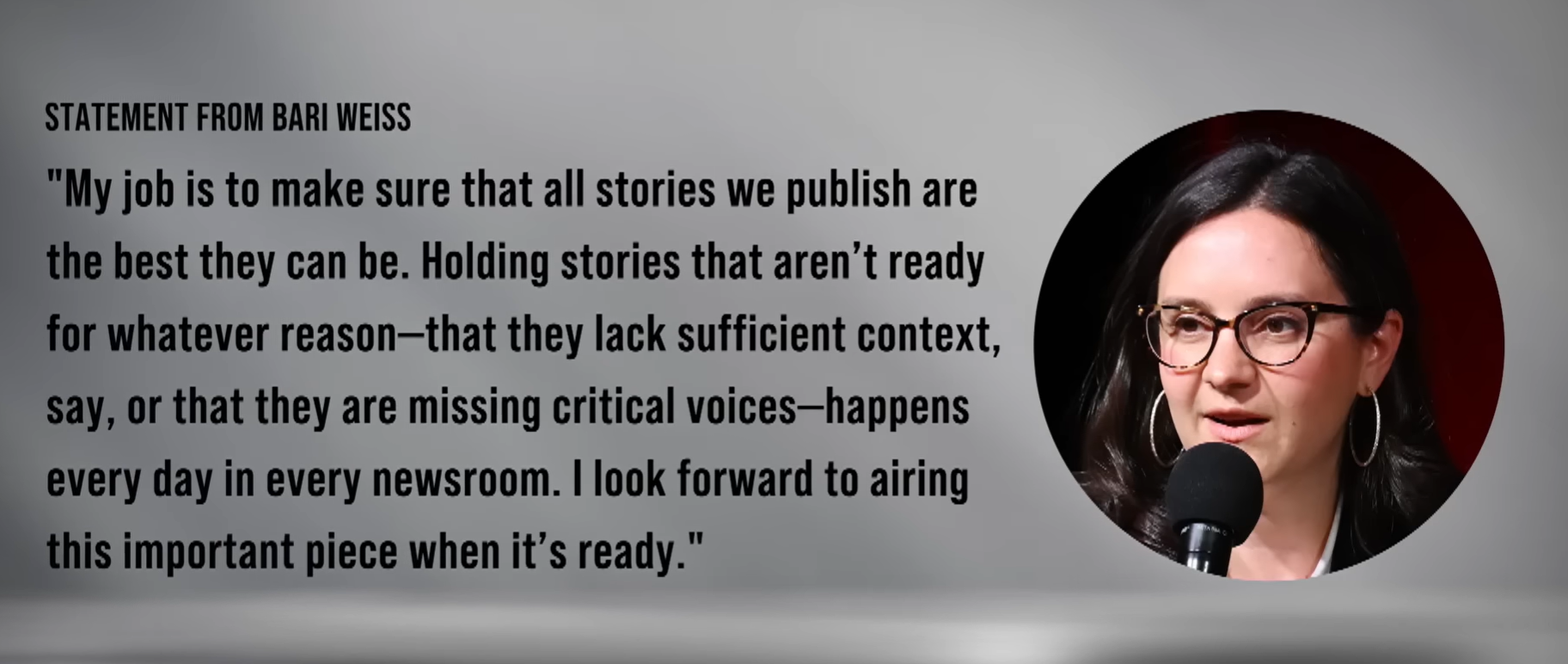
Before joining CBS News as editor-in-chief last October, Weiss had never once entered a television control room, the Los Angeles Times reports. Her only prior management experience was running The Free Press, a 60-person digital media outlet she founded. Now she helms an organization of more than 1,200 employees worldwide. Weiss has reportedly acknowledged to colleagues that she is still learning the intricacies of TV news production—from story development and reporting to editing and the relentless demands of round-the-clock programming.
The New York Times reports that Weiss described CBS News as "the best-capitalized media start-up in the world," urging staff to operate with greater agility and innovation. "We are not making a product that enough people want," she said, dismissing the daily obsession with Nielsen ratings as an "old-school metric."
 Jung Han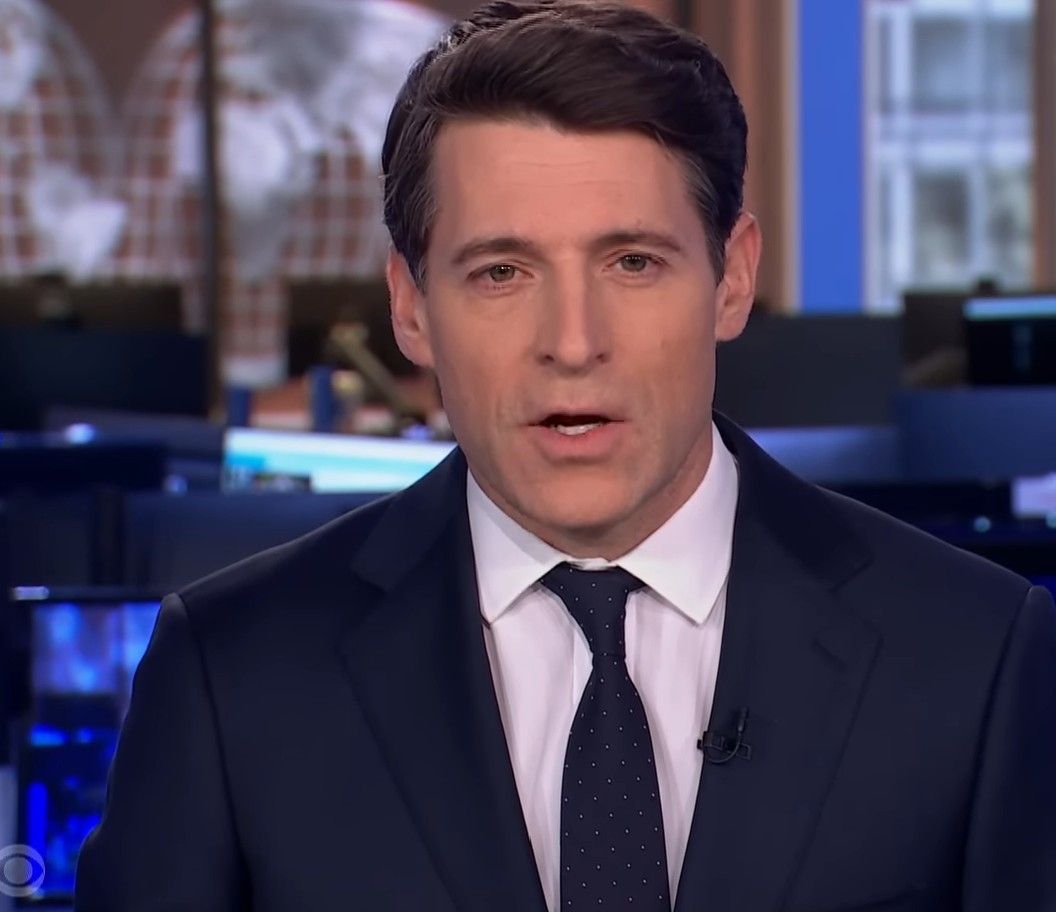
Such aggressive transformation efforts have drawn concern. Tom Bettag, a former network news producer who teaches at the University of Maryland's Philip Merrill College of Journalism, told the Los Angeles Times: "Weiss has started out so disastrously, both with 60 Minutes and with the Dokoupil Evening News launch. I wonder if she can recover. You only get one chance to make a first impression."
At the January 27 town hall held at CBS Broadcast Center in Manhattan, Weiss argued that the network must pivot from chasing traditional broadcast audiences to engaging viewers who have migrated to digital and social media. Invoking the era of legendary anchor Walter Cronkite, she said: "Back then, there were two competitors—ABC and NBC. Today, we have roughly two billion."
"I am here to turn CBS News into an organization for the 21st century," Weiss declared. "If our strategy is still about clinging to the viewers who remain on broadcast TV, we are toast the moment we commit to that strategy."
On content strategy, Weiss advocated reducing reliance on "commodity news"—stories available everywhere—in favor of content that is "anti-meme, non-imitative, differentiated, and unavailable anywhere else." Her ideal journalist, she explained, is a "Swiss Army knife"—someone who can write, speak, anchor, report, analyze, and produce across multiple platforms.
For programming, Weiss outlined plans to extend CBS's marquee brands—60 Minutes, CBS Sunday Morning, and the true-crime magazine 48 Hours—into podcasts, newsletters, and live events. "We need to shift immediately to a streaming mindset," she said. "Our competitors are no longer just the other broadcast networks."
She also sent a clear message about organizational culture: "This is a free country. If you feel this isn't the place for you right now, I fully respect that decision."
Before the glow of Weiss's vision could fade, news of restructuring emerged, amplifying internal anxiety. According to Variety and other trade outlets, CBS News is pursuing voluntary buyouts targeting non-union staff at CBS Evening News. The timing—immediately following the town hall—has fueled fears that "innovation" is code for layoffs and workforce reorganization.
Sources say new anchor Tony Dokoupil and Evening News executive producer Kim Harvey lobbied leadership to minimize cuts, but they were unable to shield the program from cost-cutting pressure driven by parent company Paramount Skydance. Since acquiring Paramount from the Redstone family last year, Skydance has pursued at least $200 million in savings through company-wide restructuring, with thousands of positions already eliminated in multiple rounds of layoffs.
CBS News now finds itself navigating simultaneous challenges under new leadership that styles itself as "the world's best-capitalized start-up": a digital-first transformation while undertaking a sweeping overhaul of its legacy broadcast operations. How journalism integrity, organizational culture, and workforce structure will be reshaped amid Weiss's aggressive vision and Paramount Skydance's cost-cutting imperative is drawing intense scrutiny across the global news industry.
The early report card for Tony Dokoupil's CBS Evening News—a choice made personally by Weiss—has been harsh. While all three network evening newscasts have seen year-over-year ratings declines as of January, CBS Evening News has suffered the steepest drop at approximately 20%, according to Nielsen data. The Dokoupil-led broadcast is averaging just over four million viewers, widening the gap with competitors.
Early editorial choices have also sparked controversy. A segment on Secretary of State Marco Rubio drew criticism for being excessively flattering, while brief coverage marking the fifth anniversary of the January 6 Capitol attack prominently featured President Donald Trump blaming Capitol Police—a choice that triggered fierce backlash. The New York Times noted that these early missteps are "well documented," though the program has gradually settled into a more conventional newscast as initial intense scrutiny has subsided.
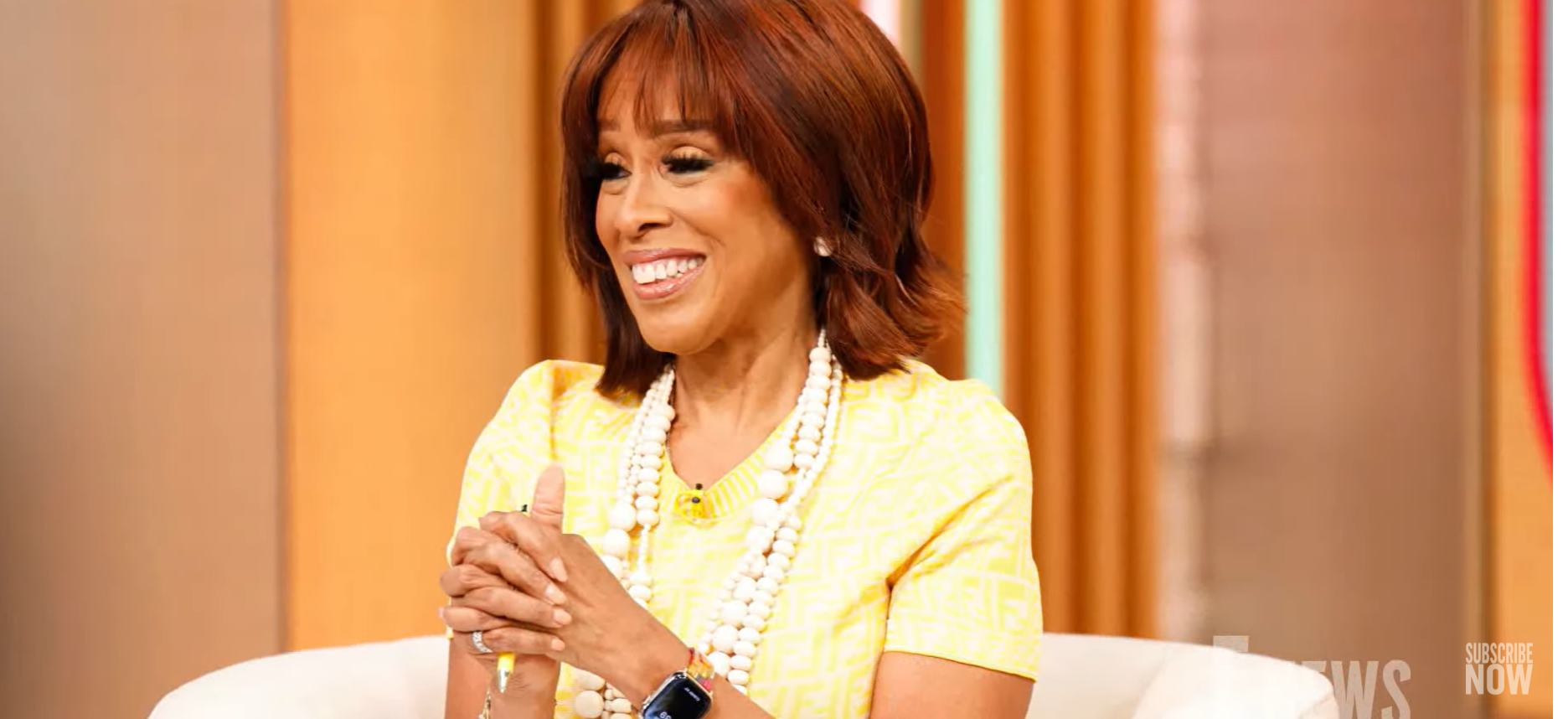
At the late January town hall in Manhattan, anxiety and exhaustion within the organization were laid bare. CBS Mornings co-anchor Gayle King said: "For the past few months, we've all felt like we're walking around with gasoline on our pants"—a vivid metaphor for the sense of being one spark away from combustion.
One Evening News staffer voiced even more direct concerns. According to a transcript shared by CBS, the employee said: "On Evening News, everyone is worried about their jobs, and people are afraid to speak up for fear of retaliation. There's a chilling effect inside the newsroom." The staffer added: "It feels like offering feedback, alternatives, or constructive criticism will immediately make you a target"—conveying the atmosphere of fear and mistrust that has intensified under Weiss's leadership.
King also shared public reactions: "People come up to me at airports and say, 'We love you guys, but we're not watching anymore.'" She highlighted the gap between brand affinity and actual viewing behavior. At the same time, she publicly criticized employees who leak internal matters to outside media in real time, joking: "I wonder how quickly what I'm saying right now will get out." Weiss reportedly quipped in response: "Gayle, someone might be livestreaming this as we speak."
Weiss's limited TV news experience became starkly apparent in her handling of 60 Minutes—the network's most prestigious and profitable franchise.
Correspondent Sharyn Alfonsi had spent months investigating abuse allegations at an El Salvador prison where the U.S. government was sending Venezuelan immigrants. The report had cleared the network's standards department. Yet Weiss pulled the segment just one day before its scheduled December 21 air date.
In an email to colleagues, Alfonsi called the decision "a political decision, not an editorial one." The controversy reinforced the narrative that Weiss is reluctant to cross the Trump administration. Reports indicate Weiss argued the story needed additional Trump administration voices on camera—specifically, a more aggressive push for an interview with immigration policy architect Stephen Miller—despite the White House having already declined interview requests.
The segment eventually aired roughly a month later under the title "Inside CECOT," but additions amounted to little more than supplementary framing in the introduction and conclusion—the core reporting remained largely unchanged. Multiple CBS News executives privately assess that the political controversy and brand risk Weiss incurred for such minimal additions "was not worth it at all."
At the town hall, Weiss acknowledged a procedural misjudgment: "Given that promos had already run, I should have handled it differently." But she defended her editorial authority: "As editor-in-chief of this newsroom, it is always my prerogative to demand more reporting and to push for more information." She admitted to overlooking "a certain logistical nightmare" due to insufficient understanding of complex TV production workflows, but pledged: "Going forward, there will never be a hold after promos in that same manner."
The controversies surrounding Weiss extend beyond CBS News to the broader political and industry landscape. With Paramount pursuing its Warner Bros. Discovery acquisition, persistent speculation suggests she is tilting coverage to favor the Trump administration in order to smooth regulatory approval. Adding fuel: Paramount's $16 million settlement of Trump's defamation lawsuit against 60 Minutes has become a touchstone for concerns that political considerations are influencing journalistic decisions.
Weiss has forcefully rejected such characterizations in the town hall and external interviews. She drew a clear line, saying she has never discussed White House coverage direction with Paramount CEO David Ellison, to whom she reports directly. "I'm here to do one thing," she said. "I'm not here to be anyone's spokesperson. I'm here to be a spokesperson for fairness and the pursuit of truth." Regarding the Alfonsi report hold, she emphasized: "Let me be as clear as I can: I received no pressure from David Ellison or anyone else."
Nonetheless, allegations of political bias show no sign of abating. The New York Times highlighted that Weiss founded and operated The Free Press, a conservative-leaning opinion site frequently critical of mainstream news media, which Paramount acquired for approximately $150 million—simultaneously installing Weiss as head of CBS News. Inside and outside CBS, suspicions persist that Weiss aims to tilt the network toward a more pro-Trump spectrum.
CBS carries additional political risk. Just before the Trump administration approved the Paramount-Skydance deal, Paramount settled Trump's 60 Minutes defamation suit for $16 million—with reporting indicating that part of the sum was earmarked for the Trump Presidential Library. The Los Angeles Times and New York Post have reported that Skydance offered to spend tens of millions on public service announcements promoting conservative policies, raising concerns that "the line between regulatory approval and news editorial independence is blurring."
Separate from these controversies, Weiss has positioned "expanding diversity of viewpoints" as a central pillar of her vision. At the town hall, she announced plans to hire 19 new contributors as a signal of CBS News's new direction. According to CBS, their backgrounds and perspectives "span the full political spectrum," with a focus on bringing diverse voices across news, features, and lifestyle content.
Notable names include neuroscientist Andrew Huberman, a major figure in the so-called "manosphere"; British-American historian Niall Ferguson, a Free Press contributor; Substack writer Casey Lewis, who tracks Gen Z and Gen Alpha trends; and commentator Coleman Hughes, known for advocating a "color-blind society." In fashion and culture, Puck fashion correspondent Lauren Sherman joins the roster, as does physician Mark Hyman, known for food and agricultural policy reform advocacy.
Hyman has publicly supported some controversial health and food policies championed by Health and Human Services Secretary Robert F. Kennedy Jr.—a choice that critics say could invite further political controversy.
This 19-person lineup goes beyond traditional news commentators to include podcasters, authors, doctors, and chefs. CBS News describes them not as talent for "cable news-style" panel debates, but as contributors who will expand storytelling across streaming, social media, podcasts, and live events. Weiss also highlighted newly hired young reporters based in London, Kyiv, and New York who shoot field video on iPhones and distribute simultaneously across multiple platforms—embodying her goal of cultivating "social-first talent who also work in other formats."
While 60 Minutes and CBS Evening News have become symbolic battlegrounds of Weiss's leadership, CBS News's financial foundation still rests on its morning flagship, CBS Mornings. Co-anchor Gayle King is the news division's highest-profile star, and while the program ranks third behind ABC's Good Morning America and NBC's Today, it retains a loyal viewership. Morning news viewing is largely "a business of habit"—anchor changes can trigger immediate viewer defection, and winning back lost audiences has become increasingly difficult.
King's current contract expires in May. Last year, trade reports suggested Paramount was looking to reassign her to a different role and reduce her salary. At the town hall, King offered qualified praise for Weiss's presentation: "You painted a very clear picture of how you want to change CBS," she said. "It's good to hear and see directly what kind of person you are and how you feel about us." Still, she noted: "Many people haven't even properly heard your voice until now"—a pointed observation about delayed communication with staff.
Weiss publicly signaled support for King: "I want everyone here to know how beloved Gayle is. We see a long future for her at CBS." Morning show insiders are cautiously optimistic about King's re-signing, though the network is preparing contingencies. Recently named CBS Saturday Morning co-anchors Adriana Diaz and Kelly O'Grady have been positioned as primary fill-ins on the weekday CBS Mornings—a move seen as hedging against uncertainty.
Weiss has repeatedly argued that "the definition of winning" must change. In internal meetings and interviews, she has said: "Winning isn't about ratings numbers. It's about making something people can't live without—making content compelling enough that Paramount+ feels like a necessity in every household." The New York Times reports that Weiss likened CBS News's future to "one hell of a fight," adding: "Winning for this entire company lies in building excellent journalism for a much larger audience than we currently have."
She affirmed that CBS News will "continue making great broadcast TV" while pledging to "boldly reimagine underperforming programs like Evening News and dramatically expand the reach of those that work." The question is speed and money. When a staffer asked at the town hall whether there is enough time to replace traditional TV revenue—"which still generates significant profits"—with digital revenue, Weiss offered no specific figures or roadmap.
With digital and streaming ad rates still lagging broadcast TV, industry consensus holds that reliance on subscriptions, events, and brand sponsorships will inevitably increase. On investment for new initiatives, Weiss said only: "The focus going forward will be on making things people will want to pay for." That vague answer, coupled with Paramount Skydance's cost-cutting imperative, translates to anxiety for frontline reporters and producers.
Weiss has also reiterated her belief that public trust in mainstream media has collapsed. She says CBS News should target "independent Americans who want all the facts and want to hear what's really going on, even if it offends their sensibilities." This framing overlaps significantly with the "mainstream media distrust" narrative long championed by Trump and his supporters.
While pressing this agenda, Weiss is also working to soften entrenched internal sentiment that "she is not one of us." Some CBS News insiders acknowledge that the legacies of 20th-century journalism icons like Walter Cronkite and Edward R. Murrow have defined the network—but argue the organization has become excessively tethered to those "ghosts."
One CBS reporter told the Los Angeles Times: "The ghosts of the past have haunted these halls far too often. We should honor them, but we don't need to obsess over them every day. The New York Yankees don't sit around thinking about Babe Ruth every day. They focus on winning."
Ultimately, CBS News stands at an inflection point, navigating a triple challenge under leadership that bills itself as "the world's best-capitalized media start-up": honoring a storied legacy, managing new political and business risks, and executing a digital transformation. Whether Weiss's promised "CBS News fit for the 21st century" will materialize—and whether journalistic independence and trust can be preserved in the process—remains the focal point of industry attention.
![[투비]The Stream 2026: When Intention Becomes Attention](https://cdn.media.bluedot.so/bluedot.kentertechhub/2026/03/6h3xe4_202603220154.png)

![[SXSW2026]에이미 웹 트렌드 리포트(Convergence
Outlook 2026)](https://cdn.media.bluedot.so/bluedot.kentertechhub/2026/03/kty3s8_202603152312.png)






![[보고서]전통 언론사의 크리에이터 전략 대전환](https://cdn.media.bluedot.so/bluedot.kentertechhub/2026/02/0nwc9z_202602100212.png)
![[Samseog Ko's Insight]BTS Is Home. Now Comes the Harder Work.](https://cdn.media.bluedot.so/bluedot.kentertechhub/2026/03/63sbc7_202603220039.jpeg)
![[Samseog Ko's Insight]SXSW 2026 and the Future of K-Content](https://cdn.media.bluedot.so/bluedot.kentertechhub/2026/03/w7ml0m_202603160702.png)
![[Samseog Ko's Insight]SXSW 2026 and the Ascent of Entertainment Technology](https://cdn.media.bluedot.so/bluedot.kentertechhub/2026/03/p3scrb_202603091153.png)