Nevada Has Opened Its Door — SelectNV 2026 in April and K-Nevada Gateway in Sep. Are Rewriting the U.S. Entry Route for Korean-Asian Companies
by
2026년 2월 23일

From 'Cheap Reach' to 'Incremental Growth':
The New Era of Accountable Advertising
The Trade Desk × Walmart Connect Unveil a New Formula:
Retail Data + Open Internet = The Future of Measurement
January 12, 2026 | Las Vegas, CES 2026 Variety Entertainment Summit
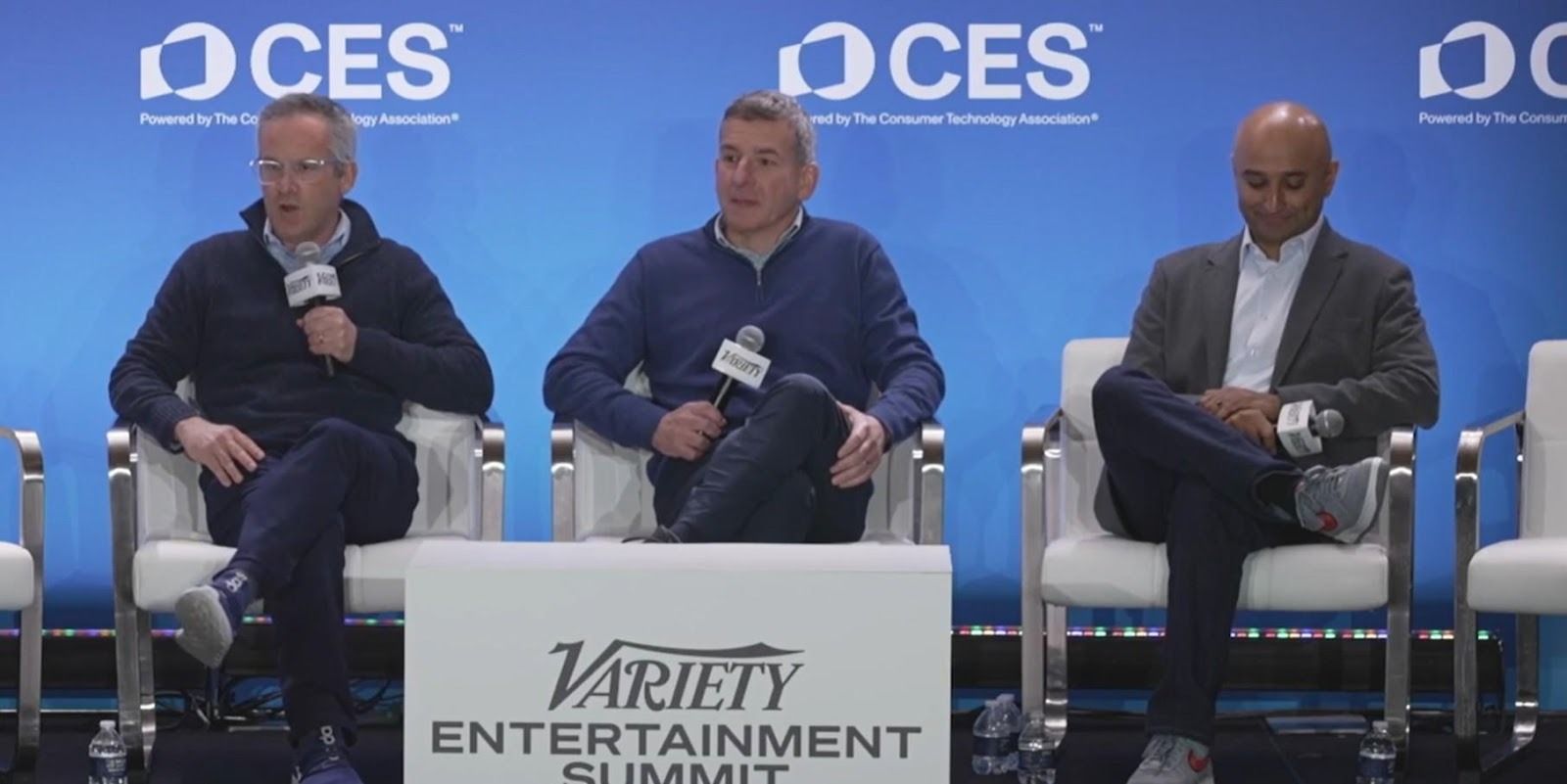
▲ 'How Smarter Partnerships Are Reshaping Media' session at CES 2026 Variety Entertainment Summit. From left: Andrew Wallenstein, Chief Media Analyst at Luminate Intelligence (moderator); Ian Colley, CMO of The Trade Desk; Khurrum Malik, CMO of Walmart Connect
"Google or Meta says 'we helped you sell a million toothbrushes this month,' but the business says, 'Well, I only sold half a million toothbrushes this month.'" This uncomfortable truth about the digital advertising industry was laid bare on the CES 2026 stage. At a session titled 'How Smarter Partnerships Are Reshaping Media,' advertising technology platform The Trade Desk and Walmart Connect—the advertising arm of America's largest retailer—presented a blueprint for redefining the digital advertising industry's core challenges: Measurement and Transparency, powered by retail data.
The session was moderated by Andrew Wallenstein, Chief Media Analyst at Luminate Intelligence, with Ian Colley, CMO of The Trade Desk, and Khurrum Malik, CMO of Walmart Connect, taking the stage.
The partnership, as both companies explained, operates on two axes. The first is Technology. Walmart's DSP (Demand Side Platform) runs on top of The Trade Desk's platform. Simply put, The Trade Desk is a leader in 'programmatic advertising'—automatically finding and buying the most efficient ad placements on behalf of advertisers. Walmart has built its own retail data capabilities on top of this platform, enabling advertisers to purchase and manage ad impressions across the entire Walmart ecosystem.
The second axis—which both companies emphasized as more important—is a shared vision for the future of measurement. CMO Colley stressed: "We need to capture more clearly whether consumers actually purchased after ad spend, whether they moved to the consideration stage, so we can explain the actual impact of every advertising dollar." A shared conviction emerged: moving beyond traditional measurement methods to precisely understand the real results of ad spending.
CMO Malik emphasized Walmart's overwhelming scale: "150 million customers engage with Walmart on a weekly basis, both in store and digitally. Combined with a footprint of 4,600 stores, that's a massive opportunity for advertisers."
This partnership encapsulates why 'Retail Media'—which has grown rapidly in recent years—is becoming the new operating system for the advertising industry. Retailers' first-party purchase data can directly connect to advertising's ultimate destinations: sales, cart additions, and repeat purchases.
Walmart launched its DSP in partnership with The Trade Desk in 2021, emphasizing an "open, transparent, objective" platform. At this CES session, both companies made clear that their collaboration isn't just a technical partnership—it's an alliance aimed at fundamental innovation in advertising measurement systems.
The sharpest critique in the discussion was the 'mismatch between behavior (consumption) and budget (ad spend).' CMO Colley pointed out the structural contradiction in the digital advertising market:
"Consider where consumers spend about two-thirds of their digital time. It's on the open internet's premium content—streaming TV, movies, digital audio (which alone is three hours a day for the average American), journalism, live sports. They spend only about one-third of their time on big tech walled garden platforms. But two-thirds of ad spend still goes to those big tech platforms. It's completely inverted."
A 'Walled Garden' refers to closed ecosystems like Google and Meta that only share data within their own platforms, blocking external access. Conversely, the 'Open Internet' means the diverse content spaces outside these big tech platforms—streaming services like Netflix, podcasts, news sites, sports broadcasts, and more.
Why does this imbalance exist? CMO Colley explained: "When CMOs talk to their CFOs and CEOs, TV advertising and Google/Meta are easy to explain. They're simple and familiar. Even when they know where performance could be better, budgets flow to channels that are easier to get through internal reporting and approval. But actual performance is better on the open internet content where consumers are focused and engaged."
Both companies forecast 2026 as "the year the open internet will come together more strongly around Measurement." The direction: make the complex open internet as "simple to buy" as walled gardens, while proving performance more precisely.
CMO Colley also criticized big tech platforms' 'vanity metrics' and 'cheap reach' issues. "Big tech platforms say 'we helped you sell a million toothbrushes this month,' but the actual company says 'We only sold half a million.' This misalignment is happening more and more. This is the major reason why CMOs have the shortest tenure in the C-suite."
While the digital advertising industry has long relied on 'proxies'—clicks, views, reach—retail data has the power to converge those proxies into actual transactions. This is why the Walmart-Trade Desk alliance reads not as a simple partnership, but as one front in the battle for measurement supremacy.
CMO Colley used a soccer analogy to explain the problem with how ad effectiveness is measured:
"Erling Haaland of Manchester City scored 50 goals this calendar year. Kylian Mbappé of Real Madrid also scored 50 goals. If you only paid the person who touches the ball before it goes in, you'd have a pretty inefficient soccer team. Haaland doesn't really touch the ball that much, except to score. All the touches come from players like Rodri and Phil Foden—all the way from goalkeeper, through defense, through midfield. You need to understand the whole process that influences the goal."
The same applies to advertising. "A major car maker famously said it takes about 20 years to create a customer for that brand. You're showing that person ads for 20 years before they finally click 'buy my Mercedes' or 'buy Subaru.' If you're giving credit just for that last click, you're ignoring 20 years of brand building."
This is the concept of 'Multi-Touch Attribution'—a method that distributes credit across all advertisements a consumer encountered before making a purchase. It's emerging as an alternative to the traditional 'last-click' attribution model.
The keyword Walmart Connect repeatedly emphasized during the session was 'Incrementality.' Simply put: "Is the new channel in my media mix actually creating additional sales (lift), rather than just 'poaching' purchases that would have happened anyway?"
CMO Malik explained: "This question is being asked relentlessly—not just by CMOs, but by CSOs (Chief Sales Officers) and at the board level. We speak not only with CMOs who control national media budgets, but also with Chief Sales Officers who have shopper marketing budgets. The C-suite and board are increasingly demanding: maximize the impact of allocated dollars. Whenever you hear 'cheap reach,' it should immediately turn into 'how am I creating value?'"
Both companies explained "what the partnership actually changes" through specific brand case studies.
Fruit of the Loom was looking to reach new buyers for their products as part of a back-to-school program. Using the Walmart DSP, they achieved 5x return on ad spend over expectations. CMO Colley explained: "They had visibility into buyer behavior in a way they had never had before."
Planters offers an even more interesting case. To expand to new customers, they engaged not only with Walmart Connect's on-site media, but also off-site advertising through The Trade Desk—leveraging Walmart shopper data to find "people likely to buy nuts" on external websites. The result: 23% incremental sales.
This demonstrates that retail media is evolving beyond "advertising only within the retailer" to extending 'shopper data' across the open web, CTV, and streaming. Walmart Connect publicly states that its off-site media is provided "through The Trade Desk."
Walmart presented specific research figures during the session.
Citing an iSpot study, they shared that combining Walmart Connect CTV (Connected TV) with open internet CTV buying can achieve up to 55% incremental reach compared to linear TV alone. CMO Malik explained: "Why is that important? Because advertisers care about reach, resonance, reaction, or sale—we have the opportunity to provide both brand solutions and performance solutions."
They also revealed research conducted with third party Circana comparing Walmart Connect media to social media norms. The result: Walmart Connect outperformed digital media benchmarks by 2.5x on ROAS.
There was also a new announcement in search advertising. Walmart Connect announced the general availability (GA) of 'Search Incrementality' this week. In the food category, they revealed data showing $2.30 in incremental sales for every dollar invested by advertisers. Put $1 in, get $2.30 'additional' out.
The most repeated phrase in the session was 'Closed-Loop Measurement.' Simply put, it's connecting 'ad exposure → purchase' so marketers can track and verify actual consumer behavior from start to finish—confirming whether people who saw the ad actually bought.
CMO Colley explained: "For the first time, through the partnership with Walmart, we were able to show marketers the impact of campaign dollars on actual consumer purchases, on consumer intent."
CMO Malik put it more simply: "It's the gold standard. To simplify it even more: you put $1 in, did it spark a sale? How do you measure that? For years, there have only been proxies for that. But we have a 4,600 store footprint. We have 150 million people we serve every week. We have the opportunity to tie media impressions to sales."
Previously, we could only know if someone clicked an ad or how many people saw it. But connecting offline store data like Walmart's enables tracking the entire journey: ad → interest → store visit → purchase.
The Trade Desk positioned objectivity as the core value of the 'open internet.' CMO Colley explained:
"The Trade Desk doesn't own any inventory. We don't have any owned and operated inventory. Any big tech platform is always going to prioritize their own ad impressions—they would be fiscally irresponsible not to. If you want search, you go to Google. If you want social, you go to Meta. If you want the open internet, hopefully you're more likely to come to a platform like The Trade Desk or the Walmart DSP, both of which don't have any skin in the game as to which impression is more important. We will help you select the one that is most valuable to your ad campaign to reach a specific audience at the right time, in the right channel, at the right price."
He also explained ongoing work to make the digital advertising supply chain as transparent as possible: "The open internet is somewhat complex. The supply of digital ads vastly exceeds demand, so there's incentive to obfuscate ad value. Through things like our Sincera acquisition, we're providing tools to help advertisers understand much more clearly the precision of exactly what they're bidding on to buy."
A question arose about whether this approach leads to higher CPMs (cost per thousand impressions). CMO Malik responded with a stock market analogy:
"My son has been studying the stock market. He says, 'Dad, this stock looks good, it's cheap, the price is low.' I told him, 'Well, it really depends on what your time horizon is, your risk tolerance, and your investment objectives.' I think that's really important in media as well. What is the objective the CMO wants to accomplish? Can that objective be accomplished with a ROAS threshold the CFO needs? The price of media and rising CPMs is a second-order thing."
The key point: the center of decision-making isn't "whether CPMs go up or down," but whether advertiser objectives (ROAS/incremental sales/new customers) are met. If return on investment exceeds thresholds, CPM increases aren't an issue.
An intriguing point was how the discussion extended beyond traditional ad surfaces to 'Agentic Shopping.' When asked about future plans, both CMOs cited AI as the key keyword.
CMO Malik introduced Walmart's generative AI shopping assistant 'Sparky': "We're experimenting with agentic shopping experiences. We launched Sparky last year and tested ad surfaces within Sparky. When we surveyed customers using agentic shopping experiences with our Sparky agent, 81% want to use it for discovery, and they use that to inform a buy."
'Agentic AI' refers to AI that doesn't just answer questions but performs actual actions (searching, comparing, purchasing) on behalf of users. As scenarios grow where customers explore and decide on products through conversations with AI agents rather than search boxes, brands must think not just about "where to place ads" but "how to enter the agent's recommendation logic, data, and measurement systems."
CMO Colley evaluated Walmart's agentic approach as "a great case study of how agentic should work": "We've heard a lot this week about agentic and AI application, but it's only as good as the data platform it's based on. As the world's largest retailer, Walmart has an incredibly robust and refined data platform upon which to build agentic models. There's a lot of discussion in the industry around agentic, but very few platforms have that comprehensive, refined data platform that can integrate first and third-party data, that can understand 20 million ad impressions a second. If you don't have that scale and rigor in your data system, you'll optimize to incomplete data and perhaps not get optimal results."
This trend aligns with Walmart's 2025 announcement of its OpenAI partnership, pursuing an 'AI-first shopping experience.'
CMO Colley forecast 2026 as "a year we'll see tremendous innovation in measurement."
"Traditional measurement models like MMM (Marketing Mix Modeling) and Nielsen ratings will continue to exist but will evolve. We now have much better insight into actual action as a result of ad spend. Thanks to folks like Walmart liberating retail data in different ways, there's much opportunity to bring new kinds of innovation around measurement."
He explained that all markets that digitize—like the stock market—see increased 'data symmetry' over time. The same phenomenon is occurring in digital advertising as companies like Walmart open retail data in various ways.
In closing, both CMOs delivered direct messages to advertisers.
CMO Malik: "Have a higher standard for your media partners. Ask for incrementality. Ask for impact on sales. Focus on the prize, and you'll do great things."
CMO Colley: "What Walmart started three or four years ago is opening marketers' eyes to what they can do from a measurement perspective. As marketers increasingly recognize the limitations and risks of relying on cheap reach, we have to do even more to showcase the work we're doing with partners like Walmart to bring that measurement efficacy to life."
First, retail data isn't 'new targeting'—it's a 'new accounting standard.' The language of performance is shifting from clicks to incremental sales, new customers, and offline linkage. Walmart's closed-loop translates "the path from ad spend to sales" into CFO language.
Second, a re-evaluation of the open internet: premium content × measurement. The proposition that money should follow where people spend time (streaming, audio, journalism, sports) isn't new. What's new is that the mechanism enabling this is now retail media's data and measurement infrastructure.
Third, the emergence of 'agentic surfaces': competing not for ad products but for 'recommendation ecosystems.' As agents like Sparky grow, brands must prepare not search keyword optimization, but the data agents trust (reviews/inventory/price/delivery) and performance measurement as a package.
The message from this CES discussion is clear. Digital advertising is no longer a game of 'cheap reach'—it's moving to a game of proving precisely measurable incremental growth. And the key to that transition isn't the 'walled gardens vs. open internet' framework, but measurement innovation that liberates purchase data and connects it across the open internet. The Trade Desk and Walmart Connect partnership stands at the forefront of that innovation.
━━━━━━━━━━━━━━━━━━━━━━━━━━━━━━
📌 Key Terms Explained
• Open Internet: The internet space outside major platforms like Google and Meta. Includes Netflix, news sites, podcasts, sports broadcasts, etc.
• Walled Garden: Closed ecosystems like Google and Meta that only share data within their own platforms
• Retail Media: Advertising business leveraging retailers' customer data and store/site inventory. Amazon and Walmart are prime examples
• DSP (Demand Side Platform): A system enabling advertisers to automatically purchase ad inventory across multiple media from one place
• Closed-Loop Measurement: A method tracking from ad exposure to actual purchase to directly verify effectiveness. Called the 'golden standard'
• Incrementality: Sales that occurred 'additionally' because of advertising—distinguishing from sales that would have happened anyway
• Multi-Touch Attribution: A method distributing credit across multiple ads a consumer encountered before purchase. An alternative to last-click attribution
• Agentic AI: AI that doesn't just answer questions but performs actual actions (searching, comparing, purchasing) on behalf of users
• CTV (Connected TV): Internet-connected TV. Content viewed through smart TVs or streaming devices (Apple TV, Roku, etc.)
• ROAS (Return on Ad Spend): Revenue generated per dollar spent on advertising. A key metric showing ad efficiency
• CPM (Cost Per Mille): Cost per 1,000 ad impressions. A standard for comparing ad prices
• Proxy: Indirect metrics measured instead of actual performance (sales). Clicks, views, reach, etc.





![[보고서]전통 언론사의 크리에이터 전략 대전환](https://cdn.media.bluedot.so/bluedot.kentertechhub/2026/02/0nwc9z_202602100212.png)