

Comcast Spinoff Versant Eyes SportsEngine Sale as $12B Youth Sports Tech Market Enters Consolidation Phase
Move reflects broader retreat from non-core holdings as traditional media companies restructure for streaming era, with youth sports platform valued at $150-200 million
Versant, Comcast's soon-to-be-spun-off cable channel entity, is exploring the sale of youth sports management app SportsEngine, according to The Information. This move signals that the $12 billion youth sports technology market—which has exploded since the pandemic—is entering a definitive consolidation phase, while also illustrating how traditional cable operators are divesting non-core digital assets as they navigate survival strategies in the streaming era.
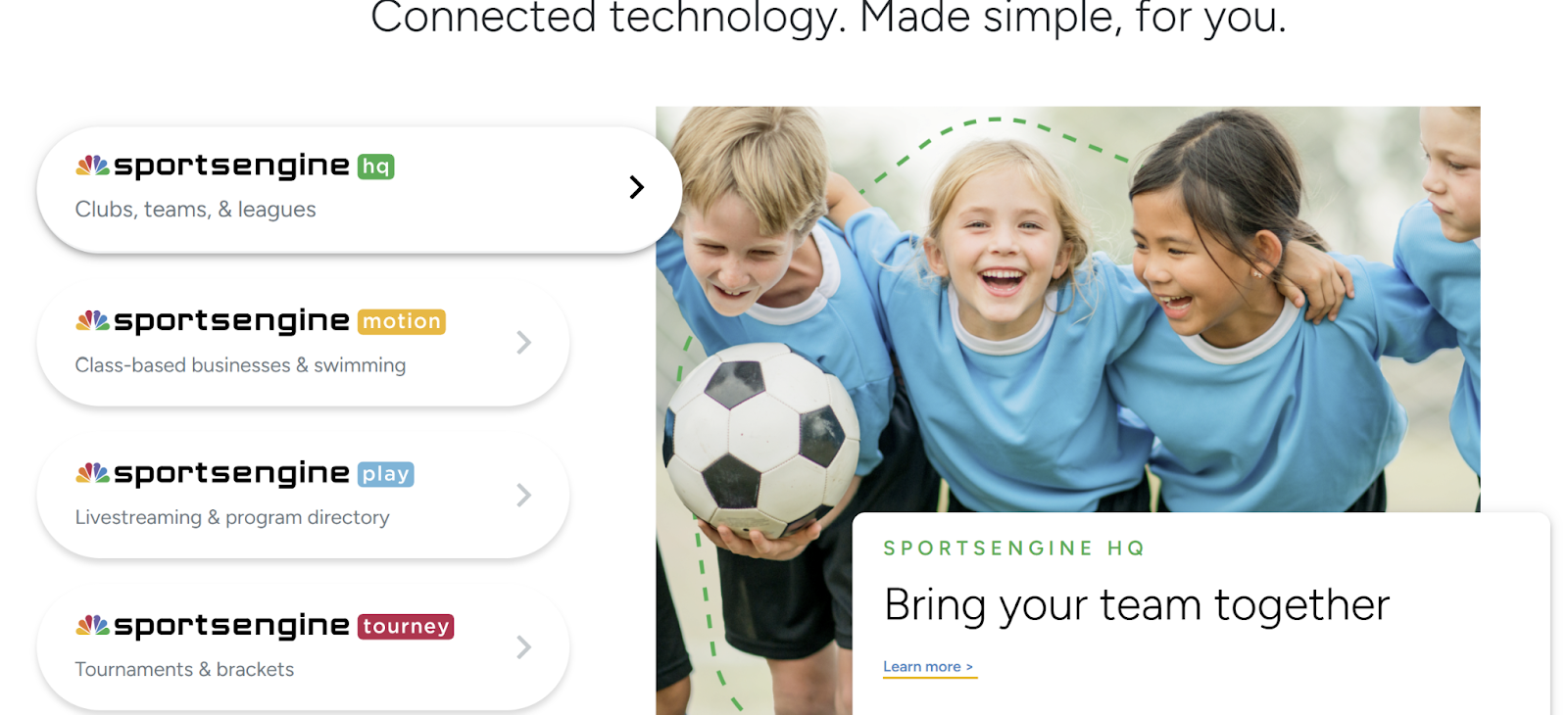
SportsEngine is a platform that handles communication and scheduling for youth athletic activities across sports including ice hockey, soccer, and volleyball. According to industry sources, Versant has not set a sale price. Sports industry insiders estimate SportsEngine's current value between $150 million and $200 million. Founded in 2008, the company now serves over 16 million athletes, 1.2 million teams, and 45,000 sports organizations using its software. It provides comprehensive tools including website creation for sports organizations, online registration and payment, team/player roster management, scheduling, tournament operations, and mobile communication apps.
Cable TV Decline and Restructuring: Behind Comcast's Spinoff
Comcast's Versant spinoff symbolically demonstrates the structural crisis facing the traditional cable TV industry. With the explosive rise of streaming services like Netflix, Disney+, and HBO Max, U.S. cable TV subscriptions are declining by millions annually, while advertising revenue rapidly migrates to digital platforms like YouTube and Meta.
In November 2024, Comcast announced it would separate cable news channels including CNBC, MSNBC, and USA Network, along with digital assets like SportsEngine and Rotten Tomatoes, into a standalone company called Versant to respond to these market shifts. The transaction is expected to complete in early 2026.
This was evaluated as a strategic decision for Comcast to focus on higher-growth potential businesses including the Peacock streaming service, NBC broadcast network, and Universal Studios. The cable channels being separated into Versant are still cash-generative but considered a business model without a future.
The sale exploration for SportsEngine is interpreted as Versant's move to restructure its asset portfolio, dispose of non-core digital assets, and optimize its financial structure before and after the spinoff completion. In a business structure centered on cable news channels, the youth sports management platform appears to have limited strategic synergy.
Versant is currently only exploring the sale of the SportsEngine platform, while entertainment-related digital assets like Rotten Tomatoes are excluded from potential divestiture. This selective sale strategy demonstrates that Versant prioritizes practical synergies with its cable network business and business model priorities.
Rotten Tomatoes, a film and TV content review aggregation service, is an asset with direct relevance to the entertainment content industry, enabling various forms of business linkages with cable networks including content marketing, viewer data analysis, and advertiser resources. In contrast, SportsEngine is B2B software specialized in managing organizations across various sports like ice hockey, baseball, and volleyball, with fundamentally limited connection to media content production or distribution. It's assessed as having weak strategic links to Versant's cable news channel-centered business model.
Against this backdrop, if Versant adopts a strategy of maximizing cash from the remaining value of its cable business and gradually downsizing operations post-spinoff, software platforms like SportsEngine could become burdensome due to ongoing technology investment needs and competitive response requirements. Accordingly, Versant is prioritizing the sale of only B2B solution-centered business units with minimal synergy to media content assets, while maintaining retention strategies for core entertainment and marketing platforms, thereby enhancing business model efficiency and strategic focus.
SportsEngine's Journey: From NBC's Strategic Acquisition to Sale Consideration
Founded in 2008, SportsEngine achieved a $133 million valuation in its Series D funding round in 2014, according to PitchBook data. At that time, investors focused on the digital transformation and growth potential of the youth sports market.
In 2016, NBC Sports Group, under Comcast, acquired SportsEngine for an undisclosed amount. Through this acquisition, NBC Sports pursued a strategy to strengthen vertical integration of the sports content ecosystem and secure direct touchpoints with data and communities in the youth sports market. Building on its strengths in premium sports broadcasting rights including the Olympics and NFL, NBC focused on using SportsEngine to capture future sports fan bases early, establish long-term relationship foundations with parents and athletes, and ultimately create a database for content and advertising businesses. NBC also promoted plans to expand its media platform footprint by streaming local youth sports league game footage.
However, nearly ten years after the acquisition, SportsEngine's enterprise value remains estimated at $150-200 million, representing minimal appreciation from its 2014 valuation. This suggests that SportsEngine's growth following NBC's acquisition was limited compared to the overall market expansion trajectory. Industry observers point to the possibility that strategic investment in SportsEngine and synergy creation with NBC integration were insufficient, compounded by the decline of the cable TV business model.
The $12 Billion Youth Sports Technology Market Explosion
The youth sports technology industry has grown to approximately $12 billion post-pandemic, attracting significant attention. This explosive expansion stems from several structural changes.
First, during the COVID-19 pandemic, restrictions on in-person sports activities triggered surging demand for digital management tools. As all operational stages—registration, scheduling, communication, payment—transitioned online, software solutions became essential infrastructure. Subsequently, parents, coaches, and organization administrators have all experienced efficiency and convenience, increasing dependence on digital tools.
Second, commercialization of the U.S. youth sports market is rapidly progressing. Moving beyond simple after-school hobbies to become critical pathways for college admission and athletic scholarships, parental investment scale and forms are diversifying. Spending has significantly increased for professional coaching, travel competitions, video analysis, and personal profile management, with corresponding surges in demand for related technology solutions.
Third, aggressive capital injection from private equity and venture capital is driving industry-wide growth. Recurring subscription-based stable revenue structures and high customer switching costs have made the youth sports software market an attractive sector for investors.
Boston Consulting Group (BCG) estimates that of the $12 billion market, management software segments including game scheduling, communication, facility permits, and registration payments represent approximately $10 billion in value. The remaining $2 billion centers on various ancillary services including video analysis, player evaluation, and recruiting platforms.
Industry-wide, the convergence of digital transformation, commercialization, and investment expansion is establishing the youth sports technology industry as an essential growth engine beyond simple infrastructure.
Market Consolidation Signals: Investment Surge and Platform Expansion
The current youth sports technology market is a highly fragmented structure with hundreds of competing startups. The absence of a clear market leader is paradoxically interpreted as a signal that large-scale consolidation is imminent.
A representative case occurred last week when competitor Fastbreak.ai closed a $40 million Series A funding round led by venture capital firms Greycroft and GTMfund, with participation from the NBA and NHL.
Particularly noteworthy is the direct investment by professional sports leagues NBA and NHL. This demonstrates that youth sports technology is recognized as core infrastructure beyond simple management tools—for cultivating future fans, player discovery pipelines, and building grassroots sports ecosystems. Professional leagues are pursuing long-term strategies to establish digitally connected fan relationships from youth, secure promising player data early, and strengthen ties with local sports communities.
Meanwhile, companies like Hudl, which started as player highlight video and game streaming platforms, are actively expanding into scheduling, team communication, and registration management functions, evolving into comprehensive solution providers.
This platform integration trend signifies that "all-in-one" solutions are becoming the core of competitiveness in the market. Parents, coaches, and league administrators prefer integrated platforms that can handle everything from registration to scheduling, communication, payment, and video analysis, rather than using multiple separate tools. This naturally leads to market consolidation through M&A (mergers and acquisitions).
SportsEngine's Current Position and Strategic Value
SportsEngine supplies management software to over 45,000 organizations across various sports including ice hockey, volleyball, baseball, and lacrosse. It has secured considerable trust and market position by establishing official partnerships with national governing bodies (such as USA Swimming).
This extensive customer base of 45,000 organizations is evaluated as SportsEngine's core asset. Each organization connects with an average of dozens to hundreds of parents, coaches, and athletes, with end users totaling millions. Due to youth sports characteristics, new age groups and new athletes/parents are continuously onboarded annually, automatically refreshing the platform's user base.
Partnerships with national governing bodies create powerful network effects while raising entry barriers. For example, when USA Swimming adopts SportsEngine as its official platform, all regional leagues and clubs under its umbrella operate on the same integrated system, maximizing network effects.
However, SportsEngine's recent enterprise valuation of $150-200 million represents only modest appreciation from the 2014 valuation of $133 million. Compared to the global youth sports technology market's explosive growth to $12 billion during the same period, SportsEngine appears not to have fully capitalized on market growth benefits. Industry assessments suggest that intense competition, profitability pressures, and changes including M&A and new technology development have all impacted both profitability and growth rates.
In summary, SportsEngine possesses strengths including a massive customer base, organizational network effects, and excellent brand trust, but has shown relatively limited growth within the market's overall explosive expansion.
Traditional Media's Digital Asset Restructuring: The Broader Trend
Ultimately, SportsEngine's sale consideration is an extension of the large-scale portfolio restructuring and reorganization trend appearing across the U.S. media industry. As cable TV and traditional broadcasting markets face stagnation, major media companies including Disney, Warner Bros. Discovery, and Paramount Global are aggressively pursuing streaming-centered structural transformation, cost reduction, and divestiture of non-core assets. The strategy is to divest B2B software with limited direct synergy to media and concentrate on core businesses including content production and distribution.
These changes are accelerating M&A trends within the industry, with platform and technology company acquisitions and network structure integration accelerating. Companies like SportsEngine, with large organizational customer bases and platform infrastructure, are assessed to potentially realize growth potential more rapidly with appropriate management participation and investment attraction. Indeed, if platform integration and expansion strategies based on 45,000 organizations are successfully executed, SportsEngine's market value could rise significantly above current levels.
Ultimately, within the media industry's restructuring currents, the growth potential and efficiency of the youth sports technology market, and the future competitiveness of platforms with large-scale customer infrastructure, are expected to become increasingly important.
컴캐스트 스핀오프 버산트, 청소년 스포츠앱 매각 검토...120억弗 시장 통합 본격화
컴캐스트(Comcast)의 케이블 채널 스핀오프 예정 회사인 버산트(Versant)가 청소년 스포츠 관리 앱 스포츠엔진(SportsEngine) 매각을 검토하고 있다고 디인포메이션이 보도했다. 이는 팬데믹 이후 120억 달러 규모로 급성장한 청소년 스포츠 기술 시장이 본격적인 통합 국면에 접어들고 있다는 신호이자, 전통 케이블 사업자들이 스트리밍 시대에 비핵심 디지털 자산을 정리하며 생존 전략을 모색하고 있음을 보여주는 최근 사례다.
스포츠엔진은 아이스하키, 축구, 배구 등 다양한 종목에서 청소년 운동 활동의 커뮤니케이션과 일정 관리를 담당하는 플랫폼이다. 업계에 따르면 버산트(Versant)는 매각 가격이 정해지지 않은 것으로 알려졌다. 스포츠 업계는 현재 스포츠엔진의 가치를 1억 5,000만 달러에서 2억 달러 사이로 추정했다. 이 회사는 2008년에 설립돼 1600만 명 이상의 선수, 120만 개 팀, 45,000개 이상의 스포츠 조직이 SportsEngine의 소프트웨어를 사용하고 있다. 스포츠 조직을 위한 웹사이트 제작, 온라인 참가 등록 및 결제, 팀/선수 명단 관리, 일정 관리, 대회 운영, 모바일 커뮤니케이션 앱 등 종합적인 도구를 제공한다.
케이블TV 쇠퇴와 구조조정: 컴캐스트 스핀오프의 배경
컴캐스트의 버산트 스핀오프는 전통 케이블TV 산업이 직면한 구조적 위기를 상징적으로 보여준다. 넷플릭스(Netflix), 디즈니+(Disney+), HBO 맥스(Max) 등 스트리밍 서비스의 급부상으로 미국 케이블TV 가입자 수는 매년 수백만 명씩 감소하고 있으며, 광고 수익도 유튜브(YouTube), 메타(Meta) 등 디지털 플랫폼으로 급속히 이동하고 있다.
지난 2024년 11월 컴캐스트는 이러한 시장 변화에 대응하기 위해 CNBC, MSNBC, USA 네트워크(USA Network) 등 케이블 뉴스 채널과 함께 스포츠엔진, 로튼 토마토(Rotten Tomatoes) 같은 디지털 자산을 버산트라는 별도 회사로 분리하겠다고 발표했다. 이 거래는 2026년 초 완료된다.