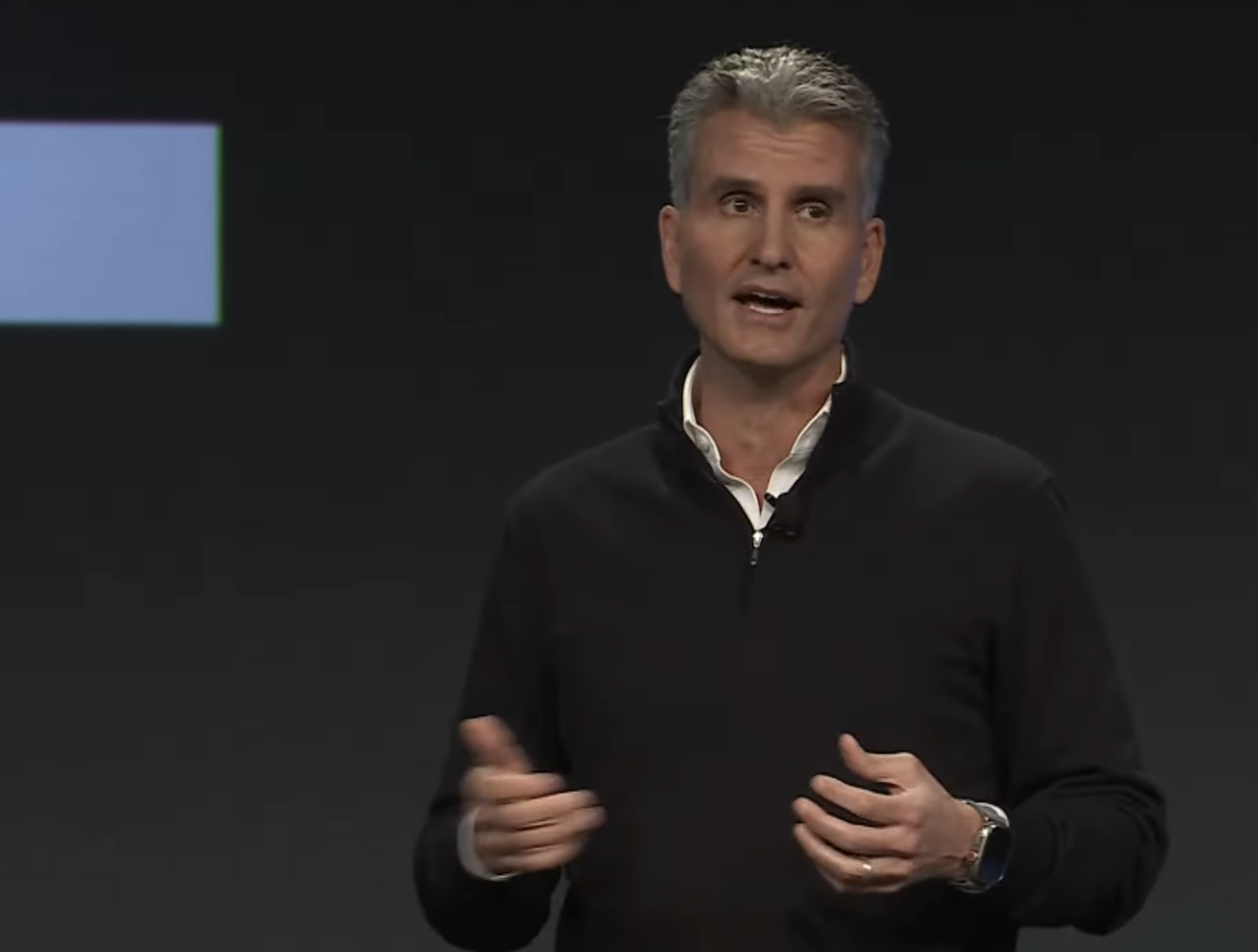
D’Amaro’s first call signals a shift from subscription maximization to lifetime-value integration
Disney is rebuilding its streaming business from a standalone subscription product into a single integrated layer where IP, theme parks, games, advertising, licensing and sports betting all converge on one screen. The company calls it a ‘digital centerpiece.’
On May 6, new CEO Josh D’Amaro used his first earnings call to deliver Q2 fiscal 2026 revenue of $25.2 billion (+7% year over year), operating income of $4.6 billion (+4%) and adjusted EPS of $1.57 — all ahead of consensus. The stock jumped more than 8% on the print. The strategic spine he laid out has three vertebrae: continued investment in IP that breaks through, integration across consumer touchpoints, and the use of technology including AI to drive monetization and efficiency. It is the second vertebra — the Disney+ super-app construct — that defines the D’Amaro era.

The structural pressure behind this pivot is the same one that has reshaped U.S. media for two years. Cord-cutting has chewed through ESPN and ABC retransmission, advertising and bundling economics, and Disney has answered by launching its own ESPN direct-to-consumer service and expanding wholesale distribution agreements.

Streamflation — the synchronized round of price hikes across Disney+, Hulu, Netflix, Max and Paramount+ — has lifted ARPU but raised both churn risk and the temptation for subscribers to down-sell themselves into ad-supported tiers. FAST channels, YouTube and TikTok have absorbed viewing minutes that Disney needs its IP to occupy. Moving from a Disney+-first posture to a Disney+-as-hub posture is the operational response. The contest is no longer about extracting more ARPU per title; it is about compounding lifetime value per customer.
D’Amaro paired this story with capital-allocation commitments: roughly 12% EPS growth in fiscal 2026, at least $8 billion in share repurchases, and another year of double-digit EPS growth in fiscal 2027. The call’s center of gravity was less this quarter than the next two years.
1. A Different Register on the Call
D’Amaro’s debut as CEO sounded structurally different from Bob Iger’s tenure. Slate reveals and theme-park surprises were largely absent. New entries in the Hocus Pocus and Planet of the Apes franchises were announced separately the same day but barely surfaced on the call. The vocabulary instead was lifetime value, near-term streaming optimization, disciplined capital allocation and workforce redeployment — the language of operations rather than the language of slate.
Wall Street analysts no longer asked live questions. Pre-submitted questions were curated and read aloud by the head of investor relations, a format borrowed from Netflix and Spotify. The change reads as procedural but is not cosmetic. Combined with Disney’s decision to stop reporting streaming subscriber counts as a headline metric, it narrows the surface area through which outside analysts can independently evaluate the company. The benefit to Disney is fewer after-hours stock swings tied to a single data point. The cost is a thinner live discourse with the Street.
In the same quarter, Disney cut roughly 1,000 jobs across marketing and publicity, Marvel, Disney Home Entertainment and certain specialty divisions. The company described the move as building a more technologically-enabled workforce. The opening signature of the D’Amaro era reads less as a growth narrative than as a restructuring exercise. D’Amaro also absorbed two external shocks during his first week in the role: the collapse of the $1 billion OpenAI partnership and a major round of layoffs at Epic Games, a $1.5 billion Disney investment. The careful tone of the first call cannot be read separately from that context.

2. The Super-App: Why Data Infrastructure Is the Real Asset
CFO Hugh Johnston framed the architecture in a single sentence on the call: theme parks remain the physical center of the company, Disney+ becomes the digital center, and the two will be increasingly connected. Disney users already log in with a single My Disney identity across Hulu, ESPN, Disneyland tickets, merchandise purchases and cruise bookings. The super-app project pulls these distributed touchpoints into Disney+. Content recommendations, park bookings, dining and merchandise, cruise reservations and ancillary services, and ESPN’s sports-betting integrations through linked DraftKings accounts are all designed to route through one interface.
2-1. It Is a Data Project, Not a UI Project
The deeper play here is data integration rather than UI consolidation. When park entry timestamps, Disney+ viewing histories, merchandise purchases and cruise itineraries sit on a single user identifier, the company can model lifetime value across subscription, advertising, licensing, merchandising and experiences as one ledger. That is the operational meaning of D’Amaro’s repeated phrase ‘long-term shareholder value.’ The basis on which Disney can simultaneously commit to 12% EPS growth and an $8 billion buyback rests on this multi-layered per-customer monetization architecture.
Early personalization signals are already in the numbers. Disney reported that a revamped Disney+ user interface and improved recommendations lifted engagement metrics. Advertising revenue grew roughly 5% on higher impressions; subscription and affiliate revenue grew 14% on price increases. The two streams moving together — rather than one cannibalizing the other — is itself a variable worth tracking into the next quarter.
2-2. Epic Games: Turning Game Screens Into Another Disney Surface
In gaming, Disney’s $1.5 billion stake in Epic Games extends the super-app perimeter. The co-developed universe spanning Disney, Pixar, Marvel, Star Wars and Avatar IP is built around a play-watch-shop-engage motion inside a single environment. Disney disclosed that its Simpsons collaboration in Fortnite, launched last November, drew more than 80 million unique players and over 780 million hours played. Disney conceded that games are not yet a meaningful revenue line. The relevance of those engagement numbers is positional: Fortnite is now one of the largest screens on which Disney IP appears.
Epic’s March announcement of $500 million in cost cuts and over 1,000 layoffs cast a shadow over this construct. Both sides have reaffirmed that the universe vision is unchanged. The question worth tracking over the next 12 to 24 months is how Disney positions a new KPI — IP time-share inside games — alongside its video and parks revenue lines.
2-3. The Linear Networks Will Not Be Spun Off
Johnston explicitly closed the door on a linear-network spinoff. He called such a move highly complex and unlikely to add incremental shareholder value, framing ABC and the Disney Channels as brands with studios attached. That decision runs directly counter to the moves underway at the other two large U.S. media companies. Warner Bros. Discovery has begun separating its cable assets. Comcast has already spun its cable networks into Versant. Paramount, post Skydance combination, is pursuing a further merger with Warner Bros.
Disney’s logic shows through between the lines. ESPN and ABC sit inside the super-app perimeter, which preserves advertising, retransmission and sports-rights leverage under one roof, alongside bundle-pricing authority. The January close of the NFL Network acquisition and the inflection point at which ESPN’s direct subscriber revenue began to exceed its linear subscriber declines provide the operational underpinning for the decision. The company added that it always evaluates strategic alternatives for non-core assets, but for this quarter at least, the spin card is not on the table.
3. AI Moves from Slogan to Operating Line
Disney named five domains for AI deployment on this call: content creation and production, monetization, workforce productivity, guest and consumer experiences, and enterprise operations. The specifics were more concrete than the slogan suggests. The CFO described using AI to model required staffing levels at theme parks by day and time band. The company plans to sharpen recommendations and ad targeting, lift content output through more efficient production pipelines, and automate vacation booking and trip-planning flows.
3-1. The OpenAI Collapse and the Space It Left
The collapse of Disney’s $1 billion licensing partnership with OpenAI in March is worth marking. The deal unraveled when OpenAI shut down its Sora video app. A separate set of agreements — under which Disney was to use OpenAI APIs to build new Disney+ products, tools and experiences, and to deploy ChatGPT internally for employees — also moved into reevaluation. Disney said it continues to explore commercial opportunities with OpenAI and others. Which vendors get chosen, in what configurations, becomes a variable the market will track every quarter from here on.
3-2. AI and the Layoff Sit in the Same Disclosure
The fact that the 1,000-person layoff and the AI rollout landed in the same quarter is the substantive observation. Disney framed it as redeploying both financial and human capital to areas with the highest expected returns. At Disney in 2026, AI adoption and cost restructuring travel together. The parallel cost-cutting at Epic Games sits inside the same structural pattern. When the CFO talks about fundamentally changing how work gets done, the reference covers both workflow automation and job redesign — a distinction that will shape the labor and HR conversation in media companies for years.
“We have been and will continue to look for these types of opportunities to redeploy capital, both financial and human, to areas we see driving the highest returns for shareholders.” — Hugh Johnston, CFO, Walt Disney Co.

4. Short-Form and Vertical Video: Owning Gen Alpha In-App
D’Amaro spent meaningful airtime on short-form. Disney launched Verts, a vertical video format inside Disney+, in March, and seeded the platform with creator-made videos around Predator and Lilo & Stitch. The ESPN app has its own vertical feed. D’Amaro fixed the first audience for this push: Gen Alpha, the cohort Disney needs to acquire as its next subscriber generation. He also emphasized making Disney IP land in native form on outside social platforms.
Disney is not moving alone here. Netflix rolled out a vertical feed inside its app. Paramount discussed a comparable initiative on its May 5 call. Fox and Holy Water have struck a micro-drama partnership. The shared logic among the majors is defensive: recapture the viewing minutes that have flowed to TikTok, YouTube Shorts and Instagram Reels by hosting short-form natively.
The economic case for in-app short-form is not yet settled. When an analyst on the call pressed Disney on whether the goal was engagement, marketing, or actually challenging TikTok, the question itself was the signal. What is settled is that mobile viewing of long-form continues to grow, which puts short-form into the category of investments studios cannot opt out of, regardless of whether the unit economics are fully understood.
5. Segment Results: Streaming and Experiences Lift, Sports Mixed
[Table 1] Disney Q2 FY2026 Segment Performance (Sources: Disney IR, The Wrap)
5-1. Entertainment: Streaming Has Overtaken Linear
Entertainment segment revenue rose 10% year over year to $11.7 billion, with operating income up 6% to $1.34 billion. The most visible shift inside the segment was the 88% jump in combined Disney+ and Hulu operating profit, which reached $582 million. Streaming revenue grew 13% to $5.5 billion; subscription and affiliate revenue grew 14% on price increases, and advertising revenue grew about 5% on higher impressions. The two streams moving together rather than against each other is the point.
Content sales grew 8% on the strength of ‘Avatar: Fire and Ash,’ ‘Zootopia 2’ and the new Pixar film ‘Hoppers.’ The Fubo capital combination added another 4% to segment revenue. Disney described this as the quarter in which streaming revenue overtook linear revenue, and projected the gap to widen. The fiscal 2026 streaming operating margin target of at least 10% was reaffirmed.
A structural change worth flagging is that Dana Walden, the new chief creative officer, now oversees games alongside studios, television and Disney+/Hulu. Bringing IP development, windowing and distribution decisions under one line shortens the decision cycle. D’Amaro framed the consolidation as optimizing every decision for the fan and for long-term brand strength.

5-2. Experiences: A Record Quarter on a ‘Capital-Light’ Footprint
Experiences delivered a record quarter. Revenue rose 7% to $9.49 billion and operating income rose 5% to $2.62 billion, driven by the new Disney Adventure cruise ship and the opening of World of Frozen. Domestic per-guest spending climbed. Global guest volume — domestic park attendance plus international parks plus cruise passenger days — rose 2%. Inside that, domestic park attendance slipped 1%, which Disney attributed to softer international visitation.
The capital strategy language Disney used most prominently was ‘capital-light model.’ A new cruise ship bound for Japan and a planned Abu Dhabi theme park resort were highlighted as examples. Both projects rely on local-partner joint ventures and licensing structures rather than direct capital deployment by Disney. Rather than the classic playbook of pushing both revenue and operating income into double-digit growth through self-funded expansion, the company has shifted weight toward expanding global footprint without adding the capital burden. Disney said the strategic logic for Abu Dhabi was unchanged despite macro uncertainty, and that elevated U.S. gasoline prices have not yet shown up in consumer behavior at the parks.
5-3. Sports: The NFL Network Acquisition Rewires the Circuit
Sports came in mixed. Revenue grew 2% to $4.61 billion, but operating income fell 5% to $652 million. Advertising revenue was pulled down by a smaller NBA slate in the quarter and the absence of last year’s 4 Nations Hockey comparison; higher rights fees and marketing costs pressed on operating income. At the same time, the January close of the NFL Network acquisition contributed 3 percentage points of the 6% growth in ESPN subscription and affiliate revenue. Disney broadened its relationship with Major League Baseball, added CW Sports into the ESPN app for Unlimited plan subscribers, and rolled out account linking between the ESPN app and DraftKings Sportsbook.
The single most important line in the segment is that ESPN’s direct subscriber revenue exceeded its linear subscriber decline for the first time. That is the inflection point of the sports streaming transition, and worth marking. Disney guided fiscal 2026 sports operating income to mid-single-digit growth when including the NFL transaction, but Q3 sports operating income is expected to fall about 14% on the timing of new rights agreements. Ad demand for Super Bowl LXI inventory in 2027 is described as strong.
On the upcoming NFL rights renegotiation, Disney said it has not yet engaged the league but is not dogmatic about the process. Read as positioning, that suggests Disney is unlikely to set a punitive entry price, while reserving discipline on the exit terms.
6. The Competitive Map: Who Is Splitting, Who Is Combining
This call does not stand alone. Within the same week, Paramount (May 5), Disney (May 6) and Warner Bros. Discovery (May 6) all reported, and each surfaced a different strategy.
Paramount has continued its aggressive cost-cutting path following the Skydance combination. Q1 revenue grew only 2%, but cost discipline — including roughly $150 million pulled from marketing — lifted profitability. CEO David Ellison reiterated a commitment to roughly 30 films a year on a combined basis if the proposed Warner Bros. transaction closes. The market remains skeptical on both financing and operational feasibility, and the role of Middle Eastern capital in bridging the financing gap surfaced in the call’s back-and-forth.
Warner Bros. Discovery reported that HBO Max had crossed 140 million global subscribers and completed its European rollout, but stopped publishing specific subscriber counts this quarter. The company is moving deeper into a studio-led footprint after separating its cable assets, and it is positioning the Harry Potter series — premiering Christmas 2026, with a second season already greenlit — as a decade-long platform anchor. The proposed merger partner, Paramount, was conspicuously not named on the call.
Disney’s ‘no spinoff’ posture announces its own color among these three routes. It is not the path of selling off modules, and not the path of expanding the footprint through a new combination. It is the path of binding existing assets together inside a single screen and lifting lifetime value off that consolidation.
7. The Coordinates for the Korean Media Industry
Four implications carry over to Korean broadcasters, OTT operators and media-tech players.
(1) Streaming is no longer a subscription-maximization game alone. Competitive economics require IP, experiences, games, advertising, licensing and commerce to settle on a single data infrastructure. Price hikes or content-spend escalation in isolation cannot close the LTV gap with global operators. The design question Korean terrestrials face is operationally specific: how to unify advertising, VOD, ticketing and event-participation data under one user identifier, and what LTV model to run on top of it. That architecture, more than headline subscriber counts, will determine the next five years. Disney’s ability to grow ad revenue and raise subscription prices in the same quarter rests on exactly this infrastructure.
(2) FAST, OTT and proprietary apps are not separate channels but different modes of the same screen. Disney’s decision to keep ESPN, ABC and the Disney Channels inside the super-app rather than spin them off speaks to Korean terrestrial broadcasters. In a structure where over-the-air programming, FAST channels, the proprietary OTT and the official YouTube channel are operated separately, the design challenge is to make the same IP available in different modes — live, curated FAST, VOD, short-form clips — while binding those exposures to one identifier. ATSC 3.0 data-broadcasting PoC work, which will be central at the upcoming KOBA panel, can become one layer of that data spine.
(3) Short-form and vertical video are not a marketing by-product but a primary surface. Disney’s decision to host a native vertical format inside Disney+ and to extend the same to the ESPN app is a defensive move to retain Gen Alpha attention. For Korean OTT and FAST operators, short-form deserves operational resourcing on par with main programming: dedicated scheduling, ad sales and a creator pipeline. The connective tissue between FAST scheduling, short-form clips and main-title viewing is becoming a discrete design problem. If a Korean operator cannot meet Gen Alpha inside its own app, that cohort will form its IP loyalty on outside platforms and carry it into adulthood.
(4) AI rewires content cost and workforce structure at the same time. Disney’s 1,000-person layoff and its five-domain AI rollout sit in the same quarterly disclosure. For Korean media companies, AI adoption planning has to be paired upfront with workforce restructuring planning — labor agreement design, internal reskilling commitments and transparent role-redesign maps. The gap between the speed of technology adoption and the speed of organizational adaptation will be one of the harder management problems Korean media firms confront over the next 12 to 24 months. The OpenAI partnership collapse also illustrates the risk of over-concentration in a single AI vendor. A multi-vendor portfolio reduces that exposure.
D’Amaro closed his framing by linking Walt Disney’s synchronized-sound bet in Steamboat Willie to the company’s present-day AI ambitions. Read narrowly, it is corporate origin-story rhetoric. Read more broadly, it gestures at where the entire content industry is heading: the answer to what media companies sell after streaming is no longer a service tier, but a bundle of experiences that converge on a single screen. The choice in front of Korean media — whether to own that screen on its own infrastructure or to rent it on top of someone else’s platform — is becoming more sharply visible by the quarter.
Sources
· The Wrap, “Disney Shares Rise Over 8% as Josh D’Amaro Touts Disney+ as ‘Digital Centerpiece’ in First Earnings Call” (May 6, 2026)
· The Hollywood Reporter, “Disney Plans More Short-Form Content, Investment In Original IP” (May 6, 2026)
· Ankler Agenda podcast, “Earnings Season Prediction Market,” May 7, 2026
· The Walt Disney Company, Q2 FY2026 Earnings Letter (May 6, 2026)