The mechanism behind a 148% engagement jump, the state of the FAST market in data, and the two people who built Carousel

AI-produced programming is, for the first time, proving out a cost structure that FAST has never been able to solve. As two conditions converged — compute costs falling far enough, and content quality finally meeting consumer expectations — “original production,” long the preserve of the large SVODs, is moving quickly into ad-supported territory.

Free ad-supported streaming TV (FAST) has hit a structural ceiling: viewing time keeps climbing while new-user growth stalls, and rising views no longer translate into rising ad revenue. With a large share of revenue accruing to the platforms, channel partners have steadily less to reinvest. Against that backdrop, AI-driven programming redefines the core cost variable of content production — the “denominator.” Fairground Entertainment’s Carousel is the first case to demonstrate the shift.
A Machine That Turns Catalogs Into Channels
Fairground Entertainment has announced the full market launch of Carousel, an AI-based programming platform. Carousel converts a streaming library into finished, broadcast-ready programming led by an avatar host, taking direct aim at the structural limits of how FAST channels are run today.
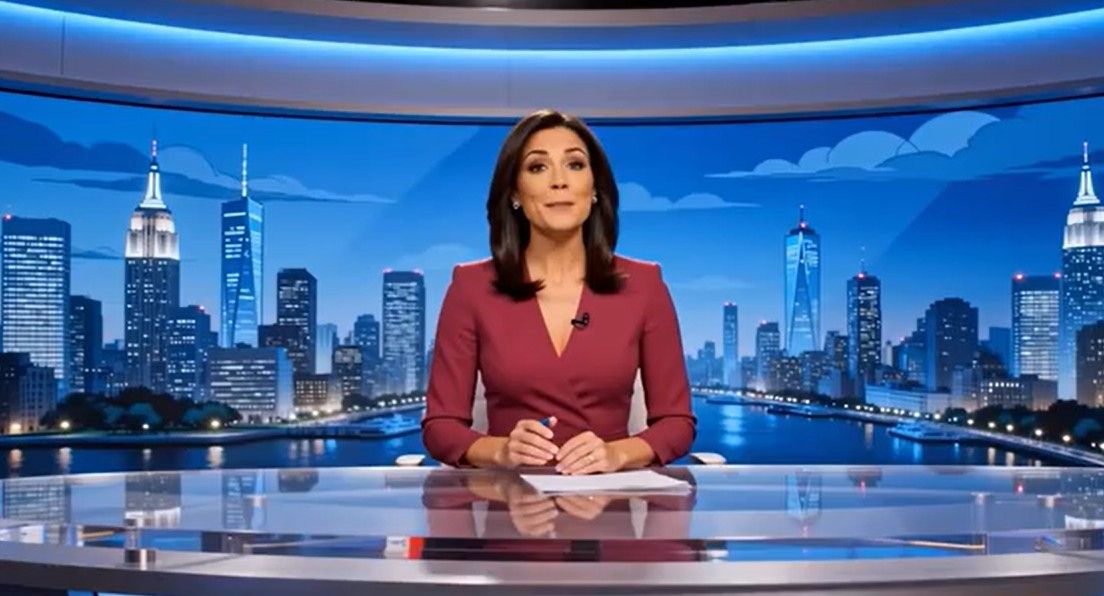
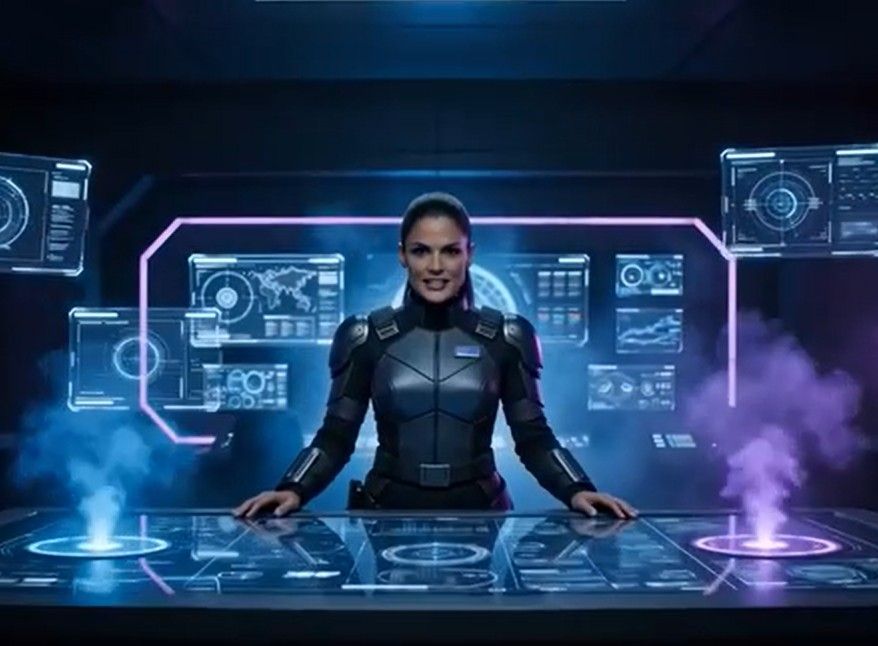
Feed the platform a content catalog and its metadata, and it automatically generates programming optimized for broadcast formats — countdowns, highlight reels, new-release showcases. A multilingual AI host presents from a virtual set, and outputs come in 90-second, 12-minute, and 22-minute lengths. Because the production pipeline is automated, it sharply reduces cost versus traditional broadcast production.
The initial proof of concept came through European FAST operator Love TV Channels, which distributes across Samsung TV Plus, Titan OS, and Amazon, among others. Using Carousel, the two co-produced Check Them Out, a show in which an AI host introduces streaming premieres in a countdown format. It became the flagship title of Love TV Channels’ Trailers channel.
The performance numbers are meaningful. Between September 2025 and April 2026, the channel’s average viewer engagement rose 148% — evidence that AI-driven programming can translate into real improvements in viewing behavior. On that basis, Love TV Channels ended the pilot phase and expanded the collaboration into a long-term strategic partnership. The case suggests AI can function as more than a production aid — as a tool capable of reshaping the scheduling structure of FAST channels themselves.
What 148% Reveals: FAST’s Unsolved Problem
Love TV Channels’ 148% engagement gain is more than a performance figure; it touches a structural limit FAST has long failed to resolve. The crux is the “connective tissue.”
FAST channel operators have been relatively successful at lowering content-licensing costs. But the elements that make a channel feel like a channel — host-led segments, countdown formats, curated intros, the grammar of broadcast — have remained blocked by high production costs. Designing a viewing experience beyond a bare playlist was never sustainable under the old cost structure.
A weekly 12-minute hosted show, for instance, costs at least tens of thousands of dollars per episode under traditional production. FAST CPMs, by contrast, sit at roughly $3–5 in Europe and around $10 in the US. In that math, recouping content investment is hard, and differentiation suffers as a result. Carousel redefines exactly this point — the cost structure itself.
The problem is sharpened by FAST’s current growth phase. The market has entered an “internal growth” stage where existing users’ viewing time rises faster than new-user acquisition. Satisfaction among current users holds, but the engine for drawing new viewers is weakening. Views rise even as ad revenue falls — a paradox.
Add the revenue split: with much of ad revenue accruing to platform operators, channel partners have steadily less to reinvest, while advertisers and media buyers demand higher quality and brand safety. Operators are caught between cost and quality.
Fairground offers a practical answer to the impasse. With Carousel, existing catalog content can be repurposed into program intros, extended into standalone AI-hosted formats, or deployed as fill content the instant an ad slot goes unsold — an evolution of the house ad toward sharper targeting and branding. As Love TV Channels shows, this AI-driven programming improves not just costs but discoverability — a real answer to FAST’s core challenge of converting new users and lifting ad efficiency, not just extending watch time.
The State of the FAST Market — Supply Surge, Generational Skew, Creator Migration
The gap Carousel targets is visible in the market data. Start with channel supply. From Q1 2020 to Q1 2026, channel counts grew across every genre, but the pace and the saturation point differed by genre.

FAST channel supply by genre (2020–26) · Source: FASTMaster Intelligence Analysis
Growth concentrated in genres with cheap licensing and deep inventory. News surged from 23 to 290, the steepest climb; unscripted series, at 202 to 572, had the largest absolute scale. Scripted series (41→275) and sports (38→115) also expanded fast. Kids, by contrast, barely moved from 64 (2022) to 66 (2024) before reaching just 73 in 2026, and movies slowed from 142 (2024) to 153 (2026). Genres with expensive rights or harder production hit saturation first.
Channel counts exploded, but much of the increase is “playlists of bundled libraries.” Connective tissue — hosts, curation — did not grow at the same rate. That is precisely the space Carousel targets.
Second is generational composition. The table below estimates, by platform, which generation a channel appeals to based on content composition (not measured viewership).

FAST channel generational appeal by platform (Q1 2026) · Source: FASTMaster Intelligence Analysis
Across nearly every platform, Millennial (46–60%) and Gen X (33–44%) appeal dominates. Boomers span a wide 25–50%. Gen Z, however, sits at 5–14% and Gen Alpha at 0–7%. Samsung TV Plus has the strongest young appeal (Alpha 7%, Z 14%), Peacock skews oldest (Boomer 50%, Alpha 0%), and Tubi leans most Millennial (60%). What the table shows is that FAST’s content composition is itself tuned to viewers in their 30s to 50s.
Third is the migration of YouTube creators — another route to shore up the younger audiences and “personality” that FAST lacks. Yet subscriber scale and FAST distribution breadth do not move together.

YouTube creators on FAST (Q1 2026) · Source: FASTMaster Intelligence Analysis
MrBeast, with 469 million subscribers, is unmatched, yet appears on four FAST platforms. Smaller-subscriber creators — Like Nastya (131M), Stokes Twins (120M), Mark Rober (70M) — each appear on just one. The titles that travel widely are repeatable, schedule-friendly formats: kids and family content such as Ryan and Friends and Ninja Kidz on four platforms each, Super Simple Songs on three, and formatted shows like Mythical 24/7 (four) and Hot Ones (three).
What spreads on FAST is not raw subscriber count but personality and repeatable format that can be packaged into a channel. This dovetails with the generational data: kids and creator content aimed at the Alpha and Z audiences FAST is weak in travels widest, and format-driven content suited to linear scheduling is favored.
Taken together, FAST sends two signals at once: it struggles to convert new viewers, especially the young, and it rewards content that can be packaged into a channel. Host-led, personality-driven formats can be the lever that narrows the generational gap and lifts discoverability. The host-and-curation layer Carousel provides applies that “channelization” to existing library content without recruiting creators directly. Love TV Channels’ 148% gain is the first proof.
FAST: Into AVOD and SVOD
The implications don’t stop at FAST. A short intro format in which an AI host contextualizes a title for 90 seconds before it plays works as a “product layer” inside any platform, AVOD or SVOD. A 90-second intro in front of a catalog title is not mere marketing. On an ad-supported platform it becomes ad inventory; on a subscription platform it becomes a tool to deepen engagement with older titles that would otherwise churn subscribers out. The Criterion Channel has shown that viewers will pay for exactly this kind of curation. Carousel makes it possible at a cost structure any mid-tier platform can justify.
FAST and AVOD Are Not the Same Market
Any reckoning of FAST economics runs into the market-sizing debate. Inside the industry, FAST means scheduled linear playout and AVOD means user-initiated on-demand. Outside analysts, though, often merge the two into one catch-all marketing term. Because licensing contracts strictly separate linear and VOD rights, the distinction is an accounting matter for infrastructure builders and content licensors.
When the definition blurs, the numbers inflate. 2025 US FAST revenue estimates diverge sharply by methodology. TVREV, which folds in vast AVOD libraries, puts the figure near $33.8 billion, while firms using stricter definitions land closer to reality. Omdia, after revising its outlook in late 2025, pegs the US market at $6 billion; S&P Global at $7.5 billion; Digital TV Research at $5 billion (reaching $6.5 billion by 2029). FASTMaster Intelligence, isolating the pure-play linear market, puts 2025 at $3.5 billion. Only against that “real” market size does the cost Carousel changes come into focus.

2025 US FAST revenue estimates
FASTMaster Intelligence $3.5B · Digital TV Research $5B · Omdia $6B · S&P Global $7.5B · TVREV $33.8B

Interview 1 — Colin Petrie-Norris, Founder & CEO, Fairground Entertainment
Colin Petrie-Norris, who leads Fairground, founded Xumo, one of the first major FAST platforms. (FASTMaster interview)
The case for AI-hosted programming has been made before, but the economics never worked. What specifically changed?
It took both the right economics for ad-supported services and quality good enough for consumers. We’ve reached both. Compute costs have come down to where it pencils out, and at the same time we can make the product genuinely appealing and useful.
Carousel launched focused on FAST, but the format looks like a natural host-intro layer inside AVOD and SVOD. Is that on the roadmap, and how soon?
It works in nearly every environment. But FAST is close to my heart. The big platforms hold so much good content, and FAST channels have enormous libraries, yet consumers struggle to find it. If a technique like Carousel connects people to content better, everyone wins.
You built Xumo from scratch into one of the defining early FAST platforms. Seeing what Carousel enables, what would you have done differently if this had existed then?
Even a large FAST platform or ad-supported service often couldn’t justify the economics of original content; that was the SVODs’ domain. Services like Carousel are leveling the field — letting ad-supported services make something unique for their own customers and build and refine offerings that resonate with particular audiences. I think it’s the start of an entirely new generation of content, and I find that very exciting.
Interview 2 — Teresa López, Co-founder & CEO, Love TV Channels
As the first mover you took real risk. When did you decide the technology was ready, and what would failure have looked like?
Our FAST channel Trailers was built as a window into the latest films and series, helping audiences discover upcoming content clearly and engagingly. At some point we saw a chance to evolve the format beyond a trailer showcase into a periodic program with more personality. That’s where Check Them Out came from — a curated countdown with a narrator guiding viewers through new releases. Fairground made the concept possible in an innovative, scalable way. AI was the best option because it let us build a more narrative, engaging experience led by an AI host, efficiently. Failure would have meant a lack of engagement. This first season was very much a test of how audiences would respond to a new format and an AI host. The results were amazing and we’re happy with the performance, so we’re already producing a second season and hope to expand into new territories and raise frequency soon.
148% is striking. In business terms — ad revenue, carriage, retention — what does it actually mean?
It matters because more people are watching and engaging with the content — proof that viewers respond to curated, personality-driven formats. In business terms, higher viewership means more ad inventory to monetize. It’s also opening new opportunities with content partners and streaming platforms interested in a similar format to improve the discoverability of their own content. Strategically, Check Them Out is a key case showing we can produce content with AI efficiently while raising channel engagement, and we can apply it across our channel portfolio.
You distribute across Western Europe, where there’s a lot of noise around AI-content regulation. Has that created friction, or does an AI-hosted discovery format fit your mandate better than people assume?
Regulation is still under discussion, but we chose to anticipate where it seems headed — transparency with viewers about AI-generated content. Any other noise is just noise; audiences received Check Them Out and its AI host very well.
The People Behind It, and What Comes Next
Fairground was founded by Colin Petrie-Norris, creator of Xumo, one of the earliest and most influential FAST platforms. Love TV Channels, based in Barcelona and supported by the EU MEDIA Programme, was co-founded by Teresa López and distributes premium thematic channels across Western Europe.
Fairground’s Carousel is available now for streaming platforms, OEMs, and content brands (fairground.tv/carousel). Love TV Channels distributes across Samsung TV Plus, Titan OS, Amazon, and other European CTV platforms (lovetvchannels.com).
Sources: Gavin Bridge, FASTMaster, May 13 & 20, 2026. Channel supply, generational appeal, and YouTube creator data: FASTMaster Intelligence Analysis (Q1 2026). Revenue estimates: Digital TV Research (2023), Omdia (2025), S&P Global (2022), TVREV (2023). Images: Fairground Entertainment, FASTMaster.