
'소수'와 '딜'이 결정하는 미국 미디어 — 한국 콘텐츠 산업, 지금 무엇을 준비해야 하는가
by
2026년 3월 24일
In the AI Era, 'Authenticity' and 'Human Connection' Become Core Competitive Advantages
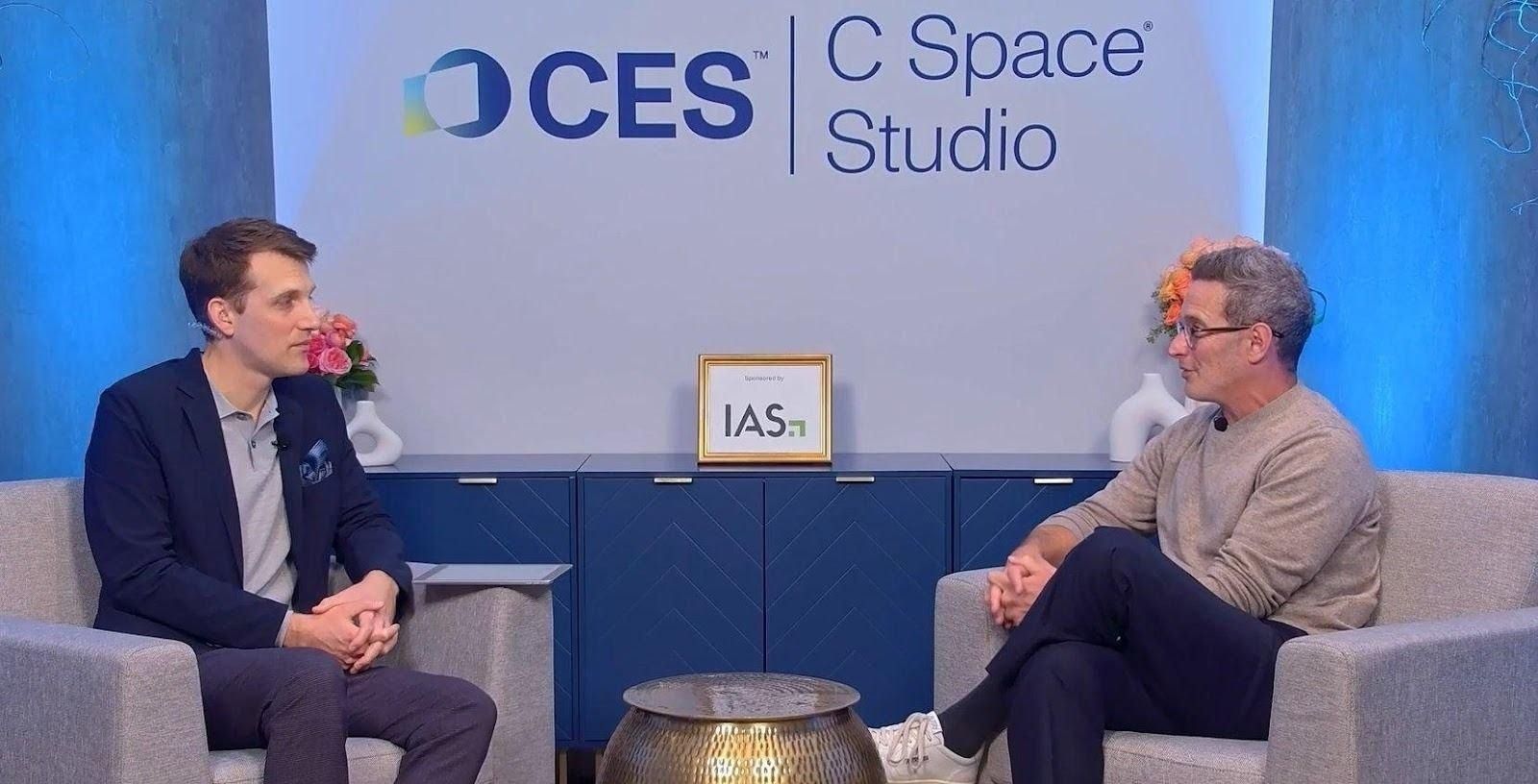
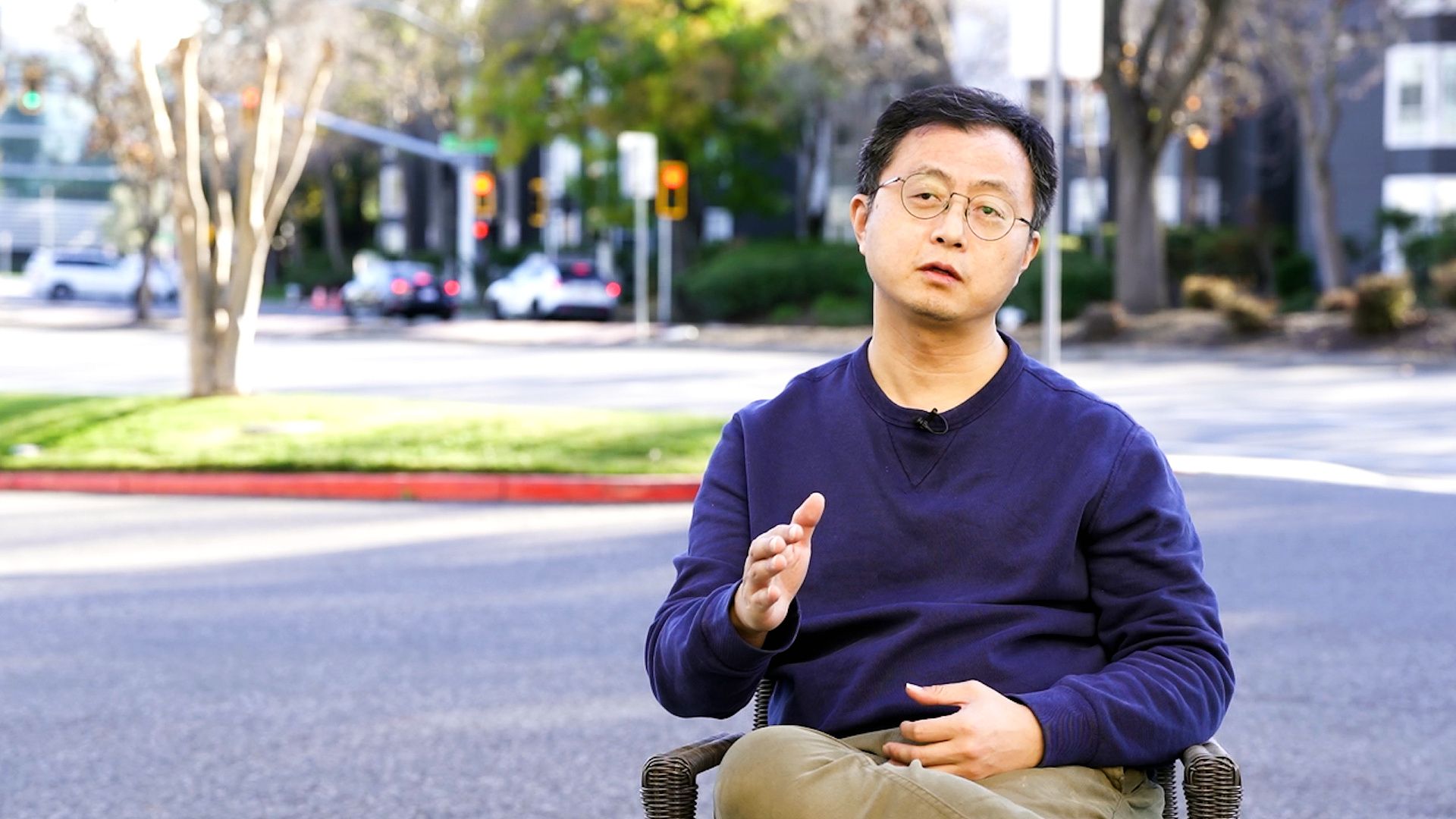
▲ CES 2026 C Space Studio Interview with LinkedIn's David Roter (Sponsor: CES/IAS)
In an interview at the CES 2026 C Space Studio, David Roter, LinkedIn's Senior Director of Global Agency & Video Solutions, clarified LinkedIn's new positioning. The message: "LinkedIn is where marketing means business." This declaration signals LinkedIn's evolution beyond a simple recruiting and networking platform into one that delivers tangible business results for B2B marketers.
As interviewer James Coteki noted, while numerous platforms exist for B2C social media, LinkedIn holds a virtually unrivaled position in the B2B space. Roter emphasized, "We have this incredibly influential platform and trusted environment. When those two things come together, we can deliver real results for marketers."
LinkedIn's transformation is backed by concrete market data. According to Business Insider, LinkedIn's VP of Marketing Davang Shah revealed that total video views increased 36% year-over-year, with video content creation growing at twice the rate of other formats. Research firm EMARKETER projects LinkedIn's advertising revenue to reach $8.06 billion in 2025, a 12.4% increase from the previous year.
 Jung Han
The growth of LinkedIn's creator economy has been nothing short of explosive. According to Digiday, B2B influencer marketing agency Creator Match, launched in early 2024, achieved 80% of its total revenue in recent months alone and paid over $1 million to LinkedIn creators during this period. CEO AJ Eckstein analyzed that this rapid growth reflects structural changes in the market.
The growth figures from B2B creator management company The Wishly Group are also noteworthy. The number of LinkedIn creators they manage expanded fivefold from 6 in August 2024 to 30 by April 2025, while monthly campaigns surged from 20 to 75. Founder Aneesh Lal shared, "Interest from brands in LinkedIn creators is growing exponentially."
Brendan Gahan, CEO of LinkedIn influencer marketing agency Creator Authority, revealed they are recording annual growth rates of 300-400%. He noted, "Before, even when we got budget, it was very experimental, small amounts. Now, more companies are approaching us saying, 'We have dedicated budget for this sector.'"
LinkedIn Creator Economy Key Growth Metrics
Source: Business Insider, Digiday, eMarketer, Social Media Today (2025)
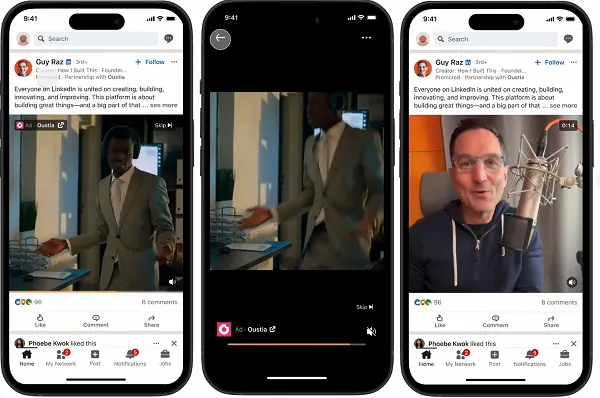
LinkedIn is strengthening its strategic product lineup to capture the creator economy.
According to Business Insider, in May 2025, LinkedIn rebranded its existing Wire Program to 'BrandLink' and expanded revenue sharing to include individual creators. Previously, only professional news publishers like the Wall Street Journal, Reuters, and Business Insider could participate, but now influencers and creators can also generate revenue through pre-roll ads.
LinkedIn also introduced 'LinkedIn Shows,' an original video programming initiative. According to Social Media Today, AT&T Business, IBM, SAP, and ServiceNow are the first brands to collaborate exclusively with LinkedIn on the debut season of four shows: "Small Business Builders" (AT&T), "Founder's Blueprint" (IBM), "AI in Action" (SAP), and "The CEO Playbook" (ServiceNow).
The initial creator lineup also includes Steven Bartlett (host of "The Diary of a CEO" podcast), fashion designer and "Real Housewives of New York" star Rebecca Minkoff, Sprinkles Cupcakes and Pizzana founder Candace Nelson, "How I Built This" podcast host Guy Raz, The Female Quotient founder Shelley Zalis, and author Bernard Marr.
BrandLink is also expanding its publisher network. New additions include BBC Studios, BNR, TED, The Economist, Vox Media, The Washington Post, Front Office Sports, and Adweek. LinkedIn reportedly takes 50% of advertising revenue through the BrandLink program.
According to eMarketer, since the BrandLink rebrand, quarterly revenue has grown approximately 200%, and payments to creators and publishers have more than tripled year-over-year.
Roter identified Gen Z's entry into the workforce as the key driver of LinkedIn's platform transformation. He described it as: "Video is their love language." For this generation, creating in video, consuming in video, and following creators is second nature. LinkedIn's evolution toward a creative storytelling platform—beyond learning, education, and job information—is precisely targeting this generation.
One statistic stands out: Today, Gen Z and Millennials account for 71% of B2B decision-making. Roter explained, "It might surprise many people, but considering that millennials are already entering their 40s, it's a natural shift." This demographic change is driving the surge in video and creator content across the LinkedIn platform.
LinkedIn's latest research of 19,000 professionals reinforces this trend. According to the study, 75% of 18-24 year olds say that even as AI becomes more advanced, there's still no substitute for the intuition and insights they get from trusted colleagues.
Creator Authority's Brendan Gahan explained LinkedIn's differentiator: "This is where decision-makers and executives actually spend their time. Probably more than any other platform." While LinkedIn offers over 1 billion users, powerful advertising tools, and a largely brand-safe environment, its unique positioning as a 'professional, affluent niche' is its greatest differentiator.
When asked about his 2026 outlook, Roter offered a thought-provoking prediction: "Yes, AI is here, it's coming, and it's taking over. But as AI grows and penetrates deeper into our lives, paradoxically, I think the need to 'be more human' will increase."
LinkedIn's latest research backs this up. Despite the rising reliance on AI chatbots, the study shows that professionals say their network—the people they know—is still their #1 source for advice at work (43%), ahead of search engines and even AI tools. Nearly two-thirds (64%) of professionals say colleagues help them decide faster and more confidently.
He emphasized that conferences like CES and real-world moments of connection will become more important than ever as venues that foster genuine human interaction. In his conversation with the interviewer, Roter noted, "Theoretically, soon enough I could talk to an AI version of you. But there's a special 'currency' in sharing time in the same physical space and having face-to-face conversations. This value will become even more important in the future than it was in the past."
This philosophy is precisely why Roter joined LinkedIn. He expressed confidence that "LinkedIn is a platform that connects real humans with real identities," and that such a platform's value will shine even brighter in the AI era.
When asked for advice on creating good video content on LinkedIn, Roter answered simply: "Be Yourself. Be Trusted." This principle applies equally to individuals and brands.
LinkedIn's VP of Marketing Davang Shah conveyed the same message in a Business Insider interview: "When you produce authentic and trusted content, it leads to connections, which leads to conversations, which ultimately leads to closed deals. That's what marketers care most about."
Roter shared that he openly discusses his mental health journey (anxiety and OCD) on LinkedIn and serves on the board of the nonprofit Active Minds. He noted, "I'm now publicly talking about topics I never discussed in the first 40 years of my life," demonstrating that personal subjects once considered inappropriate can now resonate as meaningful conversations on LinkedIn.
According to Digiday, LinkedIn creator April Little (with over 250,000 followers) has earned approximately $150,000 in revenue through LinkedIn brand partnerships over the past two years. She advised, "Most creators set their rate at about 1% of their follower count, but you can command higher prices if you have high engagement even with a smaller following."
LinkedIn's streaming strategy unfolds along two axes. The first is leveraging the entire lifecycle of live events. Roter explained, "What's being utilized extensively on LinkedIn is the strategy of driving pre-event interest through event ads, creating real-time connections through live streaming, and then repurposing into snackable content afterward."
The second is CTV (Connected TV) advertising products. Roter showed enthusiasm, saying, "It's probably my favorite advertising product." Through partnerships with Disney, Comcast, Paramount, and Roku, LinkedIn enables advertisers to leverage its precise targeting data to reach members while they watch their favorite TV programs at home or on the go.
Roter described this as a "powerful way to deliver 'No Waste' and 'On-Target Reach' for B2B customers and advertisers." By providing B2B advertisers with a clean entry point into the CTV space, it offers a solution to the effectiveness challenges of traditional TV advertising.
According to Digiday, LinkedIn influencer marketing posts fall into three main categories, with brand interest evenly distributed across all three.
Jennifer Winberg, Senior Director at Ogilvy, explained LinkedIn influencer marketing's unique position: "It's about business-to-business connections, and LinkedIn is a business platform." Currently, the majority of brands spending on LinkedIn influencer marketing are B2B advertisers focused on business applications or professional development, like HubSpot and Notion. HubSpot allocates about 10% of its influencer marketing budget to LinkedIn, while Notion has increased its share from 25% to 40-45%.
This CES 2026 interview and related market trends offer the following strategic implications for Korean content and entertainment technology industries.
The message from LinkedIn at CES 2026 is clear: In the AI era, the key to B2B marketing is the balance between technology and humanity, with video content and live experiences serving as the essential media to realize that balance.
Multiple trends are converging and reshaping the B2B marketing landscape: the rise of Gen Z, practical AI tool adoption, CTV streaming's B2B applications, and the explosive growth of the creator economy. While powerful competitors like YouTube and TikTok exist, LinkedIn is differentiating itself through its unique 'professional, affluent' niche and positioning as 'where decision-makers actually spend their time.'
Yet at the center remain the fundamental values of 'authenticity' and 'trust.' As Roter said, "Our realness as humans will be what differentiates us in the future." Nick Cicero's advice that "the goal isn't scale—it's signal" will be the success formula for B2B marketing in the AI era.
![[SXSW 2026] ‘뉴스의 미래’: AI·정치 압박·광고 이탈 속 살아남는 언론의 조건](https://cdn.media.bluedot.so/bluedot.kentertechhub/2026/03/dv1i7h_202603162323.png)
![[투비]The Stream 2026: When Intention Becomes Attention](https://cdn.media.bluedot.so/bluedot.kentertechhub/2026/03/6h3xe4_202603220154.png)
![[SXSW2026]에이미 웹 트렌드 리포트(Convergence
Outlook 2026)](https://cdn.media.bluedot.so/bluedot.kentertechhub/2026/03/kty3s8_202603152312.png)
![[보고서]전통 언론사의 크리에이터 전략 대전환](https://cdn.media.bluedot.so/bluedot.kentertechhub/2026/02/0nwc9z_202602100212.png)