
![[Samseog Ko's Insight]In the AI Era, the Future of K-Pop Is Share Reality](https://cdn.media.bluedot.so/bluedot.kentertechhub/2026/05/mrmb17_202605250529.jpg)
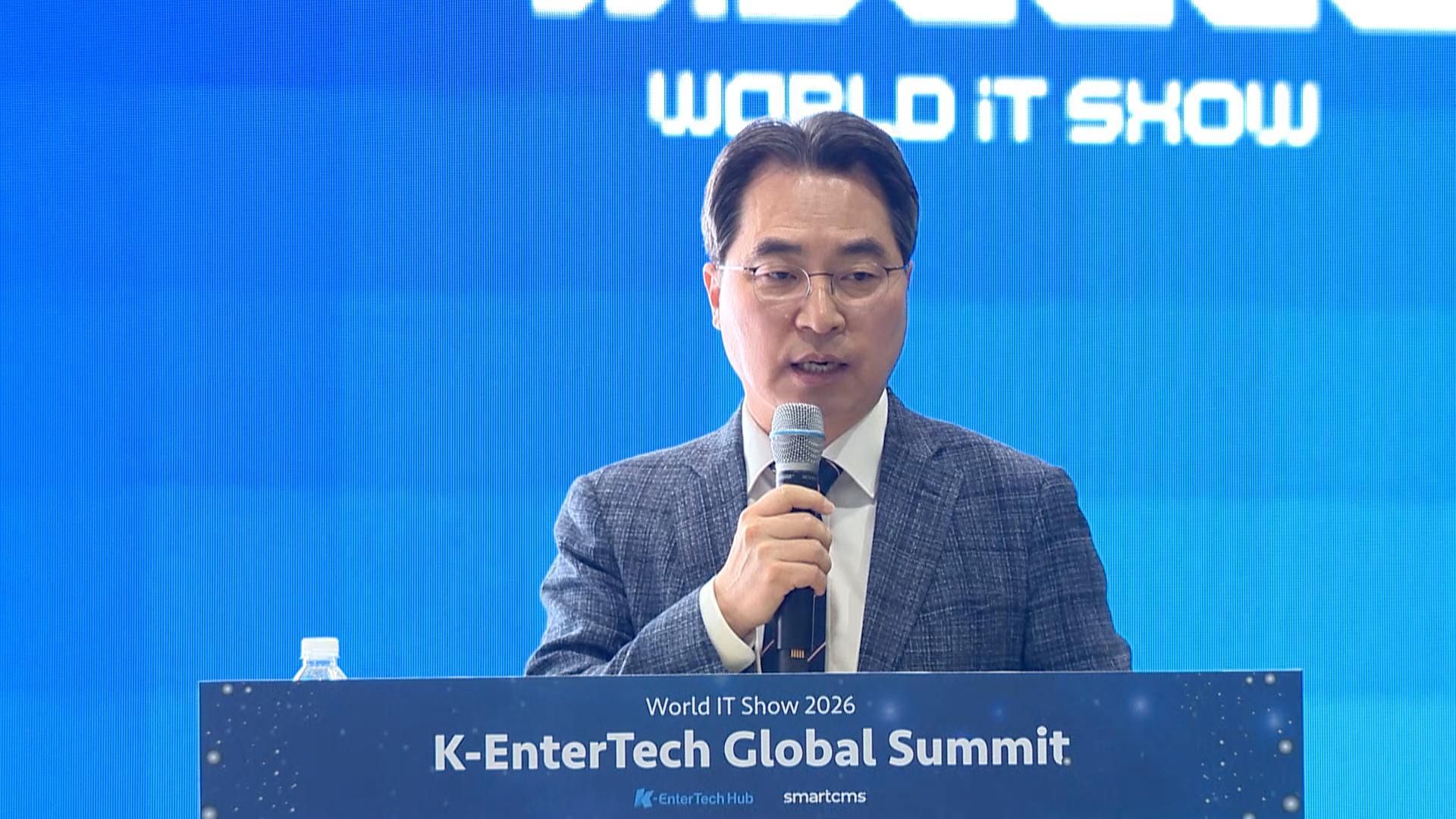
Dr. Samseog Ko
Distinguished Professor, College of Advanced Convergence, Dongguk University
Member of the Presidential Council on Artificial Intelligence
Over the past three decades or more, K-pop has grown into the most influential global cultural brand among the content Korea has produced. It started out as ordinary music, yet today K-pop has built a powerful “cultural ecosystem” in which video and performance, fandom and platforms, community and cutting-edge technology come together for audiences around the world to consume and take part in. K-pop has become both a flagship export industry in the content sector and a core asset of the national brand.
AI Arrives, and the Real Question Shifts
Today, however, K-pop is facing yet another massive inflection point. At the center of this challenge stands artificial intelligence (AI). Generative AI is already producing countless pieces of music. It creates videos on its own, designs choreography, and gives birth to virtual artists such as virtual idols. What once required major entertainment agencies and dedicated production systems can now be done by individual creators. This is why some are saying that a “democratization of content production” has begun. The change is positive, yet at the same time it raises a fundamental question for the K-pop industry.
In an era when AI can compose music and anyone can produce content, on what basis will K-pop continue to be chosen by global audiences? How can it remain sustainable? Will it be better music, more dazzling visuals, or more powerful AI technology? Such elements will, of course, remain important for sustaining K-pop’s competitiveness going forward. But they are necessary, not sufficient, conditions for that sustainability. The competition ahead is likely to be not a contest over content production but, perhaps, a contest over the experience of content users. And at the very center of that contest sits Share Reality.
What “Share Reality” Means
Share Reality is not yet a familiar concept in Korea. Put simply, it refers to a structure or situation in which many people, while located in different spaces, experience things together as if they were all in the same place. Share Reality is not the kind of immersion in which one person dons a VR headset alone.
Rather, it is a mode in which large numbers of people experience a single reality at the same time through concert venues, theaters, extended reality (XR) spaces, even urban spaces, and real-time networks. What matters here is not the technology. It is the audience’s “sense” of feeling and enjoying the same moment together. Koreans, on reflection, are well used to experiences like this — the mass sing-alongs at K-pop concerts, the street cheering during the World Cup. Fans sharing emotion in real time while watching the same performance or sporting event has always been at the heart of popular culture. AI technology is now expanding such experiences in larger and more powerful ways.
Tokyo and Los Angeles Show the Way
Content-leading countries such as Japan and the United States are turning “technology-based experience expansion” into a new industry ahead of Korea. Live Viewing Japan, a Japanese company in which AMUSE INC. and Sony Music Entertainment Japan are among the shareholders, specializes in broadcasting major concerts, anime events, plays, musicals, and sporting events in Japan to cinemas and live houses across the country in real time via satellite relay and the Internet. Recently, the company also simulcast a K-pop concert held in Seoul to audiences in Tokyo through its “Live Viewing” service.
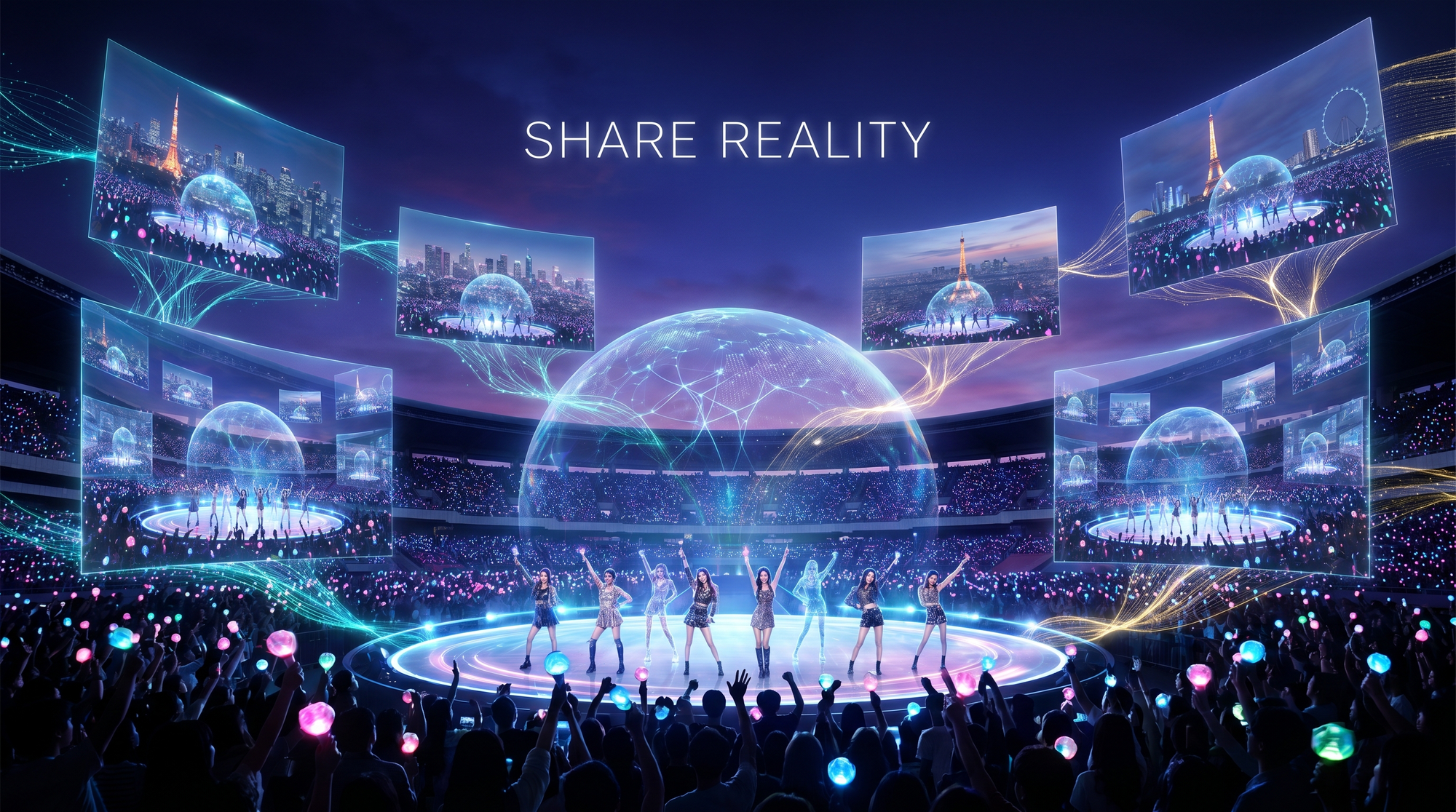
The core of this business model is not the simple relay of a concert or a sporting event. The real core is a strategy of “expanding the venue.” A concert held in Tokyo is watched at the same moment by fans in Seoul, Los Angeles, Paris, and Singapore.
Audiences do not merely look at the screen; they cheer and shout together, sharing a single experience. The performance or match takes place in one particular city, but the experience itself is created in many cities simultaneously. Here, revenue does not stop at ticket sales. Merchandise, memberships, communities, data, and repeat consumption all become interconnected. At this stage, the performance industry evolves into an experience industry.

The United States has gone a step further. One of the companies drawing the most attention in the global entertainment market today is Cosm. Cosm defines itself not as a performance company but as a “Share Reality Company.” In the large dome venues it has built, sporting events, films, and concerts unfold as if audiences were on site. Without traveling to a stadium, audiences can enjoy a depth and immersion no different from being at the actual venue. The reason this matters is clear.
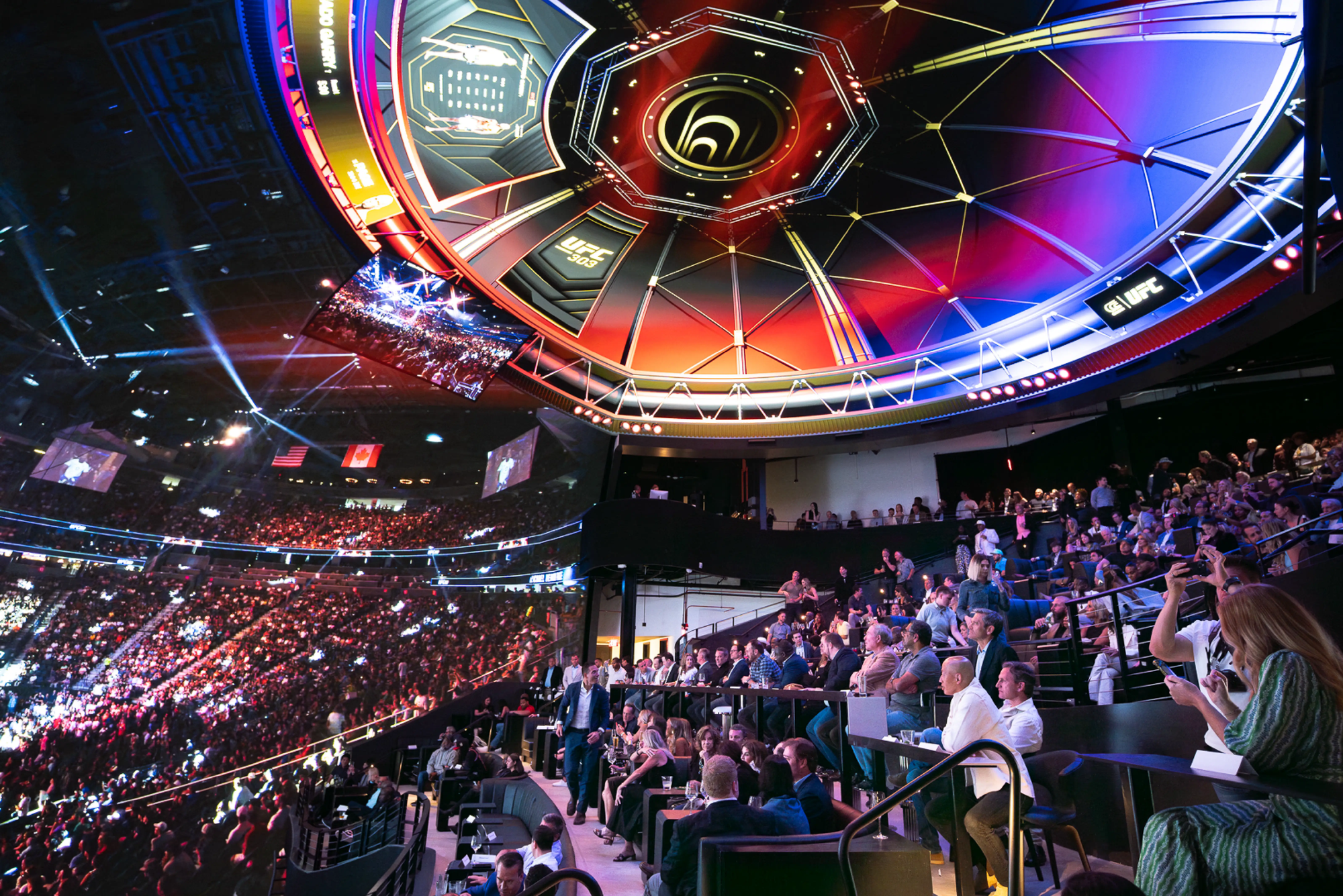
Cosm does not simply sell content; it sells the very space in which reality is shared and the experience that comes through it. If Netflix today dominates the screen inside the home, the era now opening is one in which cities and concert venues themselves become both platforms and screens. We are entering an era in which AI, spatial technology, and content combine to create a new “experience economy.” At its center sits Share Reality.
Korea’s Edge — and the Gap to Close
How does Korea stand against this backdrop? Korea is equipped with conditions as favorable as any country in the world. It holds K-pop IP of the highest global caliber and has built a powerful global fandom. It has the high-speed networks and other infrastructure essential to Share Reality, and its AI and XR technologies are at a high level as well. K-pop itself is, in fact, one of the most successful early forms of Share Reality on the global stage.
The concert culture in which countless fans gather in a single space, wave their lightsticks together, and sing along to the same songs already embodies a collective experience economy. The problem is that this has not yet been extended beyond a fandom economy centered on individual entertainment companies into a full industrial strategy that fuses technology and space. That is precisely why K-pop needs a new industrial and global strategy.
What Government and Industry Must Do
First, the government’s role is important. The Ministry of Culture, Sports and Tourism needs to move beyond project-level support for performances and content and consider a national-level “Share Reality Project” that connects K-pop with AI, XR, and spatial experience. Portions of concert venues and theaters should be transformed into future-oriented experience spaces, and institutional frameworks covering performance rights, broadcast rights, and AI-generated content also need to be updated.
Content policy and AI policy should not be treated separately; they should be integrated into a single “Entertech” strategy. In particular, if a global Entertech hub strategy is pursued centered on regions such as Seoul, Incheon, and Seongnam in Gyeonggi, Korea could readily become a leading nation in the Share Reality field. The recent launch by the Ministry of Culture, Sports and Tourism of a new organization dedicated to cultural AI policy, and its work on a “Cultural Powerhouse Implementation Strategy for the AI Era,” deserves a positive assessment.

The role of private entertainment companies must also change. Korean entertainment firms can no longer remain confined to nurturing artists and producing performances. From now on, they must take a further leap forward as “global experience platform companies.” They need to build structures in which a concert held in Seoul is shared in real time in Tokyo, Singapore, New York, and Paris, while AI at the same time dramatically expands the audience’s experience. And just as with ABBA Voyage in London, the experience for fans should be able to continue even after the artists’ performances themselves come to an end. This will become the new growth model for K-pop in the era of the “Next Hallyu.”
Into the Shared Space
Over the past 30 years, the Korean Wave exported content. Through K-drama and K-pop, Korea has made itself known to the world. Along the way, the country has confirmed a new possibility — that of becoming a “cultural powerhouse.” The next 30 years, however, must be different. The winner of the AI era is unlikely to be the country that produces the most content. It is more likely to be the country that lets the largest number of people experience the same moment together.
The stage of K-pop must now move beyond particular concert venues and TV screens. It must move into “Shared Spaces” where people exist together, are moved together, and remember together. The country that builds such spaces first and expands them across the world will be the true cultural powerhouse leading the next era.