
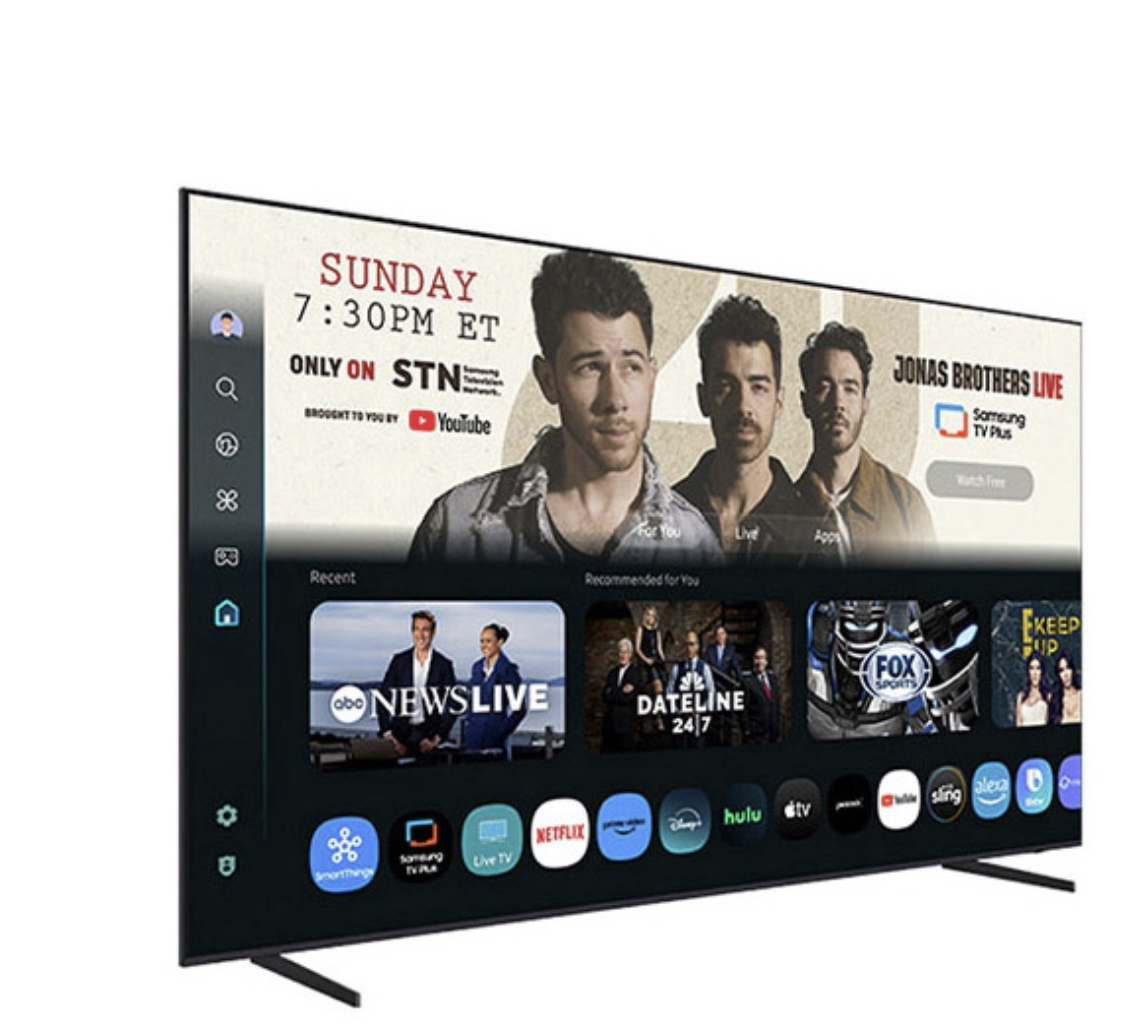
The July integration marks the first time Amazon's interactive video ad technology lands on an external CTV platform — and it could fundamentally reshape how advertisers think about the full marketing funnel on TV.
 Jung Han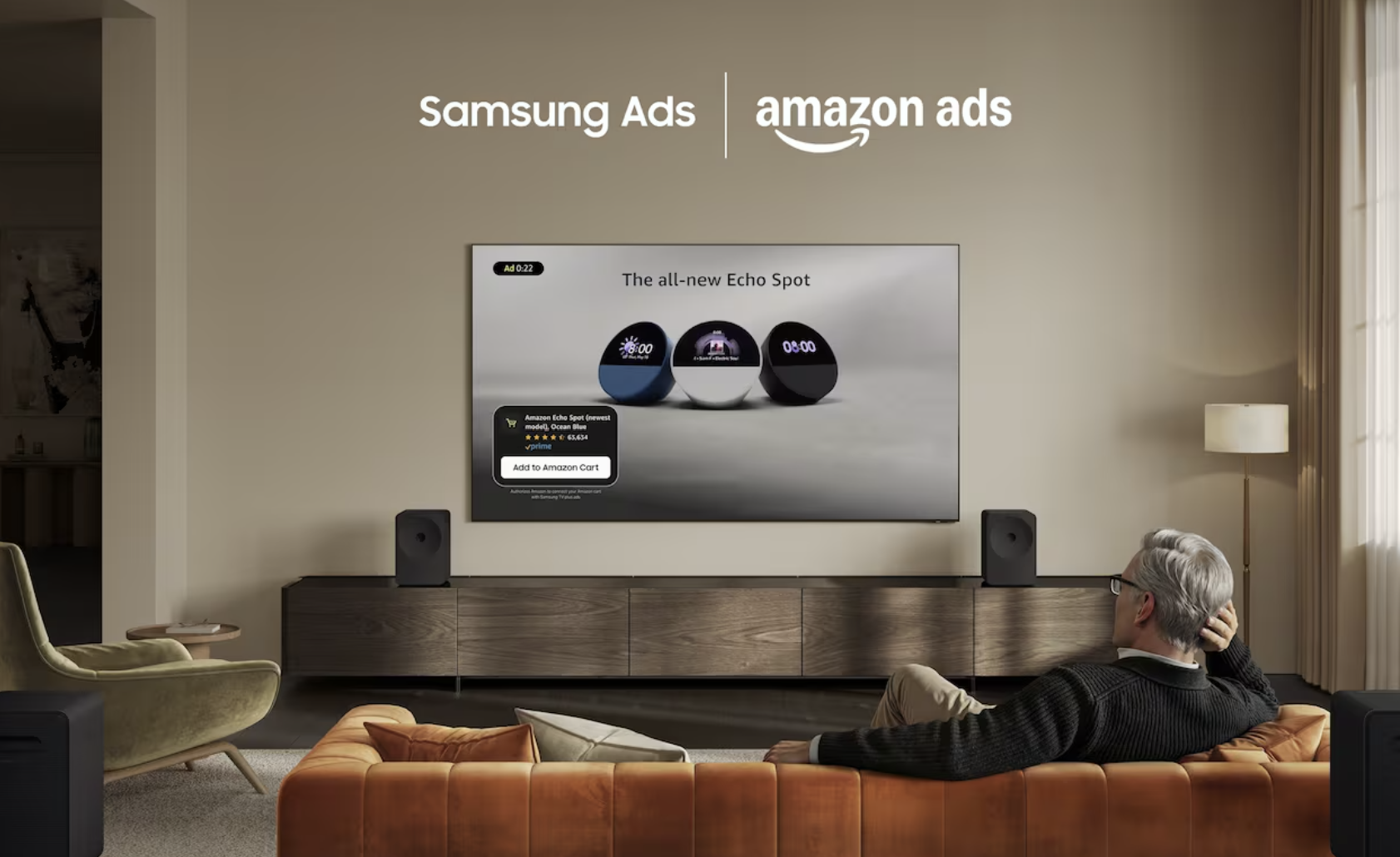
What Changes
Five shifts that will reshape TV, advertising, and content when Samsung flips the switch in July
When Amazon's interactive video ad technology goes live on Samsung TV Plus in July 2026, the shift will be quiet — but the reverberations will be felt across the entire TV ecosystem. This is not a routine ad format upgrade. The way viewers shop, the logic by which advertisers allocate budgets, and the revenue calculus for content operators are all about to change simultaneously. It is a system-level transition.
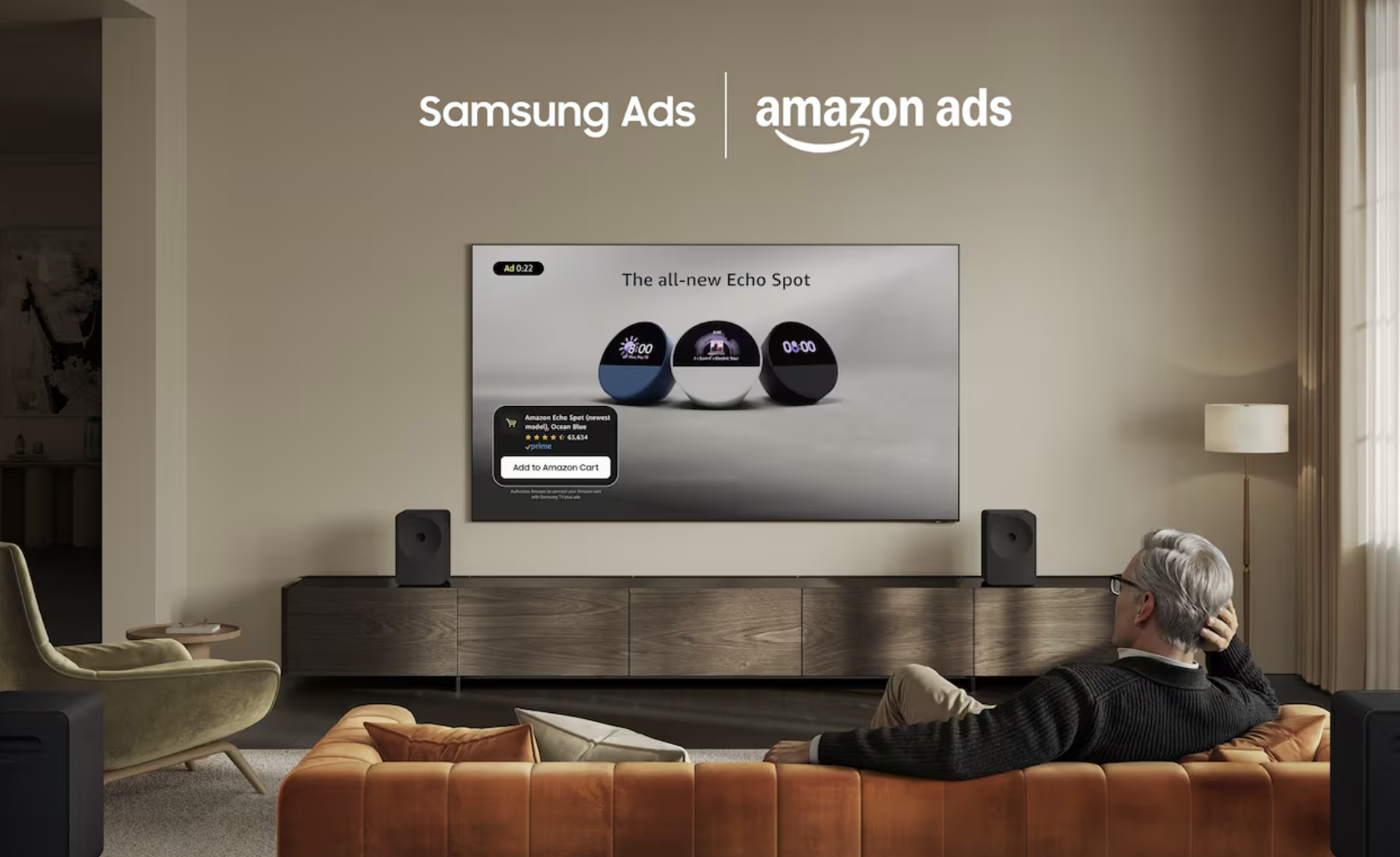
Viewers: Shopping completes without leaving the couch
Until now, the path from TV ad to purchase has been riddled with friction. A viewer sees a product they like, reaches for their phone, opens a search engine, types in the brand name — and by the time the page loads, the impulse has often faded. Alternatively, they scan a QR code on screen, which breaks the viewing flow entirely. The physical and psychological distance between the moment an ad sparks interest and the moment a purchase button gets pressed has been, structurally, too wide.
The Samsung-Amazon integration collapses that distance to zero. As an ad plays, an 'Add to Cart' button surfaces on screen. A single click of the remote drops the product straight into the viewer's Amazon Prime shopping cart. The purchase can be completed later on a phone or PC — but the buying action has already been triggered, without interrupting the viewing experience. TV stops being something you only watch. The couch becomes a checkout counter.
Advertisers: A 15-year attribution problem finally gets solved
The oldest grievance advertisers have held against CTV is the measurement gap. TV ads move consumers — everyone in the industry has always believed this — but proving it has been nearly impossible. The last-click models that dominate digital attribution consistently hand the credit to Google search or a social media tap that happened moments before purchase, even when it was a TV ad that first sparked the consumer's interest. The result: CTV budgets have been confined largely to upper-funnel brand awareness, while performance marketing dollars stayed with digital channels.
This integration breaks that structure open. The entire journey — TV ad exposure, remote click, cart addition, purchase completion — becomes traceable within Amazon Marketing Cloud (AMC). For the first time, an advertiser can pull up a dashboard and see, in data, that a TV ad drove a sale. That capability is the unlock that brings performance marketing budgets into CTV. The inflection point that the industry has been waiting for may have arrived.
Content operators: It's no longer about how many watched — it's about what they bought
For FAST channel operators and content publishers, this shift rewrites the revenue model. Today, ad revenue is driven by CPM — cost per thousand impressions. Viewership volume determines income. Whether a piece of content creates any connection between its audience and purchase behavior has never been measurable, let alone monetizable.
In a shoppable ad ecosystem, the equation changes. If a viewer watching a cooking show clicks on a kitchenware ad and completes a purchase, that channel's ad inventory is worth more — not just in theory, but in data that can be shown to a buyer. The contextual relevance between content and advertised product, and the rate at which that relevance converts to transactions, becomes a determinant of ad pricing. For Korean content in particular, the implications are significant. K-beauty, K-food, and K-fashion content channels carry audiences with documented high purchase intent toward those categories. The buying power of the Hallyu fandom, until now spoken of in qualitative terms, is about to gain a price tag.
FAST competitive dynamics: From audience scale to data infrastructure
The competition among FAST platforms has until now been fought largely on the terrain of reach and content breadth. Tubi wins on library size. Pluto TV leans on Paramount IP. Roku leverages its OS ubiquity. Samsung's exclusive lock-in of Amazon DSP's interactive video technology shifts the axis of competition. The new differentiator is not how many households a platform can reach, but how precisely and verifiably it can deliver business outcomes to advertisers. Samsung is the only FAST platform that can combine its own ACR viewing data with Amazon's trillion-signal shopping graph. That data infrastructure cannot be replicated quickly by competitors.
Ad data: The black box of TV attribution finally opens
TV viewing data and shopping data have always lived in separate silos. Samsung's smart TVs know what ads people watch. Amazon knows what people buy. But these two datasets have never been connected — meaning the question 'did our TV ad actually drive a purchase?' has had no reliable answer.
That changes with this integration. Samsung's ACR data identifies who watched which ad, when. Amazon's purchase data reveals what that person subsequently bought. Merged inside Amazon Marketing Cloud, the two datasets make it possible, for the first time, to quantify the contribution of a TV ad to an actual sale. This is a paradigm shift in CTV measurement — and the first platform to operate this infrastructure exclusively, starting in July, is Samsung TV Plus.
EDITOR'S VIEW | The moment Samsung integrates Amazon, the television stops being a screen where ads are shown and becomes a space where purchases happen. For Korean content operators, the strategic window is now: build a shoppable roadmap into your FAST channel strategy before this infrastructure becomes table stakes.
Full Report
Samsung Ads took the stage at the IAB NewFronts 2026 in New York on March 24, unveiling a partnership with Amazon Ads to bring Amazon DSP's Interactive Video Ad (IVA) technology directly to Samsung TV Plus (STVP). Samsung becomes the first external CTV platform partner to integrate this remote-enabled, shoppable ad technology — a capability previously available only on Prime Video. Roku has an existing Amazon DSP partnership, but Samsung is the first outside platform to receive direct integration of the interactive shoppable video ad tech itself.
The announcement is more than a product launch. It is Samsung's declaration that it intends to reposition STVP as the preeminent full-funnel advertising platform in the global FAST market — and it accelerates an industry-wide push to shift CTV from a brand awareness vehicle to a measurable performance channel.
NewFronts — The Annual Battleground for Digital Ad Dollars
NewFronts is the annual IAB-organized event at which digital and streaming media companies pitch ad buyers ahead of the new season. It is, in essence, the digital-era counterpart to the broadcast industry's Upfronts. Netflix, YouTube, Amazon, Spotify, and Samsung all take the stage to present their reach, formats, and content strategies to agency planners and brand marketers who are finalizing their second-half media budgets. The timing of Samsung's Amazon DSP announcement was deliberate: dropping a shoppable TV bombshell at the exact moment buyers are deciding where to allocate performance dollars is the most effective possible sales move.
Source: Samsung Ads NewFronts 2026 / Adweek (March 24, 2026)
The Integration — What It Actually Does
Launching in July, the Amazon DSP integration gives Samsung TV Plus advertisers access to remote-control-clickable ad formats. For brands selling on Amazon's marketplace, 'Add to Cart' functionality lets viewers add products to their Prime shopping cart directly from the TV screen. Brands that don't sell on Amazon can deploy outcome-focused action buttons — 'Send to Phone,' 'Sign Up Today,' or 'Learn More' — to carry the engagement forward across devices.
Underpinning the formats is Amazon's authenticated audience graph, which provides deterministic reach to over 90 percent of U.S. households, and its vast trove of shopping, browsing, and streaming signals. Advertisers can access and activate this through Amazon Marketing Cloud, applied against Samsung TV Plus inventory.
“Our shoppable ad formats are proven to drive measurable performance on and off Amazon through our differentiated combination of broad reach and authenticated signals. By bringing Amazon's interactive ad technology to Samsung through Amazon DSP, together we're providing an experience for advertisers to deliver on any full-funnel marketing objective — whether it's awareness, consideration, or conversion.”
— Kelly MacLean, VP of Engineering, Science and Product, Amazon DSP
The Structural Problem CTV Has Always Had — And Why This Fixes It
The advertising industry has spent the better part of a decade wrestling with CTV's attribution problem. The medium delivers reach and engagement that few channels can match, but the inability to draw a clear line between a TV ad and a downstream sale has kept performance budgets at bay. Last-click attribution models have consistently credited Google and social platforms for purchases that were, in many cases, initiated by a television ad. CTV platforms have complained about this structural disadvantage for years without a credible solution.
Samsung's integration with Amazon DSP is the most direct answer to that problem yet deployed at scale. The company reports that interactive ads on its platform already drive 17 percent higher engagement than other CTV environments, and that its AI-driven audience optimization is delivering efficiency gains of up to 90 percent.
“We have this massive amount of scale. We're sitting on all of this data. And so when you look at all of this, there's an opportunity for us to really take advantage of the machine learning we have, the full-funnel opportunity that we're looking at, the interactivity that's there, and start to dive into the business outcomes that are most important to each one of our partners.”
— Jimmy White, Managing Director, Head of Large Customer Sales, Samsung Ads
AI Reinvents Both the Ad and the Viewing Experience
Alongside the Amazon partnership, Samsung introduced Vision AI Companion — a system that continuously interprets on-screen action to inform ad timing and relevance in real time. Its AI-Powered Contextual Targeting goes beyond keyword matching: it analyzes scenes, dialogue, and emotional tone to serve ads at the moment of highest contextual alignment. A cooking show viewer gets a kitchenware ad at the right beat; a travel documentary audience gets a luggage brand during a packing scene.
AI-Powered Audience Collectives uses Samsung's viewing data to dynamically identify viewers most likely to engage, convert, or respond to specific content — feeding that intelligence into the ad serving stack. On the creative side, Samsung is expanding its Creative Canvas platform with new partner integrations and three new interactive formats: product galleries, vertical video shoppable units, and click-to-email.
Live Events and Creator Content — The Interactive Experience Layer
The commercial infrastructure is only part of the story. Samsung is simultaneously building an interactive content layer that makes the viewing experience itself more participatory — and more valuable for brands. The results so far are striking: an exclusive live Jonas Brothers concert on STVP in 2025, featuring the platform's first FanVote interactive polling feature, drove 26 times the engagement of QR-code-based interactions.
In 2026, Samsung is scaling that model. A two-hour global live special with former NASA engineer and YouTube creator Mark Rober is in production, built around a real-time scientific mission in an undisclosed location that viewers can participate in from their sofas. MotoAmerica is coming to STVP as an exclusive partner, with over 100 live races scheduled. Keanu Reeves and Gard Hollinger's Hooligans: The ARCH Racing Project has also been confirmed as exclusive content.
The interactivity layer is being rolled out platform-wide, not just on marquee events. According to VP of Content and Programming Takashi Nakano, hundreds of channels have already signed up to bring interactive elements to their programming. Confirmed interactive content partners for 2026 include A+E Global Media, AMC Networks, LiveNOW from Fox, MotoAmerica, TelevisaUnivision, and Vevo.
“Live, interactive experiences and creator-led content have become the new engine of TV, bringing authenticity, community, and cultural connection directly into the living room.”
— Salek Brodsky, SVP and Global Head of Samsung TV Plus
FAST Competitive Landscape — The Race Is Now About Data, Not Just Reach
The FAST market is among the fastest-growing segments in the global streaming ecosystem. Subscription fatigue has driven audiences toward free, ad-supported services, pushing the ad inventory value of FAST platforms sharply higher. Against competitors including Tubi, Pluto TV, and Roku — each of which has its own content and reach advantages — Samsung's differentiator has historically been its hardware ecosystem and ACR data asset. The Amazon DSP integration adds a third dimension that rivals cannot quickly replicate.
Source: Company disclosures, compiled by K-EnterTech Hub | ●: Full support △: Partial (2026)
Industry observers are describing the Samsung-Amazon partnership as the opening shot of T-Commerce — television commerce — at meaningful scale. For advertisers evaluating FAST platforms, a platform that offers shoppable formats backed by Amazon's purchase data graph is a structurally different proposition from one that offers reach alone. Budget concentration toward Samsung TV Plus seems likely to accelerate.
What This Means for Korean Content — and the Hallyu Economy
The Samsung-Amazon integration sends a concrete strategic signal to Korean content operators pursuing global FAST distribution. Major Korean broadcasters including YTN, KBS, and MBC already operate channels on Samsung TV Plus. The question is whether they are positioned to capture the commercial premium that this infrastructure unlocks.
The Hallyu fandom is, commercially speaking, an unusually high-intent audience. K-pop, K-drama, K-beauty, and K-food fans demonstrate documented willingness to purchase products associated with the content they consume. Connecting that behavioral data — content viewing on Samsung TV Plus — with Amazon's purchase graph creates, for the first time, a data pipeline through which the buying power of the Korean Wave can be expressed as ad pricing. The value of Korean content on FAST platforms, long argued in qualitative terms, becomes quantifiable.
Analysis: K-EnterTech Hub Editorial (March 2026)
Conclusion — TV Is Reaching for Its Most Powerful Role Yet
Samsung's NewFronts 2026 presentation marks an inflection point for the CTV advertising industry. The full-funnel TV platform — where a brand can run awareness, consideration, and conversion campaigns within a single screen environment, with measurement connecting each stage — is no longer theoretical. It is launching in July. The combination of Amazon's purchase data infrastructure, Samsung's 100 million-user platform, and AI-driven targeting capability positions Samsung TV Plus as something that no other FAST service currently is: a performance advertising channel with TV-scale reach.
Execution risk remains. Remote-click conversion rates versus mobile have yet to be proven at scale. Privacy regulation will shape the boundaries of Amazon data utilization. And the speed at which advertiser budgets actually shift is never as fast as industry announcements imply. But the structural direction is clear. Television is reaching for its most commercially powerful role yet — and Samsung and Amazon have positioned themselves at the center of that transformation.
This report was edited, analyzed, and translated by the K-EnterTech Hub editorial team based on original reporting by StreamTV Insider and Adweek. All rights reserved.