
손님은 떠났다. 청구서는 남았다:오픈AI가 할리우드를 떠난 뒤 — 무엇이 바뀌었고 무엇이 남았나
by
2026년 3월 25일
FAST & AI-Based Personalized Experiences Emerging as New Growth Engines in the Fragmentation
Streaming Media Connect 2025 | Feature Report
Premier League on Sky, Champions League on TNT, some matches exclusive to Amazon. We live in an era of "Fragmentation Fatigue," where sports fans are increasingly frustrated by the inability to find the games they want.
However, global sports streaming experts have discovered a new opportunity within this crisis: the convergence of "Personalization" and FAST (Free Ad-supported Streaming TV). Here is a look at the future of sports media as presented by industry leaders at the "Skins in the Game" panel during Streaming Media Connect 2025.
"Discovery is the single biggest problem facing our industry, especially in sports."
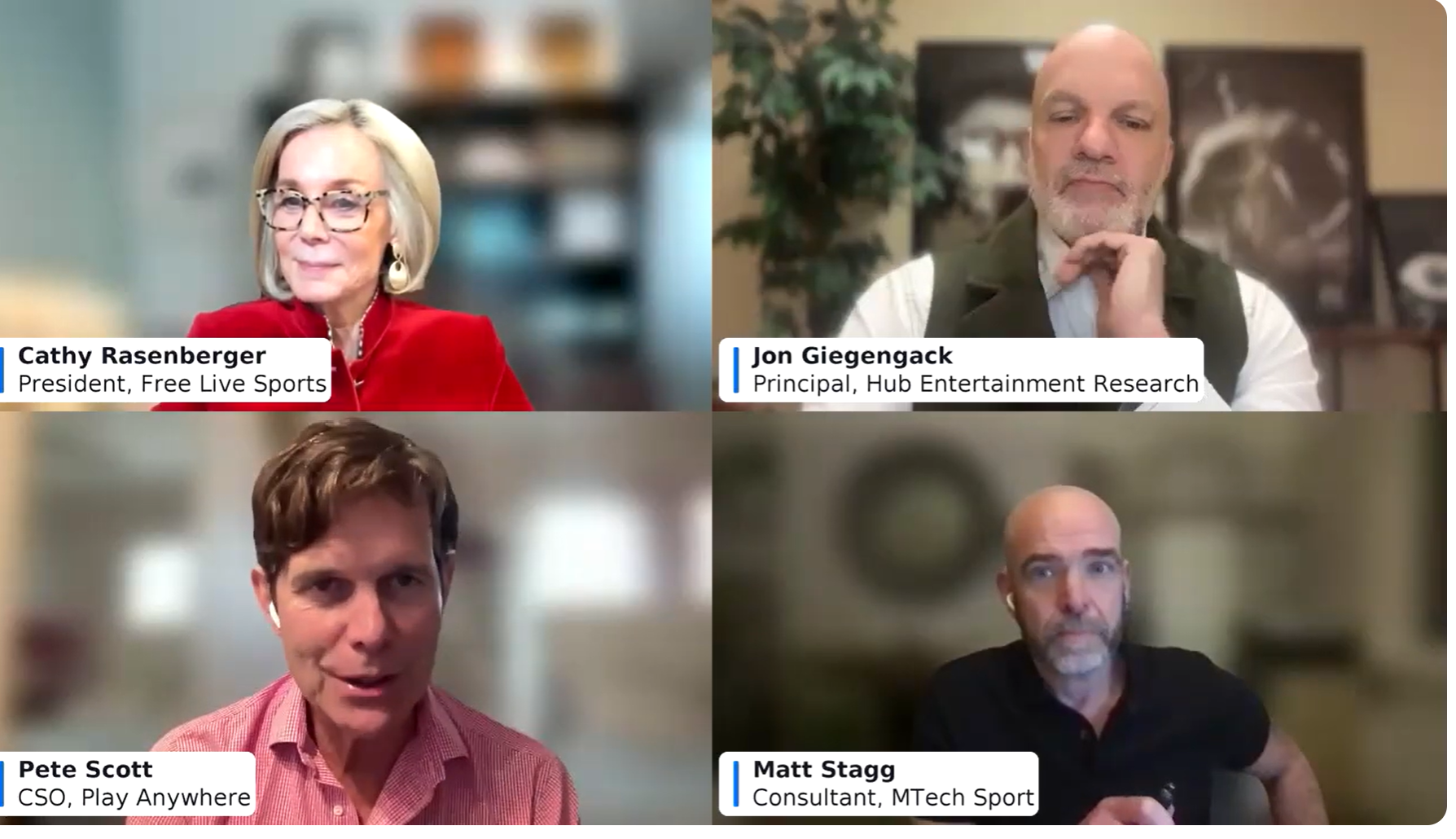
Cathy Rasenberger, founder of Rasenberger Media with 28 years of experience and co-founder of the world's largest free sports content aggregator platform 'FreeLiveSports.tv', was emphatic. Leading a platform that services 125 channels across 75 countries, she diagnosed that most content discovery for sports fans currently happens through friend recommendations or ChatGPT. This is proof that the search and recommendation systems of existing platforms are failing to meet user needs.
Rasenberger has positioned FreeLiveSports.tv as a "clubhouse for sports fans" to solve this issue. "Imagine a giant sports bar in Times Square with 100 screens. Fans come to watch a cricket match they can't find anywhere else, look around, and discover, 'Oh, there's Pickleball? There's PFL MMA too?'"
Pete Scott, CSO of Play Anywhere, views AI agents as the ultimate solution. "We will see AI agents that search databases based on zip codes or regions to find content. While you take a sip of coffee, the agent will find everything for you."
Jon Giegengack, Principal at Hub Entertainment Research, pointed out that the difficulty of discovering sports content makes fans particularly angry. "If you can't find a trending original series, you can watch another series. But if you want to watch the Eagles game and can't find it? There is no substitute. It's much more frustrating."
He explained that Roku is responding to this problem by aggregating specific sports-related content in one place through 'Sport Zones'. The outlook is that leagues and broadcast partners will also step up to solve this problem directly. If casual fans or growing fans entering a fandom have to navigate through multiple apps and channels to find the game they want, fatigue and confusion will accumulate, potentially leading to a gradual loss of interest in the sport itself.
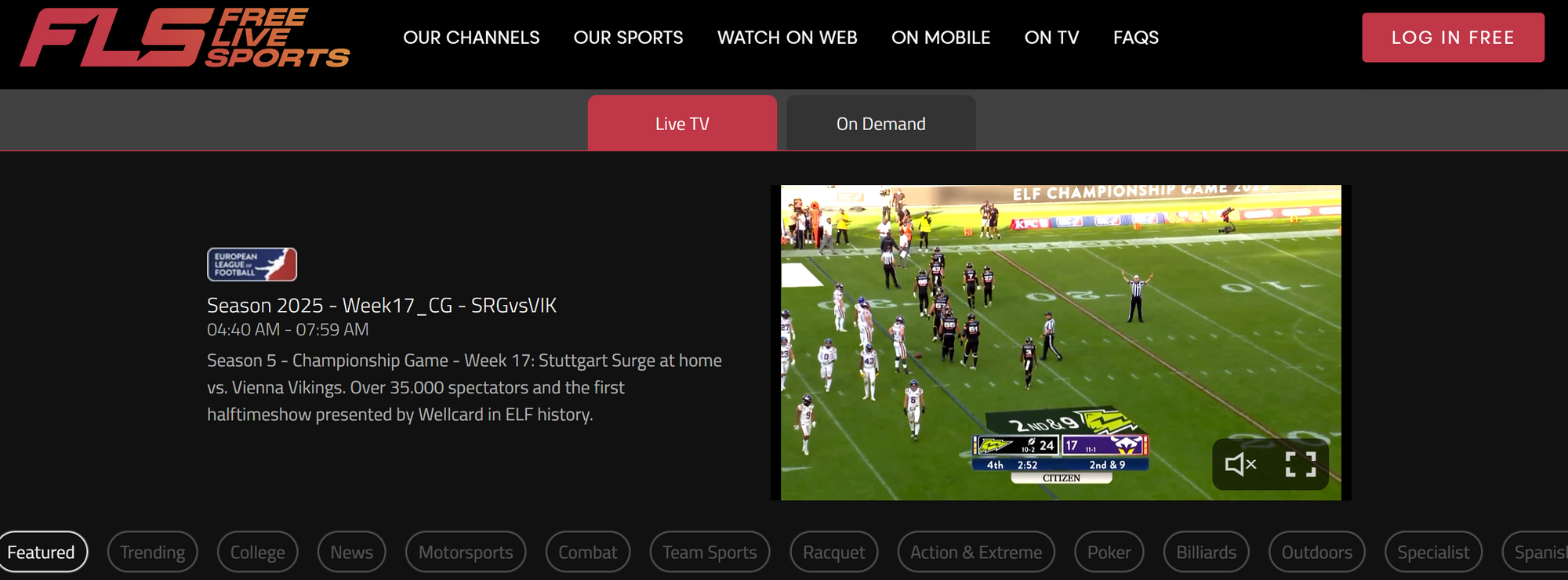
The growth of FAST is fundamentally changing the landscape of the sports industry. Rasenberger assessed, "FAST and streaming are democratizing sports. Sports with passionate fan bases that were previously inaccessible are now open to everyone."
The most popular sports on FreeLiveSports.tv defy expectations. Kickboxing, motorsports, PFL MMA, and court sports lead the way. "Pickleball is absolutely huge on our platform. In 10 years, it could be a major sport."
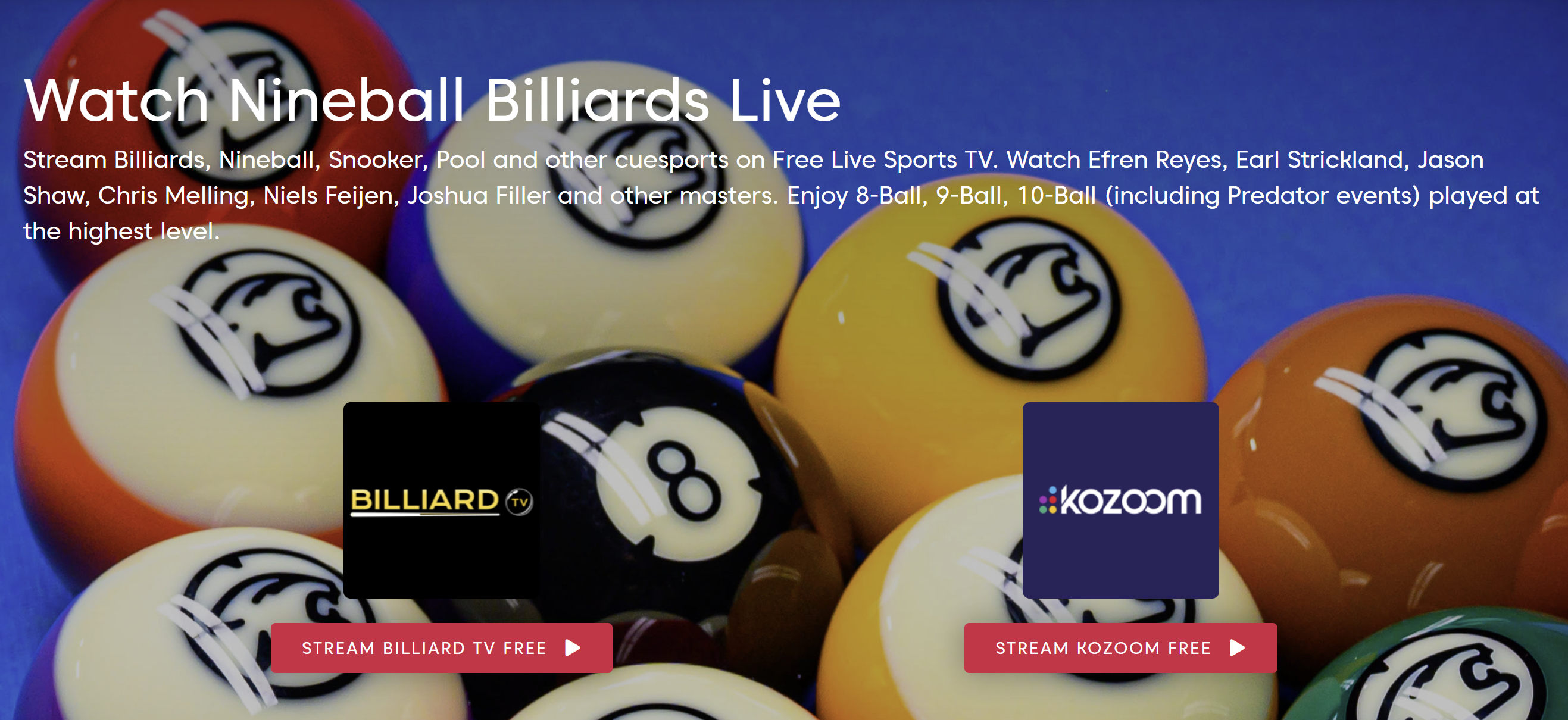
The power of live content is overwhelming. "When a billiards tournament is live, viewership on the billiards channel jumps 100%. The same goes for poker and court sports. People want live sports content," explained Rasenberger.
Pete Scott added that declining costs are accelerating this change. "Compared to when we first started streaming at Warner Brothers, technology costs have dropped dramatically. Streaming equipment, cameras, everything. Now you can create a women's volleyball league and sign with Verent, or start a women's soccer league. Think about the new leagues that have emerged in the last five years."
Jon Giegengack cited the UFC as a prime example of niche sports growth. "Going back to 2006, the UFC was nearly bankrupt. As a last resort, they created a reality show called 'The Ultimate Fighter' with Spike TV. 75% of it was contestants living in a house, stealing each other's food, and trashing rooms, with a fight only at the end of each episode. For someone flipping channels who accidentally saw a UFC fight, there was zero accessibility. But after watching the show and empathizing with the contestants, they began to understand the sport itself."
The results were astonishing. After the first season of 'The Ultimate Fighter', UFC pay-per-view sales increased by 450% in one year.
"That was 2007. Before TikTok, before Instagram Reels. Think about how many more tools exist now to create the same effect." — Jon Giegengack
Giegengack explained that 'Welcome to Wrexham', Formula 1's 'Drive to Survive', and Messi documentaries are utilizing the same strategy. Rasenberger agreed. "UFC has now become the sport with the third-largest fan base worldwide. PFL MMA is benefiting from that too. Pickleball could be next."

Engaging Gen Z is another key challenge. Panel moderator Matt Stagg shared his experience. "My 16-year-old binged four seasons of The Walking Dead in a week. Saying Gen Z has a short attention span is completely wrong. They just have a very precise filter for 'Relevancy'."
Rasenberger hit the nail on the head. "Gen Z doesn't watch ESPN or traditional cable and broadcast. They watch short-form, clips, and highlights. On social media, FAST, and YouTube. To attract young fans, you have to approach them in their language. That language is short-form video. Start with short-form and connect them to long-form content."
Pete Scott cited ESPN's changes as an example. "Look at the ESPN app. Now there's Home, Scores, and 'Verts'. Verts are literally vertical videos. Powered by WSC Sports technology. You have to go where the viewers are."
FreeLiveSports.tv is also applying an SDK called 'Glued In' to support community interaction, gamification, rewards, betting data, and User Generated Content (UGC) in a vertical format.
The nature of modern sports fandom is also changing. Jon Giegengack analyzed, "The younger generation follows players rather than teams. They want to know what that player eats in a day, what their biorhythm is like. Just like following a social media influencer."
He explained that the NFL Draft and NFL Combine becoming huge events is a result of this shift. "Initially, they just broadcast it on TV, but they realized fans consume this content enthusiastically, especially in the off-season. In the days of only linear TV, keeping fan interest during the off-season was difficult, but now the methods are endless."
Pete Scott presented the most fundamental turning point. "If you can change 'Liverpool' to 'We', that is the key turning point. 'We got the best draft pick', 'We played well on Sunday', 'We scored multiple goals'. Making them say 'We' instead of a third party. That is the most successful thing sports franchises and leagues can do."
Various 'skins' are emerging, such as Nickelodeon versions of NFL broadcasts and EA Sports camera angle broadcasts. How can they avoid becoming just gimmicks?
Pete Scott answered, "Relevancy." "How does Matt want to watch the game? Pete? Jon and Cathy? If you provide one-to-one relevancy, it becomes true value, not a gimmick."
He positively evaluated the attempt to broadcast the EA Football game version on Thanksgiving. "Broadcasting with EA camera angles connects with people who play EA games. It's worth a try. The NFL's first-and-ten line started as 'Will people like it if we draw a glowing line to show where 10 yards is?', but now it's become a standard for watching football."
Rasenberger introduced 'Canvas Space', which is currently being tested. It provides light interactive overlays on top of content, but the key is 'Opt-in'. "If you want multiview, you can choose it. If you just want to watch the regular feed, you can do that. You can participate in reward programs or provide additional information to advertisers in interactive ads. But everything is a choice. It shouldn't be forced."
Personalization is opening up new revenue models. Pete Scott cited the Real Madrid case. "Real Madrid sells a single soccer match to 12 different regions, and virtual signage is sold out for each region."
He painted a specific picture of future advertising scenarios. "Let's say four people living in the same apartment complex in London are watching a Champions League match. I go to your house to watch, and a Ford ad comes on. 'That's weird, I saw a sports car ad, but yours is a minivan?' Upstairs at Cathy's house, it's a convertible ad, and at Jon's house, it's a pickup truck ad. It's targeting by cohort using data and AI. Depending on whether the household is a family or single, and the region. AI can even dynamically generate the creative."
Jon Giegengack explained the potential of advertising that captures the emotion of the moment with his own experience. "When Saquon Barkley did that legendary reverse hurdle, a framed photo of that scene arrived at my house the next day. I found and ordered it myself. But what if my agent sat on the screen and asked, 'You like these kinds of photos, you ordered from this company before. Should I order it?'"
What will the living room of the future look like? Pete Scott found the answer in science fiction movies. "Combine the scene in Minority Report where Tom Cruise manipulates the screen with gloves, with 'Ask Jarvis'. In the future living room, an agent will orchestrate what you are interested in."
Rasenberger mentioned the personalized EPG (Electronic Program Guide) which is already becoming a reality. "We've started using AI to personalize the EPG according to viewer tastes and interests. If Jon likes UFC and football, those move to the top of the EPG, and Pickleball and Formula 1 move down."
Will extreme personalization cause fans to split into too many small rooms and lose their sense of community? The panelists were optimistic.
Pete Scott explained, "When we gather in a big ballroom, we unite as 'We'. Then we can go to small rooms next door to watch with an influencer, bet with strangers, or say 'I don't know Cathy but we're both Messi fans so let's talk about Messi'. The ballroom is 'We', and the small rooms make it richer."
Rasenberger returned to the sports bar analogy. "Every sports fan likes other sports fans. Especially fans who like the same sport. Gathering in a big room and interacting with other fans is exciting in itself. If you want, you can choose deeper engagement, or you can just hold a beer and watch the game comfortably."
The panelists unanimously voiced optimism. Rasenberger said, "There has never been a more exciting time in sports. It is certainly fragmented, but I hope the discovery problem improves. Much more sports are available to fans than before, and there are more platforms to watch them on. It is the most abundant and interesting era in sports history."
Jon Giegengack added, "You can get more by following a team. If you look at Eagles social media, there are small videos about other players as well as star players. These are players we wouldn't have known in the linear world. Of course, I'm not really part of the team, but that fantasy works for me and is enjoyable. The opportunity to feel much more connected and invested is good for the brand and makes being a fan much more fun."
Pete Scott concluded the panel by highlighting the social role of sports. "The world is a bit strange right now and everyone doesn't get along well, but if you're a fan of a team, you get along. You can disagree with other opinions but respect him because he's a sports fan, because he loves that sport. I am optimistic that technology can play a role like the UN bringing everyone together. When the lights go down in the movie theater, we don't know each other but we watch the movie together. Because we love movies. Sports are the same. We are sports fans, and we respect that in each other. How can we use that for a better future?"
In the crisis of fragmentation, personalization and FAST are not just technical solutions. They are a new paradigm delivering more sports to more fans with deeper connections and richer experiences. And at the center of it all, the community of "We" still remains.
References: Streaming Media Connect 2025
Skins in the Game: Personalizing the Live Sports Experience
Tuesday, December 9: 12:30 p.m. - 1:30 p.m. (ET) / 9:30 a.m. - 10:30 a.m. (PT)
In an August 2025 Streaming Media article, Field to Feed columnist Matt Stagg writes that sports rightsowners and tech companies who want to play a meaningful role in live sports streaming’s future need to “get some skin in the game”—which is to say, prepare themselves to serve up streams in multiple “skins” that are flexible and adaptable to the tastes of next-gen viewers, rather than the one-size-fits-all uniformity of broadcasts past. Join this panel of sports streaming innovators to learn what’s possible and what’s practical when it comes to personalizing streams guaranteed to engage today’s demanding sports fans.

![[SXSW 2026]AI 파일럿 95%는 왜 실패하는가: '성공하는 AI 시스템의 7가지 패턴'](https://cdn.media.bluedot.so/bluedot.kentertechhub/2026/03/9wheq7_202603201341.png)
![[투비]The Stream 2026: When Intention Becomes Attention](https://cdn.media.bluedot.so/bluedot.kentertechhub/2026/03/6h3xe4_202603220154.png)
![[SXSW2026]에이미 웹 트렌드 리포트(Convergence
Outlook 2026)](https://cdn.media.bluedot.so/bluedot.kentertechhub/2026/03/kty3s8_202603152312.png)



![[보고서]전통 언론사의 크리에이터 전략 대전환](https://cdn.media.bluedot.so/bluedot.kentertechhub/2026/02/0nwc9z_202602100212.png)