
Streaming displaced cable, but the overall market hasn't grown — no fix without re-bundling
The growth engine of the global video market has stalled. Streaming dismantled the cable era, but nothing has filled the void it left behind.
The pandemic consumption boom is over, ad-supported revenues are merely redistributing dollars away from linear TV rather than expanding the total pool, and streaming giants remain too focused on competing with each other to cooperate. Without a structural reset — most likely through re-bundling — the video industry's prolonged stagnation looks set to continue, according to a sobering new analysis from MoffettNathanson.
 Jung Han
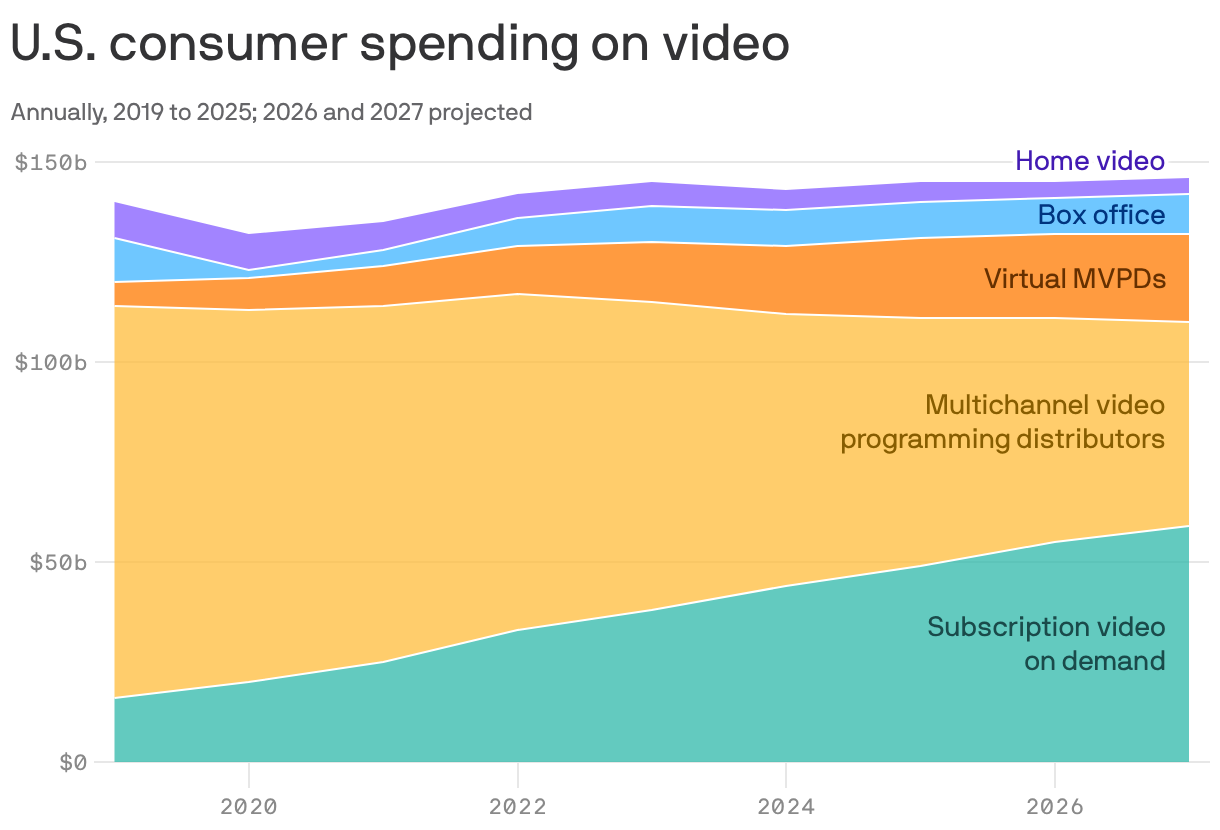
Consumer spending on video has effectively plateaued since the pandemic. Platforms multiplied, content libraries swelled — yet wallets stayed shut. Subscription fatigue set in as monthly bills stacked up, and once lockdowns lifted, discretionary dollars flowed back toward dining out, travel, and live experiences. Media research firm MoffettNathanson has put hard data behind this shift, warning that the video industry's revenue model faces a fundamental challenge with no easy exit.
■ Why It Matters
This is not a cyclical dip that will self-correct. Ad-supported video on demand (AVOD) has been widely touted as the industry's next growth engine, but analysts are skeptical it can meaningfully offset the decline in consumer subscription spending. Advertising budgets are migrating to digital, yes — but streaming platforms are capturing dollars already allocated to linear TV, not creating new ones. For Hollywood studios and content producers, the window for recouping production investment is steadily narrowing.
■ The Structural Trap — Competition Blocking Cooperation
For the video market to grow again, one precondition stands above all others: streaming services must come together to offer consumers a compelling, unified bundle that raises total spending across the board. The reality, however, is moving in the opposite direction. Each platform calculates that standalone profitability outweighs the gains from bundling — and so the industry remains locked in a war of subscriber acquisition rather than collective growth.
MoffettNathanson senior analyst Robert Fishman captured this irony in a note to clients:
"As long as each streaming service believes it can achieve better standalone profitability than it could through bundling, the prospect of a re-bundling — ironic as it would be, given that streaming drove the great un-bundling in the first place — remains elusive."
In other words: streaming broke the old bundle, but the industry's own competitive instincts are now blocking the formation of a new one.
■ State of Play — Funneling Consumers Toward Ad Tiers
In the absence of cooperation, streaming services have settled on a different strategy: push consumers toward cheaper, ad-supported tiers. The pitch is framed as expanded accessibility, but the underlying logic is to compensate for premium subscription churn with advertising revenue.
Netflix is the clearest example. Last week, the company raised its standard ad-free plan to $20 per month — a steep jump — while holding the price of its ad-supported tier steady. The intent is transparent: nudge subscribers down into the ad tier. Rivals are playing the same game, accelerating an industry-wide migration toward ad-supported viewing.
■ The Core Problem — Ad Revenue Reshuffles, Doesn't Grow
But this strategy has a structural ceiling. The advertising dollars flowing into streaming are not new money — they are being transferred from linear TV as cable and satellite audiences continue to shrink. Cord-cutting displaces viewership, and those displaced ad budgets migrate to streaming. The total advertising pool for video is not expanding; it is simply moving. As a result, the rate at which ad revenue grows cannot keep pace with the accelerating loss of pay-TV subscribers, leaving the industry's overall ad revenue base treading water.
■ The Bottom Line — Sports Add Pressure, Not Relief
Analysts point to two conditions that would need to be met for the video market to meaningfully recover. First, cord-cutting would need to slow significantly or reach a floor. Second, streaming platforms would need to coalesce around an attractive bundle offering that drives total consumer spending higher. Neither looks imminent.
The rapid migration of major sports rights — NFL, NBA, and beyond — to streaming is, paradoxically, making the first condition harder to achieve. Sports has long been the last anchor keeping reluctant cord-cutters tethered to traditional pay-TV. As those rights move online, even that holdout audience gains a compelling reason to cut the cord. And without a change in the competitive calculus, the incentive to bundle remains absent. Until the industry's economics shift, the structural slump in video will persist — and Hollywood's margin pressure will only deepen.