
네바다, 프레이저 연구소 선정 '세계 최고 광업 투자처' 1위 탈환
by
2026년 3월 17일

Departure comes three days after one-third of staff laid off, marking deepest crisis since Bezos acquisition
By K-EnterTech Hub Media Desk | Sources: Axios, NPR, CNN, Deadline, TheWrap, NBC News, Poynter, Variety, PBS, CJR, Hollywood Reporter
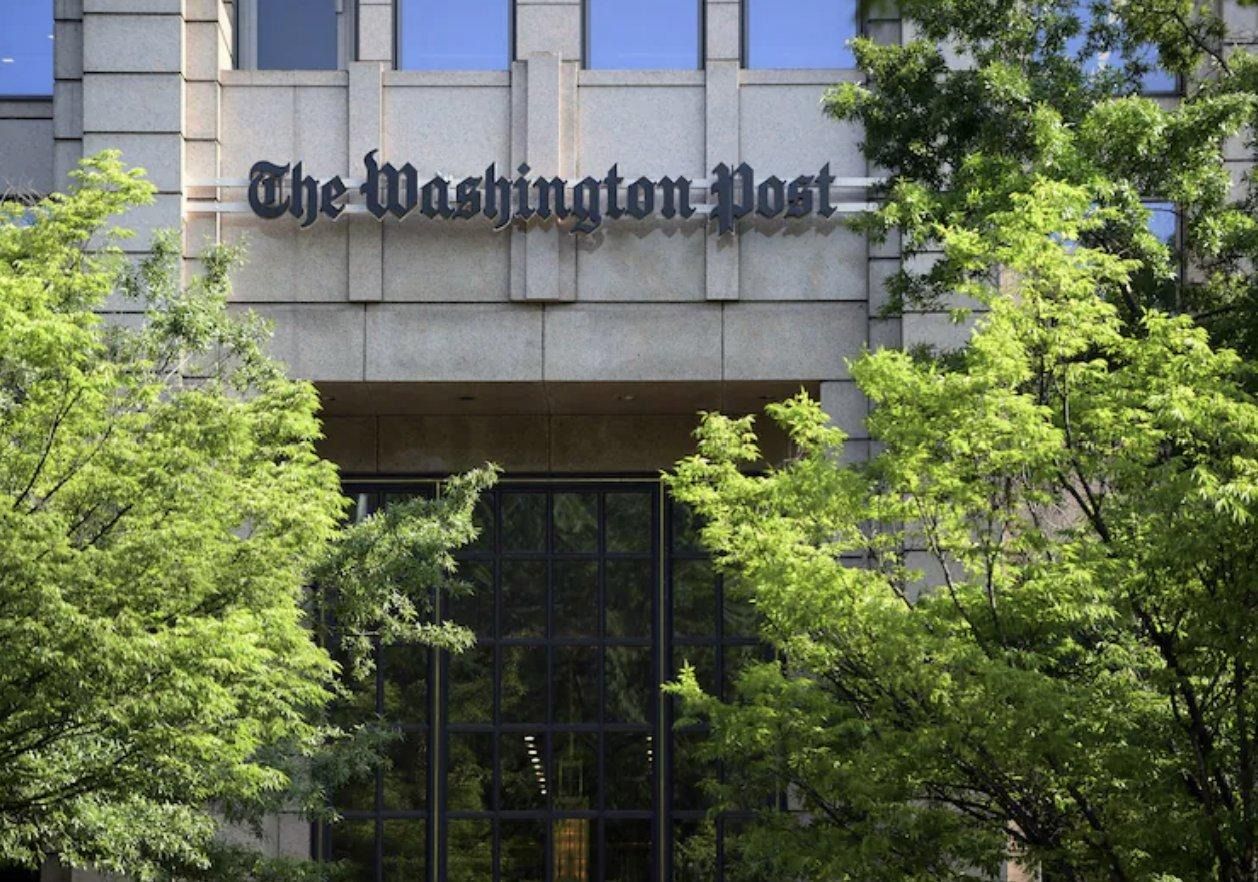
The Washington Post headquarters at One Franklin Square, Washington, D.C.
The Washington Post announced Saturday evening that CEO and Publisher Will Lewis would resign effective immediately, capping a tumultuous two-year tenure defined by newsroom conflict, subscriber hemorrhaging, and a controversial leadership style. The departure came just three days after the 150-year-old newspaper laid off roughly one-third of its workforce — including more than 300 of its 800 newsroom journalists — in the most sweeping cuts in its modern history.
 Jung Han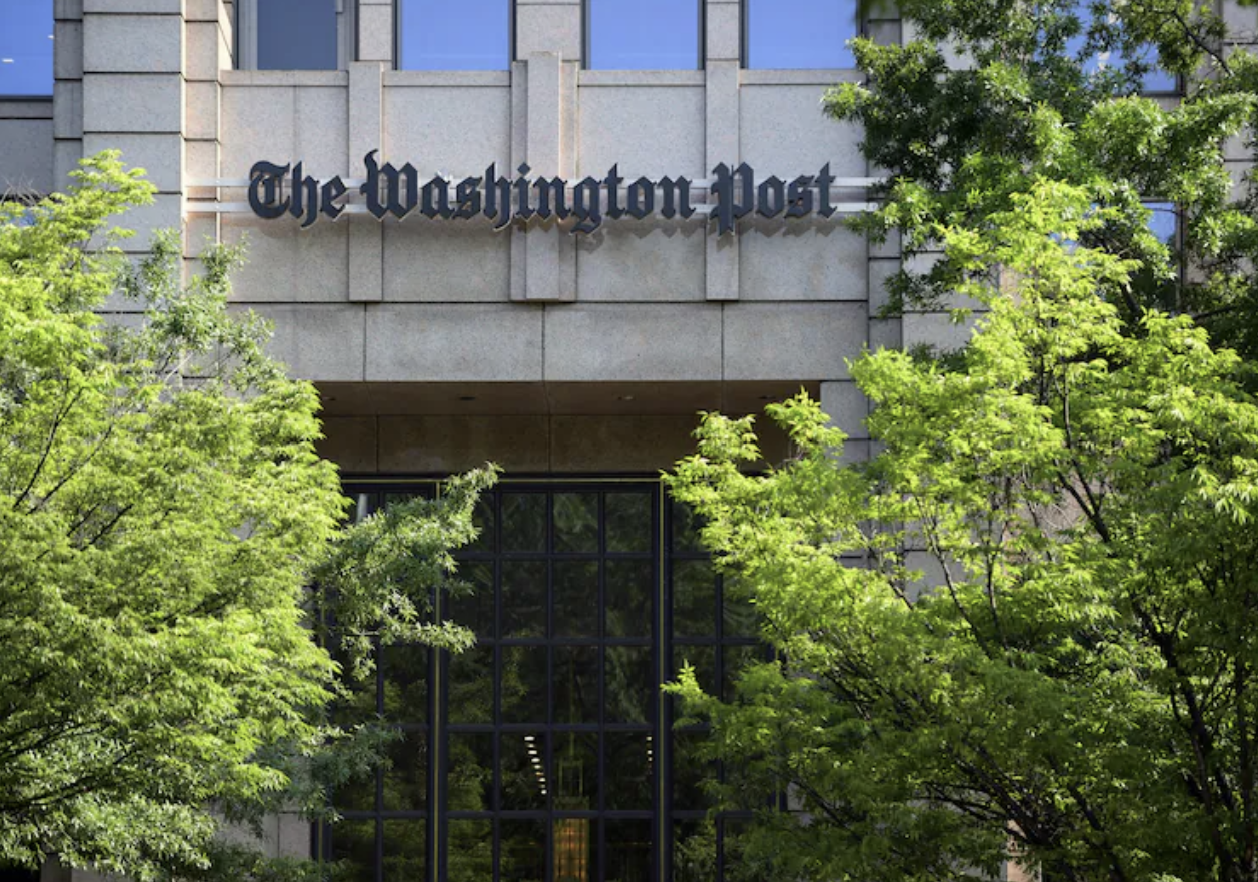
Jeff D'Onofrio, the paper's chief financial officer since June 2025, was immediately named acting publisher and CEO. Owner Jeff Bezos, who had remained silent for five days after the layoffs were announced, issued his first public statement simultaneously with Lewis's departure.
"After two years of transformation at The Washington Post, now is the right time for me to step aside," Lewis wrote in a memo to staff. "I want to thank Jeff Bezos for his support and leadership throughout my tenure as CEO and Publisher. The institution could not have a better owner."
NPR characterized his tenure as "defined by turbulence rather than a clear path."
On Wednesday, February 4, Washington Post employees received a 6 a.m. email from Executive Editor Matt Murray and the head of human resources instructing them to stay home. At 8:30 a.m., Murray delivered the news alone on a Zoom call: the paper would undergo a "broad strategic reset" resulting in a "significant staff reduction." Lewis did not participate.
In an internal memo, Murray cited the structural decline of search-driven traffic as a primary driver: "Platforms like Search that shaped the previous era of digital news, and which once helped the Post thrive, are in serious decline. Our organic search has fallen by nearly half in the last three years. And we are still in the early days of AI-generated content, which is drastically reshaping user experiences and expectations."
The Washington-Baltimore News Guild, which represents Post journalists, condemned the cuts: "Management has framed these decisions as unavoidable, but they are the result of choices. Choosing to cut staff instead of recommitting to the people who produce The Post's journalism is a failure of leadership and vision."
Among those laid off were Amazon beat reporter Caroline O'Donovan, who wrote: "Today I was laid off from my job covering Amazon for Jeff Bezos's Washington Post."
Race and ethnicity reporter Emmanuel Felton said: "This comes six months after hearing in a national meeting that race coverage drives subscriptions. This wasn't a financial decision, it was an ideological one." The entire Middle East correspondent roster, the Cairo bureau chief, the Asia editor, and correspondents covering China, Iran, Turkey, Ukraine, and South Asia were all eliminated.
A Pattern of Absence
Lewis was named CEO and publisher in November 2023, taking the post in January 2024. A veteran British media executive, he previously served as CEO of Dow Jones (parent of The Wall Street Journal), editor of The Daily Telegraph, and general manager of News International during the phone hacking crisis — a history that would later haunt his Post tenure.
His leadership was marked by controversy from the start. In April 2024, he announced a "third newsroom" reorganization plan that led to the effective ouster of Executive Editor Sally Buzbee, who viewed her reassignment as a demotion and resigned. Staff told The New Yorker that they "attributed their departures to Lewis's lack of a discernible plan for the paper." Columbia Journalism Review documented a steady exodus of top talent under his watch.
The final straw came during the layoff week itself. Lewis was absent from the all-staff Zoom call where Murray announced the cuts. The following day, Thursday, February 6, he was photographed attending the NFL Honors ceremony — a Super Bowl event — in San Francisco while Post journalist Sarah Kaplan protested outside the newspaper's D.C. headquarters. The juxtaposition became an instant symbol of the gulf between management and the newsroom.
According to TheWrap, multiple Post staffers "expressed glee" at Lewis's departure, with one saying it was "really great he finally left." Another added: "It leaves some small hope that we've hit rock bottom. But I've thought that before."
The Successor: Jeff D'Onofrio
D'Onofrio joined the Post in June 2025 as CFO following leadership roles at Raptive (a digital advertising company), Tumblr (where he served as CEO), Yahoo, and Google. His tech-industry background signals a likely emphasis on digital transformation and data-driven business strategy.
In his memo to staff, D'Onofrio acknowledged the pain of the moment: "We are ending a hard week of change with more change." He continued: "The Post's resolute commitment to writing the first rough draft of history anchors and imprints its future. I am honored to become part of charting that future and to take the lead in securing both the legacy and business of this fierce, storied American institution."
Bezos Breaks Silence
Bezos had not commented publicly during the five days between the layoff announcement and Lewis's departure. His Saturday statement finally came: "The Post has an essential journalistic mission and an extraordinary opportunity. Each and every day our readers give us a roadmap to success. The data tells us what is valuable and where to focus."
He designated D'Onofrio, Executive Editor Matt Murray, and Opinion Editor Adam O'Neal as the new leadership troika, saying they "are positioned to lead the Post into an exciting and thriving next chapter." The emphasis on "data" as a guiding principle drew immediate attention from media observers.
Internal data shared with Semafor revealed a staggering trajectory: daily digital traffic plunged from approximately 22.5 million users in January 2021 to between 2.5 and 3 million by mid-2024. As former Executive Editor Martin Baron told PBS: "They've called it a reset. It looks more like a retreat."
The losses are especially striking given Bezos's personal wealth. As multiple commentators noted, at the current loss rate of $100 million annually, Bezos could fund the Post for 50 years and spend less than 2% of his fortune. He recently spent $75 million producing and marketing a documentary about Melania Trump and owns a $500 million yacht with a separate support vessel.
4.1 The 'Trump Bump' Hangover
The Post thrived during Trump's first term (2017-2021), positioning itself as the center of resistance journalism and experiencing a subscriber surge. The so-called "Trump Bump" evaporated after the Biden inauguration, with daily active users falling 87%. The paper never developed a sustainable audience strategy independent of political polarization — a structural vulnerability that industry analysts had long warned about.
4.2 Bezos's Strategic Pivot and Subscriber Hemorrhaging
Two decisions by Bezos triggered cascading subscriber losses. In October 2024, he killed a planned editorial endorsement of Kamala Harris, prompting 250,000+ cancellations. In February 2025, he directed the opinion section to advocate exclusively for "personal liberties and free markets," causing Opinion Editor David Shipley to resign. Within days, 75,000 more subscribers departed. A chain of high-profile exits followed: longtime columnist Ruth Marcus, Pulitzer winner Eugene Robinson, editorial cartoonist Ann Telnaes, and columnist Karen Attiah, among others.
Baron, who led the newsroom during its golden years under Bezos, was withering in his assessment: "Bezos's ill-conceived decisions, including killing the endorsement, drove loyal subscribers away by the hundreds of thousands. He once often declared that The Post's success would be among the proudest achievements of his life. I wish I detected the same spirit today."
4.3 AI's Destructive Impact on the News Business Model
Murray explicitly identified AI as the central structural driver behind the layoffs. Generative AI tools — from Google's AI Overviews to ChatGPT — are directly cannibalizing the organic search traffic that sustained digital advertising models for legacy news organizations. The Post's 50% decline in organic search over three years is a leading indicator of a broader industry transformation. This represents not merely a cyclical downturn but a fundamental disruption of how news reaches audiences and generates revenue.
4.4 The New York Times Gap
Operating in the same market environment, The New York Times has successfully diversified through a bundle strategy incorporating games (Wordle), cooking, sports (The Athletic), and audio, building a subscriber base exceeding 11 million. The Post, by contrast, remained largely dependent on a single news-subscription model without meaningful differentiation. Industry observers now note that the Post appears to be shrinking toward competition with specialized political publications like Politico and Punchbowl rather than maintaining rivalry with the Times as a comprehensive news organization.
4.5 The Big Tech Ownership Paradox
Bezos's ownership has become an increasingly fraught dynamic. His business empire — Amazon and Blue Origin — maintains complex relationships with the Trump administration. Just days before the layoffs, Bezos hosted Defense Secretary Pete Hegseth at Blue Origin's facilities.
The perception that Bezos is using the Post to curry political favor, combined with his overt intervention in editorial direction, has exposed the structural risks of billionaire media ownership. Former executive editor Marcus Brauchli told NPR: "The Post occupies a singular place in American journalism. It needs visionary and independent stewardship that is equal to its journalism."
Inside the Newsroom
The newsroom reaction was a mix of outrage and bitter resignation. White House bureau chief Matt Viser and seven colleagues wrote to Bezos before the cuts: "If the plan, to the extent there is one, is to reorient around politics we wanted to emphasize how much we rely on collaboration with foreign, sports, local — the entire paper, really. And if other sections are diminished, we all are."
The Post Guild held a rally outside the paper's K Street headquarters on Thursday. Their statement read: "These layoffs are not inevitable. A newsroom cannot be hollowed out without consequences for its credibility, its reach and its future. Now is the time to stand in solidarity with our laid-off colleagues and with those who remain, who will now be asked to do more with less."
Former sports columnist Sally Jenkins condemned the "incredible incompetence and pusillanimity" of Lewis and Murray. Former owner Donald Graham personally reached out to laid-off employees to offer references and flag job opportunities — a gesture that went viral when the Post's current owner remained silent.
Industry Response
Carl Bernstein, the legendary Watergate reporter, said Bezos is "at odds with" the Post's democratic mission. National Press Club president Mark Schoeff Jr. stated: "When newsrooms shrink, accountability shrinks with them, and the public is left with fewer facts and fewer answers."
Baron was the most prominent critic, telling CNN: "The Washington Post's ambitions will be sharply diminished, its talented and brave staff will be further depleted, and the public will be denied the ground-level, fact-based reporting in our communities and around the world that is needed more than ever."
Washington, D.C. Metro General Manager Randy Clarke lamented: "The Metro Section was the only real reason I subscribed. All the President's Men made me love & respect news."
7.1 Accelerating Decline of U.S. Legacy Newspapers
The Post crisis encapsulates a structural transformation across the American newspaper industry. According to Northwestern University research, 136 newspapers closed in the past year alone. Since 2005, the U.S. has lost more than a quarter of its newspapers — approximately 2,500 publications. U.S. Census Bureau data shows newspaper industry revenue declining from $46.2 billion in 2002 to $22.1 billion in 2020. The Post, once considered insulated from these trends by Bezos's deep pockets, now stands as the most high-profile casualty of the digital transition.
7.2 The AI Reckoning for News
Murray's explicit citation of AI as the central cause represents a watershed acknowledgment from a major news organization. Generative AI is not merely an efficiency tool for newsrooms — it is a direct competitive threat that replaces the search-driven discovery model that sustained digital journalism for two decades. As AI-generated summaries replace the need to click through to source articles, the entire advertising-supported news model faces existential pressure. This has profound implications for every news organization globally.
7.3 The Billionaire Media Ownership Model Under Scrutiny
Bezos's decision to let the Post bleed rather than cover relatively modest losses (relative to his net worth) raises fundamental questions about billionaire media ownership. The emerging pattern — from the Post to Bezos's broader political positioning — suggests that personal business interests can override journalistic independence in ways that may be invisible to readers until the damage is done. As Sally Quinn, the veteran Post contributor and wife of legendary editor Ben Bradlee, told The New Yorker: "In the beginning, he was wonderful."
7.4 Implications for Global Media Markets
For international media markets, the Post crisis offers three key lessons. First, AI-driven traffic disruption is a universal threat that will hit every market where search-driven audience discovery exists. Second, the New York Times bundle model versus the Post's single-product failure provides a clear case study in digital diversification strategy. Third, the massive talent displacement from U.S. legacy media creates both challenges and opportunities — skilled journalists entering the market, potential for new media ventures, and demand for AI-powered newsroom solutions from technology providers worldwide.
In the near term, the D'Onofrio acting-CEO arrangement is likely transitional. The appointment of a CFO with a tech-industry background suggests an acceleration of cost-driven, data-centric management. Further restructuring is probable. The leadership troika of D'Onofrio, Murray, and O'Neal — all relatively new to the Post — will need to stabilize a demoralized organization while demonstrating a viable business path.
In the medium term, the Post appears to be narrowing into a specialized politics-and-national-security publication, effectively conceding the comprehensive-journalism competition to the New York Times. Bezos's emphasis on "data" as a guide to what is "valuable" signals an audience-analytics-driven editorial strategy that could further erode the Post's distinctive journalistic identity.
The longer-term question is whether Bezos will retain ownership. Several Post journalists have privately expressed hope that he would sell, though no buyer has emerged. For now, the most likely scenario is a diminished Post operating in survival mode — profitable through cuts rather than growth, and increasingly distant from the institution that won 76 Pulitzer Prizes and toppled a presidency.
As one Post staffer told TheWrap: "It leaves some small hope that we've hit rock bottom. But I've thought that before."
Appendix: Key Timeline
Sources
Axios — Sara Fischer, Kerry Flynn, "Washington Post names acting CEO as Will Lewis exits" (Feb 8, 2026)
NPR — David Folkenflik, "Washington Post CEO Will Lewis resigns after massive layoffs" (Feb 7, 2026)
Deadline — Ted Johnson, "Washington Post Publisher Will Lewis Resigns After Jeff Bezos-Owned Media Outlet Laid Off 1/3 Of Staff" (Feb 8, 2026)
TheWrap — Sharon Waxman, "Will Lewis Steps Down as Washington Post CEO Days After Mass Layoffs" (Feb 8, 2026)
NBC News — "Will Lewis out as publisher and chief executive of The Washington Post" (Feb 8, 2026)
The Hollywood Reporter — "Will Lewis Out as Washington Post CEO After Layoffs, Jeff D'Onofrio Succeeds" (Feb 8, 2026)
CNN — Oliver Darcy, "Jeff Bezos-owned Washington Post conducts widespread layoffs, gutting a third of its staff" (Feb 4, 2026)
CNN — Oliver Darcy, "Jeff Bezos remains committed to Washington Post amid brutal layoffs, top editor Matt Murray says" (Feb 4, 2026)
Poynter — Angela Fu, "The Washington Post lays off a third of its staff" (Feb 4, 2026)
Variety — Todd Spangler, "Jeff Bezos' Washington Post Cuts 30% of Staff, Laying Off More Than 300 Employees" (Feb 4, 2026)
PBS NewsHour — Geoff Bennett, "Sweeping layoffs at The Washington Post will do 'enormous damage,' former editor says" (Feb 4, 2026)
CBS News — "Washington Post begins sweeping layoffs as it sharply scales back news coverage" (Feb 5, 2026)
Columbia Journalism Review — "The Exodus from the Washington Post" (2026)
Status News — "Bezos' WashPost Bloodletting" (Feb 5, 2026)
Washingtonian — "The Washington Post Laid Off One-Third of Its Staff. The Internet Has Thoughts." (Feb 5, 2026)
The Hill — "Washington Post loses 75K subscribers after Bezos-ordered op-ed pivot" (Feb 2025)
Wall Street Journal (via CBS Austin) — "Washington Post lost $100 million last year amid staff shakeups" (Jan 2025)
Wikipedia — "The Washington Post" and "William Lewis (journalist)" (retrieved Feb 2026)




![[투비]The Stream 2026: When Intention Becomes Attention](https://cdn.media.bluedot.so/bluedot.kentertechhub/2026/03/6h3xe4_202603220154.png)

![[SXSW2026]에이미 웹 트렌드 리포트(Convergence
Outlook 2026)](https://cdn.media.bluedot.so/bluedot.kentertechhub/2026/03/kty3s8_202603152312.png)






![[보고서]전통 언론사의 크리에이터 전략 대전환](https://cdn.media.bluedot.so/bluedot.kentertechhub/2026/02/0nwc9z_202602100212.png)