
How Content Fragmentation and Discovery Fatigue Are Reshaping the Streaming Survival Equation
Streaming monthly churn has surged from 2% to 5.5% in five years. Forty-one percent of subscribers tell Deloitte their services aren't worth the price they pay. These are not content quality problems. They are discovery failures — and they are quietly bankrupting the streaming industry's growth story.
 Jung Han
That is the structural crisis Gracenote, a Nielsen company, quantifies in its sweeping 2026 Generative AI Usage Study — a survey of more than 4,000 U.S. internet and AI chatbot users, paired with its 2025 Streaming Consumer Survey of 3,000 streaming consumers across six countries. The data makes a blunt case: the transition to LLM-powered content discovery is already underway, and the platform that wins will not be the one with the most content — it will be the one whose AI guides viewers most accurately to what they want.
The headline number: 52% of U.S. consumers believe AI chatbots will become their favorite source for entertainment information. Among Gen Alpha (born 2010–2024), 88% say AI will be important to delivering good entertainment experiences. The technology is ready. The data needs to catch up.
The Content Flood — and the Collapse of Discovery
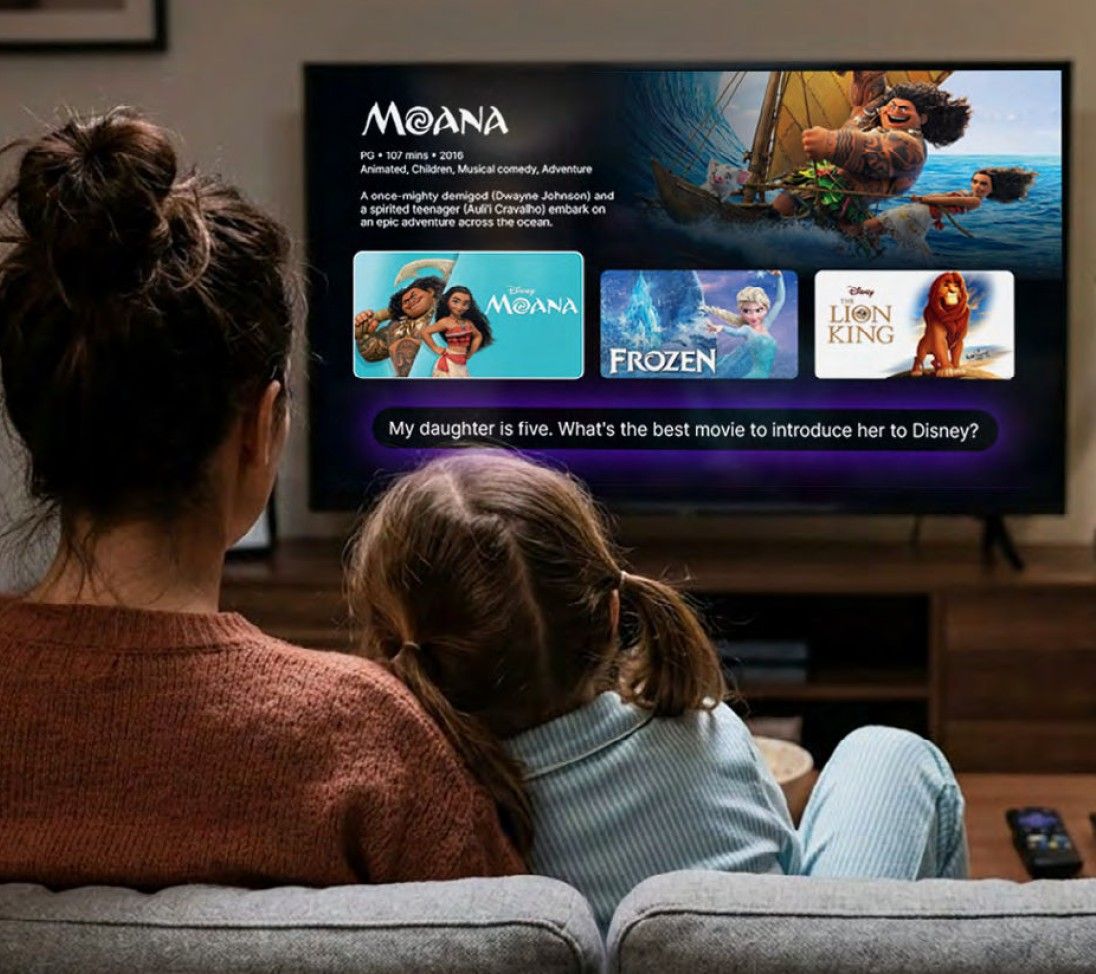
The streaming revolution gave audiences unprecedented freedom. It also gave them unprecedented fatigue. As of February 2026, Gracenote tracked more than 1.8 million program titles across nearly 350 SVOD catalogs, and nearly 210,000 program titles across approximately 2,100 individual FAST channels. Add the vast catalog extensions of virtual MVPDs — Sling TV, YouTube TV, Philo — and the universe of content available to any given viewer is functionally infinite.
Supply shows no signs of slowing. According to the Gracenote Studio System, new TV program releases peaked at 3,038 in 2022 before a modest pullback, but still totaled 2,066 in 2025. New movie releases stood at 1,190. Over the past year, the five streaming services tracked in the Gracenote Data Hub collectively grew their catalogs by 20%. The finite rail space of any platform UI cannot surface all of this — deep library titles are increasingly invisible to viewers who don't know to search for them.
Library Content Outperforms Originals — When Viewers Can Find It
A counterintuitive data point from Nielsen Streaming Content Ratings reveals what is at stake. In 2025, the top 10 most-watched TV shows distributed by streamers after airing on traditional TV — licensed programs — drove 81% more viewing minutes than original streaming programs. Bluey (45.2 billion minutes), Grey's Anatomy (40.9B), NCIS (36.9B), The Big Bang Theory (32.4B), and Family Guy (33.4B) collectively dwarfed the total viewing of Netflix originals including Stranger Things (40B), Squid Game (22.4B), and Wednesday (20B).
The implication is stark: a platform's retention value lies not in a handful of prestige originals, but in the depth and accessibility of its entire library. If viewers cannot find library content, that value is unrealized. This is the structural case for AI-powered discovery as a revenue-critical capability, not a nice-to-have feature.
Discovery Failure Drives Churn
Viewers spend an average of 14 minutes searching for something to watch. Among the 18–34 cohort, that rises to 16 minutes. Thirty-two percent of Americans say the abundance of choices is negatively affecting their TV experience — a number that climbs to 48% among 18–34-year-olds. More acutely, 26% say they know exactly what they want to watch but still cannot find it. The problem is not a shortage of content. It is a failure of navigation.
That failure converts directly into churn: 54% of people aged 18–34 say they would cancel a service because they cannot find something to watch. Fifty percent of all U.S. TV viewers say the same. Service bundling effectively reduces price-driven churn, but it does nothing to solve the discovery problem. Churn that stems from a broken search experience requires a different fix entirely.
"51% of Americans say it's getting too hard to find the content they want to watch because there are too many services available." — 2025 Gracenote Streaming Consumer Survey
The Rise of the AI Chatbot — A New Discovery Interface
The structural frustration of content overload is pushing viewers toward AI chatbots. Since the public launch of ChatGPT in November 2022, AI chatbots have become default information tools for large segments of consumers — particularly digital natives. They are now embedded in traditional search engines like Google and Bing, and are being actively integrated into major CTV platforms: Amazon Fire TV has deployed a proprietary LLM for content search; Google has integrated Gemini into Android TV; Roku is expanding AI-powered voice search. Conversational content discovery is no longer a prototype — it is in production.
Gracenote's 2026 study finds that 66% of Americans report using AI chatbots more than they did a year ago, and 75% across all age groups use them daily or multiple times a week. Usage growth is highest among Gen Alpha (80% increased use in 18 months), followed by Gen X (69%), Gen Z and Millennials (65% each), and Boomers (63%).
Gen Alpha: AI Is Already Second Nature
The generational data tells a story of irreversible behavioral shift. Among Gen Alpha (ages 13–14 in this study), 54% use AI chatbots every day — up sharply from the 30% daily usage rate Pew Research Center recorded among teens in fall 2025, just months earlier. The acceleration is documented. More significantly, 46% of Gen Alpha already find AI more familiar than traditional search; only 34% prefer traditional search. This is the first generation for whom AI is the default, not the alternative.
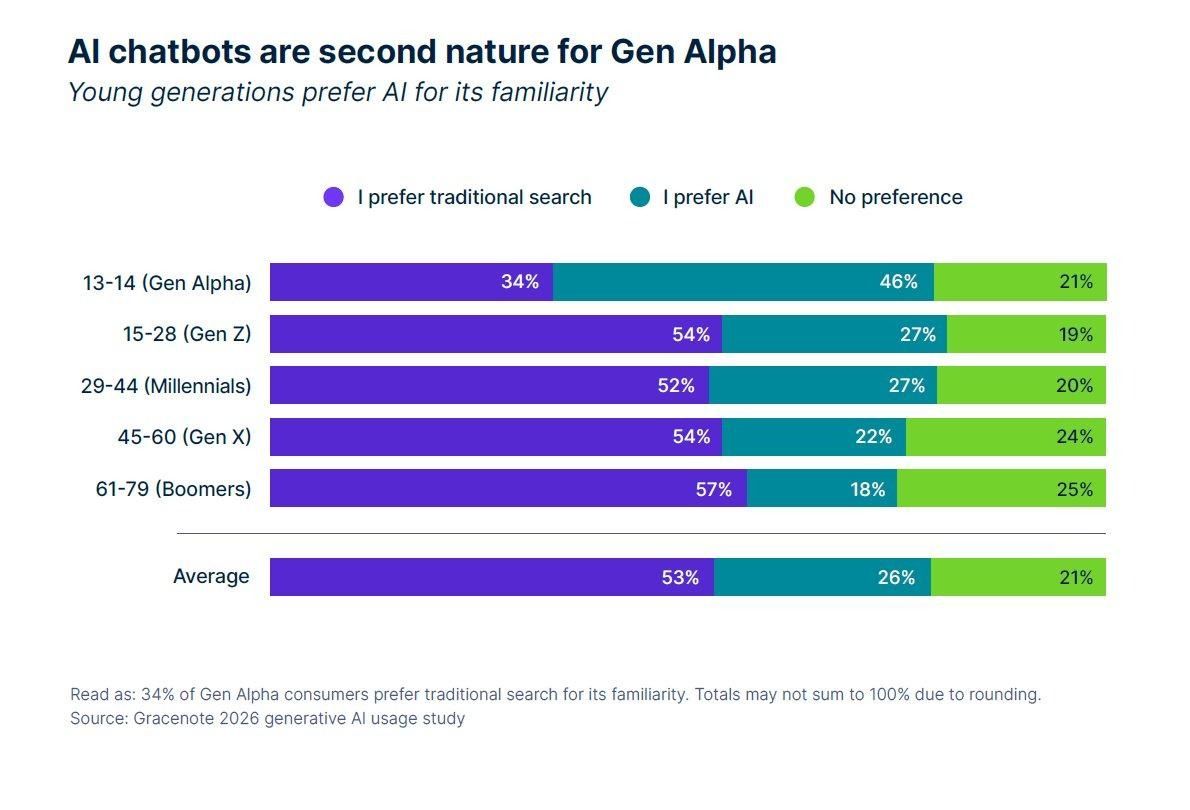
Figure 1. Preference for Traditional Search vs. AI Chatbot, by Generation
Gen Alpha (ages 13–14) has already flipped the preference: 46% prefer AI vs. 34% for traditional search. Overall average remains traditional search 53% vs. AI 26% — but the trajectory is clear. Source: Gracenote 2026 GenAI Usage Study
Across older demographics, traditional search still leads in aggregate preference — 53% overall versus 26% for AI. But this gap reflects ingrained habits, not a genuine assessment of utility. As Gen Alpha ages into the primary streaming demographic over the next decade, the aggregate numbers will follow their preferences decisively.
Entertainment and Sports: Where AI Dependency Is Already Acute
The single greatest driver of AI adoption for entertainment purposes is the same fragmentation that drives churn: consumers cannot reliably find where their content lives. Across multiple platforms, apps, and virtual MVPDs, even a simple question — "Where is that show?" — frequently defeats traditional search. AI offers a conversational path through the maze.
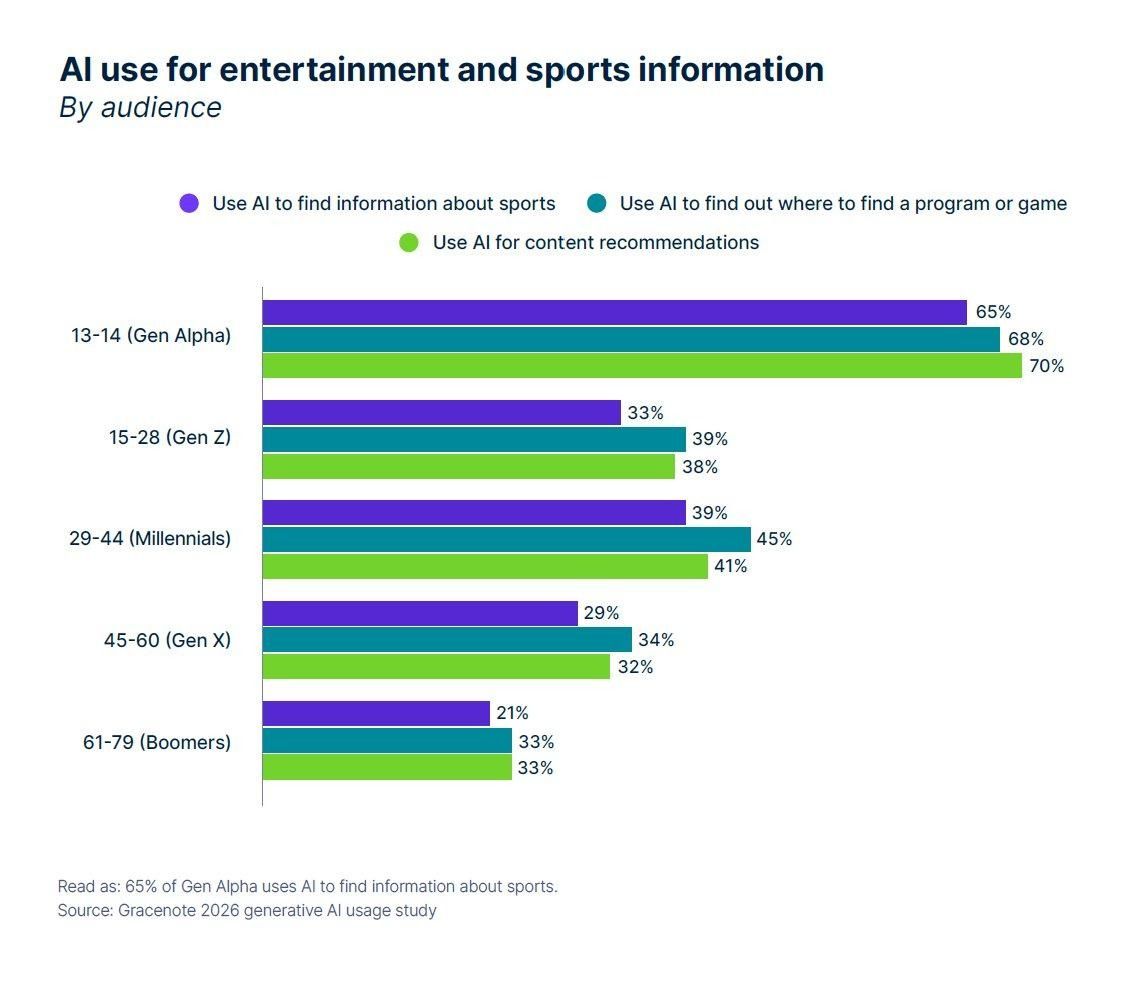
Figure 2. AI Use for Entertainment and Sports Information, by Generation
Gen Alpha: sports info (65%), finding where to watch (68%), content recommendations (70%). Millennials lead on finding where to watch (45%) — the highest across all age groups. Source: Gracenote 2026 GenAI Usage Study
Among Gen Alpha, 65% use AI to find sports information, 68% use it to locate where a specific program or game is streaming, and 70% rely on it for content recommendations. Millennials, who represent the core paying subscriber base for most streaming services, report a 45% usage rate for finding where to watch — the highest of any generation — and 41% for content recommendations. These are not marginal users experimenting with a new tool. They are primary consumers redirecting their discovery behavior.
The scope of AI utilization extends beyond transactional search. Among Gen Alpha, 20% use AI chatbots for companionship, 28% for emotional motivation, and 34% to practice social skills. Non-judgmental listening registers at 18%. AI is evolving from a search interface into a life interface. Entertainment platforms that conceptualize AI solely as a search box are likely underestimating what their next-generation users will expect.
The Trust Paradox — Heavy Use, Low Confidence
The single most consequential tension in the Gracenote data is what the report calls a "somewhat paradoxical" finding: consumers are using AI chatbots at high and growing rates while simultaneously not trusting the results they produce. Seventy-five percent of respondents say they verify AI chatbot responses — and they do so primarily by cross-checking with a traditional internet search. Gen Alpha (74%), Gen Z (78%), Millennials (78%), Gen X (70%), and Boomers (58%) all fact-check at majority rates.
Traditional search retains meaningful leads on trustworthiness (50% vs. 27%) and accuracy (46% vs. 33%). Seventy-seven percent of Americans express specific concerns about AI results. The most common concern across demographics is inconsistency of results, followed closely by the "sounds true but isn't" problem — AI-generated responses that are plausible but factually incorrect, a phenomenon technically described as hallucination. The content category respondents trust AI least for is news (42%). Second — and most relevant here — is TV and movie recommendations (16%). For streaming platforms, this is a material risk signal. In an environment where content options are abundant, consumers are unlikely to give individual publishers a second chance to repair a bad first impression.
Why They Still Choose AI Anyway
Yet the distrust does not translate into avoidance. The reason is clear in the preference data: AI delivers experiences that traditional search structurally cannot. Across five functional attributes — direct answers, comprehensive results, complex question capability, follow-up question capability, and contextual search — AI is preferred by majorities in every category and across all age groups.
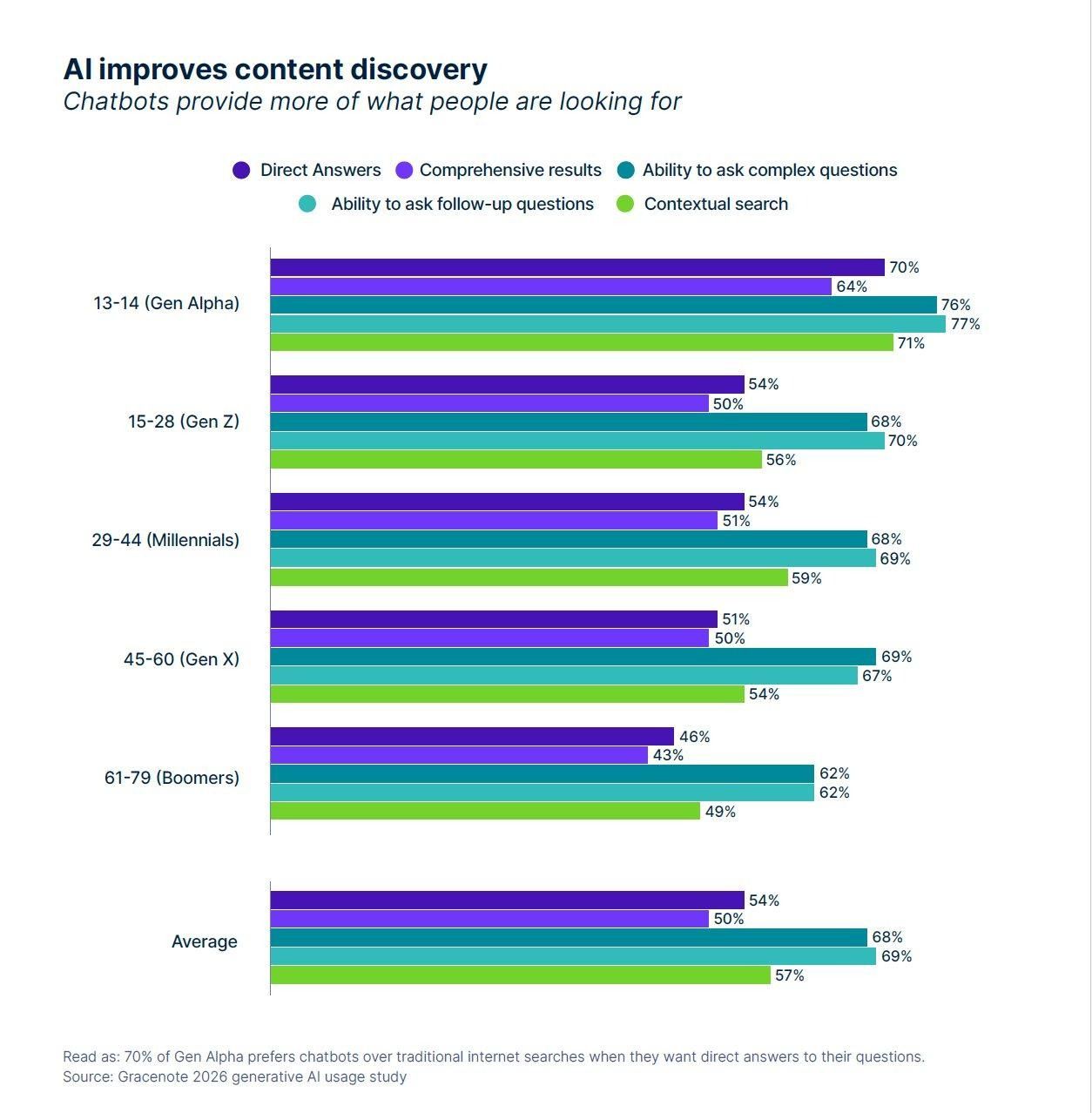
Figure 3. Where AI Outperforms Traditional Search: Five Discovery Capabilities
Gen Alpha shows 64–77% preference for AI across all five dimensions. Even Boomers prefer AI for complex questions (62%) and follow-up questions (62%). Average preferences: complex questions 68%, follow-up questions 69%, contextual search 57%. Source: Gracenote 2026 GenAI Usage Study
Among Gen Alpha, preference for AI reaches 70% for direct answers, 64% for comprehensive results, 76% for complex questions, 77% for follow-up questions, and 71% for contextual search. The overall averages across all demographics are: complex questions 68%, follow-up questions 69%, contextual search 57%, direct answers 54%, and comprehensive results 50%. Critically, even Boomers — the most skeptical generation on AI accuracy — prefer AI for complex questions (62%) and follow-up questions (62%). The perceived utility of conversational AI transcends generational skepticism about its accuracy.
The behavioral conclusion: consumers are willing to tolerate imperfect AI because its conversational advantages over traditional search are real and compelling. The practical implication for platforms: grounding AI results in accurate, current, verified data is the lever that converts tolerance into trust — and trust into retention.
Grounding: The Technical Bridge from Useful to Trustworthy
The precision of AI chatbot responses depends fundamentally on the quality of the data underpinning them. LLMs do not retrieve data — they probabilistically synthesize it. That synthesis can produce responses that sound authoritative but are incorrect, outdated, or hallucinated. "Grounding" — connecting an LLM to supplemental, validated real-world knowledge sources — is the established technical approach for mitigating these failure modes.
The scale of the data quality problem is larger than commonly understood. A study by researchers at the University of Southern California found that up to 38% of the common sense "factual" data used in two major AI databases was biased — meaning more than one-third of foundational training data reflected an inaccurate view of real-world facts before any query was ever processed. In entertainment, where availability data changes daily across hundreds of platforms and catalogs, even well-trained LLMs rapidly become stale without active grounding.
A 2025 Veed Analytics study tested ChatGPT, Claude, Gemini, and Perplexity on content discovery tasks. Only two-thirds of results correctly identified where to find a specific program. Just 31% provided a deep link to the title. The most basic entertainment discovery query — "Where can I watch this?" — fails roughly one in three times across leading AI platforms. This is the accuracy gap that represents both the industry's current challenge and its most immediate commercial opportunity.
MCP: Keeping LLM Knowledge Current Without Retraining
Model Context Protocol (MCP) has emerged as a practical infrastructure solution for real-time data grounding. Unlike fine-tuning or retraining an LLM — which is expensive, time-consuming, and creates a new knowledge cutoff date the moment it completes — MCP connects a deployed LLM to external, industry-validated data sources at inference time, ensuring that responses reflect current availability, scheduling, and catalog data.
Gracenote has built a Video MCP server product that connects content providers' LLMs to its metadata at scale. The Gracenote Video Data platform covers more than 80 countries and territories in over 70 languages, with TV listings data for 75,000+ linear channels, more than 2,100 FAST channels, and availability data for 300+ streaming catalogs. Recent partnerships with Google TV and Samsung's CTV platforms establish Gracenote metadata as a grounding layer for AI-powered discovery experiences on two of the largest CTV platforms in the world.
"Our bet is that all players within the CTV space will be using LLMs as the primary mechanism for them and their consumers to interface with media metadata. We think this is going to happen very slowly at first and then all at once."
— Tyler Bell, SVP of Product, Gracenote
The Business Imperative — AI Discovery as a Revenue Variable
The case for AI-powered content discovery is not primarily a technology argument — it is a financial one. PwC's most recent Entertainment & Media Outlook projects consumer spending on OTT services and pay TV will reach $318.5 billion in 2029, noting that OTT spending will eclipse pay TV in 2027. In a market of this scale, small improvements in discovery efficiency translate directly into material revenue impact.
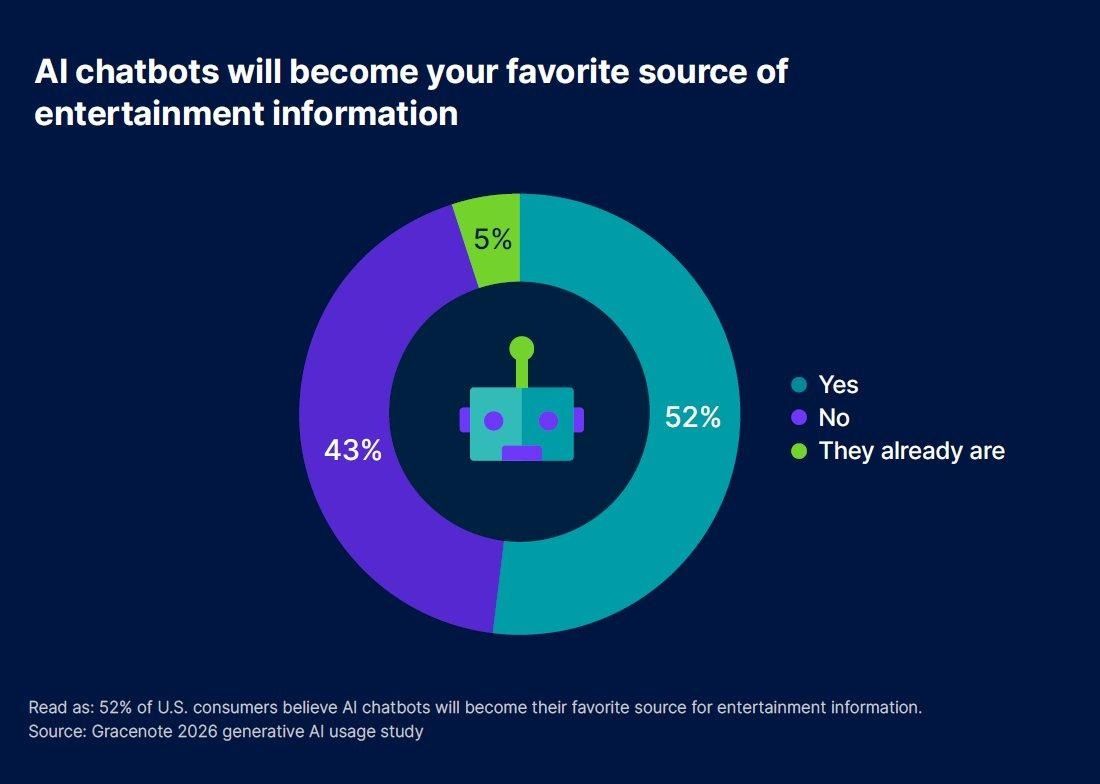
Figure 4. Will AI Chatbots Become Your Favorite Source for Entertainment Information?
52% of U.S. consumers say 'Yes.' An additional 5% say AI chatbots already are. Only 43% say 'No.' Source: Gracenote 2026 GenAI Usage Study
Fifty-two percent of U.S. consumers believe AI chatbots will become their favorite source for entertainment information; 5% say they already are. Sixty-six percent believe AI will be important in providing good entertainment experiences overall. Among Gen Alpha, that figure reaches 88%. These are not aspirational numbers — they describe where consumer expectations are already heading, driven by daily AI chatbot usage patterns that are accelerating, not moderating.
The Discovery-Retention Equation
The financial link between discovery quality and subscription retention is quantifiable. Among 18–34-year-olds — the cohort that will define streaming's next decade — CTV accounts for 80% of TV usage, yet they spend 43% less time watching TV than older cohorts. They spend 16 minutes per day searching for content. This means an outsized share of their available viewing window is consumed by failed navigation, not actual viewing.
Every minute saved on discovery is a minute added to viewing. More viewing deepens catalog familiarity, increases the perceived value of the subscription, and reduces the probability of cancellation. The 54% of 18–34-year-olds who say they would cancel a subscription when they cannot find something to watch represent a cohort whose retention is directly conditional on discovery quality. Improving that experience is not a UX refinement — it is a churn management strategy.
The cost arithmetic reinforces this. Customer acquisition cost in streaming typically runs five to seven times the cost of retention. A platform that reduces monthly churn from 5.5% to 4.5% across a subscriber base of ten million retains 100,000 additional subscribers per month. At average revenue per user of $15–18, that is $1.5–1.8 million in recovered monthly revenue — from a one-percentage-point churn improvement. AI discovery quality is a measurable variable in that calculation.
41% of streaming subscribers say their services aren't worth what they pay. Monthly churn runs at 5.5%, up from 2% five years ago. Bundling controls price-driven churn. AI discovery controls content-driven churn. Both problems need solutions. — Deloitte 2025 Digital Media Trends · Broadband TV News
What This Means for the K-Content Industry
The Gracenote data was gathered in the United States, but its structural implications extend directly to the K-content ecosystem. South Korea occupies a distinctive position in the global media landscape: a tier-one content supplier to global OTT platforms, a domestic streaming market navigating its own fragmentation, and an active participant in the global FAST channel expansion. The competitiveness of K-content in the AI-powered discovery era will depend on three strategic priorities.
Priority 1: Build K-Content Metadata as a National Strategic Asset
In an AI-mediated discovery environment, content that lacks rich, accurate, and machine-readable metadata is effectively invisible. When a viewer asks a chatbot to "recommend Korean dramas with the same tension as Squid Game" or "find a K-thriller on Netflix that's under 45 minutes per episode," the quality of Gracenote-style metadata — covering genre, mood, character relationships, narrative structure, cultural context, and availability — determines whether K-content appears in the response at all.
Currently, Korean content metadata in international databases remains underdeveloped relative to its cultural export volume. The Korea Creative Content Agency (KOCCA), the Korea Communications Commission (KCC), and individual studios must collectively treat metadata standardization and AI training data development as a national industrial policy priority — on par with production incentives and export promotion. Singapore's IMDA has pioneered systematic AI readiness support for its media industry; Korea requires an equivalent framework.
Priority 2: Add AI Discoverability as a Layer to FAST Strategy
Gracenote's catalog of more than 2,100 FAST channels already includes significant K-content distribution from SBS, KBS, MBC, CJ ENM, and others. FAST has become a primary international distribution channel for Korean programming. But FAST reach is only realized when viewers can find it — and AI chatbots currently fail that task one-third of the time even for well-documented content.
Korean content companies expanding FAST footprint must now build AI discoverability into the distribution architecture itself: ensuring MCP-compatible metadata, maintaining real-time catalog synchronization with grounding data providers, and actively monitoring chatbot accuracy for their titles across major AI platforms. The strategic frame must shift from "getting the channel live" to "ensuring AI can find what's on it."
Priority 3: Domestic Platforms Must Invest Now in Conversational Discovery
Wavve, Tving, Watcha, and Coupang Play continue to rely on keyword-based search architectures that are structurally misaligned with how their youngest, highest-growth user cohorts now expect to find content. The global benchmark is moving rapidly: Amazon Fire TV, Google TV, and Roku have all deployed or are actively scaling AI-powered conversational discovery. Korean platforms that delay LLM-based recommendation and discovery investment will find themselves at a compounding experience disadvantage against internationally distributed services.
The stakes are amplified by demographics. Gen Alpha and Gen Z — the cohorts for whom AI is already the default — will be the defining streaming subscribers of the next decade. User habit formation is happening now. South Korea's Presidential AI Committee is accelerating national AI industrial policy across sectors; the media and entertainment vertical deserves explicit prioritization within that framework. The transition to AI-powered discovery is not a future technology question. It is a present competitive question.
K-content's global competitiveness is no longer solely a question of creative quality. Whether AI can accurately surface the right K-content for the right viewer — across metadata depth, discovery UX, and platform AI readiness — is the next competitive battleground.
The Right Story Must Find the Right Audience
Gracenote's core argument is strategically clean: the shift to LLM-powered content search and discovery is underway, its impact will be transformational, and the technology is ready. What determines the winners is not who builds the best LLM — it is who grounds that LLM in the most accurate, current, and trusted entertainment data.
The consumer data is unambiguous in its direction. Fifty-two percent of Americans expect AI to become their primary entertainment discovery tool. Sixty-six percent believe AI will be critical to good entertainment experiences. Among Gen Alpha, the number is 88%. The current accuracy gap — reflected in the 75% of users who fact-check AI responses and the 5% per-platform churn that content discovery failure generates — is not an argument against AI adoption. It is the precise argument for investing in the data quality that makes AI trustworthy.
"In a world of seemingly infinite choices, properly grounded LLMs can bring those unique value propositions to life, ensuring that the right story always finds the right audience."
— Gracenote, TV Search and Discovery in the AI Era (2026)
For streaming platforms, the operational translation is straightforward: AI-powered discovery is not a feature roadmap item for a future product cycle. It is a churn management imperative for the current one. For the K-content industry, the message is equally clear: the global discoverability of Korean content in the AI era will be determined less by what gets produced and more by whether AI systems have the data quality to find it, surface it, and route the right viewer to the right title — in any language, on any platform, at the moment of intent.
The clock Tyler Bell referenced — "slowly at first, and then all at once" — is already running.
Sources: Gracenote 2026 Generative AI Usage Study (Jan. 23 – Feb. 4, 2026; 4,000+ U.S. respondents); Gracenote 2025 Streaming Consumer Survey (July–Aug. 2025; 3,000 respondents across Brazil, France, Germany, Mexico, U.S., U.K.); Nielsen Streaming Content Ratings (2025); PwC Global Entertainment & Media Outlook; Deloitte 2025 Digital Media Trends; Veed Analytics 2025 Chatbot Content Discovery Study; Pew Research Center (2025); University of Southern California AI Bias Study. Analysis by K-EnterTech Hub.