[Samseog Ko's Insight]Co-Evolution, Not Competition: A Strategy for Korea-Malaysia Content Industry Partnership
by
2026년 2월 16일
![[Samseog Ko's Insight]Co-Evolution, Not Competition: A Strategy for Korea-Malaysia Content Industry Partnership](https://cdn.media.bluedot.so/bluedot.kentertechhub/2026/02/1fzdnf_202602170324.jpeg)
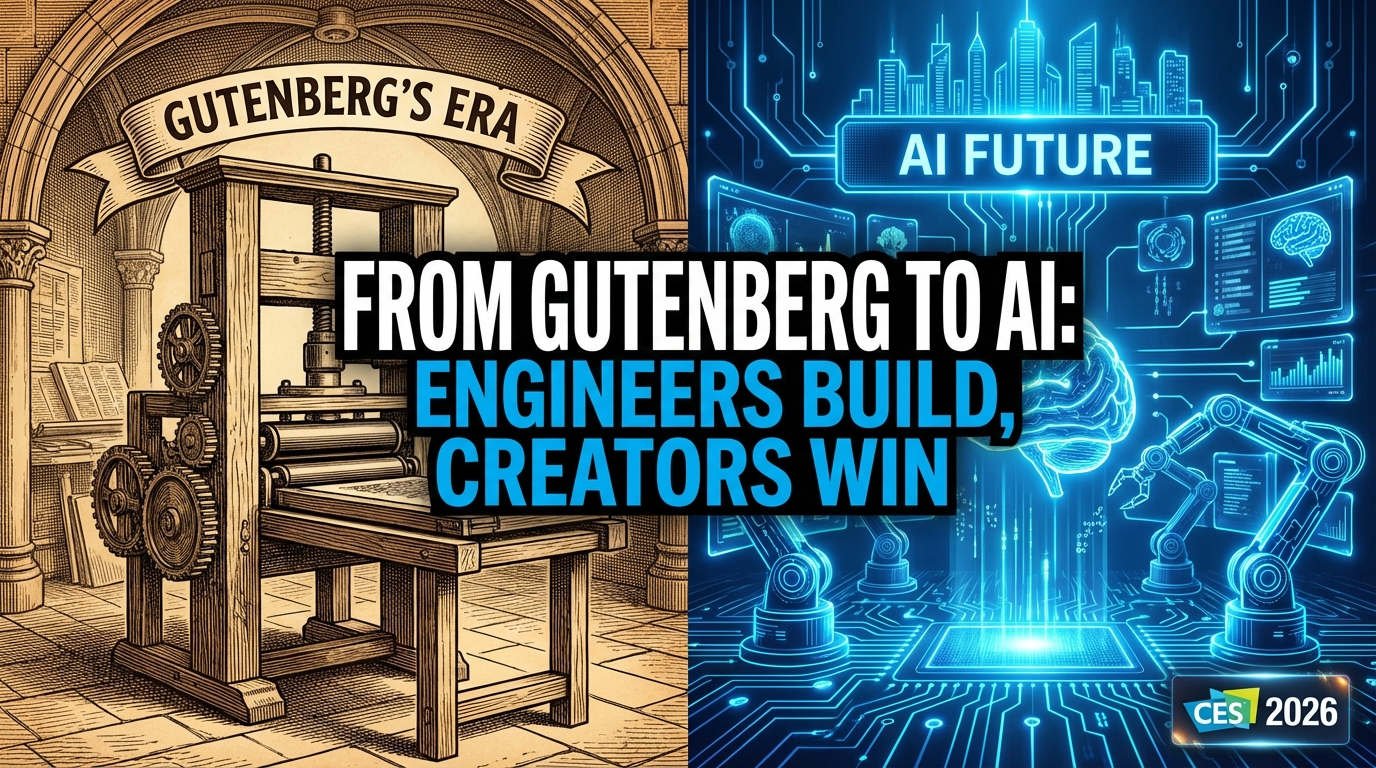
From Gutenberg's Press to AI: A Pattern Repeats
Why Engineers Build the Tools, But Content Creators Win the Revolution
A Journalism Scholar's Perspective on CES and the AI Revolution
Why Communication Researchers See History Repeating at the World's Biggest Tech Show
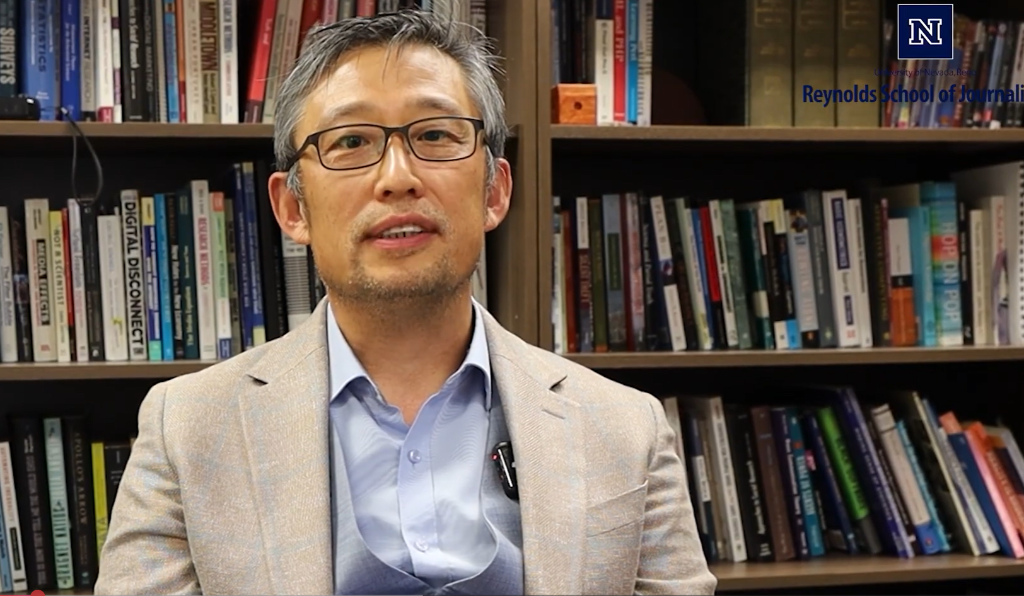
It is a pleasure to launch this column exploring the intersection of media, science, and technology. As a journalism and mass communication scholar, I have long been fascinated by this relationship. In fact, advancements in engineering and the "hard sciences" have often been the primary drivers of my media research.

History shows us that technology almost always precedes the media revolution.
When Gutenberg invented the printing press, he changed the course of humanity by democratizing access to knowledge. While the printing industry initially focused on the mechanical marvel of the press itself, the enduring business was built on the content within those pages.
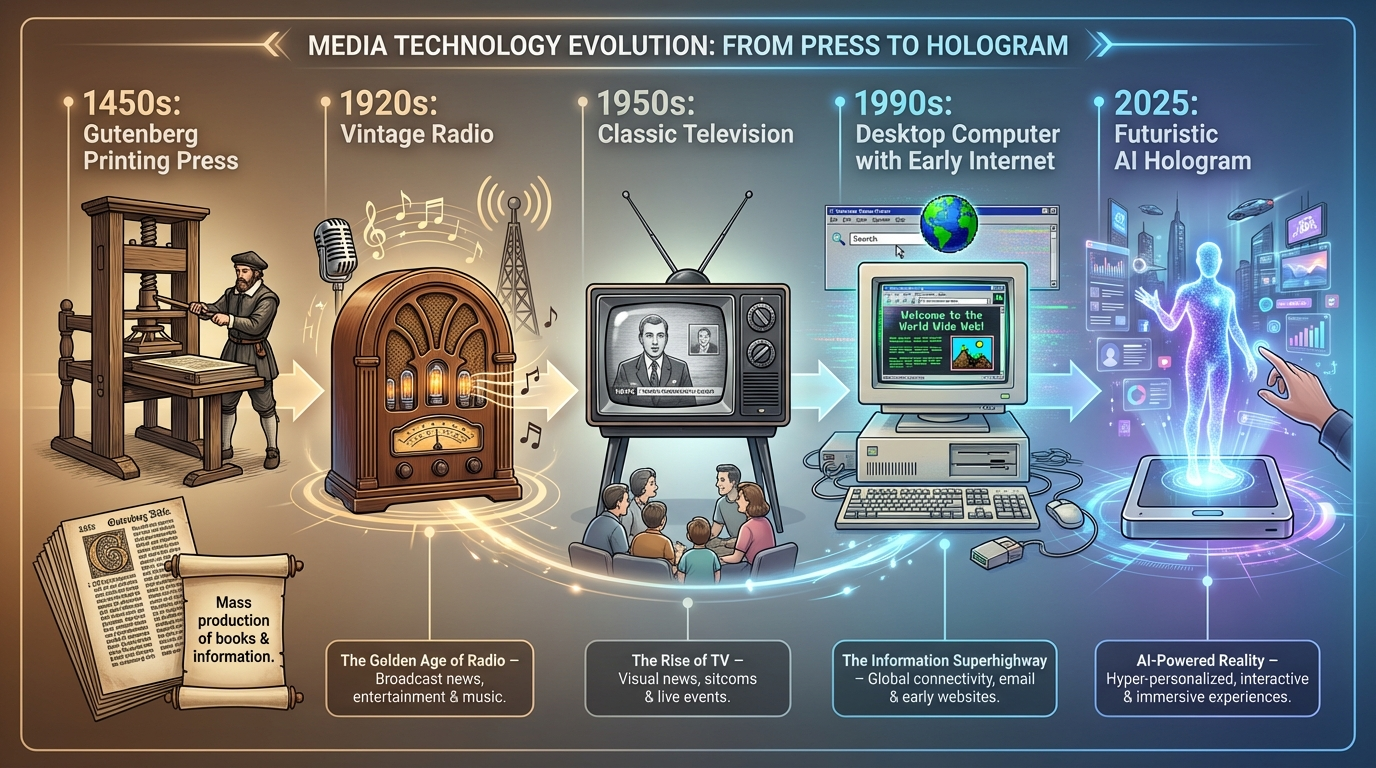
Over centuries, books, newspapers, and magazines evolved into a thriving intellectual property industry. Ultimately, it was not the mechanical inventors who benefited most from the technology, but the content creators in humanities and literature.
We have seen this pattern repeat across film, radio, television, and the internet. Friends in electrical engineering once jokingly complained to me that media professionals simply "take advantage" of the tools engineers build.
While chemical engineers gave us film, electrical engineers built the TV, and computer scientists birthed the internet, it is the content creators who have consistently emerged as the winners, leveraging these inventions to build global empires.
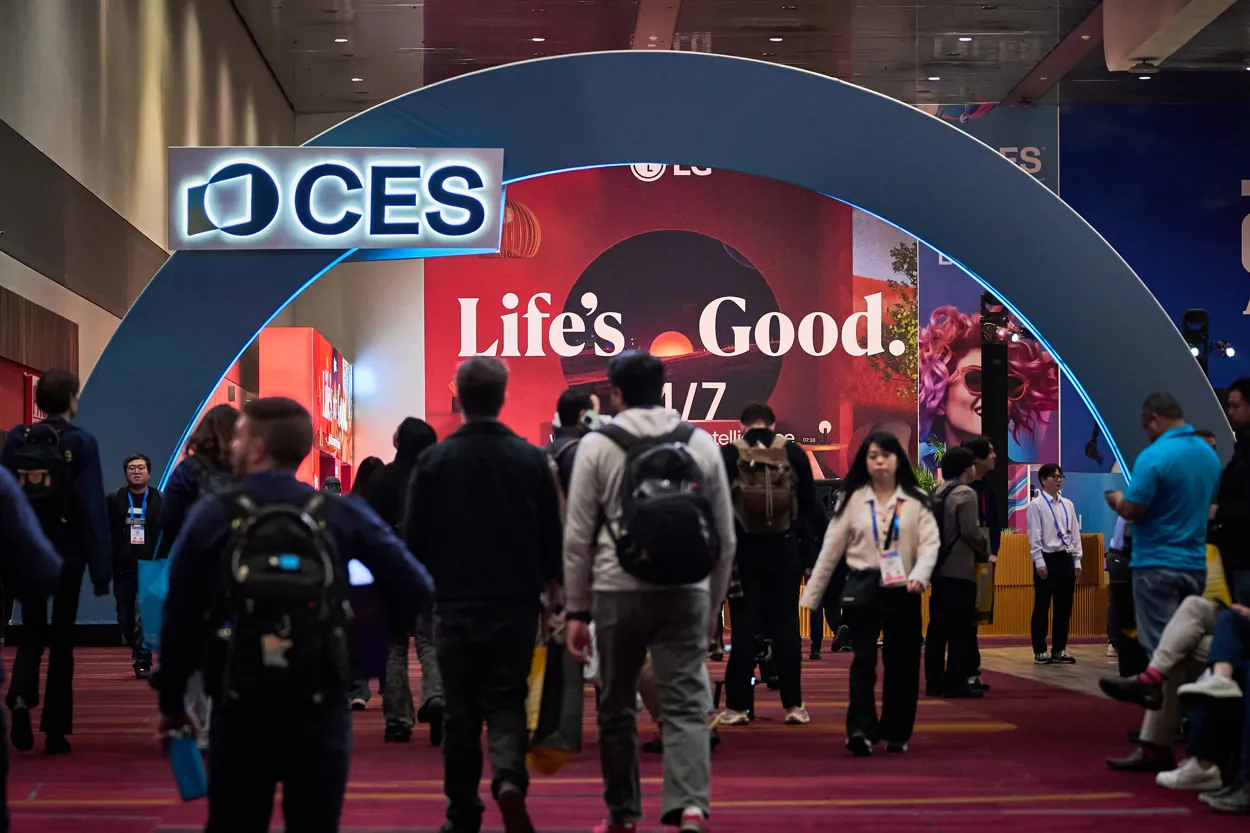
This historical context is why I find the Consumer Electronics Show (CES) so interesting to my profession. I find great joy in observing the evolution of communication technologies including high-performance GPUs and 5G connectivity to satellite communications, drone cinematography, and Virtual Reality.
As we look toward CES 2026, the spotlight is firmly on Artificial Intelligence. Because we are still in the early stages of the AI revolution, the focus remains largely on hardware and technical specifications. However, we are already seeing AI’s everyday impact on how individuals consume and create content. If history is our guide, while the "engineers" are building the AI tools today, the "creators" will be the ones who truly define the AI era.
I am once again excited to head to Las Vegas to glimpse the future of media at CES.
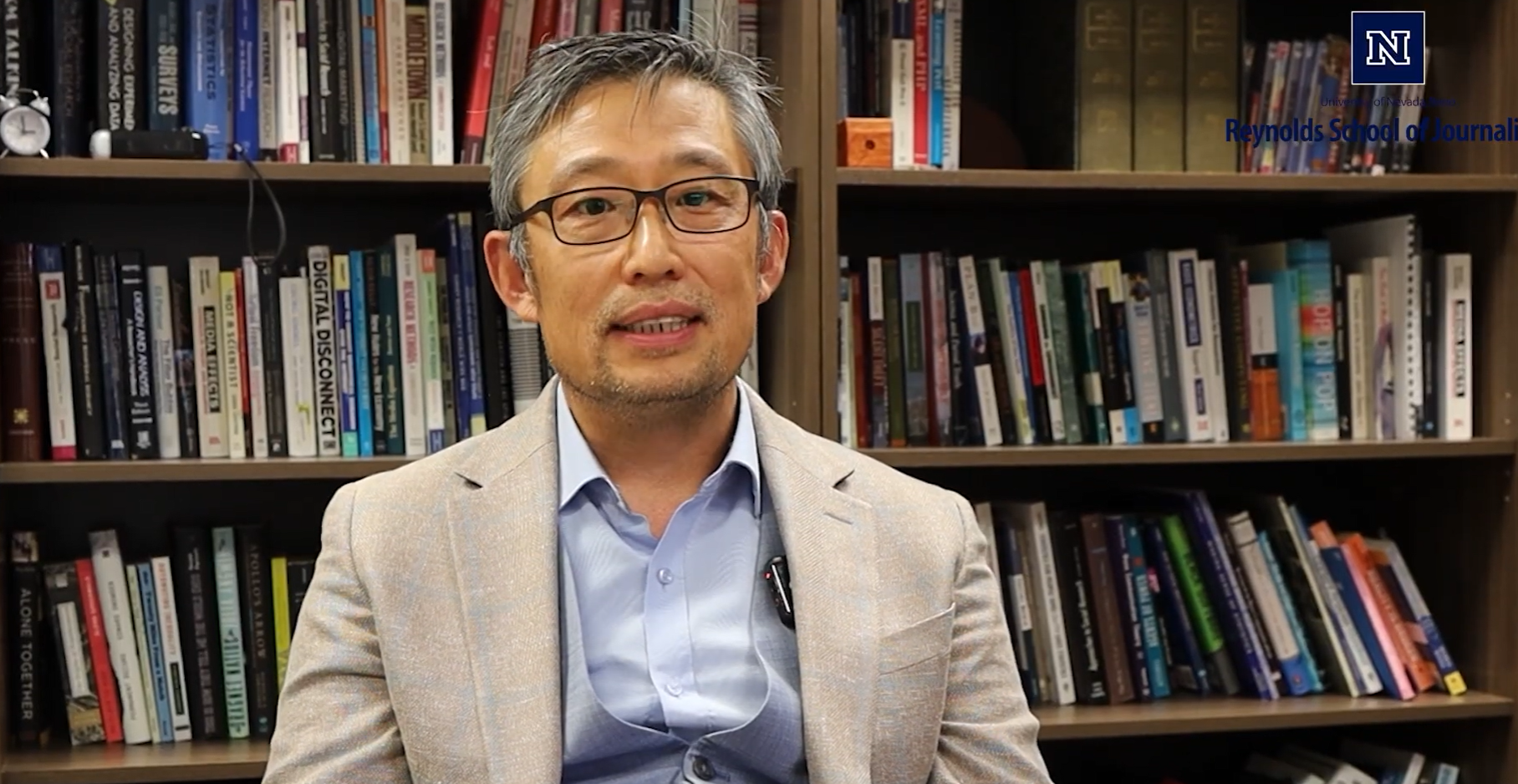
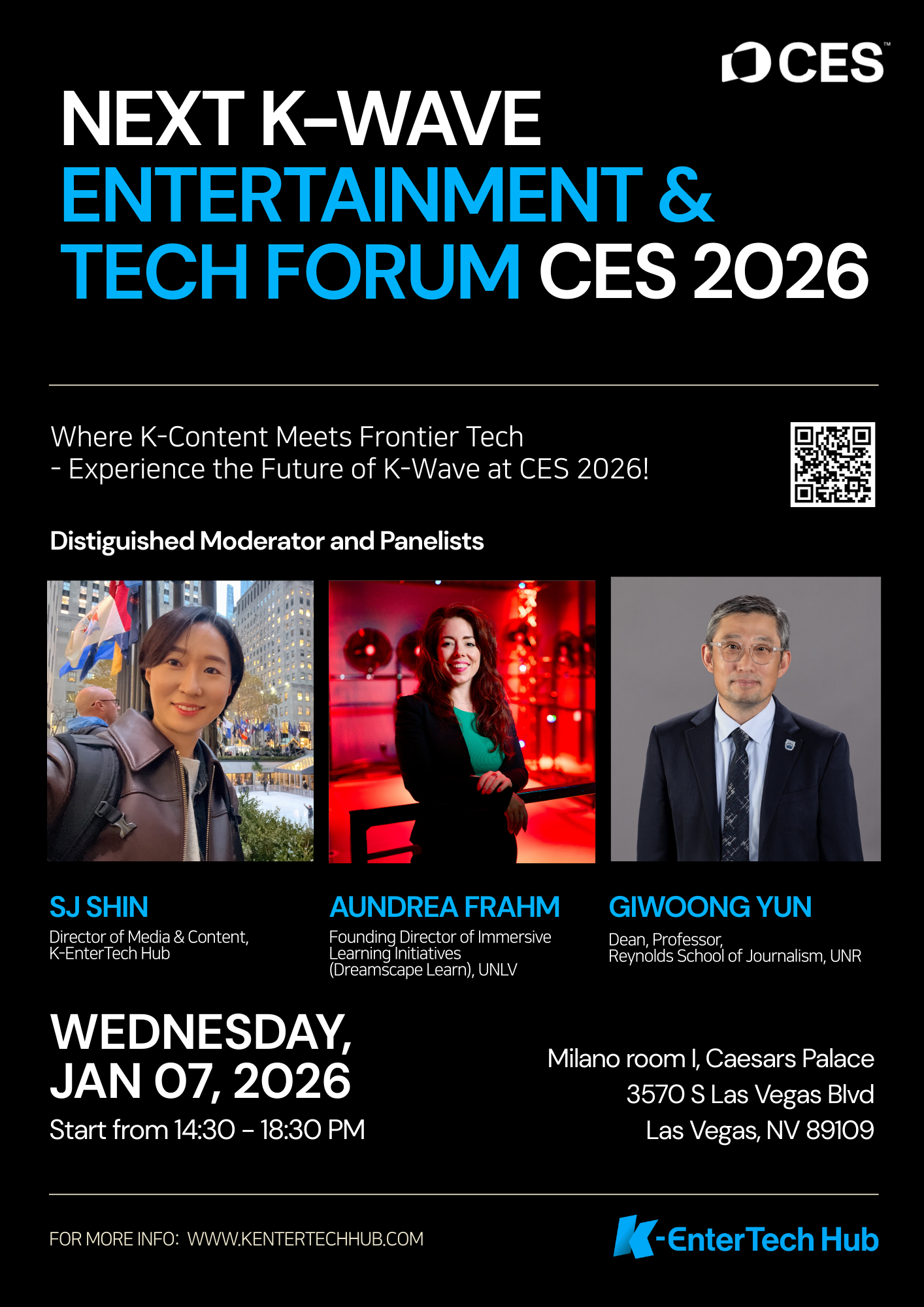
He will also be participating as a panelist at the Next K-Wave Entertainment & Tech Forum at CES 2026. The forum takes place on Wednesday, January 7, 2026 from 2:30 PM to 6:30 PM at the Milano Room, Caesars Palace (3570 S Las Vegas Blvd, Las Vegas, NV 89109).
This forum explores where Korean content meets frontier technology, bringing together media leaders, global tech companies, and academics to discuss how AI, XR, and immersive media are reshaping the entertainment industry.
Professor Yun will join distinguished panelists including Prof. Samseog Ko (Dongguk University), Del Parks (President of Sinclair), and Aundrea Frahm (Director, UNLV Dreamscape Center) in a roundtable discussion examining the future of entertainment technology and the evolution of K-Content in the global market.
이 계정을 삭제하면 안내글이 삭제됩니다.
![[Samseog Ko's Insight]The Age of AI That Acts on Its Own: CES 2026 Signals a Turning Point for Industry, Jobs, and K-Content Strategy](https://cdn.media.bluedot.so/bluedot.kentertechhub/2026/02/kw3ir3_202602091352.png)

![[보고서]전통 언론사의 크리에이터 전략 대전환](https://cdn.media.bluedot.so/bluedot.kentertechhub/2026/02/0nwc9z_202602100212.png)