
K ENTERTECH HUB | INDUSTRY ANALYSIS
Apple TV wins 28 awards as Big Tech captures 45% of the total and expands into sports and awards-show rights
.
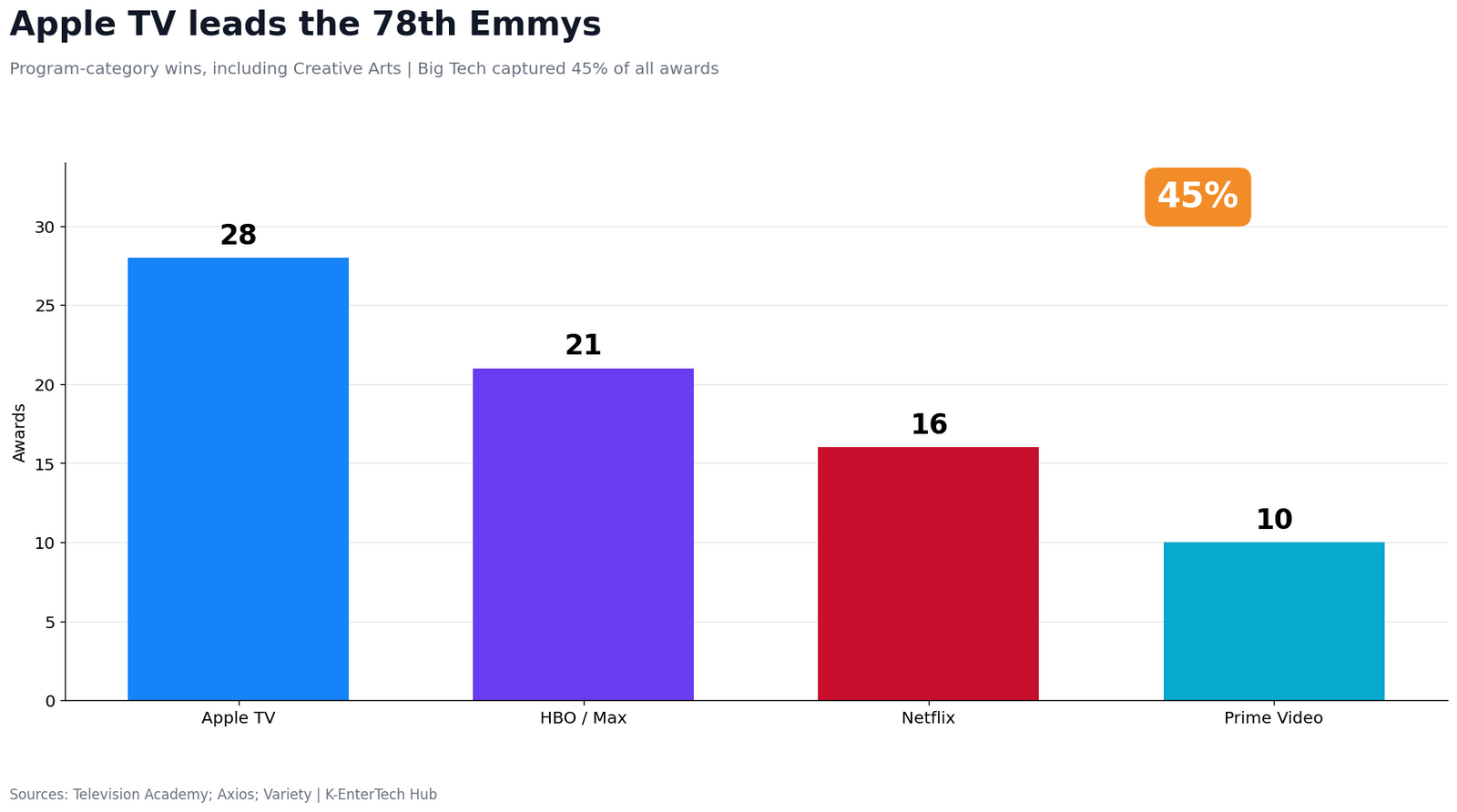
Apple TV takes the platform lead with 28 wins
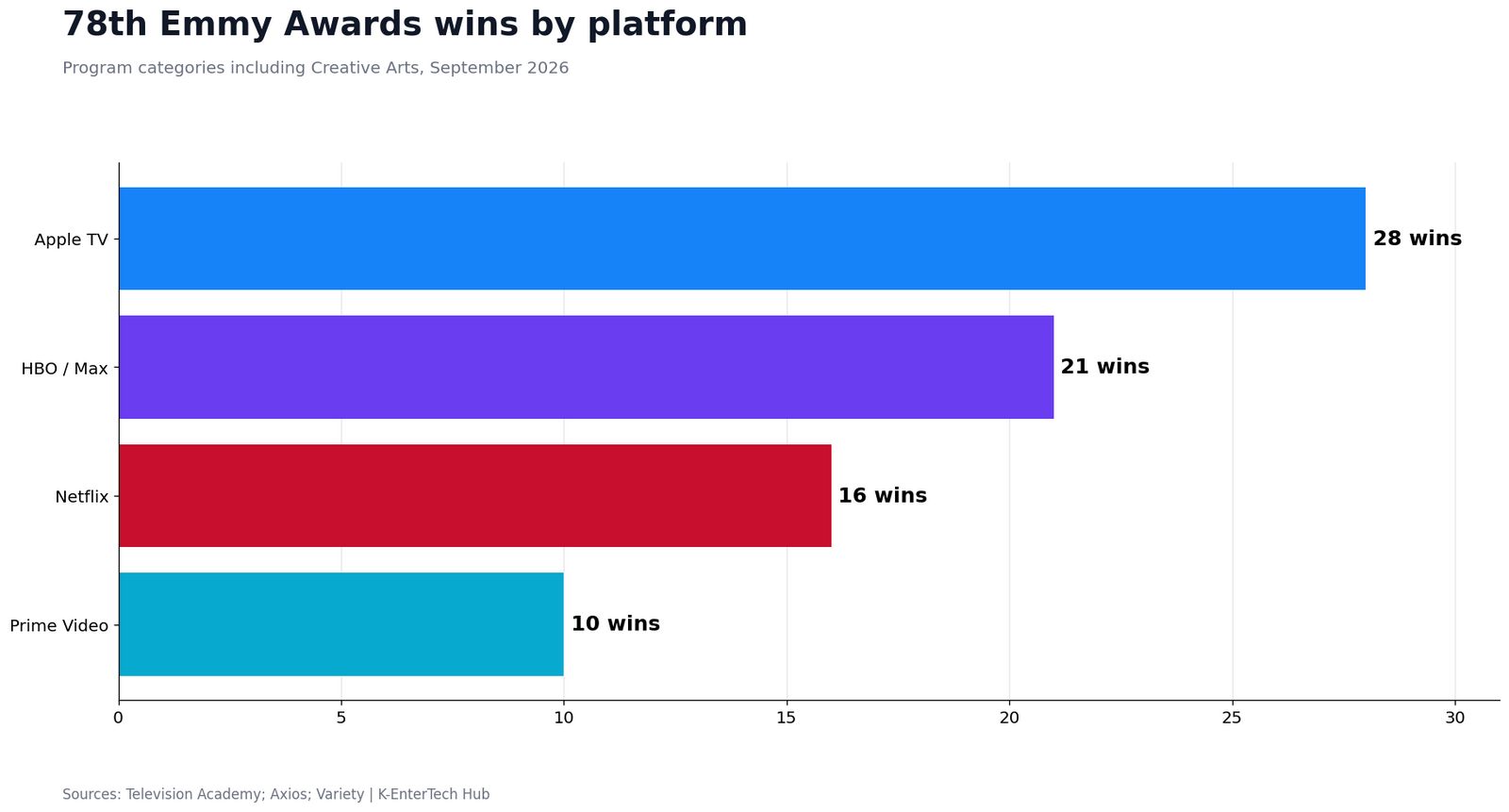
Apple TV won 28 program-category awards at the 78th Primetime Emmys, held September 14 at the Peacock Theater in Los Angeles. HBO and HBO Max followed with 21, Netflix with 16 and Amazon Prime Video with 10. Apple separately announced 29 wins because its total included one advertising award; 28 is the comparable figure used in platform tallies.
The result was driven by a small number of high-impact titles.
Horror comedy Widow's Bay won 14 awards and science-fiction drama Pluribus took six, meaning two series delivered 20 of Apple TV's 28 wins. Widow's Bay surpassed the 13-award record set by The Studio a year earlier to become the most decorated comedy in a single Emmy season.
This concentration reflects Apple TV's operating model. It submits fewer programs than HBO or Netflix, then concentrates production, talent and marketing resources around premium originals capable of generating cultural visibility. The strategy does not require the largest catalog; it requires a small group of titles that can carry the service's brand.
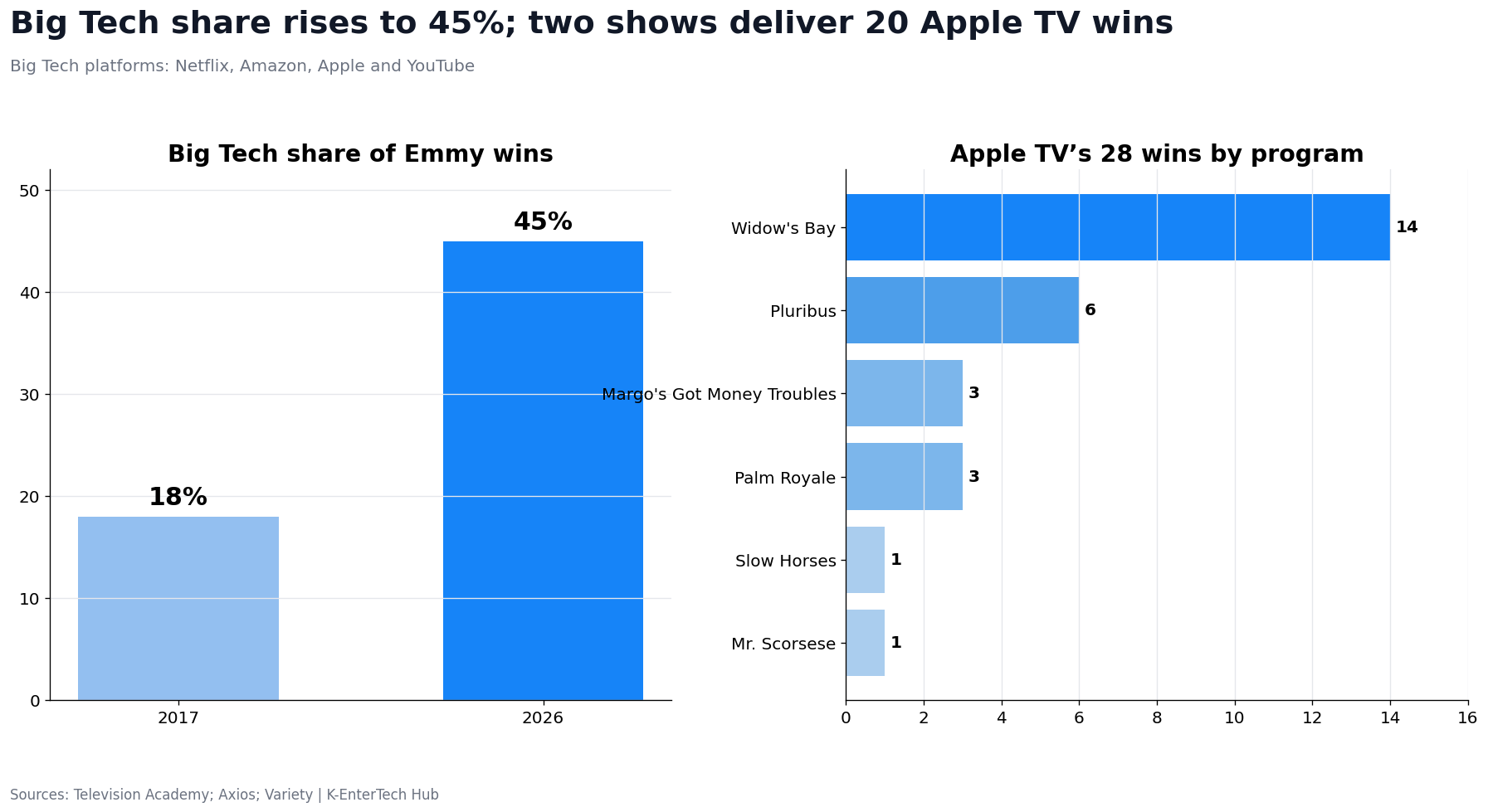
Big Tech's share of Emmy wins and the program mix behind Apple TV's 28 awards.
Awards visibility exceeds measurable audience reach
Awards leadership is not the same as market leadership.
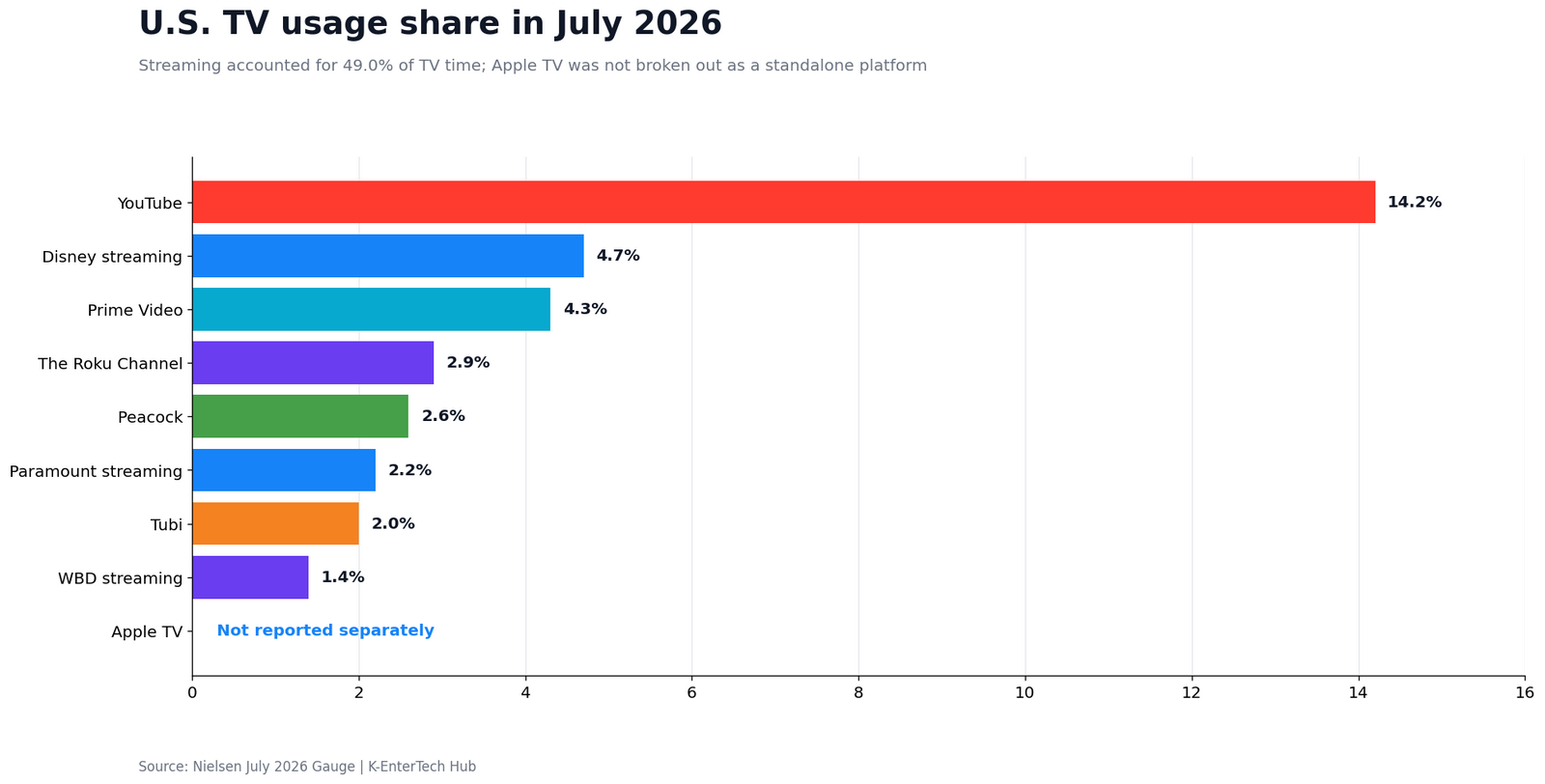
Apple does not disclose Apple TV subscriber numbers, revenue or profit as standalone metrics. The service also does not appear as an individual platform in Nielsen's monthly Gauge report. In July 2026, YouTube accounted for 14.2% of U.S. television time, Disney streaming for 4.7% and Prime Video for 4.3%, while Apple TV was not reported separately.
That gap helps explain the role awards play in Apple's strategy. Emmy wins allow a relatively selective service to project cultural influence beyond its disclosed scale. Prestige programming supports the wider Apple brand and strengthens the value of a services ecosystem that includes devices, cloud storage, music, payments and the App Store.
A 30.7 billion dollar services business provides the financial cushion
Apple reported $30.7 billion in services revenue for the June 2026 quarter, up 12% year over year. The category includes the App Store, Apple Music, Apple Pay, AppleCare, iCloud, advertising and Apple TV.
Because the company does not separate Apple TV results, the service's economics remain opaque. The broader services portfolio, however, gives Apple a financial base from which it can sustain long-term investment in originals and rights.
This structure also changes how success can be measured. Apple TV does not have to operate as a standalone streaming company in the same way Netflix does. It can support device retention, paid-service relationships and brand differentiation even when its direct revenue is not visible to investors.
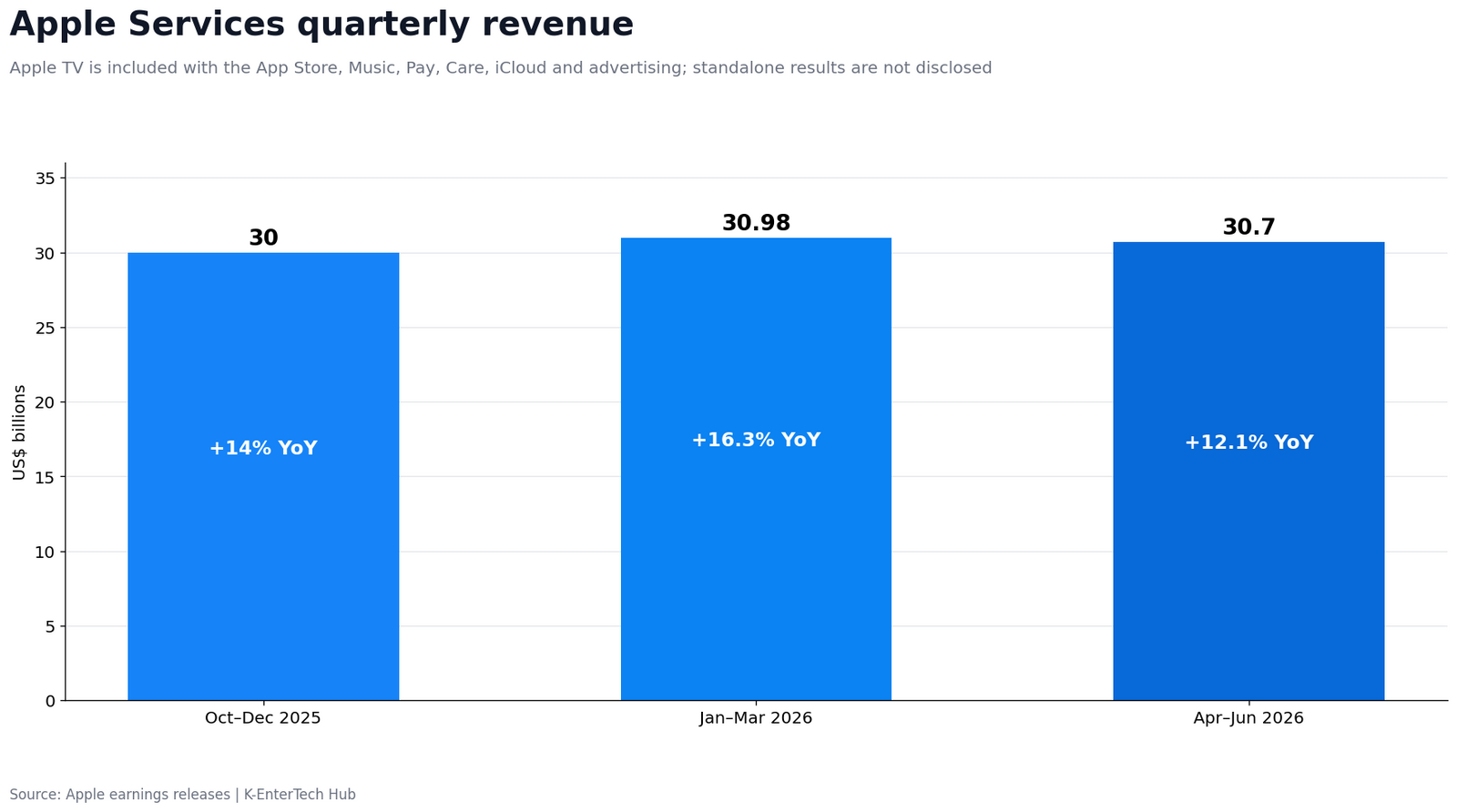
Apple Services quarterly revenue. Apple TV revenue and profit are not disclosed separately.
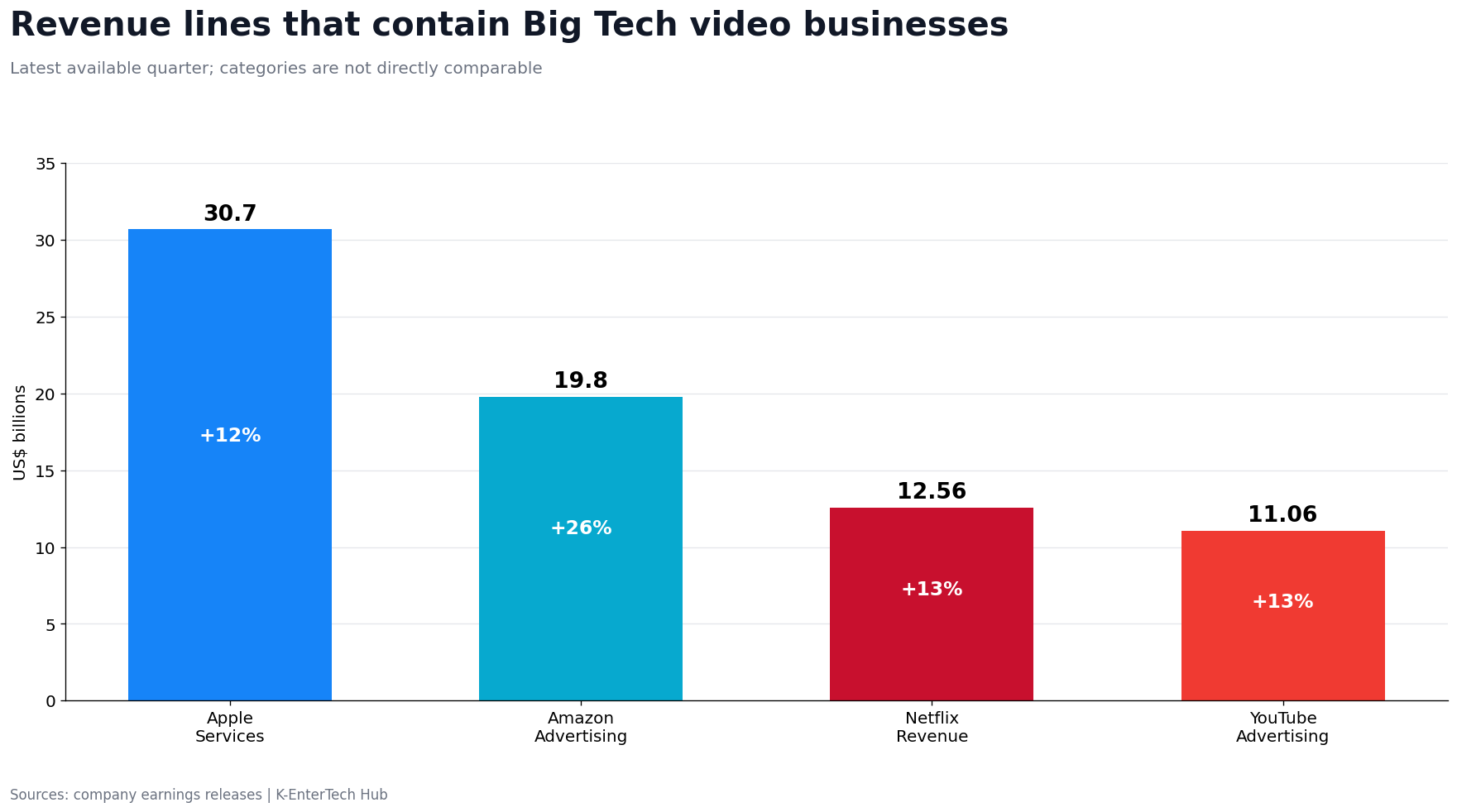
Revenue categories containing Big Tech video businesses. Figures are not directly comparable.
Apple bundles prestige originals with F1 MLS and MLB
Apple is adding live sports to its premium-programming strategy. Beginning with the 2026 season, every U.S. Formula 1 session is available through Apple TV. MLS matches have also moved from a separate Season Pass into the standard $12.99 monthly subscription, alongside Friday Night Baseball.
The company is treating the F1 movie and Formula 1 rights as parts of the same audience system. The theatrical and streaming release builds global awareness, while live races create recurring appointment viewing. Award-winning originals signal quality; sports increase frequency. The product is becoming less dependent on the release schedule of individual dramas.
The Emmys may follow the audience to streaming
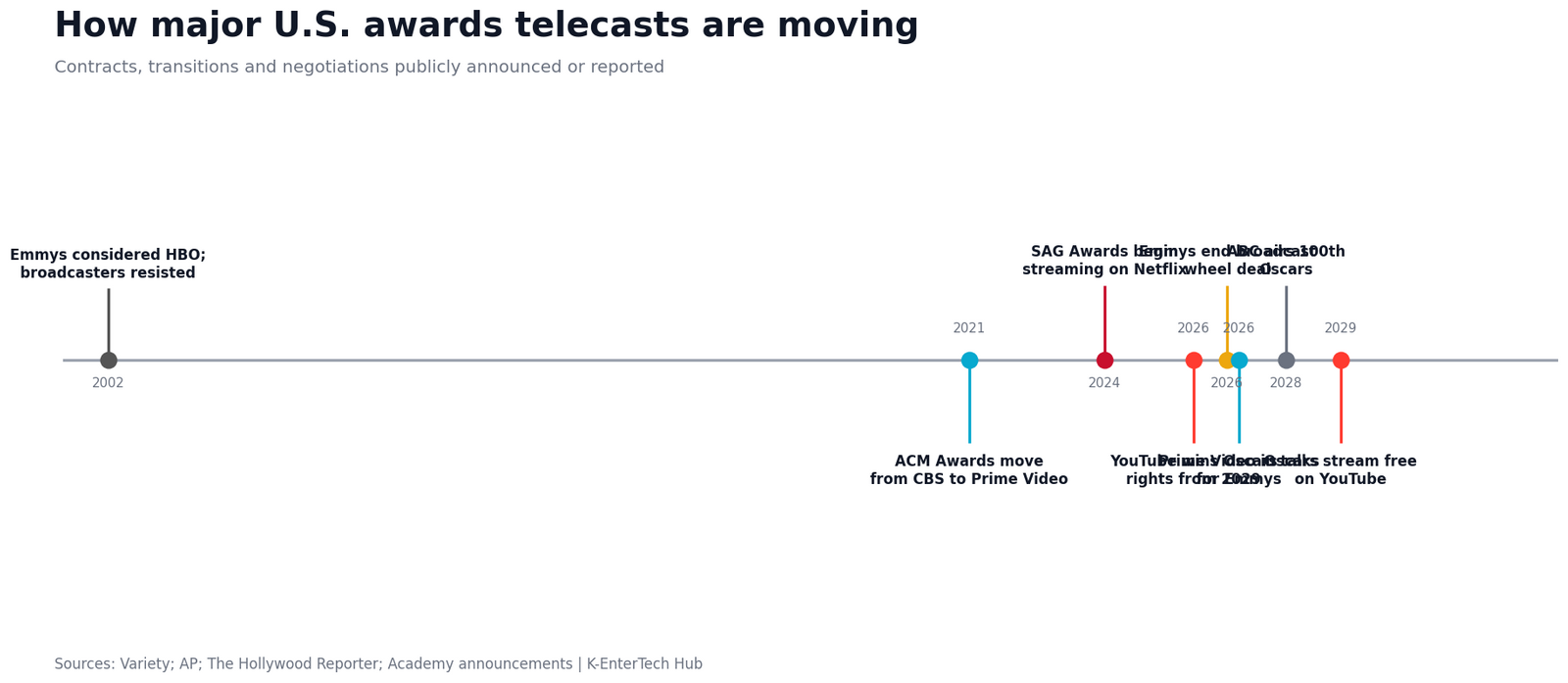
The Television Academy's rotating agreement with ABC, CBS, Fox and NBC ended with this year's NBC telecast. Industry reports say Amazon is in talks to bring future Emmy ceremonies to Prime Video. If completed, the deal would make a major awards platform both a competitor for trophies and the distributor of the ceremony itself.
The potential move fits a broader realignment. YouTube will stream the Oscars worldwide beginning in 2029, Netflix carries the Screen Actors Guild Awards, and Prime Video already distributes the Academy of Country Music Awards. Live sports infrastructure is becoming infrastructure for awards, concerts and other annual events.
The business models differ. YouTube's Oscars package will be freely available and advertising-supported, while an Emmy telecast on Prime Video would reinforce the value of a paid membership and create premium advertising inventory. Rights owners must now weigh reach, subscription value, ad sales, data and international access together.
Linear viewing falls as social clips expand
The 2026 Emmys drew 6.7 million viewers across NBC and Peacock, down about 10% from the previous year and the third-lowest audience in the telecast's history. The ceremony also faced an NFL game on ESPN. Yet NBCUniversal said Emmy-related videos generated 133 million views across Facebook, Instagram, X and YouTube, up 90% year over year.
The contrast shows why a two-hour rating is no longer a complete measure of an awards show. Red-carpet interviews, acceptance speeches, performances and short clips circulate for days across platforms. Future rights packages will increasingly be judged by both simultaneous viewing and the value of post-event distribution.
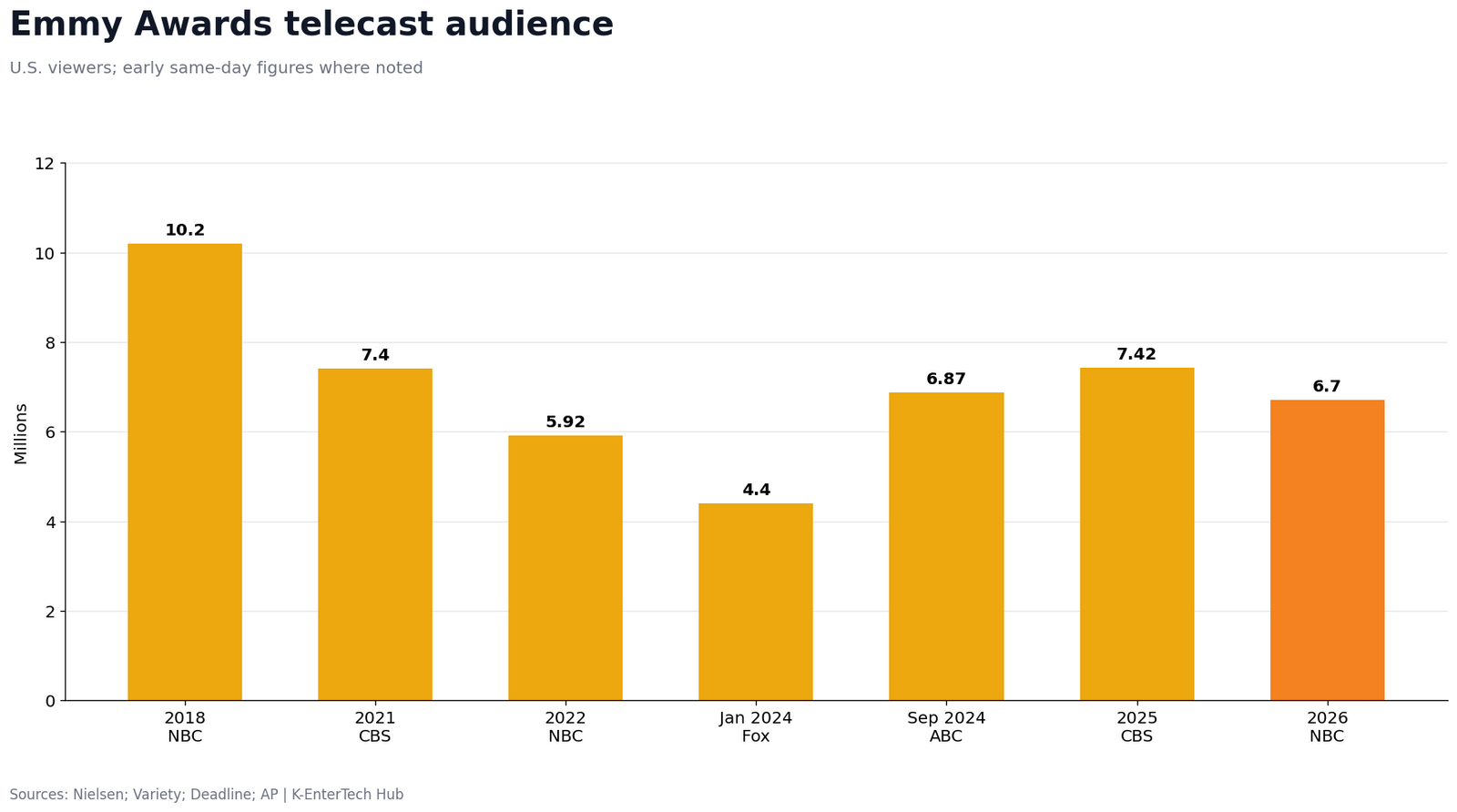
U.S. audience trend for the Emmy Awards telecast.
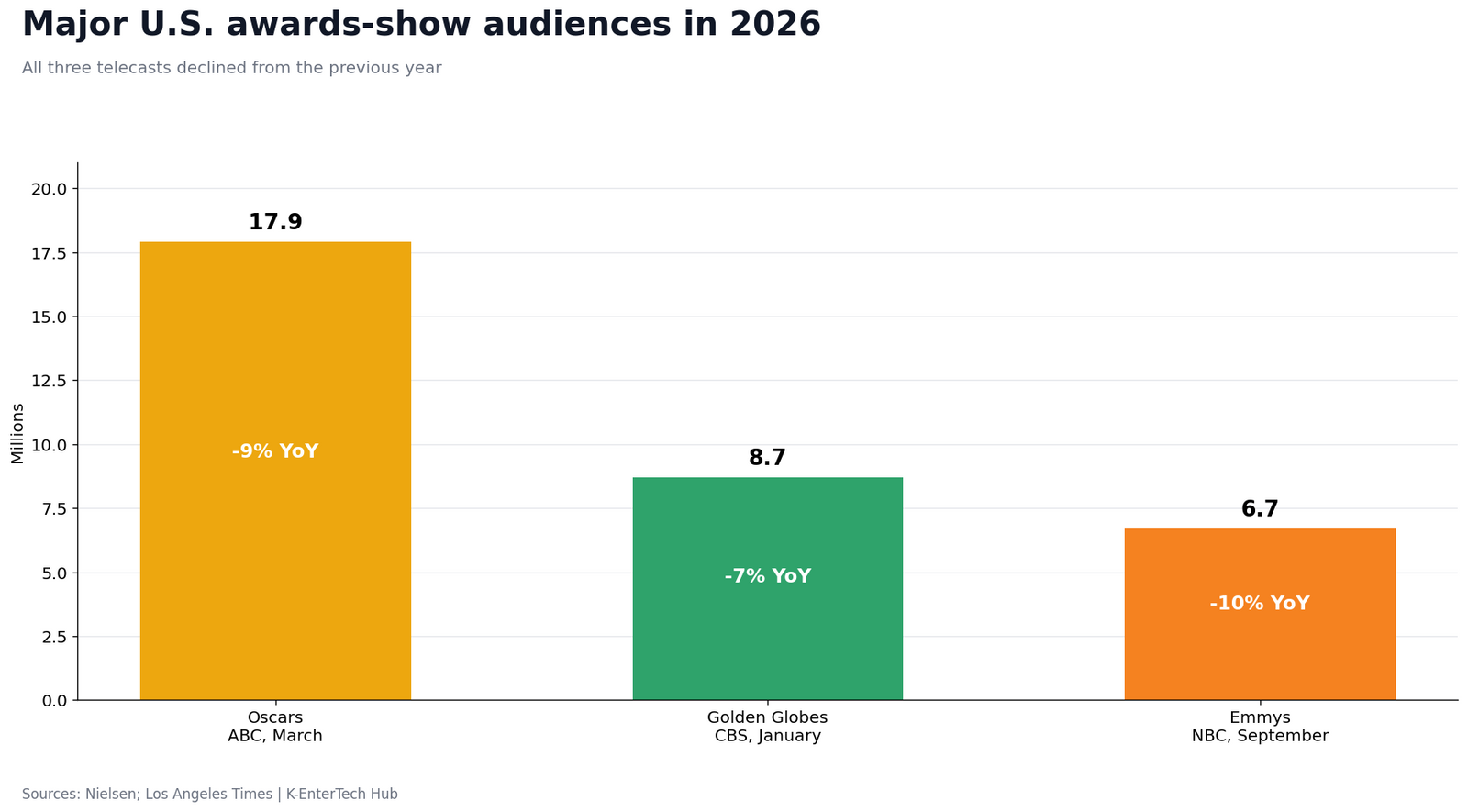
Audiences for major U.S. awards shows in 2026. All three declined year over year.
Three implications for Korean media companies
First, awards recognition should be connected to distribution strategy. A nomination or win can support negotiations with telecom operators, pay-TV providers, local streaming partners and FAST platforms. Apple TV's Korean distribution through both its own application and a branded section within TVING illustrates how a global service can use a local partner to expand reach.
Second, Korean awards shows need to be developed as rights packages rather than single broadcast slots. The Baeksang Arts Awards and Blue Dragon Series Awards already recognize streaming titles while relying on broadcasters for live distribution. Domestic rights holders can package the main telecast with social clips, international feeds, subtitles, audience data and advertising products.
Third, content companies need recurring audience touchpoints. One award-winning title can establish a brand, live sports and events can increase visit frequency, and local partners can widen distribution. Big Tech's advantage is not capital alone; it is the ability to connect these functions inside one commercial ecosystem.
The next contest is over the full distribution system
Apple TV's Emmy lead is one part of a larger structural shift. Apple is combining prestige programming and sports in one subscription. Amazon is seeking a major awards telecast. YouTube has secured global Oscars rights. As the boundaries among studios, streaming services, advertising platforms and live broadcasters disappear, competitive advantage will depend on connecting content to events, subscriptions, advertising and worldwide distribution.
Selected Sources
• Television Academy 78th Emmy Awards winners and official recap
• Apple Newsroom Emmy Awards announcement and quarterly earnings releases
• Nielsen July 2026 Gauge report
• Associated Press coverage of 2026 Emmy viewership
• Variety platform tally and reporting on Prime Video negotiations
• Academy of Motion Picture Arts and Sciences and AP coverage of the YouTube Oscars agreement