
[Special Opinion]Korea's Cultural Destiny: From a Patriot's Dream to Global Platform Power
by
2026년 3월 23일
![[Special Opinion]Korea's Cultural Destiny: From a Patriot's Dream to Global Platform Power](https://cdn.media.bluedot.so/bluedot.kentertechhub/2026/03/vjxdyq_202603231241.jpg)
By Samseog Ko
Distinguished Professor, School of Advanced Convergence, Dongguk University
Member, National AI Strategy Committee in South Korea
Why "Innovators Show Up" Signals a New Era of Accountability in Tech—and What It Means for Korea's AI Ambitions
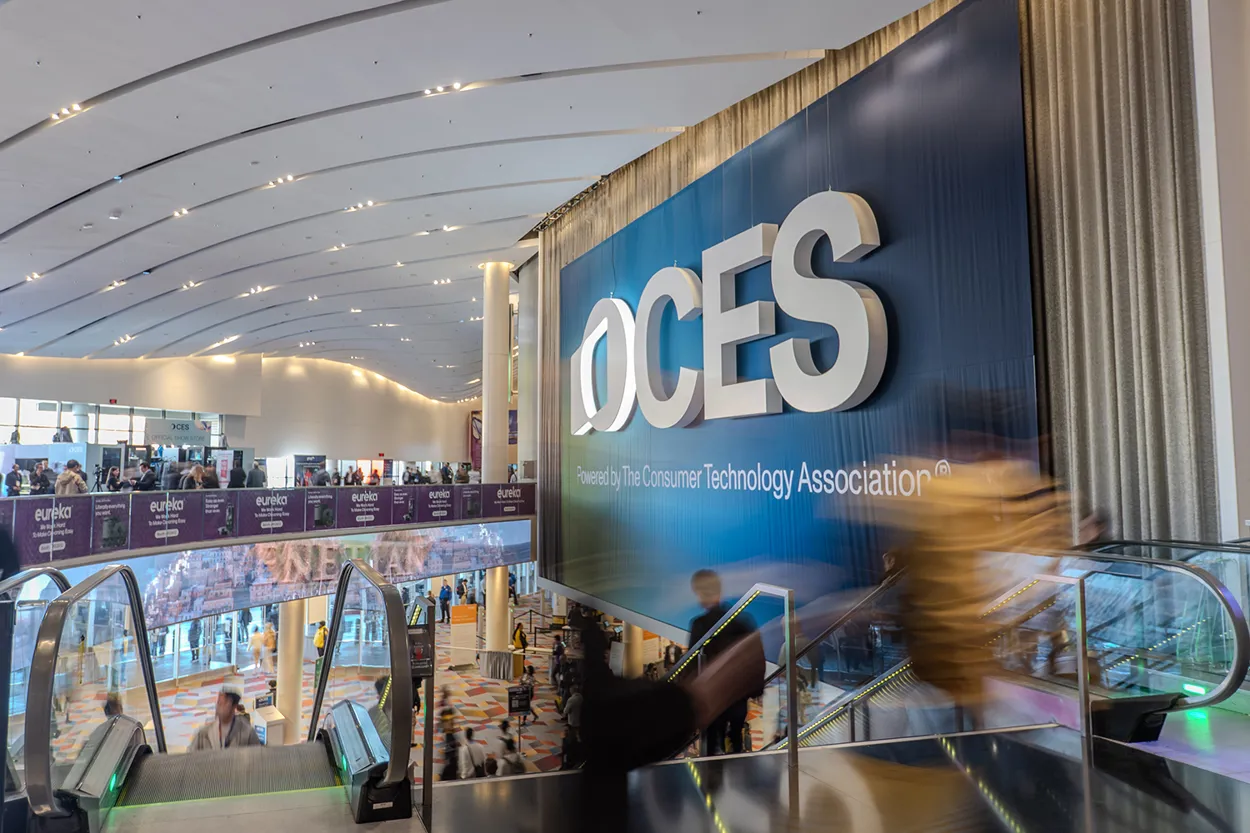
The world's largest IT and consumer electronics exhibition, CES 2026, is just two weeks away. Organized by the Consumer Technology Association (CTA), CES began in New York in 1967 but has been held annually in Las Vegas, Nevada since 1978. While the event once primarily showcased new consumer electronics like televisions and refrigerators, it has undergone continuous transformation as industry boundaries have completely dissolved, evolving into a convergence exhibition and innovation arena for technology and products.
In fact, global automakers such as BMW and Honda now participate in CES every year—not with finished vehicles, but with autonomous driving and advanced software technologies. John Deere, the agricultural equipment company, first unveiled its autonomous tractor at CES. L'Oréal debuted its AI-powered personalized beauty tech at the show, while Swedish furniture giant IKEA introduced products featuring smart home technology.
CES has thus established itself as the world's premier advanced technology expo, where technological innovations across virtually every industry sector—AI, mobility, digital health, metaverse, and more—converge.
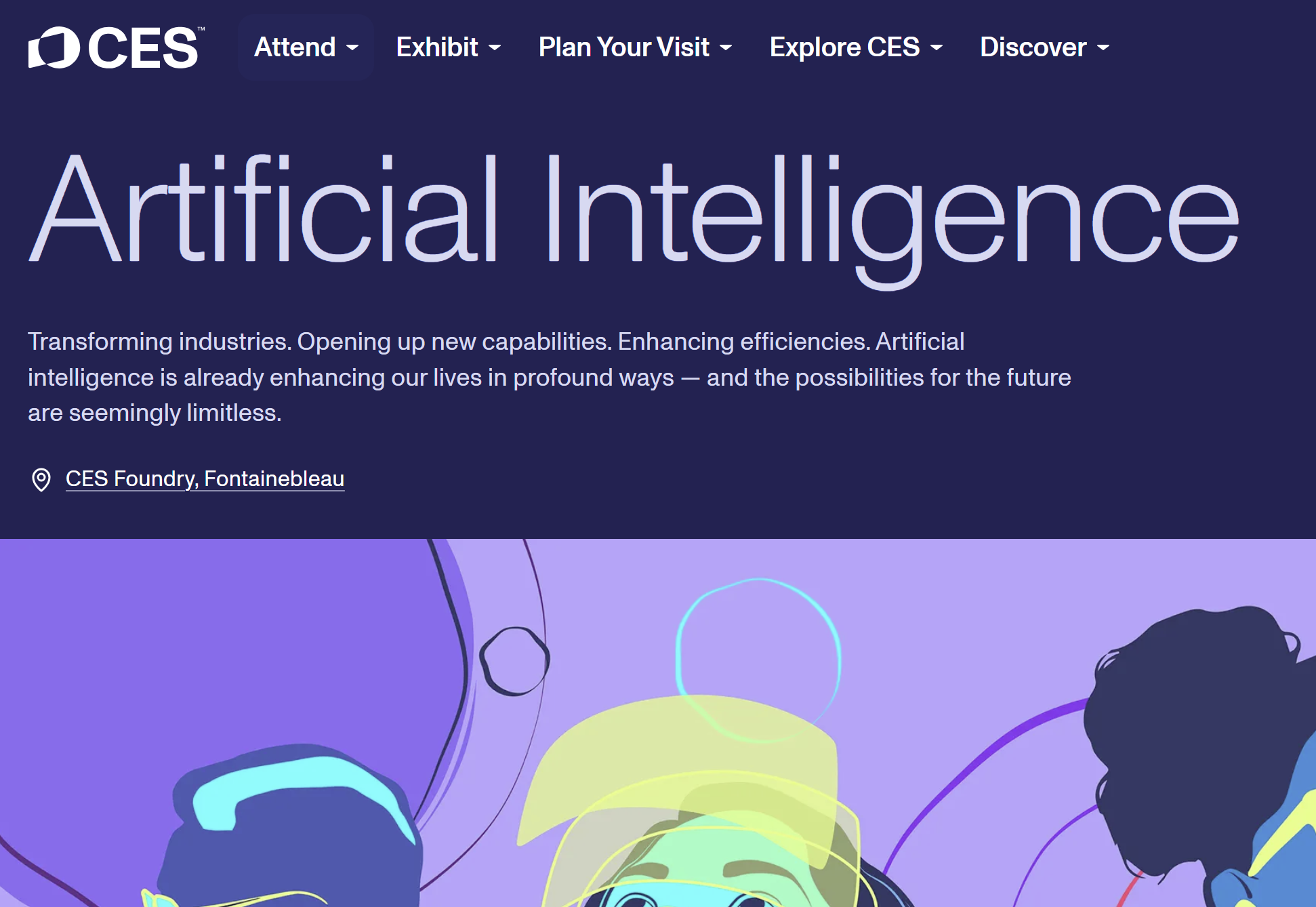
The slogan for CES 2026, opening in early January, is "Innovators Show Up." As noted above, CES has traditionally been the global stage for technological innovation, setting clear directions for entire industry ecosystems through the launch of new technologies and products while leading innovation trends in economy, industry, society, and culture. According to CES's official materials, "CES is where innovators appear, where technology business happens, and where partnerships begin."
However, the 2026 slogan "Innovators Show Up" carries a message that goes beyond conventional technology exhibitions—it signals that the agents of innovation are now directly appearing and leading markets. In essence, this year's CES serves as a "declaration ceremony" announcing that we have entered a phase where innovation protagonists are actually emerging to move markets and society, transcending the stage of merely previewing the future of technology.
The meaning embedded in this expression is straightforward: Innovation no longer resides in researchers' ideas or laboratories. Innovators must no longer hide behind theories or concepts. They must appear directly on the ground, presenting the excellence of developed technologies and products, viable business models, and social responsibility—and bear that responsibility. CES 2026 can be described as the first stage where all of this is revealed, compared, and "shows up."
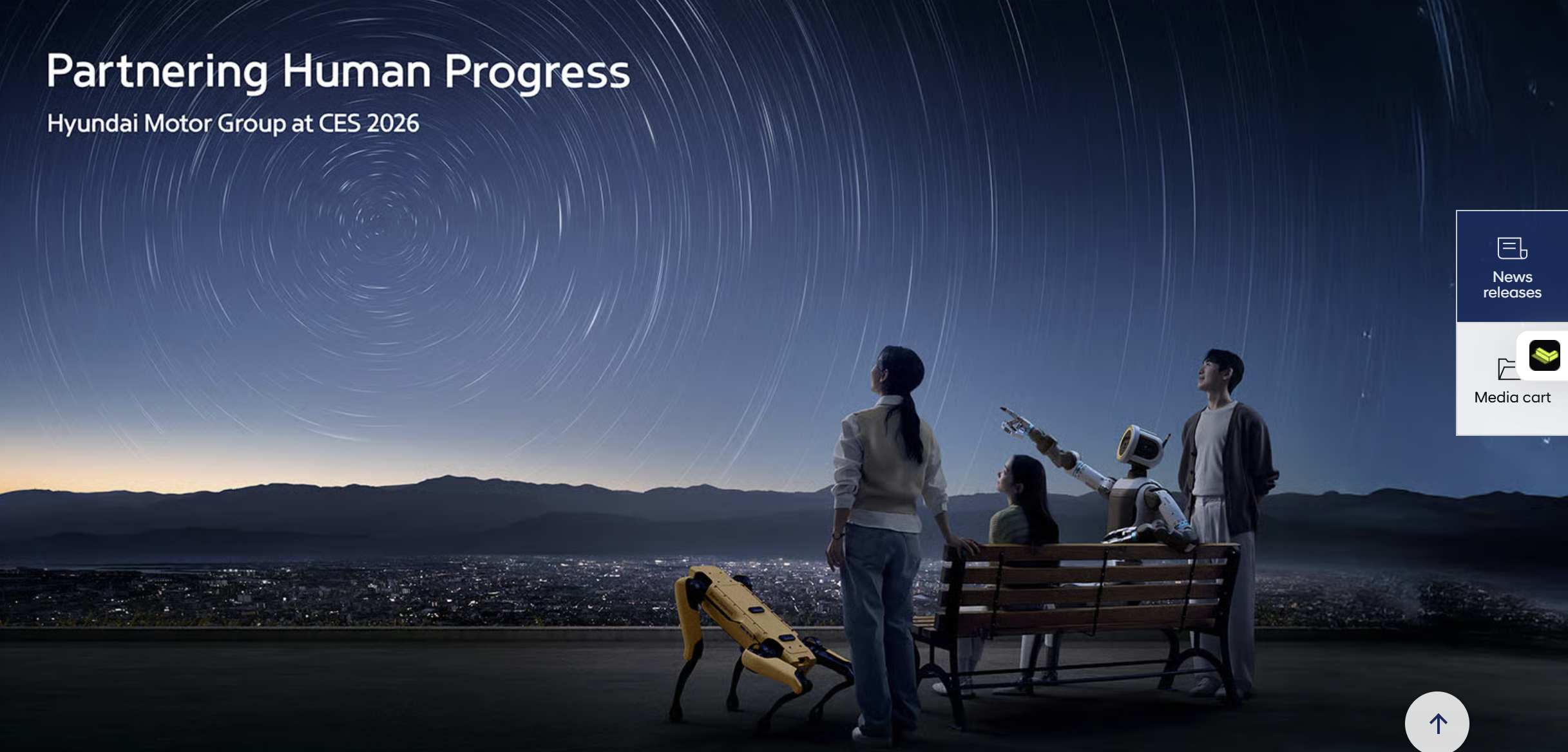
There is an industrial context behind CES 2026 placing "innovators" rather than "technology" at the forefront. Over the past several years, keywords like AI, mobility, smart home, digital health, and XR have repeatedly appeared at the center of CES. But in 2026, as we fully enter the AI era, these technologies are no longer new. They no longer feel innovative. The question is not whether the technology exists, but who will take responsibility for it and make it reality.
The situation is clear when we look at generative AI alone. AI technologies that generate text, images, video, and music have already spread throughout industries. The market's question has shifted from "Is this technology possible?" to "What experiences and value can be created through this technology?" The entities that must answer this question are not technologies themselves, but the innovators who select, combine, and take responsibility for technologies. CES has precisely captured this transitional moment. Rather than presenting faster computation of larger datasets or bigger models, it has made the emergence of entities who must design, execute, and deliver results with advanced technologies like AI within social and industrial contexts the core issue.
First, the unit of innovation is shifting from products to "systems."
Competitiveness now lies not in a single device, but in the entire experience combining AI, data, platforms, content, and services.
Second, the evaluation criteria for innovation are expanding from technological capability to "social validity."
Beyond economic efficiency, trust, safety, and inclusivity have become important standards for measuring outcomes.
Third, the agents of innovation are shifting from large corporation-centric to "multi-layered ecosystems."
Small startups, research institutions, cities and governments, and national strategies are all taking the stage simultaneously.
How should the Lee Jae-myung administration, which launched through last year's "Revolution of Light," and Korean companies utilize the CES 2026 stage? The new government has set the goal of becoming a Top 3 Global AI Power (G3) and is pursuing an AI transformation policy centered on infrastructure expansion and large-scale investment.
On December 15, National AI Strategy Committee announced the "Republic of Korea AI Action Plan," comprising three policy pillars—Creating an AI Innovation Ecosystem, National AI-Based Transformation, and Contributing to the Global AI-Enabled Society—supported by 12 strategic areas, 98 tasks, and 300 policy recommendations.
Interest in this newly announced "Action Plan" is extraordinarily high—not only among Korean citizens and companies but also among foreign governments and businesses, more than we might realize.
Therefore, CES 2026 must not be an event where Korea participates and learns as a "Fast Follower" as in the past. Rather, it should be utilized as a symbolic stage to demonstrate to on-site participants and the international community our government's and companies' vision, strategy, and capabilities for realizing our status as a Top 3 AI Power as a First Mover.

Korea possesses world-class competitiveness in semiconductors, displays, and information and communications networks. However, from the perspective of CES 2026, which foregrounds "the emergence of innovators," what matters going forward is not whether we possess technology, but our "innovation narrative and execution capability."
As we stride into the AI era, we must usher in an age where people, not technology, take center stage; where execution, not experimentation, is demanded; and where outcomes and responsibility, not mere possibility, are emphasized.
The CTA organizing CES 2026 is asking itself and participants: "Are you an innovator ready to change the world through technology?" I hope the countless Korean business leaders and government officials participating in CES 2026 return with answers.

Samseog Ko, Ph.D.
He is a Distinguished Professor at the College of Advanced & Convergent Technology at Dongguk University in Seoul, where he leads research in AI convergence and digital transformation. He currently serves as a member of the National AI Strategy Committee, contributing to Korea's vision of becoming a global Top 3 AI power.
Ko is one of Korea's foremost experts in media policy and digital strategy. He served as a Commissioner (Vice Minister-level) at Korea's Communications Commission (now Korea Media and Communications Commission) for five and a half years across two administrations (2014-2019), playing a pivotal role in shaping Korea's broadcasting and telecommunications policies. His expertise has evolved from traditional media regulation to encompass AI strategy, positioning him at the critical intersection of technology policy, media innovation, and digital transformation.
His research focuses on artificial intelligence policy, technology innovation ecosystems, media strategy, and the societal implications of AI transformation. He has been instrumental in shaping Korea's national AI strategies and fostering collaboration between academia, industry, and government in advancing AI technologies and digital media frameworks.
Mr. Ko holds a Ph.D. in Communication (Digital Policy) from Chung-Ang University and a Master's degree in Political Science from Sogang University. Prior to his academic career, he served in senior policy positions including Innovation Officer at the Presidential Office during the Roh Moo-hyun administration, and as a congressional aide. He brings extensive experience from both the public and private sectors to his teaching and policy work.
He is the author of several influential books on digital transformation and Korean culture, including:
He has been recognized for his contributions to bridging technology, media, and policy, and continues to advise on Korea's digital future and cultural strategy.
Connect with Professor Ko:
LinkedIn: linkedin.com/in/samseog-ko-1b71551a7
![[투비]The Stream 2026: When Intention Becomes Attention](https://cdn.media.bluedot.so/bluedot.kentertechhub/2026/03/6h3xe4_202603220154.png)
![[SXSW2026]에이미 웹 트렌드 리포트(Convergence
Outlook 2026)](https://cdn.media.bluedot.so/bluedot.kentertechhub/2026/03/kty3s8_202603152312.png)
![[보고서]전통 언론사의 크리에이터 전략 대전환](https://cdn.media.bluedot.so/bluedot.kentertechhub/2026/02/0nwc9z_202602100212.png)
![[Samseog Ko's Insight]BTS Is Home. Now Comes the Harder Work.](https://cdn.media.bluedot.so/bluedot.kentertechhub/2026/03/63sbc7_202603220039.jpeg)
![[Samseog Ko's Insight]SXSW 2026 and the Future of K-Content](https://cdn.media.bluedot.so/bluedot.kentertechhub/2026/03/w7ml0m_202603160702.png)
![[Samseog Ko's Insight]SXSW 2026 and the Ascent of Entertainment Technology](https://cdn.media.bluedot.so/bluedot.kentertechhub/2026/03/p3scrb_202603091153.png)