Hasbro Launches AI Character Studio ‘Sixth Wall’ — Licensing ‘Authorized Originals’ Instead of Chasing Knockoffs

Hasbro has launched “Sixth Wall,” an AI studio introducing “Behavioral Licensing” that lets partners deploy officially authorized, voice-actor-backed interactive characters governed by strict personality and dialogue rules, aiming to replace unauthorized AI imitations

Hasbro Launches AI Character Studio ‘Sixth Wall’ — Licensing ‘Authorized Originals’ Instead of Chasing Knockoffs

‘Behavioral Licensing’ and CharacterOS govern a character’s personality and voice — 12 characters, including Optimus Prime, in real voice-actor performances

Hasbro launched Sixth Wall, a dedicated AI studio that lets outside companies license its characters for AI-powered experiences, on June 3 (U.S. time). The company is leading with a new category it calls Behavioral Licensing, which trades not in how a character looks but in how it speaks and behaves.

해즈브로, ‘행동 라이선싱’으로 AI 캐릭터 시대 연다
글로벌 1위 완구회사. 해즈브로 식스 월 AI 스튜디오를 통해 캐릭터OS 기반 ‘행동 라이선싱’을 도입. 정품 AI 캐릭터와 성우 보상 구조를 패키지로 제공하며 캐릭터 비즈니스 룰의 전환을 예고

The core idea is to stop policing unauthorized AI characters after the fact and instead offer an authorized, official version — backed by rights, authenticity, and safety guardrails — as a licensable product. With many characters voiced by their original performers, including Peter Cullen, who has voiced Optimus Prime since the 1980s, the move is also drawing close attention from Hollywood’s voice-acting community.

Hasbro is advancing Behavioral Licensing because, as AI use becomes routine, characters built in violation of copyright already flood the internet. Millions of unauthorized character versions now circulate across chatbots, voice apps, games, and frontier models, created without rights holders’ permission.

As generative AI lets anyone imitate a character’s voice and speech patterns, ‘lookalike characters’ that owners cannot control erode both the fan experience and the brand at once. Hasbro has therefore shifted its line of defense from ‘blocking copies’ to ‘supplying authorized originals first,’ ensuring its characters appear only within company-approved contexts and guardrails.

‘Unauthorized AI Characters’ — The Three Choices Facing Rights Holders

Roberta Thomson, CEO of Sixth Wall, said every IP owner confronts the same dilemma when they see unauthorized versions of their characters spreading across other platforms; in her words, it is ‘not on brand for us’ and not a good experience for fans. Broadly, rights holders have three paths. They can chase down every unauthorized use with whack-a-mole cease-and-desist letters; they can allow user-generated content (UGC) directly for consumers; or they can offer an authorized, official ‘blue-check’ version that companies can license. Hasbro chose the third.

Roberta Thomson, CEO of Sixth Wall

What ‘Behavioral Licensing’ Is — Renting Behavior, Not Appearance

Thomson argues that, until now, Hasbro’s IP has been confined to ‘static media’ — a toy on a shelf, a movie, a video game. The AI era is different: characters have begun to speak and interact with fans in real time. That forces a company to govern a character’s ‘behavior,’ a different class of technical and brand challenge. Behavioral Licensing is aimed precisely at this point.

Traditional IP licensing is a deal over how a character ‘looks’ — putting its image on a T-shirt, a toy, or a poster, or featuring its appearance in a film or game. Behavioral Licensing goes further. It makes how a character ‘thinks, speaks, and reacts’ within dynamic interaction the object of the deal. Rather than a frozen image, it lends out a living ‘persona’ that moves in real time — a genuinely new licensing category.

The distinction matters because, in an AI environment, a character behaves ‘unpredictably.’ A drawing or a video is fixed once approved, but an AI-empowered interactive character responds to a user’s questions on the spot.

The rights holder must therefore define not only appearance but what the character may and may not say — its personality, speech, canon, and forbidden lines. Behavioral Licensing elevates these ‘rules of behavior’ to the heart of the license, and the system that enforces them technically is CharacterOS. If appearance licensing is ‘permission to use a single picture,’ Behavioral Licensing is closer to ‘a delegation of the operating rules for a living character.’

How the Marketplace Works

Sixth Wall functions much like ‘a talent agency that brokers character IP to licensees.’ Rather than running the characters as a service itself, it lends an authorized version to companies that want to build experiences with them. The actual flow works as follows.

  1. There are two access paths. Request a character voice through ElevenLabs’ audio marketplace, the Iconic Marketplace, or apply for a Behavioral Licensing pilot at Sixth Wall’s own site (sixthwallstudio.com).
  2. A licensed character is deployed under CharacterOS, a ‘golden record’ for each IP that defines personality, speech, and prohibited lines (guardrails). Mr. Potato Head won’t hand out tips on the perfect french fry; Cobra Commander stays fixated on conquering the planet rather than recommending lunch.
  3. Voices come from real actors’ recordings, not synthesis, and performers are compensated. Crucially, these voices are used only for AI interactive experiences — not for film or TV. Hasbro frames this as a ‘new’ revenue stream rather than a replacement for existing dubbing work.
  4. Deals run as time-bound pilots. A licensee operates the character within agreed guardrails for a set period, then negotiates renewal or expansion. The traded unit is ‘behavior,’ not image — the key departure from traditional licensing.

Thomson describes the structure as Sixth Wall acting ‘almost like a talent agent’ that offers characters to licensees wanting to build fun experiences, with real actors’ voices part of the package. Chris Cocks, CEO of Hasbro, said CharacterOS widens the creative canvas while addressing the real AI problem of unauthorized content use, adding that it is built on a creator-first model that gives voice talent and creatives ‘a meaningful seat at the table.’

Optimus Prime and ‘Real Voices’

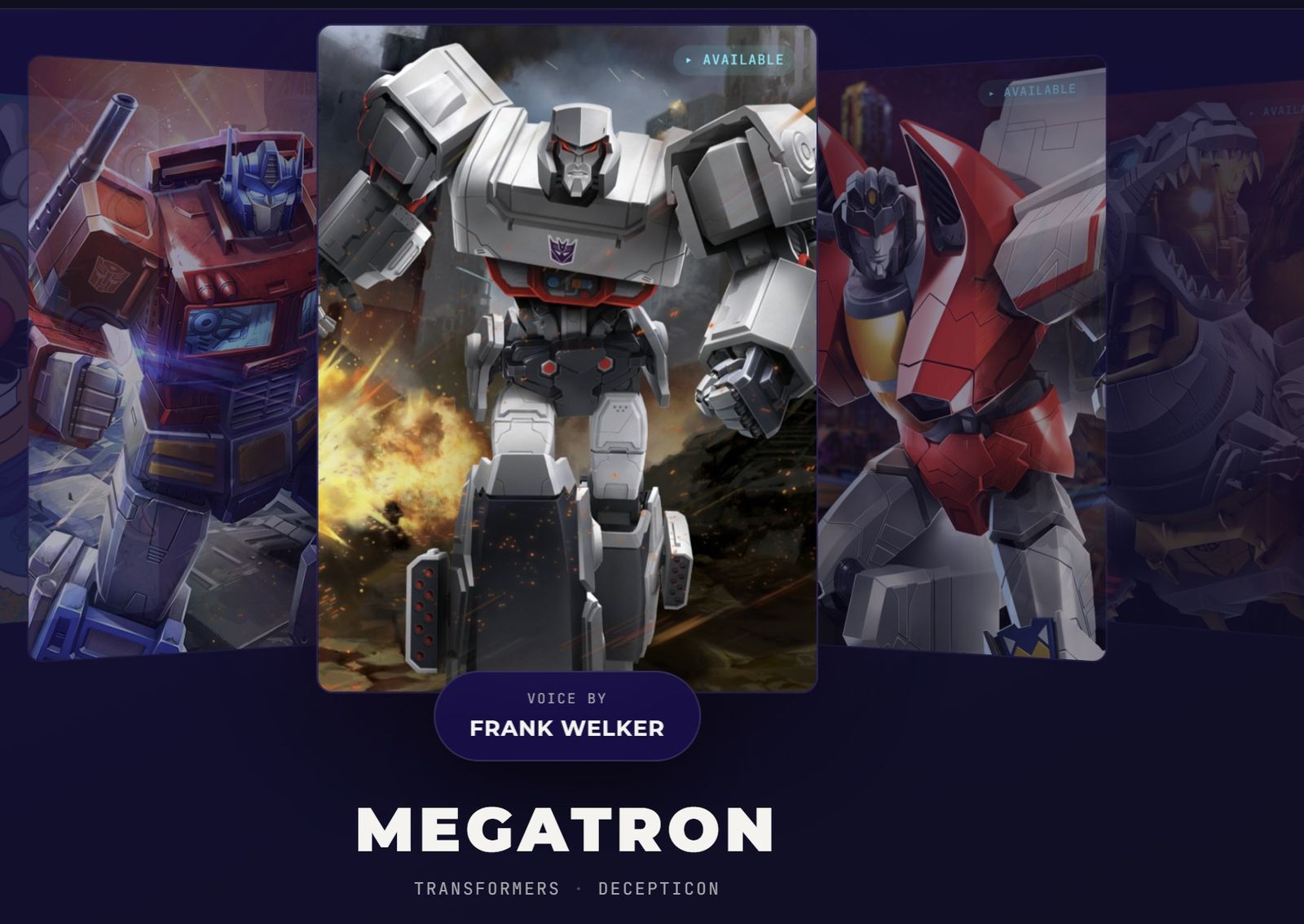
The launch lineup includes Mr. Potato Head, Megatron from Transformers, Cobra Commander from G.I. Joe, and the cast of the board game Clue, with select characters reaching the audio marketplace through the ElevenLabs partnership. Optimus Prime is rendered with the voice of Peter Cullen, who has played the character since the 1980s. For characters without an established voice actor, the company recruited professional performers.

Thomson stressed that using real voice actors is a ‘crucial’ part of the strategy. Synthetic voices could have produced a close approximation, but she judged that path the wrong one. She told the performers, in earnest, that the work should become a ‘new source of revenue’ — one born of dynamic, interactive, personalized experiences rather than a substitute for the long-form film voiceover they would otherwise record in studio. Sixth Wall has committed not to use those voices for film or TV.

For Ages 13 and Up — Use Cases and Examples

Sixth Wall is focusing solely on experiences and enterprise use cases for consumers aged 13 and older. The company says it is not developing AI products for young children and is taking part in discussions on safety standards and voluntary guardrails. Its primary application areas are:

  • Interactive storytelling experiences
  • Conversational games and digital companions
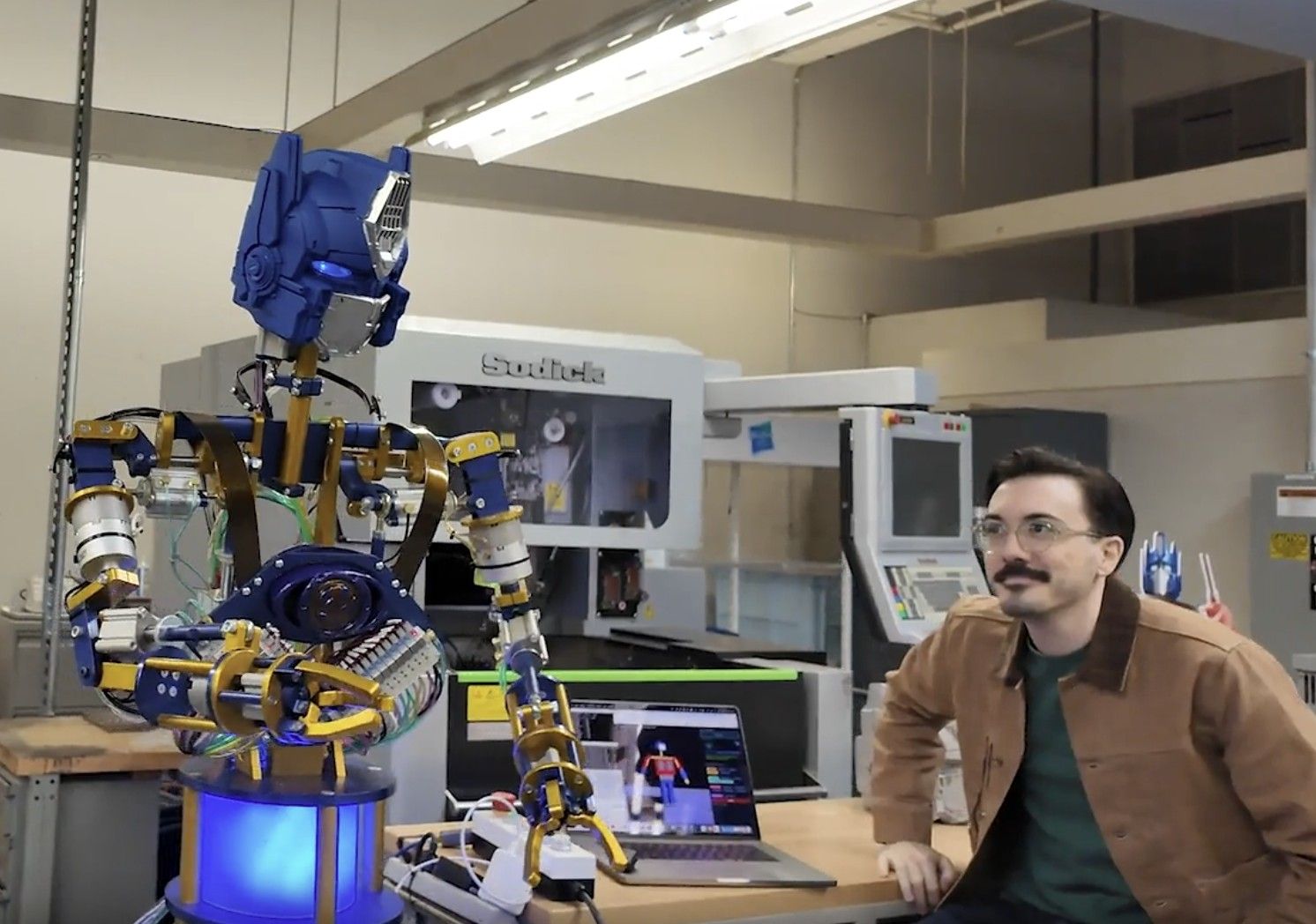
  • Connected physical products and robotics
  • AI-powered brand ambassadors
  • Location-based entertainment
  • Dynamic customer engagement agents

Thomson’s examples are concrete. A giant animatronic Optimus Prime greeting guests in a theme-park queue, she suggests, turns an hour-long wait into a delightful experience. Playing a voice game of Trivial Pursuit with a character while on hold for customer service makes a ten-minute wait feel short. Personalized storytelling with infinitely branching paths becomes possible. In other words, under Behavioral Licensing, content shifts from something you watch to time you spend with the character.

A New Path for IP Owners? — The Disney–Sora Case

Rights holders are watching Hasbro’s move with high expectations, because Sixth Wall may offer a path for every IP owner grappling with the misuse of their characters. Last year, after seeing its characters misused, Disney struck a deal with OpenAI to bring them onto the Sora platform.

That partnership, however, is understood not to have lasted. Industry observers point to several reasons: limited control over how characters are portrayed, unresolved questions over who owns secondary, platform-generated creations, and the risk of brand damage. The nature of generative AI is a particular hazard — even the same character can have its personality distorted by context or be consumed in unexpected ways.

Behavioral Licensing is drawing attention as an alternative that addresses these limits. Rather than merely permitting use of a character’s look or name, the model supplies the character’s ‘behavioral rule set’ in the form of an API or AI agent. Licensees — platforms and service operators — can then deploy the character while staying within the personality, canon, and manner of speech the rights holder has defined.

Where the old approach could leave a single character speaking and acting entirely differently from platform to platform, a Behavioral Licensing structure keeps the character’s responses, forbidden expressions, and role within its canon consistent. For an IP owner, this technically guarantees what matters most: preserving character identity. Sixth Wall reframes the character not as static content but as an ‘interactive agent,’ and aims to license it in a form deployable across many platforms. The company says it is already in talks with multiple potential partners and is seeing strong interest across games, theme parks, streaming, and customer experience (CX).

Observers see the model creating new opportunities for IP owners on three fronts. First, it can curb the spread of unauthorized output while expanding legitimate distribution channels. Second, it can convert a character from a ‘static asset’ into a ‘continuously interactive service,’ building recurring revenue. Third, it can unify character experiences that had been fragmented platform by platform. Behavioral Licensing is thus assessed as one answer to the core challenge IP industries face in the generative-AI era — balancing control against expansion. Should Disney and other global studios adopt the model in earnest, structural change in the economics and distribution of the character business looks unavoidable.

Implications for Korea’s Content Industry

The arrival of Behavioral Licensing demands a structural shift in Korea’s content industry as well. Korea has built powerful character IP and global fandoms around webtoons, animation, games, and K-pop, yet its licensing systems for ‘officially’ porting those characters into AI-based conversational and voice experiences remain at an early stage.

For globally recognized characters such as Pinkfong and Larva, and for popular game and webtoon IP, unauthorized reproduction or alteration on overseas generative-AI platforms is already a reality. Because conventional copyright protection has limits in controlling such spread after the fact, the industry increasingly argues for a more proactive strategy.

On that score, Hasbro’s model offers two lessons. First, it moves the point of control away from a ‘block-the-copies’ defense toward proactively supplying official characters into AI environments — an approach that suppresses unauthorized use while widening legitimate distribution. Second, it embeds a ‘consent-based compensation system’ that structurally reflects the rights of performers such as voice actors, offering a practical answer to the recurring domestic dispute over the unauthorized training and use of voice data.

Behavioral Licensing also poses a more fundamental question to Korean rights holders. Where existing contracts concentrated on a character’s appearance, name, and story rights, future agreements will need to cover control over ‘what a character says and how it reacts’ in AI environments. That means setting standards for who defines a character’s personality, manner of speech, forbidden domains, and in-world rules of behavior — and on what terms those are licensed.

Revenue-sharing structures will also have to be redesigned. In an environment where a character’s voice and performance are continually regenerated through AI, calls are growing for a more precise allocation of rights and compensation between performers and IP owners. As the center of gravity in the character business moves from ‘content distribution’ to ‘managing behavior and experience,’ the concern is that Korea, too, must establish AI-optimized rights structures and contract standards ahead of time — or risk losing the initiative in global competition.

About Hasbro and ElevenLabs

Hasbro

Hasbro is a leading games, IP, and toy company whose mission is to create joy and community through the magic of play. Drawing on 165 years of expertise, it reaches more than a billion fans a year worldwide through physical and digital games, video games, toys, licensed consumer products, location-based entertainment, film, and TV. Its franchise-first approach unlocks value from new and legacy IP — including Magic: The Gathering, Dungeons & Dragons, Monopoly, Hasbro Games, Nerf, Transformers, Play-Doh, and Peppa Pig — alongside premier partner brands, connecting fans from tabletop to screen across a network of partners and subsidiary studios. Over the past decade it has been recognized for corporate citizenship, including 3BL Media’s 100 Best Corporate Citizens, a 2025 JUST Capital industry leader, the Civic 50’s most community-minded U.S. companies, and Fast Company’s Brands That Matter.

ElevenLabs

ElevenLabs is an AI company focused on transforming how people and businesses communicate with the world. It launched in January 2023 with what it calls the first human-like AI voice model, and today serves millions of users and thousands of businesses across three platforms: ElevenAgents, for deploying voice and chat agents at scale with the integrations, testing, monitoring, and reliability businesses need; ElevenCreative, for generating and editing speech, music, image, and video across 70+ languages; and ElevenAPI, which gives developers access to its leading AI audio foundation models.

Sources: Alex Weprin, “Hasbro Launching an AI Studio That Will Let Companies License Its Stable of Characters,” The Hollywood Reporter, June 3, 2026 (hollywoodreporter.com/business/digital/hasbro-launching-ai-studio-license-characters-interactive-1236612854/) | Lucas Manfredi, “Hasbro Launches AI Studio Sixth Wall…,” TheWrap, June 3, 2026 | Hasbro–ElevenLabs official announcement (Business Wire, June 3, 2026) | Compiled by MediaGPT · K-EnterTech Hub