Netflix Says Its Content Contributed $325 Billion to the Global Economy in a Decade — One Streamer Now Outscales National Screen Policies

Netflix has demonstrated a platform-driven industry model where content investment generates $325 billion in economic impact and 425,000 jobs while extending into tourism, language learning, and local economies, putting K-content at a turning point to convert this impact into negotiating leverage.

Netflix Says Its Content Contributed $325 Billion to the Global Economy in a Decade — One Streamer Now Outscales National Screen Policies

‘The Netflix Effect’ site launches with $135 billion in production spend and 425,000 jobs across 50 countries; ‘KPop Demon Hunters’ lifts U.S.–Korea flight bookings 25% and Korean learners on Duolingo 22%

넷플릭스 “10년간 세계 경제에 3,250억 달러 기여”… 스트리밍 한 곳이 한 국가 영상정책을 넘어섰다
넷플릭스, 10년간 3,250억 달러 규모의 경제 효과와 42만 개 일자리를 창출하며 콘텐츠 투자가 관광·언어·지역경제까지 확장.‘플랫폼 중심 산업 구조’를 입증했고, K콘텐츠는 이를 협상력으로 전환할 기로

Netflix said on May 12 that its films and series have contributed more than $325 billion to the global economy over the past decade, with $135 billion of that going directly into production across more than 50 countries and generating over 425,000 jobs.

As legacy broadcasters and studios pull back on content spending under pressure from advertising softness and cord-cutting, the figures point to a structural shift in which a single streaming platform now deploys content capital on a scale that most national screen-industry policies cannot match.
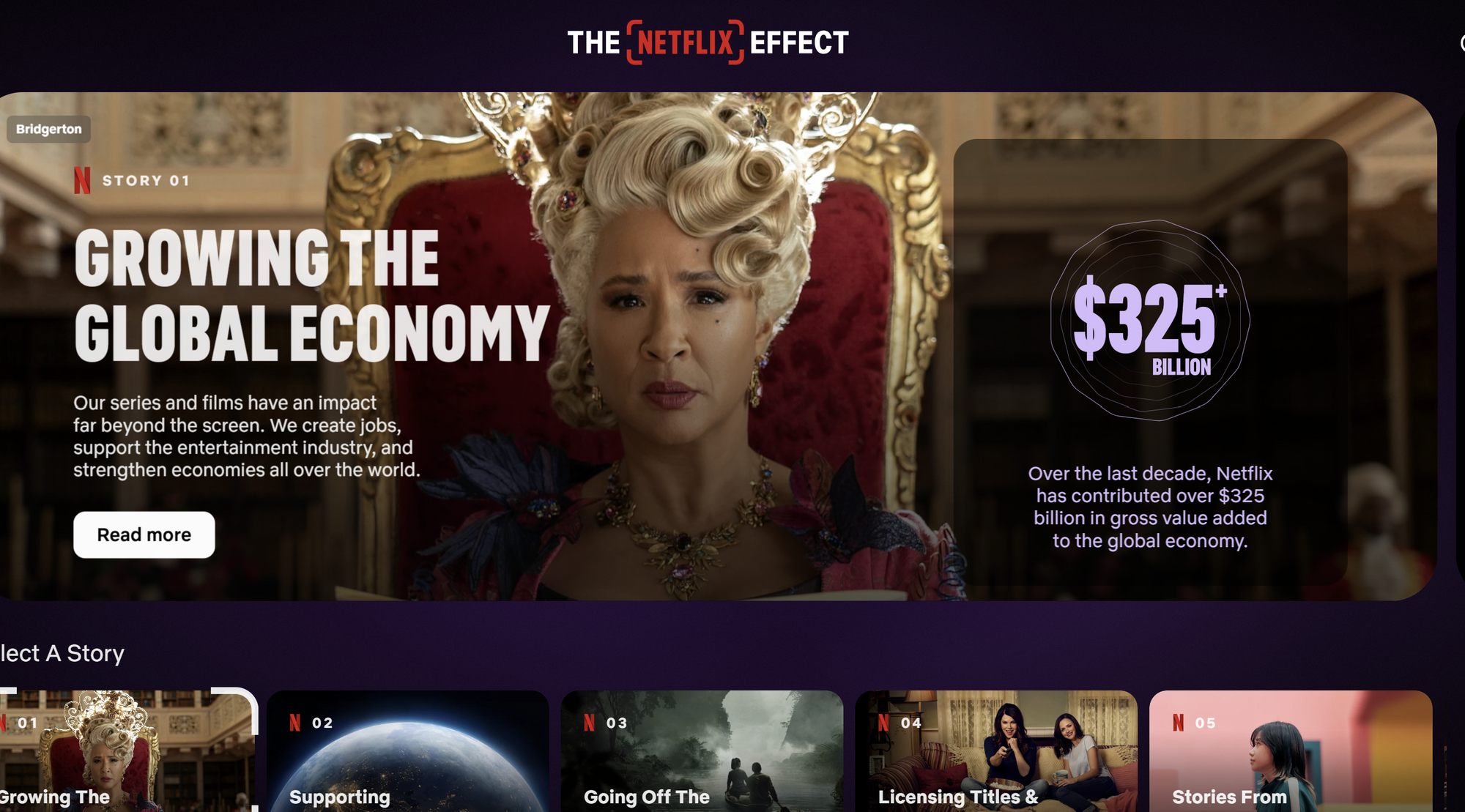
The company unveiled the data through a new interactive site, The Netflix Effect (thenetflixeffect.com). In a blog post the same day, co-CEO Ted Sarandos described it as "a comprehensive look at the economic, cultural and social impact of our films and series, and how it ripples out across economies, industries and everyday life, day after day, week after week." The figures are Netflix’s own and have not been verified by an independent third party — a caveat worth flagging in any citation.

The release lands during a turbulent stretch of Hollywood consolidation. Netflix pulled out of the bidding for Warner Bros. Discovery in February, and WBD is now in the process of being acquired by Paramount Skydance. The earlier attempt drew criticism that absorption of a legacy studio by the largest global streamer would shrink market diversity. Rather than challenge that view directly, Netflix is offering a different argument — that it can grow the industry through its own spending, without buying it.

A parallel signal is the company’s revised relationship with theaters. Netflix said earlier this month that its upcoming feature “Narnia: The Magician’s Nephew” will receive the company’s longest theatrical-only window to date — nearly two months. Until now, Netflix has typically released films in a small number of cinemas for short stretches, primarily to satisfy awards-eligibility requirements.

The investment cycle is expanding rather than tightening. Netflix projects cash content spending of $20 billion in 2026, up 10 percent year on year. Sarandos wrote that the company has "a responsibility to keep that flywheel going," adding that "while other entertainment companies pull back, we’re leaning in — spending tens of billions of dollars on content every year, investing in production facilities from Spain to New Jersey, and growing the entertainment industry through training programs that have reached over 90,000 people across more than 75 countries." With WBD, Paramount and Disney all working through cost cuts or post-merger integration, Netflix is positioning the capital gap as a data story rather than a deal story.

The production footprint is wide. Shows and films have been made in more than 4,500 cities and towns across over 50 countries. Netflix has worked with more than 2,000 production companies and licensed content from over 3,000 firms, including public broadcasters. Licensed titles still account for roughly 75 percent of the catalogue, a counterpoint to the common perception that Netflix has shifted almost entirely to originals; external producers and broadcasters remain a core part of the business. Over the past five years, the company says it has organized more than 1,000 training programs and events reaching over 90,000 participants in more than 75 countries.

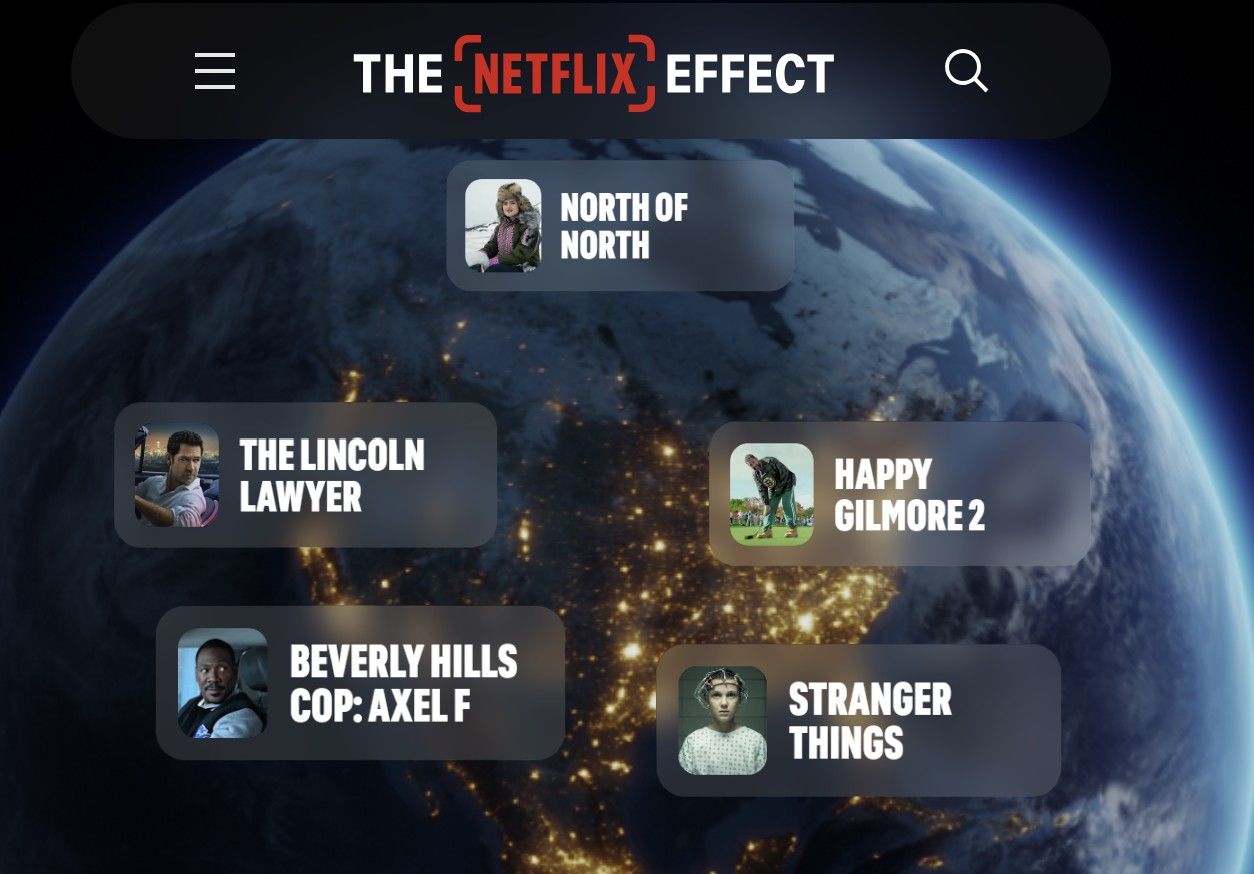
At the title level, individual Netflix shows now rival the economic output that some U.S. state film policies aim to deliver. “Stranger Things” supported more than 8,000 jobs across its five-season run and contributed $1.4 billion to the U.S. economy.

The final season alone employed more than 200 stunt performers, and the series engaged over 3,800 vendors across nearly every U.S. state. Four seasons of “The Lincoln Lawyer” added more than $425 million to the California economy and employed over 4,300 cast and crew, with filming in more than 50 Los Angeles locations including Dodger Stadium and Grand Central Market. “Beverly Hills Cop: Axel F,” the 2024 Eddie Murphy feature, brought $140 million to California, and the Western drama “Ransom Canyon,” shot in Albuquerque, New Mexico, created more than 700 local jobs.

The ripple effect extends beyond production. In 2023, “Suits” topped the U.S. streaming charts for 12 consecutive weeks — twelve years after its original premiere — and has since drawn more than 450 million views on Netflix. Library content, the company argues, can find a second prime time on a streaming platform. Non-English-language titles now account for more than a third of total viewing on Netflix, up from less than 10 percent a decade ago; the streamer’s titles are dubbed in 36 languages and subtitled in 33.

Korean content receives the most prominent showcase in the report. “KPop Demon Hunters” became Netflix’s most-watched original film of all time. Its track “Golden” won the first Grammy for a K-pop song, and the film took home two Oscars. Duolingo recorded a 22 percent rise in Americans studying Korean, and U.S.-to-Korea flight bookings reportedly climbed 25 percent. The numbers capture, in an external platform’s own data, how a single piece of Korean content has moved its impact from the screen into tourism, education and language learning.

France appears in the same vein. Audiences are 2.4 times more likely to name a country as their top travel destination after seeing it in a film or series, and Netflix says 38 percent of recent visitors to Paris cited “Emily in Paris” as one of their motivations for the trip. A single show can now stand in for what a city tourism budget once had to buy on its own.

For Korea’s media and content sector, the report reframes the negotiation position more than it changes the trajectory. The 75 percent licensing share is a reminder that external producers and broadcasters remain a structural pillar of Netflix’s business — leverage that local studios can still use to move from supplier role into shared-economics arrangements.

The “KPop Demon Hunters” effect — a 25 percent rise in flight bookings, a 22 percent rise in Korean learners — sits across boundaries that no single Korean agency, whether the film council or the tourism organization, currently measures end to end. Building a shared metric that captures how content shifts adjacent industries is the next requirement. Netflix is defining its own influence through its own data. Korea’s question is how to translate the same effect into measurement it can carry into the next round of negotiations.