FAST · TV COMMERCE
Ten Baby Shark, Pinkfong and Bebefinn toy and educational products to launch on Korea’s FAST channels in July via on-screen QR
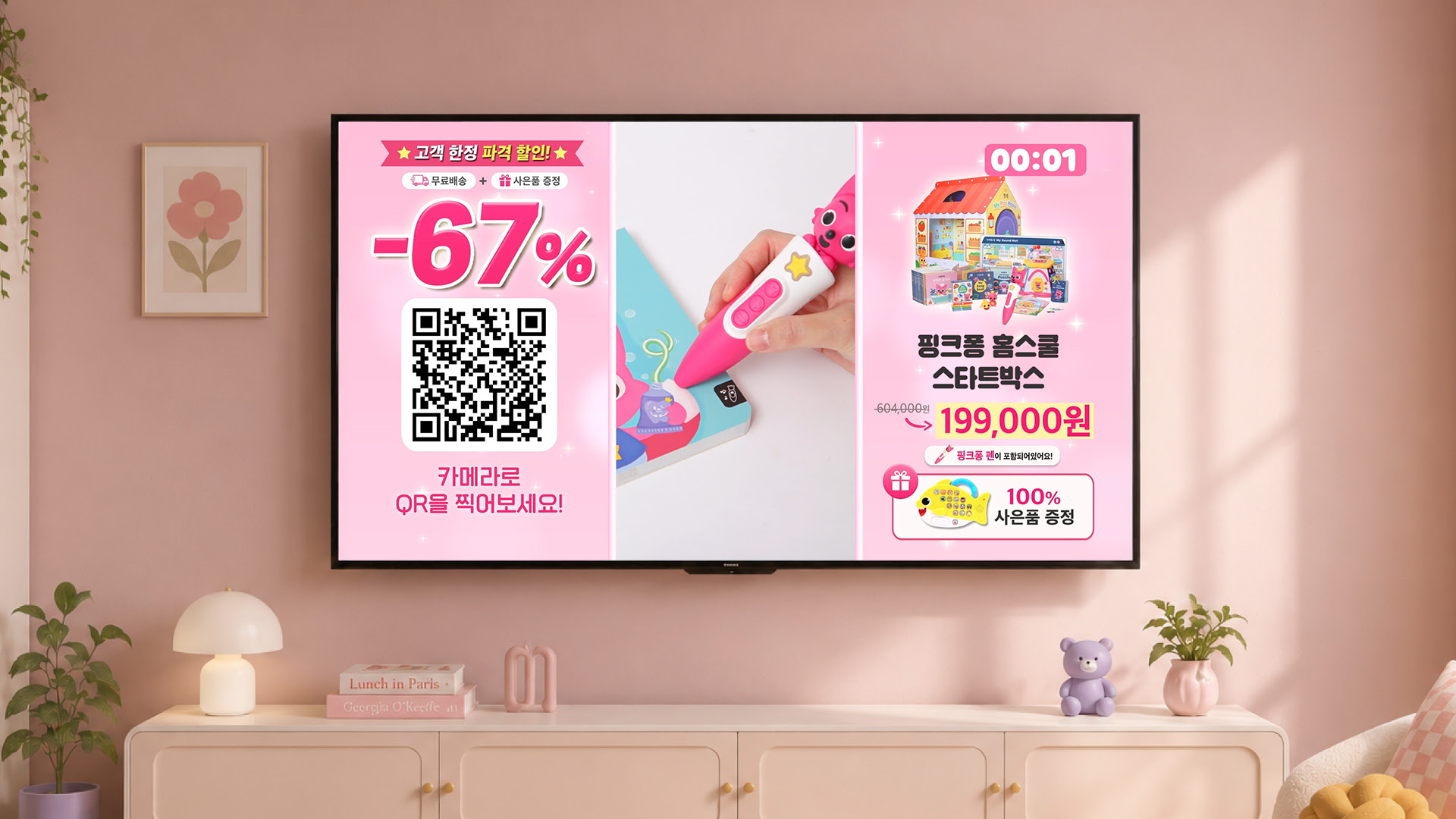
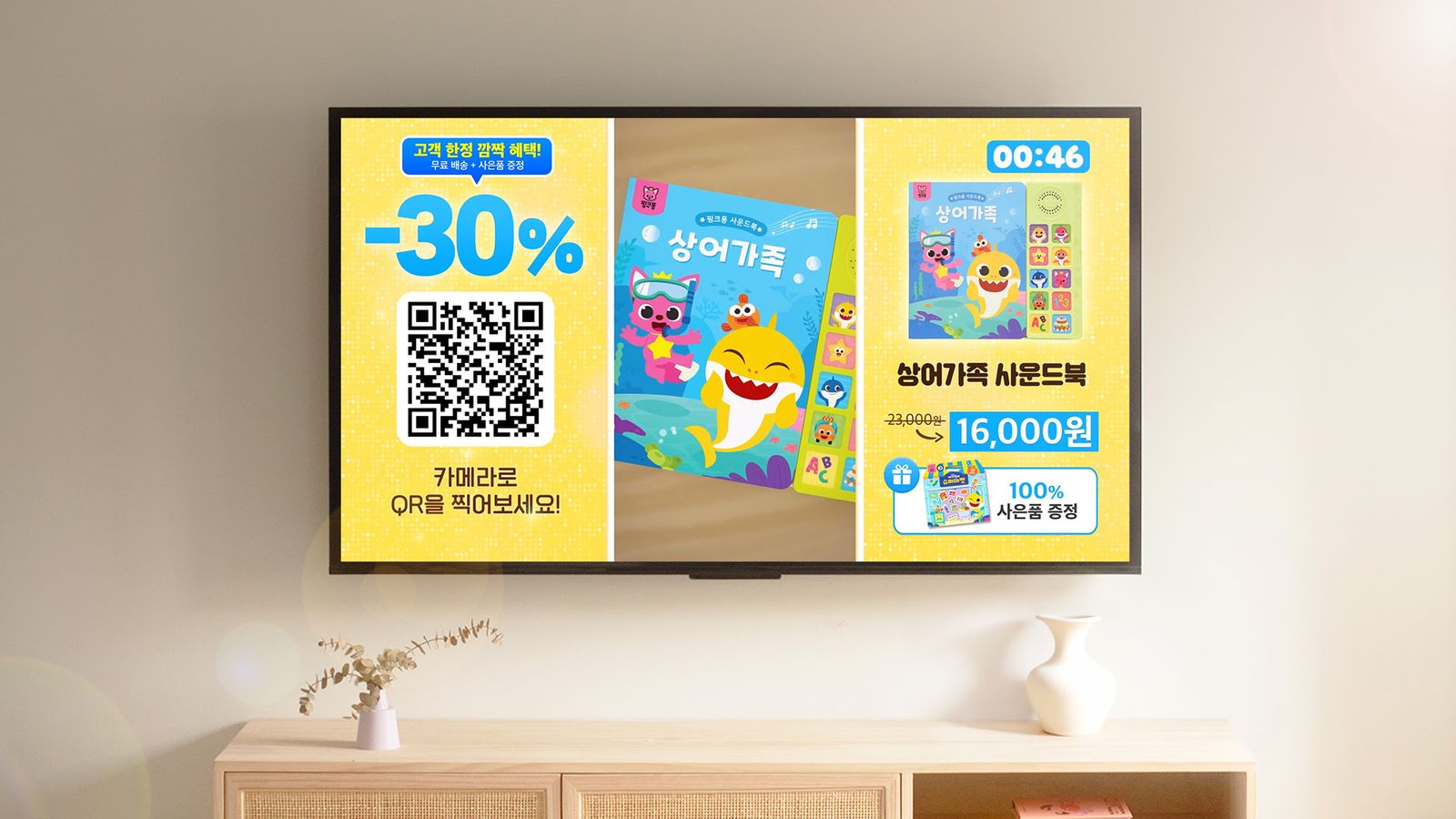
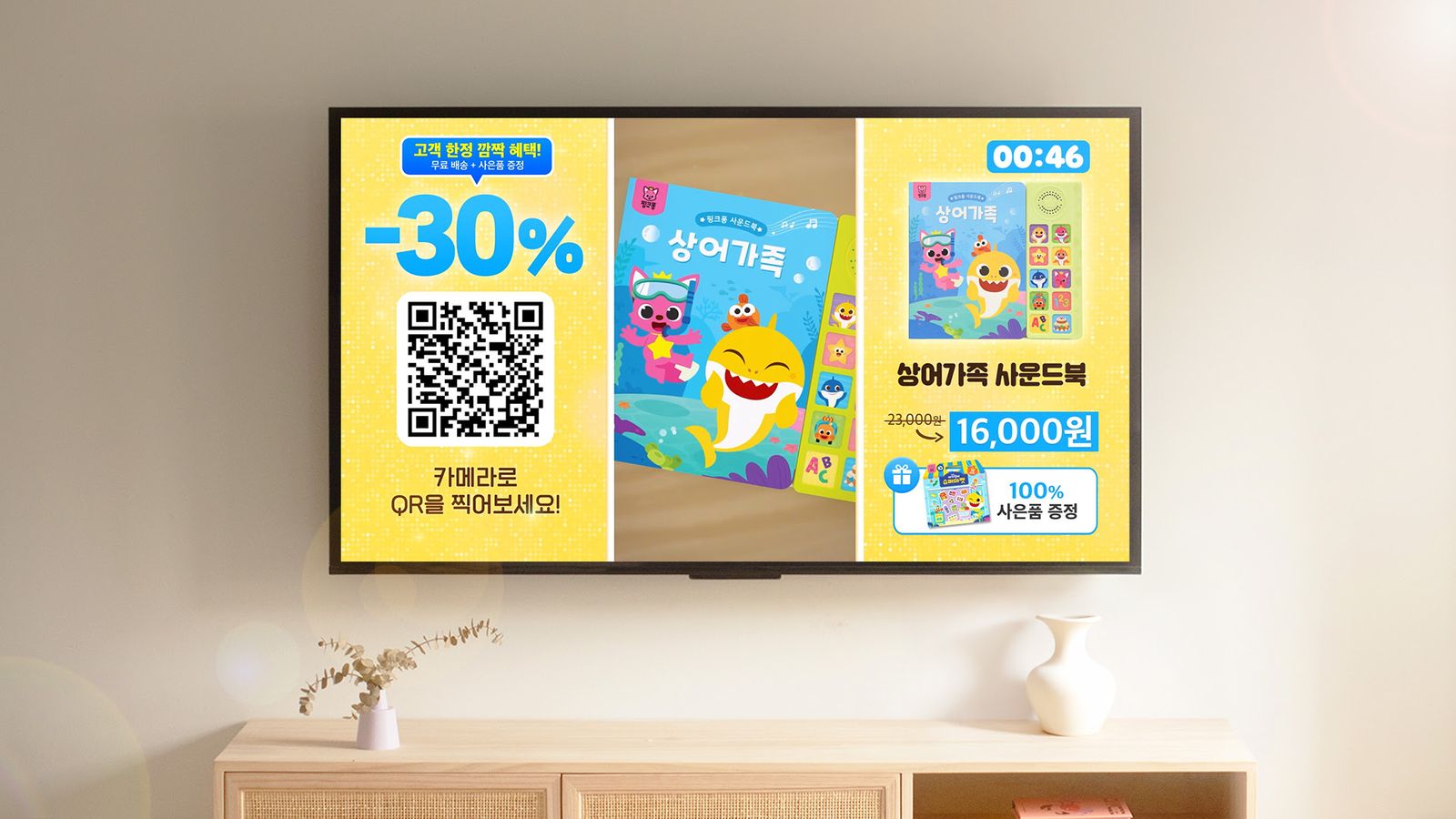
Sample New ID–Pinkfong shoppable-ad creative. Scanning the QR on the left of the screen opens the mobile product page. (Source: New ID newsletter)
New ID is teaming up with global family entertainment company The Pinkfong Company to bring QR-based shoppable ads to domestic FAST (free ad-supported streaming TV) channels in July. Announcing the partnership through its company newsletter, New ID described the move as an effort to turn the viewing screen directly into a point of purchase and to extend FAST’s advertising-dependent revenue model into commerce.

The turn toward commerce reflects a structural ceiling in FAST’s growth. The free, ad-supported model has scaled viewership quickly, but revenue remains tied to ad-inventory sales. With ad load unable to expand indefinitely, operators have been looking for ways to convert viewing itself into revenue. The habit of keeping a phone within reach while watching TV provides the bridge. Industry research shows that 71% of connected-TV viewers keep their phones nearby while watching, and 62% are open to scanning on-screen QR codes.
Shoppable ads work through a QR code shown during the ad break on a FAST channel. When a viewer scans the code with a smartphone, they are taken to a product page where they can view and buy the item on the spot. By linking content, advertising and purchase into a single flow, the format completes a TV commerce experience without the viewer leaving the channel, New ID says.
Starting with 10 toy and educational products, with more to follow
The two companies will debut the first campaign in July with a total of 10 toy and educational products built on the Baby Shark, Pinkfong and Bebefinn IP. The idea is to connect a lineup aimed at infant and family audiences naturally with FAST ad breaks, narrowing the distance between IP viewing and related purchases. New ID said it plans to add new products in stages, broadening the range of the shoppable-ad campaign over time.
The terms of the sample creative unveiled for the July campaign are as follows.
Family IP is seen as well suited to gauging early results. Viewing and purchase decisions are made at the household level, and many toy and educational items carry a purchase motive that follows directly from the viewing context. Because Baby Shark, Pinkfong and Bebefinn are IP with established recognition at home and abroad, they are also viewed as helpful in reducing drop-off after a viewer scans the code.
A growing shoppable-ad market — TV as a conversion channel
Efforts to connect the TV screen to purchase are not confined to Korea. According to EMARKETER, more than 30% of US internet users made at least one shoppable-media purchase in 2025. Advertiser priorities are shifting as well: in an IAB survey, the share of marketers planning to focus more on shoppable ads rose from 38% to 45% year over year.
The conversion performance of connected-TV advertising is offered as further evidence. In an NBCUniversal benchmark, connected-TV shoppable ads delivered up to 73% higher conversion than standard video ads. As the lean-back viewing environment combines with purchase intent, TV is being reshaped from a brand-awareness medium into a performance channel.
Global platforms embrace ‘content-to-commerce’ too — Amazon Live joins Samsung TV Plus
The same shift is visible among major global platforms. Per US outlet Deadline, Amazon’s shopping-focused FAST channel Amazon Live joined Samsung’s free streaming service Samsung TV Plus in March. Samsung TV Plus is a smart-TV-based service used by more than 100 million people each month, and holds the leading smart-TV share in North America.
At the center of Amazon Live is its ‘Shop the Show’ mobile companion experience. When viewers scan an on-screen QR code, they can view and buy products featured in the broadcast in real time through the Amazon Shopping app, and join live chats during broadcasts. Samsung cast the launch as an extension of its content-to-commerce strategy, connecting on-screen products directly to purchase.

Amazon Live joins the Samsung TV Plus channel lineup. (Source: Deadline)
As repeated price hikes in subscription streaming widen the audience for free, ad-supported services, large platforms are steadily attaching QR-based TV commerce. New ID and The Pinkfong Company’s domestic shoppable ads stand in the same direction as this global realignment.
Upgrading the channel-operations platform — Playout+ adds ‘Create Stillcut’
Alongside its commerce experiment, New ID is also upgrading its channel-operations tools. Its Playout+ platform has added a ‘Create Stillcut’ feature that extracts an image directly from a registered video. Without preparing a separate image file, operators can capture a representative scene from within the video and use it as a stillcut.

The Playout+ back end. ‘Create Stillcut’ and ‘Shoppable Ads’ are managed on one platform alongside metadata, posters and subtitles. (Source: New ID)
The feature comes in three modes.
In the actual Playout+ back end, a ‘Shoppable Ads’ section sits on the same screen as episode metadata, stillcut and poster images, and subtitles. From content registration through representative-image generation to ad-commerce setup, everything runs on a single operations tool — meaning this shoppable-ad campaign runs on the same pipeline.
Toward a FAST commerce ecosystem
New ID frames the partnership as an extension of its work to expand the FAST commerce ecosystem. Drawing on a range of partnerships and ad technologies, the company intends to add more touchpoints linking the viewing experience to purchase, building a structure in which content viewing and commerce move forward together. The early results of this family-IP campaign are expected to serve as a test bed for future product and partner expansion.
References · Sources