Honorary Palme d’Or laureate frames generative AI as a craft tool, but insists actor consent and rights licensing are non-negotiable
AI in film is not a threat but just another special effect — provided that any AI re-creation of an actor’s face has the prior consent of the person or their estate.
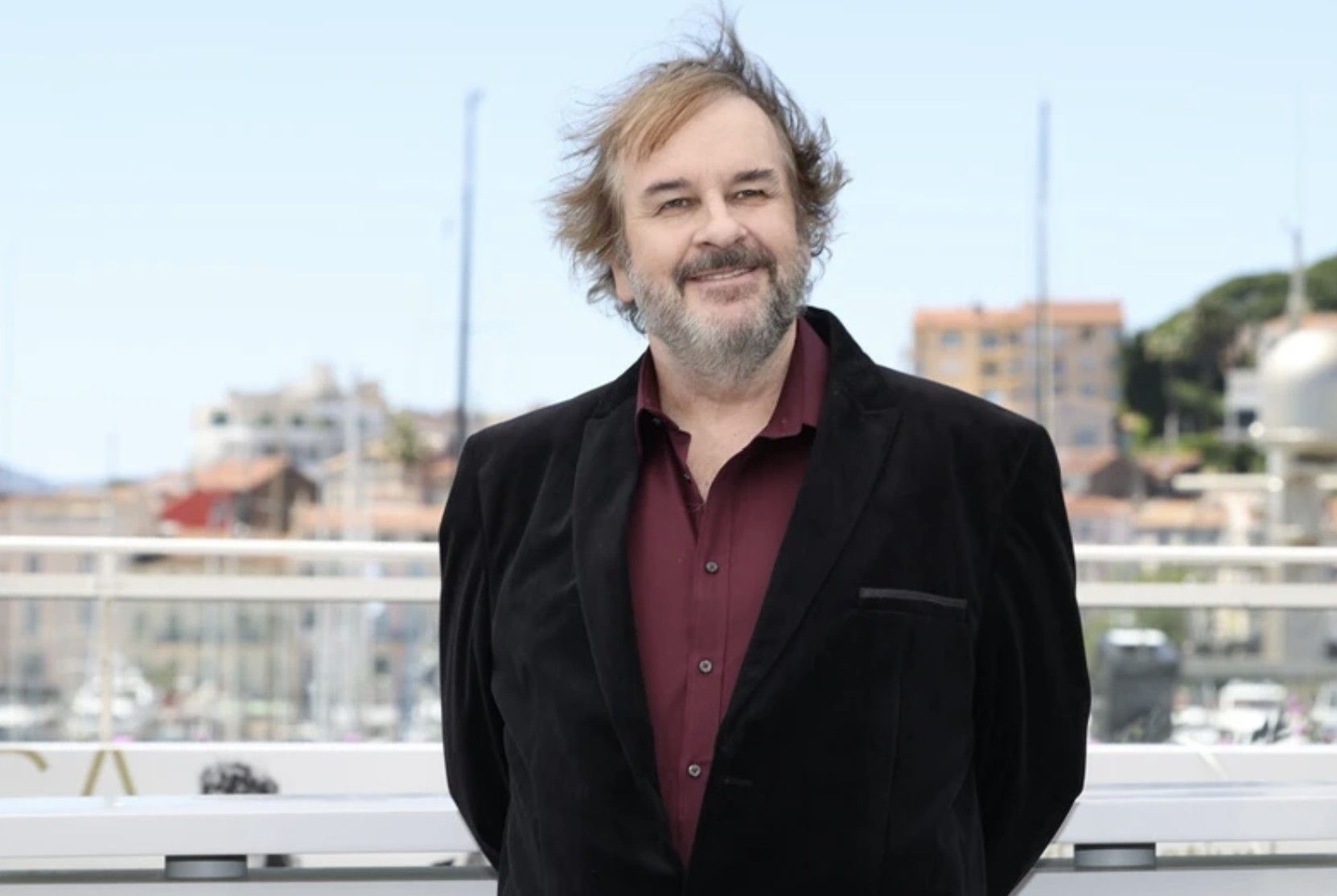
That was the position Peter Jackson laid out on May 13 at his Cannes Film Festival masterclass, the day after he received an honorary Palme d’Or. His “AI-as-tool” framing adds a new coordinate to a Hollywood debate that has remained polarized between “AI as replacement threat” and “AI as productivity tool” since the 2023 writers’ and actors’ strikes.

As generative AI reshapes production economics and tests the limits of actor likeness rights at the same time, the VFX revolutionary who ushered in the era of motion capture and digital characters with The Lord of the Rings used Cannes’s official stage to publicly side with the “just a tool” camp — under one non-negotiable condition.
“AI used in the right way is just a tool like any other tool,” Jackson told a packed Palais des Festivals. The decisive variable, he argued, is not the technology but the person directing it: “Is it actually interesting? Is it funny? Is it imaginative?
Has it been stitched together well to make a narrative, a story? Some people will make really, really great films, and some people will do the exact same process, and their film will be crap — just like normal films.”
Jackson reached for a historical analogy familiar to anyone steeped in fantasy cinema: the original 1933 King Kong and the Ray Harryhausen stop-motion films. “Those were done with stop-motion by a person moving a rubber creature,” he said.
“Why shouldn’t somebody on a computer using AI software be able to create their own imagery?” Coming from the filmmaker who rewrote the grammar of digital characters with Gollum and the armies of Middle-earth, the comment reads less as cheerleading for AI than as an attempt to locate the new technology within a continuous line of cinematic craft.
He drew a firm boundary, however, between film-industry applications and broader concerns about the technology. “I’m not talking about AI in general, like the thing that it might destroy the world,” he said. “To me, it’s just a special effect. It’s no different from any other special effect.” Across both The Hollywood Reporter and Variety accounts of the session, that “another special effect” framing was the phrase he returned to.

The condition came next. Reproducing an actor’s face with AI, Jackson said, requires the actor’s approval. “If you’re doing an AI duplicate of somebody, like Indiana Jones or anyone else, as long as you’ve licensed the rights off the person you’re showing, I don’t see the issue,” he said. “It’s when people’s likenesses get stolen and usurped.”
He placed that principle on the same footing as music and book rights. “You can’t play a song in a film unless you own the rights to that song. You can’t adapt a book unless you have licensed the book. So you shouldn’t be able to show somebody’s face through an AI technique without the approval of whoever it is — either the person themselves, or if they’re dead, their estate.” He added: “It’s pretty straightforward, really. I don’t see the concern about it.”
Jackson used the same platform to address a related and, for him, more personal grievance: the awards-season treatment of motion-capture performance. The case in point was Andy Serkis as Gollum. “A lot of the current environment, everyone’s so worried about AI … I don’t think a Gollum-type character or a generated character has any hope for winning any awards,” Jackson said. “Which is a bit unfair, especially in the Andy Serkis case where it’s not an AI-generated performance, it’s a human-generated performance 100 percent of the way.” His point: motion-capture acting is increasingly being lumped together with AI-generated characters in voters’ minds, costing it shortlist slots it has long deserved.

That same reading of Serkis explains why Jackson is not directing the next chapter of the franchise. Serkis is helming and starring in the forthcoming The Hunt for Gollum. “The film is about Gollum’s psychology and addiction,” Jackson said. “I thought, ‘Andy knows this guy better than anybody.’ So I actually didn’t think much of me directing it. I thought the most exciting version of this movie is if Andy Serkis makes it.”
The honorary Palme d’Or itself was presented on the festival’s opening night, May 12, by Elijah Wood — Frodo in the original trilogy. “You showed the world something it had never seen before, and nothing was ever the same,” Wood told the director on stage, calling him a filmmaker who “built an entirely new filmmaking culture at the far edge of the world.”
In his acceptance speech, Jackson recalled the 2001 Cannes screening of 20 minutes of footage from The Fellowship of the Ring, 25 years ago this festival. The press had dubbed the three-film production a “folly”; Cannes’s reception, he said, was the moment outside perception of the project began to shift.
Wood was in the audience again the following morning, prompting one of the warmer moments of the masterclass. “He was relentlessly cheerful every single day,” Jackson said of his lead actor. “Some actors show up and they’ve got this whole idea of what they want to make, but Elijah just was there to collaborate. Having somebody there who was that insanely cheerful was very, very helpful.”
The film industry’s AI argument is not narrowing. Two camps — “replacement threat” on one side, “productivity tool” on the other — keep talking past each other. What makes Jackson’s intervention worth tracking is that a filmmaker who himself opened the era of digital performance has now planted a stake on the “tool” side, but conditioned that position on a clear rights regime: AI-generated likenesses must be licensed like songs and books, from the person or, if they have died, their estate.
With industry-wide standards for likeness, voice and training-data rights still unsettled, the line drawn at the Palais des Festivals is likely to be cited well beyond Cannes — in the next round of SAG-AFTRA, studio and streamer contract negotiations.

Audience sentiment, however, is moving the other way. Illuminate’s U.S. Entertainment 365 study found that net interest in watching a movie or TV show “if they knew it was written using generative AI” was negative across all generations in both May and November 2025, and fell further over that six‑month period. General population net interest dropped from −11% to −19%, Gen Alpha+Gen Z from −4% to −13%, Gen X from −9% to −20%, and Boomers from −31% to −35%, with Millennials also slipping into negative territory.
The report warns that discomfort with AI-written scripts is “potentially damaging” to content consumption and that any wider rollout of AI in development will have to be paired with clear communication and trust-building around how rights, likeness and creative control are handled.