Reels Crosses a $50 Billion Run Rate — and Instagram's Next Stage Is the Living-Room TV

Instagram Reels, which launched as a TikTok knockoff, has in just five years grown into the world's most profitable video business at a $50 billion annual revenue run-rate—and now, riding the No.1 growth rate in Morgan Stanley's survey and HBO Max-level usage,

Reels Crosses a $50 Billion Run Rate — and Instagram's Next Stage Is the Living-Room TV

The fastest-growing service in Morgan Stanley's survey now matches HBO Max and Tubi on reach, and creator-made long-form programming is next

Instagram Reels, a product that launched five years ago to dismissive 'TikTok clone' reviews, has crossed a $50 billion annual revenue run rate and become one of the most profitable video businesses in the world. That figure rivals the annual revenue of Coca-Cola or Nike, and it exceeds the roughly $46 billion analysts project for YouTube's advertising business this year.

릴스, 연 매출 500억 달러 넘었다… 인스타그램의 다음 무대는 거실 TV
TV가 되고 있는 릴스. 틱톡 아류로 시작한 인스타그램 릴스, 5년 만에 연 매출 500억 달러로 세계 최고 수익 영상 사업으로 등극. 모건스탠리 서베이 성장률 1위·HBO맥스급 이용률을 발판으로 이제 거실 TV와 크리에이터 롱폼 편성까지 넘봐. K-콘텐츠 업계에 유통 창구·광고 예산 재편이라는 숙제 던져.

Reels' standing in the U.S. streaming landscape has shifted accordingly: in Morgan Stanley's latest survey, 26% of U.S. adults reported using Reels — the same tier as HBO Max (27%) and Tubi (26%) — and its usage growth ranked first among the two dozen services measured. Meta is now moving that momentum to the television screen.

Two structural currents converge behind the turnaround. The first is the maturing of AI recommendation systems. As the technology for inferring taste from viewing behavior — rather than follow relationships — crossed a threshold, the advertising efficiency of short-form feeds climbed toward the level of premium video. The second is a shift in where video gets watched. As YouTube's rise to become the most-watched video provider on U.S. television sets last year demonstrated, social video has already moved beyond mobile and into the living room. Instagram's push into TV sits precisely where those two currents meet.

Five Years That Began at 'Zero Engagement'

According to The Wall Street Journal, Meta CEO Mark Zuckerberg disclosed on an October earnings call that Instagram and Facebook Reels combined had surpassed a $50 billion annual run rate — nearly triple the $17 billion that research firm eMarketer estimates TikTok will generate in advertising this year. Zuckerberg credited AI recommendation systems for surfacing higher-quality, more relevant content, and noted that time spent watching video on Instagram had grown 30% year over year.

The contrast with just a few years ago is dramatic. Instagram rushed Reels to market in August 2020 as ByteDance's TikTok surged. Internal Meta materials reported by the Journal in 2022 showed Instagram users spending one-tenth as much time on Reels as TikTok users spent on that app, and one internal document went so far as to conclude that most Reels users showed no engagement at all.

An Algorithm That Abandoned the Following Graph

Tessa Lyons, Instagram's vice president of product, told the Journal there were two challenges. The first was grafting short-form video onto an app built around photos and friends; the second was surfacing videos from accounts users didn't follow. Instagram's ranking system had been built on the follow relationship — the 'following graph.' TikTok overturned that premise by reading how long users lingered on each video to infer taste, and Instagram had to solve that far harder problem from behind.

Instagram expanded supply by prioritizing original content and paying creators, and a flywheel took hold: the more time users spent scrolling, the sharper the recommendations became. Market intelligence firm Sensor Tower now estimates the average Instagram user spends 27 minutes a day watching Reels, ahead of YouTube Shorts at 21 minutes. TikTok still leads, with the average user spending 44 minutes a day in its main feed.

What the Survey Shows: Growth Lives Only on the Free, Social Side

Morgan Stanley's 16th annual Alphawise Streaming Survey, fielded in June 2026 among 3,000 U.S. adults, puts numbers on the shift. On raw reach, the incumbents still lead: Amazon Prime Video (66%), Netflix (55%), YouTube (47%), Hulu (38%) and Disney+ (36%). But Instagram Reels, at 26%, now sits shoulder to shoulder with Paramount+ (28%) and HBO Max (27%), and ahead of Peacock (24%) and the Roku Channel (20%). A social app's video feed is being counted as an entertainment source alongside paid streaming services — and it has overtaken the mid-tier of that market.

The year-over-year growth column makes the pattern sharper. Instagram Reels ranked first among the 24 services at 13.09%, followed by TikTok (10.37%), Facebook Reels (9.95%), the FAST leader Tubi (8.54%) and Facebook Video (6.43%). The top of the growth table is filled with free, algorithm-driven services, while the paid premium tier hovered near flat: Netflix at 3.52%, Prime Video at 2.64%, Disney+ at 1.49%, Hulu at 0.90%. ESPN Unlimited/ESPN+ (-4.21%), Apple TV+ (-3.36%) and AMC+ (-0.65%) lost ground outright. The expansion of the viewing base is happening on the free social-video and FAST side, not in subscription premium — a signal of where advertising budgets are headed.

U.S. streaming penetration and year-over-year change. Source: Morgan Stanley Alphawise Streaming Survey (June 2026); chart by K-EnterTechHub based on Luminate's compilation

Meta's portfolio position stands out as well. Facebook Reels (28%), Instagram Reels (26%) and Facebook Video (23%) all rank in the upper half of the table, giving a single company the broadest social-video footprint in the market — and all three also placed in the top five on growth. While Netflix adds subscribers one at a time, Meta is absorbing the streaming market's growth by expanding watch time on top of a base of three billion existing users.

The Next Battleground: the Living Room

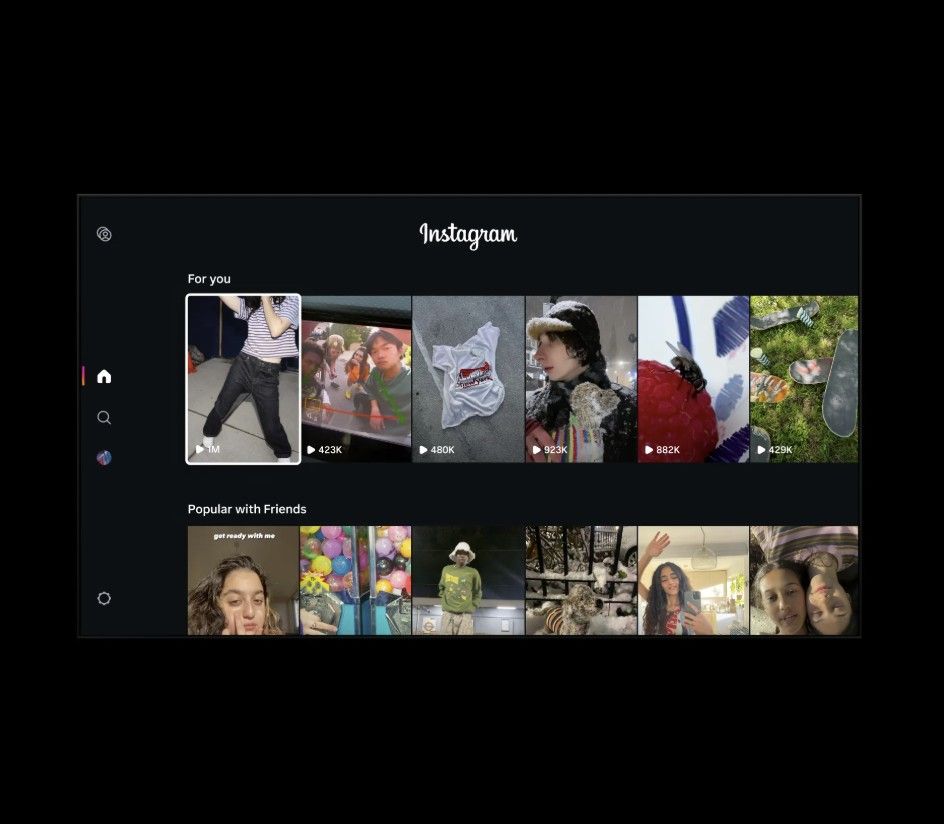
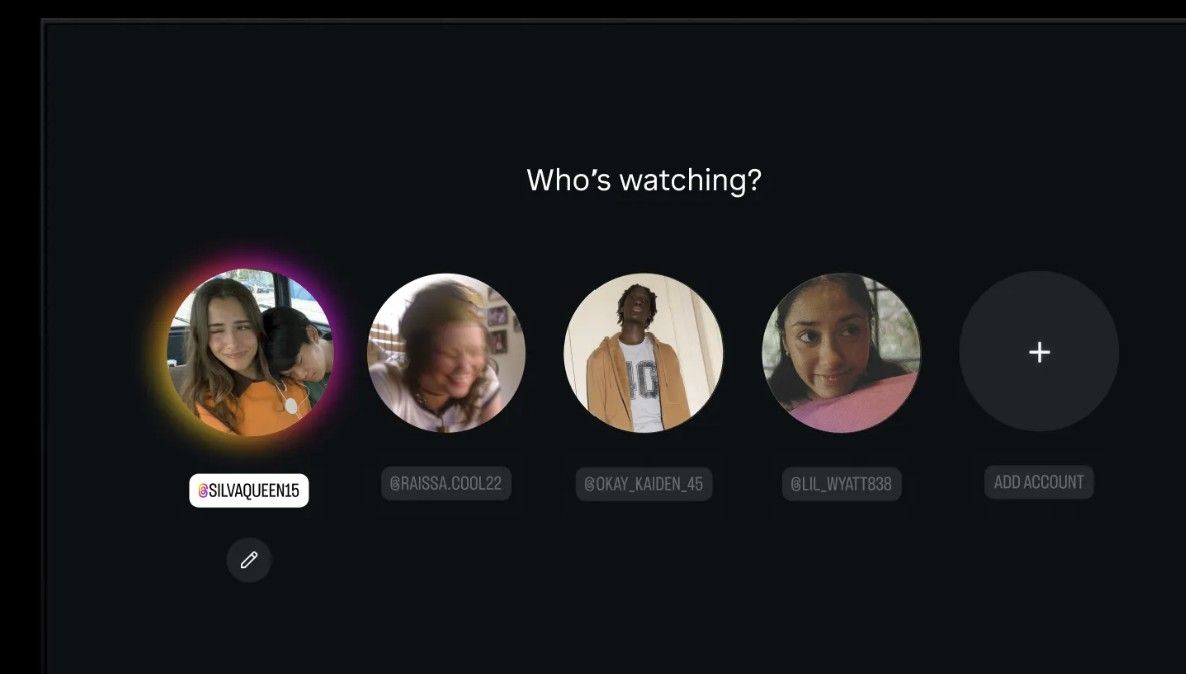
Meta is now extending that momentum to television. Instagram for TV began as a test on Amazon Fire TV devices in the U.S., moved to Google TV, and was recently added to Samsung smart TVs. On top of the distribution push, Instagram has signaled its intent to work with creators on its platform to produce long-form, episodic programming for the TV app — a hub for viral short clips stepping into the business of programming. Media analyst Andrew Wallenstein argues that Netflix co-CEO Ted Sarandos's 2013 line about becoming HBO faster than HBO could become Netflix now fits Instagram better than anyone — and that with TikTok moving to television less aggressively, the moment amounts to a window of opportunity.

YouTube has already proven the case. In the U.S., YouTube is now watched more on TV sets than on phones or any other device, and the TV screen has worked as a lever that lifts both watch time and premium ad pricing. Lyons pointed to research showing that many users were already watching Reels together with friends by mirroring their phones to a TV. Recent features are positioned with that environment in mind: Blend, which combines a user's algorithm with a friend's to create a shared feed, and a control that lets users tell the algorithm directly what they do and don't want to see. On TV, Lyons said, viewers need to be able to tap straight into the right content for whoever is sitting with them.

Implications for the K-Content Industry

The audience shift the survey documents poses two questions for the Korean content industry. The first concerns distribution. If Instagram begins commissioning creator-based long-form programming, demand will grow for extending short-form-proven IP into episodic formats — an opening for Korean studios with vertical-drama and short-form production capabilities to enter as early suppliers. The second concerns advertising. If growth keeps concentrating in free social video and FAST while premium subscription stalls, the reallocation of television ad budgets will accelerate, which gives Korean broadcasters and the advertising industry reason to watch Instagram's living-room experiment closely.

Sources

The Wall Street Journal, "How Meta's Reels Became a $50 Billion Business" (Meghan Bobrowsky, Jan. 1, 2026) — https://www.wsj.com/tech/meta-reels-revenue-ade4179e

Morgan Stanley Research, 16th Annual Alphawise Streaming Survey (June 2026, N=3,000 U.S. adults 18+) · data as compiled by Luminate

Andrew Wallenstein, "Instagram's TV Takeover Could Boost Reels' Momentum"

Sensor Tower / eMarketer estimates (as cited by WSJ)