CNN founder didn't just create 24-hour news. He invented the always-on channel stack — and Korea's ATSC 3.0 transition is its newest test case.
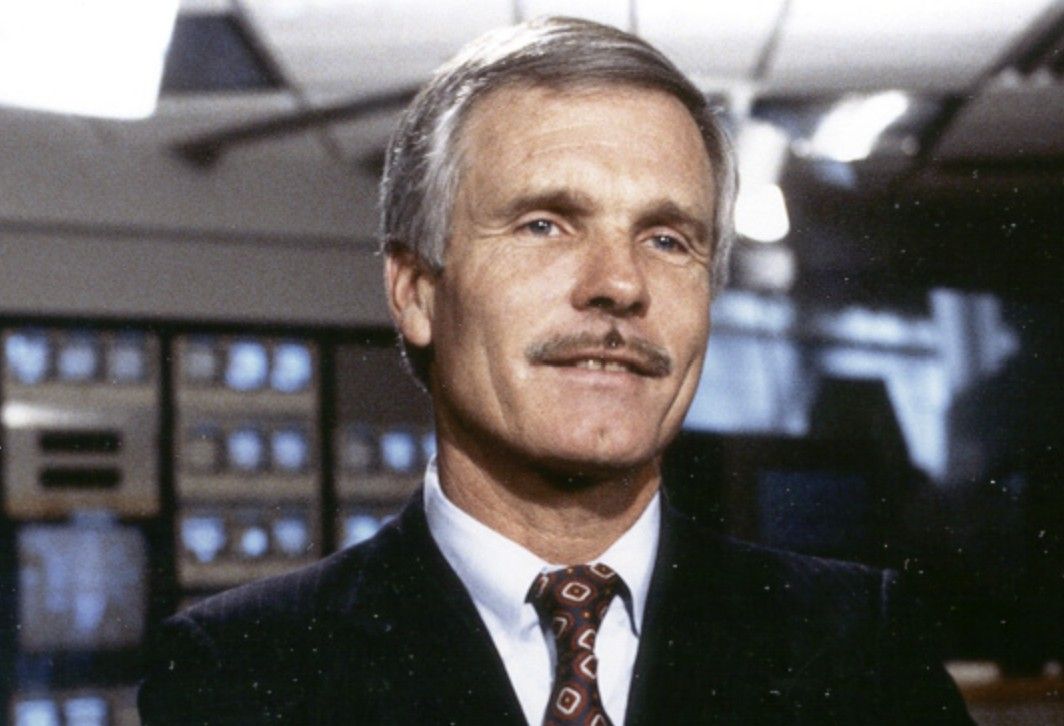
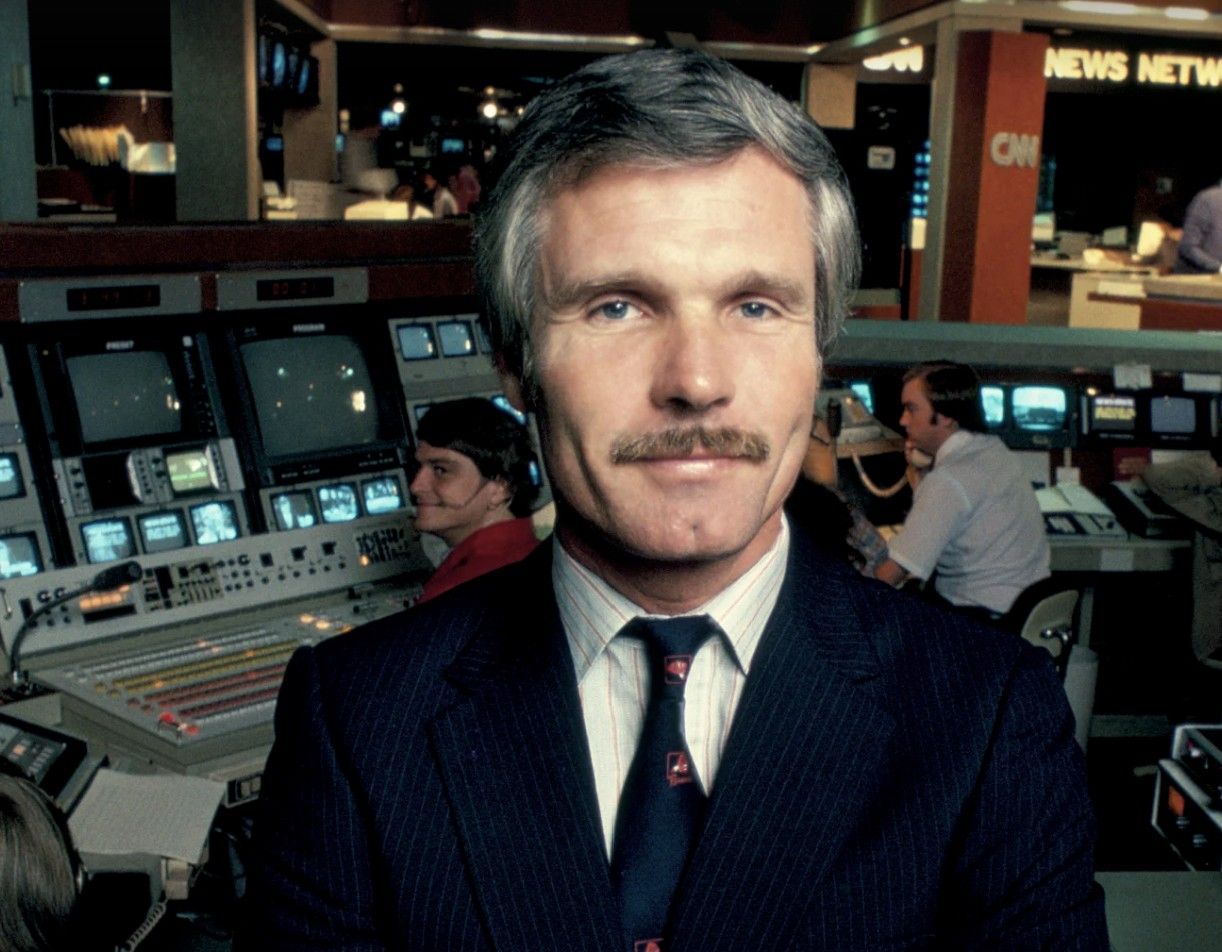
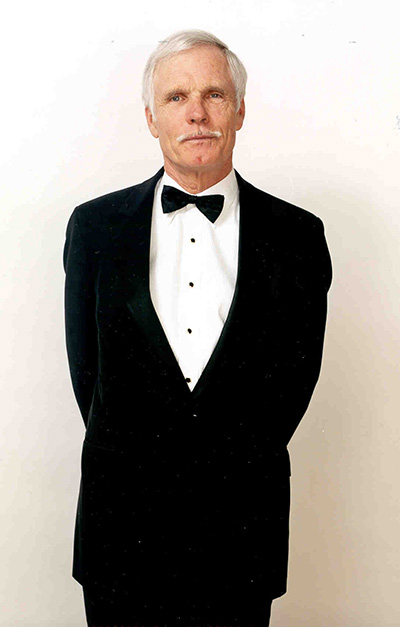
The cable era's most consequential architect has died. Ted Turner, founder of CNN (Cable News Network) and the man who created the 24-hour news cycle, passed away on Wednesday at his home near Tallahassee, Florida. He was 87.
Family spokesman Phillip Evans confirmed the death. Turner had disclosed in 2018 that he was suffering from Lewy body dementia, a progressive brain disorder he later said had been mistaken for years as bipolar disorder.
But for Korean broadcasting — and for any market now staring down its own ATSC 3.0 and FAST transition — the more consequential story isn't the man's death. It's the business model he leaves behind.
Between 1976 and 2001, Turner invented a four-layer stack — satellite distribution + cable carriage + genre-specific channels + permanent IP library — that has been replicated, more or less verbatim, by every cable empire that followed: Fox News, MSNBC, Discovery, HBO. Today's blueprint for the "always-on" channel business on OTT, FAST and ATSC 3.0 traces back, almost line for line, to a control room in Atlanta on the morning of June 1, 1980.
"Lead, follow, or get out of the way." — Ted Turner's lifelong motto

1. Why 1980 Worked — Exploiting a Structural Gap in Cable
Turner's breakthrough was made possible by a structural gap in the late-1970s U.S. cable industry. Cable operators desperately needed content to differentiate themselves from the three broadcast giants (ABC, NBC, CBS), but their own production capacity was thin. The supply void was the opportunity.
Turner identified the gap with surgical precision. In late 1976, he leased an RCA satellite to beam the signal of his small Atlanta station, WTCG, to cable operators across the country. It was a U.S. first. On top of that same satellite-and-cable backbone, he then layered, one by one, a portfolio of genre channels: 24-hour news (CNN), film and drama (TNT, TCM), animation (Cartoon Network), and a deep classic-film IP library (acquired through MGM).
Turner's real legacy, in other words, is not CNN as a single channel. It is the four-layer stack — satellite + cable + genre channels + IP library — as a business model in itself. The explosive cable growth of the 1980s, the global channel boom of the 1990s, and the multi-channel pay-TV market of the 2000s were all built on this architecture. By 1989, Turner's personal fortune had doubled to roughly $5 billion, and CNN plus CNN Headline News reached more than 50 million households worldwide.

2. From Birth to Tragedy — His Father's Suicide and the Birth of a "Superachiever"
Born Robert Edward Turner III in Cincinnati on November 19, 1938, Turner was raised primarily in Georgia, where his father Ed Turner ran a billboard advertising business after relocating from Mississippi during the Depression. As a boy, Ted cut weeds in front of billboards and helped the painters.
The relationship with his father shaped the rest of his life. In his autobiography Call Me Ted, he described his father as abusive when drinking, but also as the man whose approval he chased relentlessly. Even Turner's choice to study classics at Brown University irritated his father, who believed it would not serve a business career and reportedly questioned in a letter whether "oddball professors" and ivory towers were producing the kind of son he could be proud of.

Turner himself was no model student. He was suspended from Brown for throwing chairs out of a dorm window after drinking; classmates later recalled that he sang Nazi songs outside a Jewish fraternity and put up KKK signs on Black students' dormitory doors. He left Brown without a degree.
The deeper tragedy came in the family. In 1963, his 53-year-old father — overwhelmed by debt anxiety and substance abuse — impulsively agreed to sell off part of the company and, days later, shot himself in the bathtub. Ted was 24. He had also recently lost his younger sister Mary Jean to lupus and encephalitis, an experience he later said cost him his religious faith and made him publicly antireligious for life. He cited the same losses as the engine that turned him into what he called a "superachiever."
3. From Billboards to Broadcasting — The Birth of the Superstation
Immediately after his father's death, Turner overrode the impulsive sale and took over the company. Drawing on experience he had built since joining the firm in 1959, he expanded into radio and TV stations across Atlanta and Charlotte, and acquired libraries of films and old television series. The business returned to profitability within a few years.
In 1970, he financed his way into a struggling Atlanta TV station, renaming it WTCG. In 1976, he made a bigger bet: borrowing further to acquire the underperforming Atlanta Braves baseball franchise — $500,000 in cash plus $8 million payable over 10 years at 6% interest. By broadcasting all 162 games on WTCG, he filled programming time at almost no cost, time competitors were paying handsomely to fill. He acquired the NBA's Atlanta Hawks the following year. (Forbes today values the Braves franchise at $3.35 billion.)

His ownership style was characteristic. He sent an advertising executive to the Braves' spring training in uniform to learn baseball; once, after a player hit a home run, Turner ran onto the field to congratulate him. In 1977 he briefly inserted himself as on-field manager for one game before Major League Baseball stopped him, citing rules that bar owners from managing. When the Braves won the World Series in 1995, defeating the Cleveland Indians, no one held the trophy higher.
Late in 1976, Turner leased the RCA satellite, invested heavily in transmission equipment, and started beaming WTCG to cable operators nationwide. The company was renamed Turner Broadcasting System (TBS). The economics aligned perfectly: cable operators got new content for their subscribers, Turner got national reach to drive higher ad rates.

4. Captain Courageous — Sailing as a Business Asset
Turner's other identity was as a yachtsman. Trained at the Savannah Yacht Club as a boy, he was named U.S. Yachtsman of the Year in 1970 and 1973. After failing to qualify for the 1974 America's Cup, he regrouped and won the 1977 Cup at the helm of Courageous, sweeping the defense 4-0. The nickname "Captain Courageous" stuck, and with it came an enduring image of American heroism that became a strategic business asset.
In his autobiography he tied the two pursuits together explicitly: he ran his company the same way he ran his boat — recruit the best crew, delegate operations, and step back to keep an eye on overall strategy and the next move. His comfort with delegation came from this principle.
The image was not always pristine. During the 1977 Cup elimination races at Newport, his drinking and womanizing scandalized the local establishment to the point that he had to issue a written apology to one elite social club. He was reportedly too drunk to finish his nationally televised victory speech. In the catastrophic 1979 Fastnet Race in the Irish Sea, where unexpectedly fierce winds killed 15 sailors and prevented roughly 70% of starters from finishing, Turner's yacht Tenacious took the win.

5. CNN's Launch — Surviving the "Chicken Noodle Network" Mockery
On June 1, 1980, Turner finally launched CNN. The base of operations was Atlanta — neither New York nor Washington — a deliberate choice signaling distance from the East Coast media establishment. CNN Headline News, with half-hour cycle updates, followed about 18 months later. At launch, Turner described the network as a positive force in a world of cynics.
The early years were brutal. CNN lost roughly $2 million per month for its first two years, with fewer than two million subscribing households. By comparison, the combined newscasts of ABC, NBC and CBS reached well over 50 million. Competitors mocked it as the "Chicken Noodle Network," and CNN had to sue the Reagan administration and the three broadcast networks just to be admitted to the White House press pool.
Filling 24 hours of programming required building an editorial operation from scratch. Turner and his team recruited columnist Robert Novak, anchors and hosts including Lou Dobbs and Larry King from local TV and radio, and built a global newsroom infrastructure that had no precedent. Programs such as Larry King Live and Crossfire were the early laboratory for what cable-era talk and commentary would look like.
6. The Gulf War and the Standardization of Global News
The decisive turning point came with the 1991 Gulf War. CNN correspondent Peter Arnett broadcast live from Baghdad as U.S. forces bombed the city, one of the only Western journalists in place. Competitors filed from outside the country and depended heavily on official U.S. government statements.
That coverage demonstrated two things at once. First, a 24-hour news channel could be an independent global infrastructure, not merely an accessory of cable. Second, the time unit of news itself — for governments and the public alike — could be reduced to minutes. Even President George H.W. Bush remarked publicly that he was learning more about events from CNN than from the CIA.
CNN won a Peabody Award for the coverage; the citation noted explicitly that the network had matured from a cable curiosity into a global service of the first order. Turner was named TIME's Man of the Year for 1991. The same pattern repeated during the 1995 O.J. Simpson trial and the 2003 Iraq War coverage. The reach and agenda-setting power generated by 24/7 live broadcasting — that was the asset Turner had truly invented.
7. CBS, MGM, and the John Malone Deal
In 1985, with CNN finally turning profitable, Turner attempted his most audacious move yet: a hostile bid for CBS, then America's largest broadcast network, totaling $5.4 billion in stock and junk bonds. A company with annual revenue of less than $300 million was attempting to swallow one with revenue near $5 billion. CBS responded with a poison pill — borrowing $1 billion to repurchase 21% of its shares, ensuring that any successful takeover would carry crushing debt. Turner withdrew the bid that July.
A month later, he turned to a different target: Kirk Kerkorian's MGM-UA Entertainment, which Turner agreed to buy for $1.5 billion. The deal, completed in March 1986, gave him the MGM studio, its lot, and a library of roughly 3,500 films including Citizen Kane, The Wizard of Oz, and Gone With the Wind. The pre-1948 Warner Bros. catalog — including Casablanca and Looney Tunes — also transferred.
The price was the problem. Turner's company was left with about $2 billion in debt. By June 1986, he had sold off everything except the film library for $490 million, leaving him with an effective $1.2 billion price for the library alone. A string of MGM theatrical disappointments compounded the cash crunch.
It was at this point that Turner placed a 6 a.m. phone call to fellow cable titan John Malone, telling him something had to be done. According to the Malone biography Cable Cowboy, Malone organized a consortium of cable operators that, in 1987, took a 37% stake in TBS for $562 million and seven of fifteen board seats. Spending decisions above $2 million required twelve of fifteen board votes. For the first time since his father's death, Turner had lost sole control of his business.
That episode captures the essential power dynamic of the cable era. Content channels existed only insofar as they were carried by the major cable operators, and the carriage decision sat with figures like Malone. Turner understood this dynamic better than anyone — and he was famously unafraid to swallow his pride to secure carriage. His autobiography recounts him asking, on hands and knees, whose shoes he had to kiss to get carried on Malone's system.
8. Contradictions in Politics — Right-Wing and Castro
Turner's political stances rarely added up to a coherent line. He claimed conservative Republican credentials and maintained warm ties with the John Birch Society and right-wing evangelical figures including Jerry Falwell and Donald Wildmon. In 1980 he attacked the three broadcast networks as a "bunch of pinkos" and positioned himself as a defender of family values. But he also visited Cuba in 1982, spoke admiringly of Fidel Castro, and persuaded Castro to film a CNN promotional spot. A year after the 1989 Tiananmen Square massacre, he told foreign correspondents in Beijing that the students should have known better — comments his critics linked to his expanding business interests in China.
His public statements were a serial-controversy generator. In 1985 the Atlanta Constitution reported him suggesting that the MX missile program and Black unemployment could be addressed simultaneously by hiring jobless African Americans to move missiles. A 1999 collection of his statements quoted him saying he disliked baseball agent Jerry Kapstein partly because Kapstein was Jewish. He once told the American Humanist Association convention that Christianity was a religion for losers.
Less remembered: during his marriage to Jane Fonda in the 1990s, Turner seriously considered running for U.S. president. He told CBS in 2018 that Fonda warned him he would be running alone if he ran. He did not.

9. Cartoon Network and the Empire's Completion
In 1991, Turner acquired Hanna-Barbera Productions for $320 million, bringing The Flintstones, The Jetsons and Yogi Bear under his roof in a single move. On that foundation he launched Cartoon Network in 1992, a 24-hour all-animation channel. New Line Cinema and Castle Rock Entertainment followed in 1993.
From this point, his net worth curve smoothed into a steady rise. The $5 billion personal fortune of 1989 grew steadily; the public image shifted from "reckless gambler" to "mature media titan." Colleagues reported that he had calmed down. He himself acknowledged he had begun taking lithium, commonly prescribed for bipolar disorder — a diagnosis he later said was a misreading of what was actually early-stage Lewy body dementia.
10. Three Marriages — "Three Strikes and You're Out"
Turner's personal life ran as turbulently as his business life. His first marriage, to Julia Nye, produced two children, Laura and Teddy Jr. It ended in the early 1960s after a now-infamous yachting incident in which Turner — seeing his wife on track to win their race — rammed her boat with his.
His second marriage was to former Delta Air Lines flight attendant Jane Shirley Smith, with whom he had three children: Beauregard ("Beau"), Rhett, and Jennie. He humiliated her publicly by bringing girlfriends to Braves games, and they divorced in the late 1980s.
His third marriage, to Oscar-winning actress Jane Fonda in 1991, became media-industry legend. After his second divorce, Turner read in the newspaper that Fonda was getting divorced, called her, accepted her request for space, and called again months later to ask whether she would now go out with him. Right-wing conservative met left-wing feminist; hunter met environmentalist. They shared the experience of having lost a parent to suicide and counted figures like Castro among mutual acquaintances. The marriage ended in 2001, around the time of the AOL-Time Warner merger; Fonda later attributed the breakup to his persistent infidelity and her own deepening Christian faith.
In a 2012 Piers Morgan interview, Turner conceded with a smile that managing four girlfriends simultaneously after the divorce was difficult. To the Hollywood Reporter that same year, drawing on his baseball background, he said three failed marriages amounted to three strikes and an at-bat that was over. Asked whether he was lonely, he answered, briefly: maybe a little.

11. The Time Warner Sale and the AOL Trap
In 1995, Turner accepted a sale of his company to Time Warner valued at roughly $8 billion. He took the role of vice chairman; Gerald Levin took the chairman and CEO position. After 33 years as a CEO, Turner had agreed to be someone else's number two.
The sale came with an immediate fight. When Time Warner Cable declined to carry the new Fox News at its launch, Turner went head-to-head with Fox boss Rupert Murdoch. Murdoch's New York Post ran a front-page headline questioning Turner's sanity; Turner challenged Murdoch to a boxing match and threatened, in colorful terms, to crush him. After roughly a year of legal disputes, the two sides reached a carriage agreement.
More damaging to Turner personally was the 2000 merger of AOL and Time Warner — a $156 billion deal at the height of the dot-com bubble that is now widely regarded as one of the most disastrous corporate mergers in U.S. history. Turner later acknowledged he had sensed something was off but had not pushed hard enough on the board to block it.
Post-merger, Turner was effectively sidelined. According to the merger postmortem Stealing Time, Levin viewed Turner as a liability for injecting personal liberal views into CNN. As AOL's advertising business collapsed and the combined company took tens of billions of dollars in writedowns and accounting restatements, Turner's personal fortune fell sharply. He left AOL-Time Warner in 2003.
12. Conservationist, Philanthropist, Rancher
In his later decades, Turner clearly preferred the identity of conservationist and philanthropist over that of media operator. He created the Goodwill Games in 1986 to ease Cold War tensions through international athletics, holding five editions over 15 years. He became one of the largest private landowners in the United States, with two million acres across nine states plus substantial holdings in Argentina, and he ran a herd of about 51,000 bison — the largest in the country. His operations included wolf reintroduction on his Ladder Ranch property. He had famously kept a bear and an alligator as pets.
His commercial experiments around conservation were instructive. To create a market for bison meat and thereby preserve the species, he opened a restaurant chain, Ted's Montana Grill. In 2015 he launched Ted Turner Reserves, a luxury ecotourism business operating across his New Mexico properties. He also invested in renewable energy.
His most symbolic philanthropic act was the 1997 announcement of a $1 billion donation to the United Nations — roughly one-third of his net worth at the time. The pledge created the United Nations Foundation, focused on issues including climate change, child health, and global security. In an interview at the time, he argued that his $1 billion donation merely represented his net worth's increase over the prior nine months, and challenged other billionaires to follow. He had effectively built a template for billionaire philanthropy.
13. The Business Model — Five Lessons Turner Leaves for Korean Broadcasting
Turner's 25-year arc isn't simply a successful cable story. It is the clearest case study in modern media of how distribution infrastructure determines content economics. Extracting his decision pattern produces five lessons of unusual force for a Korean broadcasting industry now navigating ATSC 3.0, FAST and AI-driven content as parallel transitions.
Lesson 1. Stack Channels on a Single Infrastructure
Turner's defining strategy was to load as many channels as possible onto a single distribution backbone. One RCA satellite lease became the TBS superstation; the same satellite-and-cable backbone subsequently carried CNN (1980), CNN Headline News (1982), TNT (1988), TCM (1994), and Cartoon Network (1992). Infrastructure costs are largely fixed; per-channel cost falls as channels are added. The Korean translation is direct: ATSC 3.0 next-generation terrestrial infrastructure should carry, in stacked fashion, a Korean-style 24/7 news service, K-content FAST channels, and genre-specific programming. This is the architectural argument behind the BEST Alliance and K-Channel 82 initiatives.
Lesson 2. Treat Content IP as a Permanent Asset, Not a Transactional License
Turner's $1.2 billion effective price for the MGM library nearly bankrupted his company in 1986. Yet that same library subsequently became the programming spine of TNT, TCM, and Cartoon Network — and three decades later still anchors Warner Bros. Discovery's content catalog. What Turner saw was not opening-weekend box office but 30 years of repeat distribution value. The implication for K-content is precise: global distribution strategy cannot stop at one-off OTT licensing deals. It must move toward permanent IP asset formation, with controlled long-tail rights.
Lesson 3. Distribution Trumps Ego
Turner's account of asking, on hands and knees, whose shoes he had to kiss to win cable carriage from Malone is the most honest single sentence ever uttered about the media business. Content does not exist if it is not distributed. His 1987 decision to give Malone's consortium 37% of TBS and seven board seats followed the same logic. The implication for Korean broadcasters entering the U.S. market is concrete: carriage alliances with local ATSC 3.0 partners — Sinclair Broadcast Group, CAST.ERA, and equivalents — are not optional. At the negotiating table, reach should outrank pride.
Lesson 4. The Reach Premium of Being Always-On
CNN's 1991 Gulf War coverage was the moment a 24-hour channel became an indispensable infrastructure for governments, capital markets and the public. The mechanism was almost embarrassingly simple: when an event breaks, the channel that is already on becomes the standard. Decision-makers do not consume news on the news organization's schedule. This logic underwrites the case for a 24/7 K-content channel — a continuously-on linear service rather than a fragmented set of on-demand licensing windows. It is precisely why K-Channel 82, as a continuously available linear channel on U.S. ATSC 3.0, holds long-term value that on-demand SVOD or PPV releases cannot match.
Lesson 5. Beware the Merger Trap
The $156 billion AOL–Time Warner merger remains, a quarter-century later, the textbook example of an M&A disaster. Turner himself admitted he had sensed something was off but had not pushed hard enough to block it. Two different cultures and business models do not generate synergy automatically by being placed under one corporate umbrella. The implication for Korea's frequent media-industry M&A discussions is direct: scale via acquisition is fast on paper and brutal on integration. Organic strategic alliances — partnerships without equity merger — are often the more durable path to global expansion. Turner Broadcasting's pre-1996 cable carriage agreements outlived its post-1996 corporate marriages.
14. Timing — A Second Cable Reorganization at WBD-Paramount
Turner's death lands precisely at the moment his cable empire is being reorganized for the next era. Warner Bros. Discovery is in the process of merging with rival Paramount, and although Paramount has indicated it does not currently plan to spin off WBD's cable networks, no one disputes that the channels Turner created are facing another round of restructuring and downsizing pressure.
WBD CEO David Zaslav, in a memo to staff, credited Turner with permanently transforming the media industry and said he had not merely disrupted media but reshaped it. Lifelong rival Rupert Murdoch acknowledged that Turner's pioneering influence had left a permanent mark on the cultural landscape. John Malone — both rival and friend, neighbor and board peer — described him as inventive, gutsy, visionary and generous. President Donald Trump, posting on Truth Social, called him among the great figures in broadcasting history and a personal friend.
15. Implications for Korean Broadcasting — From "Support" to "Transition"
Korean broadcasting's current situation rhymes uncomfortably with the late-1970s position of the U.S. broadcast big three. Audience attention is migrating to OTT and short-form platforms. Advertising markets are contracting. Local broadcasters and mid-sized program providers are not absorbing a temporary shock; they are watching structural erosion.
Turner's 1976 answer was the four-layer stack: new technology (satellite) + new distribution layer (cable) + genre-specific channels + permanent IP library. A Korean answer is now coming into focus along structurally parallel lines: ATSC 3.0 next-generation terrestrial infrastructure; FAST channels; AI-driven content production and personalized distribution; and K-content IP treated as long-term sovereign asset rather than transactional license.
The policy paradigm needs to shift accordingly — from "support for incumbents" to "structural transition". Turner did not subsidize the existing broadcast networks. He built an alternative operating system next to them. That is why the Korea Communications Commission (방송미디어통신위원회)'s sustainable local broadcasting policy debate cannot be limited to enhanced financial support; it must extend to structural redesign on the foundation of ATSC 3.0 and FAST.
The BEST Alliance — a partnership among Korean broadcasters, Sinclair Broadcast Group, and CAST.ERA — and its K-Channel 82 initiative, the first nationwide Korean content channel on U.S. terrestrial ATSC 3.0 broadcasting, are the most direct Korean applications of these five lessons. The September 2026 K-Channel 82 pilot launch is therefore not the opening of one channel. It is a first-stage validation of the Turner model in a Korean form.
Closing — "I Have Nothing More to Say"
Turner liked to joke about his own gravestone. In his younger celebrity years his preferred candidate was "You Can't Interview Me Here." In mid-career he favored a wry note about never having owned a broadcast network. Late in life, he settled on a much shorter line.
"I Have Nothing More to Say."
From 24-hour news to satellite superstations, from the MGM library to Cartoon Network to a $1 billion gift to the United Nations — Turner spent his life choosing to lead. The choice was sometimes wrong, sometimes anachronistic. But it was never to step aside. The question Korean broadcasting now faces is the same: lead, follow, or step aside. The death of the man who built one era leaves that question on the desk of the people who will build the next.
Sources
· The New York Times, "Ted Turner, Creator of CNN and the 24-Hour News Cycle, Dies at 87," Jonathan Kandell (May 6, 2026)
· The Wall Street Journal, Ted Turner obituary by Amol Sharma & Anne Steele (May 6, 2026)
· Axios, "CNN founder and cable pioneer Ted Turner dies at 87," Sara Fischer (May 6, 2026)
· Ted Turner with Bill Burke, Call Me Ted (autobiography, 2008)
· Mark Robichaux, Cable Cowboy: John Malone and the Rise of the Modern Cable Business
· Robert Goldberg & Gerald Jay Goldberg, Citizen Turner: The Wild Rise of an American Tycoon (1995)
· Alec Klein, Stealing Time: Steve Case, Jerry Levin, and the Collapse of AOL Time Warner
· Charlie Rose Show interview (2008); CBS interview (2018); Piers Morgan Tonight (2012)
· Turner Enterprises official statement (tedturner.com); Warner Bros. Discovery internal memo (May 6,