

CNBC’s three-year Future of TV survey, 2026 — YouTube leads the living room at 13.8%, action against Big Tech rests on the 2026 and 2028 elections, and no one names a floor for cable
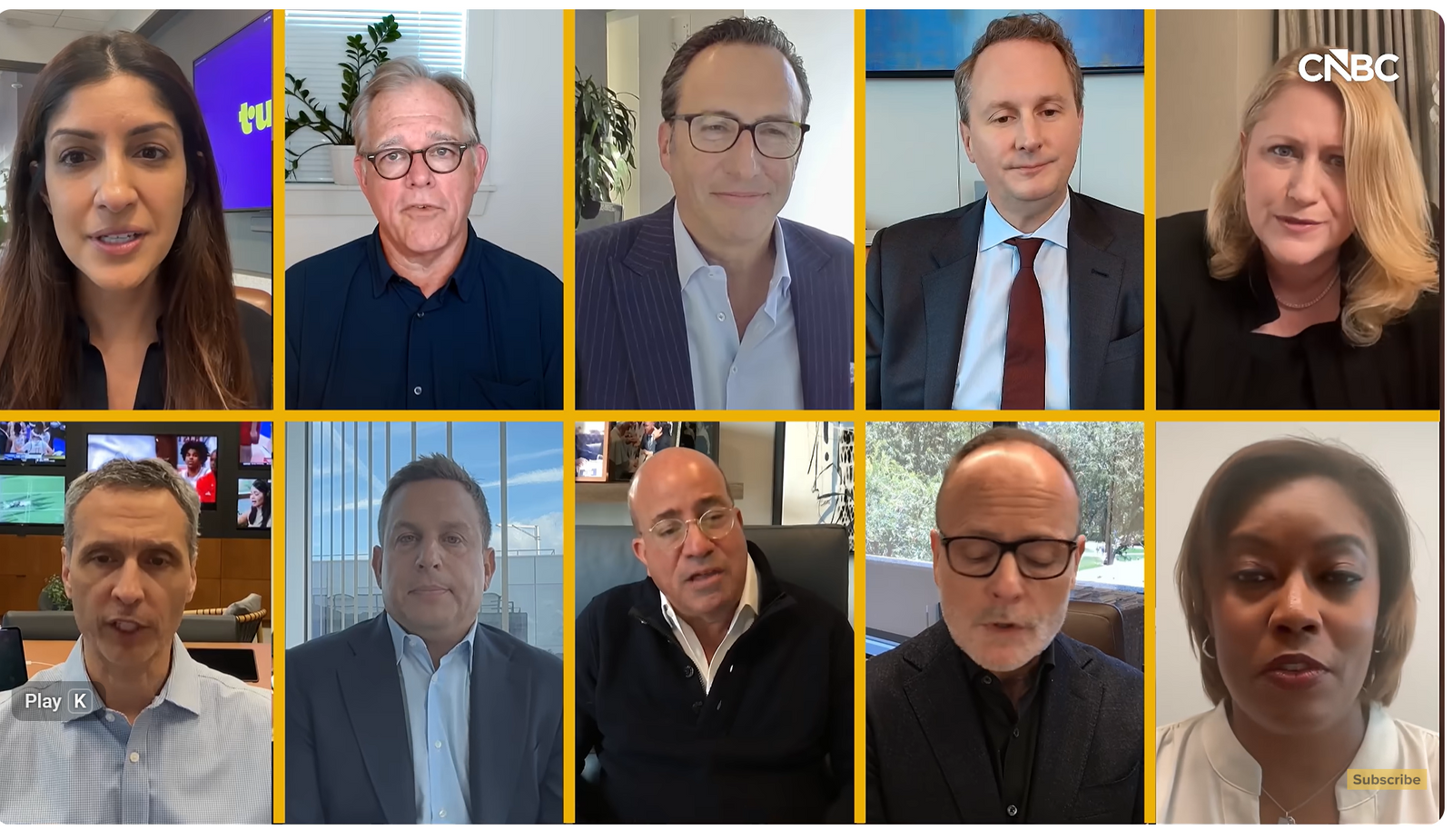
Fig. 1. The media executives who took part in CNBC’s Future of TV survey (source: CNBC)
Asked whether government will act to stop a Big Tech company from getting bigger in entertainment, Tubi CEO Anjali Sud turned the premise around. The convergence of Silicon Valley and Hollywood has already happened; the platforms taking the largest share of time spent and attention are tech platforms, and the largest share of living-room television viewing belongs to YouTube. The genie, she said, does not go back in the bottle. Jeff Zucker, chief executive of RedBird IMI, said Big Tech faces heavy scrutiny but that its extent depends on the 2026 and 2028 elections.
 Jung Han
The measurement backs her up. In Nielsen’s June Gauge, published on August 18, YouTube took 13.8% of TV watch time and held first place among distributors, ahead of Netflix at 7.9%, Disney at 4.6% and Prime Video at 4.2%. While media companies rearrange hundreds of billions of dollars of assets through mergers, the top of the watch-time table is not held by a media company.
What opened that position is not a content contest but the pay-TV cost structure. Over-the-air signals are transmitted free, yet the retransmission fee American pay-TV operators pay broadcasters now exceeds $30 per customer, and that cost flows into the bill. The same broadcast and cable content is already sold inside individual apps and streaming bundles. Prices rise while the exclusivity that justified them thins out, and the time that leaves goes to what is open for free.
So on CNBC’s first question — whether cable subscribers hit a floor in three years — no one named one. Zucker said the decline continues every year until sports rights finally leave cable, at least a decade away. Chris Winfrey, president and CEO of Charter Communications, expects the rate of decline to get steeper. Winfrey expects Netflix to end up inside those bundles too, describing it as closer to a very large cable programmer that could be packaged alongside other streaming apps to give customers more choice, value and utility.
The data points the same way. MoffettNathanson’s Cord-Cutting Monitor put U.S. pay-TV at 62.23 million subscriptions at the end of Q1 2026, after a net loss of 2.03 million in the quarter — 40.90 million with traditional cable, satellite and telco operators and 21.33 million with virtual providers including YouTube TV, Fubo and Sling TV. In Nielsen’s June Gauge, released on August 18, streaming took 48.5% of TV watch time, broadcast 19.8% and cable 19.5% — broadcast ahead of cable, and the first time broadcast share has risen in a June interval since The Gauge began in 2021 (+0.6 points).
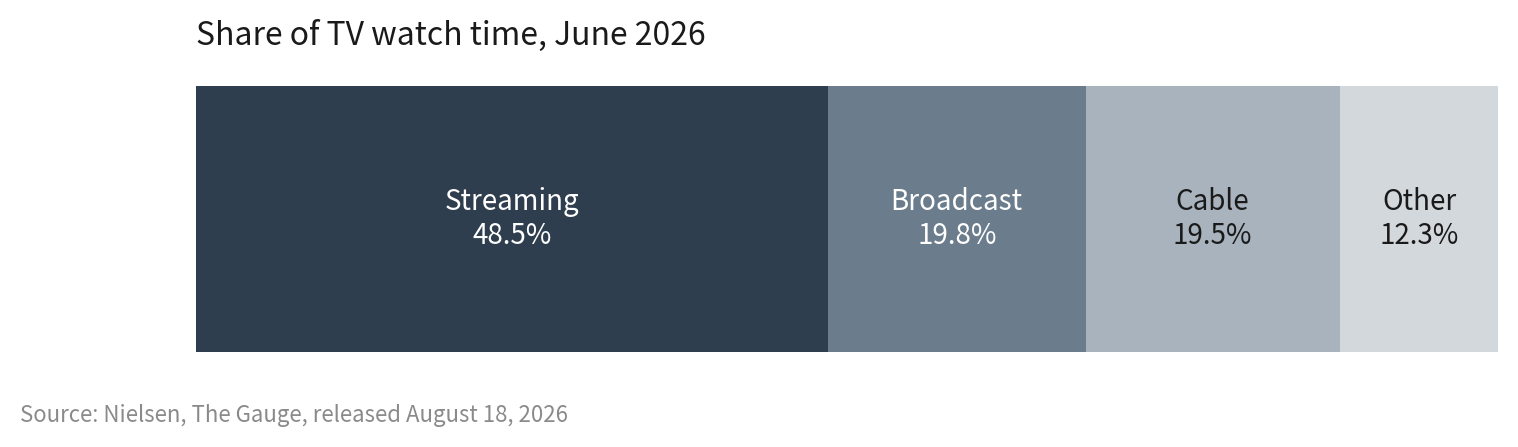
Fig. 2. Share of TV watch time, June 2026 (source: Nielsen, The Gauge)
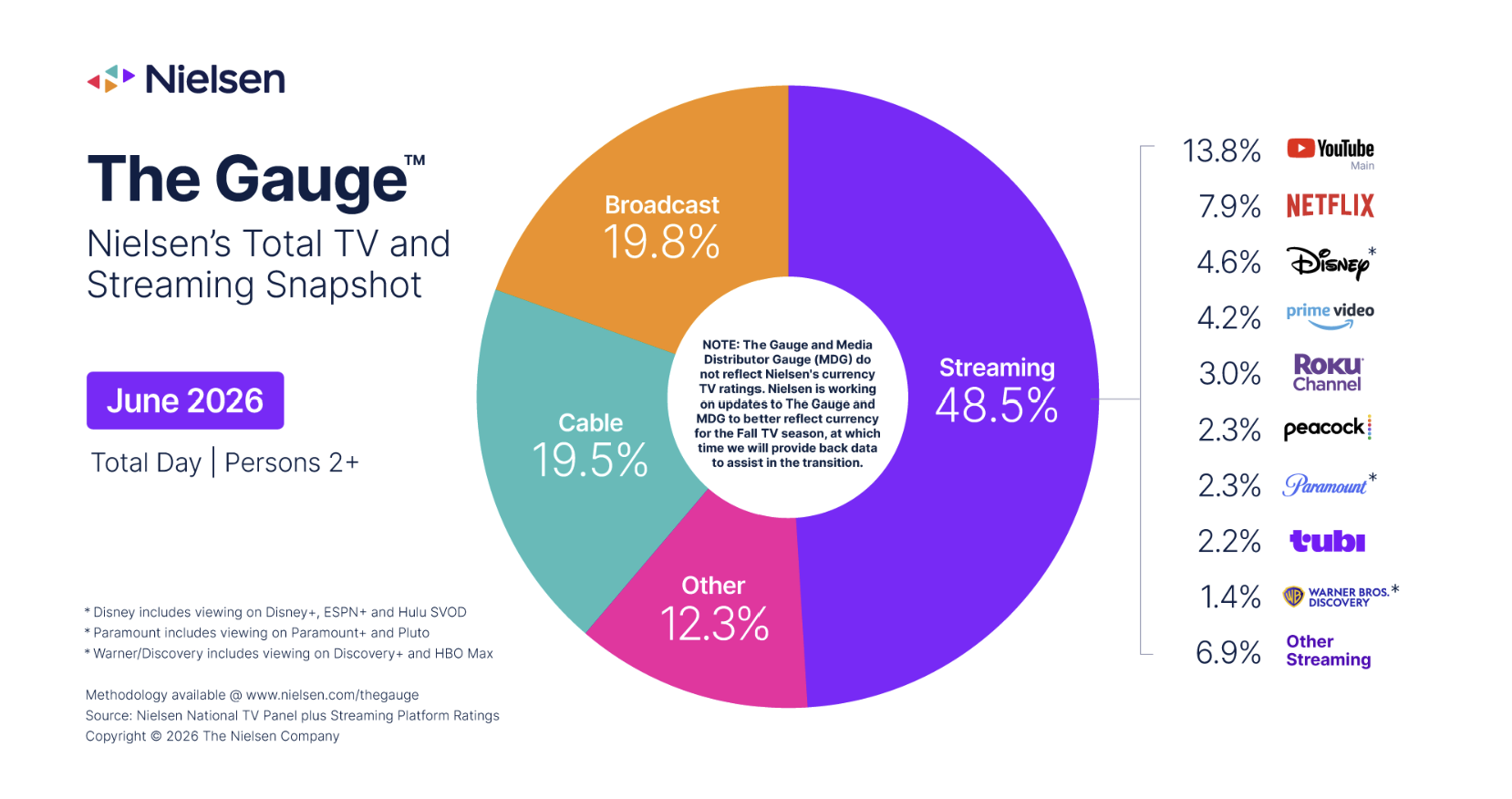
Fig. 3. Nielsen’s June 2026 Gauge, as published (source: Nielsen)
CNBC framed the exercise as more than a thought experiment: the general consensus about the state of linear media underpins hundreds of billions of dollars of mergers and acquisitions. Cable subscribers have been falling for more than a decade, and while streaming services are now profitable, subscriber growth has largely plateaued.
The survey repeats an exercise CNBC first ran in February 2023. Reporters Alex Sherman and Lillian Rizzo put the same five questions to ten executives. Several 2023 forecasts held up: that linear pay TV would survive with fewer customers, that bundling streaming services would prove difficult, and — specifically — that Paramount+ and HBO Max would be consolidated. CNBC’s parent company is Versant, spun out of Comcast in January.
Table 1. Source: CNBC Future of TV Survey, August 17, 2026
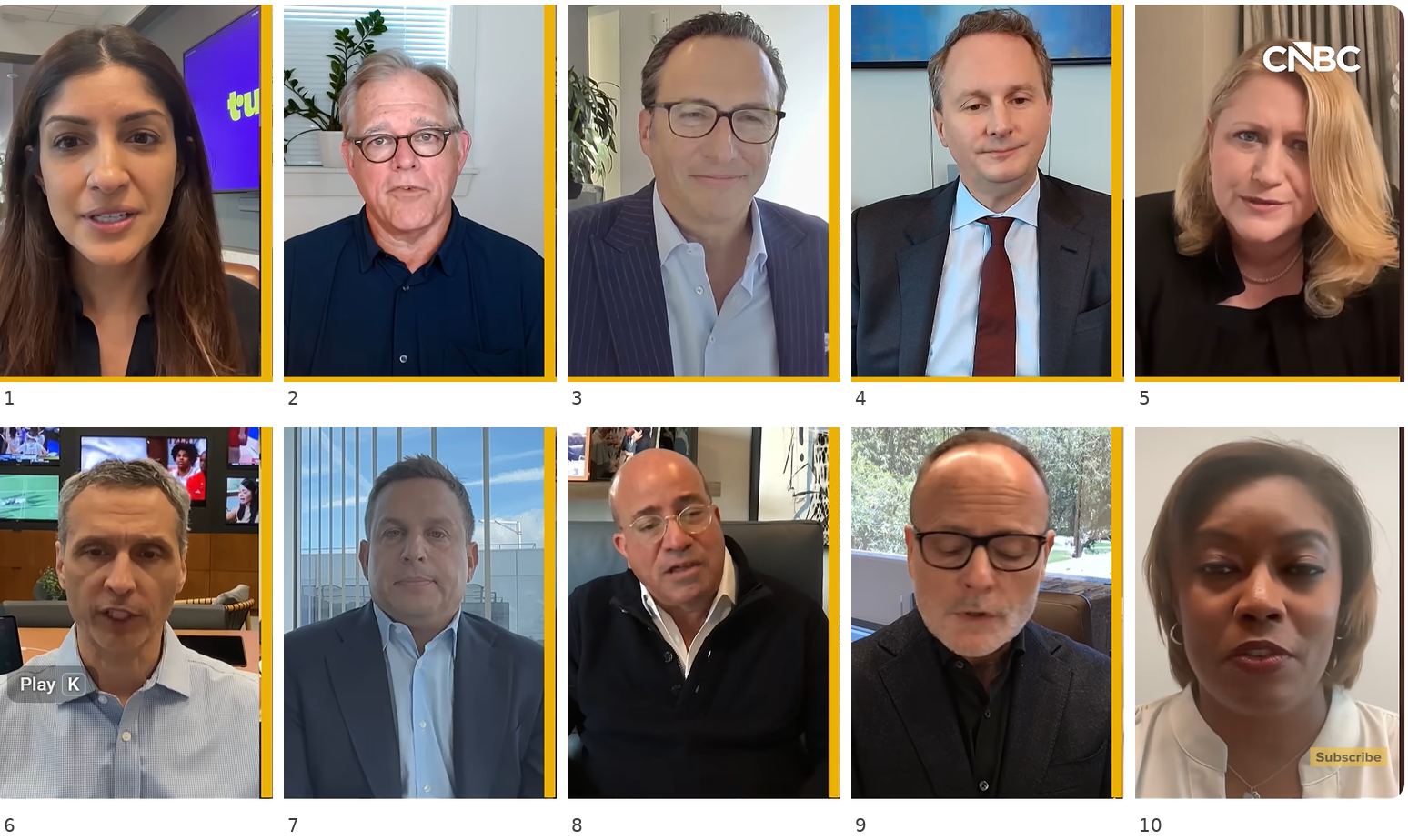
Fig. 4. The ten respondents (source: frame from the CNBC survey video)
The answers in full… ten executives on five questions
CNBC put the same five questions to all ten. Their answers are set out below.
Table 2. Source: CNBC Future of TV Survey, August 17, 2026. Statements are condensed
Marking the 2023 forecasts… M&A, bundles and AI landed; metaverse TV and Apple TV sets did not
CNBC first went back over what the 2023 panel got right. Consolidation among media companies, wider streaming bundles and the growth of AI all arrived. Watching television inside the metaverse, and Apple manufacturing television sets, did not. The forecasts that linear pay TV would survive with fewer customers, that bundling would prove hard, and that Paramount+ and HBO Max would be consolidated all held.
That scorecard is a useful lens on the 2026 answers. Forecasts about industrial structure and capital flows largely held; forecasts about new viewing formats and hardware did not. Most of what this panel named — personalized advertising, commerce, day-and-date releases, aggregation — again concerns transaction and distribution structure rather than a new device.
Table 3. Source: comparison of CNBC’s 2023 and 2026 surveys
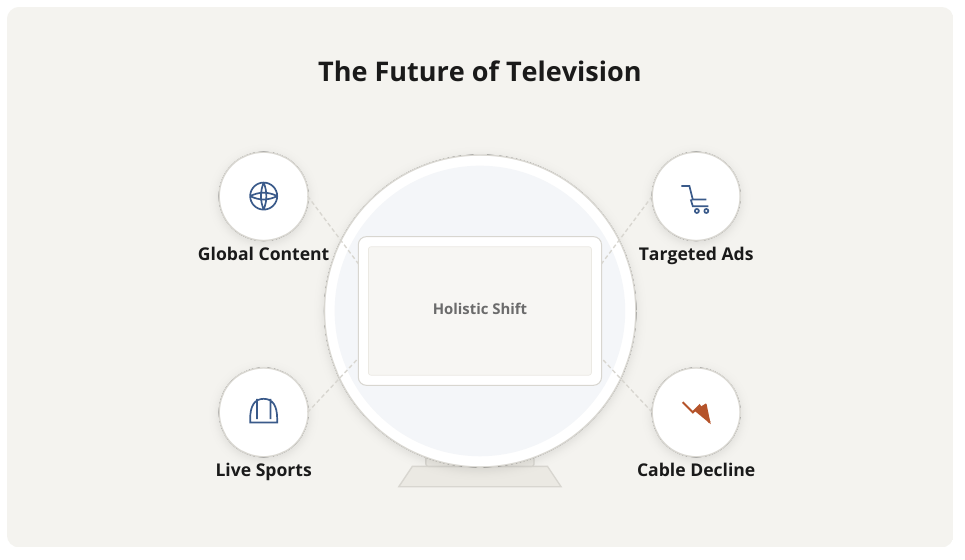
Fig. 5. The four axes of the 2026 survey — content without borders, targeted ads, live sports, cable decline (source: report on the survey video)
Action against Big Tech rests on the 2026 and 2028 elections… and the counter-argument that convergence already happened
On whether government will act to stop a Big Tech company from getting bigger in entertainment, Zucker said Big Tech has lost considerable goodwill on the left and among Democrats and will face heavy scrutiny, with the qualifier that it depends on the 2026 and 2028 elections. Jones said the goal is not bigger and better, and argued that consumer and industry backlash, rather than regulation, is what changes the course of deals, citing the letter from 1,000 Hollywood professionals opposing Paramount’s acquisition of Warner Bros. Discovery.
Sud answered from a different angle: the convergence of Silicon Valley and Hollywood has already happened, and the platforms taking the largest share of time spent and attention are tech platforms. The largest share of living-room television viewing belongs to YouTube. With Instagram running vertical video on TV, the Oscars going to YouTube and creators releasing films theatrically, she said, the genie is not going back in the bottle.
Nielsen’s June figures support that. YouTube took 13.8% of TV watch time and held the top distributor position, ahead of Netflix at 7.9%, Disney at 4.6% and Prime Video at 4.2%. Total TV usage rose 3.1% on the World Cup and the NBA Finals; streaming usage rose about 3%, which left the category down 0.1 share point. YouTube, Netflix, The Roku Channel and Paramount Streaming all added viewing while their shares stayed flat or edged down.
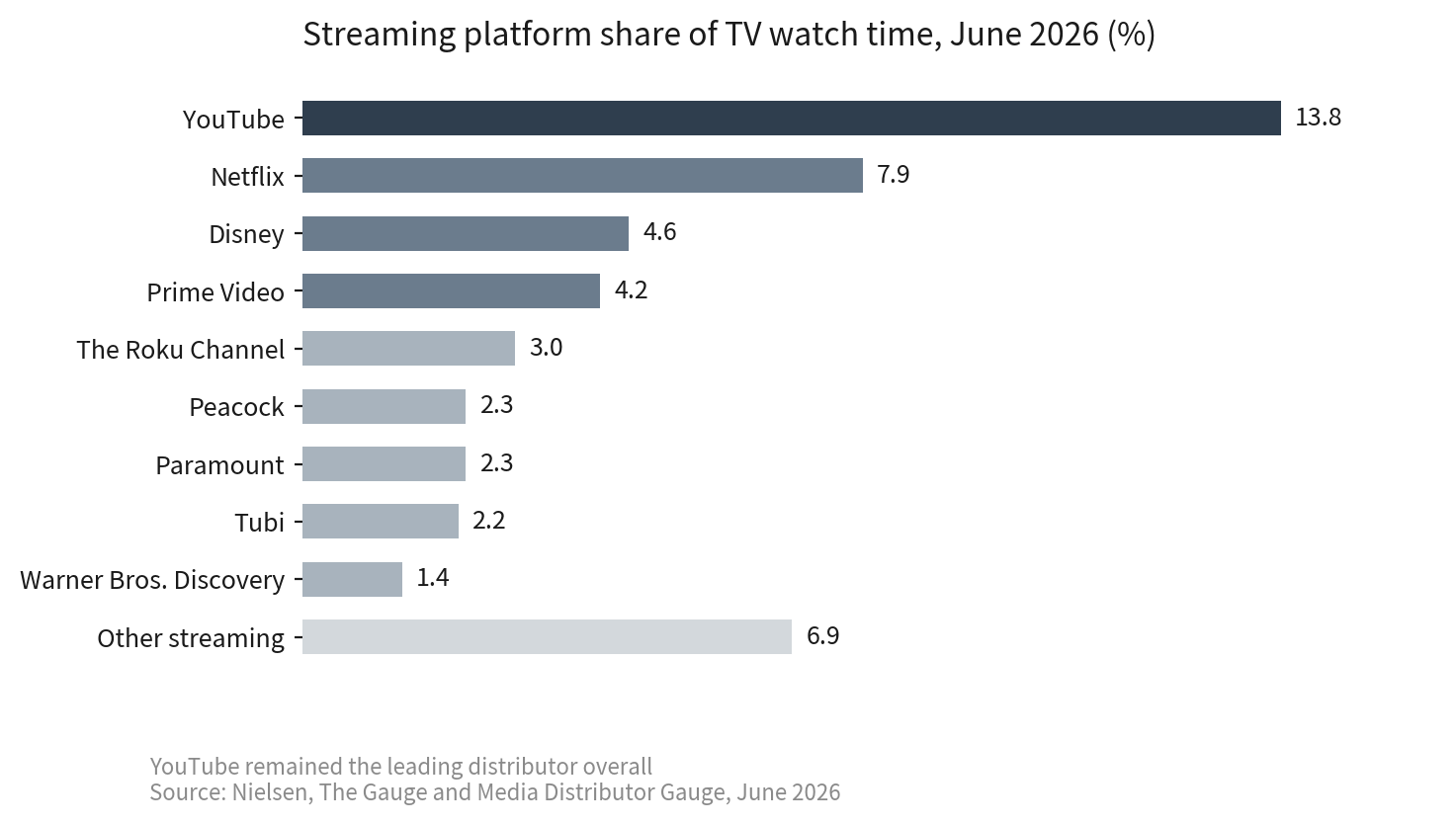
Fig. 6. Streaming platform share of TV watch time, June 2026
In Korea the gap is wider still. On WiseApp·Retail sampling of Korean smartphone users from January to May 2026, YouTube averaged 113.6 billion minutes a month against 5.61 billion for Netflix in second place — more than twenty times. News1 reported YouTube averaging 2,688 minutes per user a month against 1,645 minutes for all major Korean OTT services combined. In music, YouTube Music passed Melon on monthly active users in November 2025, 7.97 million to 7.05 million. The convergence Sud described is further along in Korea than in the market she was describing.
No floor… $30 retransmission breaks the pay-TV price logic
Zucker does not expect a floor. Losses continue annually until sports rights disappear from cable, which he places at least ten years out. Charlie Collier, president of Roku Media, said nothing truly goes to zero — somewhere in America someone is still paying for AOL dial-up or renting a DVD from the last Blockbuster, in Bend, Oregon — but the direction of travel is not reversible.
Rashida Jones, CEO of Uncensored and former MSNBC president, said the move to platforms other than linear television is hard to reverse, while noting the industry has never been right about the pace. It has not been as fast or as aggressive as forecasts of four or five years ago suggested.
The pace varies sharply by operator. Charter lost 60,000 video subscribers in Q1 2026, against 181,000 in the year-ago quarter, and MoffettNathanson put the decline rate of its video base at 1.3%, down from close to 10% two years earlier. Charter’s practice of folding ad-supported streaming apps — Peacock, Hulu, Disney+, ESPN, Max — into linear packages at no extra charge is showing up in the numbers.
Personalized advertising becomes the standard… commerce, day-and-date and language follow
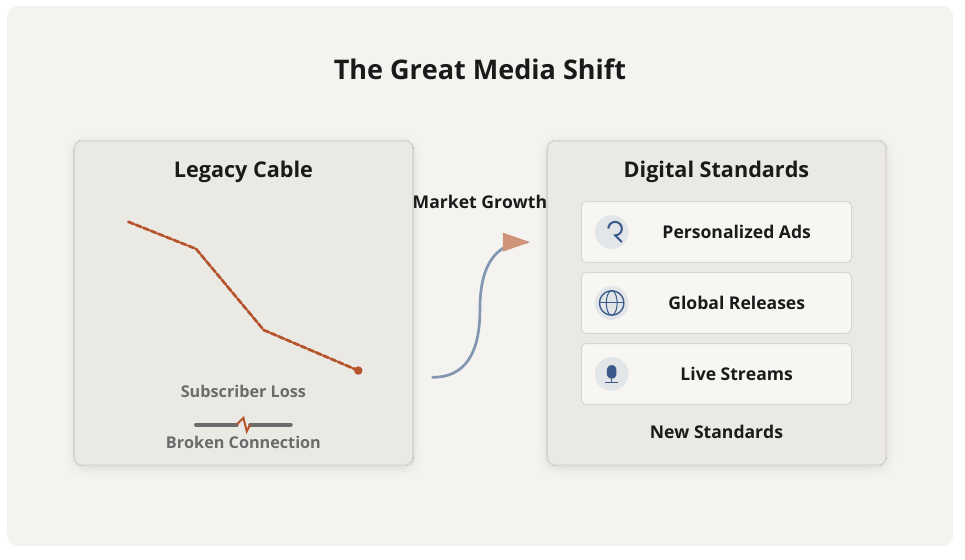
Fig. 7. Subscriber loss on legacy cable and the shift to new standards (source: report on the survey video)
Asked what will become an industry standard that does not exist today, ESPN chairman Jimmy Pitaro named ubiquitous personalization: beyond recommendation, into content created and tailored to a user’s preferences. Tubi CEO Anjali Sud pointed to advertising becoming as useful and relevant as it is on social platforms. Television advertising still reads as unpersonalized; with hyper-personalization, she argued, an ad stops registering as interruption or friction.
Pitaro also cited commerce integration. ESPN’s enhanced app already carries a buy experience, and he expects frictionless commerce — more product placement, and deep links straight to a partner site — to emerge. FX content and studios chairman John Landgraf named day-and-date global releases: some shows will still premiere in a single territory — North America, Asia or Europe — but the biggest titles increasingly launch everywhere at once. Zucker pointed to podcasters and livestreaming shows being licensed to cable, and possibly broadcast, networks.
Starz president and CEO Jeffrey Hirsch gave the same answer he gave three years ago. As language technology advances, subbing and dubbing disappear as separate processes and viewers toggle a language with a button — content without borders becomes the standard. Winfrey named immersive sports programming in 8K, citing Spectrum Front Row, Charter’s work with the NBA and Apple Vision Pro.
The language piece is already underway. Netflix has said it will widen its use of AI this year into subtitle localization, and Amazon’s Prime Video began an AI-assisted dubbing pilot in March 2025 across 12 licensed films and series in English and Latin American Spanish. Prime Video’s AI dubs on several anime titles, by contrast, were pulled after objections from voice actors and viewers. Whether this becomes a standard in three years turns less on the technology than on disclosure rules and performer agreements.
A fast no on the sports bubble… expanded out-of-home measurement is doing the lifting
Asked whether sports viewership is in a bubble, Pitaro said no without hesitation. Measurement is getting more accurate as out-of-home and streaming usage are accounted for, and every time the industry expects a downturn the numbers keep going up and to the right.
The measurement side is more specific. Brian Fuhrer, Nielsen’s senior vice president of product strategy, said the company has made methodological improvements that bear especially on sports, the first of which is expanded out-of-home measurement. Home markets matter enormously to sports rates; Nielsen has seen increases directly attributable to that enhancement and expects them to continue, without a large year-to-year bump. Put another way, a meaningful share of the rise came from widening the measurement frame.
Jones took the other side. Every industry has a ceiling of available audience, and with recent distribution deals broadening the platforms carrying the content, she expects a peak followed by some decline. Winfrey expects ratings to keep rising on a mix of short-form, long-form and in-stadium immersive formats, arguing sports is the one category where watching after the fact is not the same thing.
The June measurement, published a day before the survey, ran in Pitaro’s favour. The FIFA World Cup 2026 drew more than 84 billion minutes of viewing across FOX and NBCUniversal properties, and the World Cup together with the NBA Finals lifted broadcast sports viewing 118% month on month. The broadcast category reached 19.8% of TV — its first increase in a June interval since The Gauge began.
By distributor, FOX posted the largest share gain (+0.9 points) to 7.4% and the largest viewing increase of any distributor (+18%), with World Cup coverage lifting FOX affiliates 73% and Fox Sports 1 by 232%. NBCUniversal’s Telemundo, the exclusive Spanish-language home of the tournament, saw affiliate viewing rise 143%; on Peacock, days with matches ran 60% above days without, and viewing from Hispanic audiences rose close to 200% over the prior month. NBCU-Versant reached 9.1% of TV (+0.7 points).
Disney held second place among media companies at 9.6%. ABC’s five-game NBA Finals between the San Antonio Spurs and the eventual champion New York Knicks was the most-viewed broadcast telecast on every day it played, and Games 3, 4 and 5 were the most-watched telecasts of the June interval at more than 20 million viewers apiece, lifting ABC affiliates 15%. Cable moved the other way: with the NBA and NHL playoffs absent, cable sports viewership fell 10% and the category slid 0.9 points to 19.5%. Which window carries the sport moved the category share directly.
Nielsen also said in the same report that methodological updates tied to currency measurement will be applied to The Gauge and the Media Distributor Gauge this fall. That is Fuhrer’s point continuing — and the reason to keep separating how much of a ratings increase is added viewing from how much is added measurement.
Zucker and Collier converged on the same point. Zucker said people want live events, live news and above all live sports — the things AI will not be able to replicate. Whether ratings rise or fall, he added, depends on matchups and championships, but sports overall stay very strong. Collier called live sports one of the last true mass-reach experiences in the culture: families watch together, friends text in real time, and entire cities change mood on an outcome, which is why he expects premium sports to be worth more than they are today.
The next share goes to aggregators and FAST… Epic Games, Tubi and Roku Channel named
Asked which service will take meaningful share in three years, Disney Entertainment Television chairman Debra OConnell said it is likely one not on the map today, while pointing to Instagram’s TV formats announcement as an example of existing services expanding how they engage audiences.
Winfrey named the aggregator — whoever can pull the scattered services back together, much as cable TV was originally created to deliver a discounted bundle. That, he said, is the opening for a new entrant. Zucker cited TikTok videos getting longer and the persistence of niche casting, with very small communities playing outsized roles across services.
The FAST services Fuhrer named appear as individual line items in the June Gauge, with The Roku Channel at 3.0% and Tubi at 2.2%, both ahead of Warner Bros. Discovery at 1.4%. Fuhrer named The Roku Channel, Tubi and Pluto TV directly, citing sharp increases in adoption and usage, continued content additions including originals, and rising popularity of FAST channels with no sign of slowing. Pitaro named Epic Games, in which Disney invested $1.5 billion, on the view that the possibilities for connecting gaming with entertainment and sports content, including live events, are open-ended. Landgraf dissented: a streamer no one has heard of will not be meaningfully competitive in long-form video within three years. Hirsch’s answer was Starz.
The FAST expansion shows up in Korean manufacturers’ numbers too. Samsung TV Plus went from roughly 3,300 channels last year to about 4,300 this year, and LG Channels passed 5,000, with Samsung lifting monthly active users of TV Plus to 100 million. Omdia projects the global FAST market growing from $6.3 billion in 2023 to $12 billion in 2027.
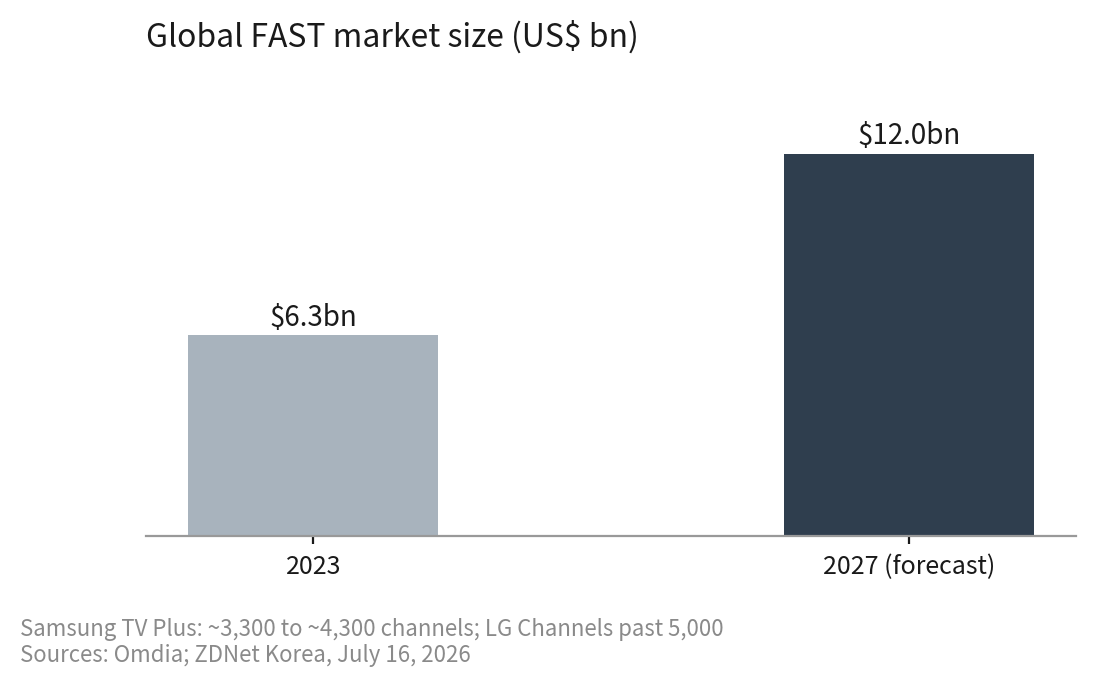
Fig. 8. Global FAST market size forecast (source: Omdia)
The market moved while the survey ran… Fox-Roku at $22bn, Paramount-WBD stalled
CNBC noted that the landscape shifted while the survey was being conducted. Paramount Skydance agreed in February to acquire Warner Bros. Discovery, after a sale process in which Netflix came close to buying WBD’s film studio and HBO Max. The deal is now held up over antitrust concerns in Washington, and Paramount is seeking a $1.88 billion bond from state attorneys general to cover the cost of the delay.
Fox said in June it would acquire Roku for $22 billion. Comcast plans to separate NBCUniversal in 2027, following January’s spinout of Versant, its cable network portfolio. Charter received final regulatory approval for its $34.5 billion merger with Cox Communications, which will create the largest cable company in the United States.
Partnerships are running alongside the deals. NBCUniversal has already announced a tie-up between Peacock and YouTube, and Disney, under a new chief executive, is focused on tying together ESPN, ABC, FX, Disney+ and Hulu.
That means several respondents answered while their own company’s ownership or structure was in motion — Collier at Roku Media, Pitaro at ESPN, OConnell at Disney Entertainment Television, Winfrey at Charter. Netflix, meanwhile, has reversed much of its earlier strategy on binge releases, password sharing and advertising, and its stock is down more than 35% over the past year.
2.03 million lost in a U.S. quarter, 76,030 in a Korean half-year
The American executives grounded their no-floor view in retransmission costs and bundle substitution. In Korea the same structure is not yet operating at the same speed. According to the Korea Communications and Media Commission’s release of May 29 on pay-TV subscriptions and market share for the second half of 2025, domestic pay-TV subscriptions stood at 36,150,070, down 76,030 from the previous half. That is a second consecutive half-year of decline, but on a different order from the 2.03 million the U.S. shed in a single quarter.
By platform, IPTV held 21,535,256 subscriptions for 59.57% share, cable system operators 11,935,236 for 33.01%, and satellite 2,679,578 for 7.41%. KT remained the largest single operator with 9,123,463 subscriptions and 25.24% share. IPTV added roughly 120,000 in the half while cable and satellite lost about 150,000 and 40,000 respectively.
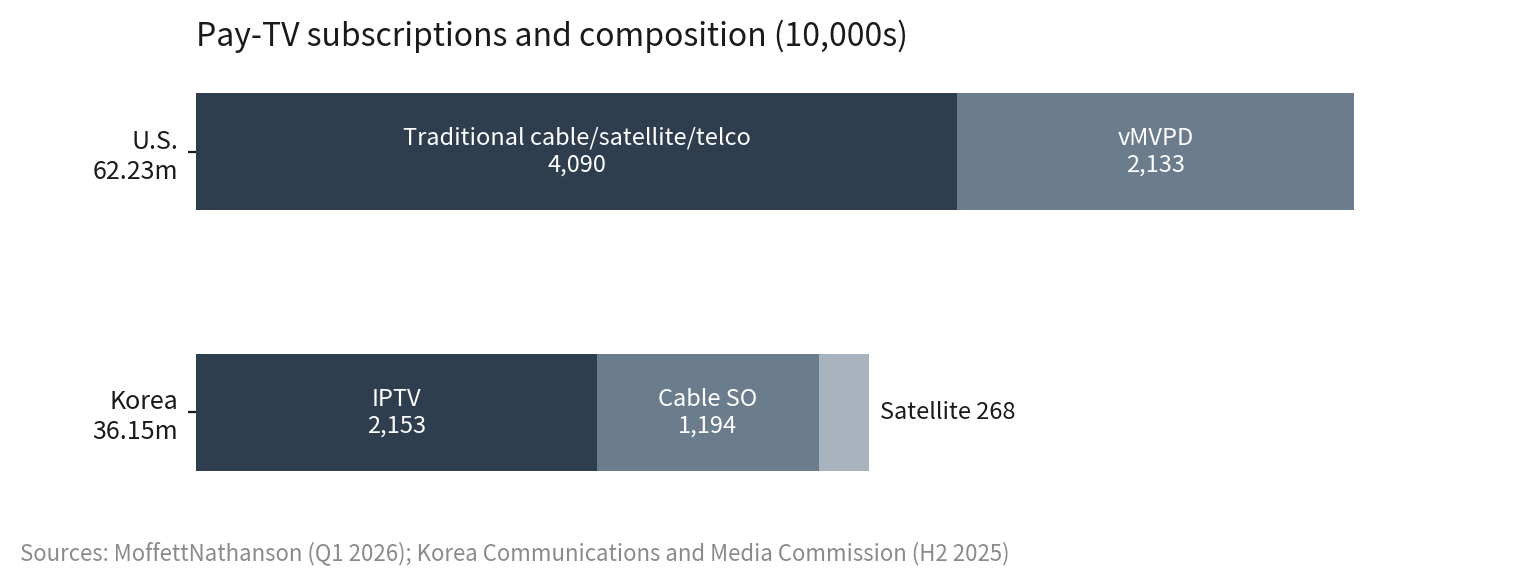
Fig. 9. Pay-TV subscriptions and composition, U.S. and Korea
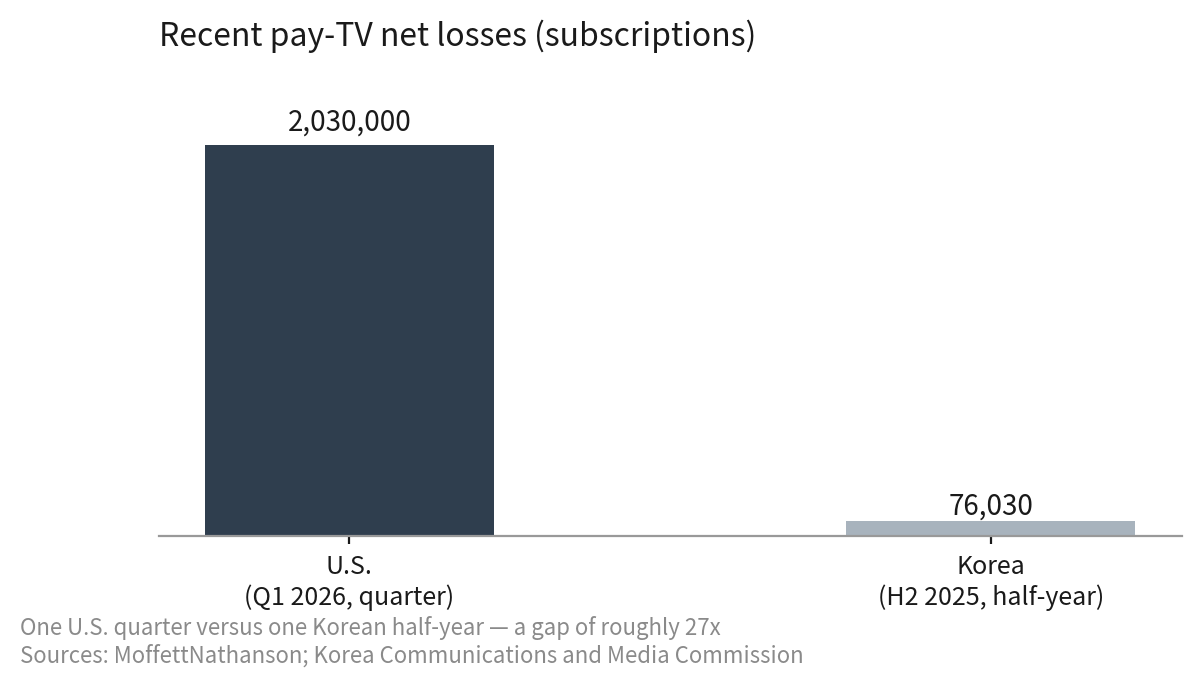
Fig. 10. Recent net losses — a U.S. quarter against a Korean half-year
Table 4. Sources: MoffettNathanson, Nielsen, Korea Communications and Media Commission, S&P Global Kagan, CNBC
The economics of retransmission… $4.83 at wholesale, $22 on the bill
The $30 Winfrey cited is not what broadcasters receive; it is what the household pays. On Kagan estimates from S&P Global Market Intelligence, the monthly retransmission rate per subscriber for Big Four owned-and-operated and affiliate stations rose 7% from $4.52 in 2024 to $4.83 in 2025. The broadcast TV fee that appears on a pay-TV bill, by contrast, averaged $21.48 a month in 2023 and $22.62 in 2024. More than four times the wholesale rate, with reverse retransmission payments and operator margin filling the gap.
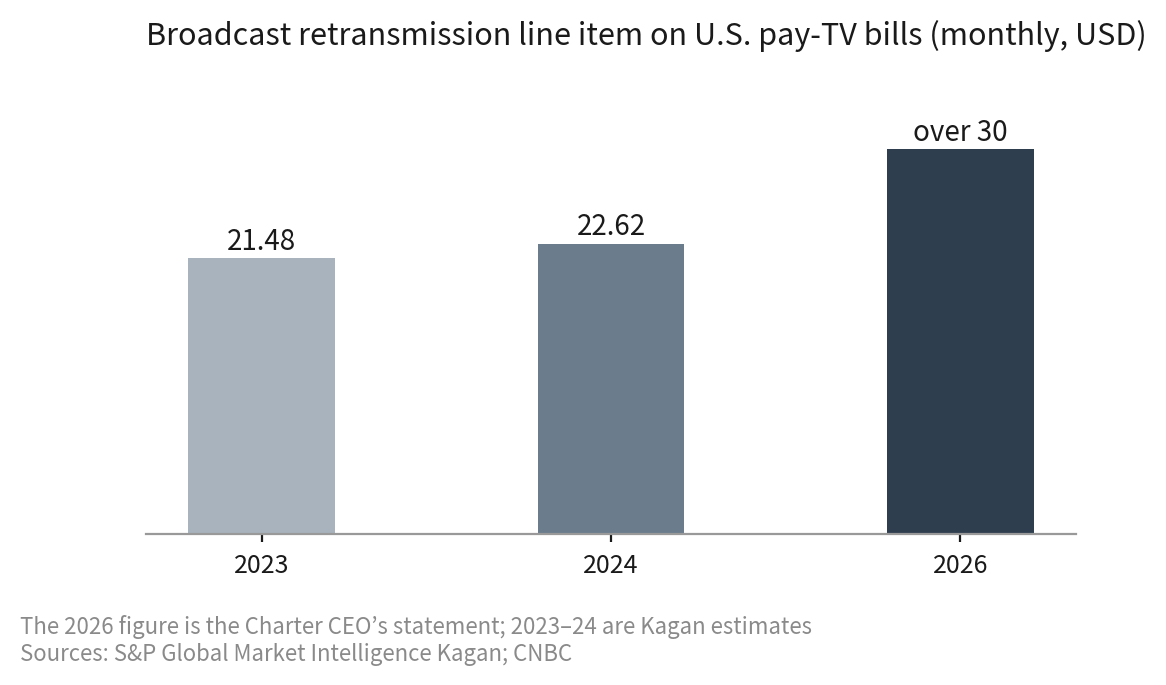
Fig. 11. Broadcast retransmission line item on U.S. pay-TV bills (monthly, USD)
In aggregate, gross retransmission and virtual subscriber fee revenue for U.S. stations was estimated at $15.09 billion in 2023 and $15.4 billion in 2025, and Kagan projects $17.5 billion by 2030. Net of the reverse retransmission payments stations send back to the networks, however, the figure fell from $7.35 billion in 2024 to $7.27 billion in 2025 and reaches only $7.40 billion by 2030. Rate increases are barely offsetting the subscribers going out the door.
Kagan also projects that the $16.54 billion in gross retransmission revenue in 2028 will equal 40.1% of the $41.30 billion pay-TV operators pay cable networks and regional sports networks that year, and that pay-TV spending on sports rights will reach close to $16.6 billion in the same year — about 40% of programming cost. Retransmission and sports together account for close to eighty percent of the pay-TV cost base, which is why Zucker put the end of the decline at the moment sports rights leave cable.
Korea’s structure sits an order of magnitude lower. The per-subscriber fee, known locally as CPS, went from about 400 won per broadcaster in 2018 through staged increases to a reported 500 won or so, totalling roughly 1,500 won a month across all three national broadcasters — about a fourteenth of the U.S. Big Four wholesale average, and about a twenty-eighth of what an American household actually pays. The CPS contracts between the three IPTV operators and the broadcasters expired last year and are back in negotiation, and a seminar backed by the Korea Broadcasters Association presented research applying a Nash bargaining model to argue for higher CPS.
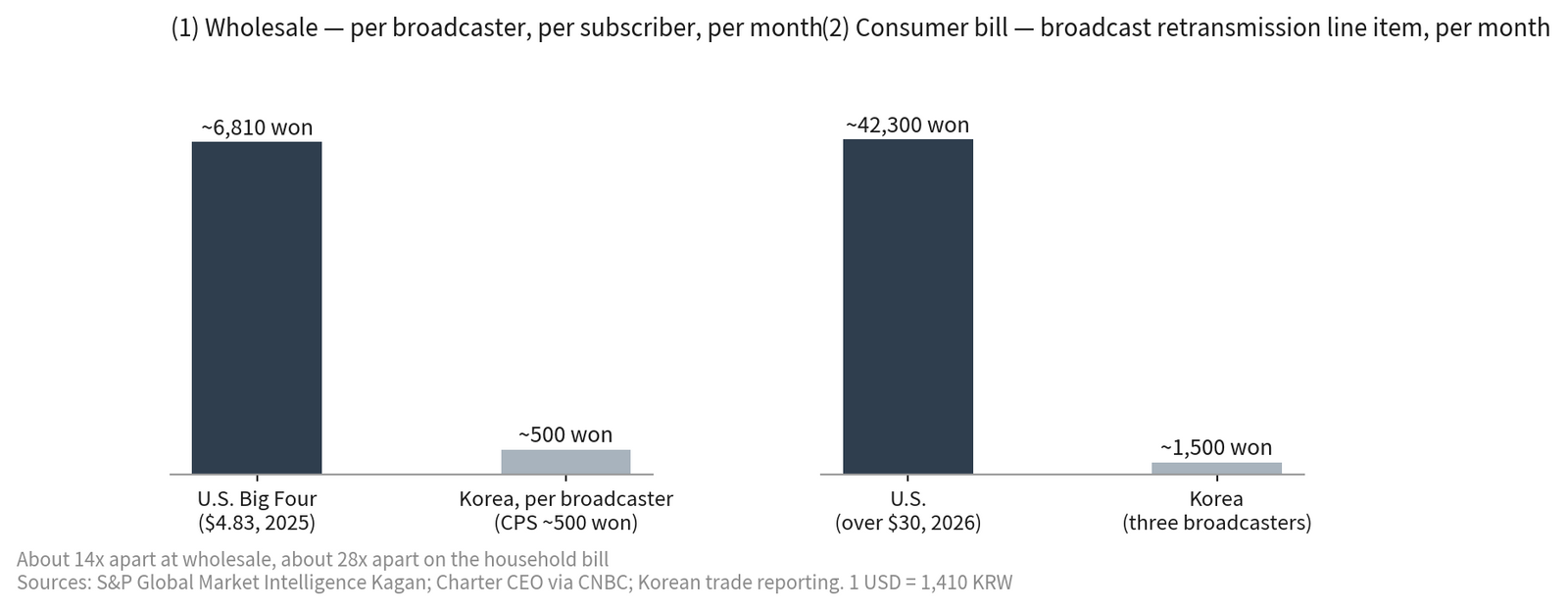
Fig. 12. Two layers of the retransmission fee — wholesale rate and consumer bill
Table 5. Sources: S&P Global Market Intelligence Kagan, CNBC, Korean trade reporting
Korean broadcast revenue of 18.65tn won… a third straight decline, terrestrial in a third year of losses
In the FY2025 financial disclosure published by the Korea Communications and Media Commission on June 19, the 371 broadcasters covered reported combined broadcast revenue of 18.65 trillion won, down 154.7 billion won or 0.8% year on year — a third consecutive annual decline. Terrestrial revenue fell 214.6 billion won (6.1%) to 3.32 trillion won; programming providers fell 2.3% to 6.94 trillion won, cable system operators 2.6% to 1.64 trillion won and satellite 5.7% to 447.0 billion won. IPTV edged up to 5.08 trillion won and held the largest share at 27.3%, while IPTV content providers jumped 31.5% to 1.22 trillion won, passing one trillion for the first time.
Advertising drove the decline. Broadcast advertising revenue fell 283.0 billion won, or 12.3%, to 2.01 trillion won; terrestrial advertising fell 17.0% to 693.6 billion won and PP advertising 9.6% to 1.13 trillion won, while the mobile advertising market grew at an annual average of 7.5% over the same period. Terrestrial broadcasters posted an operating loss of 117.4 billion won, a third straight year in deficit. Industry-wide operating profit rose 44.2% to 3.17 trillion won, but most of that came from IPTV at 2.53 trillion won.
Content providers went from 2.2% of the market in 2016 to 6.5% in 2025. As the total shrinks, income is moving toward whoever holds the distribution window and whoever supplies the content. Programme production spending stopped growing, edging down 0.1% to 5.75 trillion won, with terrestrial production spending falling to 2.57 trillion won.
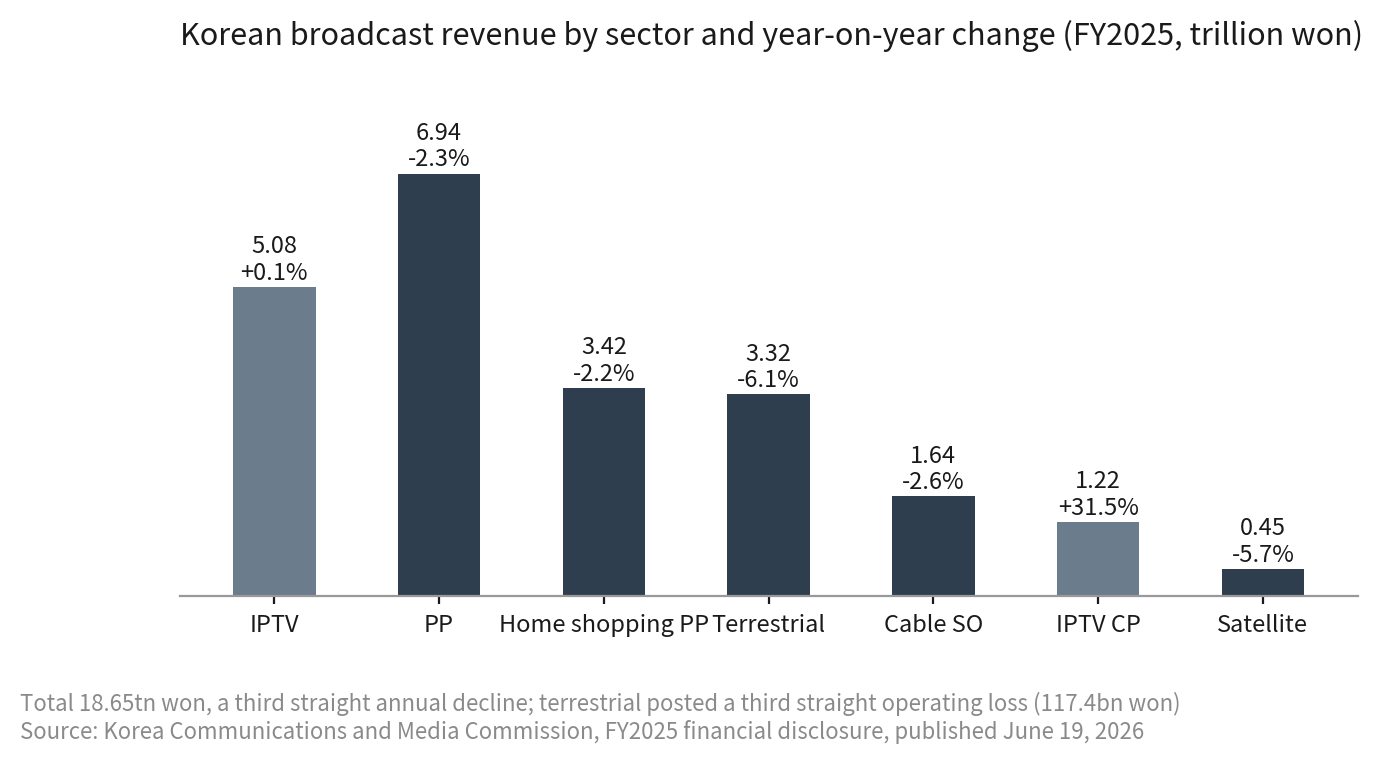
Fig. 13. Korean broadcast revenue by sector and year-on-year change, FY2025
The aggregator Winfrey named… in Korea that experiment has been stalled for three years
The opening Winfrey identified for a new entrant was the aggregator — whoever can pull the scattered streaming services back together. Korea’s attempt at that position is the merger of TVING and Wavve. CJ ENM and SK Square signed a memorandum in December 2023 and received conditional clearance from the Korea Fair Trade Commission in June 2025, but nearly three years on there is still no definitive agreement.
The blockage is shareholder consent. Every shareholder except KT Studio Genie, TVING’s second-largest holder at 13.54%, has agreed; KT has held out, reportedly because a combined entity would cannibalise its own IPTV business. The structure the American executives named as the cause of pay-TV decline — the same content sold inside apps, dissolving the pay-TV price logic — is in Korea the reason the merger has not closed.
The market moved in the meantime. On IGAWorks Mobile Index data for November 2025, Netflix led Korean OTT services with 14.44 million monthly active users, followed by Coupang Play at 8.19 million, TVING at 7.79 million and Wavve at 4.08 million; TVING and Wavve combined reach 11.87 million, still short of Netflix, whose Korean user base has since passed 16 million. TVING, meanwhile, posted its first profitable quarter in Q2 2026 — revenue of 140.7 billion won, up 40% year on year, with operating profit of 6.0 billion won — which has itself reopened the question of what the merger is for.
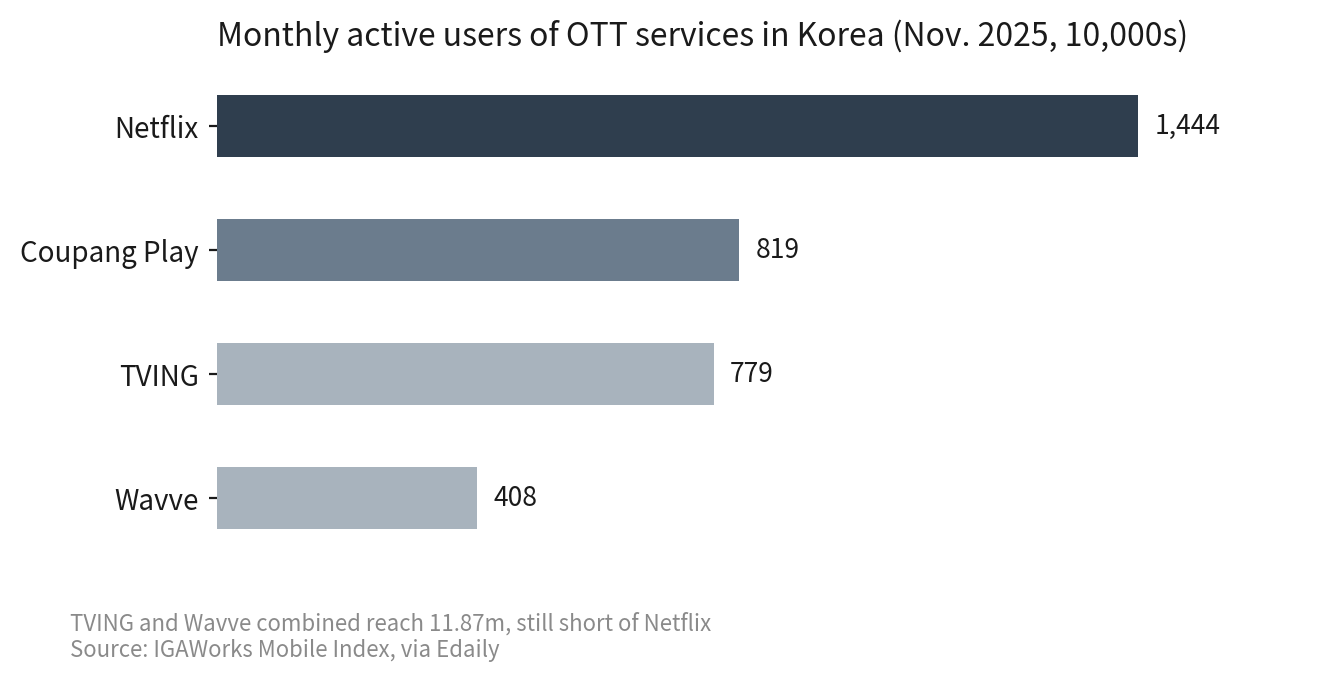
Fig. 14. Monthly active users of OTT services in Korea, November 2025
Korean pay TV rests on home shopping… 34.1% of revenue is carriage fees
American pay TV is breaking on the cost side; Korean pay TV is breaking on the revenue side. According to the Korea TV Home Shopping Association’s 2025 industry review, seven TV home-shopping companies and five data home-shopping companies paid 2.44 trillion won in carriage fees to pay-TV operators in 2025 — 34.1% of the sector’s 7.17 trillion won in broadcast revenue, and 42.42% for cable, 37.67% for satellite and 31.07% for IPTV.
The dependence has deepened. Subscription fees fell from 38.8% of cable revenue in 2016 to 34.15% in 2025 while home-shopping carriage fees rose from 35.4% to 42.4%. Satellite went from 59% to 55.3% on subscriptions and 26.9% to 37.7% on carriage; IPTV carriage went from 13.9% to 31.1%. What customers pay is no longer the centre of the business; what home-shopping channels pay for shelf space is.
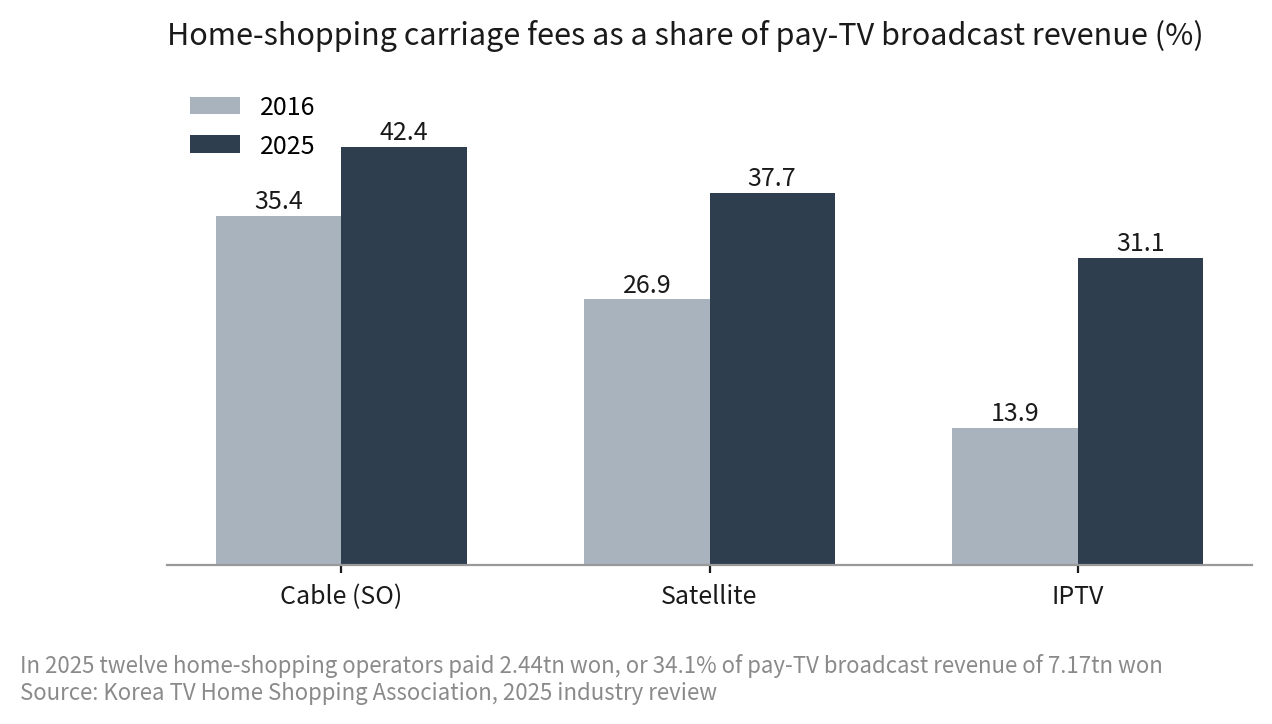
Fig. 15. Home-shopping carriage fees as a share of pay-TV revenue
That pillar is shaking. Carriage fees now equal 73.4% of the seven TV home-shopping companies’ broadcast revenue, which fell for a fourth straight year in 2025 to its lowest since 2012; operating profit of 392.6 billion won sits more than 20% below the 2022 level. In 2024 CJ ONSTYLE went dark on three cable operators over a failed negotiation. The government issued a home-shopping relief package in May 2026, and platform-by-platform negotiations are expected to close around September or October.
Cable operators are squeezed hardest. On national statistics-office survey data, total home-shopping carriage fees grew 34% from 1.83 trillion won in 2020 to 2.45 trillion won in 2024, but the cable share fell 2% from 745.8 billion to 732.2 billion won while IPTV rose 70% from 906.4 billion to 1.54 trillion won, taking 69.2% of the total. Cable broadcast revenue fell 14.3% to 1.73 trillion won and the gap with IPTV widened from 1.91x to 2.89x — while cable still carries a statutory obligation to run local channels, costing 125.6 billion won in 2024, over 7% of its broadcast revenue.
The World Cup lifted U.S. broadcast to 19.8%. Two of Korea’s three terrestrial networks could not carry it
What pushed U.S. broadcast to 19.8% in Nielsen’s June Gauge was the World Cup and the NBA Finals. In Korea, two of the three terrestrial networks did not carry that tournament. JTBC bought exclusive domestic rights to the 2026 World Cup for $125 million (about 183.8 billion won) and offered the same sub-licence terms to all three. Only KBS closed, at 14 billion won; MBC and SBS would not go above 12 billion won and talks collapsed on April 22. SBS missed a World Cup for the first time since it went on air in 1991.
MBC said that even at 12 billion won it projected a loss of roughly 13 billion won, and could not accept 14 billion. SBS said it could not ignore its position as a listed company with a sustainable business to run alongside its public duty. JTBC already holds Korean rights to the 2026–2032 Olympic Games and the 2026 and 2030 World Cups. The Korea Pool, under which the three terrestrial networks jointly bought major sports rights, is effectively finished.
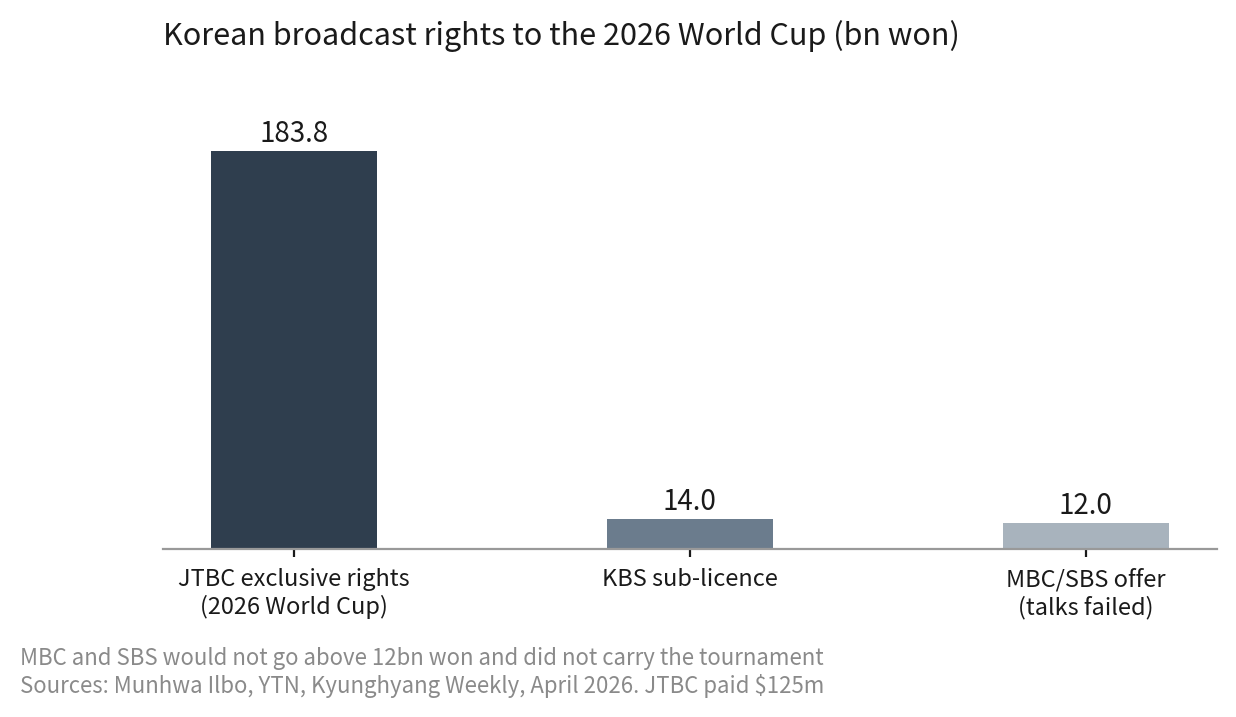
Fig. 16. Korean broadcast rights to the 2026 World Cup
Zucker placed the end of the cable decline at the moment sports rights leave cable, and put that at least a decade out. In Korean terrestrial broadcasting that move has already happened. Terrestrial revenue fell 6.1% to 3.32 trillion won, advertising fell 17.0% to 693.6 billion won, and the sector is in a third year of operating losses. The capacity to buy rights and the reach those rights generate are declining together.
What this means for Korean pay TV
The competitor has to be redefined. The top of the watch-time table that American pay TV lost went not to another distributor or to a streamer but to YouTube, and in Korea the gap to second place is twentyfold. While Korean operators contest the order among TVING, Wavve and Coupang Play, the total pool of time is being set somewhere else. As Zucker’s answer implies, the regulatory variable is not controllable. Price, bundle and measurement are.
The subscriber curve is not a defensive metric. What drove the American decline was not viewing migration alone but rising retransmission costs alongside the same content being sold through apps. Korea’s 76,030 half-year loss is shallow, yet the revenue lines move at a different speed: broadcast revenue has fallen three years running to 18.65 trillion won, cable operating profit fell 95.8% from 348.6 billion won in 2017 to 14.8 billion won in 2024, and IPTV transactional VOD revenue fell 24% in a year.
A third of revenue is staked on a single customer industry. Carriage fees are 34.1% of pay-TV broadcast revenue and 42.4% for cable, yet the seven TV home-shopping companies paying them have their lowest broadcast revenue since 2012 and a carriage burden equal to 73.4% of it. Depending on a counterparty whose capacity to pay is shrinking narrows the business regardless of how the negotiation lands. Where American pay TV broke on cost, Korea breaks on revenue.
Retransmission fees need a ceiling designed alongside the increase. U.S. wholesale rates have risen around 7% a year, yet net retransmission revenue has not grown, and the $30 on the household bill pushed subscribers out. The broadcasters’ case that Korean CPS is low in absolute terms is sound; but if the increase passes straight through to the retail price, Korea runs a compressed version of the same path. What has to be settled alongside the rate is how it is passed through, how long the cycle runs and who absorbs the subscriber losses.
Cheap subscriptions buy time, not immunity. As KBS told its own board, Korean pay TV is so much cheaper than in the U.S. that viewers have not moved straight to FAST. That low price slows churn while capping ARPU — and it is the same reason home-shopping dependence grew. Repricing subscriptions and reducing carriage-fee dependence are two ends of one problem.
Personalized advertising as a standard is a data problem before it is a product. The hyper-personalization Pitaro and Sud describe only works where viewing data and advertising data can be joined. Without settled consent frameworks, identifier policy and measurement definitions, Korean operators will not be able to sell their own inventory when the standard arrives. In a market where the three IPTV groups hold 87.2% of subscribers and 91.7% of revenue, whoever sets the standard first sets the terms.
Cable’s public obligations need separate funding. While 69.2% of home-shopping carriage fees flow to IPTV, cable’s share fell 2% against 2020 and its broadcast revenue fell 14.3% — yet it still spent 125.6 billion won in 2024, over 7% of revenue, on the local channels the law requires it to run. Keeping the localism obligation means funding it on something other than a revenue share.
What this means for Korean terrestrial broadcasters
The departure of sports is not a forecast here; it has happened. Zucker put the end of the cable decline at the moment sports rights leave cable, at least a decade out. In Korean terrestrial broadcasting that move is complete: the 2026 World Cup and the 2026–2032 Olympics sit with JTBC, and only KBS bought back into the World Cup. The tournament that lifted U.S. broadcast to 19.8% in June went out on two fewer Korean terrestrial networks than any World Cup since 1991.
The reason they could not buy is arithmetic, not leverage. MBC projected a loss of about 13 billion won even at a 12 billion won rights fee. Terrestrial revenue fell 6.1% to 3.32 trillion won, advertising fell 17.0% to 693.6 billion won, and operating losses are in their third year. If buying a large event to manufacture reach no longer clears, the remaining task is to define which other asset produces reach.
Higher retransmission fees are justified but are not the answer by themselves. Korean CPS runs around 500 won per broadcaster, roughly a fourteenth of the U.S. Big Four wholesale rate, and the IPTV contracts are back in negotiation. But U.S. stations raised rates and still saw net retransmission revenue stall once reverse payments were deducted. While pay-TV subscribers fall alongside, a rate increase does not defend the total for long.
Content without borders makes the terrestrial library valuable again. If Hirsch’s language-toggle standard holds, subtitle and dub cost and turnaround stop being the bottleneck in distribution — and decades of terrestrial archive is precisely the asset whose redistribution cost falls furthest at that moment. The precondition is disclosure rules and performer agreements; without them, adoption reverses the way Prime Video’s anime dubs did.
FAST is about securing measurement, not pushing out channels. Because Nielsen counts The Roku Channel (3.0%) and Tubi (2.2%) as individual line items, a FAST channel is a tradable advertising unit in the U.S. Korea has no equivalent. Supplying channels to Samsung TV Plus and LG Channels is a different problem from proving that viewing to advertisers, and pressing for a measurement standard is worth more than another round of channel-count expansion.
Live has to be priced on reach and simultaneity, not ad rates. What Zucker and Collier both named was content AI cannot replicate and that is not the same watched afterwards. If, as Fuhrer described, much of the U.S. ratings increase came from expanding out-of-home measurement, then widening the frame in Korea would surface viewing that currently goes uncounted. Widening measurement belongs before the next rights negotiation, not after it.
Common to both
The aggregator slot does not disappear while it sits empty. The opportunity Winfrey described is a question of who bundles first, and in Korea that experiment is stuck at the shareholder table. Over those three years Netflix passed 16 million Korean users and Coupang Play moved into second place. TVING’s first profitable quarter shows a standalone path exists — which makes the prior question what the combination is actually for: subscriber addition, advertising, live, or global distribution.
Sources
CNBC, “What will TV look like in three years? Media insiders share their predictions,” Aug. 17, 2026 — https://www.cnbc.com/2026/08/17/tv-media-insiders-predictions.html
CNBC, “Here’s what TV will look like in three years, according to 10 industry execs” (video), Aug. 17, 2026 — https://www.cnbc.com/video/2026/08/17/what-tv-will-look-like-in-three-years-according-to-industry-execs.html
CNBC, “What will TV look like in three years? These industry insiders share their predictions” (2023 survey), Feb. 7, 2023 — https://www.cnbc.com/2023/02/07/future-of-tv-predictions.html
Nielsen, “ABC Nets Top Broadcast Telecasts with Games 3, 4 and 5 of NBA Finals” (June 2026 Gauge and Media Distributor Gauge), Aug. 18, 2026 — https://www.nielsen.com/news-center/2026/
Nielsen, “Streaming Embarks on Annual Summer Ascent in Nielsen’s May 2026 Gauge Reports,” July 28, 2026 — https://www.nielsen.com/news-center/2026/streaming-embarks-on-annual-summer-ascent-in-nielsens-may-2026-gauge-reports/
Light Reading, “US pay-TV sheds 2M subscribers in Q1” (citing MoffettNathanson Cord-Cutting Monitor), May 2026 — https://www.lightreading.com/video-streaming/us-pay-tv-sheds-2m-subscribers-in-q1
Broadband TV News, “CNBC panellists: The TV industry’s next three years,” Aug. 17, 2026 — https://www.broadbandtvnews.com/2026/08/17/cnbc-panellists-the-tv-industrys-next-three-years-consolidation-personalisation-and-a-hard-landing-for-linear/
ZDNet Korea, “유료방송 가입자 계속 준다…지난해 하반기 가입자 3615만” (citing the Korea Communications and Media Commission), May 29, 2026 — https://zdnet.co.kr/view/?no=20260529180945
NewDaily, “OTT·IPTV 공세에 가입자 줄고 실적 악화 … 생존 위기 몰린 케이블TV,” June 2, 2026 — https://biz.newdaily.co.kr/site/data/html/2026/06/02/2026060200108.html
Newsway, “2년 새 20만명 이탈···‘유료방송’, 돌파구 어디에,” June 2, 2026 — https://www.newsway.co.kr/news/view?ud=2026060216373272897
ZDNet Korea, “삼성·LG TV, 글로벌 ‘FAST’ 영토 넓힌다” (citing Omdia), July 16, 2026 — https://zdnet.co.kr/view/?no=20260716143619
News1, “콘텐츠가 효자…삼성전자·LG전자, 글로벌 TV 수요 둔화 극복,” July 16, 2026 — https://www.news1.kr/industry/electronics/6230806
Hankyung, “유튜브 없이 못 사는 한국인들…월 사용시간 1136억분 압도” (WiseApp·Retail), June 17, 2026 — https://www.hankyung.com/article/202606171070g
News1, “넷플·티빙 다 합쳐도 유튜브 못 이겼다,” Aug. 2026 — https://www.news1.kr/it-science/internet-platform/6252725
Munhwa Ilbo, “TV에 갇힌 홈쇼핑… 왕년의 ‘유통 3강’ 어디갔나” (citing the Korea TV Home Shopping Association), July 15, 2026 — https://www.munhwa.com/article/11602744
Herald Business, “‘매년 2조’ 홈쇼핑 송출수수료 꺾일까,” July 7, 2026 — https://biz.heraldcorp.com/article/10800450
Ajunews, “홈쇼핑 송출수수료 10원 중 6원은 IPTV 몫,” June 29, 2026 — https://www.ajunews.com/view/20260629151457100
Seoul Economic Daily, “치솟던 홈쇼핑 송출수수료 ‘숨 고르기’,” July 3, 2026 — https://www.sedaily.com/article/20063340
Dailian, “방송광고·유료방송 동반 침체…송출수수료 분쟁 가능성 확대” (2025 broadcast market competition assessment), May 15, 2026 — https://www.dailian.co.kr/news/view/1644846
Munhwa Ilbo, “JTBC·KBS 월드컵 공동 중계…MBC·SBS와는 불발,” April 23, 2026 — https://www.munhwa.com/article/11584286
YTN, “JTBC·KBS, 북중미 월드컵 ‘공동 중계’…MBC·SBS는 협상 결렬,” April 22, 2026 — https://www.ytn.co.kr/_ln/0106_202604230644349598
Weekly Kyunghyang, “동계올림픽 참담한 흥행 JTBC, 월드컵은 KBS와 공동중계,” April 22, 2026 — https://weekly.khan.co.kr/article/202604221357001
Media Today, “764억 적자 편성 KBS ‘수신료 통합징수법 통과 총력’” (includes KBS on FAST), Feb. 21, 2025 — https://www.mediatoday.co.kr/news/articleView.html?idxno=324482
S&P Global Market Intelligence, “Broadcast outlook 2025: Challenges, opportunities facing US TV, radio stations,” Oct. 2025 — https://www.spglobal.com/market-intelligence/en/news-insights/research/2025/10/broadcast-outlook-2025-challenges-opportunities-facing-us-tv-radio-stations
The Desk, “S&P: Cord-cutting continues to impact TV retransmission fee revenue” (citing Kagan), Oct. 18, 2025 — https://thedesk.net/2025/10/s-and-p-forecast-cable-broadcast-retrans-fees/
TV Tech, “Kagan: Broadcast Fee Growth Slowed in 2023” (consumer broadcast TV fee estimates), Feb. 2024 — https://www.tvtechnology.com/news/kagan-broadcast-fee-growth-slowed-in-2023
Broadcasting & Technology Monthly, “방송미디어통신위원회, 2025 회계연도 방송사업자 재산상황 공표,” June 2026 — http://tech.kobeta.com/
Edaily, “2025년 방송사 매출 18.6조…3년 연속 감소,” June 19, 2026 — https://edaily.co.kr/News/Read?mediaCodeNo=257&newsId=05723606645483360
Ajunews, “광고 침체 직격탄…방송사업자 매출 3년 연속 감소,” June 19, 2026 — https://www.ajunews.com/view/20260619181836491
Herald Business, “티빙-웨이브 연내 합병 불투명…‘시계제로’ 된 국내 OTT,” Aug. 14, 2026 — https://biz.heraldcorp.com/article/10841143
Ajunews, “첫 흑자 낸 티빙…웨이브 합병 셈법 더 복잡해졌다,” Aug. 10, 2026 — https://www.ajunews.com/view/20260810142454287
TheBell, “[이사회 분석 | 티빙] 이사회 과반 확보 CJ, 웨이브 합병 KT에 막힌 이유는,” June 30, 2026 — https://m.thebell.co.kr/m/newsview.asp?newskey=202606291531181480106978
Edaily MarketIn, “티빙·웨이브 합병, 또 해 넘기나…‘토종 메가 OTT’ 출범 표류” (citing IGAWorks Mobile Index) — https://marketin.edaily.co.kr/News/Read?newsId=03988486642398848
DigitalDaily, “[IT클로즈업] ‘IPTV 재송신료 인상’ 시그널 보낸 지상파…분쟁 씨앗될까,” Nov. 19, 2025 — https://news.nate.com/view/20251119n29258
CNBC, “What Will TV Look Like In 3 Years?” (YouTube video and detailed report), Aug. 2026 — https://www.youtube.com/watch?v=CDmJHWZ_X0g&t=533s
Animehunch, “Netflix Confirms AI Use In Subtitle Localization As Part Of Global Expansion Push,” Jan. 22, 2026 — https://animehunch.com/netflix-confirms-ai-use-in-subtitle-localization-as-part-of-global-expansion-push/
Note: won conversions applied at 1 USD = 1,410 KRW (Seoul FX market, mid-August 2026).
Jung Hoon Han | CEO, K-EnterTech Hub · Adjunct Professor, Dongguk University Graduate School of Digital Image and Contents