Not a broadcasters' joint feed but a streaming simulcast — a deal that works on different principles from the terrestrial era, and the questions it poses for Korea
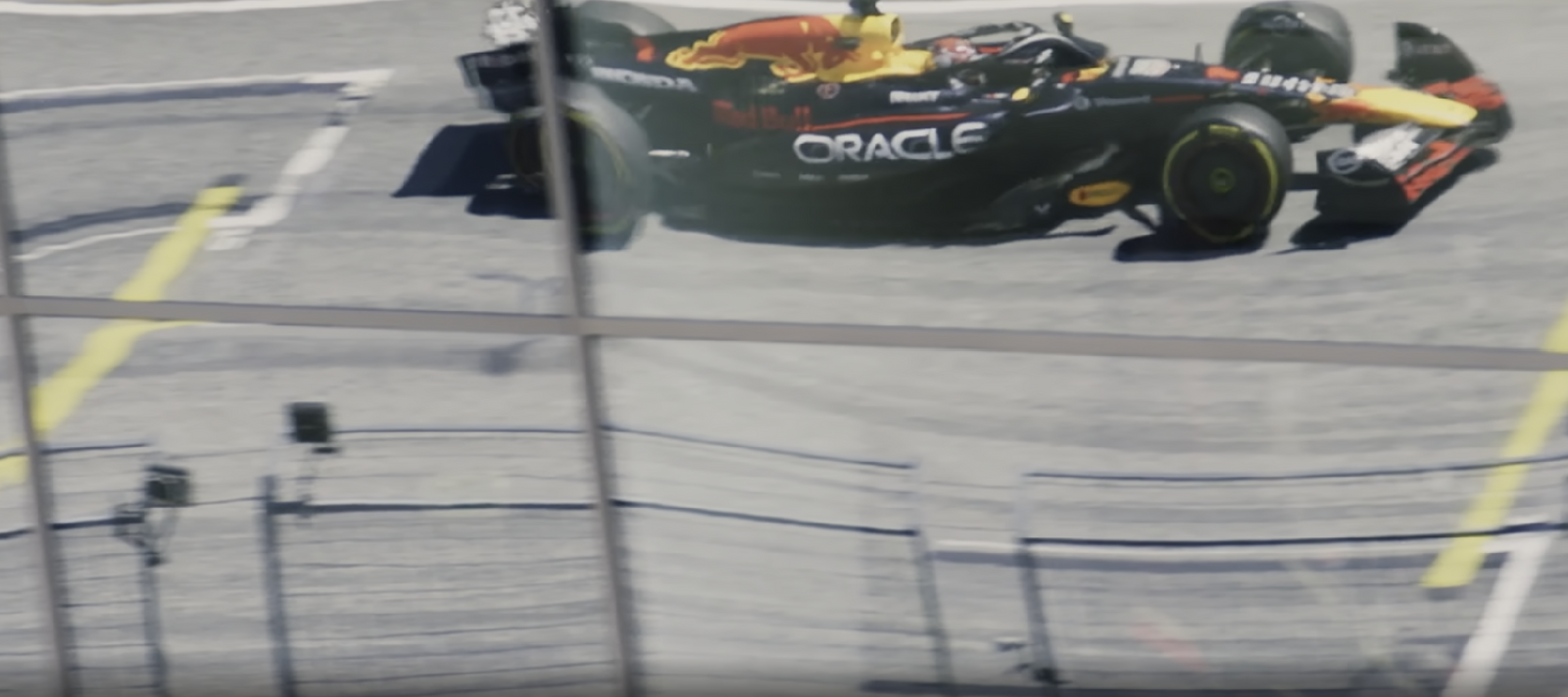
A track scene released by Netflix announcing its Drive to Survive Season 8 and Canadian Grand Prix live-broadcast collaboration with Apple. (Photo: Netflix Tudum)
Netflix is preparing to expand its Formula 1 coverage. Amy Reinhard, Netflix's president of advertising, told Axios in an interview published July 7 that the May simulcast of the Canadian Grand Prix was a "great success," adding that she "would imagine there's going to be more possibility there."

A single experiment confirmed that sublicensing — the exclusive U.S. rights holder, Apple, reselling select races to a rival platform — can grow audiences for both companies at once, and the door to the next race is now open. On the surface it looks like joint coverage — two operators carrying the same race — but the deal runs on different principles from the joint broadcasts of the terrestrial era.
Joint coverage in the broadcast era — multiple networks splitting the Olympics or the World Cup — was an allocation of rights built for universal access and maximum reach: leagues and regulators set the frame, broadcasters paid cash, and ratings were published. The Apple–Netflix Canadian Grand Prix sits at the opposite pole.
The exclusive rights holder selectively opened part of its rights to a rival platform; the consideration was content rather than cash — Apple TV's carriage of "Drive to Survive" Season 8; the objective was each other's subscriber bases and fandom pipelines rather than nationwide reach; and neither side publishes viewing figures. A new category begins here: not a broadcasters' joint feed, but a streaming simulcast. In the same half-year, Korea watched the opposite experiment reach its conclusion — JTBC, which secured exclusive Olympic and World Cup rights but failed at resale, filed for court receivership in June. On both sides of the Pacific, the same lesson landed at once: it is not the acquisition of exclusivity but the distribution design that follows it that determines what broadcast rights are worth.
Streaming platforms whose subscriber growth has plateaued have converged on live sports as a way to solve new sign-ups, advertising revenue, and member retention in a single stroke.
The same calculation explains why Apple absorbed a rights fee of roughly $140 million to $160 million per year — some 60% above what ESPN paid — and why Netflix, which dismissed live sports as unprofitable in 2022, has stacked up 15 rights deals and events in four years. Exclusivity alone, however, does not widen the audience. That is why Apple has put a slice of its exclusive rights back on the market, and why Netflix keeps knocking.
Apple Touts an Early-Season Viewership Surge
According to Motorsport.com, Apple senior vice president Eddy Cue told the Autosport Business Exchange Miami in May, ahead of the Miami Grand Prix, that ratings for the season's first three races were "way up" versus last year's linear numbers on ESPN. He stressed that viewership grew across the entire weekend — Friday practice, sprint qualifying, Saturday's sprint race and qualifying — not just Sunday's grand prix: "I always thought there was a huge opportunity to grow viewership, not just on Sunday, but all weekend. And we've seen that early on in the results that we have."
That programming strategy is still on display. Over the British Grand Prix weekend at Silverstone on July 4, Apple TV put the season's fourth sprint — a 17-lap race — front and center as a viewing product separate from the grand prix itself.

Apple TV's F1 Britain Sprint screen (July 4, 2026). Sprints and qualifying sit alongside the grand prix as programmed viewing products across the whole weekend. (Photo: Apple TV screenshot)
Apple is paying roughly $150 million per year for the rights according to Motorsport.com, or $140 million to $160 million per year by Axios' estimate — well above ESPN's previous contract of about $90 million per year. Apple folded F1 into the Apple TV subscription rather than selling it as a separate product.
Tearing Down the Paywall: Austria, Times Square, and FAST
According to BlackBook Motorsport, Apple made the entire Austrian Grand Prix weekend of June 26–28 — practice, qualifying, and the race — free in the U.S. for anyone who downloaded the Apple TV app with an Apple ID. Before the giveaway, Apple had screened races on Times Square billboards in New York and in IMAX theaters, and simulcast creator-led altcasts on Tubi, Fox's free ad-supported streaming television (FAST) service. It is an experiment in opening every possible touchpoint to viewers outside the paid subscription wall.
Behind this push for exposure sits criticism of the ESPN exit — the argument that leaving the most influential sports channel in the U.S. for a paid streaming service traded reach for revenue. Apple claims its viewing figures are comparable to F1's final year on ESPN, but has released no numbers. F1 averaged a record 1.32 million viewers per race on ESPN last season. A 2023 study found that 26% of "Drive to Survive" viewers had no interest in Formula 1 itself; converting that peripheral audience into race watchers is the task in front of Apple.
Cue named younger viewers and women as the two axes of audience growth: "We've seen that as well. So the early responses have surpassed certainly I think the expectations that we had, and I think that F1 has had. It's a great start, but we've got a long way to go." Apple has, however, released no specific viewership figures for any of the nine race weekends it has aired this year, leaving the claims impossible to verify independently.
Netflix Steps Inside the Exclusive Deal
Netflix walked into Apple's exclusive structure. According to Netflix's official outlet Tudum, Season 8 of "Formula 1: Drive to Survive" — covering the 2025 season, the sport's 75th year — launched simultaneously on Netflix (globally) and Apple TV (U.S. only) on Feb. 27. In exchange, Netflix carried the Canadian Grand Prix live for U.S. viewers on May 22–24, giving viewers who arrived through the documentary a chance, in Netflix's words, to see "the rivalries they've watched for years play out in real-time" on the same platform. Apple TV's live season coverage began with the Australian Grand Prix weekend of March 5.

Netflix's "Formula 1: Drive to Survive," now in its eighth season. Launched in 2019, the docuseries was the starting point of F1's U.S. fandom expansion — and the leverage Netflix held in its simulcast negotiation with Apple. (Photo: Netflix screenshot)
Reinhard said Netflix's content teams "are always mining for those opportunities" when asked about more on-demand F1 content beyond live races: "It really starts with the story, and the story can come in so many different forms and can come from so many different angles. So we're just open to great stories." The remarks came with Netflix still withholding viewership figures for the Canadian Grand Prix — the basis for expansion is not a ratings sheet but the strategic alignment of the two platforms.
Netflix maintained as late as 2022 that it saw no profit path in live sports. "Drive to Survive" reversed that judgment. Reinhard said the series "gave us insight into not only how popular that sport could be, but how popular sports could be for Netflix as well when things are eventized" — proof that sports could drive cultural conversation and ignite fandom like hit franchises "Stranger Things" and "Bridgerton." Netflix has since built out its portfolio: a 10-year, $5 billion deal for WWE "Raw" in 2024, a three-year package of NFL Christmas Day games, exclusive Japanese rights to the 2026 World Baseball Classic, and, next year, exclusive U.S. coverage of the 2027 FIFA Women's World Cup.
500,000 Followers in Two Weeks: Drivers Testify to the 'Drive to Survive' Effect
Driver interviews Axios published the same day show how the docuseries landed inside the sport itself. Lando Norris, the 2025 world champion, said onstage at Axios House during Cannes Lions: "The thing you don't necessarily see on TV, but it's something that Netflix has done very well, is obviously showcase what goes into a season. People love to say we just sit in the car and go in circles, but it's a lot more than that."
Atlassian Williams driver Carlos Sainz recalled that despite his aversion to cameras documenting his private life and contract negotiations, he decided in 2018: "This could be game-changing, so let's give Netflix access, at least the first year." Season 1 devoted a full episode to his career, and he gained 500,000 followers within two weeks of its release. "From then on, everyone realized this was going to be a big help for Formula One, and we all started opening up a bit more," he said. Jessica Hawkins, head of F1 Academy and driver ambassador for Aston Martin Aramco, called the show "a big turning point" that "turned it from an amazing sport to a global platform that everybody wants a piece of."
The numbers back up the drivers' accounts. Per Sports Business Journal, ESPN's average F1 race audience jumped from roughly 550,000 viewers in 2018, before the show's release, to around 950,000 in 2021, with individual races in subsequent seasons exceeding 1.1 million to 1.3 million. A single documentary more than doubled the U.S. audience over six years — a trajectory that went straight onto the rights-fee negotiating table.
Netflix Live Sports Rights and Events Timeline (2023–2026)
The 15 major live sports events and rights deals Netflix has closed from the Netflix Cup in November 2023 through May 2026. (Data: Axios research)
The Shared Measurement Gap
There is still no unified standard for measuring live sports performance on subscription streaming. Traditional ratings fail to capture engagement that matters to growing leagues — viewership abroad, or fan content such as F1's alternative race broadcasts for kids. Netflix, too, has not released Canadian Grand Prix viewing data. The closest precedent is Apple's 10-year, $2.5 billion global exclusive with Major League Soccer. At the June 2022 announcement, Cue celebrated a structure with every match in one place and no local blackouts — "no fragmentation, no frustration" — and MLS commissioner Don Garber called Apple "the perfect partner." Yet even Garber, while touting the partnership as a success, has conceded that the lack of transparency around viewership metrics makes it hard to assess independently.
F1's leadership nonetheless keeps its eyes on the platform-ecosystem effect. McLaren Racing chief marketing officer Louise McEwen said at an Axios House event during Cannes Lions that Apple can connect the fan experience across its platforms — music, news, and beyond: "fandom doesn't live in a silo." Peter Kenyon, board advisor to the Atlassian Williams F1 team and former CEO of Manchester United and Chelsea, said "all the indications are that women are our next generation of F1 fans, and I think it's not a five-year play."
42% Female, 43% Under 35: This Is What Apple Bought
Kenyon's remark is backed by F1's own 2025 season figures. The sport's global fanbase reached 827 million in 2025, up 12% year on year and 63% versus 2018. Forty-three percent of all fans are under 35, and 57% of new fans over the past year were under 35. The female share of the fanbase rose from 37% in 2018 to 42%, with women accounting for 48% of all new fans. The younger viewers and women Apple named as its two growth axes are already the substance of F1's fandom expansion.
The same pattern showed up offline and in theaters. Total 2025 season attendance hit a record 6.7 million, with 19 sell-out events. "F1 The Movie," starring Brad Pitt, grossed more than $630 million to become the highest-grossing sports film of all time, then hit No. 1 on Apple TV's streaming charts immediately after its December release on the platform. Apple's appointment as F1's exclusive U.S. broadcaster was announced at last year's United States Grand Prix — the moment the structure interlocking box office, documentary, and live coverage inside a single company's platform was completed.
Yet while nearly half of the new fans arriving through Netflix are women, there are none on the grid. No female driver has taken part in even a practice session since Susie Wolff in 2015. Wolff now serves as managing director of F1 Academy, the championship F1 launched to develop young female drivers, and Netflix runs a separate documentary about the series. "It would be great to see a woman in 'Drive to Survive,'" Hawkins said. "Hopefully, we'll start seeing more women on 'Drive to Survive' when we start to see more women in the sport."
Liberty's Groundwork: Nine Years Since the 2017 Social Media Opening
The Apple deal is also the accumulated result of F1's commercial growth in the U.S., and the starting point traces back to 2017. As ESPN's Nate Saunders reported at the time, F1 under Bernie Ecclestone shunned social media — Ecclestone himself once said the sport had no need to engage a younger audience. Filming of any sort inside the paddock was banned for anyone other than rights-holding broadcasters and Formula One Management, and drivers including Lewis Hamilton were repeatedly told to take down clips they had posted.
Liberty Media completed its takeover in January 2017, removing Ecclestone as CEO and moving him to an honorary chairman role. In February that year, ahead of pre-season testing in Barcelona, the new owners sent teams a letter formalizing the relaxation of social media rules and encouraging them to post short clips of the circuit and their drivers. Mercedes streamed an Instagram Live of Hamilton's hot-lap preparations from the cockpit's point of view and showed its night-shift mechanics at work; Red Bull posted a day in the life of Daniel Ricciardo and Max Verstappen's preparations for his first day at the wheel. The side of F1 that had never existed outside broadcast feeds was opened directly to fans.
That posture of openness carried through Liberty's strategy: the ESPN U.S. distribution deal of 2018–2025, and the pitch of "Drive to Survive" to Netflix — a Liberty initiative. The series brought in millions of new fans, led by younger audiences and women, and that enlarged audience base translated into an Apple rights fee more than 60% above ESPN's. The 2017 decision to open the paddock's cameras is the path that led, nine years later, to two tech giants competing over F1.
The Message for Korea
Korea has its own tradition of joint coverage. The three terrestrial networks split the Olympics and the World Cup for decades, backed by the country's universal viewing rights regime. But that was a device of regulation and consensus guaranteeing reach — not a market transaction in which operators trade rights and content.
What emerged as that tradition collapsed was JTBC's exclusivity experiment. JTBC (Joongang Group) contracted directly with the IOC in 2019 for exclusive Korean rights to the 2026–2032 Olympic Games, later adding the 2026 and 2030 FIFA World Cups — a total outlay of roughly $500 million that dismantled the decades-old "Korea Pool" joint-negotiation system. The business model was the same as Apple's: buy exclusivity.
What followed was not. Ahead of February's Milano-Cortina Winter Olympics, three rounds of resale talks with the terrestrial networks all collapsed, producing the first Olympics in decades with no terrestrial coverage. In April, the North American World Cup resale landed only KBS, at 14 billion won; MBC and SBS walked away. With the plan to recoup the rights fee through resale in ruins, JTBC defaulted on some 20 billion won of debt and filed for court receivership in June, pulling five core Joongang Group affiliates into insolvency proceedings.
The difference between Apple–Netflix and JTBC is not exclusivity itself. Apple designed its resale not as cash recovery but as a content swap and a fandom pipeline, making the trade profitable for the buyer as well. JTBC asked terrestrial networks — their advertising revenue halved, running annual losses around 100 billion won — for hundreds of billions of won in cash per broadcaster.
A cash resale to buyers who have lost the ability to pay does not close; what remained was a universal-viewing-rights controversy and a debate over amending the Broadcasting Act. Exclusive rights are an asset only when a distribution design stands behind them; without one, they are a liability.
Korea also has streaming exclusivity of its own. TVING has held exclusive digital rights to KBO baseball since 2024 under a three-year deal worth a total of 135 billion won (45 billion won a year) — transplanting the Apple–F1 "OTT exclusive" structure into the domestic market first.
But there is no next step. TV and OTT coverage sit inside separate walls in a two-track structure; no platform-to-platform deal — the exclusive holder reselling select games or exchanging them for content — has yet been attempted. With TVING's contract expiring after 2026, the Apple–Netflix model offers a new option for the renegotiating table: selective simulcasts of weekend marquee matchups, or swaps of documentary carriage for live rights.

TVING's KBO Live screen (July 8, 2026). Korea's pro baseball digital coverage also runs on an OTT-exclusive structure — but has not yet moved to platform-to-platform resale or content exchange. (Photo: TVING screenshot)
Rights negotiations for Korean baseball (KBO) and K League football still revolve around single-operator exclusivity and headline-sum bidding. Apple opened part of its exclusive rights to Netflix and grew F1's total exposure; Netflix used its own documentary as leverage to reach live rights. With F1 demonstrating a distribution design in which terrestrial broadcasters, telecom OTTs, and global platforms could divide and combine rights by race, day, and content type — growing league value and audience reach together — the negotiating architecture of Korea's domestic rights market becomes a candidate for review.
F1's U.S. rights fee rose from $90 million to roughly $150 million per year after "Drive to Survive" aired. The storytelling IP built the fandom first; the rights fee followed. That is why Korean sports properties need to turn the narratives of their athletes and clubs into franchises distributable on global platforms before selling broadcast rights — and where the global production and distribution capabilities K-content has already built can intersect with the sports industry.
Apple designed all three days — Friday practice through sprints and qualifying — as a viewing product rather than a single Sunday race, and confirmed weekend-wide audience growth in its early data. In contrast to Korean sports programming that stops at single-match coverage, packaging live events with shoulder programming to grow ad inventory and time spent together is becoming the global standard.
The measurement gap is also a problem Korea's market will soon face. With neither Apple nor Netflix releasing specific figures, the performance of streaming sports currently rests on the platforms' own announcements. As Korean sports coverage migrates to OTT, the absence of a cross-platform audience metric that advertisers, leagues, and regulators can agree on will feed uncertainty into negotiations and investment. Apple's strategy of naming women and younger viewers as growth axes rests on the same question: how fandom data gets defined and measured.
Sources
Axios, "Netflix eyes more F1 content" / "F1 executives optimistic about Apple deal despite limited data" (Sara Fischer, Christine Wang, July 7, 2026)
https://www.axios.com/media-trends-membership/2026/07/07/netflix-f1-live-sports
Axios, "F1 drivers say Netflix changed the race" (Sara Fischer, Christine Wang, July 7, 2026)
https://www.axios.com/2026/07/07/f1-drivers-say-netflix-changed-the-race
Motorsport.com, "Apple reveals early F1 2026 viewership surge after US broadcast rights deal" (Alex Harrington, May 2, 2026)
https://www.motorsport.com/f1/news/apple-reveals-early-f1-viewership-surge-after-150m-us-broadcast-deal/10816971/
ESPN, "F1's new owners relax social media rules" (Nate Saunders, Feb. 28, 2017)
https://www.espn.com/f1/story/_/id/18787004/f1-new-owners-relax-social-media-rules
BlackBook Motorsport, "Apple removes F1 paywall for Austrian GP in pursuit of wider US audience" (Cian Brittle, June 19, 2026)
https://www.blackbookmotorsport.com/news/f1-apple-netflix-espn-viewership-austrian-grand-prix-june-2026/
Apple Newsroom, "Apple and Major League Soccer to present all MLS matches around the world for 10 years" (June 14, 2022)
https://www.apple.com/newsroom/2022/06/apple-and-mls-to-present-all-mls-matches-for-10-years-beginning-in-2023/
Formula1.com, "Formula 1's record-breaking 2025 season in numbers" (Dec. 19, 2025)
https://www.formula1.com/en/latest/article/formula-1s-record-breaking-2025-season-in-numbers.irq7aR8PcyAw7ysO72vJn
Weekly Kyunghyang, "Did sweeping up World Cup and Olympic rights backfire? JTBC faces court receivership 15 years after launch" (June 15, 2026)
https://weekly.khan.co.kr/article/202606151455001
Weekly Kyunghyang, "JTBC co-broadcasts World Cup with KBS — but could not sell to MBC and SBS" (April 22, 2026)
https://weekly.khan.co.kr/article/202604221357001
Hankyung, "'We won't broadcast the World Cup' — the terrestrial networks' 100-billion-won deficits" (April 11, 2026)
https://www.hankyung.com/article/2026041026437
Netflix Tudum, "Netflix and Apple TV Join Forces to Stream Formula 1 Thrills" (Madeleine Saaf-Welsh, May 21, 2026)
https://www.netflix.com/tudum/articles/formula-1-apple-netflix-drive-to-survive