AICON 2026 | KOREA-SINGAPORE AI EXCHANGE, SINGAPORE
At AICON 2026, Korean and Singaporean media leaders examine how IP development and audience insight can turn AI production capacity into lasting businesses
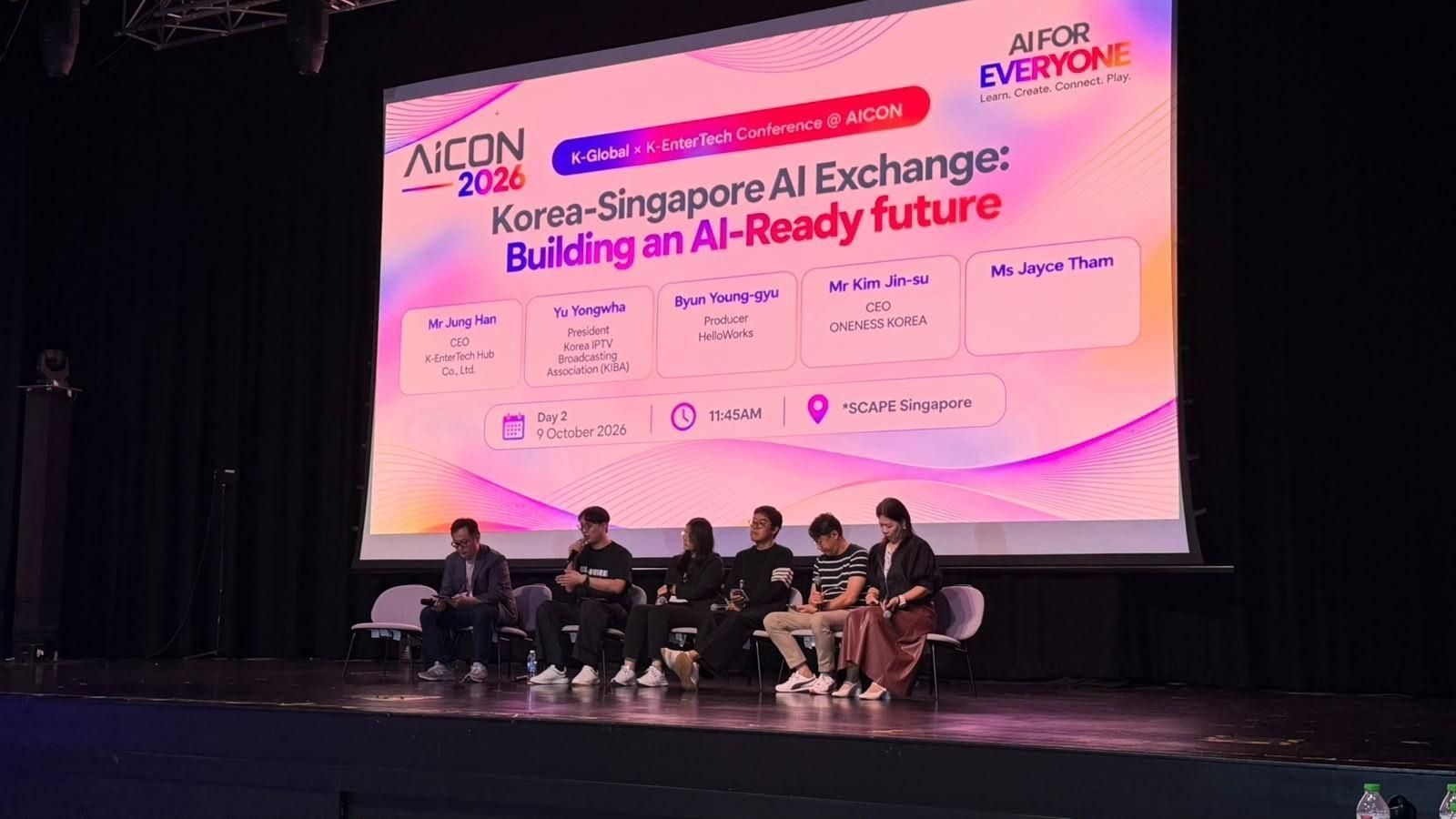
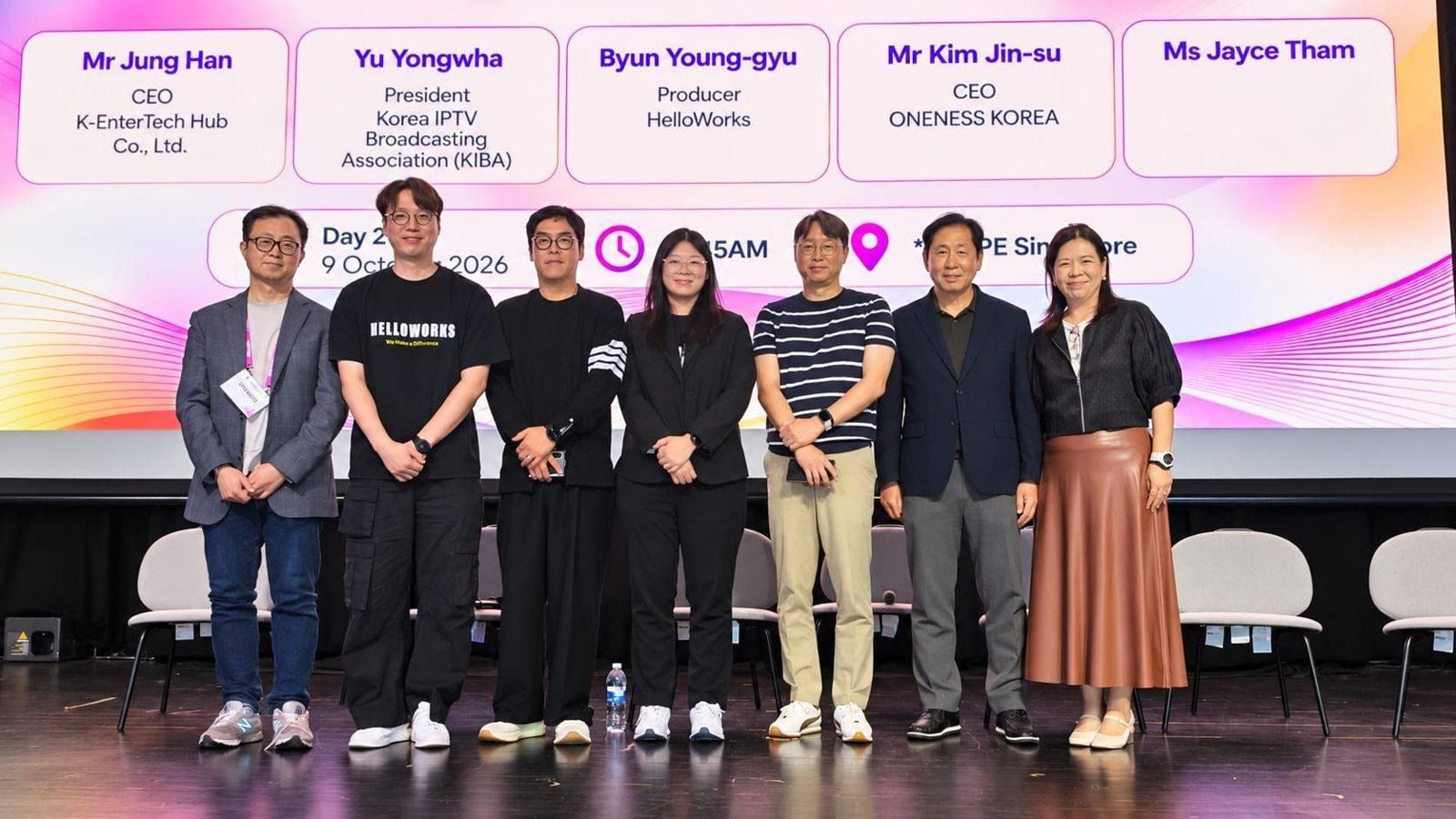
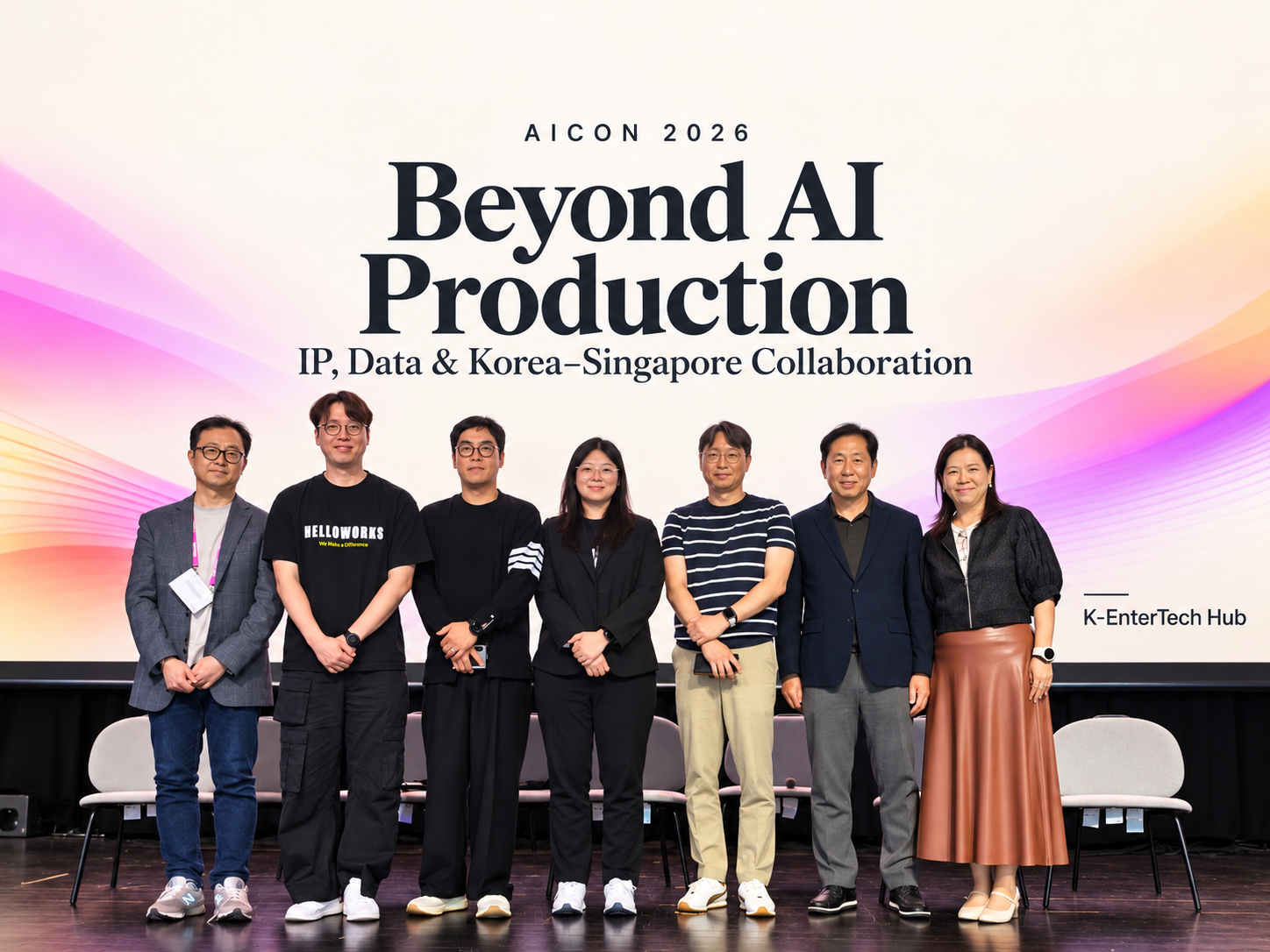
The AICON 2026 main-stage panel at the SCAPE Ground Theatre, Singapore, October 9. From left: moderator Jung Han of K-EnterTech Hub, HelloWorks producer Byun Young-gyu (holding the microphone) and, far right, CreativesAtWork chief executive Jayce Tham. Photo: K-EnterTech Hub
As AI content production becomes more accessible, media companies are looking to intellectual property and audience relationships for a lasting competitive edge. Producers need rights that allow stories and characters to grow across formats and markets. Platforms need data that shows whom content reaches and how viewers respond. At AICON 2026 in Singapore on October 9, Korean and Singaporean media leaders explored how those assets could support the next phase of the content business.
Yoo Yong-hwa (유용화), president of the Korea IPTV Association (한국IPTV방송협회), gave the opening address. The panel brought together Byun Young-gyu (변영규), a producer at HelloWorks (헬로웍스); Kim Jin-su (김진수), chief executive of ONENESS KOREA (원니스코리아); and Jayce Tham, chief executive of CreativesAtWork. Jung Han (한정훈), chief executive of K-EnterTech Hub, moderated.
Platforms and producers approached the challenge through different assets. Yoo focused on the viewing data accumulated by pay-TV operators. The association runs TV INDEX with Korea’s three IPTV operators, KT, SK Broadband and LG Uplus, using viewing logs from about 18 million set-top boxes. “If pay TV combines its strengths with AI and data technology, it can create new opportunities even as competition with global streamers intensifies,” he said.
The producers focused on the business foundations that remain after output expands. “If we keep doing only the production-service model, we just fight each other and prices go down,” Tham said. Byun added: “With AI anyone can make video, so supply is rising steeply, but the amount of video people watch is the same.” He argued that “owning good IP is the key to success, and in an AI world, choosing is the human’s job.” Their concern was how production gains translate into IP development and distribution opportunities.
From scheduling to recommendation
"AI is already changing how content is made, delivered and enjoyed, and the media industry is changing very fast as a result," Yoo said. "Broadcast platforms used to be about sending out programmes at fixed times. Now they are becoming much smarter, understanding viewers' tastes and habits and recommending content and services that suit each of them."
Korea's IPTV operators already use AI for personalised recommendation and search, customer service and AI set-top boxes. Advertising is shifting too. Yoo cited addressable TV advertising: "Even when people watch the same channel at the same time, each household can see a different ad, and set-top box data lets advertisers know better how many people saw it and how well it worked."
TV INDEX standardises that data. The IPTV operators and analytics firm IGAWorks (아이지에이웍스) released a beta in November 2025 and launched the full service on March 24, 2026. Where Korea's conventional ratings extrapolate from a panel of about 4,000 households, TV INDEX reports actual reach and viewing time. The blind spot it targets is large: of 306 channels carried by the three operators, 85, or 27.7%, register 0% in conventional ratings, according to Korea Broadcast Advertising Corp data reported by Digital Today.
"TV INDEX goes beyond traditional ratings to look at the actual number of viewers, how many people content reaches, and viewing time," Yoo said. "The aim is not to create another ratings system but to better understand the real value of content and how viewing habits are changing." The association plans to link viewing data with advertising data to measure the value of content and ads together.
Hurdles remain. At the association's policy committee in August, members flagged privacy protection, rules for combining data, common data formats across operators and accurate programme and ad schedule information as issues to resolve, Newsis and other outlets reported.
Yoo summed up the future platform's job as "connecting people and content, understanding viewers, and turning that understanding into new content and services." Pay TV, he said, "has a wide range of content, a stable service and viewing data built up over a long time." He listed areas for Korea-Singapore cooperation: co-production and distribution, AI content production, recommendation, personalised viewing data, ad tech and new media services. "Korea is strong in pay-TV platforms, content production and K-content, and Singapore is Asia's digital hub, where global companies, technology and markets come together." After his address Yoo left for a meeting with Orange Wholesale International.
Microdrama growth exposes the limits of service fees
Tham's CreativesAtWork delivers two vertical microdrama series a month to US platform DramaBox, each with 60 to 90 episodes of about a minute. "By redesigning the workflow we can go from two a month to six, and with partners in other countries we could make 100 a month," he said.
The output is chasing a fast-growing market. The China Netcasting Services Association put China's microdrama market at CNY 50.44 billion in 2024, ahead of the CNY 42.50 billion domestic box office reported by the China Film Administration, the first time short drama overtook cinema.
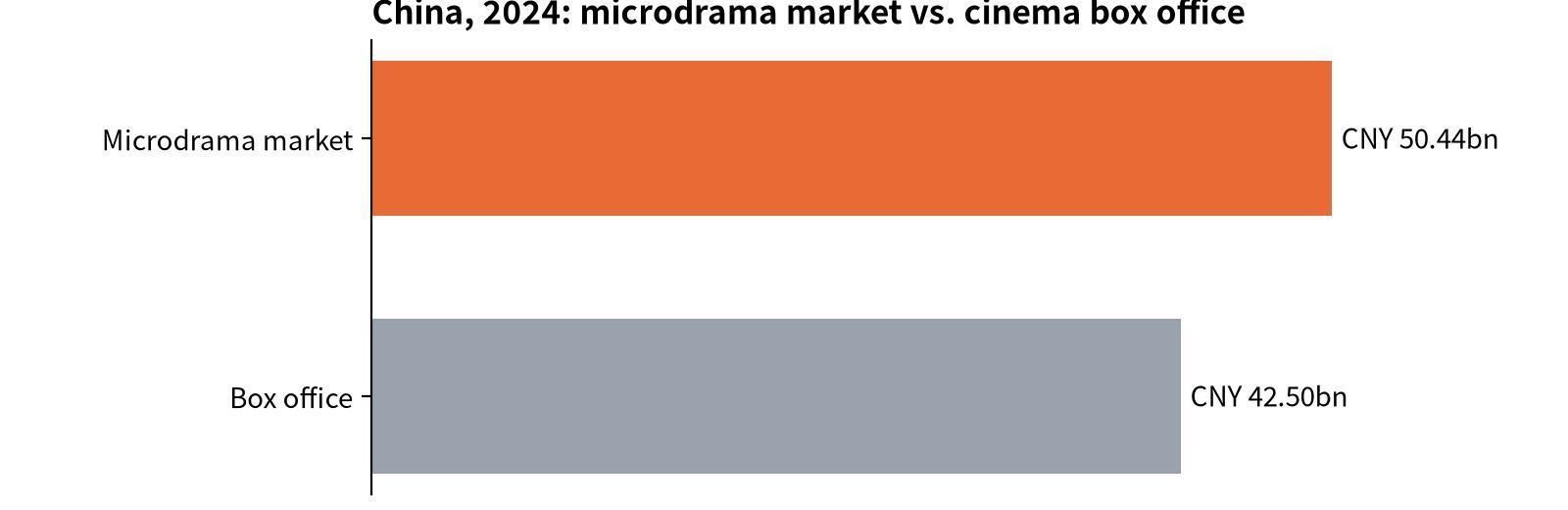
China's 2024 microdrama market (estimate) vs. cinema box office. Sources: China Netcasting Services Association; China Film Administration
Outside China, app spending has surged as well. Global in-app revenue from short drama apps reached about $700 million in the first quarter of 2025, nearly four times the $178 million of a year earlier, according to Sensor Tower. The US accounted for 49%. ReelShort earned about $130 million and DramaBox about $120 million.
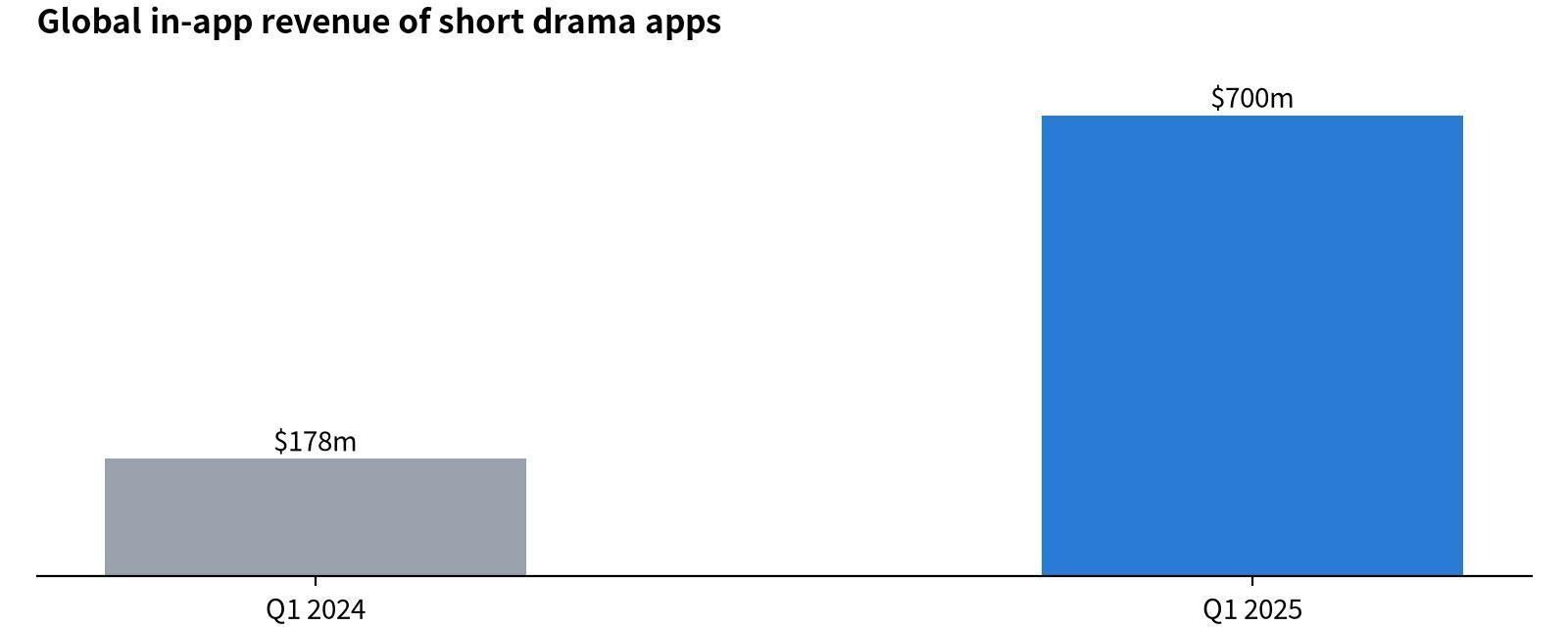
Market growth does not guarantee healthier margins for suppliers. Tham’s concern was the pressure on fees when studios compete primarily on production capacity. CreativesAtWork still earns production fees from platforms and broadcasters commissioning AI-assisted or fully AI dramas.
“How much will a broadcaster pay us for a fully generative AI title?” he asked. He argued for taking IP beyond a single microdrama, animation or television format into uses such as merchandise, and for exploring experiences as another source of revenue.
LiPie offers a case for developing Korean IP across formats
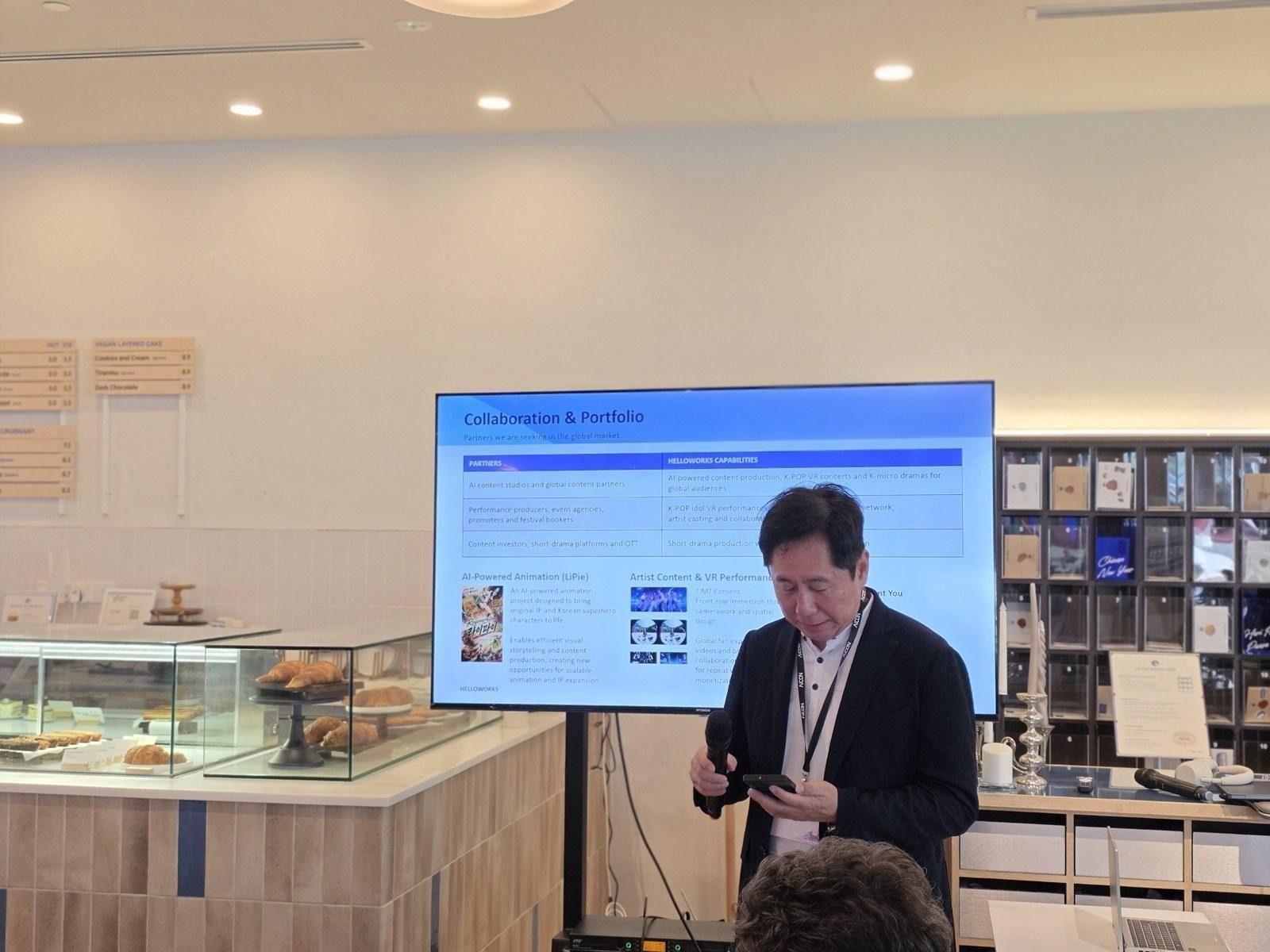
HelloWorks presented LiPie Regeneration as its case for IP expansion. LiPie (라이파이) is a science-fiction comic drawn by Kim San-ho (김산호) in 1959. "There are lots of K-drama and K-pop videos, but nobody knows a Korean superhero," Byun said. "The world needs a Korean superhero like Iron Man or Superman."
"LiPie gave children a future and dreams after the Korean War," Byun said. "We want to grow it again together with Kim San-ho." The IP should not be confined to film, he argued, but extended into documentary, animation and comics. Tham asked whether HelloWorks was also looking for Singaporean investment or co-production partners.

Combining AI with 2D and 3D production
"Anyone can now make content with AI, so it is hard to make money from that alone," Kim said "Using AI as it is doesn't give you efficiency."
He took fight scenes as an example: anyone can generate a plausible fight, but controlling fine details such as the position of a fist or a facial expression is hard. "We are not looking at AI alone. We are combining the strengths of 2D and 3D technology to find solutions."

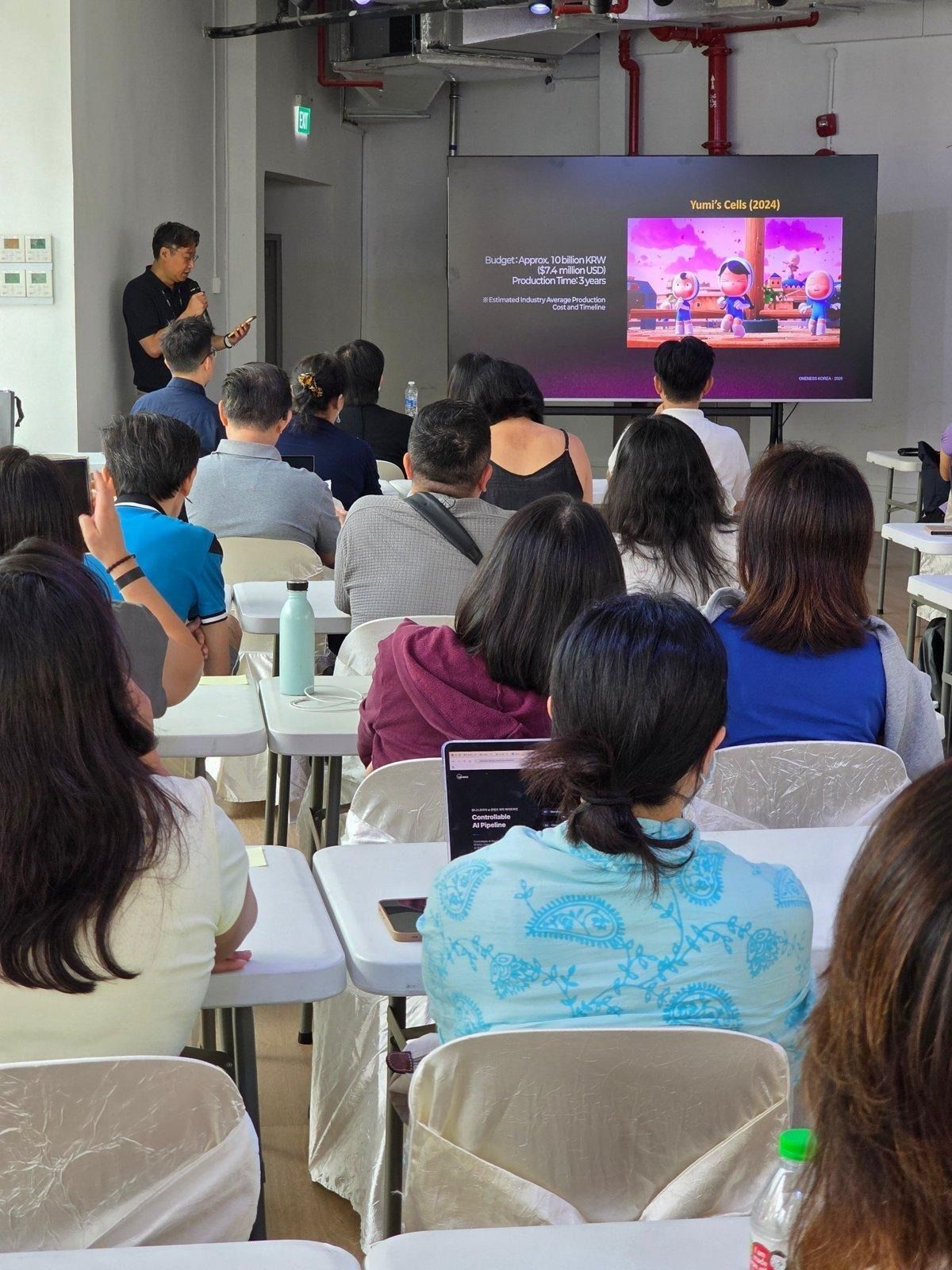
ONENESS KOREA was founded in 2023 by the team that created and ran Rozy, one of Korea's best-known virtual humans, and makes advertising, animation and IP video.
"A 3D animated character disappears when the show ends, but a virtual human carries on with its own life and is active in the real world," Kim said. The day before, chief technology officer Eo Jin-hyuk (어진혁) had presented the company's generative AI production work in a masterclass.
Audience acceptance shapes the pace of adoption
Singapore is a different market from Korea or China, Tham said. "Audiences in Korea and China are used to fully AI content, whether TV series or features, but Singapore is much more cautious. In August a local company put a 100% AI feature film in cinemas and there was a big audience backlash."
So in Singapore generative AI is arriving first as a post-production aid. CreativesAtWork works with national broadcaster Mediacorp to generate scenes that are hard to shoot, such as accident reconstructions. With Indonesian broadcaster SCTV it is making 26 seven-minute children's episodes produced entirely with generative AI. "Audiences accept that more readily," Tham said, "but generating real people with AI is still sensitive because of copyright and fake-content issues."
Curation and testing become platform responsibilities
The moderator asked what broadcasters and pay-TV platforms should do when anyone can make content with AI. "Broadcasters and platforms have a solid audience and have kept quality high," Byun said. "AI video can't be stopped, so at some point they have to choose, and they have to experiment." There will be pushback at first, he said, but acceptance will grow. "Broadcasters need to use data to find out what works and what doesn't, and producers need to supply good-quality AI video and drama."
"You can't gather 100 or 1,000 people to shoot a one-minute video," Kim said. "Media also has to break with old ways of shooting and think about how to make video with AI." Byun's picture of broadcasters choosing by data points straight back to the TV INDEX that Yoo described in his opening.
Connecting Korean stories with Singapore’s regional networks
"Korea is strong at making stories, and Singapore is strong in technology, infrastructure and connections across Southeast Asia," Tham said. "The two countries can work more closely on creative content." He does not expect actors or voice actors to become unnecessary and named hybrid production, combining real people and AI, as the next step. "There are many untold stories in Southeast Asia. Thanks to generative AI, a child in Indonesia can make an Indonesian story, and Singapore can distribute it."
Asked what content will look like in five years, Tham said "personalisation will be the next battleground for every creator." The biggest opportunity generative AI offers, he said, is "making content that speaks to each individual viewer, not to the biggest audience." Kim said "K-culture is the best in the world," and Byun said small teams will be able to achieve big results.
Testing opportunities for co-production and regional distribution
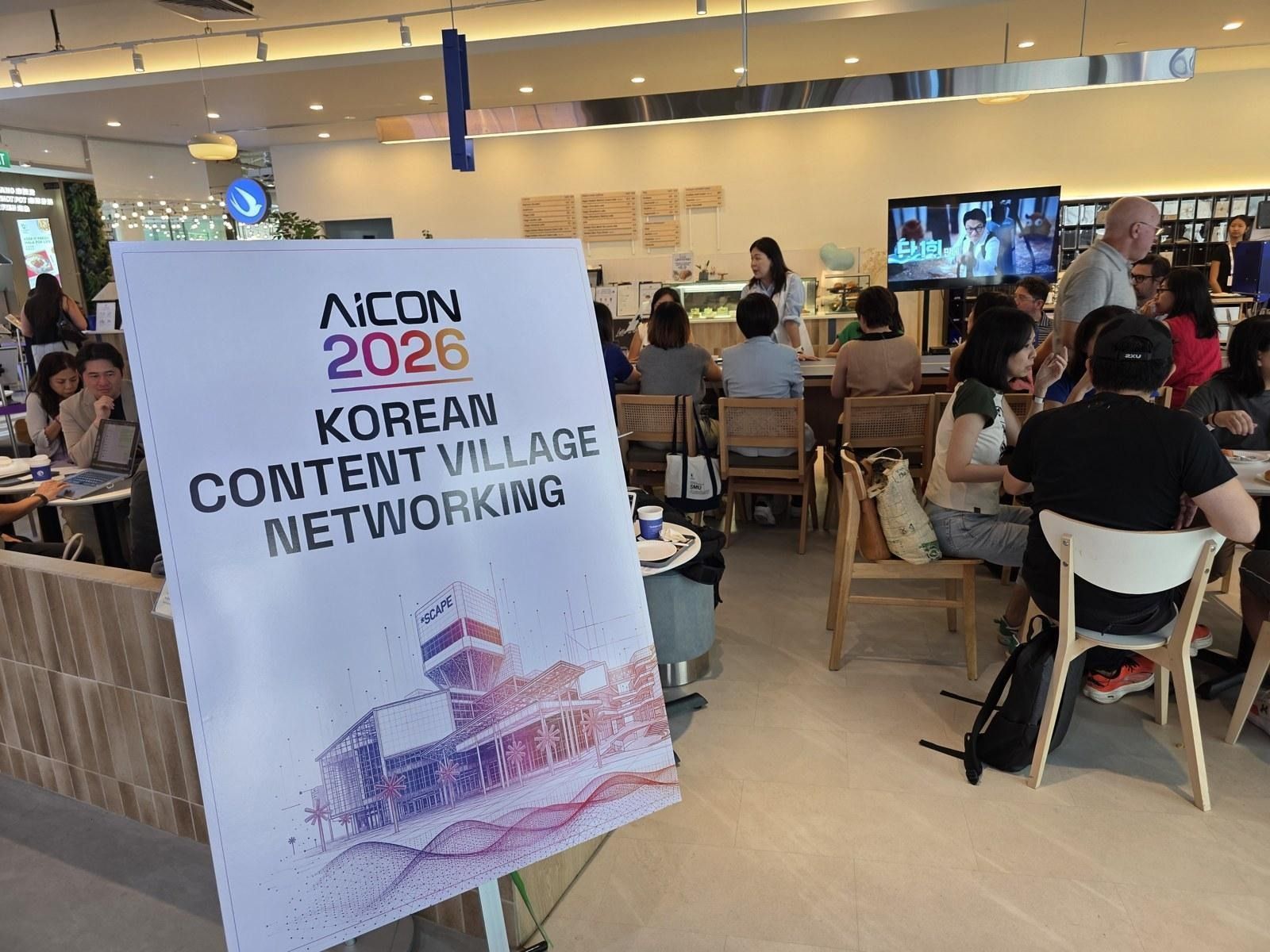
The panel was one part of a two-day programme for the Korean delegation. On October 8 Yoo gave a congratulatory speech at the Korean Content Village networking lunch at SCAPE's Nuldam Space. Guests included Ng Tian Chong, chief executive of Singtel Singapore, as well as Singaporean government, public-sector and corporate representatives and Korean media and content executives. HelloWorks and ONENESS KOREA presented their companies.
"AI is now going beyond changing industries to rapidly reshaping how we make content, consume media and communicate with each other," Yoo said in that speech. "As one of Asia's leading digital and AI innovators, Singapore is building new technologies and services through government, companies, research institutes and start-ups working together." The association, he said, would take part in such exchanges so that the two countries' media and content industries can create new opportunities through AI.
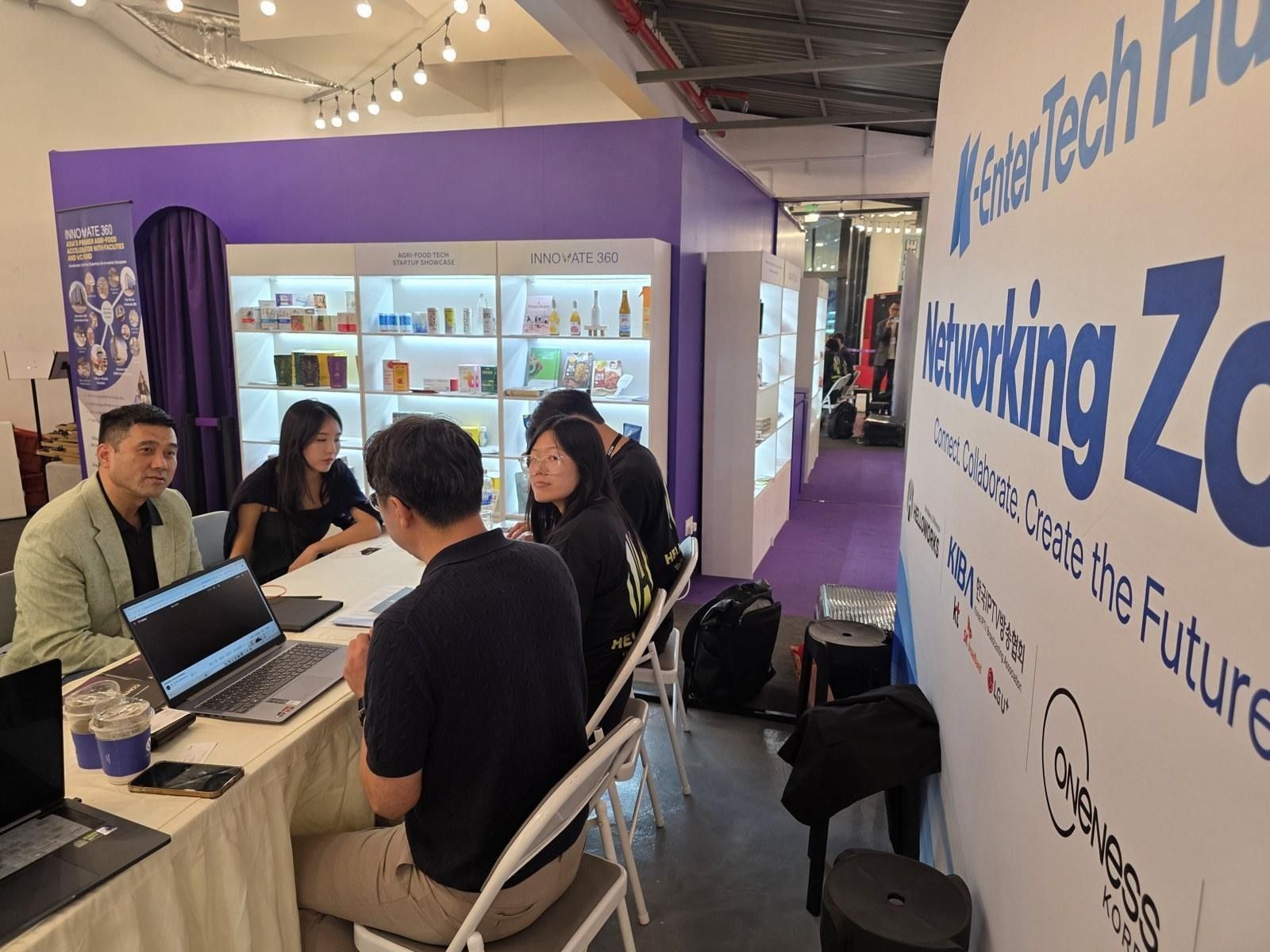
CreativesAtWork, AICON's co-organiser, arranged the local meetings. At 6.30 pm on October 8 the delegation met an Alibaba Cloud team led by Andy Lee, vice president of international business and head of Southeast Asia, in the K-EnterTech Hub networking zone.
HelloWorks sent Byun and legal lead Jang Shin-i (장신이); ONENESS KOREA sent CTO Eo. The Korean side had flagged its interests in advance: cloud infrastructure and storage for streaming and large-scale data processing, and generative AI tools for automated production and character consistency. Both companies said they are considering a Southeast Asian base.
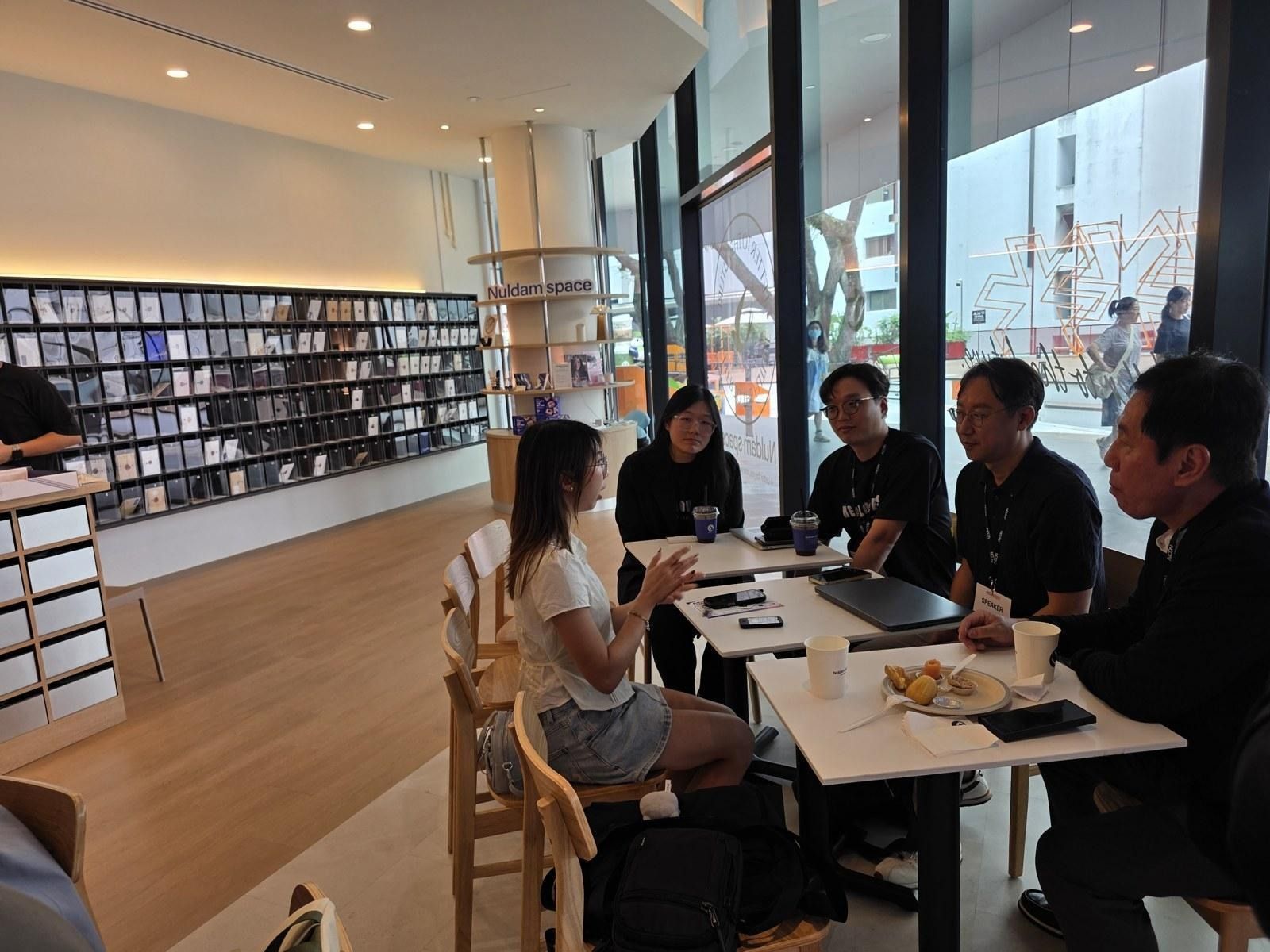
The same day a team from Bloomr.SG, the creator network (MCN) run by Mediacorp, visited the delegation at Nuldam Space. Mediacorp set up Bloomr to make branded content with local creators, which overlaps with HelloWorks' microdrama production and creator and talent management and with ONENESS KOREA's AI character video.
Right after the panel on October 9, the Korea IPTV Association visited Orange Wholesale International's Singapore office for a briefing on telco-based content delivery networks (CDN) and data protection and security services.
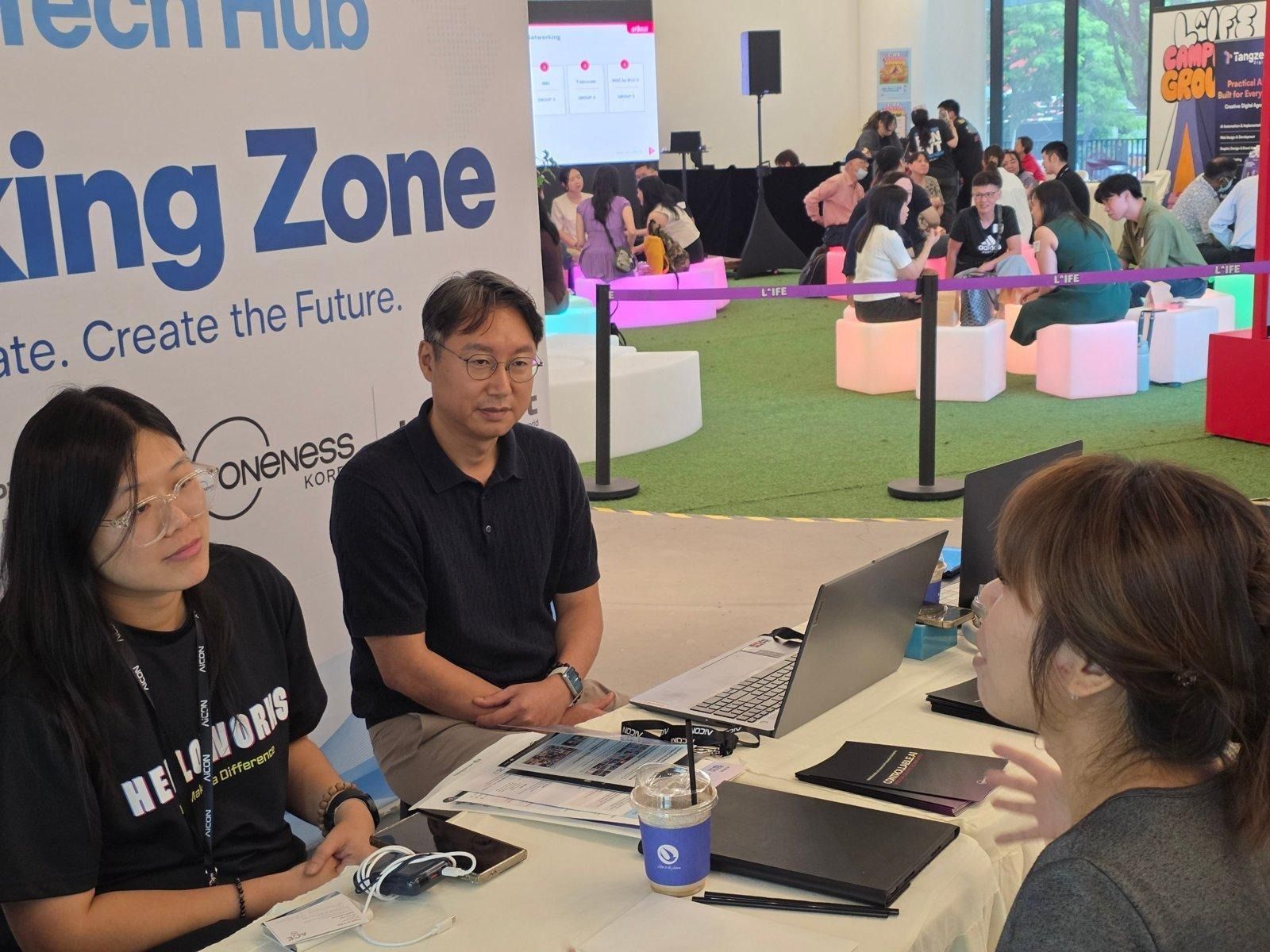
K-EnterTech Hub ran a networking zone in the venue's Entertainment Zone as a meeting space for Korean exhibitors over both days. When the panel ended, the moderator invited the audience to "visit the Korean Content Village run by K-EnterTech Hub if you want to see more Korean innovation," and the head of a marketing agency that makes brand and government content in China came to the stage to ask how to work with Korean companies.
Korean delegation's main schedule at AICON 2026
Source: K-EnterTech Hub
Turning production efficiency into IP and distribution outcomes
The discussion centred on how greater production capacity can support a durable business. Tham’s prospect of making 100 titles a month depends on partnerships across countries. Turning that capacity into revenue and profit will also require quality, demand and workable distribution terms. Korean studios therefore need to pair efficient production with IP rights and participation in revenues from subsequent uses.
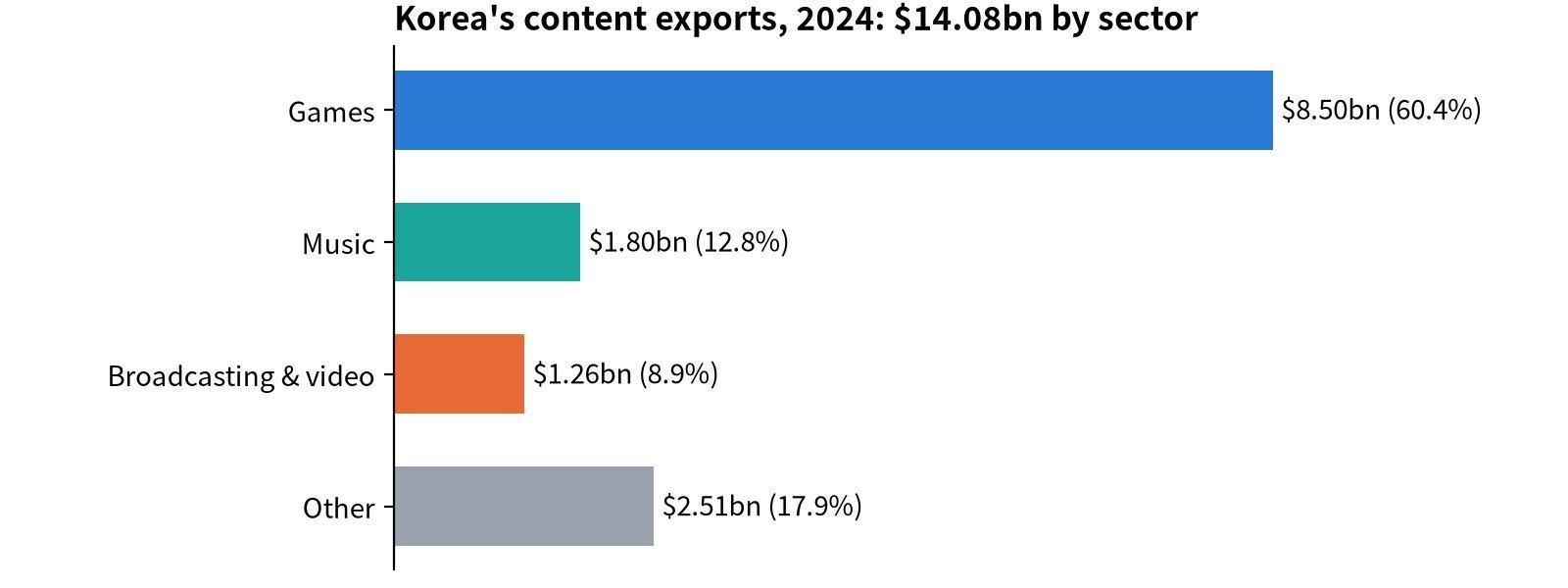
Korea's export mix points in the same direction. Content exports hit a record $14.08 billion in 2024, according to the culture ministry's 2025 content industry survey, as reported by Herald Economy. Games accounted for $8.50 billion, or 60.4%, while broadcasting and video brought in $1.26 billion, or 8.9%. The panel's idea of stretching a single drama into animation, games, live shows and merchandise is one way to raise broadcasting's share.
Combining IP strategy with audience data could improve decisions throughout development and distribution. Studios need to assess which characters and stories merit expansion into other formats; platforms need to understand which titles connect with which viewers. Data from about 18 million set-top boxes is a potential resource for those decisions. Putting it to work requires consistent measurement, defined uses and privacy safeguards.
Standards for commissioning and distributing AI content are also part of the business model. Broadcasters and platforms need clear practices for disclosing AI use, securing consent for likenesses and voices, managing underlying rights and handling errors. Alongside applicable legal requirements, those practices can shape audience trust and a project’s ability to secure distribution.
The Singapore examples described by Tham also underline the importance of audience acceptance. Experience in post-production and children’s programming offers a starting point for testing responses and extending AI use across genres.
For Korean companies, the next step is to define the development scope and rights structure of individual properties such as LiPie, then agree production and distribution terms with local partners. Those projects will establish the commercial significance of this exchange. The next competitive edge will depend on connecting AI’s expanded production possibilities with long-term IP development and a deeper understanding of audiences.