
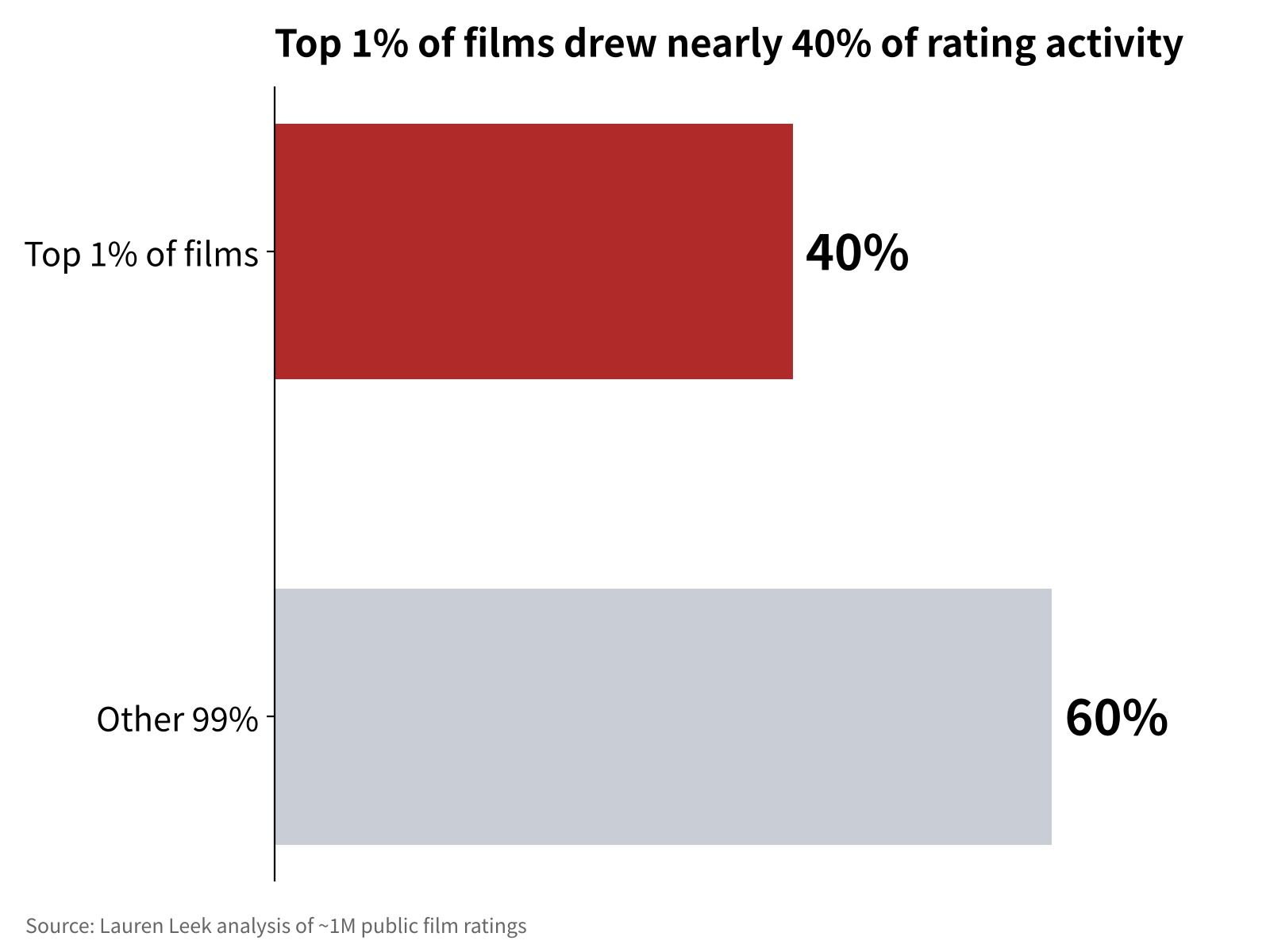
1% of films drew 40% of rating activity; in simulations, narrowing reversed only when about 20% of recommendations went to unfamiliar titles
Independent producer Ted Hope, known for films such as "The Ice Storm," argued on Nov. 16 in his newsletter Hope For Film that streaming recommendation algorithms are crowding out independent cinema, and proposed a "20% rule."
He builds on research by data analyst Lauren Leek. In a dataset of nearly a million publicly posted film ratings, she found that just 1% of films accounted for nearly 40% of recorded activity. More films are available than ever, but attention is concentrated on a tiny fraction. Recommendation systems that keep rewarding the familiar and successful narrow cultural choice, Leek argues.
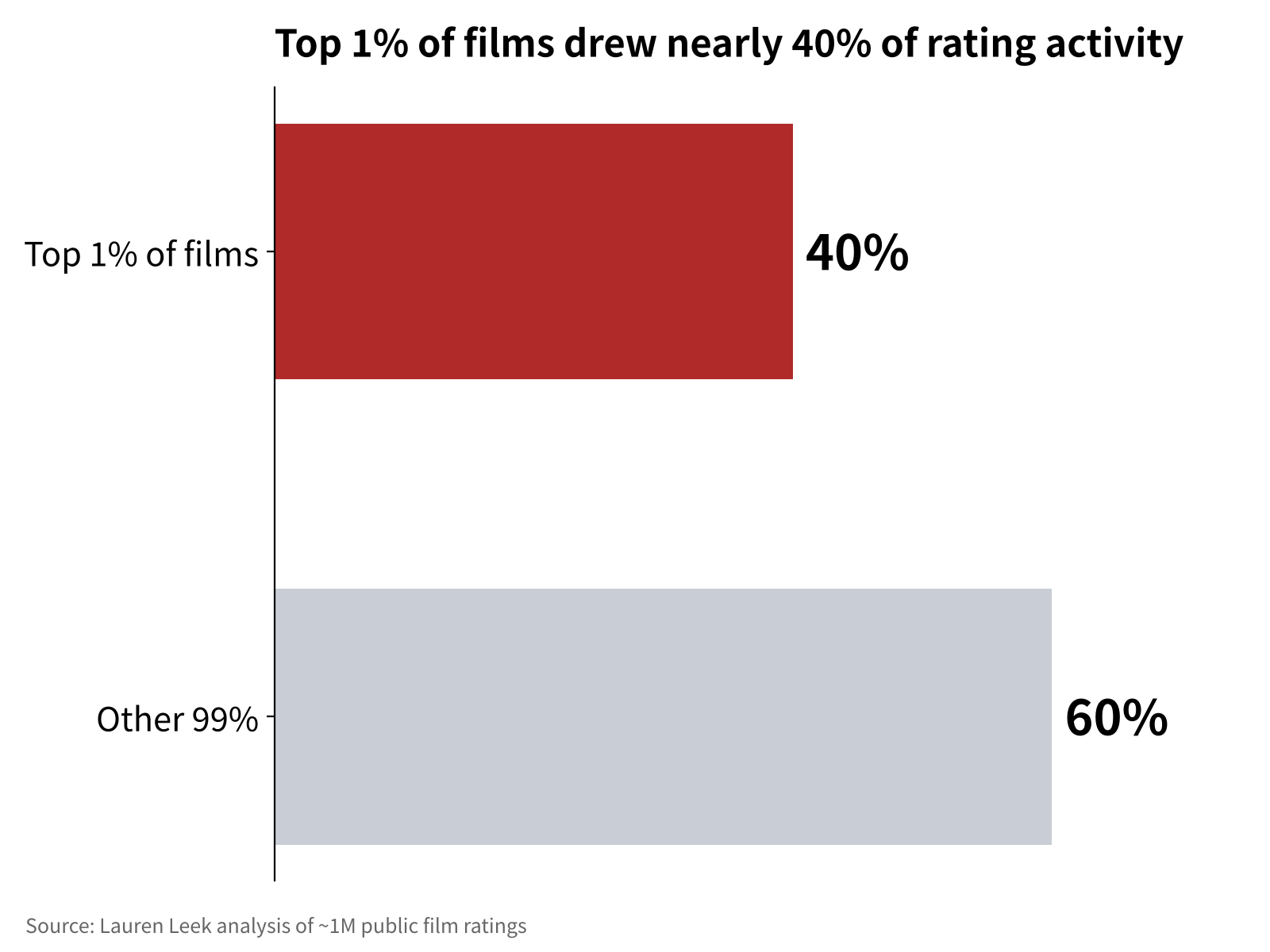
2-5% does little; at 20%, narrowing reverses
In Leek's simulation, forcing an algorithm to explore unfamiliar options with only 2-5% of its recommendations accomplished very little. At roughly 20% exploration, the narrowing began to reverse. Hope cautions that 20% is not a universal threshold, but asks: if algorithms need a substantial commitment to exploration to preserve choice, shouldn't the companies that control access to cinema be required to make it?
Not 20% of the catalog, but 20% of recommendations
Hope proposes a 20% minimum for genuinely independent, third-party supply on major platforms, plus a requirement that audiences regularly encounter a comparable share of films outside the most predictable choices. "A platform is able to stack 20% of its library with 'independent' cinema while also ensuring that virtually nobody encounters it," he wrote, so a catalog quota alone would accomplish almost nothing.
The argument feeds into U.S. discussion of a new version of the Financial Interest and Syndication (FinSyn) rules for global streaming platforms. The original rules addressed concentration of ownership in television; today's platforms also influence what gets discovered, Hope says, calling for regulation in the U.S. and globally.
What it means for K-content and FAST
Algorithmic concentration is the same challenge for Korean film and drama. The more top titles dominate attention on large platforms, the more mid-size and independent work becomes "available but invisible." FAST channels where viewers stumble onto shows, curation-led services and national streaming regulation are becoming key variables in how discoverable K-content is.
K-EnterTech Hub at CES 2027 — CES TO HOLLYWOOD
K-EnterTech Hub and smartcms run CES 2027 Entertainment Tech Programs, built around Digital Hollywood on Jan. 5 and the UNLV Entertainment Tech Summit on Jan. 7. Seven tiers run from a KRW 500,000 report to tours, summit pitching and matching, exhibiting and full service, with early-bird prices through Dec. 15. Details are on the program page.