

NAB SHOW NEW YORK 2026 | MEDIA M&A
At NAB Show New York, dealmakers from J.P. Morgan, BofA and Apollo said a decade of cost-driven megamergers failed to lift valuations, and that libraries, platforms, ad tiers and sports will drive the next round. Korean broadcasters face the same test as JTBC goes up for sale and the Tving–Wavve merger stalls
Wall Street and private equity gave the past decade of media megamergers a failing grade on Oct. 21: the deals cut costs but did not lift valuations, and the next round will be priced by assets that can actually grow revenue. That was the consensus of “The Great Media Reshuffling,” a panel at NAB Show New York at the Javits Center.
The panel featured Eric Menell, global chair of media and communications investment banking at J.P. Morgan; Jessica Reif Ehrlich, managing director at BofA Securities; and Aaron Sobel, partner at Apollo Global Management. CNBC’s Alex Sherman moderated. The three blamed the poor record on the steep loss of linear pay-TV subscribers and the debt piled on to finance the deals. Now that the decline has flattened into something predictable, they agreed, libraries and theatrical film, distribution platforms, ad-supported streaming and sports will set the value of what comes next.
The deal flow already reflects that view. Paramount Skydance closed its roughly $110 billion acquisition of Warner Bros. Discovery on Oct. 6. Fox is buying Roku, turning a programmer into a platform owner. Comcast spun off its cable networks as Versant in January and is now separating NBCUniversal and Sky.
The discussion maps directly onto Korea. JTBC entered court-supervised rehabilitation in August and is looking for a buyer, and streamers Tving and Wavve are in the third year of a merger they have yet to complete. If Korea’s restructuring stops at combining channels to cut costs, the panel’s message suggests, Korean broadcasters risk repeating the mistakes U.S. companies spent a decade making.
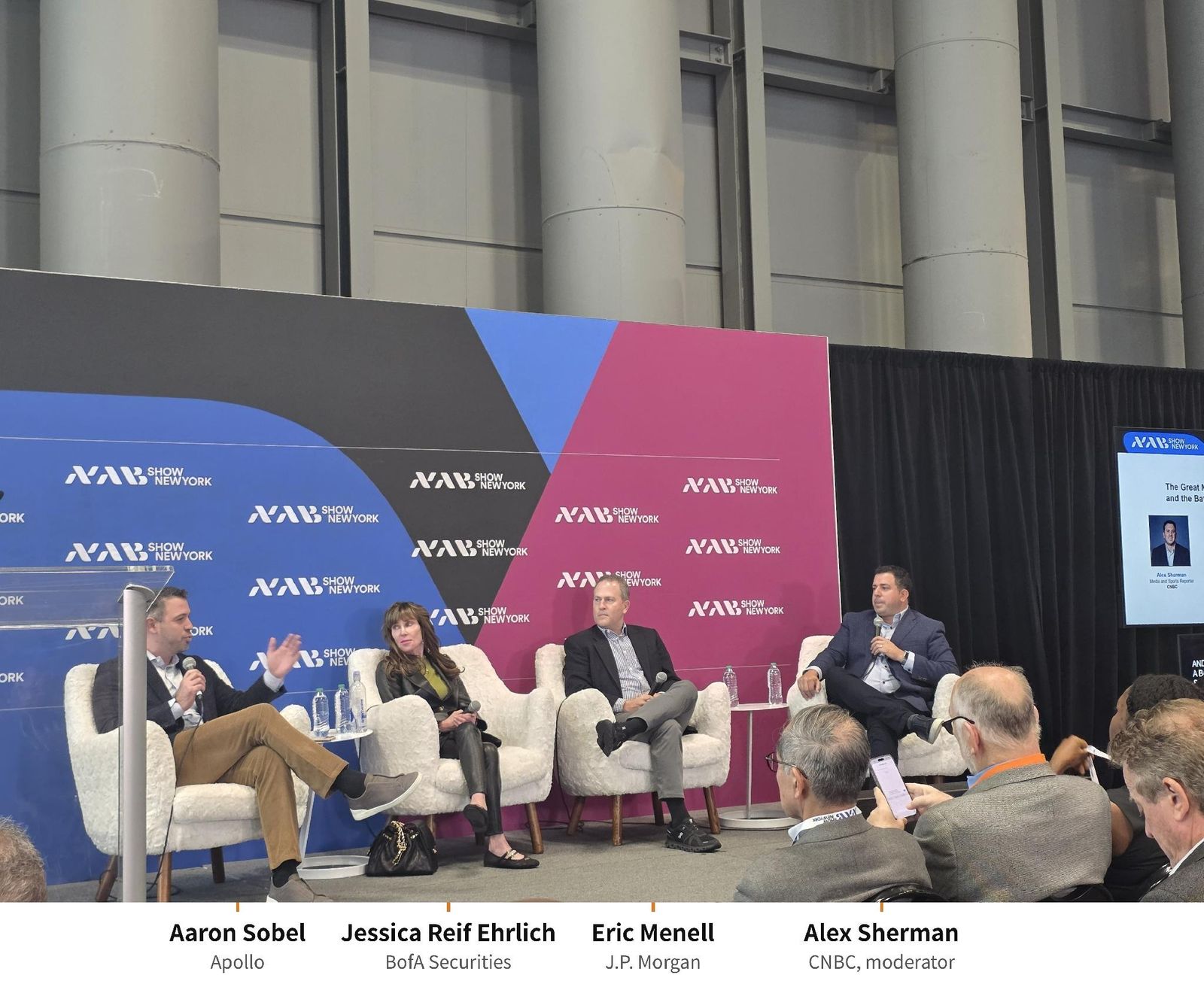
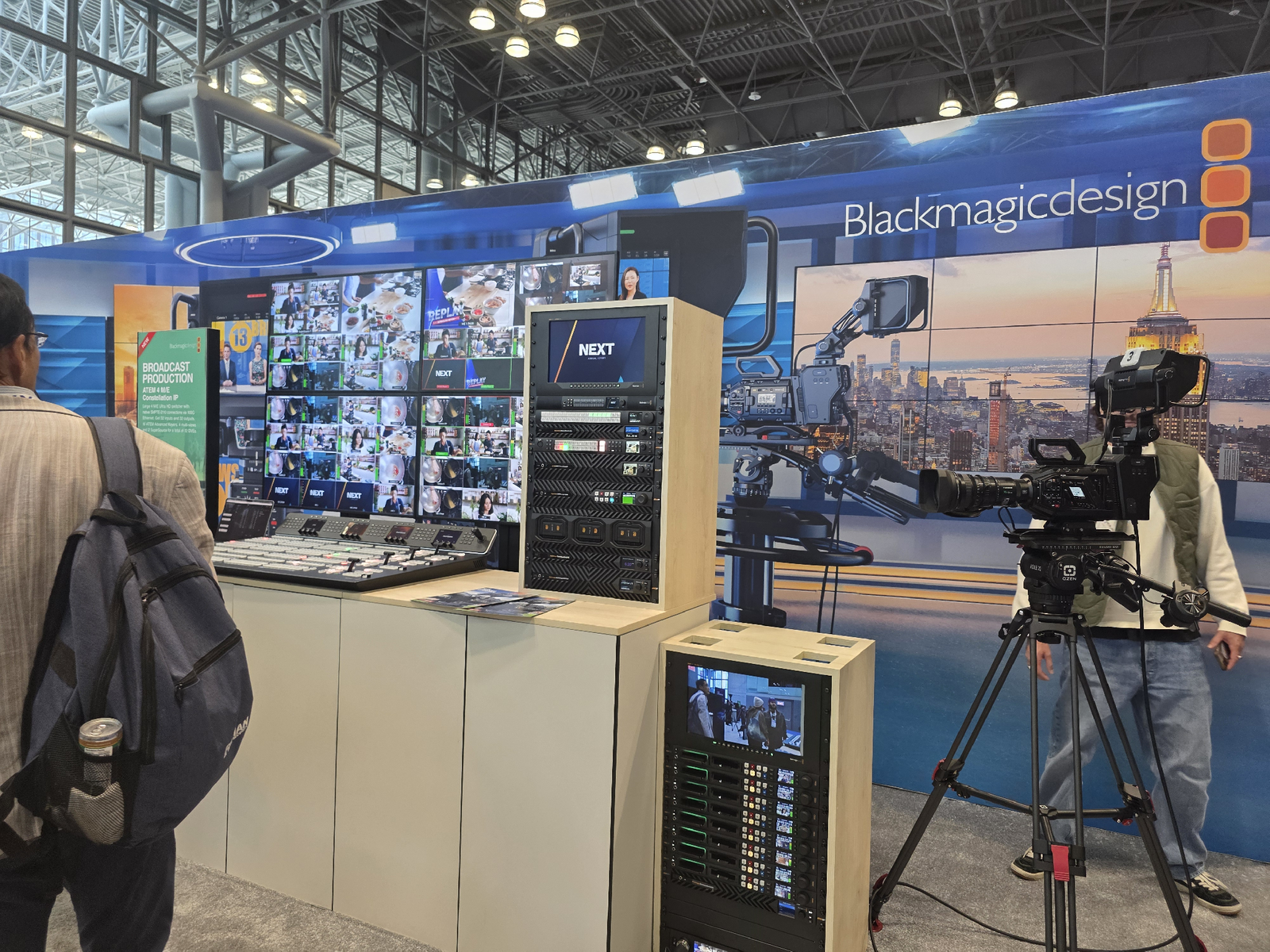
The “Great Media Reshuffling” session in Theater A at NAB Show New York, Oct. 21. Photo: K-EnterTech Hub

A decade of deals: “Cutting costs doesn’t grow your business”
Sherman ran through AT&T–Time Warner, Disney–21st Century Fox, Comcast–Sky, Viacom–CBS and Discovery–WarnerMedia and asked whether any had created shareholder value. Sobel pointed to linear subscriber losses as the biggest headwind, saying no model from five or 10 years ago had foreseen losses this deep. Menell called the pay-TV bundle, in which every subscriber pays for channels they may never watch, “one of the world’s greatest business models.” As it eroded, media companies competing with Big Tech had essentially one lever left. “You cut costs,” he said.
The market was unmoved. Sherman noted that Warner Bros. Discovery grew free cash flow substantially without moving its stock. “Cutting costs doesn’t grow your business,” Reif Ehrlich said, adding that for three years WBD could do little but pay down debt. Skydance has since set its own $6 billion cost-savings target for the combined company. With linear decline now “much more stable and predictable,” Sobel said, this is the moment to buy growth.
A library set WBD’s price as “the pendulum swung to IP”
The WBD auction was cited as proof. Netflix agreed in December 2025 to buy WBD’s studios and streaming business for $27.75 a share, then walked away on Feb. 26 after Paramount offered $31. Menell noted that a stock that had traded at $7 or $8 sold for $31: in a market crowded with streaming services, he said, “premium always differentiates.” Reif Ehrlich called WBD’s film and TV library the industry’s best, with NBCUniversal’s next, and named the soon-to-be-separated company as a likely Netflix target. Sobel summed it up: the pendulum has swung from distribution to IP.
Programmers buy platforms: Fox–Roku and the ad tier
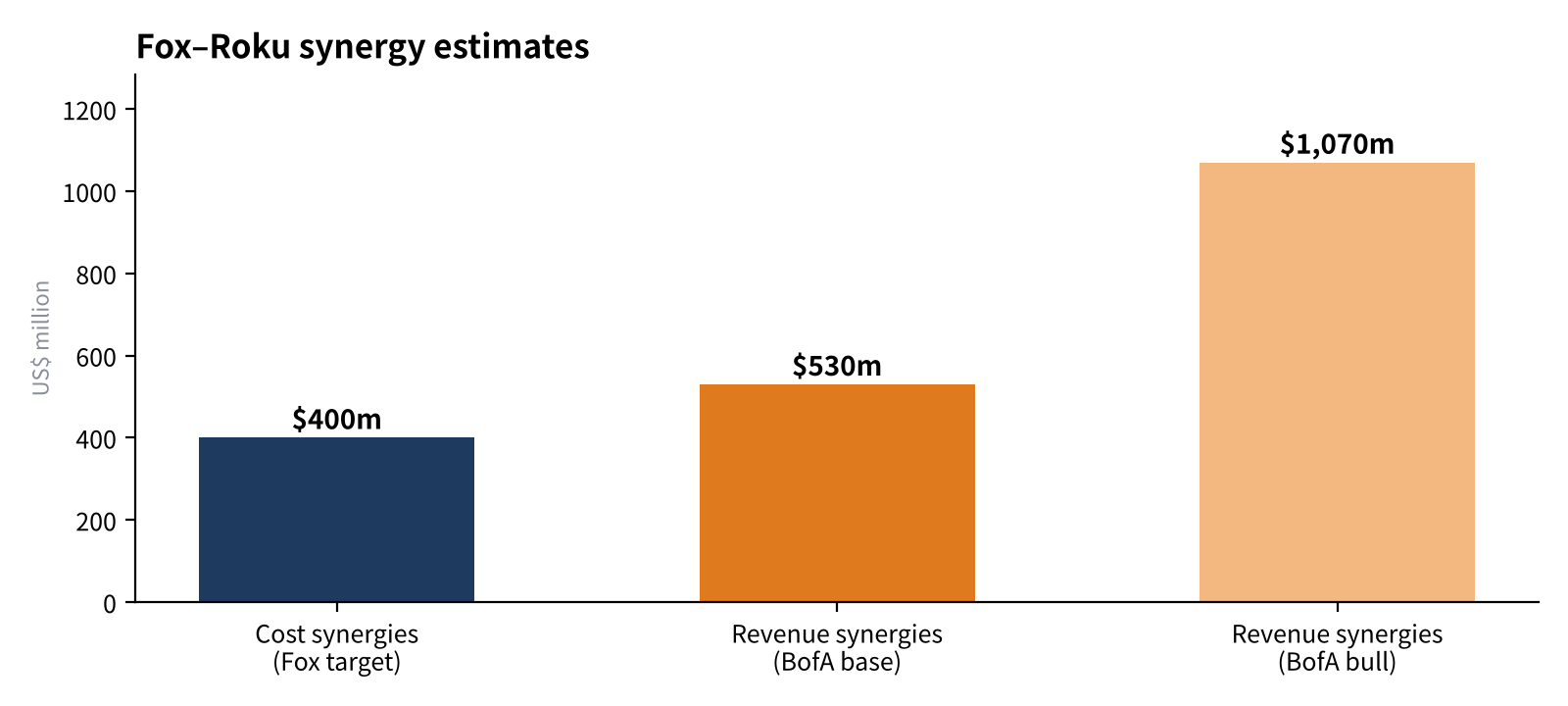
Distribution platforms also made the list of growth assets. Fox agreed on June 15 to acquire Roku, the TV platform used in more than half of U.S. broadband homes, at an enterprise value of about $22 billion. Reif Ehrlich called Fox’s $400 million annual cost-synergy target conservative. BofA, which upgraded Fox two notches to Buy five days before the session, estimated revenue synergies at $530 million in its base case and up to $1.07 billion. Fox’s ad sales team gets far more inventory to sell; Roku gets NFL and Major League Baseball programming.
Ad tiers are the other growth engine. More than half of new streaming sign-ups now come through ad-supported plans, Reif Ehrlich said.
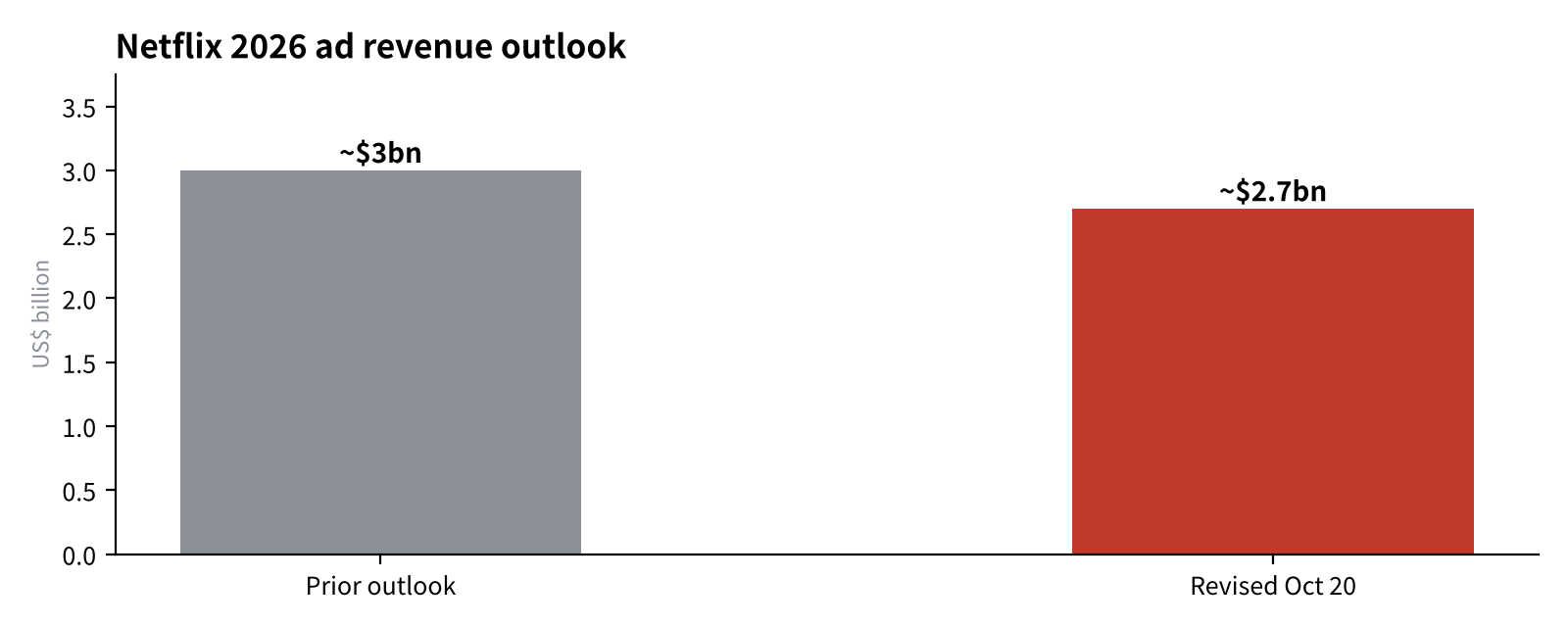
Growth is slower than hoped, however: in its third-quarter results the day before the session, Netflix cut its 2026 advertising revenue outlook to about $2.7 billion from roughly $3 billion, citing delays in rolling out ad products.
Versant CEO: more cable “would prolong our life”
Where a spun-off cable company should go became clearer on another New York stage the same week. Versant CEO Mark Lazarus said at Axios Media Trends Live on Oct. 20 that he is unlikely to buy Skydance’s cable networks, which Wall Street expects could be put up for sale after the WBD deal.
“Buying more cable assets on a large scale would prolong our life but not necessarily make our life better because we still have the secular decline,” he told Axios. Large network acquisitions that do not change Versant’s trajectory, he said, are not on the near-term agenda.
Instead, Versant is using CNBC, MS NOW (formerly MSNBC) and Golf Channel as “an amplifier” for adjacent businesses. Beyond the ticketing service Fandango, it has bought a cinema-software company and a FAST-channel operator since the spin-off. Asked whether the separation has created value, Lazarus said, “We have not yet. We are undervalued,” adding that Versant trades below comparable peers and must prove it can build growth businesses on its brands.
At NAB, Sobel called the strategy “very smart,” noting that private equity tried the same playbook for 20 years but loaded it with debt and failed. Versant’s near-debt-free balance sheet, he said, is its biggest advantage.
Local TV must consolidate or decline, and Washington moved first
Sobel, whose firm owns Cox Media Group, warned that local television has to consolidate or it will “look a lot like the radio and the newspaper industry.” He described two routes: restructure a struggling company into a stronger one, or combine equity while both sides are still healthy.
Washington changed the rules first. The FCC eliminated its 39% national audience-reach cap for station groups in August. Before that, Nexstar won a waiver and closed its $6.2 billion acquisition of Tegna in March. Lawsuits from states and DirecTV have halted integration of the two companies since April, and the fight is now before the Ninth Circuit.
Sports are “rented”; AI should be too
Menell said he regrets that media companies paid rights fees instead of owning leagues and teams, which are now selling to a new class of billionaires “with Anthropic and OpenAI” as scarce, “AI proof” assets. Reif Ehrlich called sports a “rented” business for distributors and said YouTube, Netflix and Walmart could bid when the NFL can opt out of its current deals in 2029. Sobel pointed to Apple’s MLS deal to argue that leagues also lose when they give up reach.
On AI, the panel saw real savings but no case for buying technology companies. Sobel said Apollo-backed Legendary is spending $70 million to $90 million on visual effects for the new “Dune,” due in December, and predicted AI will cut film budgets by 5% to 20% within a few years. Reif Ehrlich said media companies should rent or license AI rather than buy it. “Media companies chasing technology has always been a failed start,” Menell said.
What it means for Korea
(1): the channel is for sale, the IP is elsewhere
Apply the panel’s yardstick to Korea and JTBC comes first. The cable-and-satellite general channel missed a 20.6 billion won (about $15.5 million) securitized loan payment in June, and the Seoul Bankruptcy Court opened rehabilitation proceedings in August. First-half revenue was 190.1 billion won ($143 million) with an operating loss of 26.6 billion won ($20 million), and its debt-to-equity ratio stood near 2,600% at the end of June, Economic Signal reported. JTBC must file a rehabilitation plan by Jan. 29, 2027, but a sale notice once planned for October is expected to slip to November.
The bigger issue is what is actually for sale. Lead adviser EY Hanyoung lists JTBC’s production capability, IP and newsroom as strengths, but SLL JoongAng, the studio that holds its drama production and IP, is a separate company whose future has stalled over valuation. The library that the New York panel treated as the basis of value sits outside the channel. A buyer of the channel alone could end up mostly with debt and sports-rights obligations. Olympic and World Cup rights were among the burdens behind JTBC’s liquidity crisis, along with falling ad revenue and rising production costs, K-News LA reported, citing The Hankyoreh. In Korea, the broadcaster carried the full cost of what Reif Ehrlich called a rented business.
The contrast with Versant is stark. Versant is buying businesses to bolt onto its brands from a nearly debt-free position; JTBC must find a buyer before its court deadline. Most proposals in Korea still center on combining channels. At a Sept. 28 forum, Sun Moon University professor Kim Yong-hee proposed that regional broadcasters share transmission and technology, and most parties reported to be interested in JTBC are media companies, according to MTN. In Lazarus’s terms, buying more declining channels may only prolong life.
(2) Platform consolidation caught in IPTV math
Korea has no independent TV platform like Roku; pay-TV distribution is controlled by the IPTV services of the three telecom groups. Tving and Wavve signed a merger MOU in December 2023 and won antitrust approval, but Tving shareholder KT Studio Genie has not consented. KT is weighing whether a larger combined streamer would accelerate cancellations at its own IPTV service, Newsway reported on Oct. 22. In the U.S., programmers that accepted linear decline are buying platforms; in Korea, a shareholder protecting its linear distribution business has become the swing factor in a platform merger. The deal is widely expected to slip into next year.
(3) Fewer eligible buyers, and rules still under debate
A shrinking ad market adds urgency. Kim told the same forum that terrestrial TV advertising has fallen more than 40% in four years and that operating profit has been negative for three straight years, Digital Daily reported. Where U.S. companies used mergers to ride out a decade of steep decline, Korean broadcasters largely missed the chance to build scale while they were still healthy.
Ownership rules remain a threshold for any deal. Companies belonging to large business groups may hold no more than 10% of a terrestrial broadcaster, against 40% for others, and the number of such groups has grown from 17 in 2008 to 47 this year. The companies with the most capacity to buy are the most restricted. The forum floated allowing a largest shareholder to hold up to 49% in an emergency recapitalization, but the Korea Media and Communications Commission favors gradual easing. Menell said U.S. media giants have outgrown what private equity can buy, leaving mergers as the only path; Korean broadcasters are far smaller, yet the pool of eligible buyers is narrowed by regulation.
Regulatory predictability after a deal is another question. On Nov. 28, 2025, the Seoul Administrative Court annulled the approval of Eugene ENT as YTN’s largest shareholder, ruling that the decision by the then two-member Korea Communications Commission was unlawful. The government did not appeal, but Eugene ENT did, and the case is pending before the Seoul High Court. In September the Board of Audit and Inspection said former commission chairman Lee Dong-kwan and others had improperly intervened in the approval process and referred the matter to investigators, and on Sept. 28 the regulator voted to hold a hearing before deciding whether to revoke the approval.
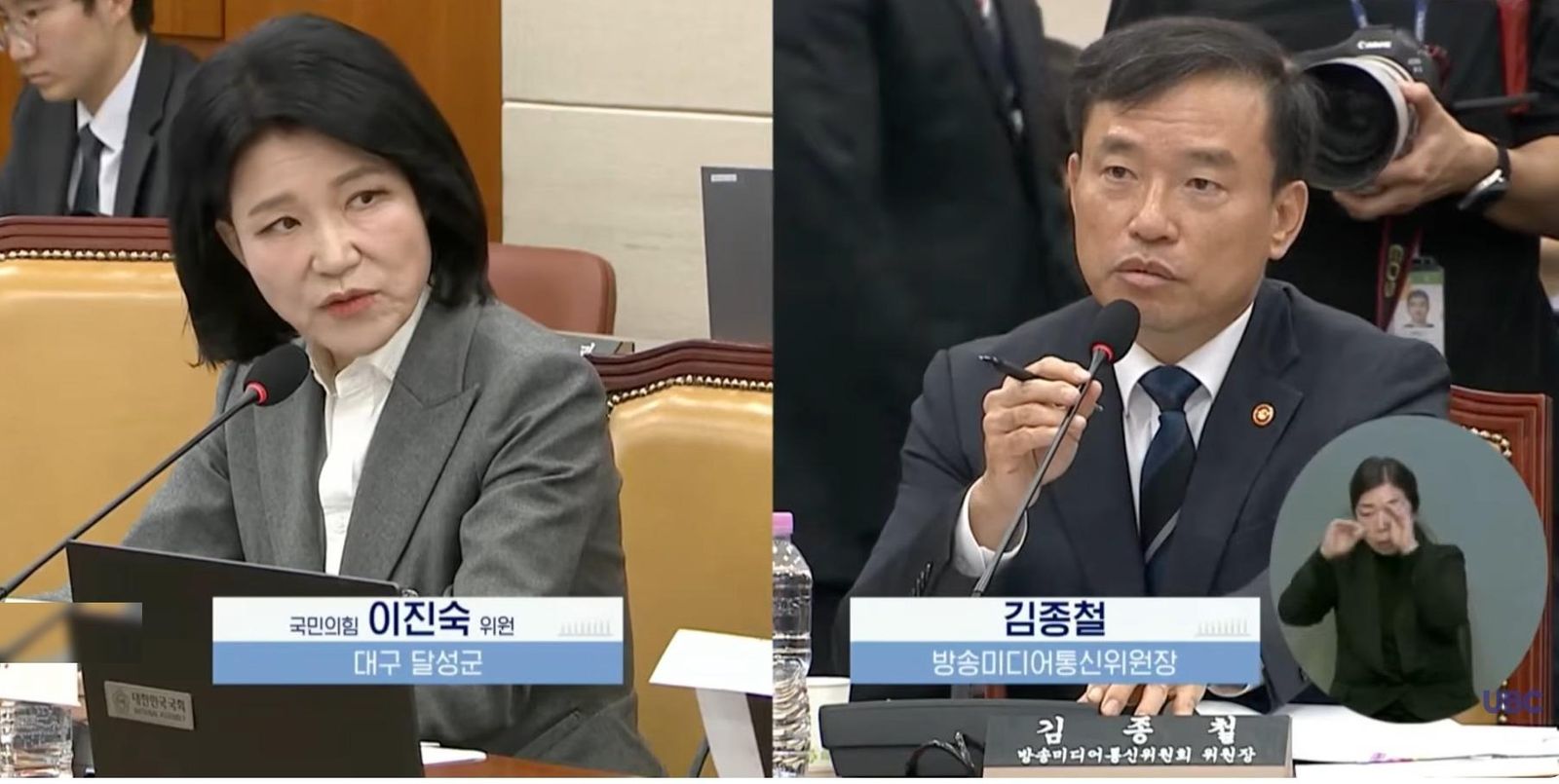
The hearing process itself drew fire on Oct. 22, when the National Assembly’s Science, ICT, Broadcasting and Communications Committee held its final comprehensive audit of the regulator. Rep. Kim Jang-gyeom of the opposition People Power Party alleged that new grounds for the hearing had been added without a fresh vote and that the revised hearing notice had not been circulated to commissioners in advance, News1 reported.
Korea Media and Communications Commission Chairman Kim Jong-cheol replied that every participating commissioner had confirmed the facts and their agreement in writing, and that “there is no problem with the decision itself,” Yonhap reported. Asked by Rep. Lee Jin-sook why he recused himself from the first deliberation on July 15 but attended the Sept. 28 vote, Kim said he was there to meet the quorum and that the commission’s decision on “a new situation” remains open to judicial review, according to Dailian.
Much as Nexstar–Tegna ran into litigation after regulators signed off, a Korean deal approved more than two years ago is being reexamined by a court, a regulator and the legislature at the same time. Whatever the outcome, bidders for JTBC will factor that uncertainty into price and terms.
Outlook: the U.S. report card comes in 2027; Korea’s deadline is Jan. 29
The U.S. results arrive next year. Fox must close the Roku deal and turn BofA’s estimates into reported revenue. Skydance must cut $6 billion while growing at the same time. The Nexstar–Tegna appeal will set the pace of local-TV consolidation, and the NFL’s 2029 opt-out will show what new bidders such as YouTube and Walmart are willing to pay for rights. Whether Netflix returns to the table once NBCUniversal is separated is the next question.
Korea’s clock is shorter. JTBC must file its rehabilitation plan by Jan. 29, 2027, and has yet to issue a sale notice. YTN’s ownership will be settled by the appeal and the regulator’s hearing, while lawmakers continue to contest the legality of the hearing process. The Tving–Wavve merger is likely to slip into next year. The ownership and cross-ownership reform that could ease all three only got its first public forum in late September, and the regulator is talking about gradual change.
The New York panel’s standard was clear: the value of the next deal will be set by assets that can prove growth, not by the number of channels. Korea’s broadcast restructuring is likely to be judged the same way, by whether it can bring IP, platforms and ad-sales capability into a single structure, and whether the rules behind those deals are predictable.