

ANALYSIS | HOLLYWOOD STUDIO RESTRUCTURING
Legal department cuts and a streaming leadership overhaul accompany higher U.S. subscription prices designed to steer viewers toward bundles. For Korean producers, the terms of Disney’s international content expansion will matter as much as the number of commissions.
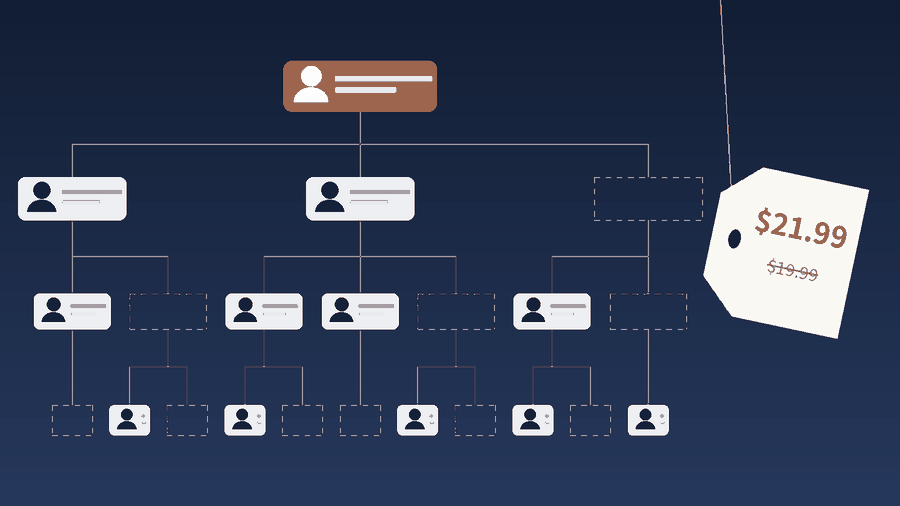
Disney is accelerating organizational cuts even after more than doubling its streaming operating profit. Following two rounds of layoffs and an early-retirement offer for executives this year, the company has signaled a reduction in its legal and global affairs division. In the United States, it has raised Disney+ and Hulu prices while narrowing the gap between standalone subscriptions and the bundle. The combined approach seeks to improve profitability by lowering labor costs and drawing subscribers into a broader package.
An internal memo offered a clearer view of the restructuring. According to The Ankler’s Sep 25, 2026 report, Disney chief legal and global affairs officer Horacio Gutierrez told employees that his organization would be substantially smaller once the process was completed next spring. Deadline also obtained and reported on the memo. The legal and global affairs division has fewer than 1,000 employees worldwide.
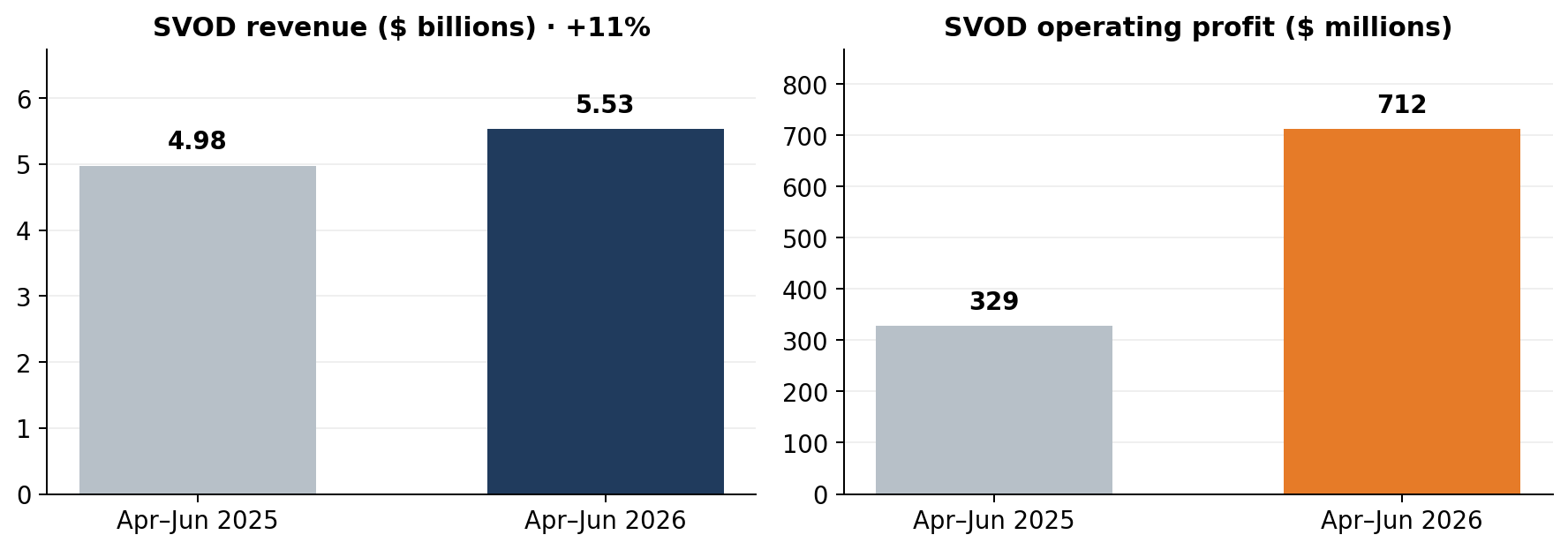
The cuts cannot be explained solely as an emergency response to weak results. In its Aug 5, 2026 shareholder letter, Disney reported April–June revenue of $5.53 billion, approximately KRW 7.5 trillion, for its entertainment subscription-video business, up 11% from a year earlier. Operating profit rose from $329 million to $712 million, approximately KRW 965 billion, with a 13% operating margin. The company says cost savings will create room to invest in growth. The prior-year quarterly profit of $329 million was equivalent to about KRW 446 billion. A larger profit has not brought an end to staffing and organizational reductions.
Leadership changes and pricing adjustments have proceeded alongside the cuts. Eric Schrier, who oversaw international originals, left his executive role, while Adam Smith became sole chairman of Disney’s direct-to-consumer business. In the U.S., ad-free Disney+ and Hulu subscriptions each rose to $21.49 a month. The ad-free bundle costs $21.99. A subscriber can therefore add the second service for just 50 cents more.
A broader rethink of legal operations
Gutierrez’s memo outlined an effort to change how the division works, rather than simply reduce headcount. According to The Ankler, he proposed assessing what an appropriate legal organization would look like if it were built from scratch. The approach involves reconsidering existing practices, lowering barriers between departments and using technology across the operation. Gutierrez joined Disney from Spotify in 2022. The memo also emphasized that the Disney envisioned by chief executive Josh D’Amaro would not remain bound to established routines: it would use technology and closer internal coordination to strengthen the company’s core capabilities.
The memo warned that some employees would be directly affected. Inside the Magic, citing Deadline’s reporting, said options under consideration included automation, outsourcing and alternative legal service providers. Such providers can handle contract and document review, due diligence and electronic discovery. Gutierrez made clear that difficult decisions would be unavoidable. The outsourcing option raises the question of whether work now performed in-house can be delivered at a lower cost by specialist firms.
Inside the Magic dated the memo to Sep 18, 2026. On the same day, Disney appointed former Character.AI chief executive Karandeep Anand to the newly created position of chief technology officer. According to Disney’s announcement, Anand will begin on Oct 2, 2026, reporting directly to D’Amaro and overseeing enterprise technology infrastructure, data and AI platforms, and product and engineering.
He spent 15 years at Microsoft and served as a vice president for business and advertising products at Meta. D’Amaro framed the appointment around using technology to support creativity and having the company operate as one Disney.
Two rounds of layoffs followed by executive retirement offers
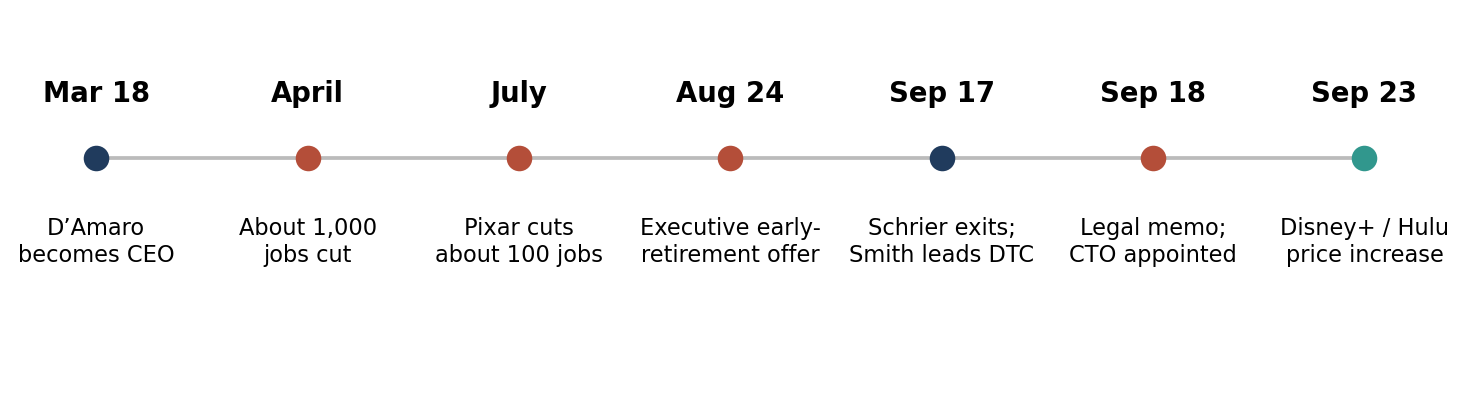
D’Amaro succeeded Bob Iger as chief executive on Mar 18, 2026, after leading Disney Experiences, the division responsible for theme parks and cruises. About a month later, in mid-April, Disney cut roughly 1,000 jobs, primarily in marketing. Studios, television, ESPN, product and technology operations were also affected.
Deadline reported in May that D’Amaro had acknowledged the possibility of further layoffs. According to inews24’s Jul 22, 2026 report, a subsequent round included about 100 of Pixar’s 1,100 employees, along with staff at National Geographic and ABC News.
In August, Disney offered early retirement to veteran executives. TheWrap reported on Aug 24, 2026 that eligible employees were U.S.-based directors through executive vice presidents who were at least 50 years old and had at least 10 years of service. The package included severance, health coverage at active-employee rates and continued vesting of equity compensation. Chief human resources officer Sonia Coleman said savings would be directed toward content, technology and experiences. The Ankler also reported that, starting next year, spouses or domestic partners with access to insurance through their own employers would no longer be eligible to join Disney’s health plan.
Successive changes have unsettled employees. A Disney insider interviewed by The Ankler described an atmosphere in which uncertainty about what would happen next made it difficult to concentrate on work. Questions about the restructuring were being raised at the Emmy Awards, and talent and creators were also asking about the company’s direction. The Ankler said Disney declined to comment.
Higher streaming earnings have not ended the savings drive
For Disney as a whole, quarterly revenue increased 7% to $25.2 billion, approximately KRW 34.17 trillion. Segment operating income rose 21% to $5.6 billion, approximately KRW 7.59 trillion. Streaming subscription revenue grew 15%, helped by subscriber gains and price increases. The company set a double-digit SVOD operating-margin target for fiscal 2026 and projected double-digit growth in adjusted earnings per share for fiscal 2027.

D’Amaro and chief financial officer Hugh Johnston said in the shareholder letter that Disney was reviewing multiple cost-reduction options, including labor and selling, general and administrative expenses. C21Media put this year’s content spending at about $24 billion, approximately KRW 32.54 trillion. Disney expanded its share-repurchase plan to at least $9 billion, approximately KRW 12.2 trillion. Part of the funding comes from the sale of its A+E Global Media stake to Hearst for roughly $1.2 billion, approximately KRW 1.63 trillion. Another insider interviewed by The Ankler characterized D’Amaro as prioritizing the share price. That assessment is the view of an anonymous source and should be distinguished from the company’s stated rationale for the savings program.
International content changes hands as DTC leadership is consolidated
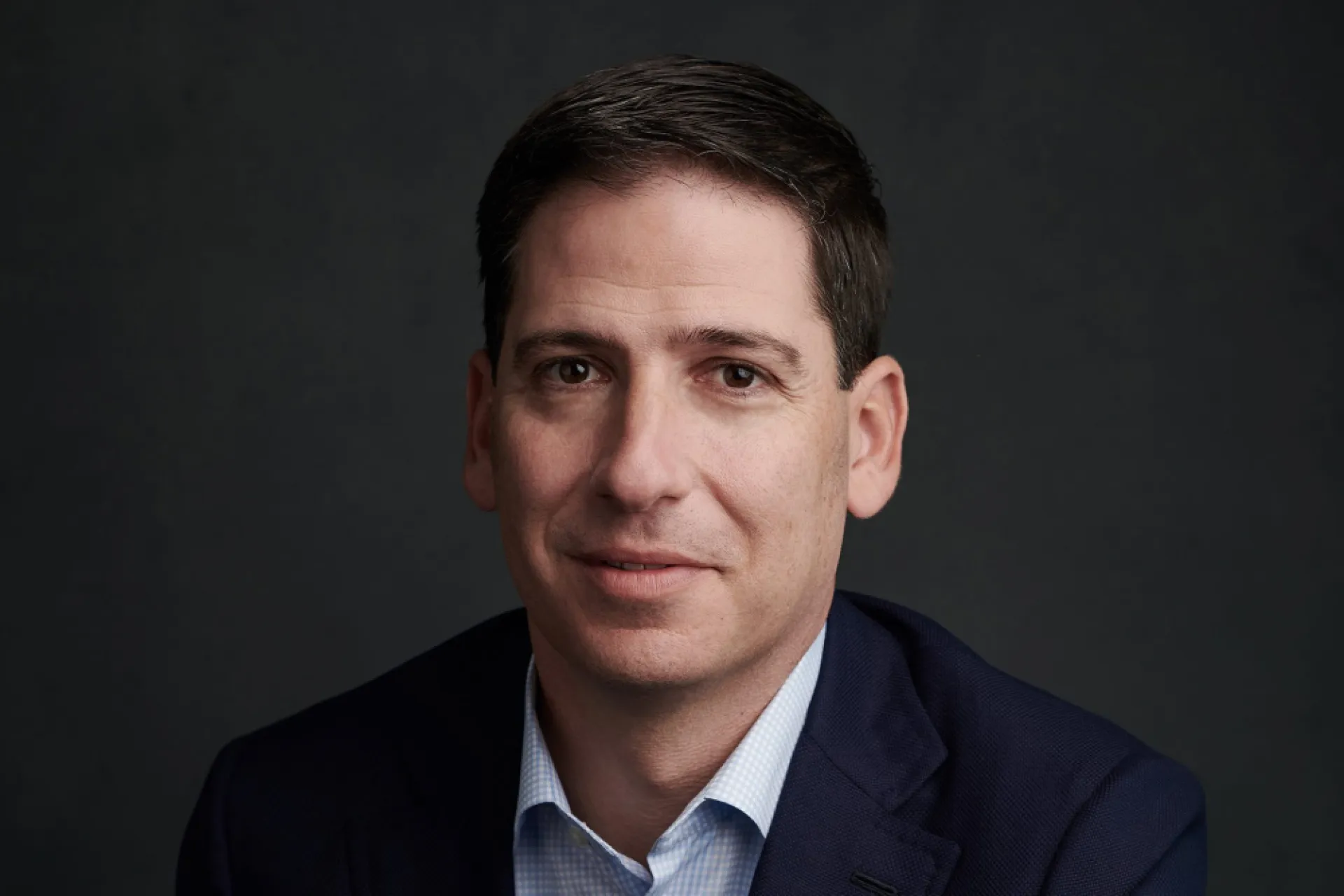
The streaming decision-making structure has also changed. TheWrap reported on Sep 17, 2026 that Schrier was stepping down as president of DTC international originals, strategic programming and new media to establish a production company under Disney Entertainment Television. A 26-year Disney and Fox veteran, he was among the executives who helped build FX. He had led 20th Television before taking the international originals role in March, when Dana Walden became chief creative officer.
Smith will lead DTC alone, ending the co-chairmanship he shared with Joe Earley. A product and technology executive, Smith spent two decades at Google and YouTube before joining Disney in 2024. Earley moved to president of franchise and content strategy under Disney Entertainment Television chairman Debra OConnell. His remit includes franchise development, production, labor, creative talent development and the international content business previously overseen by Schrier. OConnell moved into a central television leadership role under Walden in March.
Earley and Schrier joined Disney with Walden through the 2019 acquisition of 21st Century Fox, a $71.3 billion transaction worth approximately KRW 96.68 trillion at the exchange rate used in this article. The Ankler reported that some Fox veterans close to Walden were moving down a level in the organization or leaving the company. Further changes in television were expected, although their timing had not been disclosed.
Just 50 cents separates standalone subscriptions from the bundle
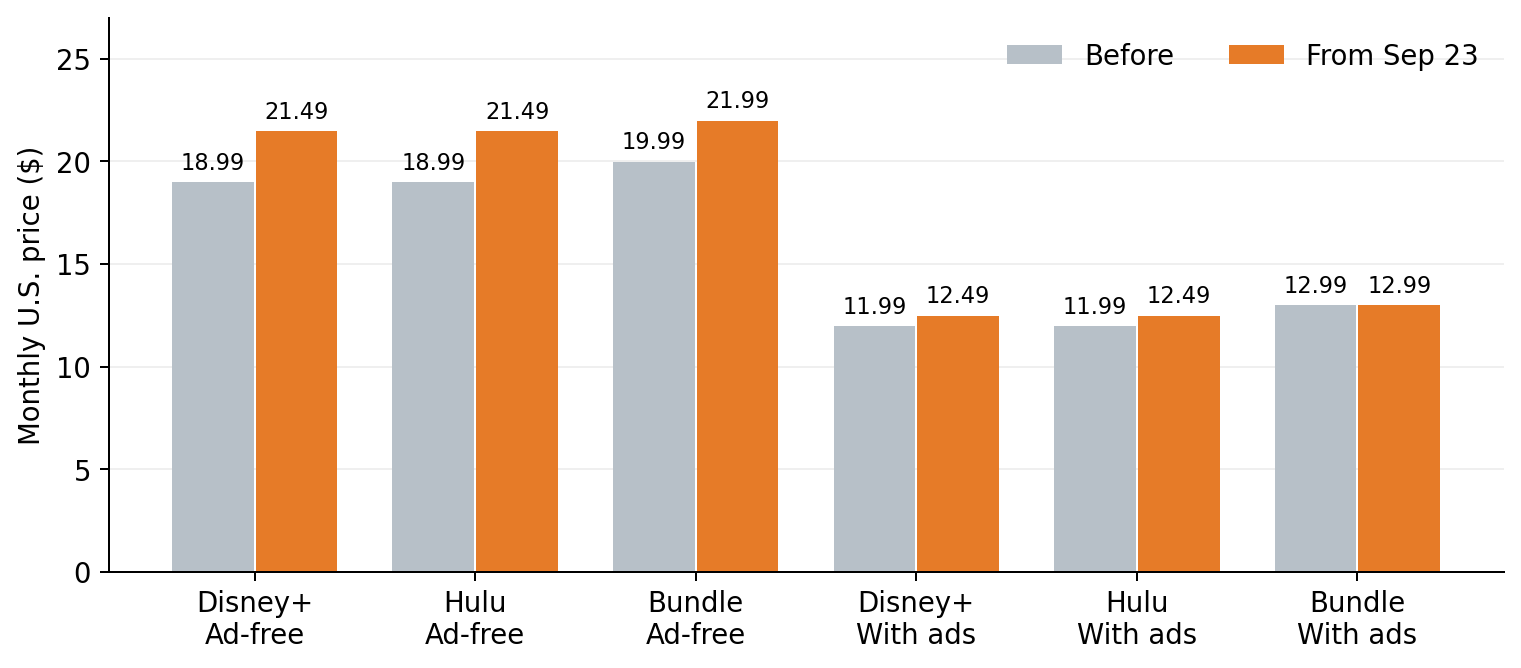
According to TVLine’s Sep 23, 2026 report, ad-free Disney+ and Hulu subscriptions in the U.S. each rose from $18.99 to $21.49 a month, approximately KRW 29,100.
The ad-free bundle increased from $19.99 to $21.99, approximately KRW 29,800. Each ad-supported standalone plan rose by 50 cents to $12.49, approximately KRW 16,900. The ad-supported bundle stayed at $12.99, approximately KRW 17,600. New customers paid the revised rates first, with existing subscribers moving to them at their next billing date.
By The Ankler’s count, this was the fifth Disney+ increase since its 2019 launch at $6.99 a month. It was the first under D’Amaro. With Peacock and Apple TV also raising prices, three major services adjusted their rates within a month.
The important feature of the price list is the gap between products, not just the size of the increases. Someone paying for one ad-free service can obtain both for another 50 cents a month. The Hollywood Reporter, citing Ampere Analysis research, reported that bundle customers were less likely to cycle through cancellation and resubscription. Disney introduced a Hulu tab within Disney+ in March 2024 and replaced its international general-entertainment brand Star with Hulu in 2025. Its August shareholder letter said Hulu standalone and bundle subscribers could link profiles, viewing histories and subscriptions through Disney+. The company expects integration benefits to begin emerging in spring 2027. Disney has also indicated a move away from operating Hulu as a separate app, bringing its pricing and viewing experience into closer alignment.
Netflix’s young-adult series point to the balance between cost and audience
Content investment is also being judged against the balance between cost and performance. Crew Girl, a rowing drama created by Canadian writer-producer Jeff Norton, secured a second season at Netflix on Sep 22, 2026.
According to producer Blue Ant Media, viewing doubled in the second week after its Sep 10, 2026 debut, taking the show to No. 2 in the global TV rankings, with 16 million views and top-10 placements in more than 90 countries. It was Norton’s third Netflix renewal after Finding Her Edge and Geek Girl. Finding Her Edge exceeded 12 million views and helped increase sales of its source novel by 500%. Geek Girl recorded 28 million views in its first seven months. Finding Her Edge, an ice-dancing drama, debuted in January this year; Geek Girl premiered in 2024. The renewals span different subjects within the young-adult category.
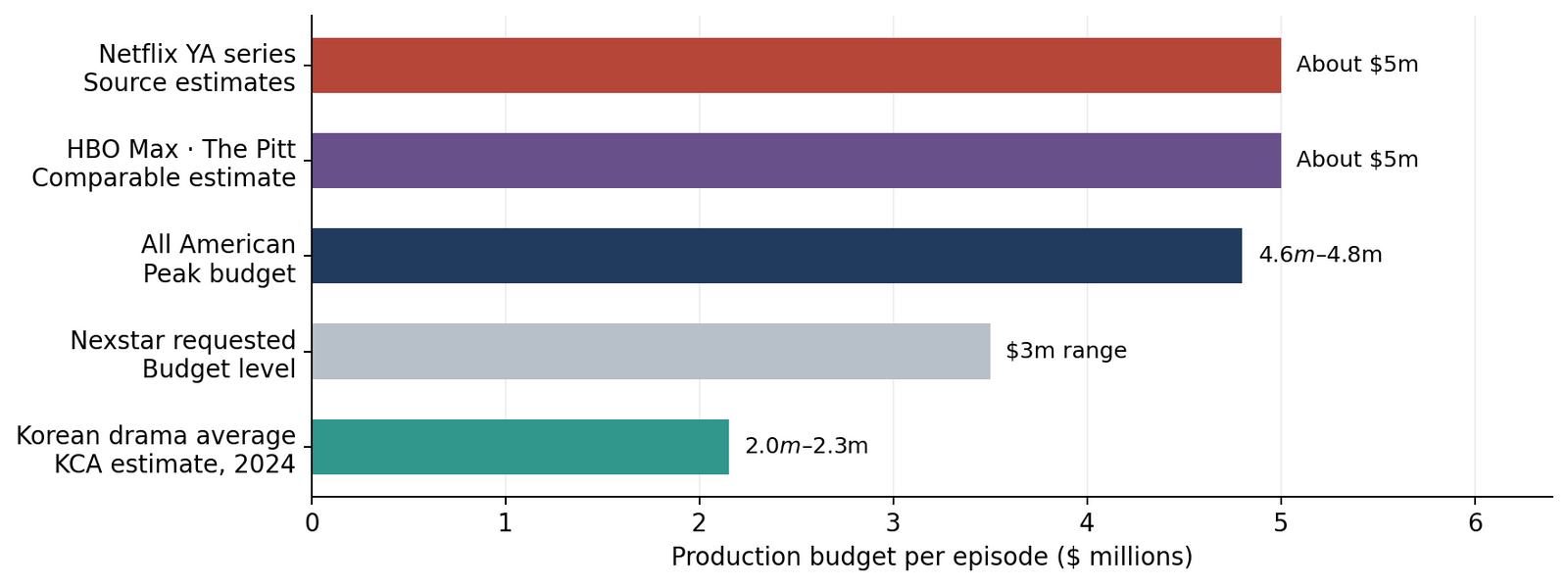
The Ankler, citing sources, put each series’ production budget at around $5 million per episode, approximately KRW 6.8 billion, a level comparable with HBO Max’s The Pitt. Those estimates for individual productions should not be treated as a standard price for the entire streaming market. Norton works on project-by-project contracts rather than an overall deal. Netflix launched a dedicated young-adult hub on Aug 15, 2026. Related reporting put global viewing for its YA titles since 2023 at 10.5 billion views, with 23 titles reaching the global top 10 this year. Jinny Howe, Netflix’s head of U.S. and Canada scripted series, presented the company as a destination for young-adult storytelling.
Budget pressure reaches the production floor
At broadcasters, the demands for savings have been more direct. The CW’s football drama All American is ending with its eighth season. It survived the elimination of most scripted shows inherited from the previous management after Nexstar took control of The CW in October 2022. Even that longevity did not shield it from budget pressure. In its official April announcement, Nexstar described a run spanning eight seasons and nearly 150 episodes. According to the schedule reported by The Ankler, the series is due to conclude its U.S. run on Sep 28, 2026, with the final season reaching Netflix in October.
Showrunner Nkechi Okoro Carroll told The Ankler in its Sep 25, 2026 interview that the show’s budget peaked at $4.6 million–$4.8 million per episode, approximately KRW 6.2 billion–KRW 6.5 billion. Nexstar reduced budgets from season to season and sought a further cut of $1 million per episode, approximately KRW 1.4 billion, which would have pushed the budget into the $3 million range. Carroll said a reduction of that size would make the existing production standard untenable. Before becoming a writer, she spent 14 years as an economic analyst at the Federal Reserve. She recalled responding that meeting the demand would effectively require shooting with stick figures—an illustration of the gap between a savings target and what a production can deliver.
Carroll also argued that shorter seasons and smaller productions reduce opportunities to train new writers. A 22- to 24-episode network drama once allowed writers to gain experience on set. Now, she said, writers move between rooms and have fewer chances to take part in production. Carroll has more than three years remaining on her overall agreement with Warner Bros. Television. She has sold a series based on Maryland Governor Wes Moore’s book The Other Wes Moore to Hulu’s Onyx Collective.
For Korean producers the terms of commissions will matter
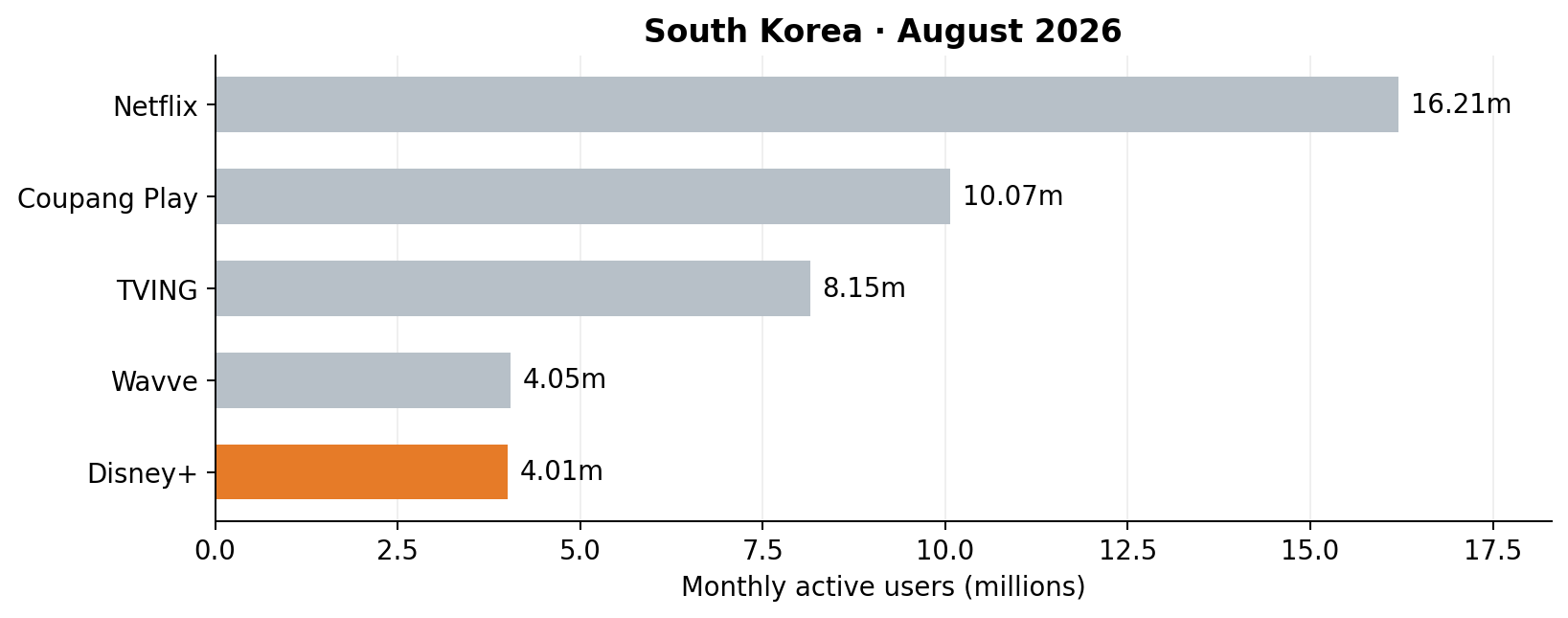
In South Korea, Disney+’s audience base needs to be considered alongside its content-investment terms. IGAWorks Mobile Index figures reported by ETNews on Sep 4, 2026 placed Disney+ fifth in August with 4.01 million monthly active users. Netflix had 16.21 million, Coupang Play 10.07 million, TVING 8.15 million and Wavve 4.05 million. Disney+’s domestic monthly prices were KRW 9,900 for Standard and KRW 13,900 for Premium.
According to Digital Today, Disney+ launched a three-service bundle with TVING and Wavve in November 2025 at KRW 21,500 a month, and a two-service bundle with TVING at KRW 18,000. At KRW 1,356 to the dollar, the standalone plans are roughly $7.30 and $10.30, while the bundles are about $15.90 and $13.30, respectively. Coupang Play passed 10 million monthly active users for the first time in this measurement.
Disney’s international originals expansion presents an opening for Korean producers. In its coverage of the Aug 5, 2026 earnings presentation, C21Media reported that D’Amaro planned to roughly triple international original output over three years. He cited the Korean title The Perfect Crown and said subscribers who watched international originals were less likely to cancel. The Fact reported on May 15, 2026 that the show became Disney+’s most-watched Korean series globally within 28 days of release, accumulating 43 million viewing hours. Titles scheduled for the second half included the second seasons of Made in Korea and A Shop for Killers, as well as The Remarried Empress. The Perfect Crown began airing on MBC on Fridays and Saturdays on Apr 10, 2026, with a simultaneous Disney+ release. D’Amaro cited it alongside British and Spanish titles as an example of international content performance.
South Korea’s production environment remains constrained. January 2025 reporting, citing the Korea Drama Production Association, put the number of domestic dramas at around 100 in 2024, down from 141 in 2022. In a 2024 analysis, the Korea Communications Agency estimated average drama production costs at KRW 2.7 billion–KRW 3.1 billion per episode, roughly $2 million–$2.3 million. That is below the estimates for the Netflix titles discussed above, but the different periods and samples limit any direct comparison of cost competitiveness. Cine21 reported that some scheduling slots disappeared in 2025, including SBS’s Thursday drama slot and Wednesday–Thursday drama slots at JTBC and ENA. A decline from 141 productions to about 100 is approximately 30%. The Korean average estimate is less than half the roughly $5 million cited for the Netflix YA series.
Schrier’s departure and Earley’s new responsibilities may also change the headquarters decision-making structure that Korean producers work with. More international originals do not automatically mean more Korean commissions or higher budgets per title. With Disney reducing costs across the company, the scale of the opportunity will depend on regional allocations and individual deal terms. Producers will need to weigh episode budgets, rights ownership and follow-on season terms alongside the number of orders.
The outcome will become clearer in 2027 investment and commissioning
Disney’s moves this year show organizational cuts and streaming-margin improvement proceeding together. The March CEO transition was followed by two rounds of layoffs, an executive retirement offer and September leadership changes. Higher prices and incentives to bundle have added another element. By continuing to cut costs after streaming profits improved, Disney is pursuing more than the preservation of a profitable business. The next question is how much funding it can release for further investment and shareholder returns.
Anand begins as chief technology officer on Oct 2, 2026. The legal and global affairs restructuring is expected to continue until next spring, while Disney expects Disney+ and Hulu integration benefits to begin in spring 2027. Future earnings releases will help show how much of the savings has reached the results and how higher prices and bundle take-up affect revenue and retention. No date has been disclosed for further television changes. The fiscal fourth-quarter results expected in November will be another checkpoint. Because that period covers July–September, it should be distinguished from a quarter that fully reflects the late-September price increase.
For the Korean content industry, the terms on an actual commission will matter more than the headline expansion target. Disney could increase international original investment while managing costs per title more tightly. Future negotiations will determine whether additional orders translate into stronger producer revenue and earnings, or require more output at lower unit prices. Those terms matter particularly when Korean production volume is falling and Disney+ ranks fifth in domestic monthly active users. If more commissions come with lower budgets, Korean producers could face negotiations similar to those Carroll described. Her account underscored that protecting a production’s place in the market can require a harder fight in some years than in others.
Currency note: The article retains the source manuscript’s exchange rate of KRW 1,356 per U.S. dollar. The source gives Sep 25, 2026 as the reference date and attributes the rate to Investing.com. The same rate is used to convert Korean prices into U.S. dollars.
Source note: Linked publication names and document titles open the cited material. Interviews and internal memos reported by other outlets are paraphrased with attribution. Anonymous assessments are distinguished from official company positions. Netflix and HBO Max production-budget figures are estimates attributed to The Ankler’s sources.