
Three of its five picks are multibillion-dollar companies… Seven months after its $1 billion OpenAI deal collapsed, Disney shows parking robots, 3D-glasses robots and a hybrid shooting workflow as robotics funding hits $18.8 billion in the first half
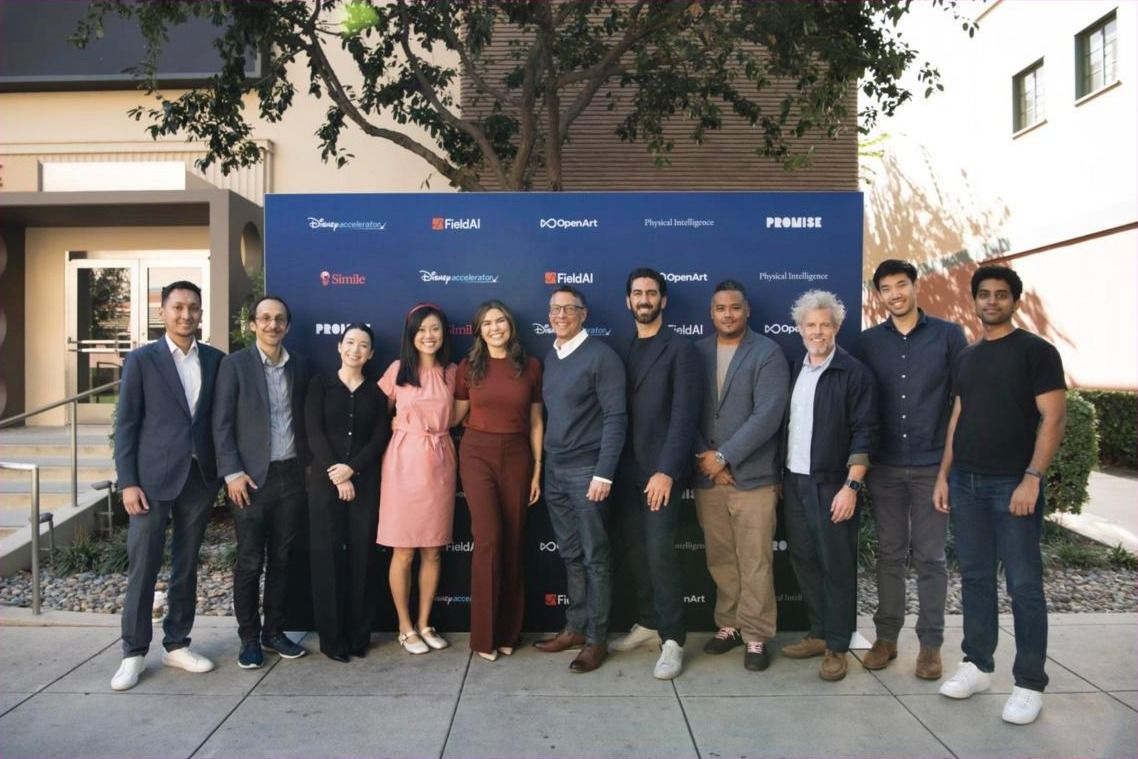
What are the AI companies Disney picked actually building? FieldAI makes robots move on their own through unfamiliar places. Physical Intelligence teaches robots to pick up and tidy what is in front of them. Promise carries an actor's performance into new story worlds. OpenArt turns the mood of a song into visual concepts, and Simile simulates how consumers will react before a product launches. Follow the five, and you can see where Disney is looking for its next edge from AI.
Five AI companies backed by Disney showed 15 weeks of work at the 2026 Disney Accelerator Demo Day on Tuesday at the Walt Disney Studios lot in Burbank, Calif. Robotics firms FieldAI and Physical Intelligence put robots to work on park parking lots and on sorting 3D glasses backstage; generative AI firms Promise and OpenArt tested hybrid filmmaking and lyric-video concepting; Simile simulated how guests plan trips.
Disney's December 2025 plan to invest $1 billion in OpenAI and license its characters to Sora died when OpenAI announced on March 24 that it would shut Sora down; no money changed hands. On July 31 Disney named these five as its 12th accelerator cohort and invested undisclosed sums.
Other studios also moved money toward AI that plugs into production. In March Netflix bought InterPositive, Ben Affleck's post-production AI company, for $587 million in cash. In June Lionsgate took an equity stake in Runway, its partner since 2024.
Two of Disney's picks are robotics companies valued near $10 billion each. Robotics startups raised $13.8 billion in 2025 and $18.8 billion in the first half of 2026 alone, according to Crunchbase. In the year its platform licence fell through, Disney widened its AI bets to park-operations robots and in-house production tools.
D'Amaro: technology 'not the goal'; three of this year's five are multibillion-dollar companies
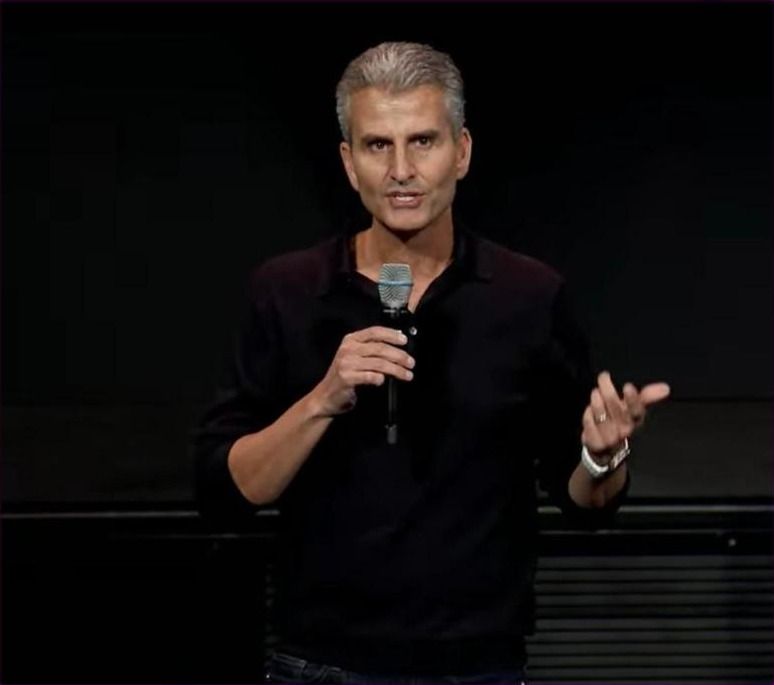
Opening Demo Day, Disney CEO Josh D'Amaro said the company is "being very aggressive" about exploring emerging technologies, and that the aim is not technology itself but "to put technology in the hands of our creators" to make immersive stories. He described this year's cohort as five companies across robotics, storytelling tools and data sciences.
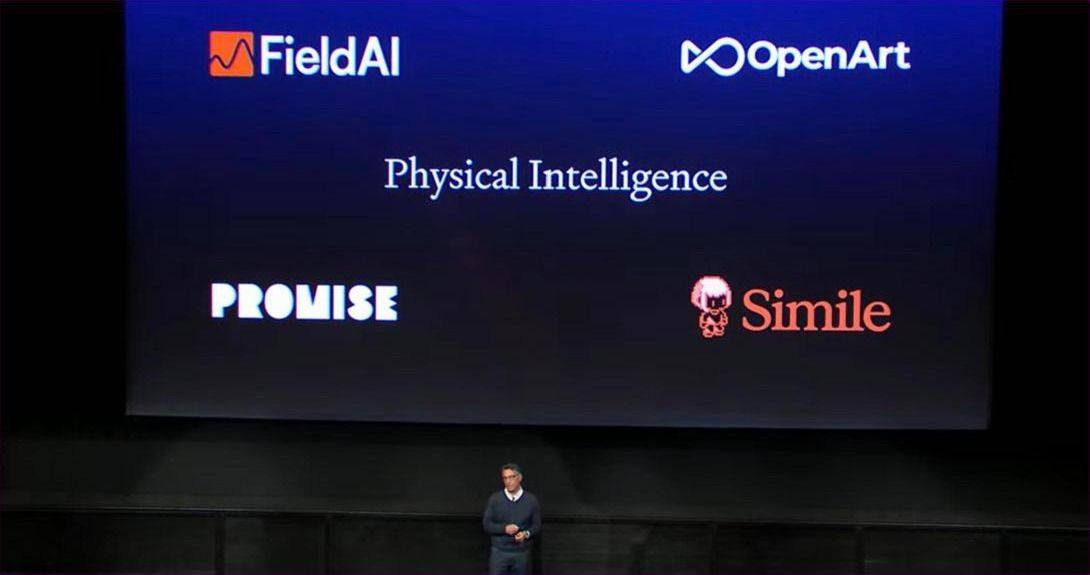
Demo Day extends the AI approach D'Amaro has set out since taking over in March. On his first earnings call in May he said Disney is committed to implementing AI in a way that keeps human creativity at the center and respects creators and the value of its IP. On the parks side, Disney is testing AI for labor forecasting and to cut friction in planning a family vacation. CFO Hugh Johnston said the Experiences business is structurally well positioned as AI-generated content multiplies. Three of this year's five companies — FieldAI, Physical Intelligence and Simile — took on park operations and guest-experience work.
Closing the program, the Disney Accelerator said 75 companies have presented on the Demo Day stage since 2014. It began with seed-stage companies; this year's cohort includes three multibillion-dollar ones. More than 100 Disney executives met the companies over 15 weeks, and Disney said it will keep working with them, as it has with Epic Games, Kahoot!, ElevenLabs, DramaBox, Animaj and Haddy.
The $1 billion OpenAI deal ended with Sora; no money moved
In December 2025 Disney said it would invest $1 billion in OpenAI and, under a three-year deal, license more than 200 Disney, Pixar, Marvel and Star Wars characters to Sora, excluding talent likenesses and voices. After OpenAI announced Sora's shutdown on March 24, Disney backed out. The investment had still required definitive agreements and approvals, and no funds were transferred. OpenAI closed the Sora web and app on April 26 and shut the API on Sept. 24.
The five accelerator investments are a different kind of bet. The two generative AI companies went into internal production at Disney's studio and music divisions rather than a consumer app; the other three applied robotics and simulation to park operations and guest research.
Netflix pays $587 million for InterPositive; Lionsgate buys into Runway
Netflix announced the InterPositive deal on March 5 and disclosed in its July quarterly filing that it paid $587 million in cash. Founded in 2022, InterPositive trains models on production dailies to handle post-production fixes such as missing shots, background replacement and relighting; its 16-person team joined Netflix and Affleck became a senior adviser. Co-CEO Ted Sarandos said on the July earnings call that about 300 Netflix titles this year used generative AI.
Lionsgate partnered with Runway in September 2024 to build a custom video model on its library, and in June took an equity stake and began co-developing a short-form series from existing IP; terms were not disclosed. Disney bought $1.5 billion of Epic Games equity in February 2024 to build a games universe connected to Fortnite.
| Deal | Timing | Form / size | Scope |
|---|---|---|---|
| Disney – Epic Games | Feb 2024 | Equity, $1.5B | Disney games universe tied to Fortnite |
| Disney – OpenAI | Announced Dec 2025 → ended Mar 2026 | Planned $1B equity | 200+ characters on Sora; cancelled with Sora, no funds moved |
| Netflix – InterPositive | Mar 2026 | Acquisition, $587M cash | Post-production AI from dailies; 16-person team |
| Lionsgate – Runway | Partnership Sep 2024 → stake Jun 2026 | Equity (undisclosed) | Library-trained model; co-developed short-form series |
| Disney Accelerator | Jul 2026 | Five investments (undisclosed) | Two robotics, two generative AI, one data synthesis |
Major AI and technology bets by U.S. studios. Sources: companies, Variety, The Hollywood Reporter, IBC
Robotics startups raised $18.8 billion in the first half, more than all of 2025
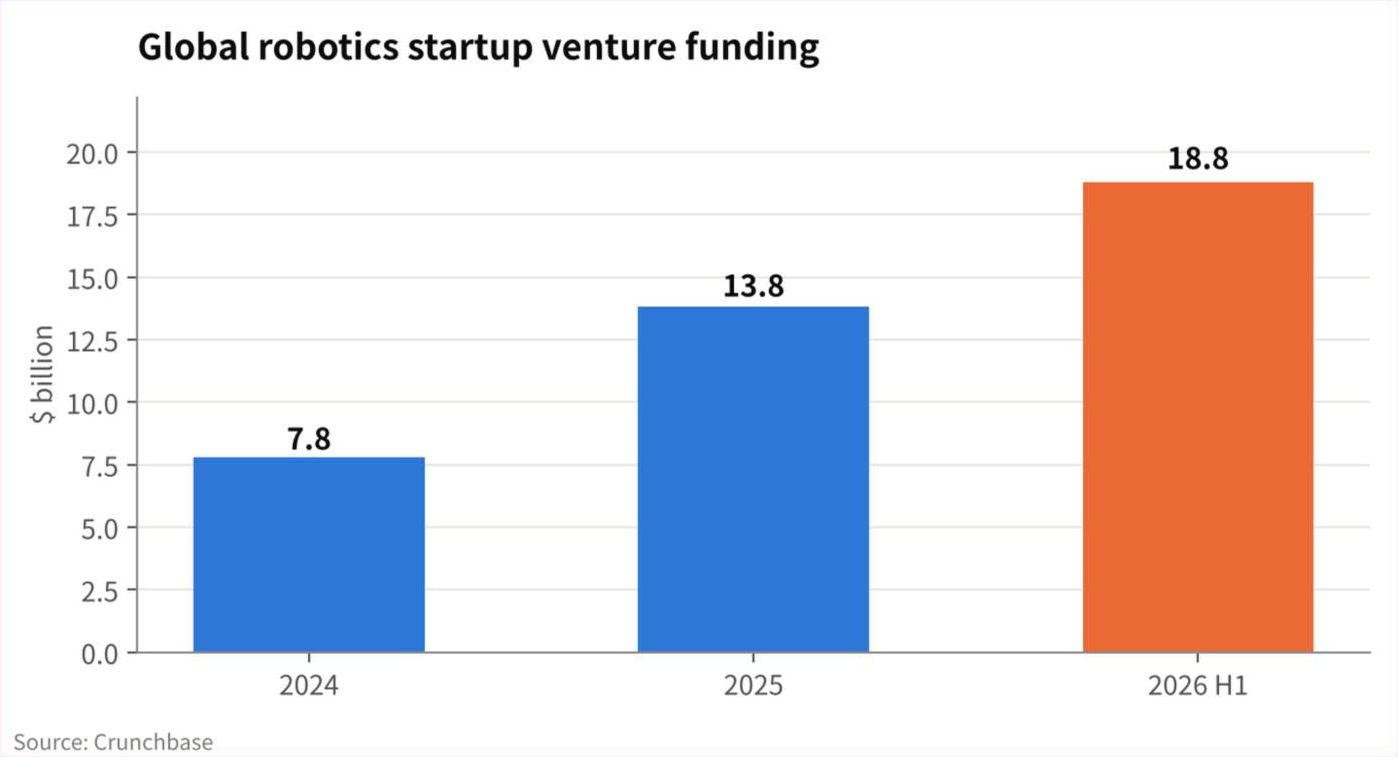
Crunchbase counts robotics startup funding of $7.8 billion in 2024, $13.8 billion in 2025 and $18.8 billion by mid-June 2026, already above last year's total. Third-quarter funding of $9.9 billion was more than double the $4.3 billion a year earlier. PitchBook, using a wider robotics and physical AI definition, counted $27.6 billion across 1,009 deals in 2025.
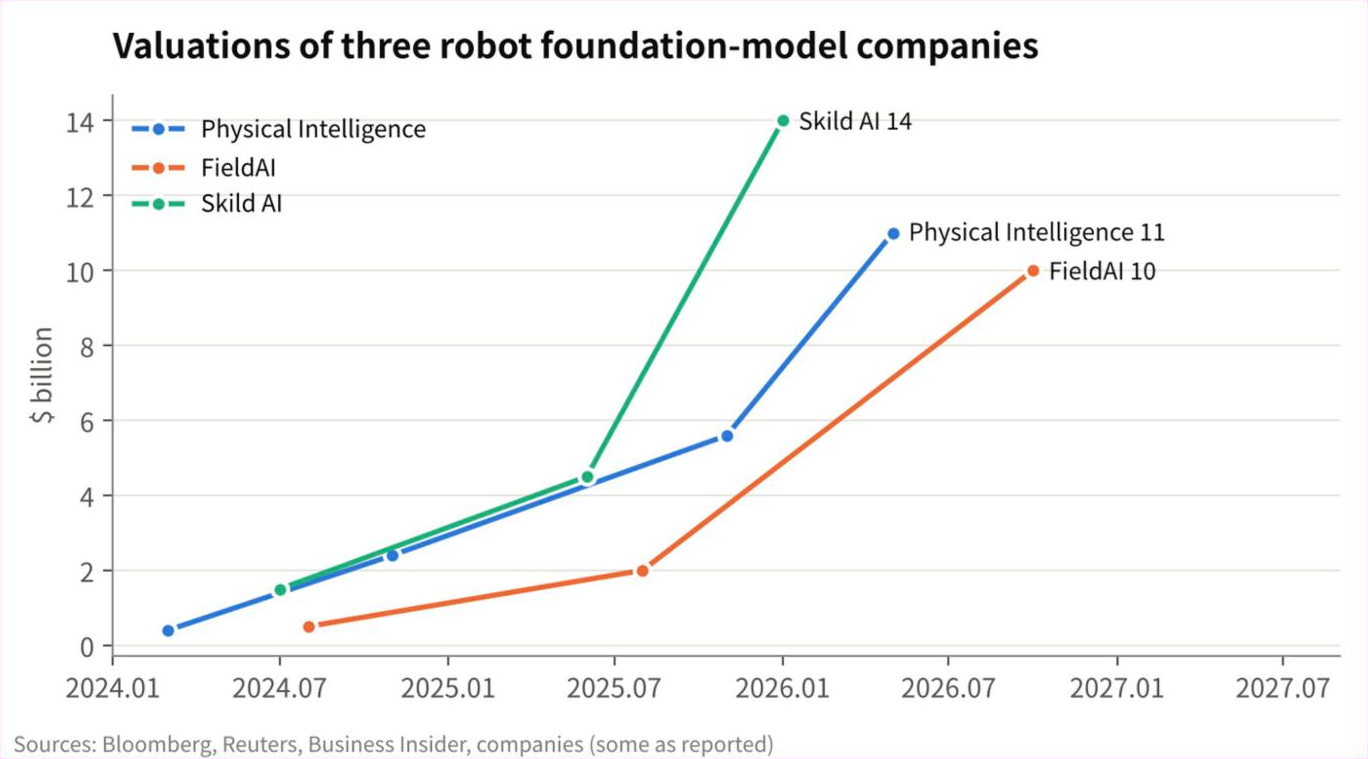
Much of the money went to robot-brain models that run across many machines rather than to hardware. Skild AI raised $1.4 billion at a valuation above $14 billion in January in a SoftBank-led round; Disney's Physical Intelligence and FieldAI are in the same category. Each of the three has risen more than tenfold in value in two years.
Capital, workspace and executive mentoring; participants keep their IP
According to the program's FAQ, participants receive investment capital, co-working space on Disney's creative campus and mentoring from senior executives. Disney does not disclose investment amounts or equity terms, and IP developed during the program stays with the company unless otherwise agreed in writing. Each cohort has about five venture-backed, growth-stage companies, found through Disney's own outreach or introduced by a startup's investors rather than through open applications. Participants spend roughly three weeks in person at Disney's Glendale, Calif., headquarters at the start.
Disney's portfolio page lists 69 companies. Kahoot! went public; Fem Inc was acquired by Nielsen Gracenote, Hoodline by Nextdoor, LittleBits by Sphero and Message Yes by Nordstrom. The 2025 cohort included vertical micro-drama platform DramaBox and Liminal Space alongside Animaj and Haddy.
The cohort at a glance: two robotics firms worth about $21 billion together
| Company | What it does | Disney pilot | What to watch |
|---|---|---|---|
| FieldAI | A 'field-ready robot brain' (FFM) that moves robots through unfamiliar sites without maps or GPS; it sells navigation intelligence, not robot bodies | Guiding cars in park parking lots | Safety amid crowds and weather; adapting to operations |
| Physical Intelligence | General-purpose robot models (π0 to π0.7) that turn images and language into hand movements; API beta since October | Sorting 3D glasses backstage | Task success rate; fit with real work |
| Promise | A studio that ties generative AI tools to production management in one workspace (MUSE) | Hybrid live-action and AI filmmaking | Consistent quality; creative control |
| OpenArt | A creative platform that strings 100+ image and video models into one workflow (not related to OpenAI) | Visual concepts for lyric videos | Whether faster concepting leads to better finished work |
| Simile | Synthetic consumers built from real interviews to test reactions before launch | How Walt Disney World guests plan trips | Match between simulations and actual booking behavior |
The five at a glance. 'What to watch' is K-EnterTech Hub analysis. Sources: Disney, companies
| Company | Founded / HQ | Founders | Funding / valuation |
|---|---|---|---|
| FieldAI | 2023 / Irvine | Ali Agha (ex-NASA JPL) | Aug 2025: $405M, $2B valuation → recent: $700M, $10B valuation (Business Insider) |
| Physical Intelligence | 2024 / San Francisco | Karol Hausman, Sergey Levine, Chelsea Finn + 4 | Nov 2025: $600M, $5.6B → May 2026 filing: ~$1.05B, ~$11B |
| Promise | 2024 / Venice | George Strompolos, Jamie Byrne, Dave Clark | North Road, a16z, Google AI Futures Fund, Crossbeam (undisclosed) |
| OpenArt | 2022 / San Francisco | Coco Mao, John Qiao (ex-Google) | Jan 2026: $30M Series A |
| Simile | 2025 / Palo Alto | Joon Sung Park, Percy Liang, Michael Bernstein, Lainie Yallen | Feb 2026: $100M → Jul 2026: $200M+, $2B valuation |
2026 Disney Accelerator cohort at a glance. Sources: company statements, Bloomberg, Business Insider, TechCrunch
"This year's cohort brought advanced domain expertise, but even more importantly, grounded every conversation with a clear point of view on how these technologies can work responsibly for people," said Bonnie Rosen, general manager of the Disney Accelerator.
FieldAI: a 'field-ready robot brain' with $135 million in revenue and contracts
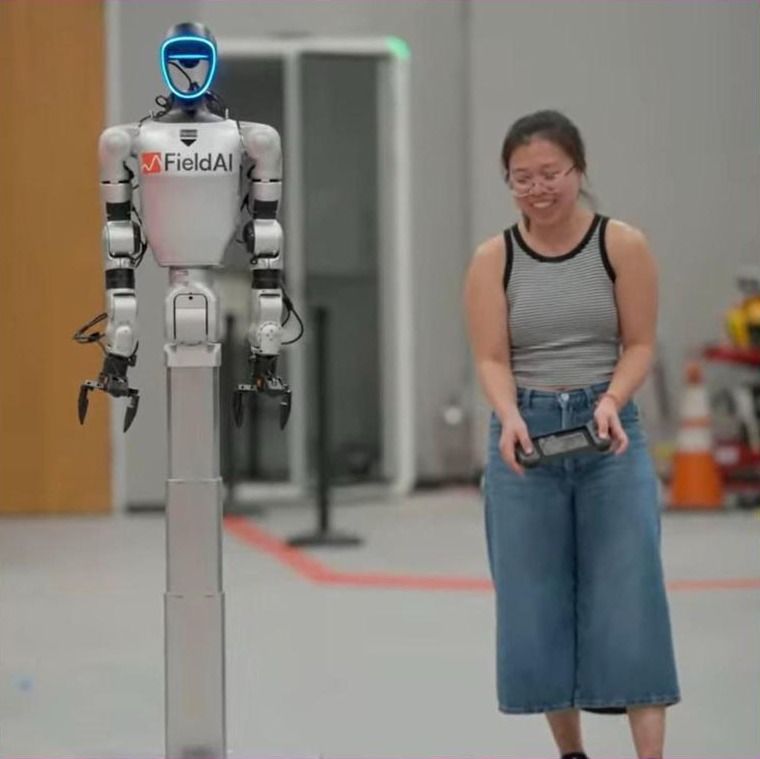
FieldAI was founded in Irvine, Calif., in 2023 by CEO Ali Agha, who spent seven years leading robot-autonomy work at NASA's Jet Propulsion Laboratory, including a DARPA Subterranean Challenge team, with chief scientist Shayegan Omidshafiei and others.
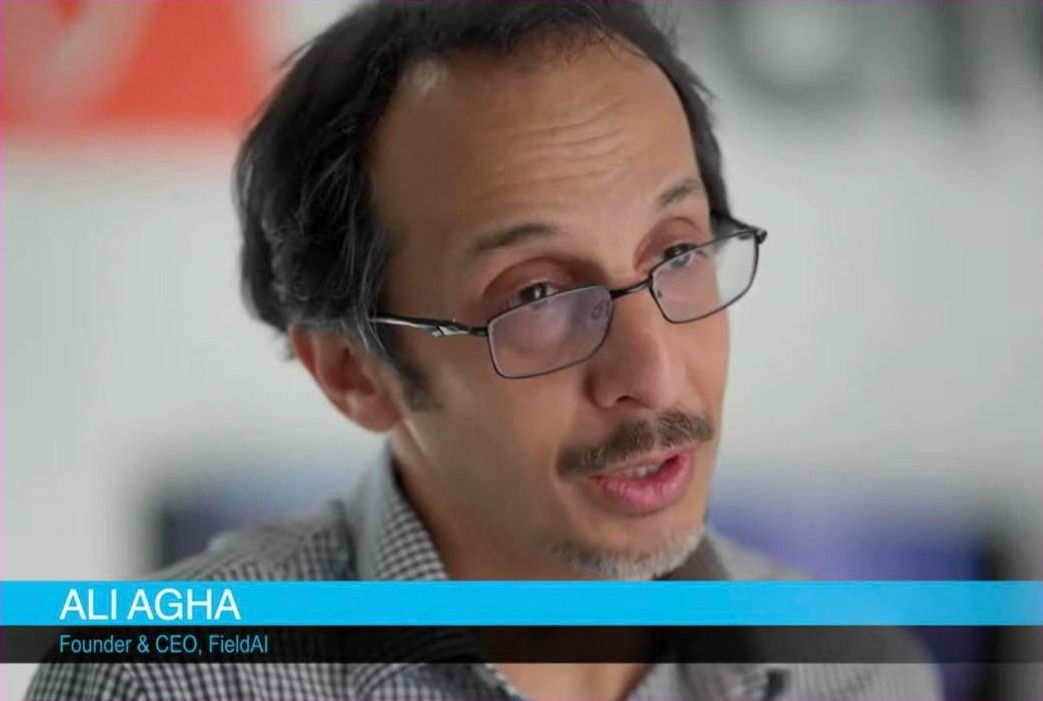
Its product is the Field Foundation Model, which combines learned behavior with physics-based reasoning and a risk-awareness layer so robots can operate in unfamiliar sites without prior maps, GPS or set routes. It is embodiment-agnostic, running on quadrupeds, humanoids, wheeled robots and drones; customers fit a sensor-compute payload to robots they already own and subscribe to software that runs on board.
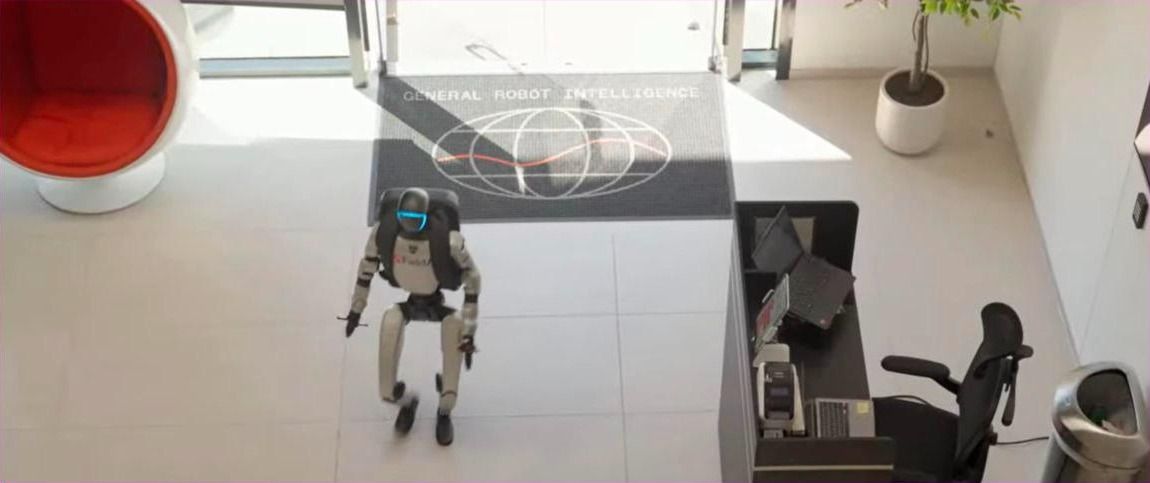
Customers are in construction, energy, manufacturing, data centers and mining. On March 12 it partnered with Boston Dynamics to put its models on Spot for autonomous construction-progress documentation, which FieldAI says has cut inspection and documentation time by more than 90%. On March 16 it announced work with NVIDIA on turning site data into training-ready digital twins, and in September a collaboration with Caterpillar. Revenue plus contracts passed $100 million in June and $135 million in October, across more than 30 customers.
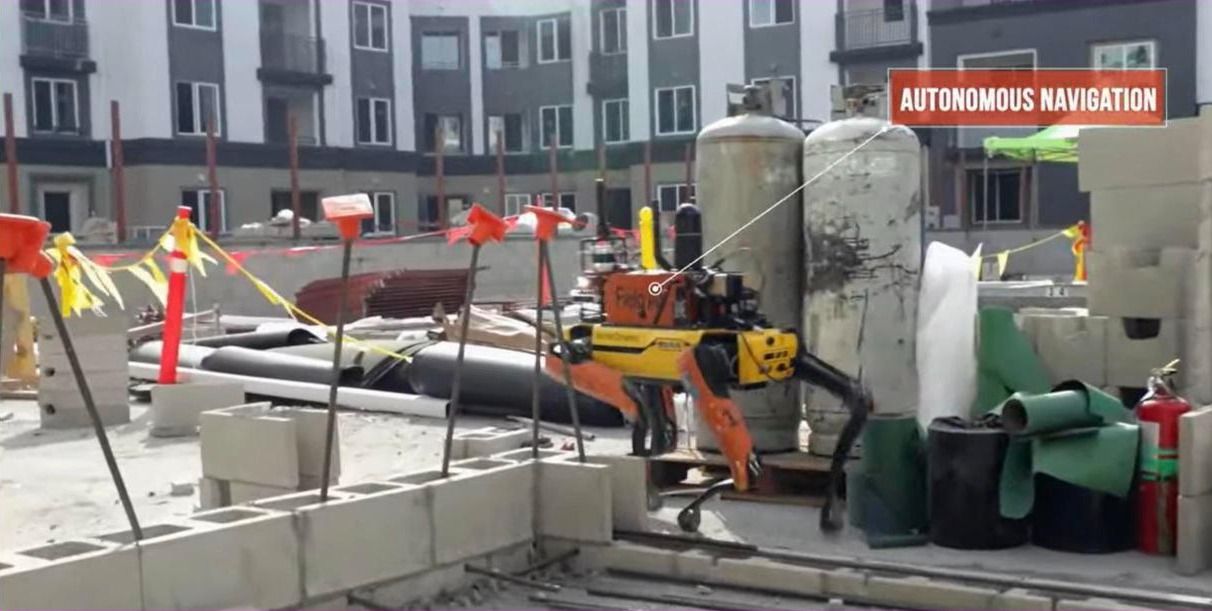
It disclosed $405 million raised over two rounds in August 2025 from backers including Bezos Expeditions, NVIDIA's venture arm, Khosla Ventures, Intel Capital, Temasek, Prysm Capital and Bill Gates, at a $2 billion valuation; Business Insider reported in October that it raised $700 million at a $10 billion valuation.
With Disney Experiences Technology and Walt Disney Imagineering R&D, FieldAI tested robots that support park parking operations across complex terrain and in changing weather; Imagineering R&D is also studying its navigation for future character robots.
FieldAI leaned on its field record. In a Demo Day film Disney released on Tuesday, the company said its core team came from Google DeepMind and NASA JPL and had worked on the Mars Helicopter, Mars rovers and DARPA challenges. "In the digital world, if 80% of your article is great, that's a huge success," FieldAI said. In the physical world even 99% "is not acceptable," which is why safety and risk awareness have to be built into the models. The Disney Experiences Technology team running the parking test put it more simply: "Imagine if characters from Cars or robots from WALL-E direct you where to park." Disney is watching both how the robots perform and how guests respond to them.
Physical Intelligence: the π model family, and an API for outside developers since October
Physical Intelligence was founded in San Francisco in 2024 by seven people including CEO Karol Hausman, formerly of Google DeepMind, UC Berkeley's Sergey Levine, Stanford's Chelsea Finn and early Stripe employee turned investor Lachy Groom. Its aim is one model that lets many robots do many tasks without task-specific programming.
It released π0, a vision-language-action model, in October 2024 and open-sourced code and weights as openpi in February 2025. π0.5, released in April 2025, tidied kitchens and bedrooms in homes it had never seen; π0.6 and the reinforcement-learning variant π*0.6 followed in November 2025, and π0.7 in April 2026. On Oct. 13 it opened a Pi API beta for hosted fine-tuning and inference on customers' own robot data. It has not disclosed product revenue.
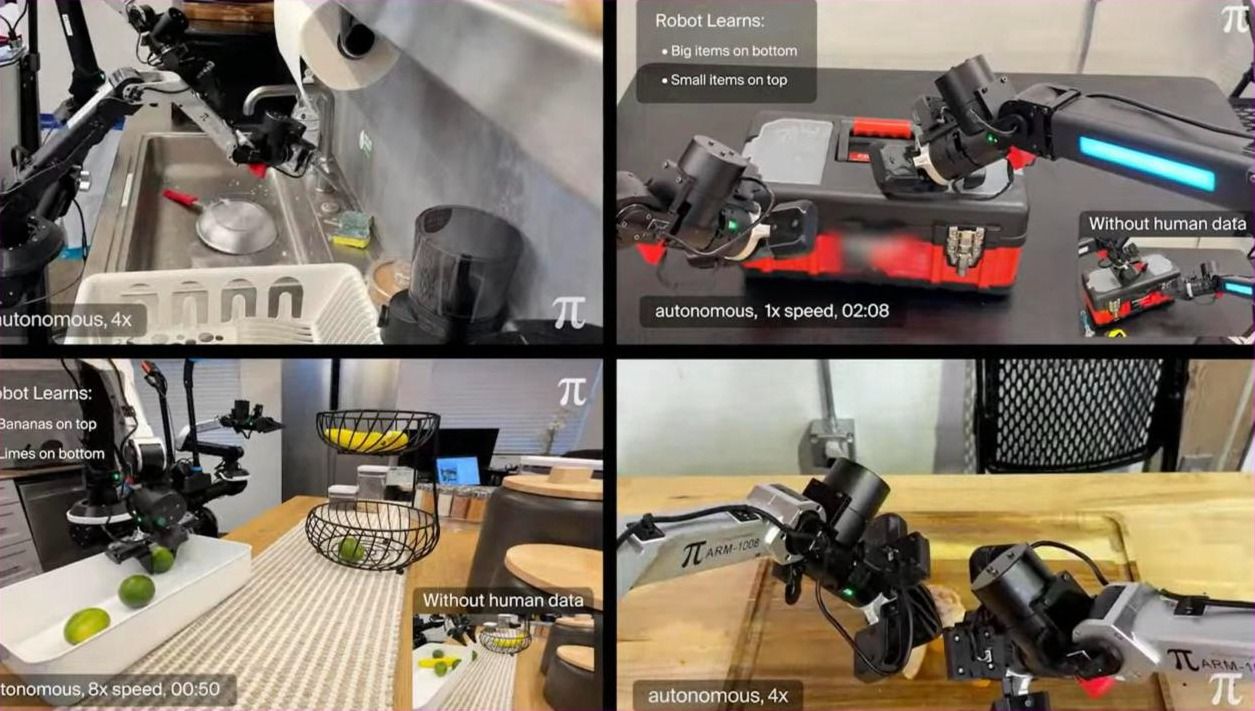
The Pi API beta works like this: customers upload robot data, fine-tune a π model on compute Physical Intelligence manages and run it through a hosted inference gateway. Early user Almond taught its Axol dual-arm robot to deburr spacers used in its own assembly after four days of iteration, and Actor's wheel loader loads dump trucks in a commercial deployment. There is no public rate card; access is by waitlist. It brings the language-model API business to robot models.
Backers include Thrive Capital, Lux Capital, Alphabet's CapitalG, Jeff Bezos and OpenAI. It raised $600 million at a $5.6 billion valuation in November 2025, and May 2026 filings authorized a roughly $1.05 billion Series C at about $11 billion, unannounced; Bloomberg reported in late October talks at about $20 billion.
With Walt Disney Imagineering it tested robots that pick up and arrange 3D glasses for cleaning between shows; Disney said that would free Cast Members to spend more time with guests.
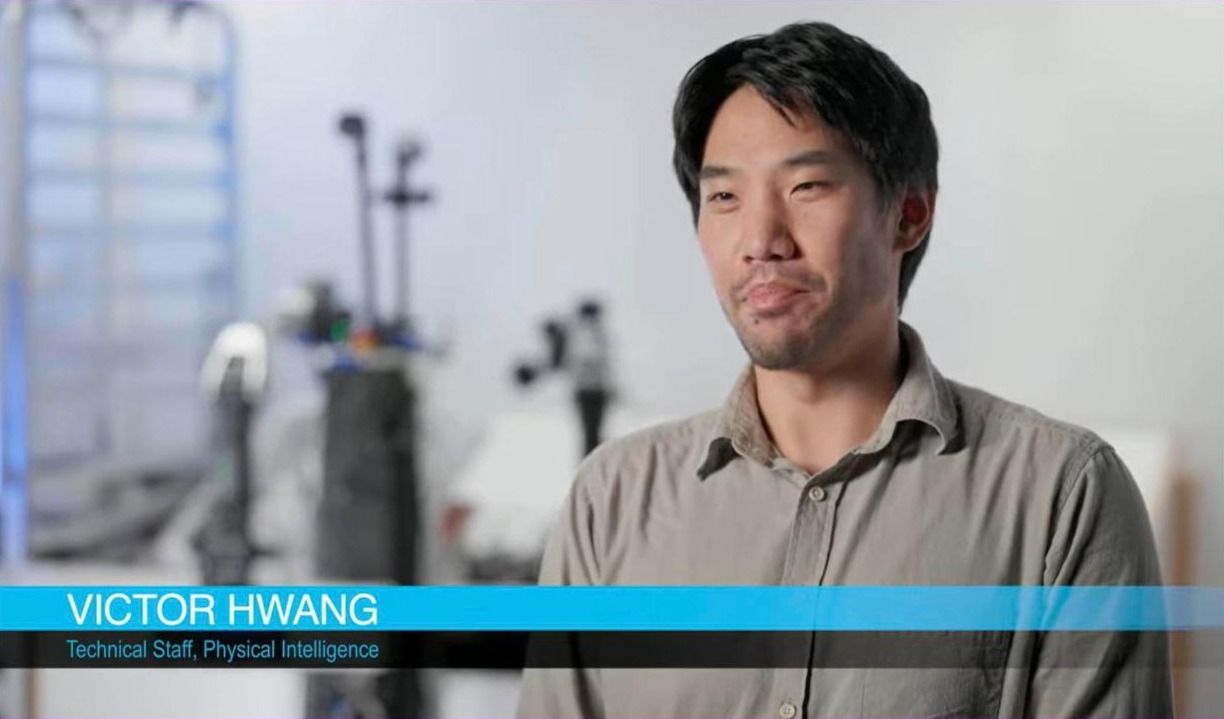
Sorting 3D glasses is harder than it sounds. A robot has to move trays, set them on racks, pick up glasses, untangle them and retrieve the ones that fall on the floor. "It's a pretty hard dexterous task," said Victor Hwang, a member of Physical Intelligence's technical staff. The company has taught its robots basics such as slicing a cucumber, folding T-shirts and boxes and tidying a kitchen, and has found that more general common sense makes the system better at specializing. Its models take in sight, touch and proprioception and learn from human demonstrations. "It's still early days," Hwang said, adding that there is "a long road ahead" on both software and hardware. A Disney Imagineer who watched the work said it was "a lot further along than I thought." Disney sees glasses handling as part of keeping 3D viable in existing parks and future attractions.
Promise: a generative AI studio from YouTube and Fullscreen veterans, built on MUSE
Promise's legal name is Promise Advanced Imagination, Inc. It was incorporated in Venice, Calif., in September 2024 and launched publicly on Nov. 19, 2024. The co-founders are CEO George Strompolos, who founded the multichannel network Fullscreen; president and COO Jamie Byrne, who helped build YouTube's creator revenue-sharing program; and chief creative officer Dave Clark, an AI filmmaker. Strompolos told Forbes he reached out to Clark after seeing a speculative Adidas commercial Clark posted to Reddit in late 2023.
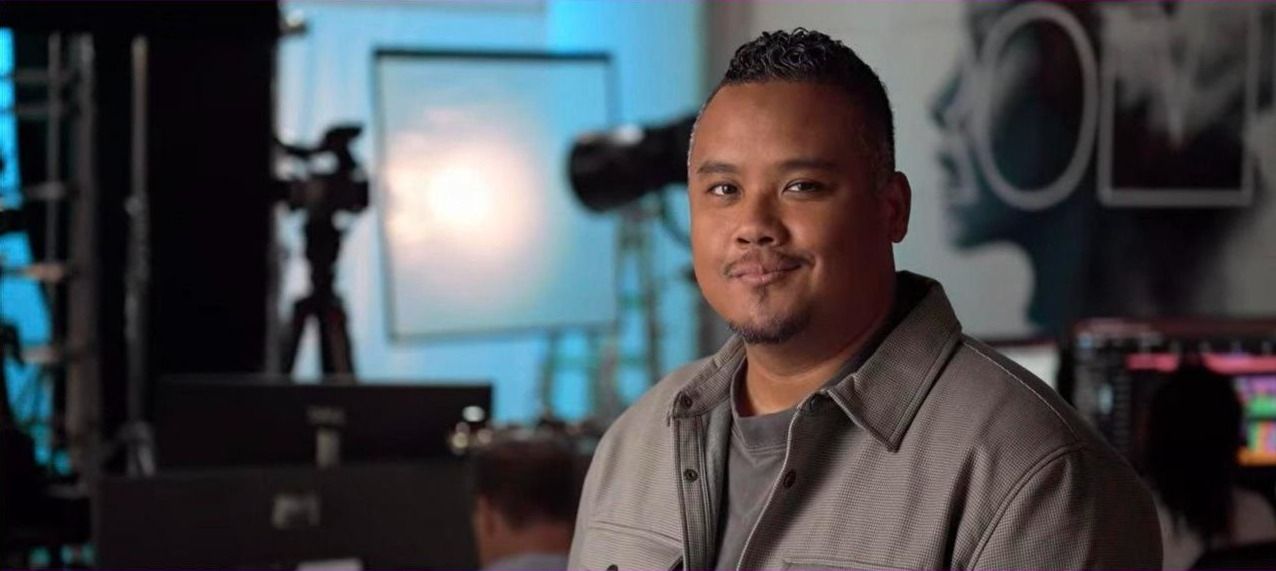
The company has three divisions: the Promise studio, which develops original IP and co-productions; Curious Refuge, the AI film school it acquired in February 2025; and The Generation Company, its AI VFX and pre-production support team. Curious Refuge says it has trained 12,000 students in 170 countries. A year after launch, Promise had a slate of ten film and series projects across horror, anime, family animation, action and drama, and it has released a teaser for NinjaPunk, its first hybrid AI and live-action feature. It has hired from Netflix, WarnerMedia, HBO, Sony Imageworks, YouTube, Imagine Entertainment and Technicolor; Forbes put headcount at 35 in July.
Its MUSE software brings generative AI into every stage from development to post-production and records each version of prompts, settings and approvals, while Copyright Guardian checks output for potential IP conflicts. The aim is generative work that studios can own, insure, edit and release. Clark is also using generative AI to show studios what a film can become before it is financed.
Peter Chernin's North Road and Andreessen Horowitz's Andrew Chen led the seed round, with Offline Ventures, Frame.io founder Emery Wells and Box CEO Aaron Levie participating. In May 2025 Google's AI Futures Fund, Michael Ovitz's Crossbeam Venture Partners, Kivu Ventures and Saga Ventures joined, alongside a Google technology partnership for MUSE. Amounts were not disclosed.
At Demo Day Promise ran a live hybrid-filmmaking demonstration: an actor performed in an untextured grey-box set, and an artist carried that performance into different story environments. With Walt Disney Studios it is testing how AI can expand the filmmaking toolkit while protecting creative craft at each step.
Clark measured the grey box's advantage in time on set. On a green-screen stage, moving the camera five degrees can mean putting up another 20 feet of screen and relighting — an hour's reset, sometimes a full day. The grey box keeps light flat and neutral with no green spill, so directors move faster and actors get more takes. Rob Bredow, Disney's senior vice president of creative innovation, said artists and engineers have worked side by side at Disney from Snow White's multiplane camera to Toy Story, and that AI will be handled the same way. "It's easy for people to have the misconception that there's an AI button that could just make a movie," the two sides said; script, storyboard and animatic still come first. The technology "might unlock new IP that could be part of the Disney family," Clark said.
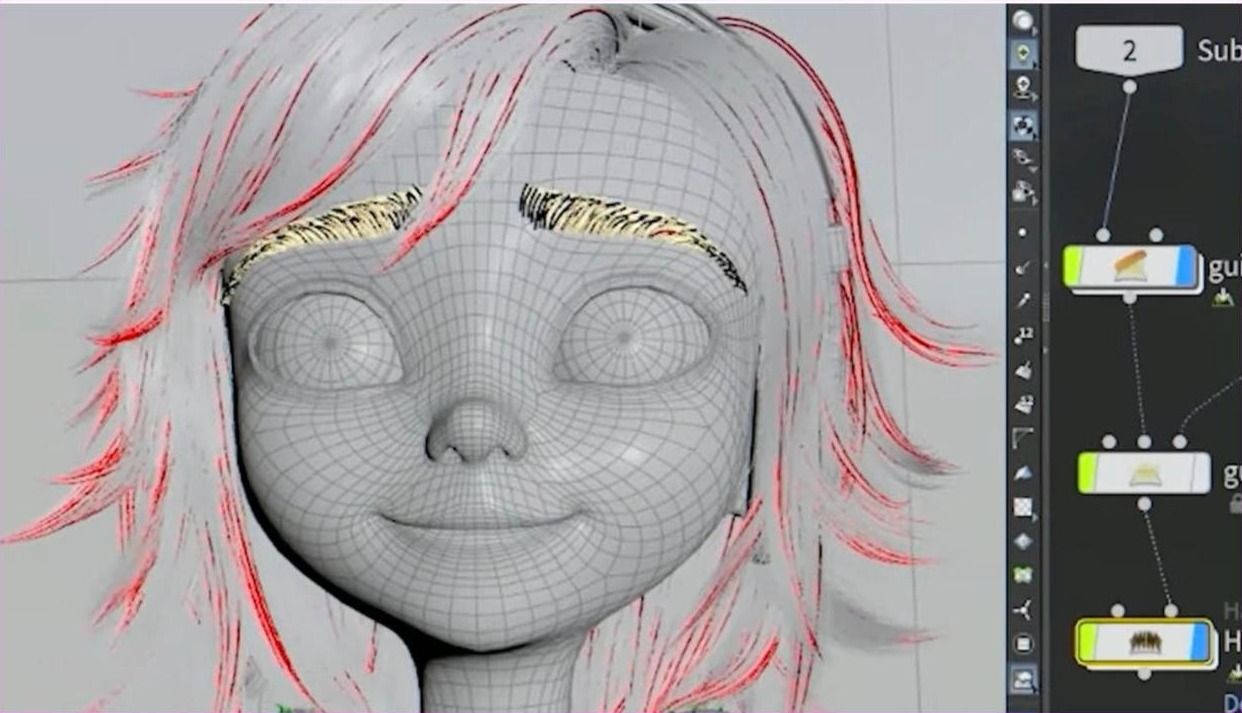
OpenArt: about 20 staff, $70 million in annual revenue, one-minute videos from a sentence
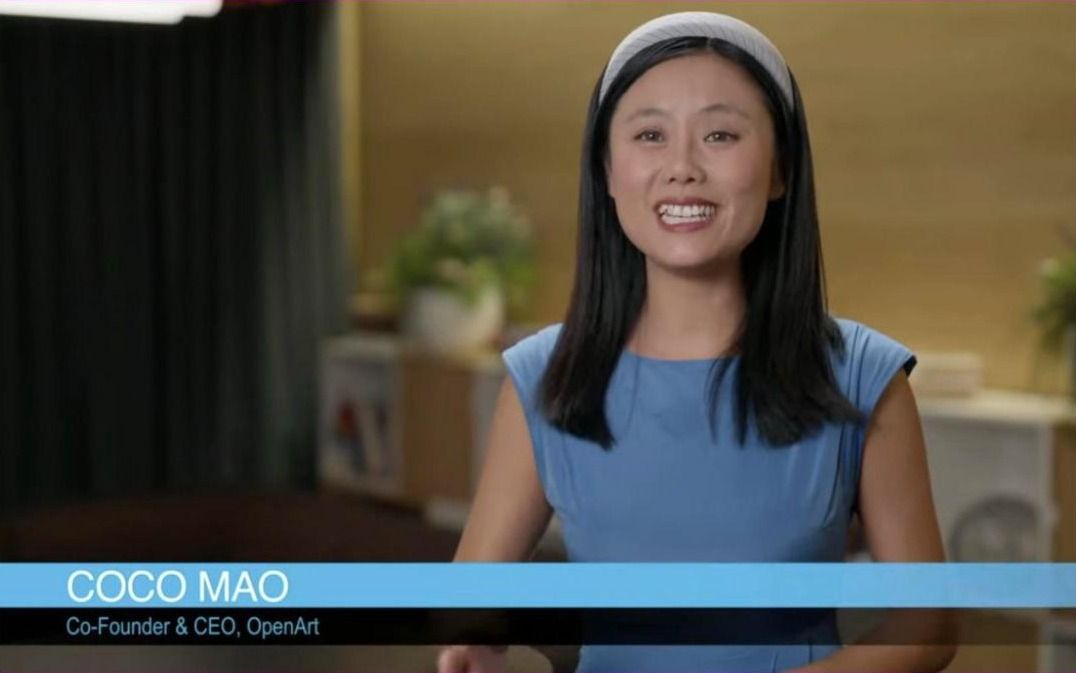
OpenArt was founded in San Francisco in 2022 by CEO Coco Mao and CTO John Qiao, both from Google's Area 120 incubator. It began as a site for sharing AI image prompts and now offers more than 100 image and video models on one platform. It added consistent characters across scenes in February 2025 and, that summer, One-Click Story, which turns a sentence, script or song into a one-minute story video using Character Vlog, Music Video or Explainer templates. Plans start at $14 a month.
In 2025 OpenArt hosted an AI Influencer Summit in San Francisco and produced Bot House, a reality show starring AI characters. Its Director tool, which followed One-Click Story, lets users adjust script and scene structure themselves; the company says creators wanted control over the story rather than a one-click result.
Sacra estimates 2025 annual recurring revenue of $70 million and 8 million monthly users, with roughly 20 employees and a profit. OpenArt raised only $5 million through 2025 before a $30 million Series A led by Canaan Partners in January 2026. It says it blocks protected characters by default and is open to licensing with rights holders.
With Disney Music Group, OpenArt built custom tools for creating and evaluating visual concepts for lyric videos from a song's themes, mood and emotional tone, cutting concepting from weeks to hours; Disney plans to use them for fan-facing music content between major releases.
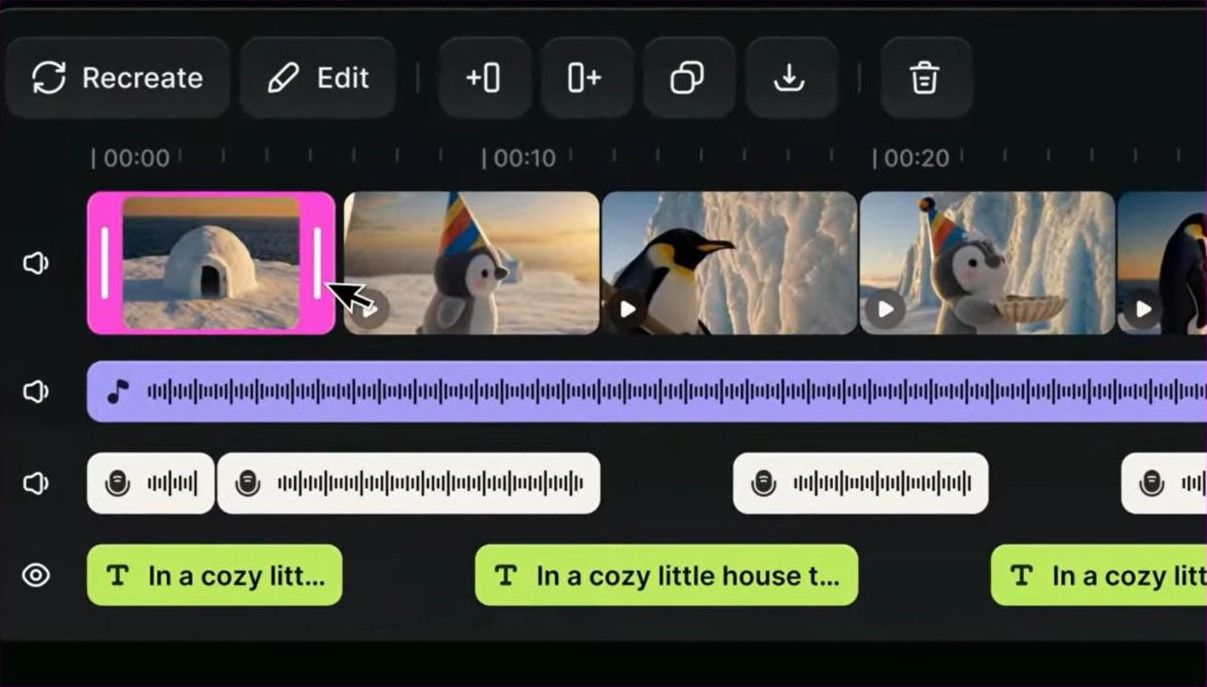
Mao used Demo Day to show OpenArt Director, a video agent that builds long-form video through conversation. A user describes an idea by script or voice; the agent returns a script, storyboard and mood board for approval, then produces the video, which can still be edited scene by scene. OpenArt said it built a separate IP-infringement detection system for Disney. Karen Lieberman, senior vice president of commerce and digital at Disney Music Group, said demand for video on social media and Disney+ has exploded, but much of the classic catalog dates from before such videos were routinely made. The teams produced new visuals for "Go the Distance" from 1997's Hercules. Work that once took "weeks if not months" can now be done faster and more cost-efficiently, Lieberman said.
Simile: 'synthetic consumers' built from real interviews, with CVS and Deloitte as customers

Simile was founded in 2025 by CEO Joon Sung Park, whose Stanford doctoral work produced Smallville, a virtual town of 25 AI agents, with Stanford professors Percy Liang and Michael Bernstein and Lainie Yallen. It builds a foundation model of human behavior so companies can ask simulated people how they would react to products and messages.
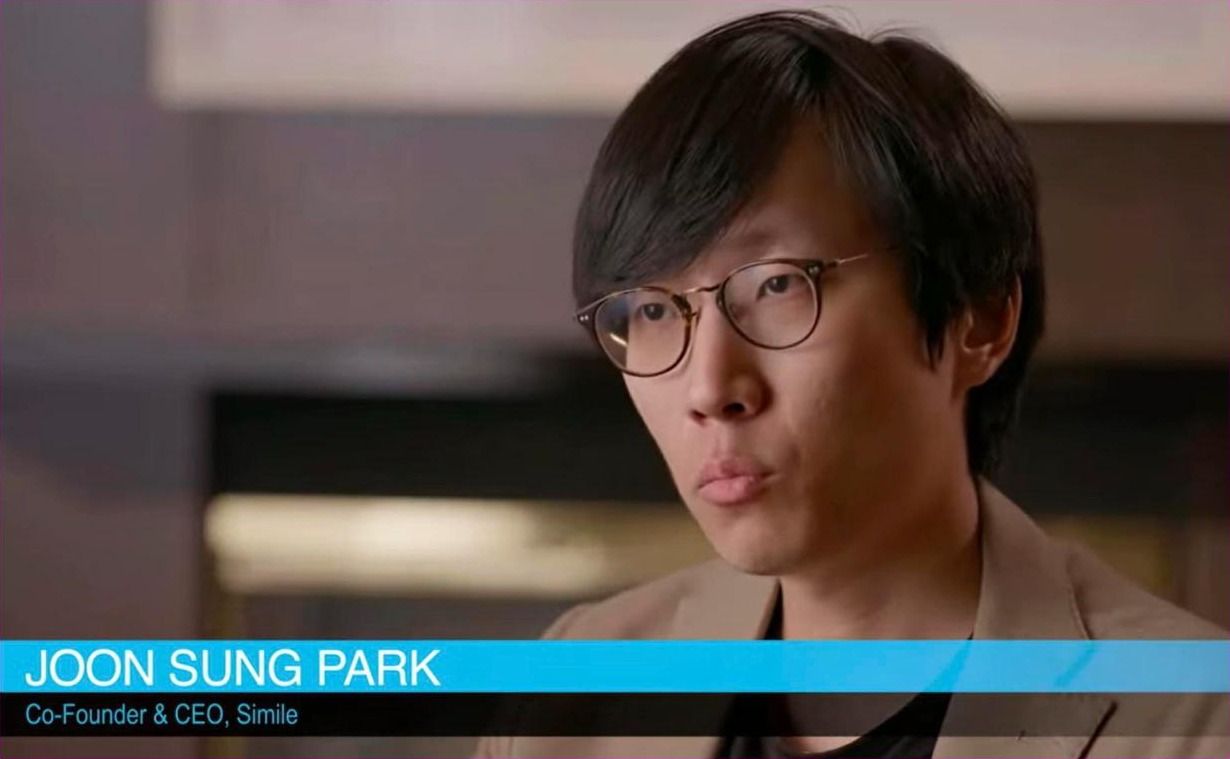
It interviews 1,000 representative participants for two hours each and conditions individual agents on those transcripts; a Gallup partnership extends the grounding to data from millions more people. Named customers include CVS Health, Wealthfront, Deloitte and Gallup. Park told Bloomberg a simulated earnings call correctly predicted eight of 10 analyst questions.
It emerged with a $100 million Series A led by Index Ventures in February and on July 30 raised more than $200 million in a Greenoaks-led Series B at a $2 billion valuation, with CVS Health Ventures and Bain Capital Ventures participating and Fei-Fei Li and Andrej Karpathy among individual backers.
Competition has arrived. Aaru, which simulates populations with multi-agent systems, raised a Series A led by Redpoint Ventures in December 2025 at a $1 billion 'headline' valuation, and on Sept. 30 EY began selling its simulations for marketing, pricing and M&A decisions, starting in financial services. The two now pitch the same buyers: consumer brands, consultancies and financial firms. Simile sets itself apart with agents built from interviews with real people. Disney has put the technology to work on Walt Disney World guest research and product wording.
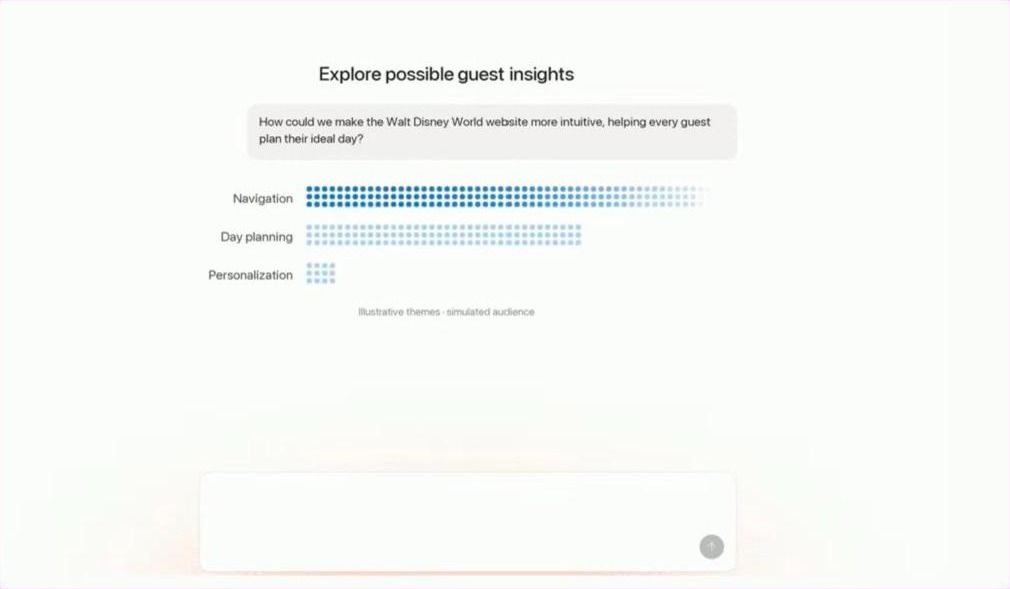
With Disney Experiences, Simile examined the details of how Walt Disney World guests plan trips, from product names and descriptions to the digital booking experience; Disney presented it as a supplement to existing guest research.
Simile insists its synthetic people do not replace real ones. The company said it talks with tens of thousands, sometimes hundreds of thousands, of people each week to model their views, values, preferences and behaviors. "Every single simulation we create are based on real people and real data," it said. "This is not a way to bypass talking to people." Walt Disney World said small decisions — what something is called, where it sits on the website, how a product is described — can make a big difference, and that Simile helps refine a concept that "could go in 12 different directions" before guests see it.
| Company | Disney partner | Pilot | Shown at Demo Day |
|---|---|---|---|
| FieldAI | Disney Experiences Technology, Imagineering R&D | Guiding cars in park parking lots | Autonomy amid weather and terrain changes; navigation informs character robots (BDX droid) |
| Physical Intelligence | Walt Disney Imagineering | Sorting 3D glasses backstage | Dexterous tasks: moving trays, picking and untangling glasses |
| Promise | Walt Disney Studios | Hybrid filmmaking | Moving grey-box performances into different settings with generative AI |
| OpenArt | Disney Music Group | Visuals for catalog songs | New visuals for Hercules' 'Go the Distance'; IP-infringement detection |
| Simile | Disney Experiences (Walt Disney World) | How guests plan trips | Simulated guest reactions to product names, descriptions and booking screens |
Disney Accelerator 2026 pilots by company; all are at the testing stage. Source: Disney
2025 alum Animaj is in production on Ozzy Fox Season 2
Members of the 2025 cohort returned with a year of follow-on work. Industrial 3D-printing company Haddy displayed set pieces and prototypes made with Walt Disney Imagineering, including a replica of a prop canoe from Disneyland Resort's Jungle Cruise, a King Louie throne now at Shanghai Disney Resort, rock facades and themed light fixtures.
Animaj demonstrated FlipMove, its artist-led AI animation workflow. Starting from an artist's sketched animatic, FlipMove builds staged 3D shots and speeds up layout, director retakes and in-betweening. It is used in production on Ozzy Fox, a series Animaj co-developed with Disney Jr. over nine months; after launching on YouTube, the show is in production on Season 2.
What the robotics firms get from Disney: a crowded, outdoor test site
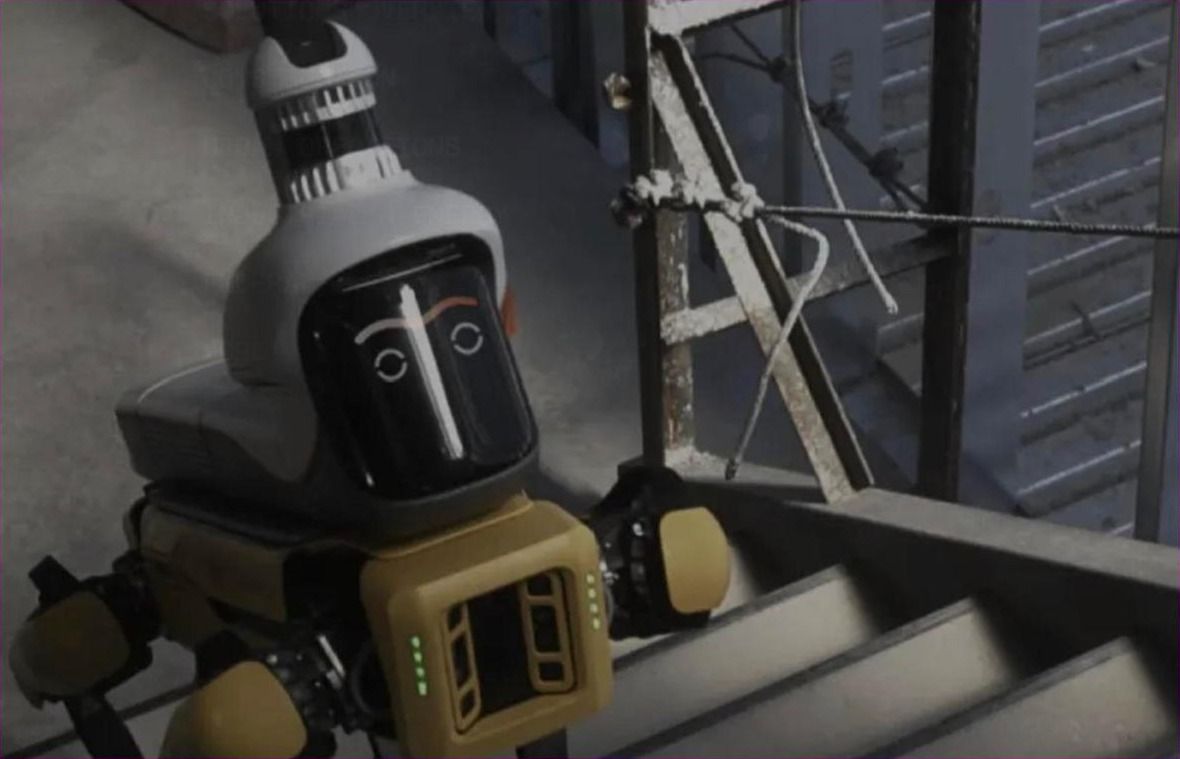
Physical Intelligence (about $11 billion) and FieldAI ($10 billion) are together valued at about $21 billion, and Disney classed both as growth-stage. What they get from Disney is less capital than a place to test. FieldAI's deployments have centred on inspection work in harsh industrial sites, and Physical Intelligence has not disclosed product revenue.
A theme-park parking lot changes with the weather and with every wave of cars and pedestrians; sorting 3D glasses repeats the same motion after every show. Imagineering R&D said it will study FieldAI's navigation for character robots — a path from industrial robot intelligence to robots that stand in front of guests.
Walt Disney Imagineering R&D said backstage robots and character robots rest on the same foundation: perceiving the world, acting in it and adapting when things change. Pointing to the Na'vi Shaman in the Avatar land, a robotic Spider-Man that flies through the air and a walking Baby Groot, it said "the park of the future" will be teeming with robot characters, some performing on stages and others roaming the lands.
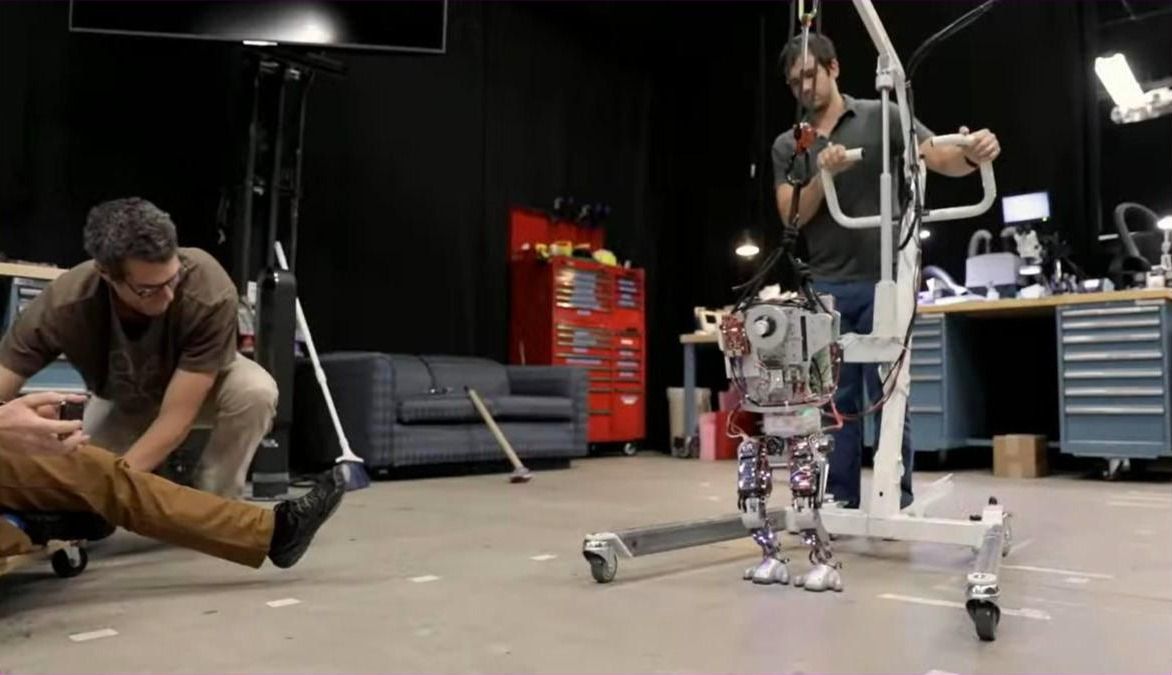
Imagineering said its Star Wars BDX droid proof of concept explores combining navigation with Disney character performance, which is what drew it to FieldAI's experience deploying robots across uneven terrain, changing layouts and unexpected obstacles. The 3D-glasses work with Physical Intelligence exercises the same perception and fine-manipulation capabilities. "Lessons from challenging operational environments can help us improve what we build for our guests," Imagineering said.
Generative AI spending shifts from consumer-app licences to in-house production
Disney uses both litigation and contracts with generative AI companies. In June 2025 it sued Midjourney alongside Universal and sent cease-and-desist letters to Character.AI and Google. Its licensing deal with OpenAI ended within three months when Sora closed.
This year's accelerator generative AI work sits in tools for Disney's own creative teams rather than services for fans: Promise in Walt Disney Studios' shooting pipeline, OpenArt in Disney Music Group's internal concepting. Disney introduced OpenArt in July as helping creators tell visual stories "while protecting IP." Netflix's InterPositive and Lionsgate's Runway stake are likewise tools used inside the studios' own productions and libraries.
U.S. viewers balk at AI actors and scripts…majorities accept AI for effects and subtitles
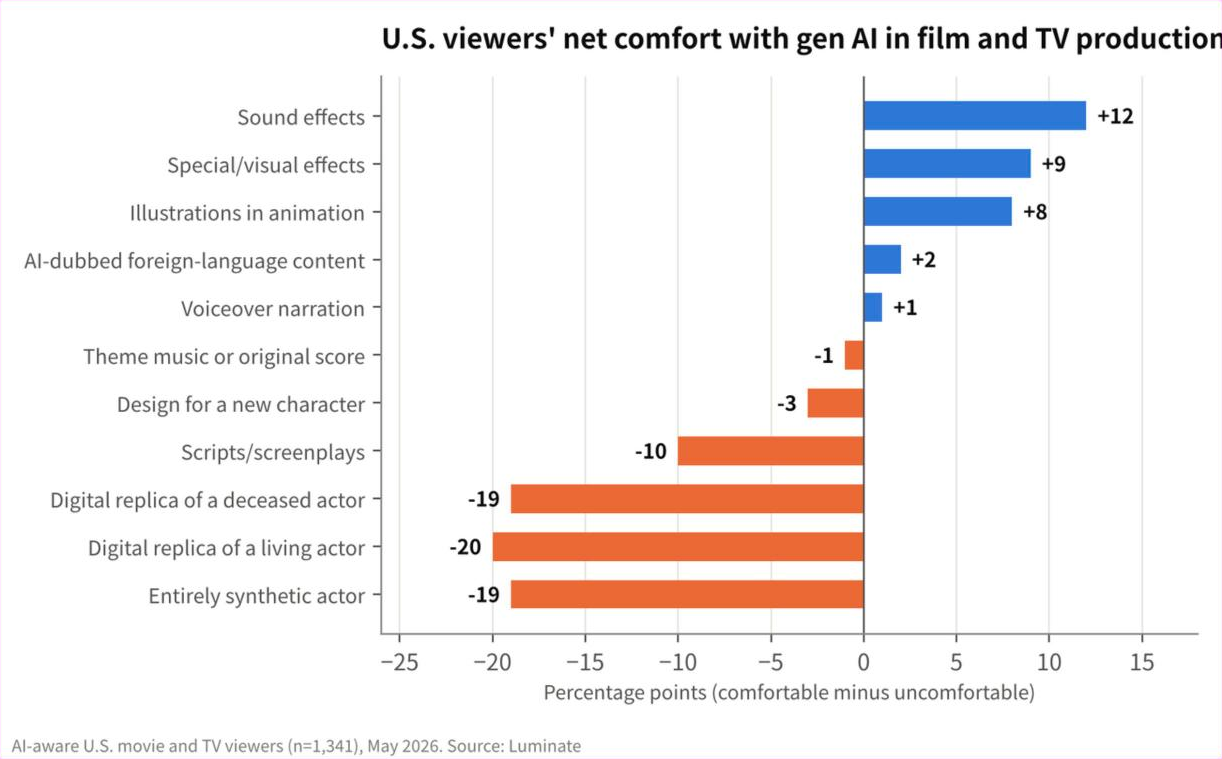
In AI & Media: Audience Attitudes, a special report Luminate published on July 24, 46% of AI-aware U.S. movie and TV viewers said they were uncomfortable with an entirely synthetic actor; 27% were comfortable. AI-written scripts also drew more discomfort (40%) than comfort (30%). Technical uses ran the other way: comfort outweighed discomfort by 12 points for sound effects, 9 for special and visual effects and 8 for illustrations in animation. Luminate surveyed 2,000 Americans aged 13 and older from May 5 to 26.
A YouGov poll of 1,106 U.S. adults in October 2025 points the same way. Seventy-five percent said replacing all actors with AI characters was unacceptable, and 57% said the same of AI writing the script. Majorities found AI acceptable for generating visual effects (61%), translating subtitles (64%) and creating dubbed audio (52%). In a Bain & Company survey, 55% said they would be less interested in a show fully generated by AI, against 23% when AI is used to brainstorm ideas.
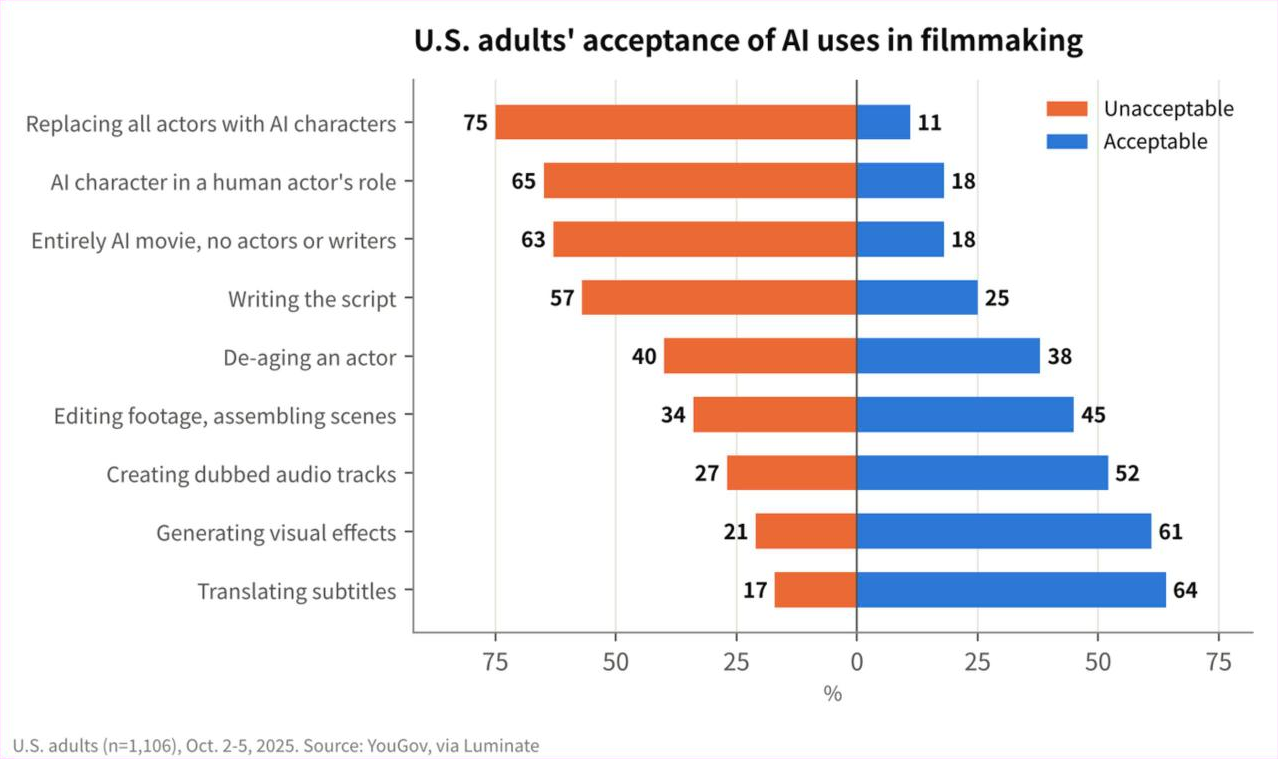
Disney's pilots are on the side audiences accept. In Promise's workflow the actor performs in the grey box and AI adds environments and texture — the backgrounds and effects viewers tolerate, not the actor replacement and AI scripts they reject.
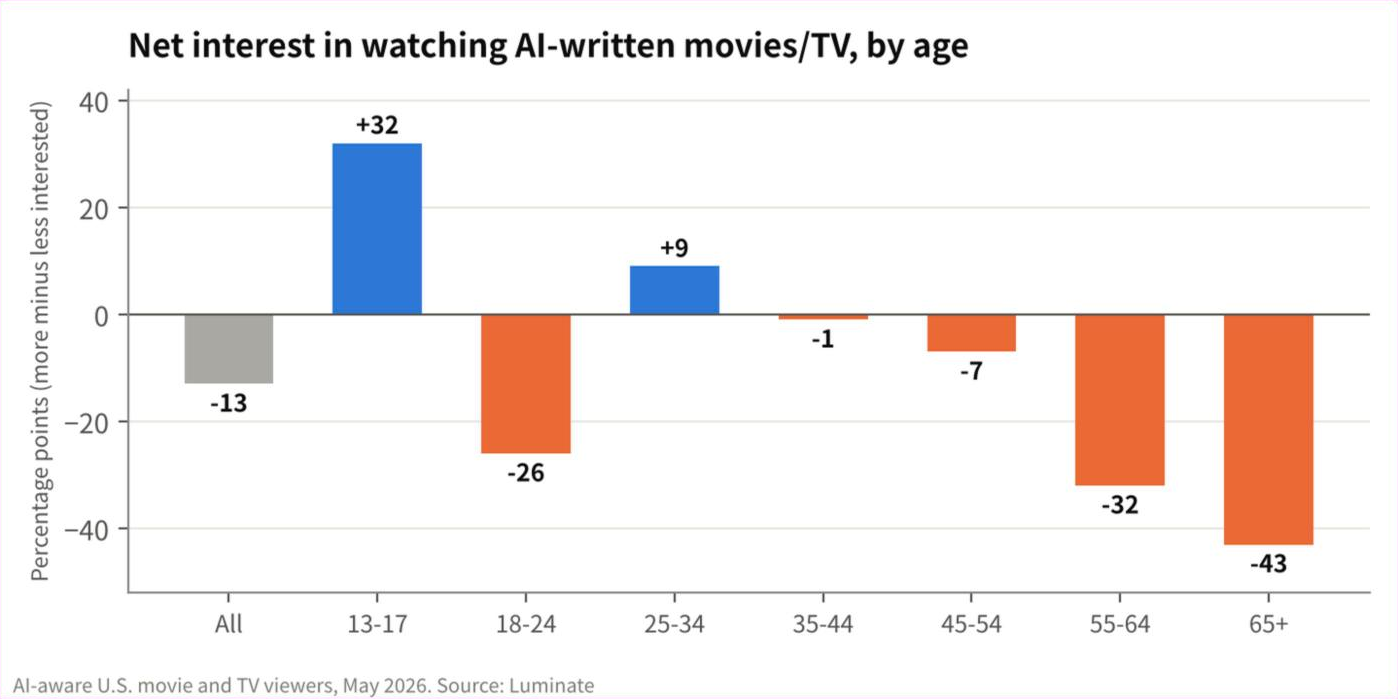
Age splits the picture. Asked about watching AI-written movies and TV, 13- to 17-year-olds were net positive by 32 points, while 18- to 24-year-olds were net negative by 26 and those 65 and older by 43. The 18-24 group was also the most likely, at 19%, to have tried generative AI and stopped. It "would be a mistake to regard Gen Z as a monolith," Luminate said.
63% of music listeners lose interest in fully AI songs…far fewer object to AI help with ideas and sound
In music, resistance rises the more AI stands in for human voices and creativity. In Bain's survey of 3,500 Americans who listen to music weekly, 63% said a fully AI-generated song would lower their interest. More than half said the same of a new AI-generated artist (58%), new music by deceased artists (56%) and AI-created vocals (52%). Only about a third objected to AI helping with ideation and lyrics (33%) or enhancing instrument and vocal sound (34%).
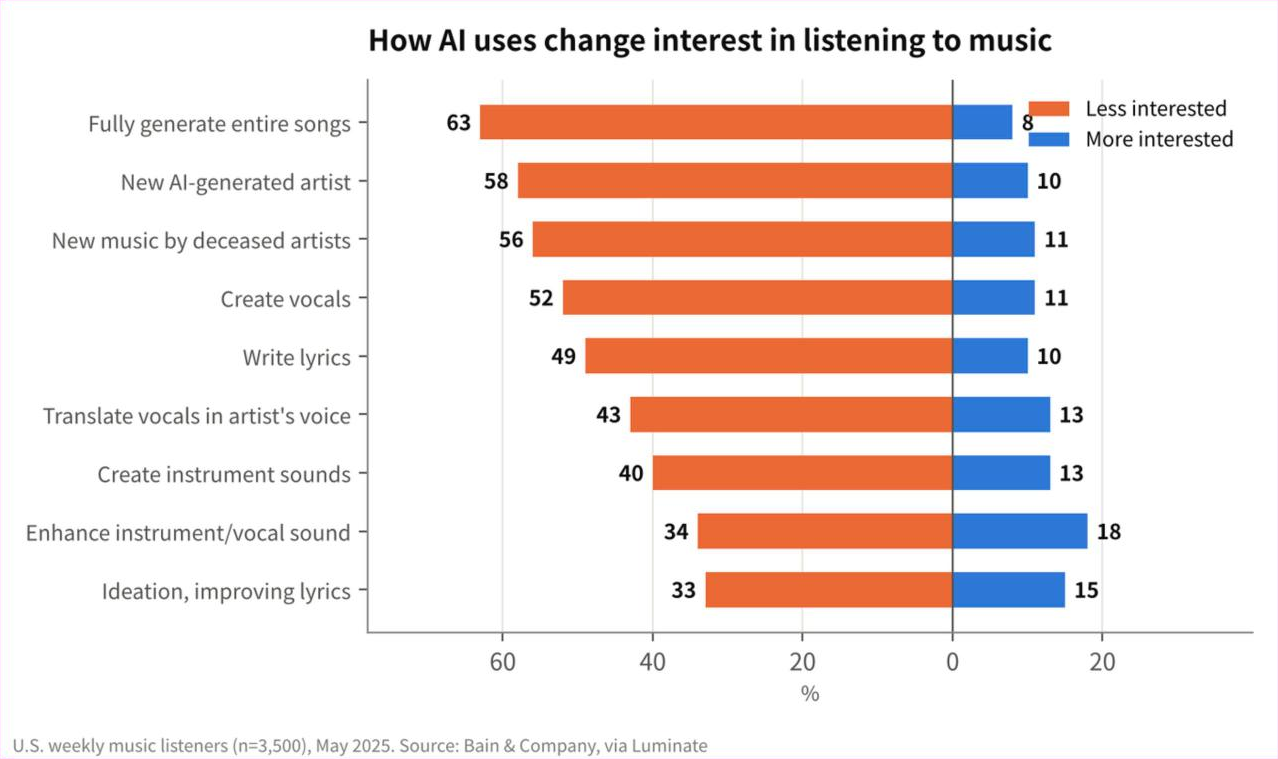
Luminate found the same pattern: 47% of AI-aware listeners were uncomfortable with a new song performed in the style or sound of a human artist, against 27% comfortable. About a quarter were indifferent, so listeners who are comfortable or indifferent together form a majority. In a poll by The Hollywood Reporter and the University of Miami's Frost School of Music, net interest in music from favorite artists made with AI help was −20 points, and −27 for new artists with similar voices used with the favorite artist's permission. In a Morgan Stanley survey, net support for releasing entirely AI-generated music was −20 points overall but +17 among 18- to 29-year-olds.
Disney Music Group's work with OpenArt makes video for songs, not songs. The recording and voice of "Go the Distance" stay untouched; AI only multiplies visual concepts — a different territory from the song and vocal generation listeners resist.
In Korea, HYBE (하이브) released MIDNATT's 'Masquerade' in six languages in May 2023, applying Supertone (슈퍼톤) technology that layered native speakers' pronunciation onto the singer's own foreign-language recordings. In Bain's survey, translating vocals into local languages in the artist's voice split evenly — 43% less interested, 43% no effect — with 13% more interested. On these numbers, K-pop agencies using AI for multilingual versions or remixes draw less resistance when they build on the artist's own recordings and consent and disclose the use.
52% of Americans use gen AI…72% want AI disclosed in film and TV, 73% in music
More than half of Americans already use generative AI. In Luminate's survey, 52% of Americans 13 and older use it regularly or occasionally — 66% of 13- to 17-year-olds and 37% of those 65 and older. Among the AI-aware, 38% have generated images in the style of a specific artist or author, rising to 49% among 13- to 17-year-olds. Style can't be copyrighted, Luminate noted, but mimicry remains a serious concern for artists who see AI replicas diluting the value of their work. Disney has sued Midjourney for copyright infringement, and OpenArt built an IP-infringement detection system for Disney.
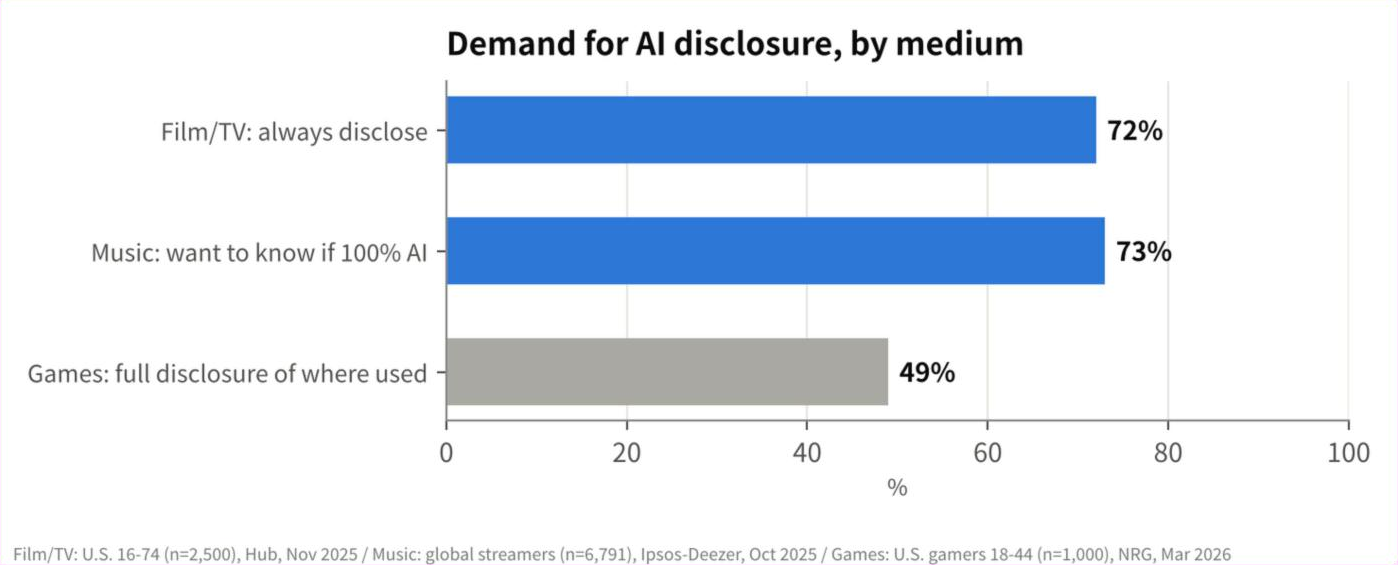
The demand for disclosure cuts across media. In a Hub Entertainment Research survey, 72% of U.S. consumers said companies should always disclose AI use in a TV show or movie. In an Ipsos and Deezer survey, 73% of music streaming users said they would want to know if a service recommended 100% AI-generated music. Among U.S. gamers aged 18 to 44, 49% wanted full disclosure of where AI was used. Promise's MUSE records each version of prompts and approvals, making it possible to trace where AI entered a production.
CJ ENM's 'The House': actors shot indoors, backgrounds by AI, four shooting days
The workflow Promise demonstrated has already reached feature length in Korea. In May, CJ ENM released the AI hybrid feature 'The House' (아파트) on its streaming service TVING (티빙). Actors were filmed in an indoor studio while every background and visual effect was generated by AI, and principal photography took four days. The pipeline used Google's Imagen, Nano Banana and Veo, with production houses Deohan Film (더한필름) and Saltmaker (쏠트메이커) from the AI Content Alliance launched in February.
The two companies have reached the same point in the workflow but deal with outside technology differently. CJ ENM's in-house AI unit applied a big-tech toolset; Disney embedded outside AI companies in its divisions for 15 weeks and invested in them. As Korean producers add generative steps, whether to extend supplier relationships from tool licences to joint testing and equity becomes the next decision.
'The House' sits on the side U.S. audiences accept: actors performed, and AI built the backgrounds and effects. As Korean producers expand generative AI, starting with post-production — effects, dubbing, subtitles — rather than replacing actors or writing scripts, and disclosing the use, matches what the Luminate and YouGov surveys show.
Everland's robot dogs led a parade; Disney starts in the parking lot
Korea's theme-park robots went on stage first. During its 2025 autumn festival, Everland (에버랜드) put two Rainbow Robotics (레인보우로보틱스) RBQ quadrupeds at the head of its Smiley Pumpkin Parade, the first robots in a Korean theme-park parade. The robots Disney tested this year work where guests rarely look: parking lots and the space behind the show.
In Korea, teaching robots backstage work started in hotels. Lotte Hotel Seoul (롯데호텔 서울) is recording banquet staff folding napkins to train robots from Korean startup RLWRLD (리얼월드), the Associated Press reported in May. Disney picked 3D-glasses handling with Physical Intelligence; Korean parks and venues that first capture their staff's repetitive tasks as data would have an easier time choosing where robots go.
SM's CultureTech Challenge targets early-stage startups; Disney picks growth-stage firms
Korean entertainment groups run startup programs too. SM Culture Partners (SM컬처파트너스), the corporate venture arm of SM Entertainment (SM엔터테인먼트), runs the CultureTech Challenge with accelerator CNT Tech (씨엔티테크); its second cohort in 2024 ran pilots with SM for 15 startups, and the 2025 third cohort was limited to companies in government early-stage incubation programs. CJ Group has nurtured 40 startups through its O!Ventures (오벤터스) accelerator.
Disney described this year's participants as growth-stage. FieldAI already has robots in commercial use on three continents, and Physical Intelligence is among the leading developers of general-purpose robot models. Korean programs tend to grow early-stage firms alongside government startup support; Disney attaches proven companies to live problems in its parks, studio and music divisions. Korean broadcasters and entertainment companies partnering with AI and robotics firms can use that as a reference for matching a partner's stage to the scope of the internal problem. Disney does not run open calls; it finds companies through its own network and investor introductions. The program targets venture-backed, growth-stage companies, and its guidelines do not require a U.S. venture investor. A Korean company can reach Disney through its investors, but needs to explain how its technology fits Disney's business problems.
Disney sized pilots to parking, glasses and product copy…a growth-stage track for Korean corporate VCs
Instead of a broad goal such as 'park automation', Disney picked jobs with measurable results: guiding cars to parking spots, sorting 3D glasses and wording product descriptions. Korean parks and venues could likewise draw pilots from backstage work that repeats every show rather than from parade spectacle, so before-and-after results can be compared in numbers.
The cohort companies already had commercial customers and working models, which is how they reached a demo in 15 weeks. Korean corporate VCs and accelerators could consider a track, separate from early-stage incubation, that takes minority stakes in growth-stage AI companies abroad and attaches business-unit problems. Disney's term letting participants keep the IP they develop is one of the things such companies weigh before joining.
Rights checks came built into the generative AI work. OpenArt built an IP-infringement detection system for Disney, and Promise screens output with Copyright Guardian. Korean agencies and producers testing catalog video or hybrid shoots need rights review designed in from the start to scale beyond a single pilot.
SBS's three-minute AI scene, KBS's AI guidelines…Korean broadcasters' task is choosing processes and labeling
Korean broadcasters are already putting AI into production. SBS (SBS) drama 'Kim Bu-jang' (김부장) created a roughly three-minute flashback shootout and chase in episode 2 without a physical shoot, using AI. At the 2026 Broadcast Media AI talent seminar hosted by the Korea Media and Communications Commission (방송미디어통신위원회) and the Korea Radio Promotion Association (한국전파진흥협회), that scene was presented alongside AI use on MBC (MBC) variety show 'Rookie Director Kim Yeon-koung' (신인감독 김연경), real-time AI captions and descriptive commentary for the 2026 World Cup, AI-voiced radio news and AI-assisted post-production cleanup. KBS (KBS) opened an AI production unit, and about 10 of its announcers agreed to let their voices be used for AI speech synthesis. MBC set up AI subsidiary DOST11 in 2024, and SBS runs 'SBS AI' through its AI partnership team.
Broadcasters' uses cluster where U.S. viewers say they are comfortable: captions, descriptive commentary, voice narration and post-production all drew more acceptance than opposition in YouGov's survey. The AI scene in 'Kim Bu-jang' did not replace actors; it created a sequence that was hard to shoot. Because it looks like live action, though, how to tell viewers AI was used comes with it.
Labeling is also a legal matter. Korea's AI Basic Act, in force since Jan. 22, requires generative AI output to be labeled, with a grace period of at least a year before fines. Under the science ministry's interpretation broadcasters are not AI 'user businesses', but KBS adopted its own KBS AI Guidelines in August 2025 and plans more detailed rules. It runs in the same direction as the 72% of U.S. consumers who say AI use in TV and film should always be disclosed.
The gap between Disney and Korean broadcasters is in how they relate to AI companies. Korean broadcasters are building AI through subsidiaries and in-house teams; Disney took stakes in outside growth-stage companies and handed them business-unit problems. With advertising revenue shrinking, terrestrial broadcasters cannot build every tool themselves. They could set joint pilots with outside AI companies in the post-production, captioning and voice work viewers accept, and build a system for recording and labeling where AI was used — Promise's MUSE, which logs every version of prompts and approvals, is one model.
From platform deals to field deployment; next year's Demo Day is the first check
Three of the five 2024 accelerator companies were AI firms (AudioShake, ElevenLabs, PrometheanAI); this year all five are. The 2024 group built voice, audio and 3D production tools; this year robotics and simulation make up more than half. 2025 alum Animaj took a series co-developed with Disney Jr. to a YouTube launch and a second season within a year.
This year's pilots are still tests. Whether the parking and glasses-handling robots enter everyday park operations, and whether Promise's hybrid workflow is used on Disney productions, will show at next year's Demo Day. With robotics valuations rising faster than revenue, deployments at customers like Disney also serve as evidence in these companies' next funding rounds.