
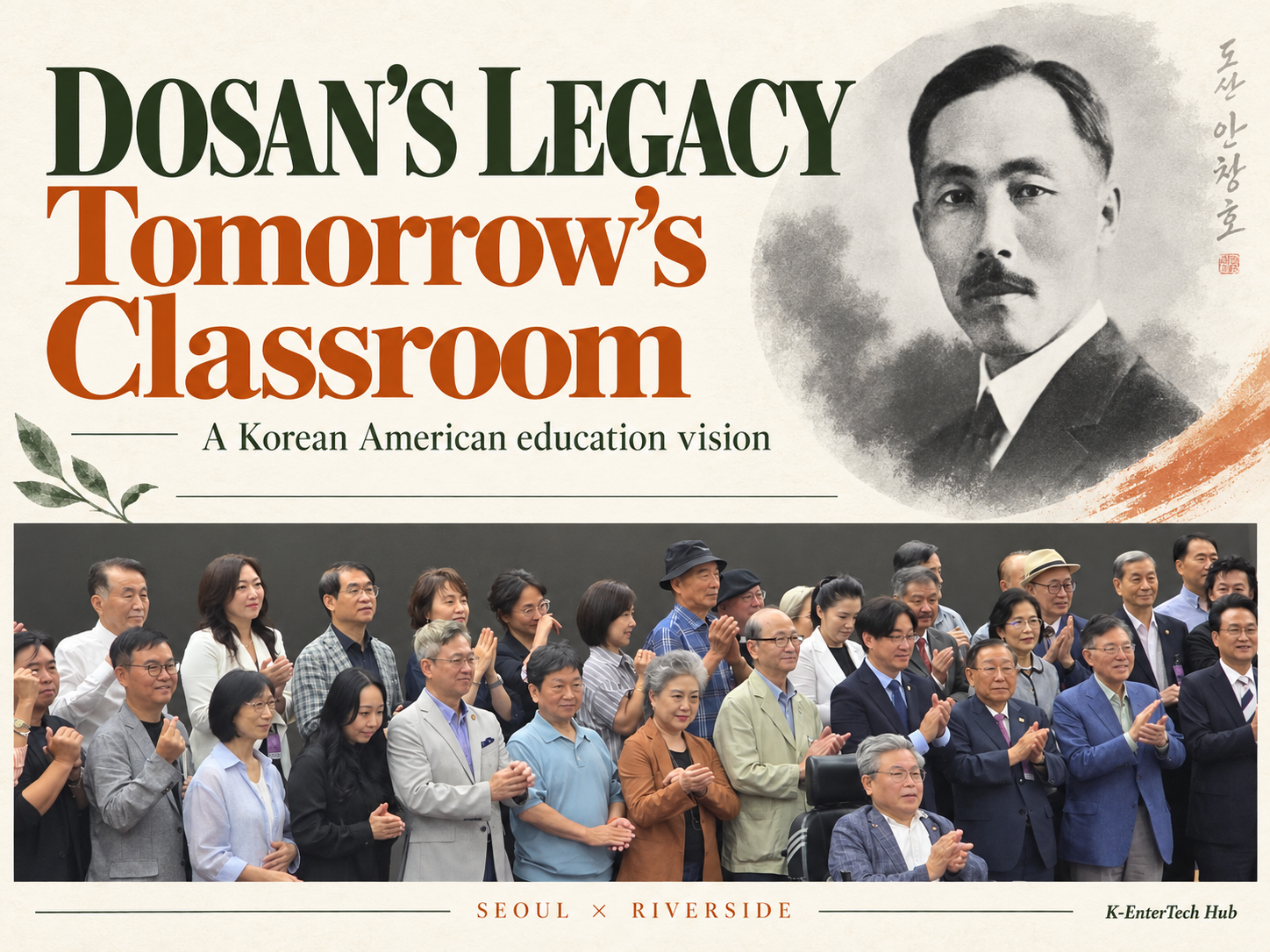
At the National Assembly's first policy seminar on the Dosan memorial… a 2029 opening targeted on about 10 acres, with linked ministry support named as the policy task
The roots of Korean democratic republicanism lie in Pachappa Camp (파차파 캠프), the early Korean settlement in Riverside, California — that claim was put to the National Assembly on Monday, along with a proposal that the Dosan memorial planned for the site be designed not as a facility honoring Ahn Chang-ho (안창호) but as an educational institution run jointly by Korea and the United States.
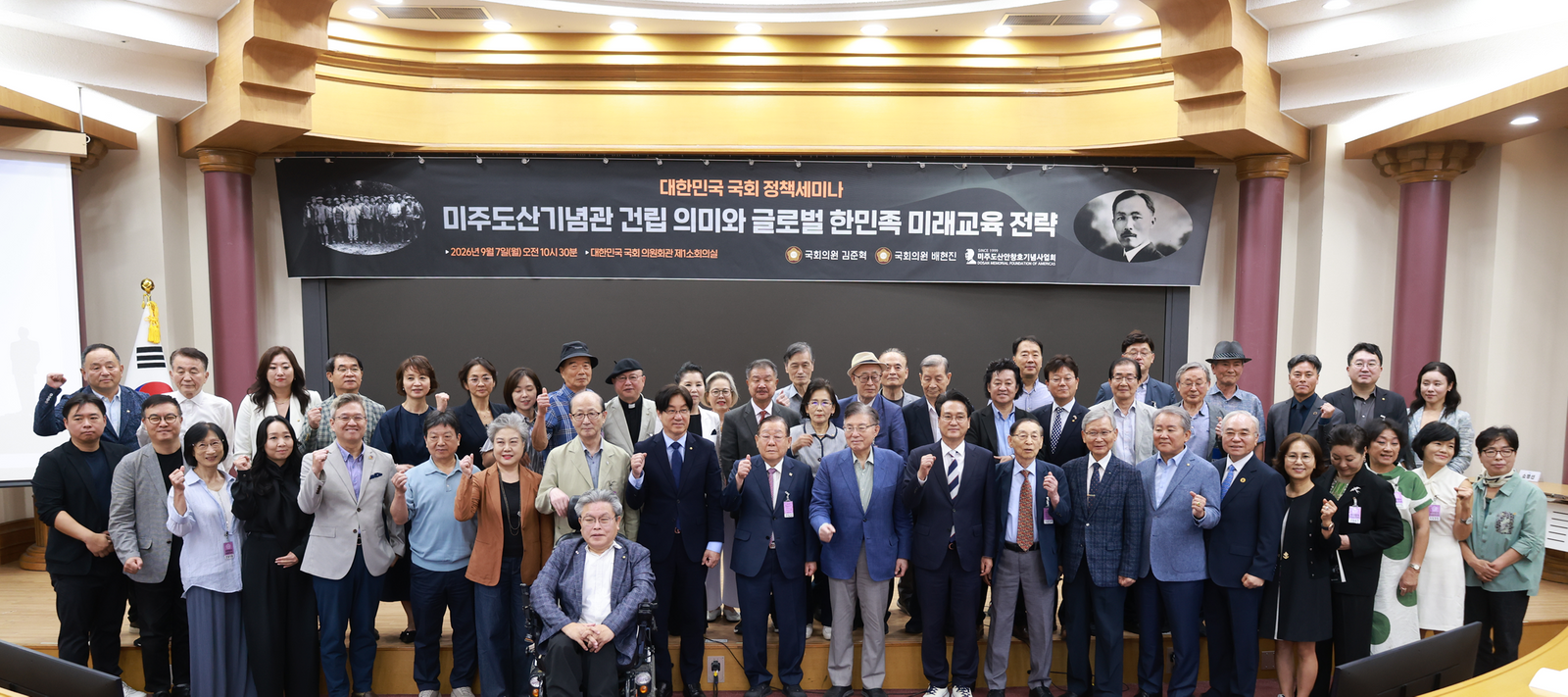
The Dosan Ahn Chang Ho Memorial Foundation of the Americas (미주도산안창호기념사업회) and the offices of lawmakers Kim Jun-hyuk (김준혁) and Bae Hyun-jin (배현진) held a policy seminar titled "The Significance of Building the Dosan Memorial in the Americas and a Global Education Strategy for the Next Korean Generation" on Sept. 7 in Room 1 of the National Assembly Members' Office Building in Seoul. It is the first time the Assembly has hosted a policy seminar on the memorial.
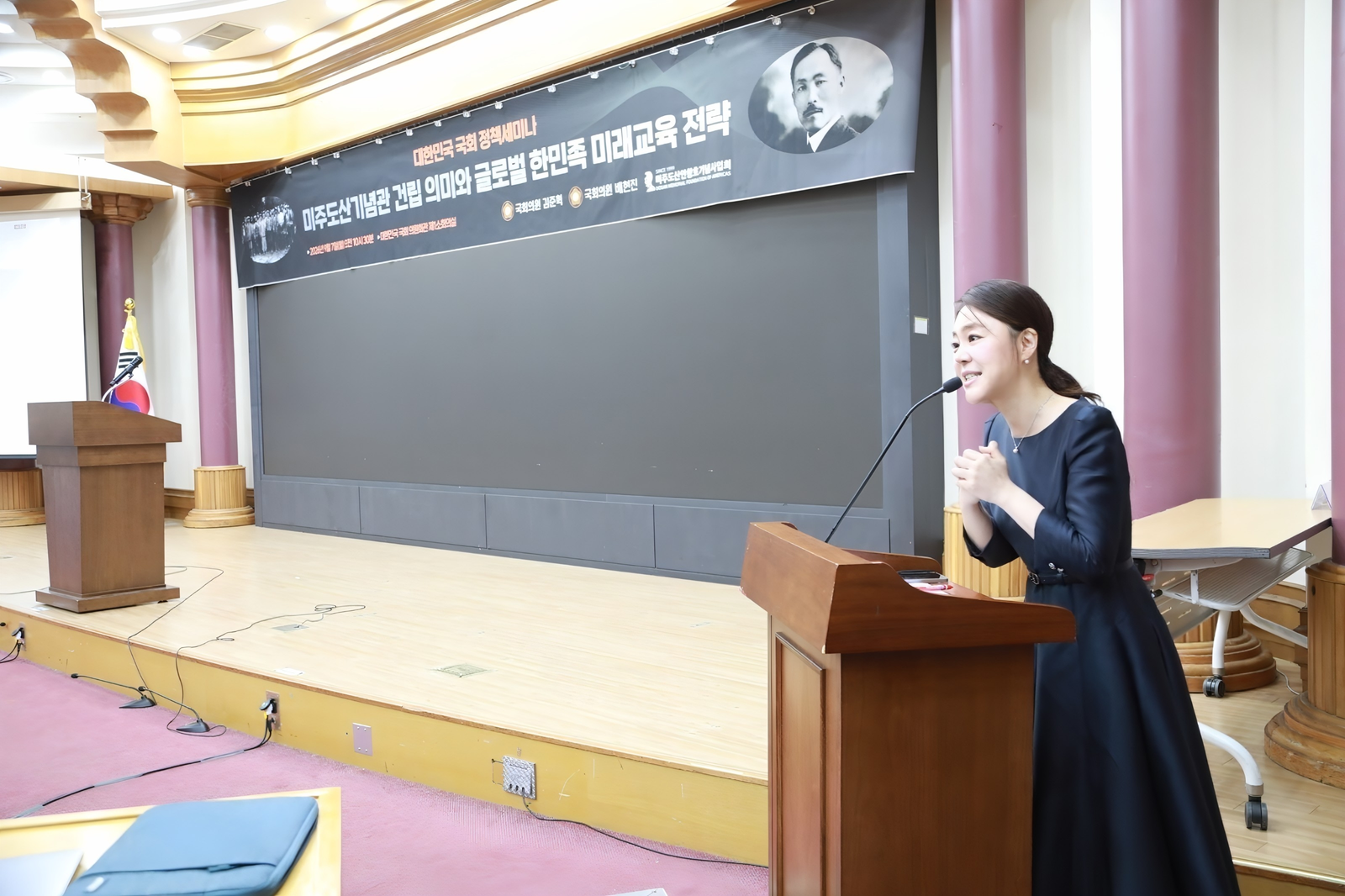
Convened at the request of the foundation, whose members come from Korean American communities, it drew about 100 people, including former National Assembly Secretary General Yoo In-tae (유인태), academics and educators, overseas Korean organizations and U.S.-based participants. CEO of The K Blossom& Announcer Moon So-ri (문소리) moderated.
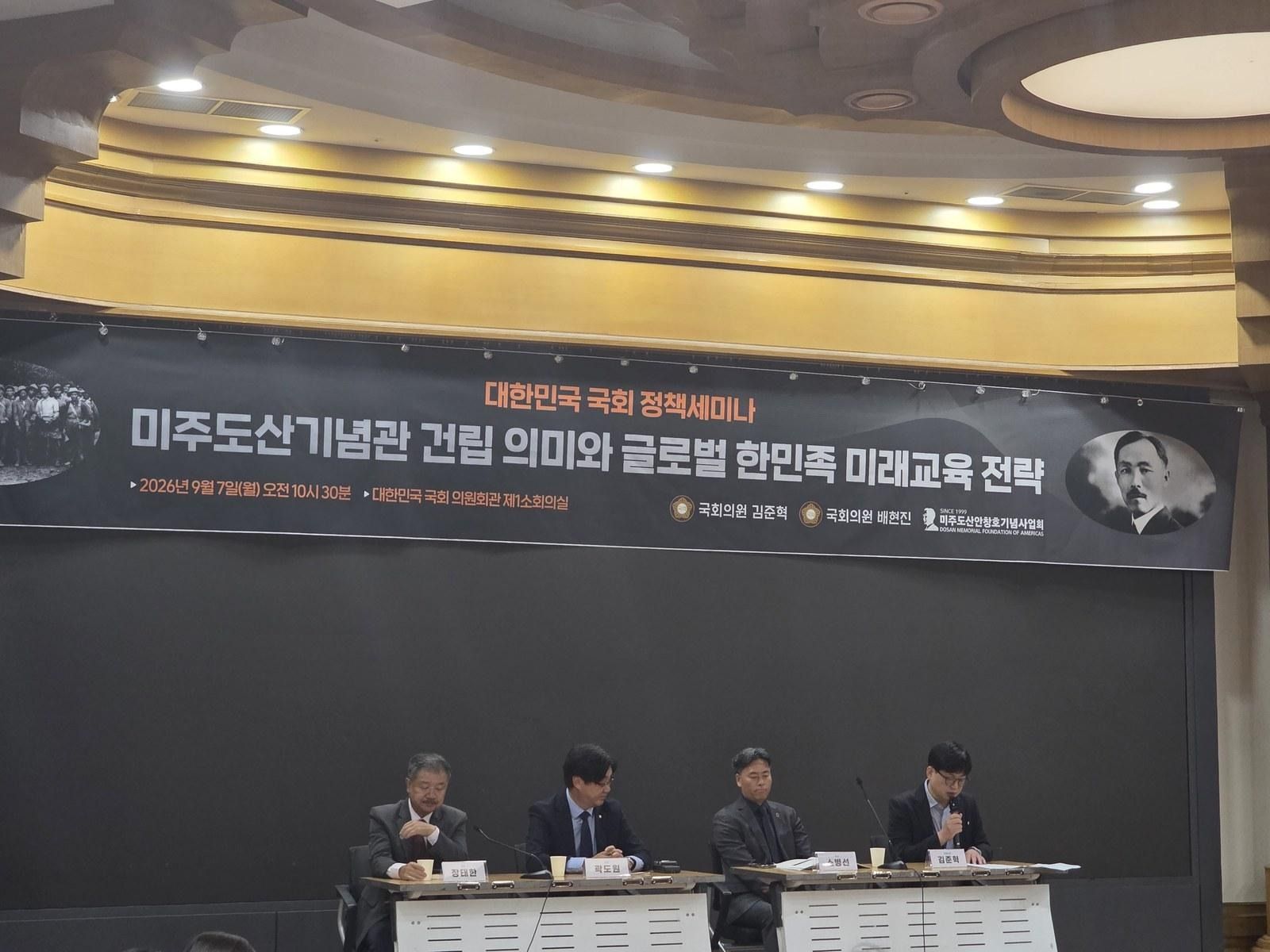
Participants agreed that the memorial should go beyond preserving history to establish the identity of the next Korean American generation and serve as a bridgehead for Korea–U.S. public diplomacy. Linked support from the Overseas Koreans Agency (재외동포청), the Ministry of Patriots and Veterans Affairs (국가보훈부) and the Ministry of Education (교육부), along with a standing support framework at the Assembly level, were named as policy tasks.
"A 21-article charter passed in Riverside in 1911"
Edward T. Chang (장태한), professor at UC Riverside and the seminar's first presenter, calls Pachappa Camp "the Dosan Republic." His grounds are the self-governing institutions built there.
The Gongnip Hyophoe (공립협회), founded at the camp by 49 members in 1905, introduced a delegate system and enforced rules including a 9 p.m. lights-out, a dress code and a community police arrangement. A Korean Mission followed in 1906, running English classes and a Korean-language school. The organizational line continued into Sinminhoe (1906), the Korean National Association (1909) and Heungsadan (1913).
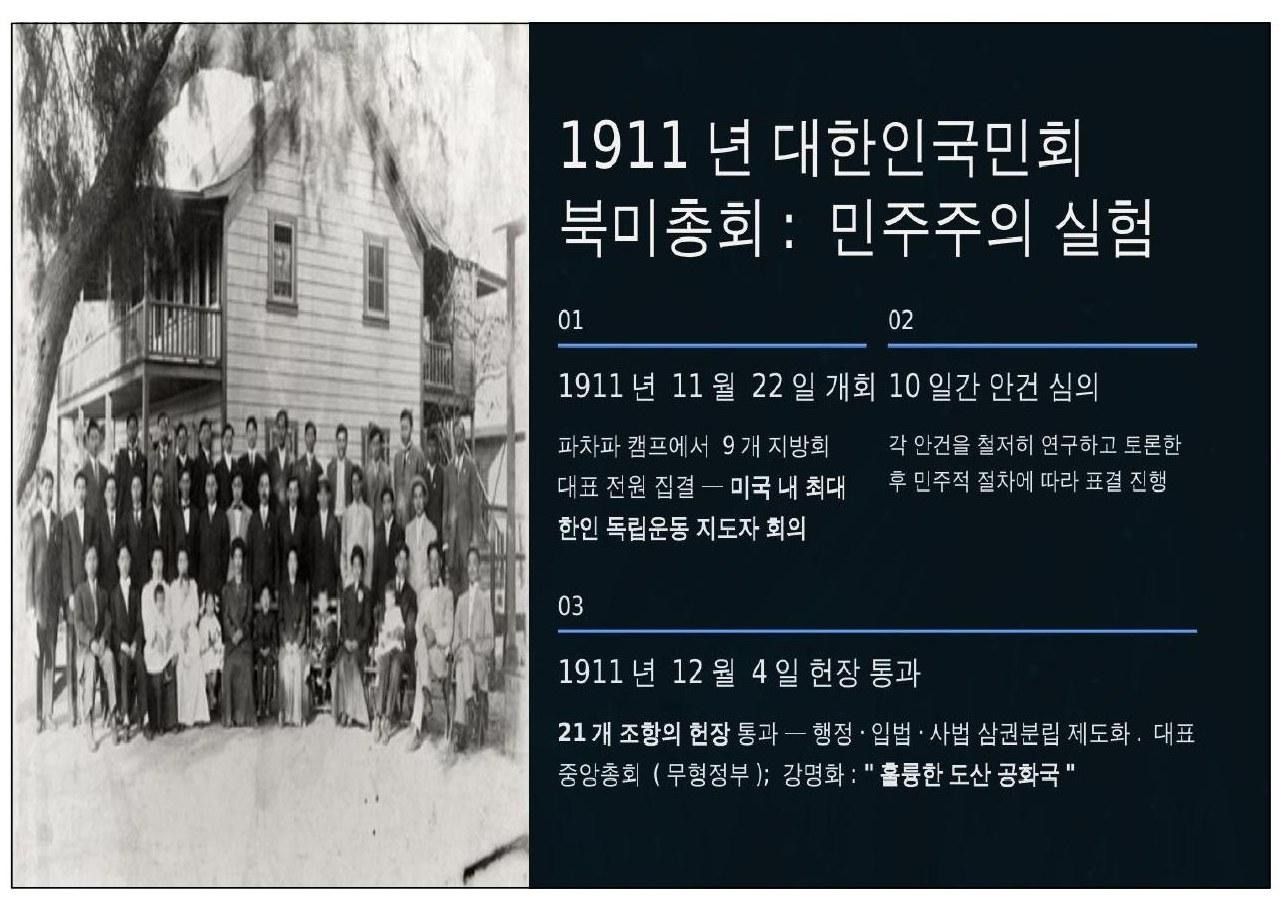
In November 1911 the Korean National Association held its North America convention at Pachappa Camp. Delegates from nine regional chapters deliberated for 10 days and adopted a 21-article charter on Dec. 4, creating a central assembly and declaring the founding of an "intangible government" representing Koreans abroad. A year after Korea lost its sovereignty, Chang said, a delegate system and a judicial system were introduced together and a separation of powers was put into operation.
The scholarly consensus holds that the democratic republicanism of the 1919 Shanghai provisional government came by way of the 1917 Declaration of Grand Unity. Chang offered a different genealogy, noting that the declaration was found among Dosan's personal effects and that Park Yong-man, one of its 14 signatories, is tied to activity at Pachappa Camp. His conclusion: "Democratic republicanism was tested and institutionalized first at Pachappa Camp in Riverside. The roots of Korean constitutional order are in California."
He also noted that the Korean National Association declared women's equal participation in 1918 — two years before American women won the vote. The first woman to join was not Korean but a Mexican woman married to a Korean taken to the Yucatán as plantation labor.
A Korean village in the orange groves… up to 300 at harvest
Ahn formed Pachappa Camp in 1904 by gathering Korean laborers working the orange groves of Riverside. To break into hiring controlled by Japanese labor contractors he set up an employment bureau himself, and he taught the workers that "picking even a single orange with full care is a way of serving the country." The camp stood at 1532 Pachappa Avenue; Chang pinned the location by finding the phrase "Korean Settlement" on a 1908 New York Life fire insurance map.
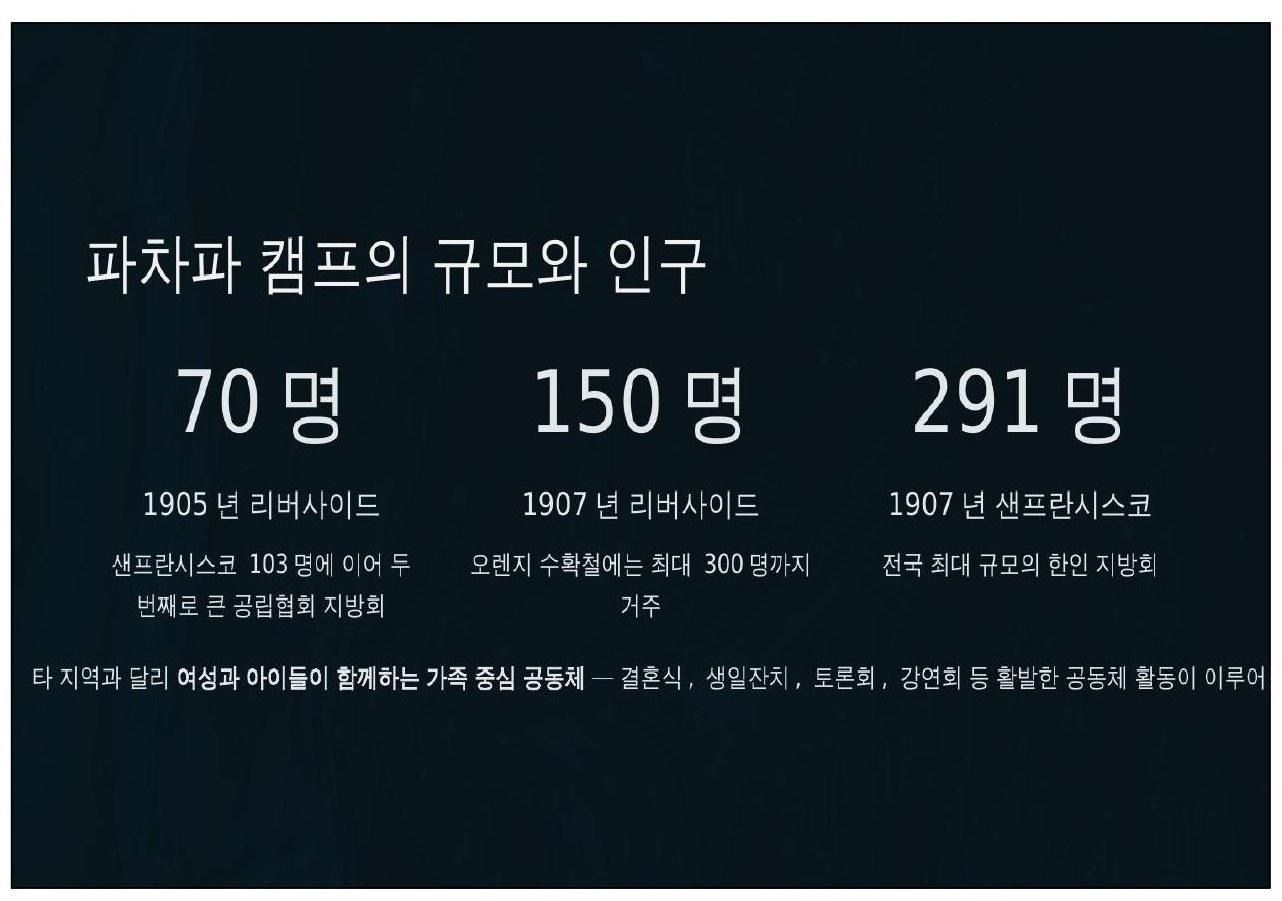
The resident count rose from 70 in 1905 to 150 in 1907 and reached 300 during the orange harvest. Where 99 percent of Chinatown residents were single men after the 1882 Chinese Exclusion Act, Pachappa Camp housed women and children and held weddings, birthday celebrations and debates. The Korean-language newspaper Shinhan Minbo described it in 1910 as "the Korean village Koreans founded first in America."
The site was cleared in the 1950s and now holds a parking lot and a gas station. Riverside designated it Point of Cultural Interest No. 1 in March 2017, and the California legislature unanimously adopted Nov. 9, Ahn's birthday, as Dosan Ahn Chang Ho Day the following August.
In 2021 the Mellon Foundation provided $850,000 (about 1.2 billion won) for the Young Oak Kim Center for Korean American Studies at UC Riverside to mount a Pachappa Camp exhibition, which traveled to San Francisco, Washington, D.C., New Jersey, New York and Chicago before returning to Riverside.
The memorial as an educational institution… 10 acres, 2029 opening targeted
The design presented by David Kwak (곽도원), the foundation's chairman, gives the memorial six functions: a research institute on the independence movement in the Americas, an immigration-history museum, a Korea–U.S. digital archive, a next-generation education and leadership center, a global Korean diaspora research hub and a public-diplomacy platform.
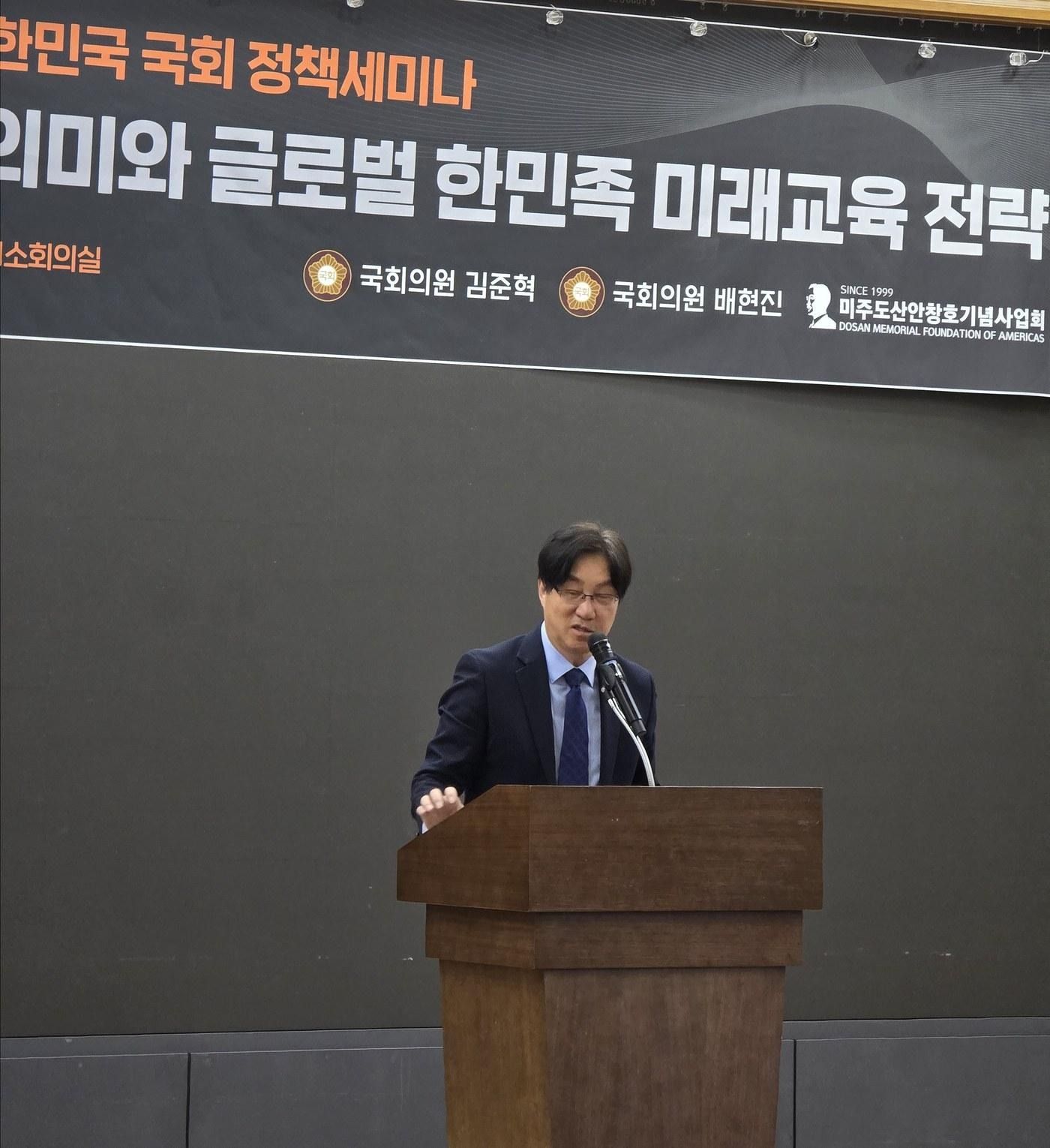
His grounds were what memorials built by other immigrant communities have already achieved. The U.S. Holocaust Memorial Museum has drawn about 50 million visitors since 1993, more than 11 million of them school-age children and teenagers.
The National Museum of African American History and Culture builds multiple perspective-taking and critical thinking into its grade 3–12 programs, and the Japanese American National Museum in Los Angeles connects the wartime incarceration experience to civil rights education. Korean American communities have no standing institution of that kind, Kwak said, calling it "the responsibility of Korean Americans and also the responsibility of the Korean state."
The build runs in three phases: a memorial in Riverside, a cultural space in Orange County, and a residency program taking students from Korea and all 50 states. The site is about 10 acres near California Citrus State Historic Park, where the foundation plans an exhibition hall, a multipurpose hall, lodging and an immigration experience center, targeting a 2029 opening. Riverside offered three candidate parcels and the foundation settled on one after two to three years of review.
After the seminar Kwak said the memorial "must not remain a space that commemorates the past" and "must carry the spirit of education, democracy, community and leadership that Dosan Ahn Chang-ho left behind to today's young people, and become an education platform connecting the future generations of Korea and the United States" (Yonhap News, Sept. 7).
500,000 visitors to the statue in 25 years… funding still private
The foundation was launched in 1999 and dedicated the Ahn statue on the Riverside pedestrian mall in front of City Hall on Aug. 11, 2001 — a full-length figure in formal dress with bronze relief panels of Koreans harvesting oranges, praying in church and studying at a Korean school, refurbished in 2016. Memorials to Mahatma Gandhi and Dr. Martin Luther King Jr. stand in the same space. About 500,000 people have visited the statue over 25 years.
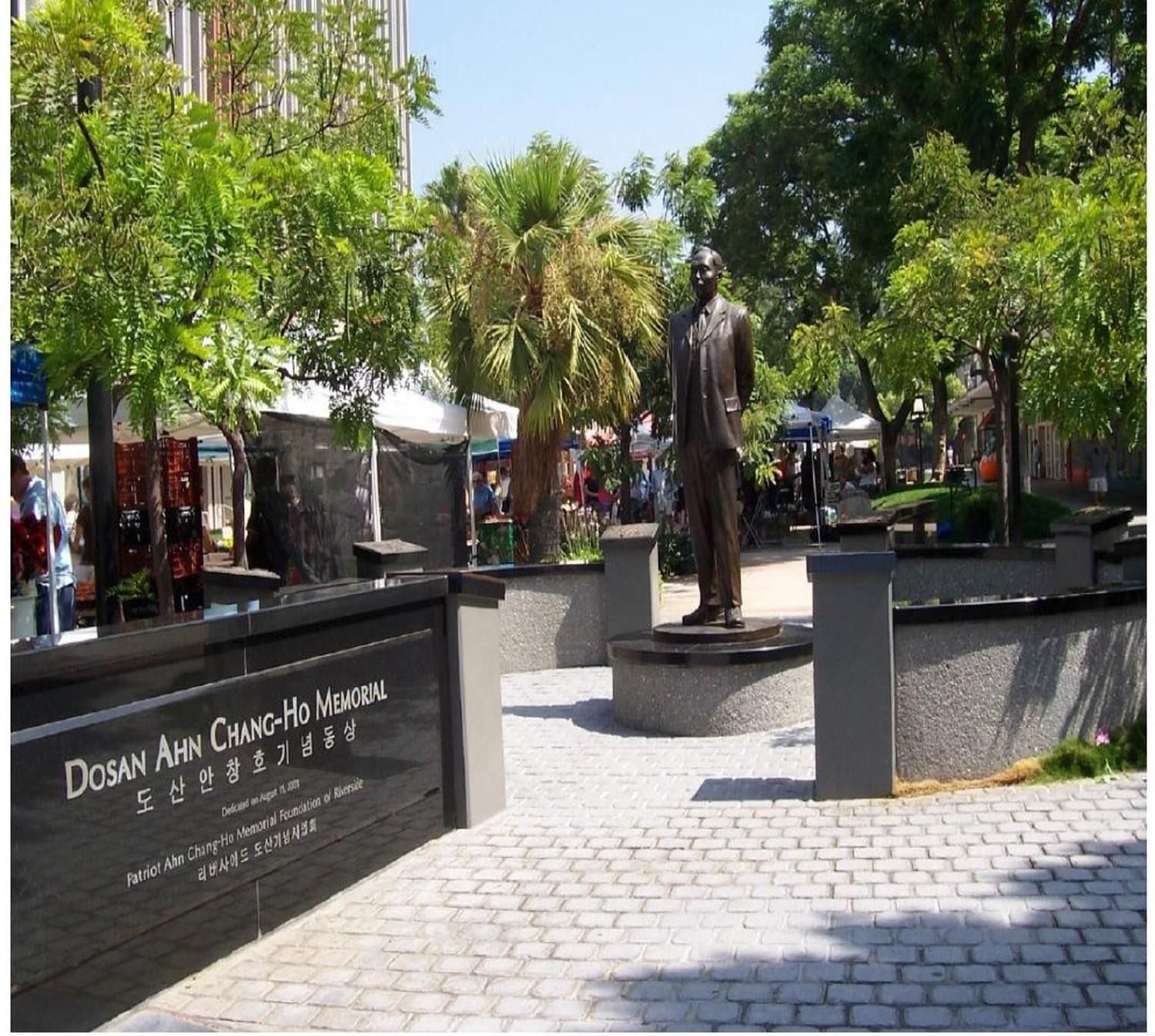
The Riverside City Council passed the memorandum of understanding for a Korean American Cultural Heritage Center unanimously on April 11, 2023, and signed it formally on May 15.
The U.S. local government handled the site and permits, but construction and operating costs remain private. The board runs to about 70 members, and the foundation covered the entire cost of this seminar. Funding is structured to combine California state budget applications, Korean government funds, global companies operating in the United States, and donations from Korean Americans and from people in Korea.
"The Heungsadan purchase is the precedent"… the Assembly's role
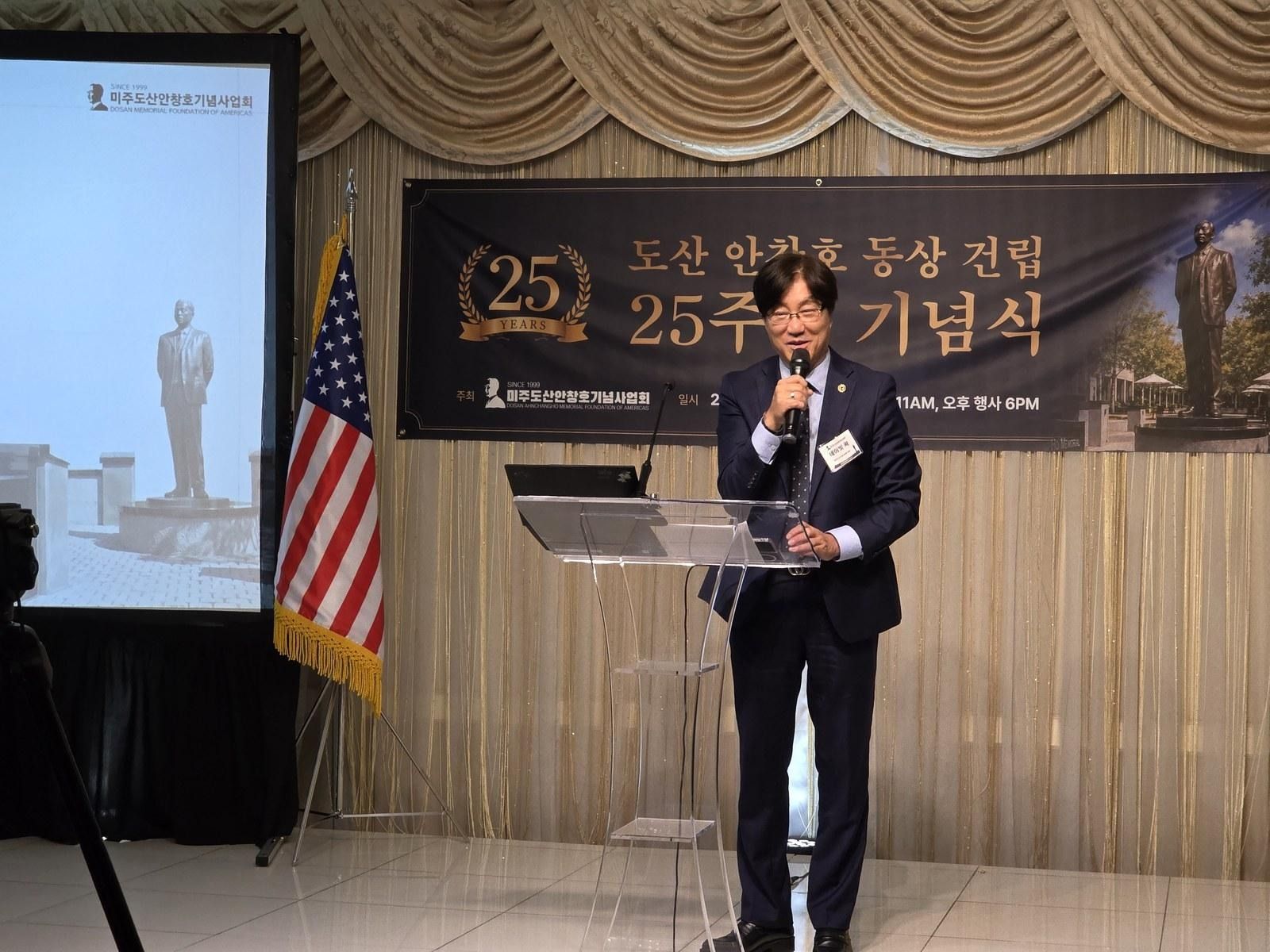
Korean government money has gone into an independence-movement site in the United States before. Rep. Bae Hyun-jin pressed for preservation of the former Heungsadan headquarters in Los Angeles at the 2021 parliamentary audit, when a Chinese-owned construction firm's development plan put the building under threat of demolition, and introduced a resolution urging the city to designate it a historic site.
As a member of the Assembly's Special Committee on Budget and Accounts in 2022 she secured the purchase budget, and the Ministry of Patriots and Veterans Affairs completed the purchase in 2023. Restored to its 1930s form, the building opens in February 2027 as the hub managing 159 independence-movement sites across the Americas.
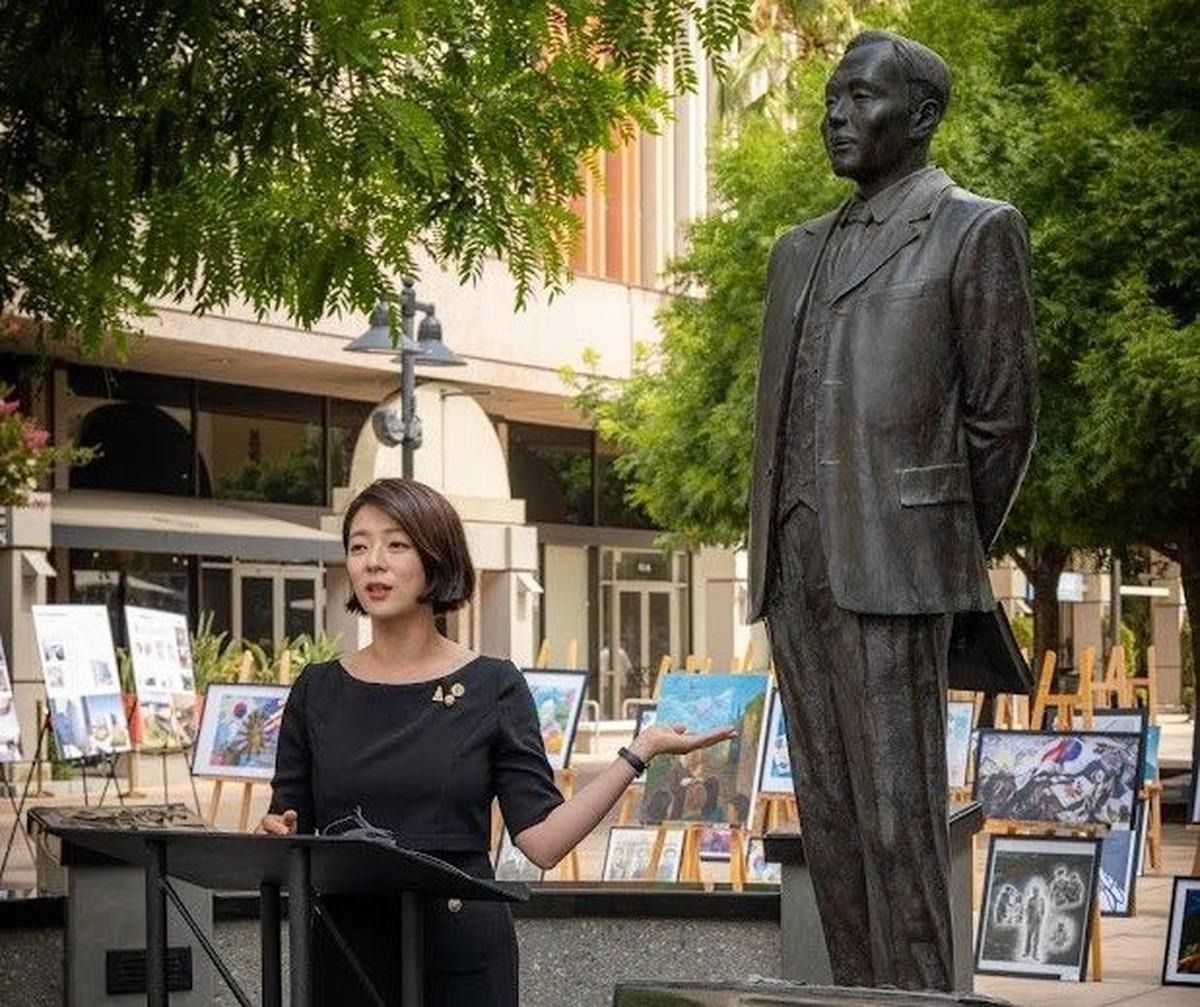
Bae said she hoped the project would "be a good opportunity to reflect on the history and spirit Dosan left in the Americas, and to draw attention to it at home as well." Kim Deog-ryong (김덕룡), chairman of the Kim Young-sam Democracy Center, said in his congratulatory address that "academia and the National Assembly, not only the Korean American community, should join forces so that third- and fourth-generation Korean Americans can carry on Korean history and their identity as Koreans" (Dailian, Sept. 7).
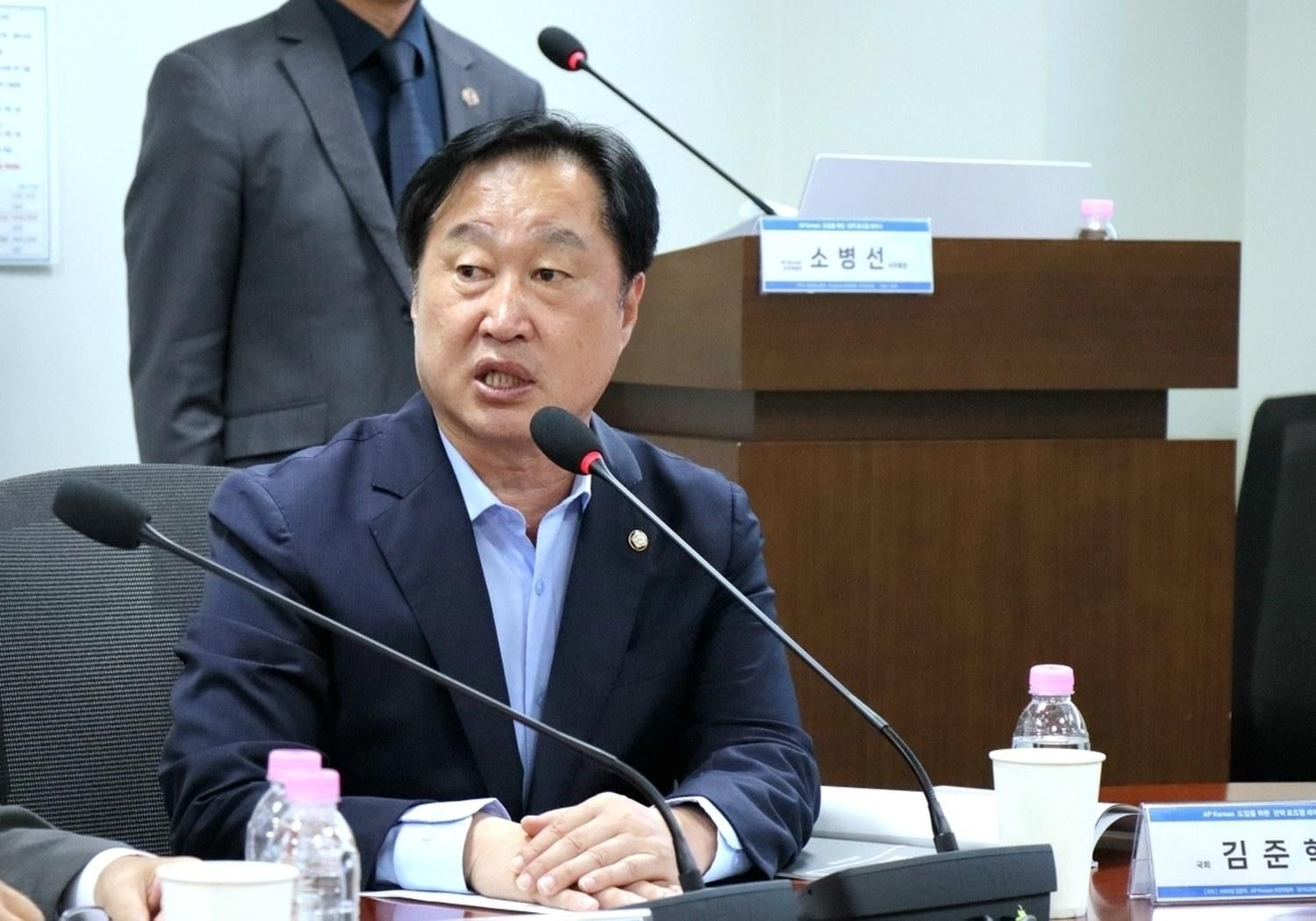
The paper on the Assembly's role came from Kim Jun-hyuk's office. Kim worked as a university professor before entering the Assembly and, before that, spent nine years as a curatorial civil servant at a museum. His paper held that "one of the most important conditions for a museum or memorial is location," proposing a phased approach: build a right-sized space in an accessible location first, produce results, then scale up.
"The first and second generations lay the foundation of a memorial space and the next generation takes part in fundraising and cooperation to complete a larger Dosan memorial," it said, calling that "how Dosan's spirit passes from generation to generation." Ahn Min-seok (안민석), superintendent of the Gyeonggi Provincial Office of Education, also addressed funding and student access in his congratulatory remarks and said the discussion should continue.
Soh Byung-sun (소병선), the foundation's senior vice chairman and the session's chair, framed the first paper as the historical question of "where we began" and the second as the forward question of "where we should go with that history," and named the personal, organizational and intellectual links between Pachappa Camp and the 1919 Shanghai provisional government as the next research task.
Who Ahn Chang-ho was
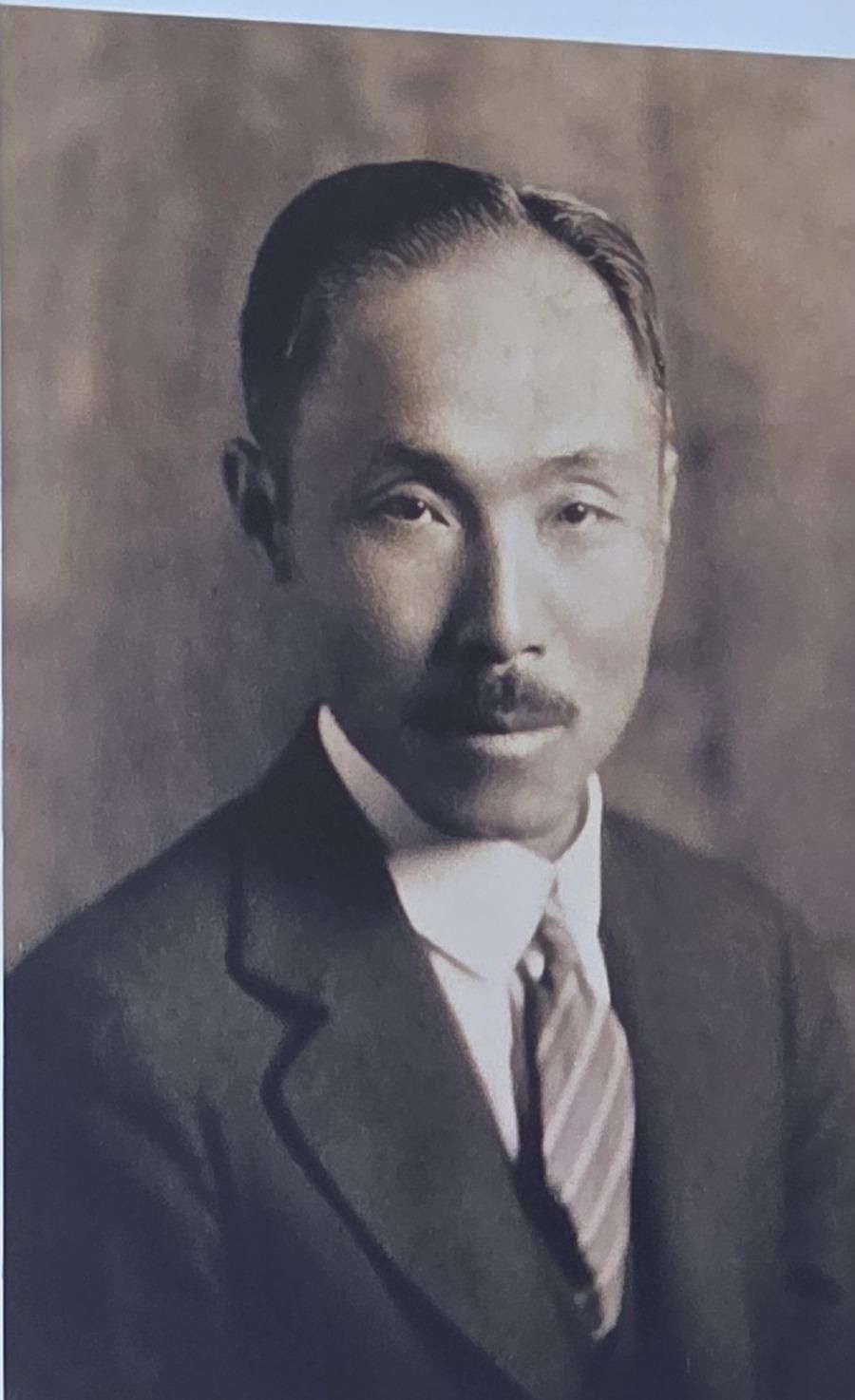
Born Nov. 9, 1878, in Kangso, South Pyongan Province. He studied at the Presbyterian Guse Hakdang in Seoul from 1895, joined the Independence Club in 1897 and organized its Pyongyang branch, and helped convene the People's Joint Assembly in Seoul the following year. Jeomjin School, which he founded in his home district in 1899, was the first modern school he built. He arrived in San Francisco on Oct. 14, 1902, spent 13 years in the United States, and in 1905 founded the Gongnip Hyophoe and launched its newspaper Gongnip Shinbo.
Returning to Korea in 1907, he organized Sinminhoe with Lee Gap and others and established Daesung School in Pyongyang; in 1909 he took part in founding the Youth Study Society. After Korea lost its sovereignty in 1910 he returned to the United States, founded Heungsadan in San Francisco on May 13, 1913, and served from 1914 as central chairman of the Korean National Association.
At the Shanghai provisional government in 1919 he served as interior minister and acting prime minister, securing its offices and launching its newspaper Dongnip Sinmun.
He helped found the Korean Independence Party in Shanghai in 1930, was arrested after Yun Bong-gil's 1932 bombing and sentenced to four years, and was released on parole in 1935 after two and a half years. Detained again in the 1937 Dongwoohoe incident and freed on medical grounds, he died of cirrhosis at Keijo Imperial University Hospital on March 10, 1938.
The Korean government posthumously awarded him the Order of Merit for National Foundation, Republic of Korea Medal, in 1962. His guiding principles were musil-yeokhaeng (무실역행, truth-seeking and diligent practice), loyalty and courage.
Event details
Event · National Assembly Policy Seminar for the Dosan Memorial in the Americas
Topic · The Significance of Building the Dosan Memorial in the Americas and a Global Education Strategy for the Next Korean Generation
Date / venue · Monday, Sept. 7, 2026, 10:30 a.m., Room 1, National Assembly Members' Office Building, Seoul
Co-hosts · Office of Rep. Kim Jun-hyuk, Office of Rep. Bae Hyun-jin, Dosan Ahn Chang Ho Memorial Foundation of the Americas
Presenters · Edward T. Chang (UC Riverside), Chairman David Kwak, Office of Rep. Kim Jun-hyuk
Discussant · Soh Byung-sun, senior vice chairman, Dosan Ahn Chang Ho Memorial Foundation of the Americas
Memorial plan · About 10 acres near California Citrus State Historic Park, Riverside; exhibition hall, multipurpose hall, lodging and immigration experience center; 2029 opening targeted
Sources
— Dosan Ahn Chang Ho Memorial Foundation of the Americas, seminar booklet and recording, Sept. 7, 2026
— Yonhap News, Sept. 7, 2026 — yna.co.kr / Dailian, Sept. 7, 2026 — dailian.co.kr
— Dosan Ahn Chang Ho Memorial Foundation of the Americas official site — 10-acre site, 2019 declaration, 2023 MOU, 2029 opening target, about 70 board members — dosanusa.com
— The Seoul Shinmun, "LA Heungsadan former headquarters to be refurbished next year," July 21, 2025 — February 2027 opening, hub for 159 sites — seoul.co.kr
— Encyclopedia of Overseas Korean Culture, "Dosan Ahn Chang Ho Statue, Riverside" — dedicated Aug. 11, 2001, refurbished 2016 — okpedia.kr
— City of Riverside, press release on the Korean American Cultural Heritage Center MOU, April 12, 2023 — riversideca.gov/press
— Edward T. Chang, "Pachappa Camp: The First Koreatown in the United States," University of California Press, 2021 — escholarship.org
— Encyclopedia of Korean Culture, "Ahn Chang-ho" — encykorea.aks.ac.kr