
INTERVIEW
Oneness Korea CEO Kim Jin-su on adapting manga from Shueisha, Shogakukan and Kodansha, a main-stage slot at AICON Singapore in October, and the long road to owning IP
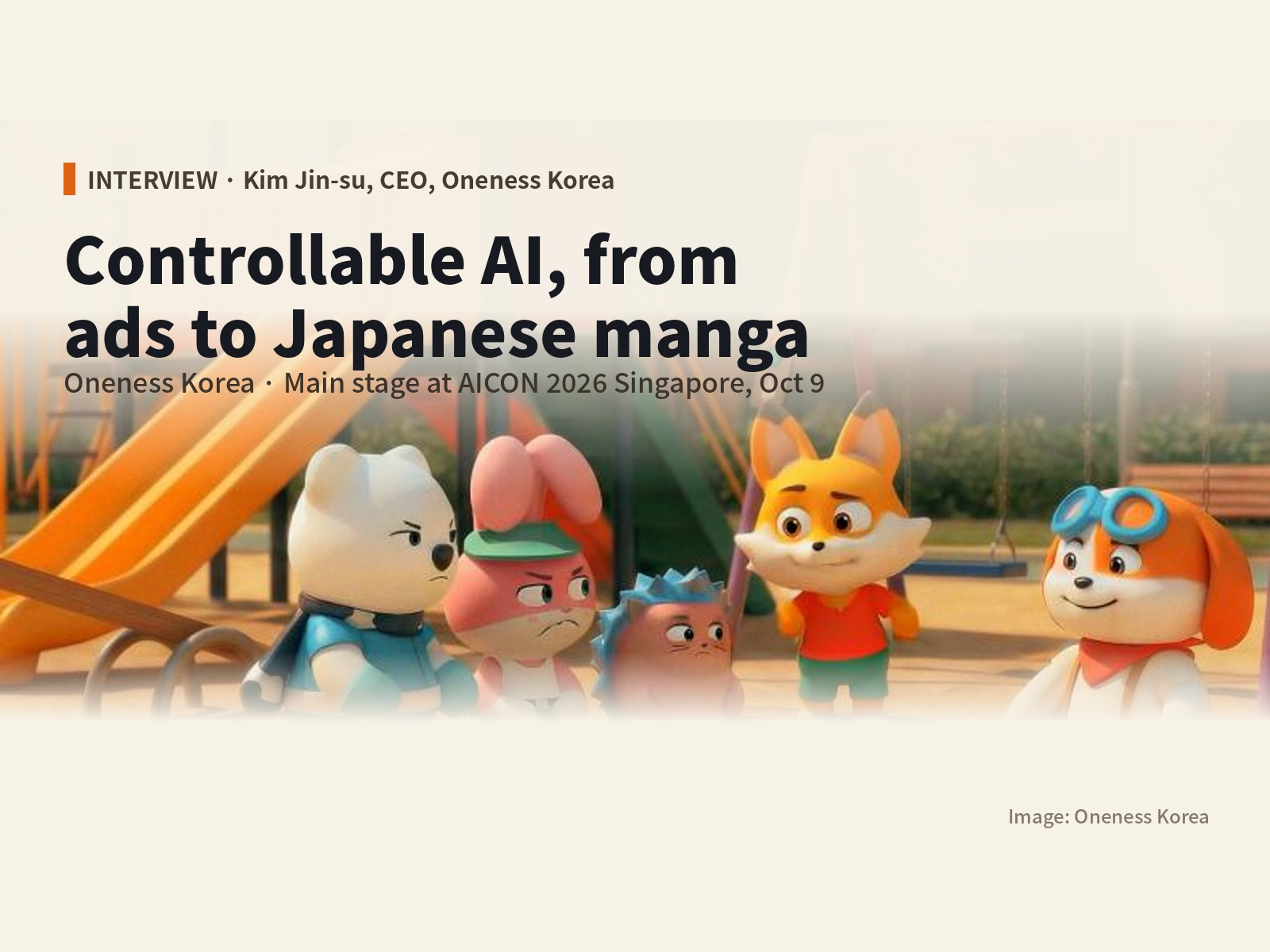
Oneness Korea (원니스코리아) will join the Korean delegation at AICON 2026, a consumer AI show at SCAPE in Singapore on October 8–9, and its chief technology officer will speak on a main-stage panel on October 9. The Seoul studio is also pursuing adaptations of Japanese manga with the AI pipeline it built for advertising.
The company is in talks to produce Dragon Ball videos, CEO Kim Jin-su (김진수) told K-EnterTech Hub (K엔터테크허브) in an interview on September 28. On August 19, at Shueisha’s (集英社) headquarters in Tokyo, the company set up a framework for global content business using IP from Shueisha, Shogakukan (小学館) and Kodansha (講談社), Japan’s three largest manga publishers. Videos for Shueisha’s official YouTube channel are also under discussion.
For now, the money comes from commercials. Advertising makes up “more than 90%” of revenue, Kim said. In the first half of this year the company produced about 60 AI-driven ads. Clients include Samsung Electronics, SK Telecom, Ford, Lincoln, BYD and PING.

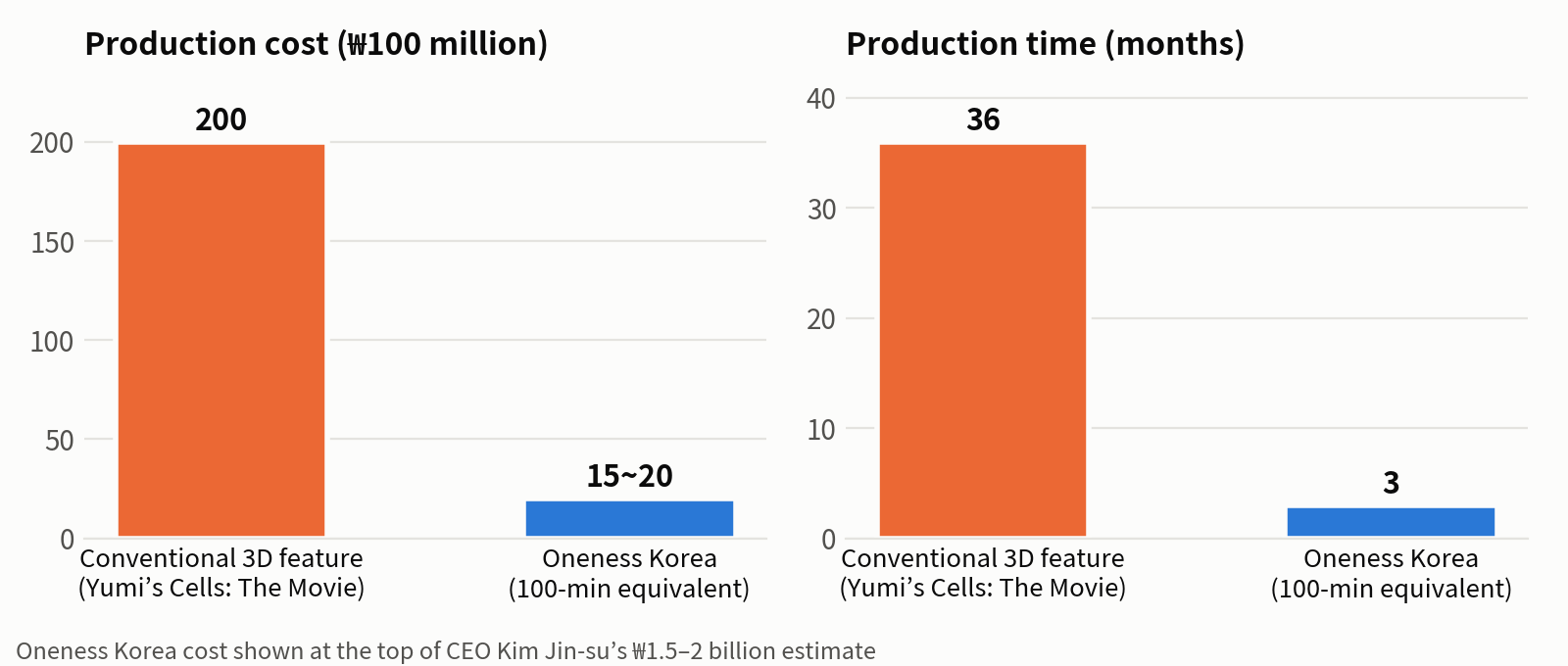
Kim’s pitch to advertisers and rights holders alike rests on cost and time. His benchmark is Yumi’s Cells: The Movie (유미의 세포들 더 무비), the 2024 feature from animation house Locus (로커스). By Kim’s estimate, that film cost about ₩20 billion ($14.7 million) and took roughly three years. Scaled to a 100-minute feature, he says, Oneness Korea’s pipeline would need ₩1.5–2 billion ($1.1–1.5 million) and about three months. The deck the company shows investors puts the same figure at about ₩1 billion.
The plan runs in stages: use advertising to fund the business and prove the technology, raise the studio’s profile through commissioned work on well-known Japanese titles, and eventually own IP.
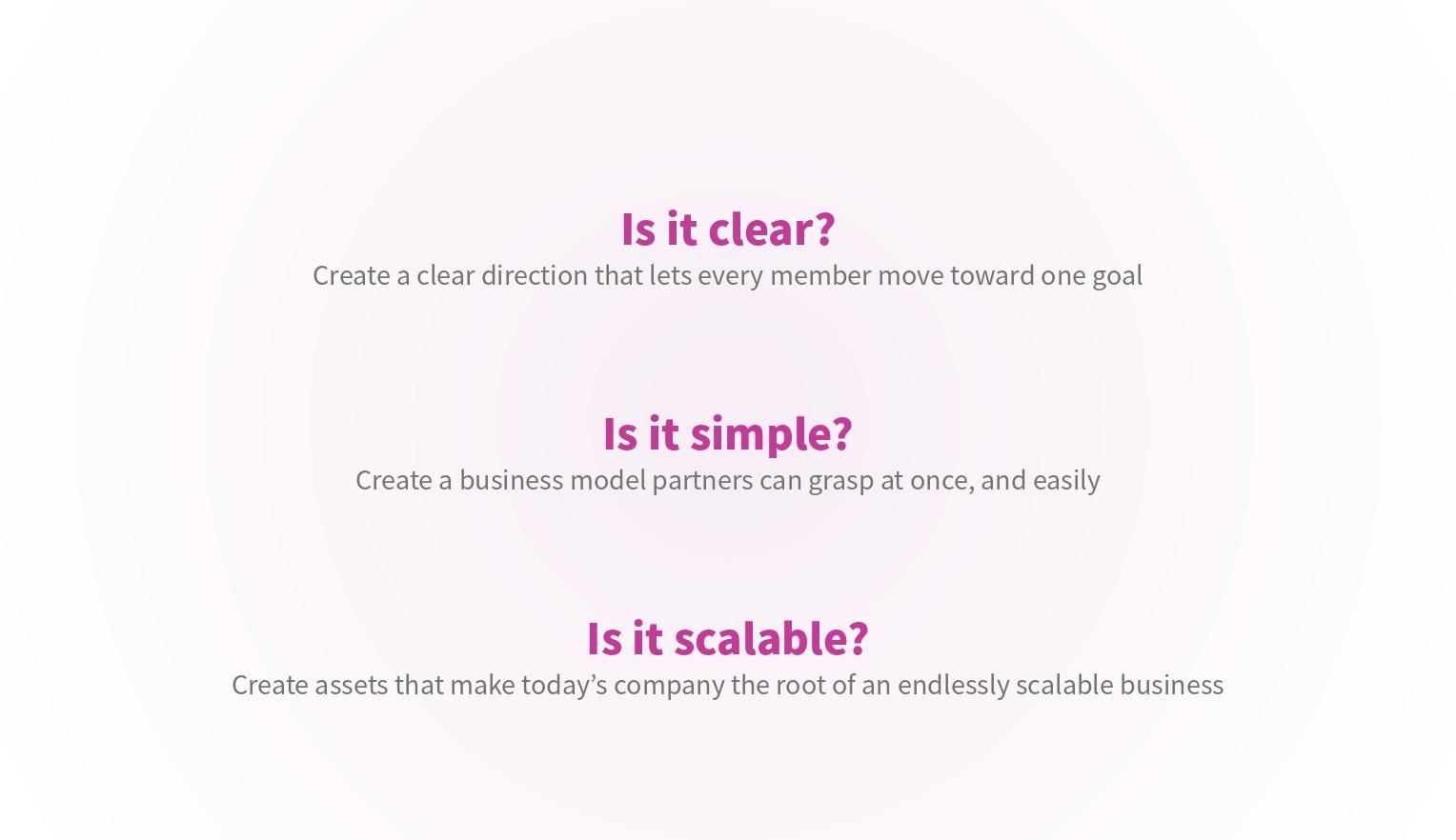
The three questions Oneness Korea asks itself (translated from Korean). Source: Oneness Korea investor presentation
A ₩19.8 trillion ad market growing 1.9% — and an anime market headed for $77.2 billion
Korea’s advertising industry handled ₩19.8 trillion ($14.6 billion) in 2024, up 1.9% from a year earlier, according to the annual advertising industry survey by the Ministry of Culture, Sports and Tourism (문화체육관광부). Ad production and specialist services — the segment Oneness Korea competes in — accounted for ₩5.5 trillion ($4 billion), or 27.8% of the total. Digital takes 60% of ad spending, according to Korea Broadcast Advertising Corp. (KOBACO, 한국방송광고진흥공사). The company’s deck classifies the domestic ad market as mature: growth comes from share shifting between players rather than from expansion, so production cost is the price of entry, and a slowing economy has made clients’ demands for cheaper production a constant.
Animation and licensing are growing faster. Grand View Research estimates the global anime market will rise from $37.7 billion in 2025 to $77.2 billion by 2033, a compound annual growth rate of 9.2%, with Japan holding more than 43%. Growth Market Reports projects the global character-licensing market at $230.1 billion by 2033, growing 6.8% a year, and Intel Market Research puts annual growth in animation and cartoon licensing at 15.5% from 2025 to 2032. Asia-Pacific licensing, at $32.7 billion and growing 8.4% a year, is the fastest-growing region; Oneness Korea cites these figures in its investor deck.
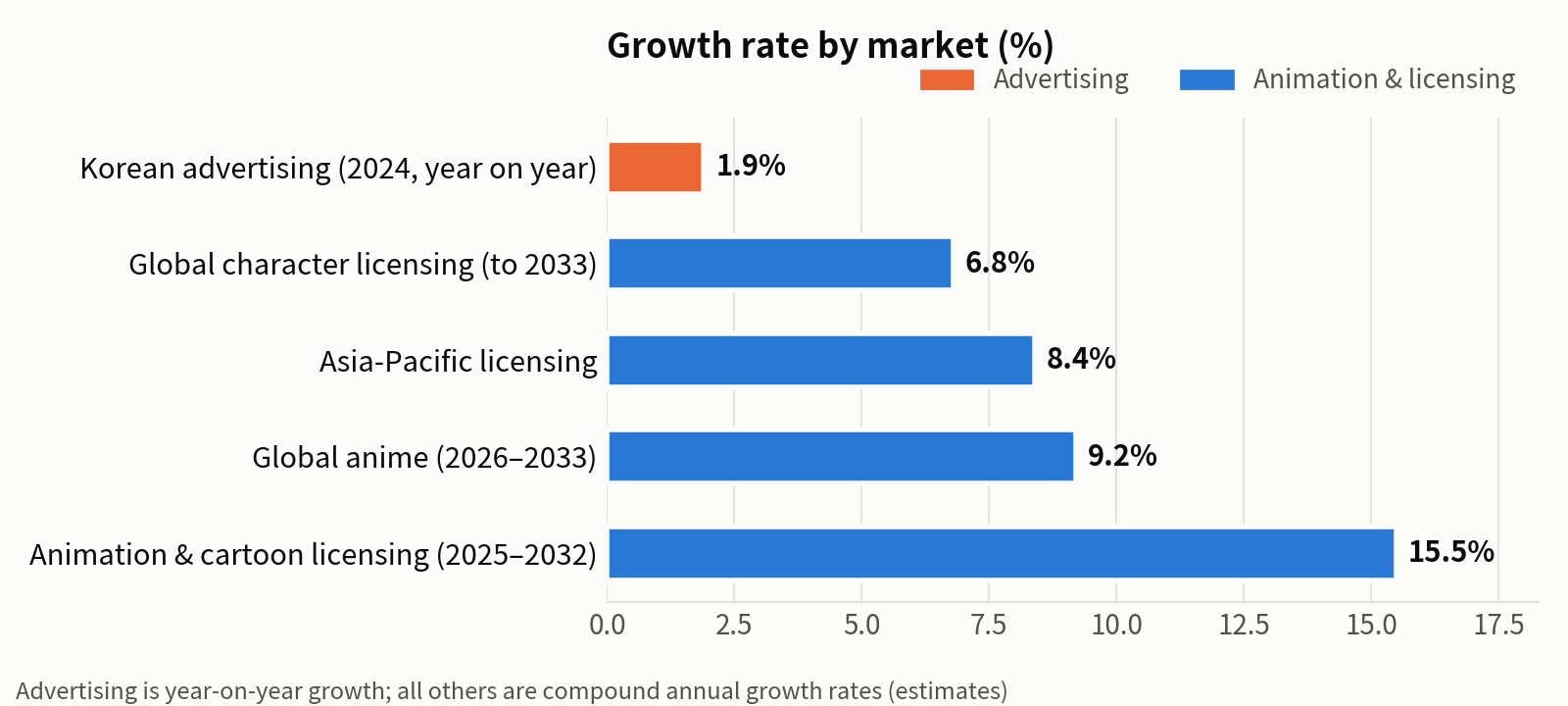
The two businesses make money differently, and that is why Oneness Korea is pursuing both. Advertising is paid per job, so revenue scales with headcount. A single piece of IP keeps earning as it spreads into licensing, merchandise and other spin-offs. The company’s plan centers on a loop: ad work brings in cash and credits, and the same technology is then redeployed on IP adaptations. The deck puts Korea’s generative AI market at ₩380 billion ($280 million), about 2% of the ₩19.8 trillion ad and content-production market, and says AI use in broadcasting and video has risen from 12.9% to 20.0%.
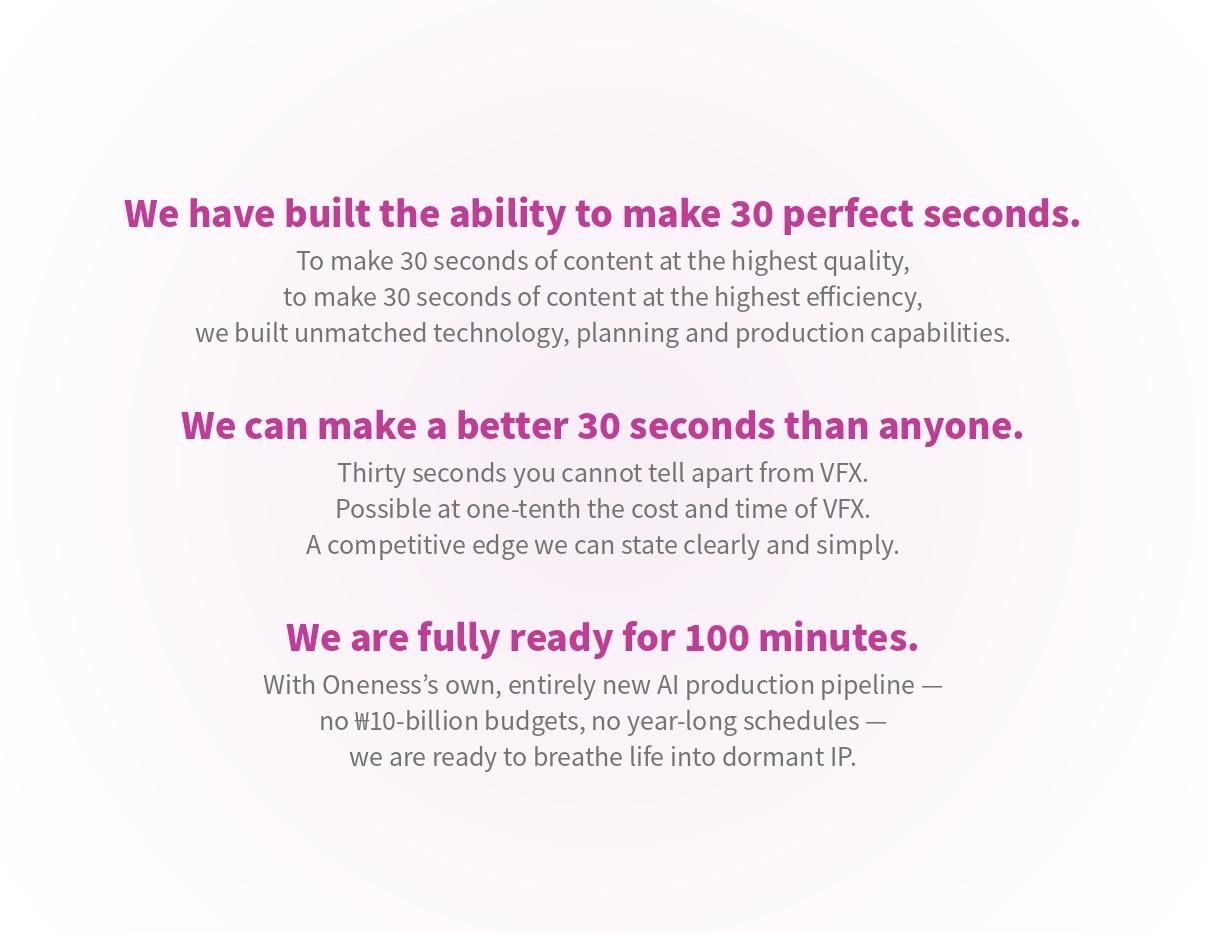
VFX-grade 30 seconds at a tenth of the cost
The company’s starting point is the 30-second spot. Kim said he set two internal goals — make those 30 seconds at the highest quality and the highest efficiency — and split the work among technology, planning and production teams. The line he uses with partners follows directly. “There is no difference from using VFX. Or: it takes a tenth of the cost and a tenth of the time of VFX. Wherever I go, that is exactly what I tell partners.”
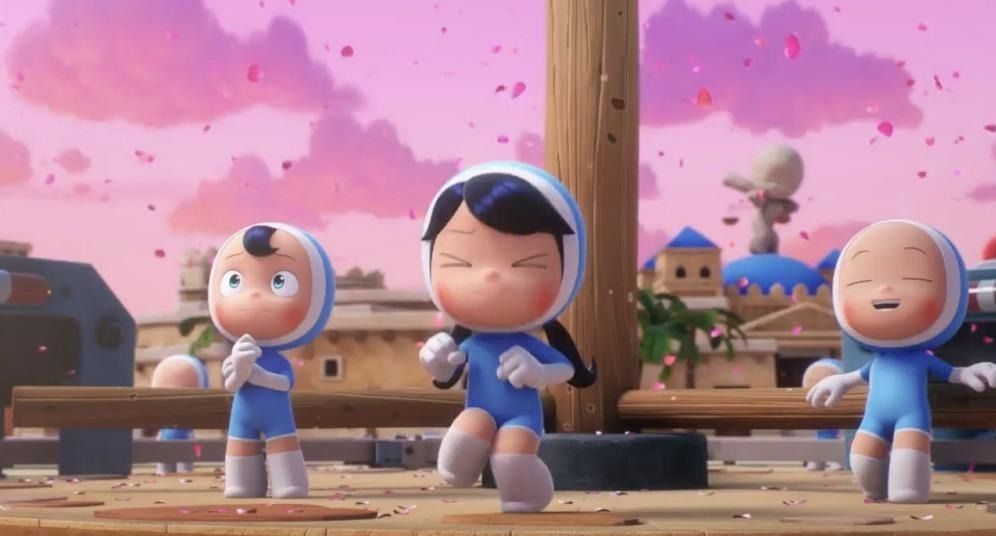
During the interview, Kim placed a still from Yumi’s Cells: The Movie next to one of his company’s own animation scenes and asked which one looked off. “Every time I open this page, I say that if either one bothers you, I’ll stop the presentation.” Oneness Korea’s ad deliveries have averaged 22 days: 14 for PING, 16 for Lincoln, 18 for BYD and 33 for a Samsung SSD campaign.
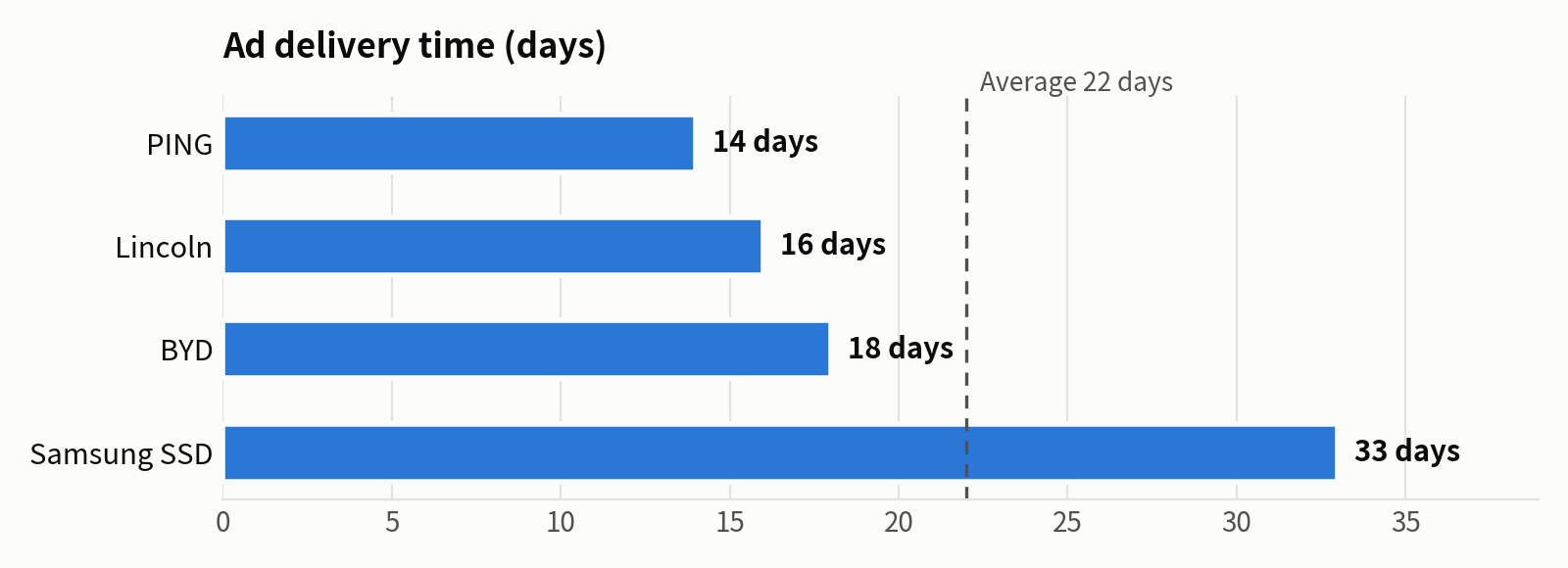
Delivery times for selected Oneness Korea commercials. Source: Oneness Korea
Same bottleneck in ads and IP: characters, motion, security
What stalls advertisers and rights holders alike is control over generative AI. In advertising, if a client asks for a small change at sign-off and the tool cannot make a partial edit, the whole clip has to be regenerated; if a product changes shape from cut to cut, it fails brand review. Licensed characters come with proportions, colors and tone written into the contract. The company reckons today’s generative AI still tops out at single shots of eight to 10 seconds.
Oneness Korea splits the problem across four engines. CAM keeps a character consistent as angles and lighting change. SNC extracts 3D motion from an actor filmed with a single ordinary camera and applies it to a character. FSC generates multiple camera angles from one tracked scene. OCS is an on-premises production environment that never touches outside servers. “Put simply, AI is a very advanced search engine — it pulls up archived material, so it has nothing for things it has never seen,” Kim said. “We built a program to train it on those, and for movements you can’t describe in a script, we built a digital motion-capture suit to control them.”
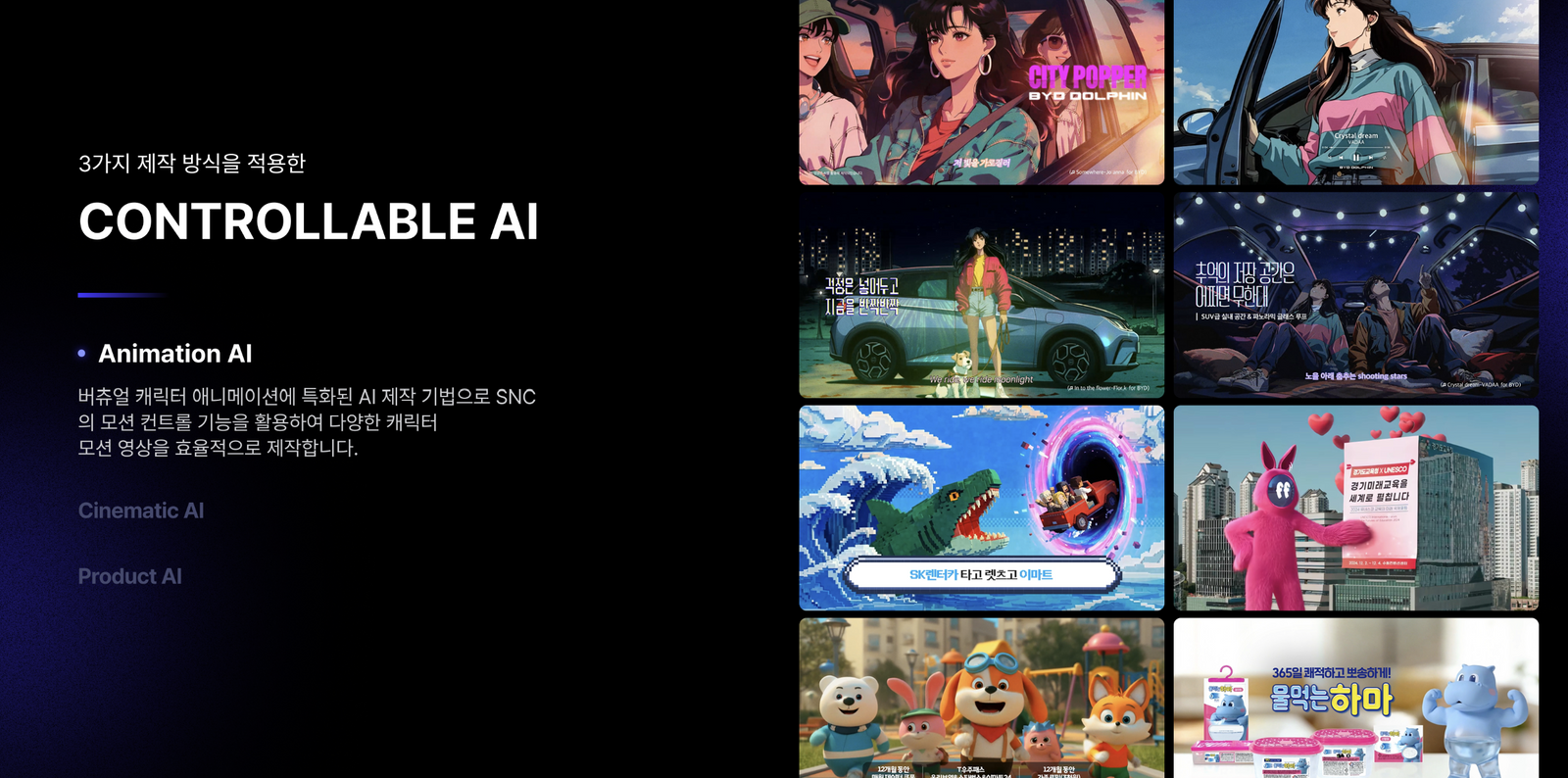
Oneness Korea’s Controllable AI engines
Source: Oneness Korea
Built on original manga art, with a marketing MOU with ROCTONA
The Japan business starts from original manga artwork (원화) rather than finished animation, which lets the company generate new scenes for adaptations as well as for brand collaborations and merchandise. It has signed a joint-marketing memorandum of understanding with Japanese content firm ROCTONA. The publisher partnerships remain at the MOU stage, and licenses are being negotiated title by title.
AICON in Singapore, October 8–9: a main-stage slot for the CTO
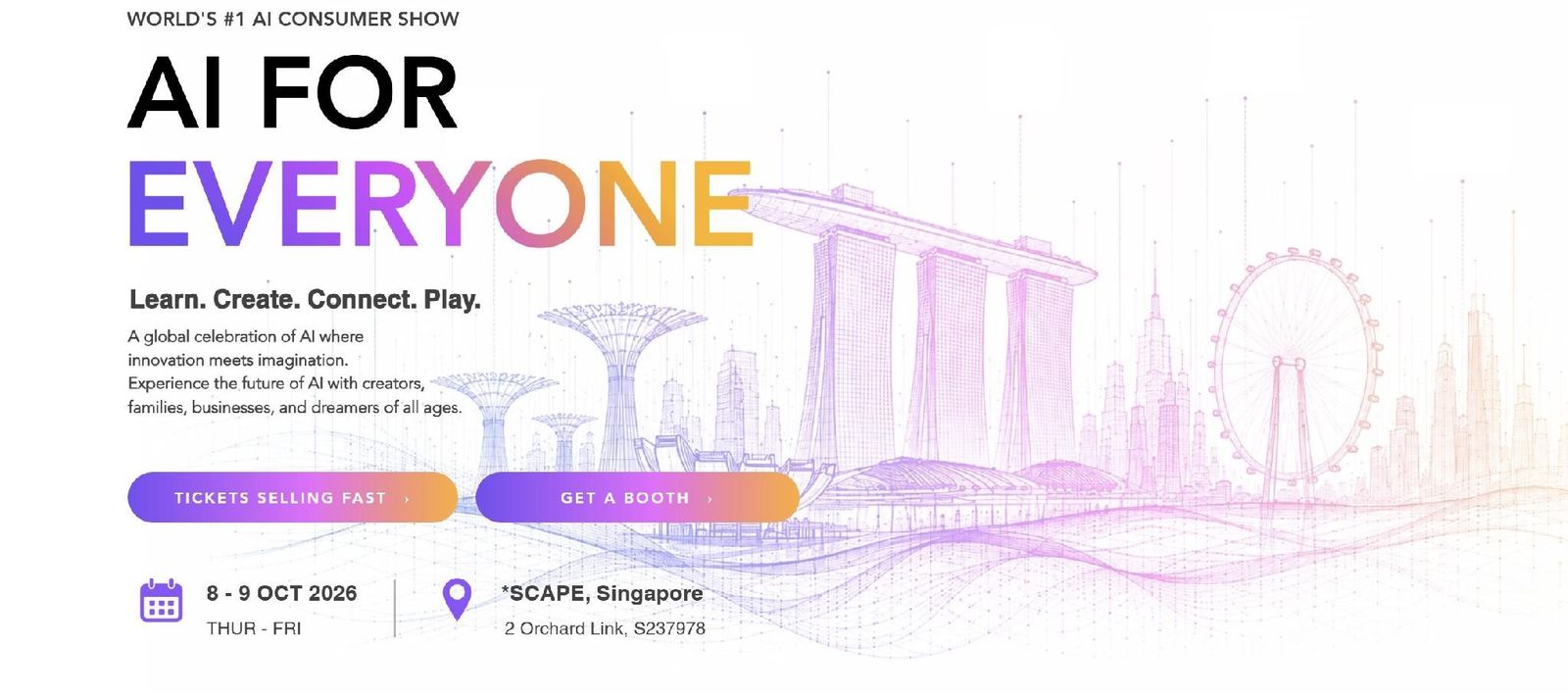
AICON 2026 is a consumer AI show at SCAPE in Singapore on October 8–9, organized by Singapore’s AI CON Capital under the banner “AI for Everyone.” On its website the organizer says it expects more than 85,000 attendees, more than 100 speakers and creators, and more than 50 workshops and talks. The main stage hosts an “AI for Humanity Impact Forum” on the first day and an “AI for Everyone Forum” on the second.
Oneness Korea travels as part of the Korean delegation organized by K-EnterTech Hub. Its CTO will speak on the October 9 main-stage panel “K-Global × K-EnterTech Conference @ AICON — Korea-Singapore AI Exchange: Building an AI-Ready Future” (11:45 a.m. to 12:30 p.m.), and the team will attend the delegation’s networking lunch on October 8.
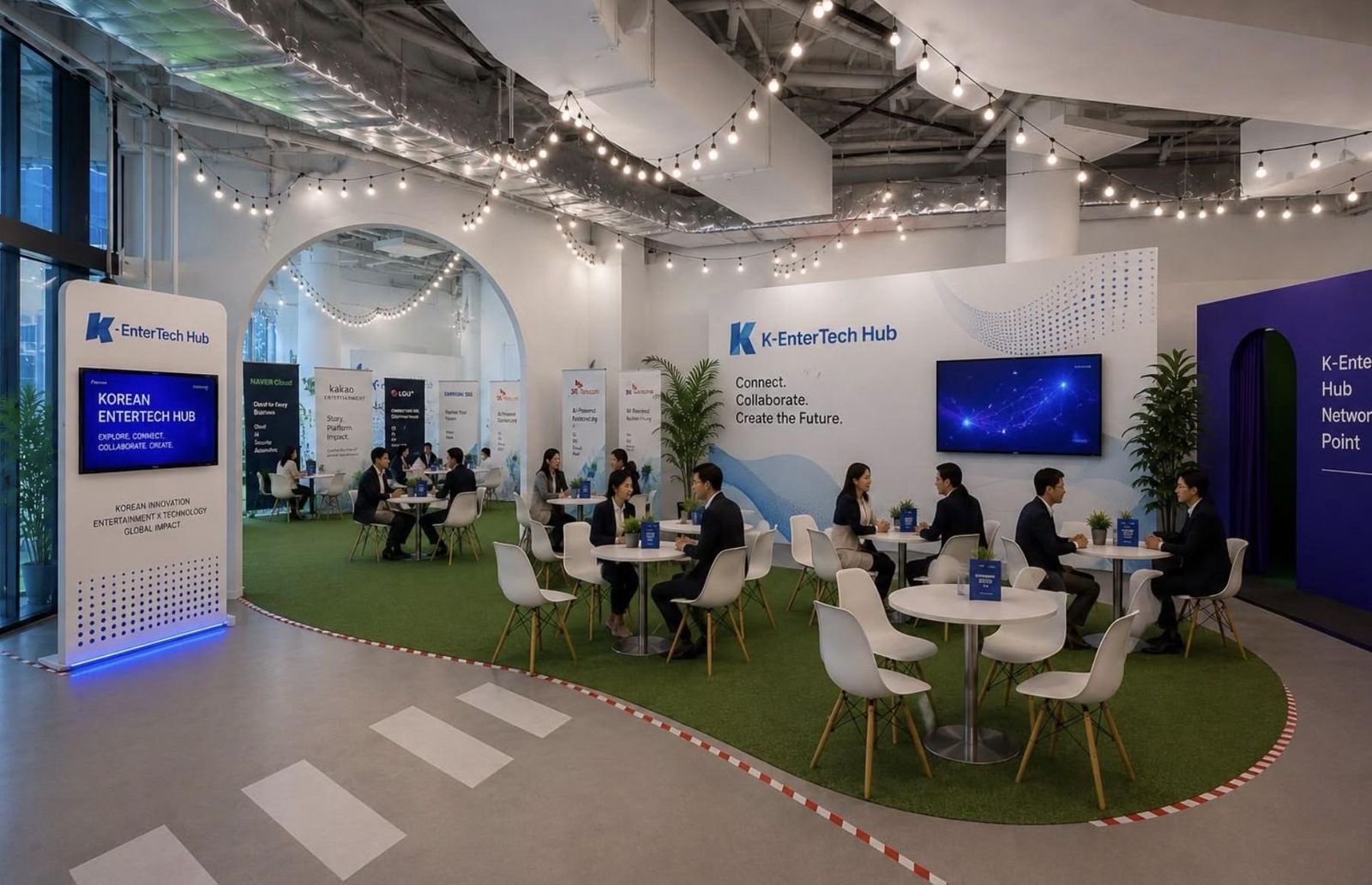
K-EnterTech Hub is setting up a Korea Pavilion at the venue, a lounge-style networking space where each participating company has a monitor and company materials for meetings with local broadcasters, media companies and investors. Oneness Korea will show its reel and company materials there.
In Singapore, Oneness Korea has asked for meetings with Mediacorp on animation and short-form co-production, Alibaba Creators Lab, the media division of the Infocomm Media Development Authority (IMDA), regional advertising agencies and Temasek.
‘Good people who use AI’: a Q&A with Kim Jin-su
Kim began his career in advertising in 2002. In 2020, as a director at Sidus Studio X (싸이더스 스튜디오 엑스), a subsidiary of Locus, he planned and produced Rozy (로지), Korea’s first virtual influencer, and he founded Oneness Korea in 2023.
The company says its virtual-human business, including Rozy, generated about ₩10 billion ($7.4 million) a year in revenue. Oneness Korea has 20 full-time staff; chief technology officer Eo Jin-hyuk (어진혁) previously led cinematic work on the game Warframe and on Star Trek. The interview has been edited for length and clarity and translated from Korean.
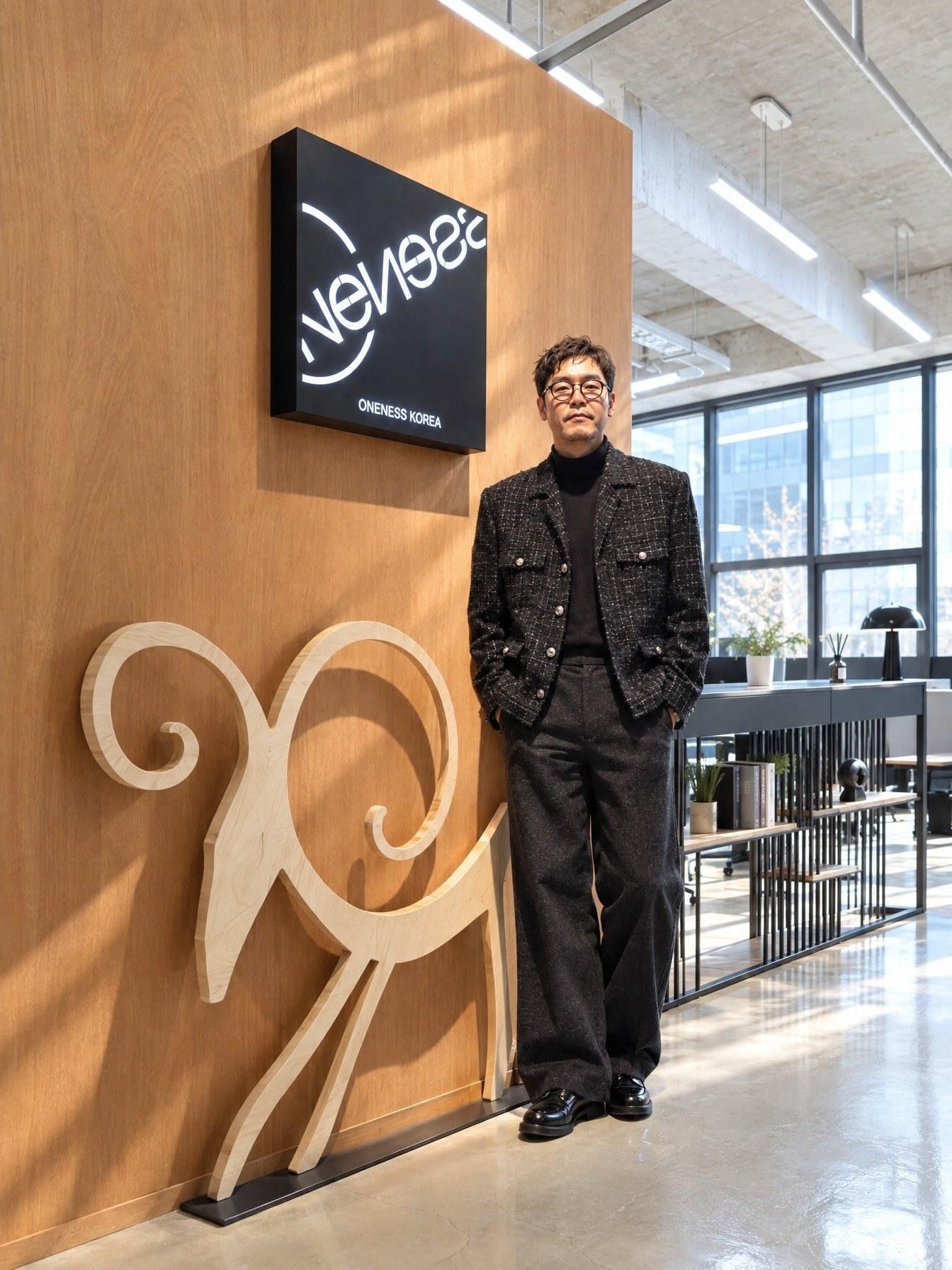
— How would you describe Oneness Korea in one sentence?
“We’re not a company that is good at using AI. We’re a company where good people use AI. I made our company deck without any AI at all, on purpose. AI is a tool, so skilled people pick it up fast. Real webtoon artists come to us, learn our pipeline and work with AI.”
— You’ve established yourselves in advertising. Why IP?
“The reason I develop technology is so that, at the very end, we become an IP holder. Even with ₩100 billion in the bank, you can’t simply become an IP holder. You need a lot of experience doing what IP holders do, and you have to become known for it. Advertising was what we were most confident in, so we built AI production technology and made ads with it.”
— Does technology built for ads carry over to feature-length work?
“When I meet content rights holders and advertisers, the bottleneck is the same. We solve ‘why doesn’t this work, why can’t this be expressed’ at the same point. It’s a question of solving it in 30 seconds, or stringing 30-second pieces into 100 minutes. Advertising is more than 90% of our revenue now, but from this year we’re seeing chances to expand into IP.”
— What difference does working from original art make?
“We work with the original art. Collaborations built on animation IP take existing scenes and stick them on a cup. Because we start from the original art, we can make variations — say, members of the Demon Slayer Corps from Demon Slayer (귀멸의 칼날) in an ice-cream chain’s uniforms, handing out ice cream.”
— What are the Japanese publishers asking for?
“They say plenty of people will do One Piece without you. There are works that are hugely popular in Japan that no one is touching right now, so they ask us to take those on too. There’s a huge amount of manga that has never been animated.”
— Beyond technology, what do Japanese partners look for?
“Data leakage. Most of the AI production tools used there are Chinese. Japanese companies don’t want their IP going outside, so what matters is whether you can run on your own closed network rather than outside software. We happened to have built that in advance, and it fit.”
— Can work-for-hire really make you an IP holder?
“When Studio Dragon (스튜디오드래곤) first started making dramas, my reaction was, ‘What is that?’ The name was unfamiliar and the studio system wasn’t common. But it made hits from successful webtoon IP, and at some point it became famous. To put it bluntly, we build know-how with other people’s money, and if the world knows us as the studio behind titles like Dragon Ball, we’re that much closer to becoming an IP holder. When a story came out that JYP Entertainment (JYP엔터테인먼트) was launching a girl group, the stock moved — no name, no photos, no song, but people trust it because JYP is making it. We want to do a lot of famous IP so people say, ‘Oneness made it.’”
— Why is there no Korean IP near the top of global licensing?
“There isn’t a single Korean IP in the world’s top 50 licensors. When I think about why, it comes down to cost and time. The Korean webtoon artists I meet want animation — dramas lose fidelity, and their worlds are big — but they say there’s nowhere to make it. If we build enough credits on Japanese IP, we can persuade them. Our goal is to put at least one IP in that top 50.”
— What matters most right now?
“Building many references and finding know-how. There’s know-how you can never get from advertising alone, so we’re piling that up.”
Next: offline engines, AI rendering, and markets beyond Japan
Technology development is tied to government programs. In June, Oneness Korea was selected for the 2026 Early-Stage Startup Package (deep-tech track) to develop SNC-RT, installable software for 3D motion generation and retargeting, Money Today reported on June 24.
In September it was chosen for the NVIDIA track of the second stage of the N-UP program, run by the Ministry of SMEs and Startups (중소벤처기업부), to upgrade its SNC Enterprise video-to-motion software, the paper reported on September 9. It has also been selected for Scale-up TIPS, a government R&D project worth ₩2 billion ($1.5 million) running from September 2026 to August 2029. The targets are a closed engine that works fully offline and AI rendering that cuts a render process that used to take at least eight weeks to under a day.
Oneness Korea plans to expand its ad work overseas from the second half of 2026 through 2027, with content revenue ramping up from 2027. Markets are to widen from Japan to China, the U.S., Thailand and Vietnam. On the IP side, the plan moves from commissioned adaptations of others’ IP to co-owned IP with creators and platforms, and then to original IP. Each new market is to be entered through local business partners. In the U.S., the company has signed a nondisclosure agreement with Utopai and is discussing technology cooperation.
The open question is how many rights the studio can secure through work-for-hire. The Japanese partnerships are still being worked out title by title, and the art-based collaborations are still under discussion. In the meantime, Oneness Korea plans to keep cash flowing through advertising while it builds up credits.
Currency conversions use ₩1,360 per U.S. dollar (around September 28, 2026).
Text in quotation marks is from the September 28 interview or from published reports; unquoted passages summarize the interview or documents. Company figures are from Oneness Korea’s 2026 investor presentation.
Disclosure: K-EnterTech Hub, which publishes this article, is an official partner of AICON 2026 and organizes the Korean delegation; the author moderates the main-stage panel.