

Regional AX Bridge @ Korea 2026
From the 2019 Baekyeong Kit brand to the BG Plus platform, with assets funded once or twice a month… exhibiting at Regional AX Bridge @ Korea, Oct. 13-14 at COEX
The Ministry of Science and ICT (과학기술정보통신부) and the National IT Industry Promotion Agency (정보통신산업진흥원, NIPA) hold the first Regional AX Bridge @ Korea (지역 AX 브릿지@KOREA) on Oct. 13 and 14 at COEX THE PLATZ (코엑스 더플랏츠) in Seoul.
Twenty AI companies headquartered outside the capital region will run booths and hold one-on-one meetings with overseas buyers and adopting institutions, and the opening ceremony carries a contract and MOU signing session. The companies were selected in July and are going through diagnostics and commercialization consulting; a participant session was held in Gangnam, Seoul on Aug. 28.
Among the 20 exhibitors, Gonggam Media (공감미디어) of Gwangju is treating the program as its first opening abroad. The company runs three lines: content, digital background assets and an academy. The company is headquartered in Gwangju with a branch in Suncheon.
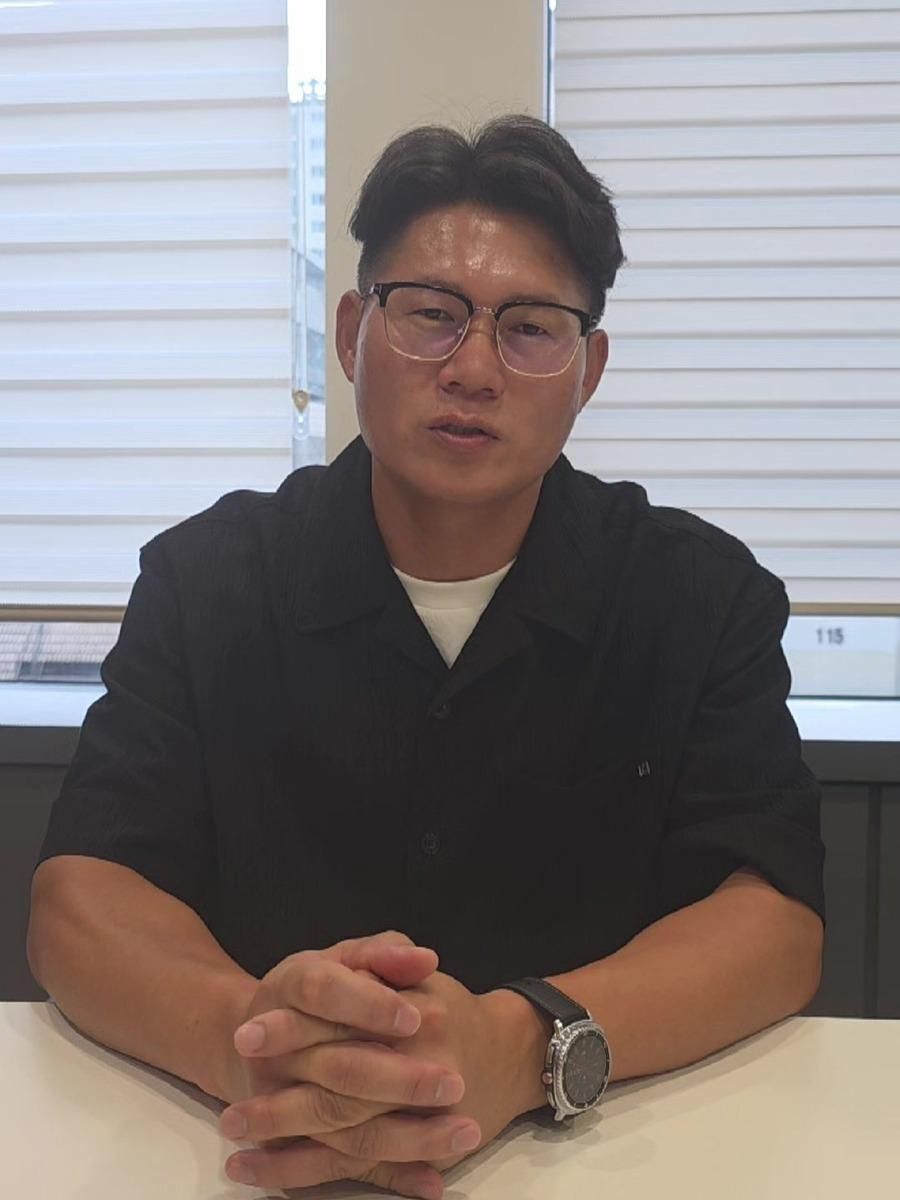
Content centers on webtoons. The company builds webtoons and derivative formats such as audio drama, serialized on Naver (네이버) and Kakao (카카오) in Korea and on Japanese and North American platforms. Its webtoon "Game of the Superhuman" began serialization on Naver's Tuesday slate in June 2022, alongside other titles.
From Baekyeong Kit to BG Plus… own catalogue plus outside creators
The background asset line grew out of data accumulated from producing webtoons. A market for background assets tied to webtoon production began forming in 2019, and Gonggam launched its Baekyeong Kit brand that year. It now runs the BG Plus (비지플러스) platform, selling its own assets while hosting listings from outside creators.
The company plans and produces the assets itself and holds the rights. Lee pointed to a difference with another Korean operator in the same space: that company started as a marketplace, while Gonggam started by producing. As production data accumulated, it added a model in which it works with outside creators to build assets quickly and list them on the marketplace.
New assets are produced through crowdfunding. Lee said the company runs a round about once a month, recently twice, with many sets inside a single round; once a round closes, the assets are listed on both its own and third-party platforms. Assets co-produced with creators split revenue evenly. Lee said the company is widening the ways it earns from the data it has accumulated as an asset. The company is in its fourth year as a data voucher supplier under the Korea Data Agency (한국데이터산업진흥원), and is developing an automated background generation tool that applies generative AI and digital twin technology to that data.
Sixteen years of the academy… Gwangju's webtoon companies grew from seven to 25
The academy dates to 2010, its sixteenth year, and the company was incorporated in 2019. Lee said people he met while running the academy in the region now work at the company. He also teaches as an adjunct professor.
He gave intellectual property as the reason for incorporating. Working as a creator, he said, contracts often transferred the rights to the work; when he set up the company he set a goal of building the company's own IP. The content market is difficult, he said, but having run the three lines as a structure the company has secured a degree of self-sustaining circulation, and is now building on that base toward global expansion.
The number of webtoon companies in Gwangju, where the company is based, rose from seven in 2022 to 25 in 2024. At a public forum hosted by the Gwangju city government in September 2024, Lee said Gwangju is the only city where AI and webtoons can meet, citing local AI infrastructure, and argued the city should grow webtoons as the root of its IP industry.
"Operating only in Korea is a constraint"… Japan's background asset market is still early
Lee said many webtoon companies have appeared in Japan but the background asset market there is still early, and that he expects it to grow as Korea's did, so the company keeps knocking. Asked why it joined the program, he said the company had been recommended by an institution. Operating only inside Korea is a constraint, he said, more so for a company based outside the capital, and having begun considering global expansion this year he sees the program as opening useful openings. What he wants out of it, he said, is overseas entry and buyer matching.
Gonggam Media is one of 20 regional AI companies exhibiting at Regional AX Bridge @ Korea (지역 AX 브릿지@KOREA) on Oct. 13 and 14 at COEX THE PLATZ in Seoul. Its stated matching targets are content platforms, webtoon and animation studios, game content studios, generative AI solution firms, content investors and venture capital, and global SaaS distribution partners.
Inside the Regional AX Bridge program Gonggam Media joined… diagnostics and consulting after the July selection… NIPA offers to connect exhibitors to its overseas offices
What Lee wants out of the program, he said, is overseas entry and buyer matching. The matching targets listed in the exhibitor profile are content platforms, webtoon and animation studios, game content studios, generative AI solution firms, content investors and venture capital, and global SaaS distribution partners — with the Japanese background asset market he keeps knocking on sitting at the front of that list.
Applications for Regional AX Bridge @ Korea closed on July 3, and selections were notified on July 13 after a document review. Selected companies went through two weeks of in-person diagnostics from July 24 to Aug. 3 and five weeks of commercialization consulting from Aug. 25 to Sept. 29. Consulting covers market-entry strategy, investment positioning, IR materials and contract and intellectual property review, and the per-company assignments repeat items that surface at the point of overseas entry: global commercialization, English-language standard contracts, and regulatory approvals. A separate market-viability test ran through September, and buyer invitations and meeting matrices were circulated from Sept. 7 to Oct. 2.
At the Aug. 28 participant session, Jung Su-jin (정수진), a director general at the National IT Industry Promotion Agency (정보통신산업진흥원, NIPA), said: "NIPA has bases abroad — Silicon Valley, New York, Singapore, Vietnam, the UAE in the Middle East, and India," adding that because the companies want to go global, the agency would connect them to those offices so they could meet good partners there. She also noted that global market entry came up repeatedly in the companies' consulting topics.