
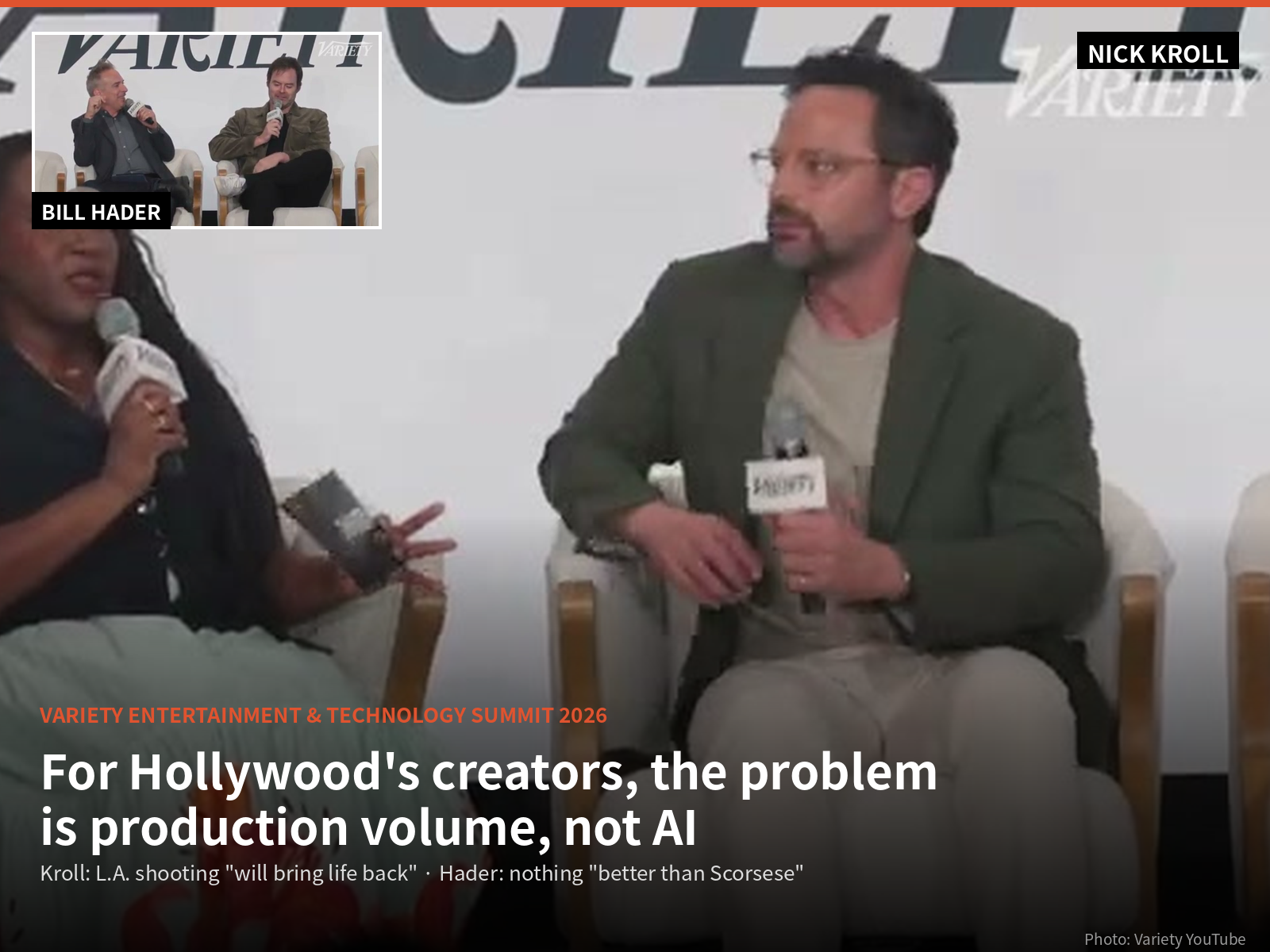
VARIETY ENTERTAINMENT & TECHNOLOGY SUMMIT 2026
For Hollywood's creators, the problem is production volume, not AI
Nick Kroll: a thriving L.A. shooting community "will bring life back" to the city · Bill Hader: nothing from AI yet that is "better than Martin Scorsese" · Nearly the whole room uses AI, and WPP Media says brands must make "humans desire us, but machines recommend us"
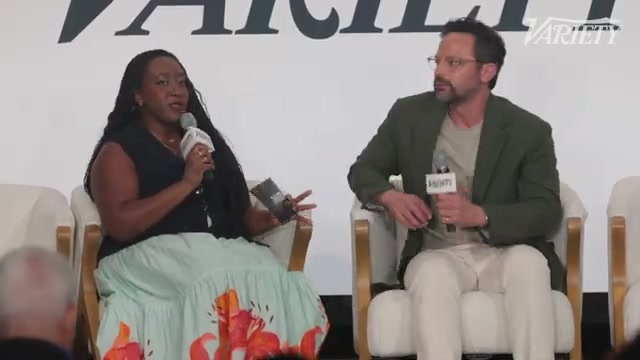
Nick Kroll (right) in conversation with Variety's Angelique Jackson at the Entertainment & Technology Summit on September 17. Photo: Variety YouTube video capture
Comedian and producer Nick Kroll used his keynote at the Variety Entertainment & Technology Summit, held September 17 at the Four Seasons in Beverly Hills, to explain why he shot his new Netflix comedy "A Hundred Percent" in Los Angeles. Kroll called the series "a love letter to the city that we live in." Later in the day, actor and director Bill Hader was asked about artificial intelligence and answered that he had not yet seen anything from it that made him think it was "better than Martin Scorsese."
Kroll's point of reference is the city's production count. FilmLA recorded 4,711 on-location shoot days in Los Angeles in the second quarter of 2026, down 12.7% from 5,394 a year earlier and below the 5,121 days of the first quarter. The figure is 36% under the five-year average for the period. It is the first full-year reading since California more than doubled its film and television tax credit to $750 million a year.
The executives on the opening panel took the same line on AI as the two creators. Abhijay Prakash, president of Blumhouse Atomic Monster, said the content most likely to be disrupted by what the industry calls "AI slop" is short-form, low-production-value creator video. Liz Jenkins, chief business officer of NBCUniversal Entertainment, described the peak-TV years as a period in which supply exceeded demand. The studios discussed AI as the next stage of oversupply rather than as a threat to their own scripted programming.
Kroll finished shooting "A Hundred Percent" in Los Angeles between June 24 and August 8, with a Netflix premiere slated for 2027. Hader is editing his directorial debut, "They Know," and voices the title character in Warner Bros. Pictures Animation's "The Cat in the Hat," which opens November 6. Both men spent more of their stage time on shooting and editing schedules than on AI.
"Adults" season 2 viewing up 40% · a single prequel episode lifted season 1 viewing by 50%
"Adults," the FX comedy on which Kroll is an executive producer, premiered its first season on May 28, 2025. "Season 1 found an audience, but it wasn't as big an audience as everyone wanted," Kroll said at the summit. Ahead of the second season, FX released a prequel episode, "Marathon Day," on FXX and Hulu on July 31 and put the full episode on Hulu's YouTube channel and FX's TikTok and Instagram accounts for a limited window. The eight-episode second season began on FXX and Hulu on August 27 and went out internationally on Disney+.
By Disney's count, season 2 viewing was up 40% on season 1 over its first 12 days. International viewing doubled. Streaming viewing of season 1 rose 50% after the prequel went out. The show's Rotten Tomatoes score moved from 77% for season 1 to 100% for season 2. "The common story right now is the sophomore slump, where shows that find an audience in the first season struggle to keep that momentum in the second," Kroll said. "'Adults' completely bucked that trend."
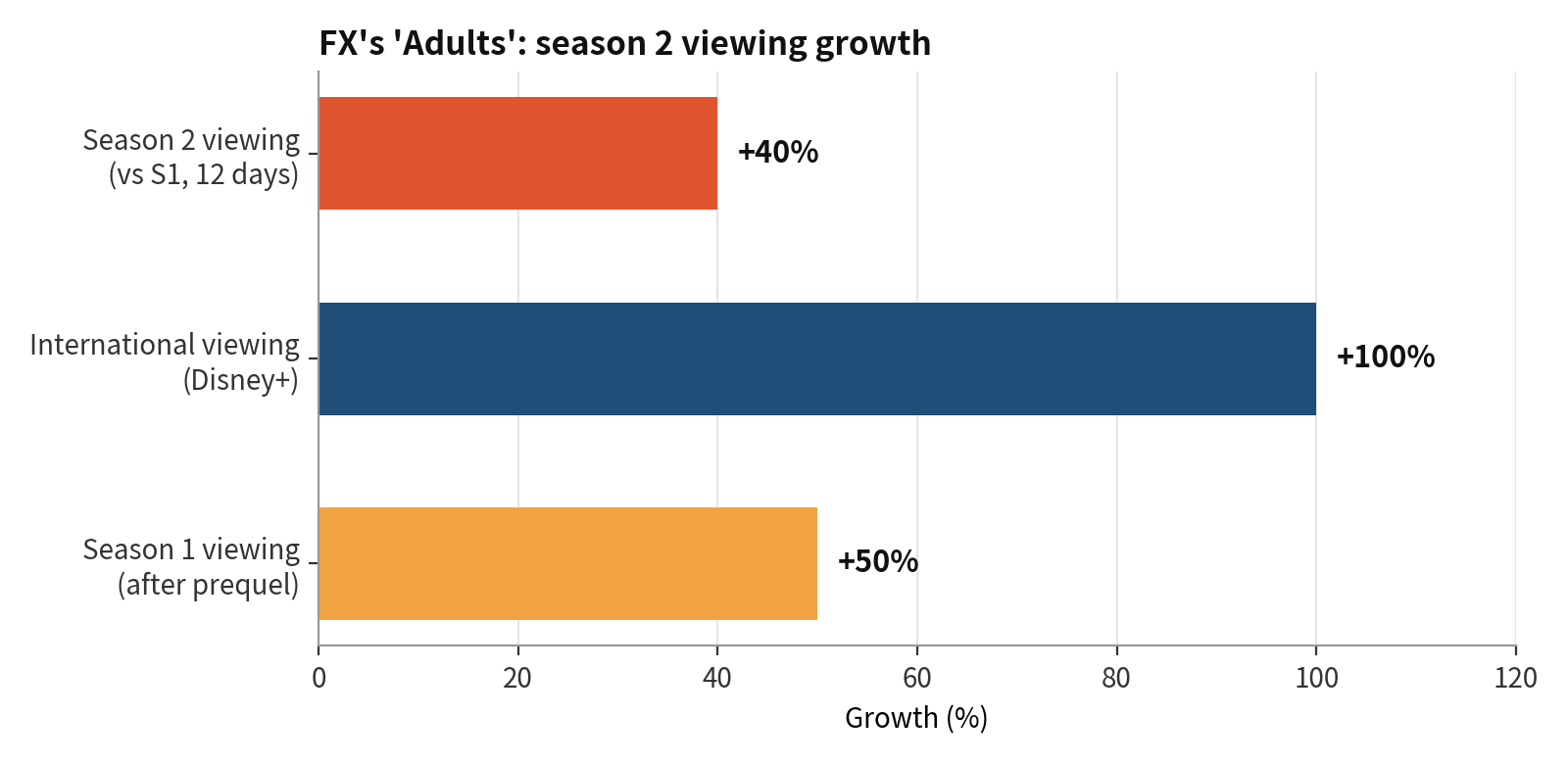
Viewing growth for FX's "Adults." Season 2 figure covers the first 12 days of release. Source: Disney, FX
Kroll described the prequel as "a new way into the show": first-time viewers understood the characters through the prequel and moved on to the rest of the season. He dated his relationship with FX to his time on "The League" more than 15 years ago and credited FX chairman John Landgraf with trusting the producers "to keep with something that they know is quality." "Adults" was created by Ben Kronengold and Rebecca Shaw.
Kroll tied the difficulty of getting a show greenlit to competition for attention. "Can you get an audience to sit down and watch your show for a few minutes, engage with it, and be like, yes, I trust these people with my time? You have to figure out a way to grab them but also hold them gently so they don't run away." He called the current state of the industry "not a recession, but a retraction." On audience feedback: "You could argue there's too much feedback, but there are ways to really understand what your audience responds to, what they love, and build off of that."
L.A. shoot days fall 12.7% to 4,711 in Q2 · Kroll: three or four sitcoms shooting at once on the Sony lot is "almost impossible to imagine" now
Kroll set his decision against his first years in Los Angeles. When he arrived to make the sitcom "Cavemen" on the Sony lot roughly 20 years ago, "Hancock," "Step Brothers," "You Don't Mess with the Zohan" and three or four sitcoms were shooting on the same lot at the same time. "Now, it's almost impossible to imagine that many shows happening all at once," he said.
"A Hundred Percent" was co-created by Kroll and Gabe Liedman and stars Kroll alongside Sam Richardson, Jason Mantzoukas and Vanessa Bayer, with Diane Lane in a recurring role. It is a comedy set among wellness influencers and self-help speakers, and Kroll compared the summit ballroom itself to the "sad ballrooms" in which those figures operate. He said Netflix's development team asked the writers "not to just make a show that makes fun of this world, but to dig in and understand the relationships between these people," because the service's audience responds to serialized stories and character relationships.
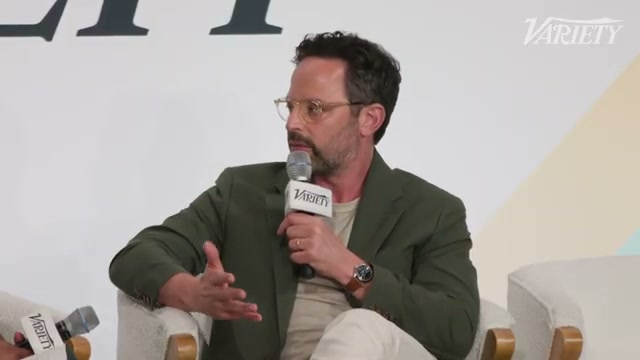
Nick Kroll: "The more that we have a thriving, ongoing shooting community here in Los Angeles, it will bring life back." Photo: Variety YouTube video capture
Kroll linked the location decision to the city's economy. "The more that we have a thriving, ongoing shooting community here in Los Angeles, it will bring life back, not only in terms of money but a renewed energy, a vitality to the city." He described the past several years as "the doldrums that we've all been feeling" and said he hoped they "will begin to work themselves out."
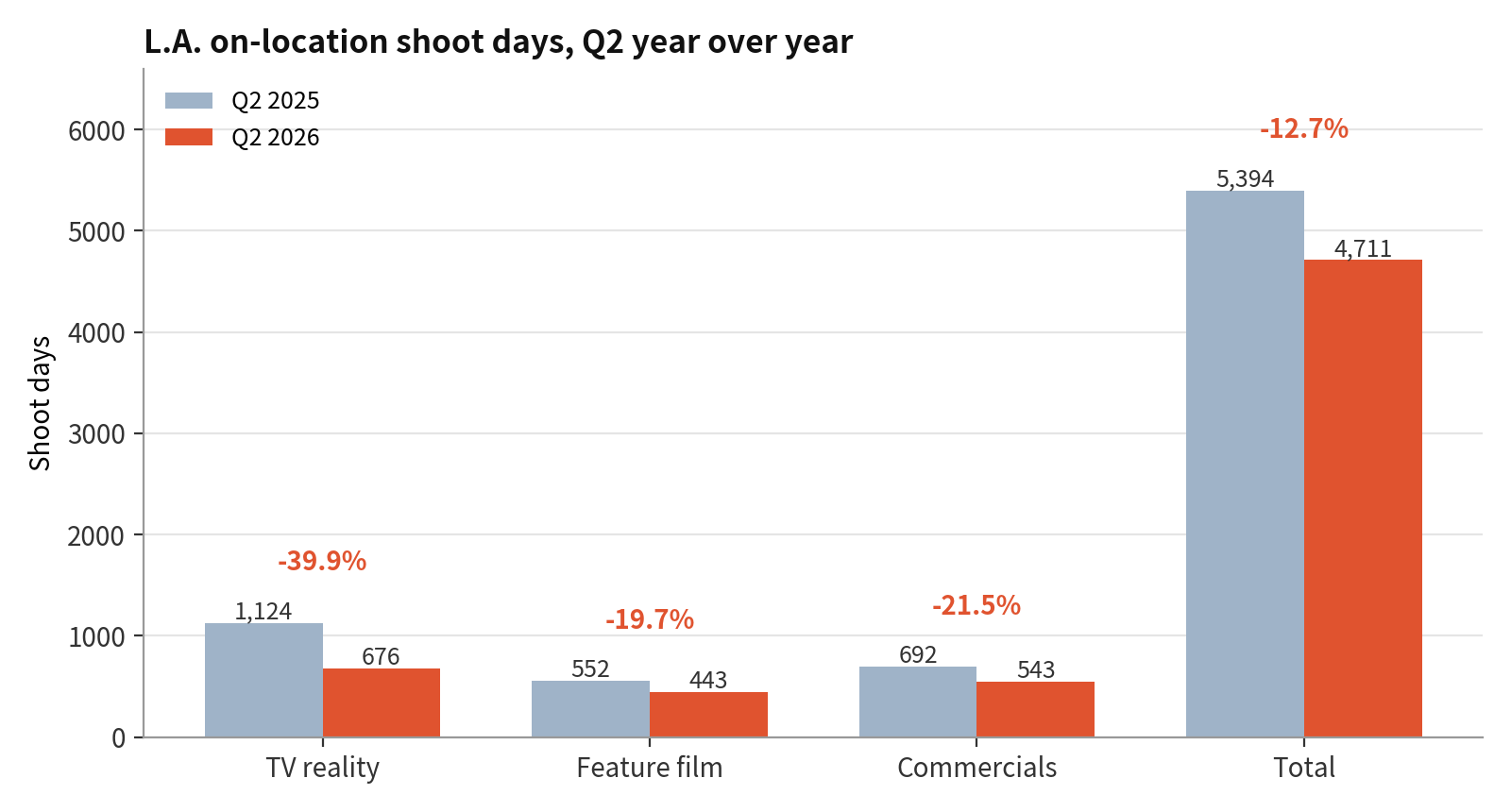
L.A. on-location shoot days, Q2 2026 versus Q2 2025. The 2025 feature-film figure is an approximation back-calculated from the reported decline of roughly 20%. Source: FilmLA
FilmLA's second-quarter report points the same way as Kroll's remarks. Of the 4,711 total shoot days, television accounted for 1,607, up 34.4% from the first quarter but down 28% from a year earlier. TV drama rose 55.1% quarter on quarter and fell 6.4% year on year. The steepest drop was in reality TV, at 676 days against 1,124 a year earlier, down 39.9%. Feature films fell nearly 20% to 443 days, and commercials fell to 543 from 692. Incentivized productions accounted for 38.3% of television shoot days. Version 4.0 of the California credit has approved 170 projects, including 41 films announced in July.
California raised the annual cap of its credit to $750 million last year and made it fully refundable for the first time. Reality competition shows became eligible, and "Schooled!," a Netflix series produced by Jimmy Kimmel, was the first to qualify. Los Angeles Mayor Karen Bass responded to the report by calling it "proof that incentives are working" and repeated her call for an uncapped credit and a federal incentive. Variety ran the same numbers under the headline that the recovery "continues to sputter." Applications are up and shoot days are not, and that is the gap Kroll was addressing.
Hader: nothing yet that is "better than Scorsese" · "Young people are very aware of the people making the thing"
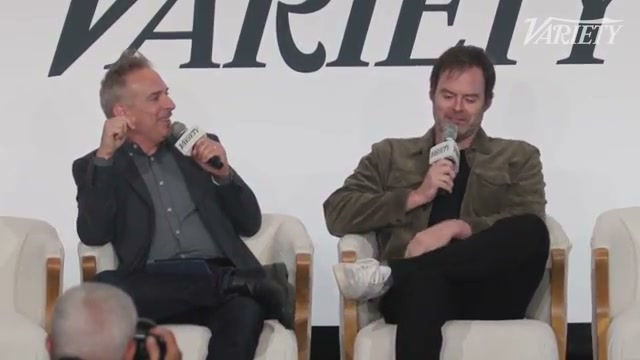
Bill Hader (right) with Michael Schneider, Variety's executive editor for TV. Photo: Variety YouTube video capture
Hader took the AI question from Michael Schneider, Variety's executive editor for TV. "A new technology comes along and everybody kind of flips out, like, a lot of people are going to be out of work," he said. "I don't want production designers to go out of work, or makeup people. Those people are real artisans, and they're amazing. If this stuff can help them, it'd be better."
He separated out a generational point. "I have talked to younger people, and they seem to hate AI any time I talk to them. When I got an iPhone I was stoked on it and I didn't think about Steve Jobs. But they are very aware of the people making the thing. They just know so much. They're afraid that anything can be manipulated." Asked whether AI could produce originality of the kind seen in "Barry" or in this year's Emmy performer "Widow's Bay," Hader answered, "No." He added: "I would like it to, if it can help things. But I haven't seen anything yet where I went, 'Whoa, that's better than Martin Scorsese.'"
Hader also described the physical load of voice work. "When you do voice acting, everybody thinks you roll out of bed and you just do it. You're literally screaming for four hours. You give them eight versions of 'open the door' and they ask for another one." He recalled pulling over to drink water after a recording session for "Inside Out." "The Cat in the Hat," in which he voices the title character, opens November 6; it is directed by Erica Rivinoja, whom Hader worked with on "South Park."
"They Know," his feature directing debut, is written by, directed by and stars Hader, with Linda Cardellini. It follows a recently divorced man's fear of his ex-partner's new relationship and its effect on their children; it is in the edit and due next year. Carl Herse, Hader's cinematographer on "Barry," shot it. Hader said directing film and television were "not different at all" except for the edit: "When you're editing a TV show, you're just trying to get them finished and out the door. This is a much longer process." He said the HBO Jonestown project with Daniel Zelman is still in development and "a very rough subject," and that he would like to make more "Documentary Now!"
Hader connected the freeway chase in season 3 of "Barry" to the show's Emmys. "I don't think HBO would have been cool with that if we hadn't won some Emmys. We wanted to shut down a freeway to do a motorcycle chase, and this is a 30-minute comedy." The sequence was shot on a closed stretch of freeway over three Sunday mornings. The recent viewing he singled out was "Midwest Safety," a YouTube channel of police body-camera footage. Citing a Minnesota politician who threw a tarantula at a tenant, he said he had "never seen that scene in a TV show or a movie," and when asked how a writer competes with that, answered: "You can't. AI can't."
Blumhouse: "AI slop" hits short-form creator content first · "Obsession" and "Backrooms" took YouTube creators to theaters
On the opening "Trailblazers of the Content Industry" panel, Blumhouse Atomic Monster president Abhijay Prakash answered the AI question with the studio's two summer box-office hits, "Obsession" and "Backrooms," both horror films made by YouTube creators. "Those are not the kinds of things that could be spat out of algorithms and large language models," he said. The content he expects to be disrupted first is "short-form, maybe lower-production-value creator content."
Prakash tied the films' results to YouTube strategy. "YouTube is probably the No. 1 platform for watching filmed entertainment. You had creators who were very popular on YouTube still craving the theatrical experience." Hollywood, he said, needs "an offering for the consumer on the platform" rather than trailers and featurettes alone. James Wan, speaking at the same summit about YouTube filmmakers, said: "You don't even need to be in the system anymore to get something made."
Rahul Purini, president of Sony's Crunchyroll, put a number on anime viewing: by Crunchyroll's research, 650 million people outside Japan and China watch anime weekly. He attributed repeat viewing less to the art style than to "the themes and the stories that Japanese creators tend to tell: grief, fame, found family."
NBCUniversal: "supply exceeded demand" in peak TV · Disney: streaming and linear "don't cannibalize each other"
NBCUniversal's Liz Jenkins summed up the peak-TV years as a period in which "the economics were a bit unsustainable" and "supply probably exceeded demand." With Peacock, Bravo and NBC in the portfolio, the company has become "very surgical" about "who are our priority audiences and how do we ensure that we're super-serving them." She cited Peacock's "Love Island USA," whose tipping point came in season 6 with the arrival of "Vanderpump Rules" alumna Ariana Madix, as a show that needed "a moment to build." The distinction lost during the bubble, she said, was between "capital C content and lowercase c content. It's not just about tonnage."
Simran Sethi, president of scripted programming for Hulu Originals and ABC Entertainment, said Disney found early that streaming and linear "don't cannibalize each other. They're distinct audiences. People who have a habit of watching live on television are not necessarily the ones streaming online. It made the pie bigger." She said weekly episode releases, against Netflix's full-season drops, work because "the idea that you can have this shared experience watching something weekly" is what audiences are returning to.
Clancy Collins White, president of creative affairs at Warner Bros. Television, pointed to "The Pitt," which won seven Emmys this year including drama series and lead actor for Noah Wyle, as a weekly-release case. "At a time when so much emphasis is being placed on IP, it's an incredibly compelling original idea that was not a complete reinvention of the wheel." The studio is currently selling 30 shows across 10 platforms, and Collins White said the distinction between programming for streaming services and for linear channels keeps narrowing. Schneider moderated the panel.
Nearly the whole room uses AI · Hasbro and Lionsgate put guardrails on IP, Warner Bros. puts it on the studio tour
Whatever the creators' doubts, adoption inside the industry is under way. On Variety's "Strictly Business" podcast, recorded at the venue on the day of the summit, co-editor-in-chief Cynthia Littleton said that when a panelist asked the audience whether they use AI, "nearly everyone raised their hand." When asked whether their companies had enterprise agreements with the big technology companies to put AI into their products, again nearly everyone raised a hand. Littleton said the fear about jobs of a year or two ago had turned into a question of "how can this transform my work for the better."
Corbin Bolies, Variety's AI reporter, summarized the summit's AI use cases as IP management. Roberta Thomson, chief executive of Hasbro's Sixth Wall, described the guardrails Hasbro places on how it licenses characters, and Bolies said Hasbro and Lionsgate are using the tools to build experiences around their IP rather than to generate AI versions of Bella Swan from "Twilight" or Katniss Everdeen from "The Hunger Games." Simon Robinson of Warner Bros. discussed AI experiences on the studio tour, citing Superman's robot and a Harry Potter sorting app. Bolies grouped those with children interacting with an AI-backed Peppa Pig as AI moving from the real world into IP experiences.
On the same episode Littleton gave the scale of creator deals. Representatives for IShowSpeed and the NBA creator Jesser attended the summit, and the largest creators with the most engaged platforms are signing seven-figure and in some cases eight-figure brand deals. Billy Parks of Fox Creator Studios was cited as an example of an established media company building a creator unit. "If you have a fan base, that fan base is an audience. Creators can become their own media companies," Littleton said. "I started hearing that phrase a few years ago and I scoffed. We absolutely see it now."
WPP Media: "humans desire us, but machines recommend us" · Audible takes "Dungeon Crawler Carl" fandom to a Times Square billboard
On the advertiser side, AI appeared as one of two marketing targets. "We have to market today to two different entities," Nancy Hall, U.S. chief executive of WPP Media, told Littleton. "We have to ensure that humans desire us, but that machines recommend us." Hall said the consumer journey had fragmented over the past 18 months across social platforms, search, large language models, audio, streaming, creators and communities, so that "the funnel is now dynamic." The content she sees resonating is stories about human behavior and communal experience, stories that evoke strong emotions such as joy and horror, and stories that invite fandom and participation. Short-form video is fast, visual and shareable; long-form inspires; live experiences create shared memories, she said.
Tom McKenna, Audible's global head of media operations and business development, said full-cast cinematic audio productions and creator storytelling were the formats performing best. His examples of format fluidity were "Project Hail Mary," an Audible original that became a film, and "Dungeon Crawler Carl," a novel Matt Dinniman wrote during the pandemic that became an Audible audiobook and is now in development as a series at NBCUniversal. In May, Audible opened a pop-up bookstore in New York called Audible Storyhouse and recorded a live podcast with Dinniman and narrator Jeff Hays, who performs more than 200 voices; free tickets sold out within minutes and one attendee drove from New Orleans, McKenna said.
Audible launched a new brand in early August built around "stories that speak to you," with a spot in which a jogger listening to "Dungeon Crawler Carl" ends up running a marathon and an Australian spot with Jennifer Coolidge. On Twitch, it ran an audiobook on the loading screen of the gaming creator DougDoug and gave away trials. Hall's favorite execution was "TikTok Out of Phone," which put a TikTok feed on the front of a building in Times Square; the same format ran in Los Angeles across from the Lakers' arena. "Media is a creative canvas and it's anywhere and everywhere. The side of a stadium, a movie theater, a seat during the World Cup. Any flat surface is media," Hall said. Both executives named data and cultural fluency as the skills of the future, with McKenna adding that "the data and technology is giving you signals, but there's a big gut instinct that is still part of this."
Korea: terrestrial ad revenue at 310.4 billion won in the first half · drama slate bottomed at 80 titles in 2024, 104 projected for 2026
The Los Angeles debate over production volume maps onto Korean numbers. Korean terrestrial broadcasters booked 310.4 billion won ($227 million) in advertising in the first half of 2026, against 1.1164 trillion won in 2011 and 793 billion won in 2016, roughly a quarter and a half of those levels. KBS (한국방송공사) expects a deficit of more than 10 billion won this year and has moved to a company-wide crisis footing. The ad decline is showing up in the schedule: drama has lost airing days and titles, and variety has cut the pilots used to test new formats.
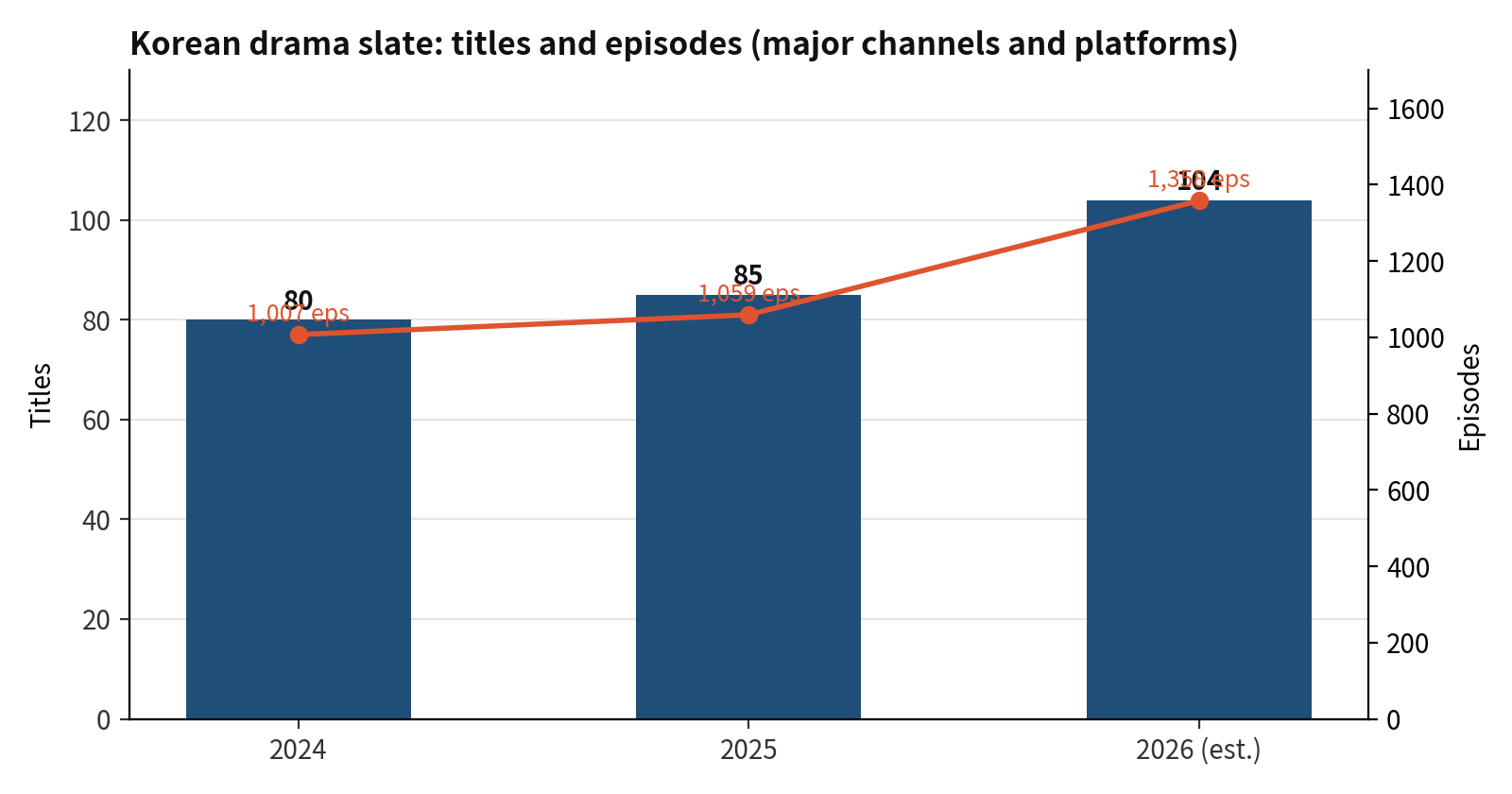
Korean drama slate by titles and episodes, combined for CJ ENM, JTBC, the three terrestrial networks, ENA, Netflix and Disney+ originals; 2026 is a forecast. Source: Daishin Securities industry outlook, December 26, 2025
By Daishin Securities' (대신증권) industry outlook of December 26, 2025, the combined drama slate of CJ ENM, JTBC, the three terrestrial networks, ENA, Netflix and Disney+ originals fell to a record low of 80 titles and 1,007 episodes in 2024. It rose to 85 titles and 1,059 episodes in 2025 and is projected at 104 titles and 1,358 episodes for 2026. Studio Dragon (스튜디오드래곤) is expected to move from 21 titles and 231 episodes in 2025 to 25 titles and 288 episodes or more, and Contentree JoongAng (콘텐트리중앙) to 24 titles. Most of the recovery comes from streaming originals and the largest production companies.
The two recovery paths differ. Los Angeles is trying to bring shoot days back with a state tax credit and location incentives; in Korea, the channels that lost advertising have cut their own slates, and streaming-service originals are filling the volume. The basis for Kroll's claim that a shooting community "brings life back" to a city is on-set employment. The equivalent Korean indicator is episode count and per-studio slate, and whether the 1,358-episode forecast for 2026 turns into actual commissions is the first reading for the domestic production labor market.
The near-unanimous show of hands on AI use and the line Hader drew on AI, in which performance and direction stay with people while tools that help artisans are welcome, matches consumer survey data. In YouGov polling cited in Luminate's "AI & Media: Audience Attitudes" report of July 2026, 75% opposed replacing actors with AI, while 64% accepted AI for subtitle translation and 52% for dubbing into languages that were not filmed. The order in which Korean producers apply AI to global distribution follows the same split: subtitling and dubbing are the processes audiences have already allowed, while actors and scripts remain the territory Hader described as not yet past Scorsese.
Outlook: the tax credit's first-year grade is shoot days · "A Hundred Percent" lands in 2027
What the creators and executives at the summit had in common was that none of them put AI first among threats. Nearly the whole audience already uses AI, and advertisers have begun to count machine recommendation as a marketing target. Kroll tied it to production volume, Hader to artisan employment, Prakash to low-budget short-form, and all three rated the replacement risk to their own scripted programming as low. Whether that judgment holds will show up in shoot days and slate counts rather than in panel statements.
The next reading is FilmLA's third-quarter report in October, when the 170 credit-approved projects that shoot on location begin to appear in permit records. Kroll's "A Hundred Percent" premieres on Netflix in 2027; a third season of "Adults" has not been announced. Hader has "The Cat in the Hat" on November 6 and "They Know" next year. In Korea, the 104-title forecast for 2026 and the second-half terrestrial advertising figures will be confirmed over the same period. In Los Angeles and Seoul alike, the number that gets confirmed before any AI argument is settled is the number of productions shooting.
Exchange rate: 1,368.6 won per U.S. dollar (Seoul close, September 16). Quotation policy: double quotes mark remarks made on the summit stage or as reported; unquoted passages are summaries of reporting. Kroll and Hader quotes were checked against Variety's September 17 session video and its September 17–18 coverage.
Sources
1. Variety, "Nick Kroll Delivers Heartfelt Appeal for Productions to Shoot in L.A.: 'It Will Bring Life Back' to the City," Sept. 17, 2026 — https://variety.com/2026/tv/news/nick-kroll-la-productions-a-hundred-percent-1236866162/
2. Variety, "Bill Hader on Why Young People Hate AI, Voicing Cat in the Hat and the Status of His Jonestown HBO Series," Sept. 17, 2026 (via Yahoo Entertainment) — https://www.yahoo.com/entertainment/tv/articles/bill-hader-why-young-people-141931944.html
3. Variety (Todd Spangler), "Top Media Execs Break Down How to Super-Serve Audiences, the Real Threat of 'AI Slop' and More at Variety Entertainment & Technology Summit," Sept. 17, 2026
4. Variety, "Navigating AI, Super-Serving Audiences, Engaging the Creator Economy and More at Variety's 2026 Entertainment and Technology Summit," Sept. 19, 2026 — https://variety.com/2026/digital/news/variety-entertainment-and-technology-summit-2026-1236864312/
5. Variety, "Strictly Business" podcast (host Cynthia Littleton), "The Future of Media Buying," recorded at the summit with Corbin Bolies, Nancy Hall (WPP Media) and Tom McKenna (Audible), Sept. 2026 (Spotify, Apple Podcasts)
6. Variety, "Bill Hader, James Wan, Devon Pritchard, Nick Kroll and Keith Le Goy Join Variety Entertainment and Technology Summit Programming," Aug. 5, 2026 — https://variety.com/2026/biz/news/bill-hader-james-wan-entertainment-technology-summit-1236827846/
7. Variety YouTube channel, summit session videos "Nick Kroll delivers a love letter to Los Angeles" and "Bill Hader is confident that AI can't rival human creativity" (Sept. 2026)
8. FilmLA, "California Film Tax Incentives Continue to Create Job Opportunities in Scripted Production" (Q2 2026 report), July 23, 2026 — https://filmla.com/california-film-tax-incentives-continue-to-create-job-opportunities-in-scripted-production/
9. Deadline, "LA on-location production totaled 4,711 shoot days last quarter, down 13%," July 23, 2026 — https://deadline.com/2026/07/los-angeles-film-television-production-q2-shoot-days-filmla-1237001626/
10. TheWrap, "Los Angeles On-Location Production Sinks 12% Despite New Tax Credits, FilmLA Study Shows," July 23, 2026 — https://www.thewrap.com/creative-content/movies/filmla-production-decline-q2-2026/
11. Variety, "L.A. Production Volume Down Slightly, as Recovery Continues to Sputter," July 23, 2026 — https://variety.com/2026/film/news/los-angeles-production-volume-down-slightly-filmla-1236819482/
12. Disney/FX release as reported by TV Insider and What's On Disney Plus, "Adults" season 2 viewing up 40%, international up 100%, season 1 up 50%, Sept. 2026 — https://www.tvinsider.com/1289082/adults-season-2-ratings-season-3-renewal-chances/
13. What's on Netflix, "'A Hundred Percent' Nick Kroll's New Netflix Comedy Series to Begin Filming in June 2026," June 4, 2026 — https://www.whats-on-netflix.com/news/big-mouth-creator-new-netflix-show-a-hundred-percent/
14. Star News (스타뉴스), "방송국 적자 시대..천정부지 제작비, AI가 해결할 수 있을까," Sept. 1, 2026 — https://www.starnewskorea.com/broadcast-drama/2026/09/01/2026082811564764325
15. Media Today (미디어오늘), "'주토피아2' '아바타' 흥행으로 시작한 2026년, 콘텐츠 산업 반등할까" (citing Daishin Securities outlook of Dec. 26, 2025), Jan. 11, 2026 — https://www.mediatoday.co.kr/news/articleView.html?idxno=331283
16. Luminate, "AI & Media: Audience Attitudes" special report (citing YouGov), July 2026