

Korea IPTV Association chairman Yoo Yong-hwa meets Singtel and Orange at AICON 2026 in Singapore; Singtel’s Ng Tian Chong says Korean content helps keep subscribers, and the association weighs an Asian pay-TV operators’ forum for next year
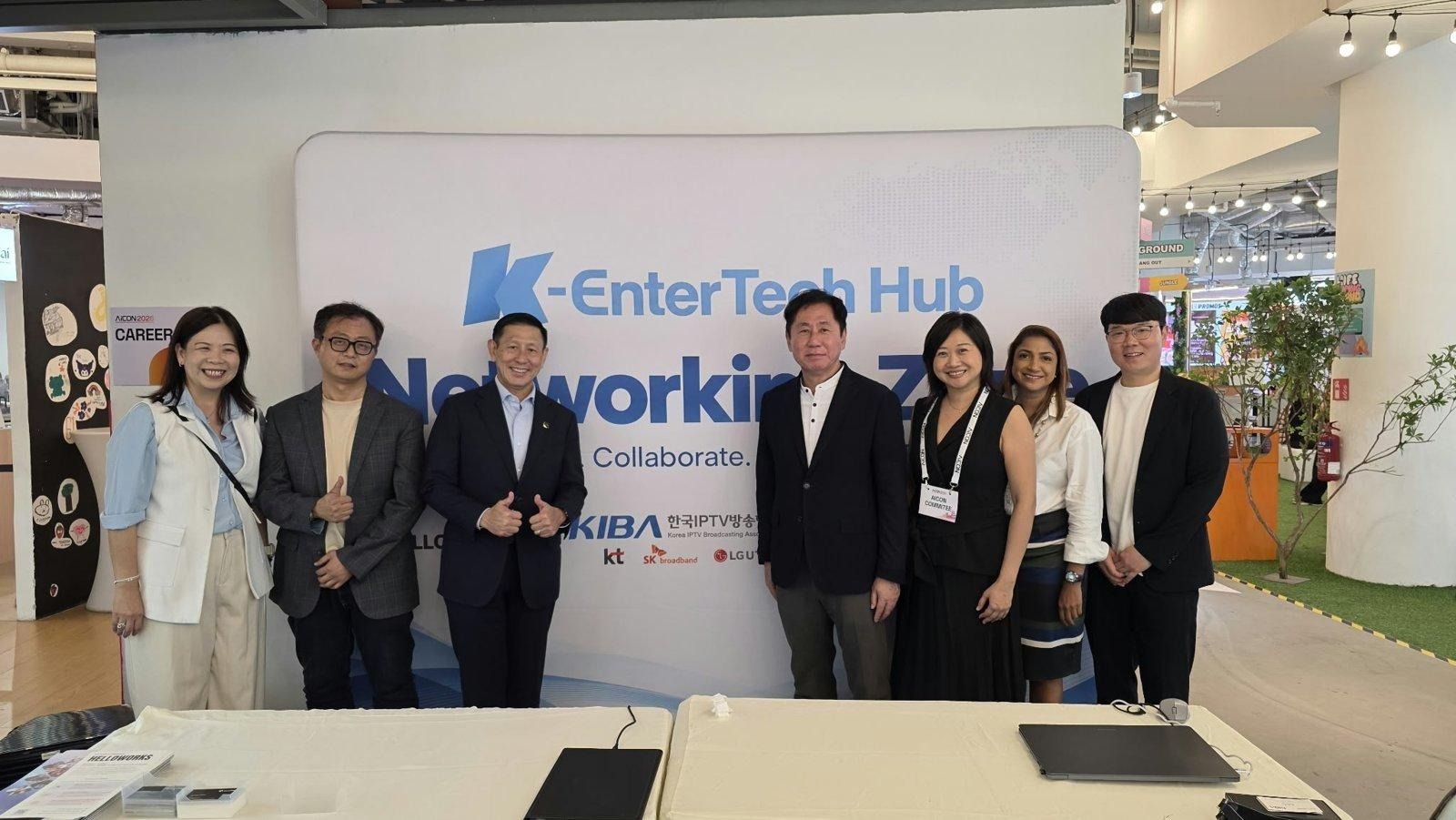
SINGAPORE — “Like most operators around the world, linear is a declining business for us,” Ng Tian Chong, chief executive of Singtel Singapore, told Yoo Yong-hwa, chairman of the Korea IPTV Association (한국IPTV방송협회), on October 8. Pay-TV operators across Asia, he suggested, face much the same pressure since Netflix arrived.
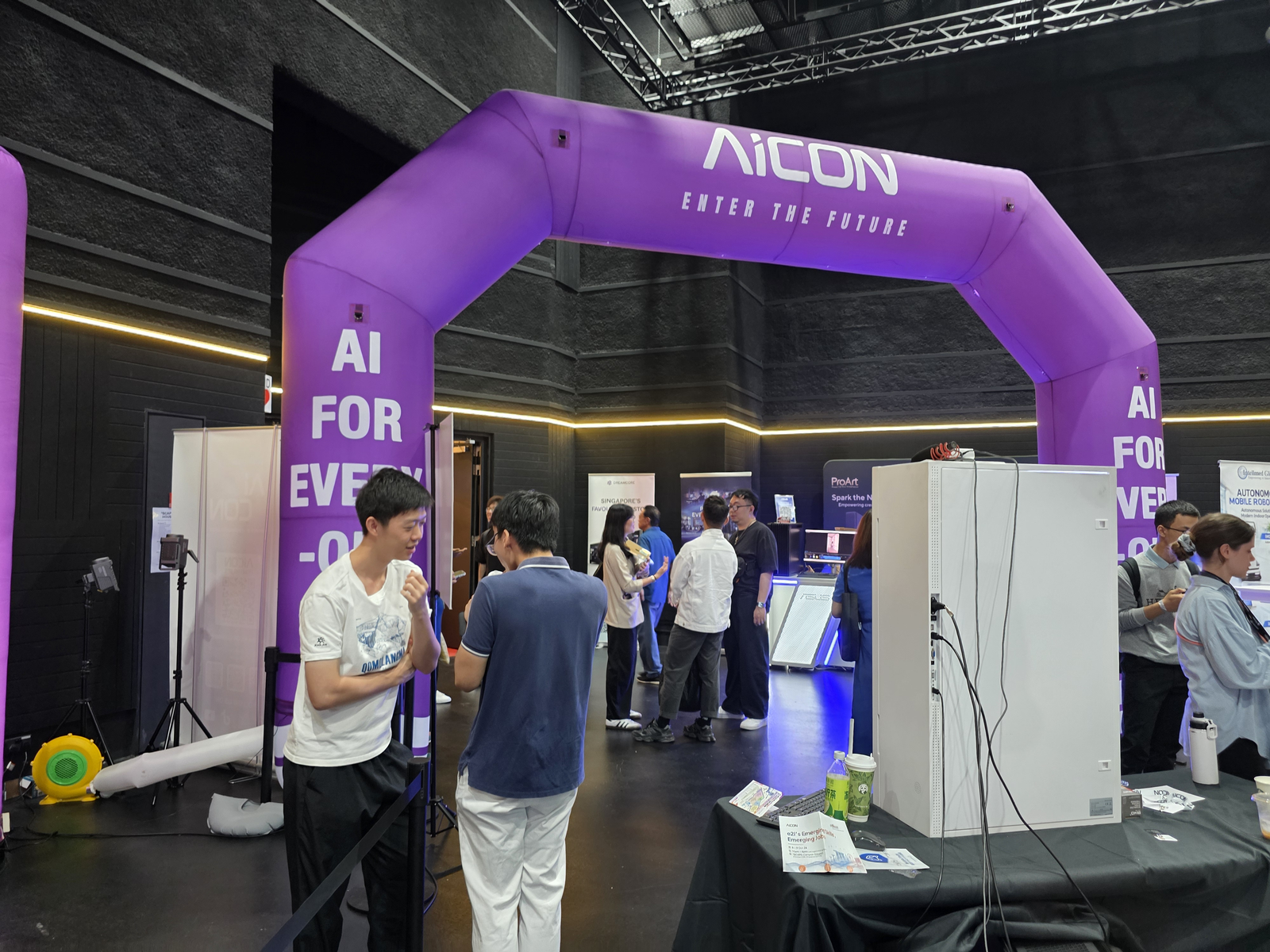
Yoo spent October 8 and 9 at AICON 2026, the AI festival held at SCAPE in Singapore. Over the two days he met Singtel, Singapore’s largest telecom operator; Orange Wholesale International, the wholesale arm of French telecom group Orange; and the Singapore office of the Korea Creative Content Agency (KOCCA, 한국콘텐츠진흥원).
Korea is in a similar position. The association’s members, KT, SK Broadband (SK브로드밴드) and LG Uplus (LG유플러스), hold close to 60% of Korea’s pay-TV subscriptions. Their paid video-on-demand (VOD) revenue, however, fell by almost 40% in four years as Netflix and other global streaming services took hold. In both markets, pay TV has served as a tool to keep broadband and mobile customers, and that tool is losing ground to streaming apps.
“For telcos, video is one of the most important businesses. It is used to attract subscribers and to keep them,” Yoo said during the meeting. Following the trip, the association is considering ways to work with operators abroad next year, including a forum for major Asian pay-TV operators and participation in international conferences.

Singtel: “Younger viewers are on apps”
Ng split Singapore’s viewers by age. “Singapore is an ageing society like Korea. Older people still watch channels, while the middle-aged and younger people watch Netflix and other apps,” he said.
Singtel’s answer is a hybrid model. “In our app, customers can watch live channels or launch other apps,” Ng said. Set-top box churn is a growing concern. “Once a set-top box is installed, customers rarely leave. But many customers are now thinking about removing the TV service and moving to apps,” he said.
Netflix leads Singapore’s streaming market. “As in other countries, Netflix has the most subscribers. Apple TV and Disney+ come after, but the gap is big,” Ng said.

Sports rights are also moving away from telcos.
In February the Premier League announced that Singapore would be the first market for its own direct-to-consumer streaming service, Premier League+.
The service launched on August 12 in partnership with StarHub, the league’s local rights holder — the first time the league has sold matches directly to fans in any market. “People used to watch through the telcos. Now they subscribe to the Premier League directly,” Ng said.
Korean content as a retention tool
Ng pointed to Korean content as one way to keep subscribers. “Content is important. We have similar challenges to Korean operators. We want to retain subscribers,” he said. “We are trying to curate interesting content, and Korean content is very popular in Singapore.”
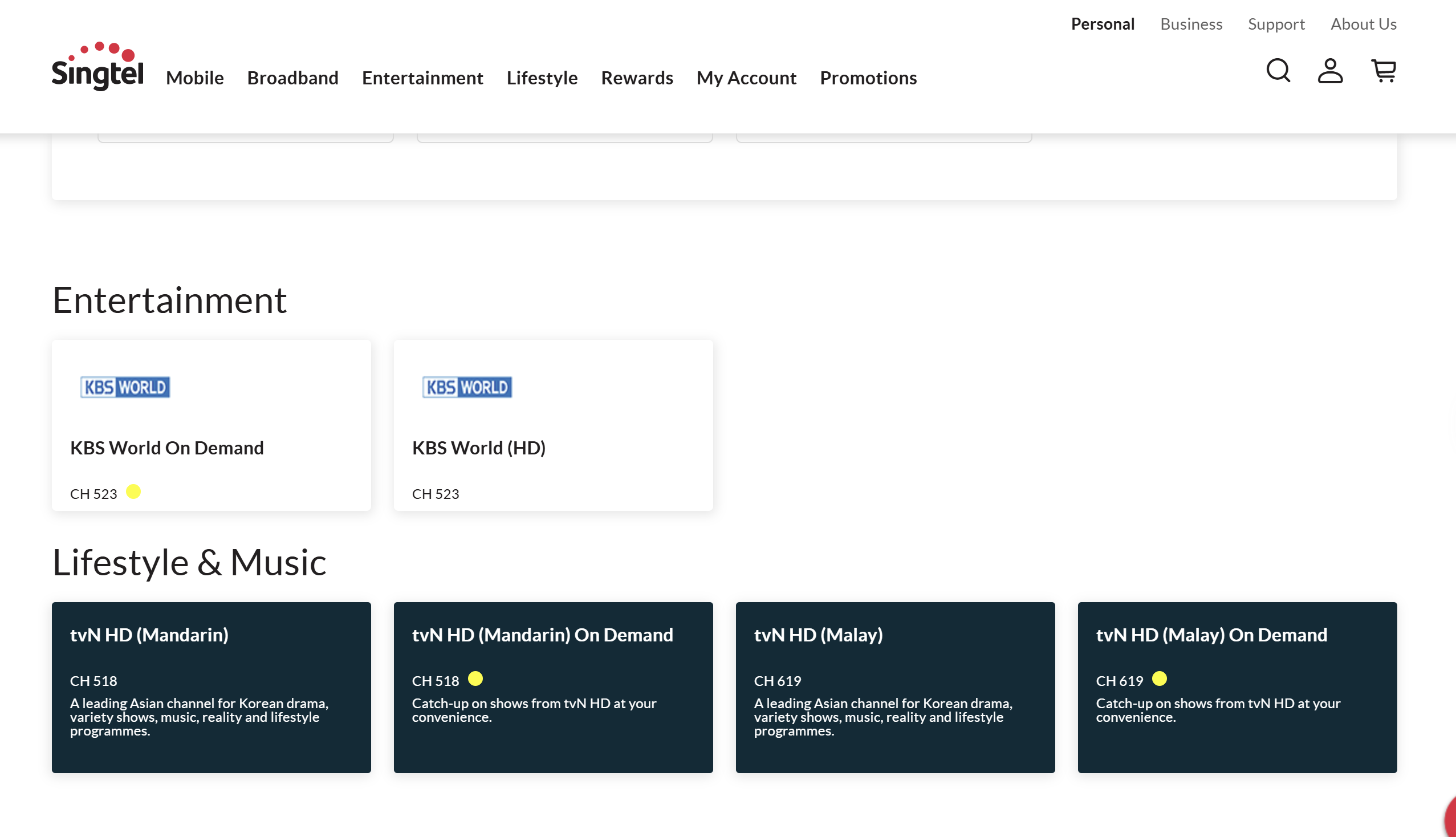
Singtel TV currently carries four Korean channels, a Singtel executive said at the meeting. Singtel has no in-house studio and sources content from suppliers.
Rival StarHub’s recent moves show how much weight Korean channels carry.
StarHub stopped carrying tvN on January 31, 2025, then brought the channel back on June 19, 2026.
When it dropped the Korean channel ONE HD around the same time, StarHub told subscribers they could keep watching Korean shows on KBS World and the returning tvN. An operator may drop a channel, but dropping Korean content altogether is harder.
Yoo explained why Korean viewers have stayed with IPTV. “Korea has Netflix, Disney+ and local streaming services, but pay-TV subscription fees are very low,” he said. Told that IPTV accounts for about 60% of Korean pay TV, Ng called it “interesting.”
Ng said Singtel’s TV business team would handle follow-up talks. He plans to visit Korea next year and asked to be told the dates of the association’s TV conference in advance so he could plan around them.
Yoo: AI can open new opportunities for Korean and Singaporean media
Yoo gave the welcome address at the Korean delegation’s networking lunch on October 8. The lunch was attended by representatives of Singapore’s government, public agencies and businesses, along with a delegation of Korean media and content companies.
“AI is changing much more than just technology. It is changing the way we create content, enjoy media, and communicate with each other.”
Yoo said Korean IPTV operators are combining AI with pay-TV services, developing personalized recommendations and search, AI customer service, advertising and data solutions, and AI-enabled set-top boxes.
“Singapore is also a leading digital and AI hub in Asia,” he said. “We hope to help create new opportunities for the media and content industries in Korea and Singapore through AI.” That evening he met Park Sang-wook (박상욱), head of KOCCA’s Singapore office, to discuss the local content market and support for Korean companies entering Southeast Asia.
[Photo 2 — Exhibition floor]

[Photo 3 — Main-stage panel]

Orange presents telco CDN and European-grade data protection
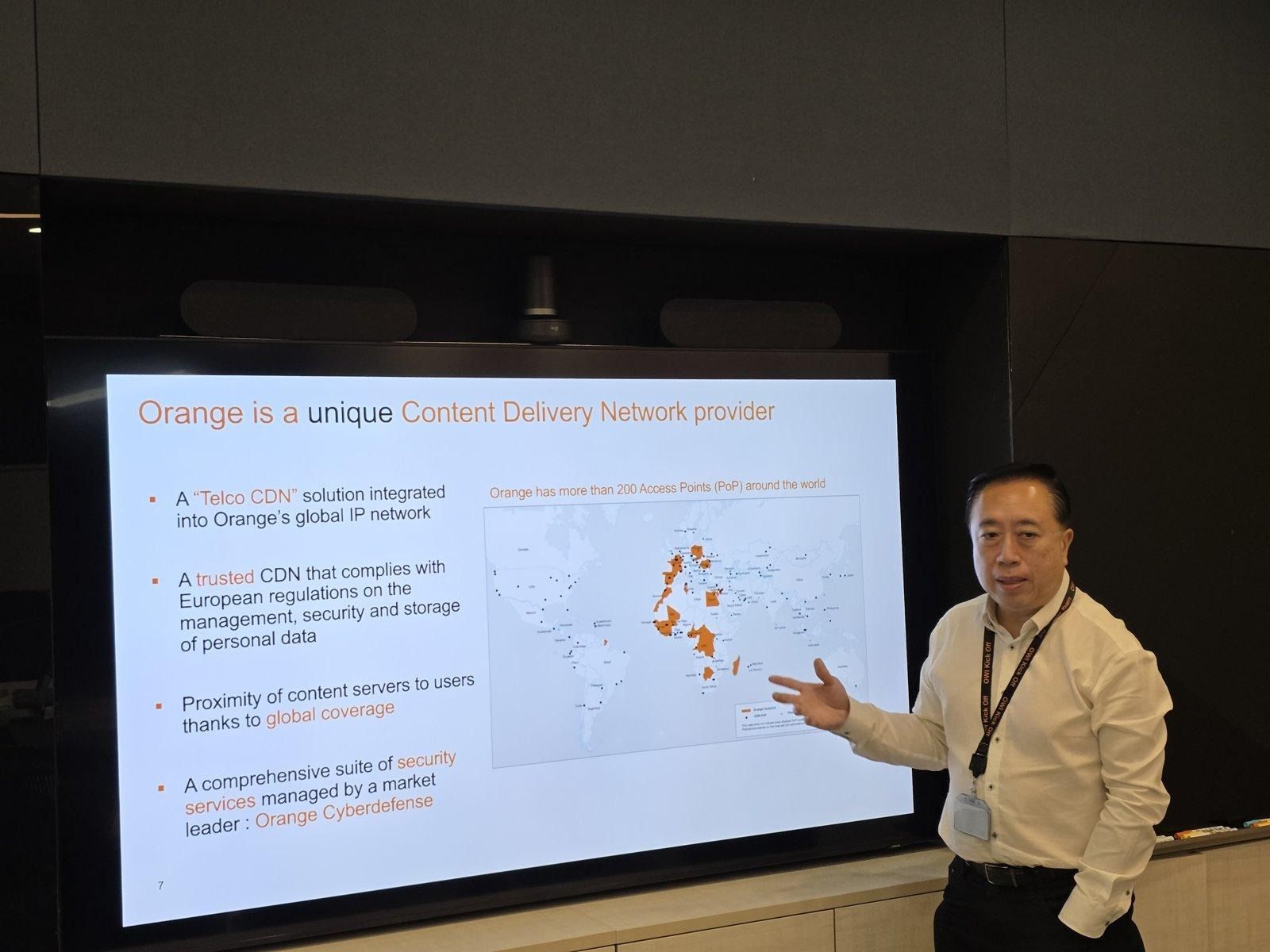
After opening the main-stage panel “K-Global × K-EnterTech Conference” on October 9, Yoo visited the Singapore office of Orange Wholesale International.
Orange presented its telco-based content delivery network (CDN), which has more than 200 points of presence (PoPs) worldwide. It also outlined its data management under the EU’s General Data Protection Regulation (GDPR) and the security services of its subsidiary Orange Cyberdefense. The Orange group serves more than 340 million customers across Europe, the Middle East and Africa.
[Photo 4 — Orange CDN briefing]
For Korean operators looking to send content abroad, delivery networks and data protection carry both cost and regulatory weight. The meeting focused on introductions and an exchange of views rather than specific business terms.
[Photo 5 — Orange meeting]

Yoo Yong-hwa (second from right) meets Orange Wholesale International at its Singapore office on October 9. Photo: K-EnterTech Hub
21.53 million IPTV subscriptions; paid VOD revenue down 39% in four years
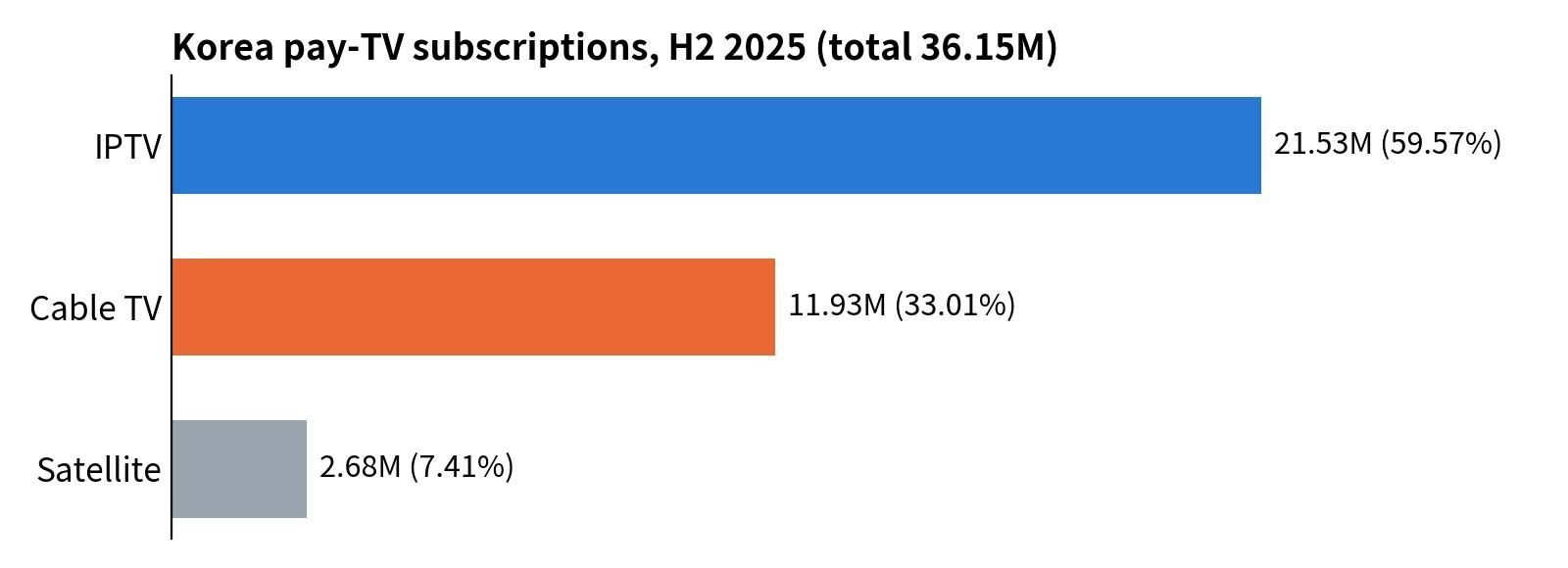
Korea had 36.15 million pay-TV subscriptions in the second half of 2025, according to the Korea Communications and Media Commission (방송미디어통신위원회)’s H2 2025 pay-TV subscription and market share report. IPTV accounted for 21.53 million, or 59.57%; cable TV for 11.93 million (33.01%); and satellite for 2.68 million (7.41%).
According to Chosun Biz, IPTV was the only platform to add subscriptions from the previous half.
[Chart 1 — Pay-TV subscriptions]
Subscriptions grew, but revenue did not. Paid VOD revenue at the three IPTV operators fell 38.7%, from 625.8 billion won ($447 million) in 2020 to 383.9 billion won ($274 million) in 2024, according to News Tomato (뉴스토마토)’s analysis of the government’s annual broadcaster financial disclosures.
KT’s figure fell from 273.3 billion won to 154.6 billion won, and LG Uplus’s from 151.5 billion won to 81.3 billion won. Viewers who once bought films and dramas one title at a time have moved to flat-fee streaming services such as Netflix.
[Chart 2 — Paid VOD revenue]
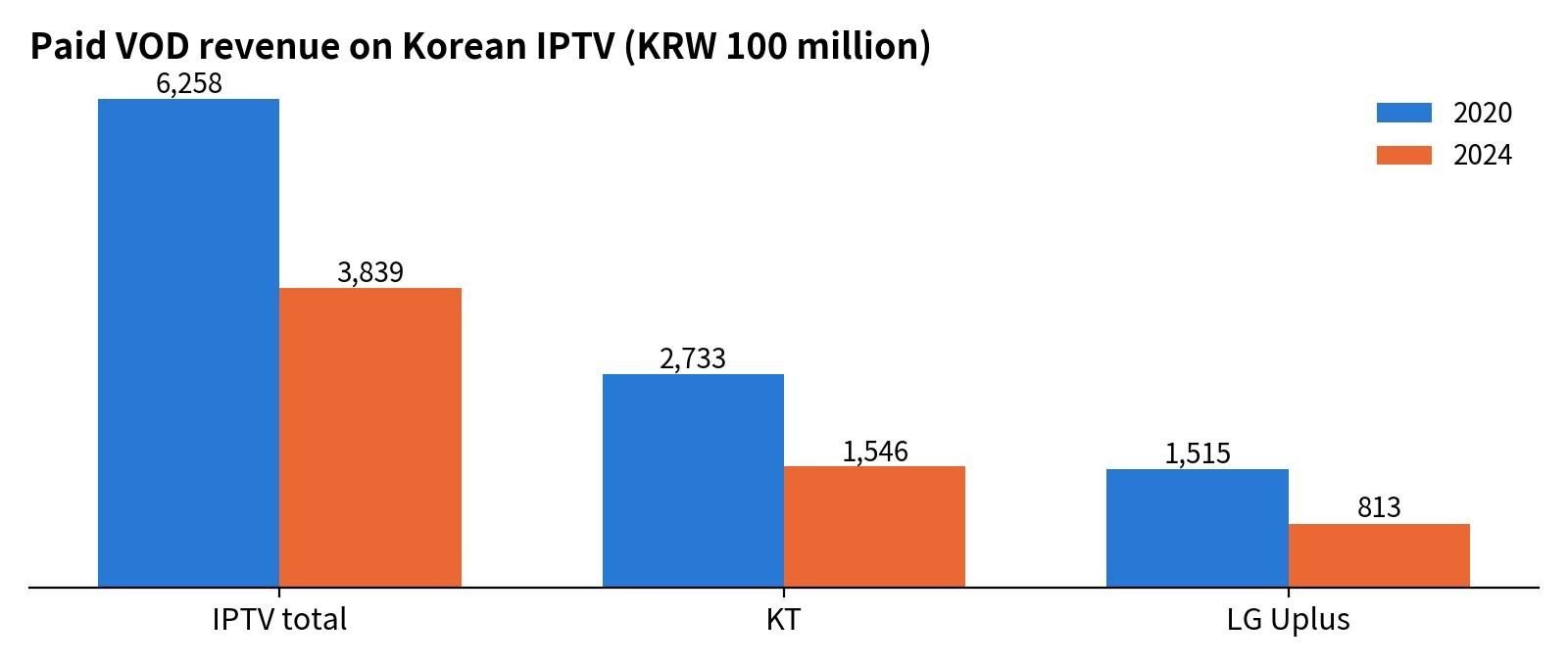
Paid VOD revenue on Korean IPTV, 2020 and 2024. Source: broadcaster financial disclosures, compiled by News Tomato
Association weighs an Asian pay-TV operators’ forum for next year
Building on the trip, the association is reviewing four options for international cooperation next year: a forum where major Asian pay-TV operators can meet, participation in overseas conferences and trade shows, research into overseas distribution channels for members’ content, and exchanges on AI and data use. Format and timing will be decided after consulting member companies.
In the Singtel meeting, Yoo said Asian pay-TV operators share the same challenges: competing with Netflix and keeping subscribers. Ng said that if the association holds such an event, Singtel’s TV and consumer teams would discuss what topics they could contribute and get back to the association.

Outlook: turning a domestic subscriber base into overseas partnerships
Korean IPTV has held on to subscribers through bundles and low monthly fees. Its share of pay TV is close to 60%, yet paid VOD revenue fell by nearly 40% over the same period. The link between subscriber numbers and revenue has weakened.
Singtel offers a reference point. Rather than defend live channels alone, it brings outside apps into its own app to keep the customer relationship. Korea’s three IPTV operators are on a similar path with Netflix and YouTube bundles, but none has yet worked with a Southeast Asian telco on content curation or on AI recommendation and advertising technology.
Demand for Korean content could be the starting point. Singtel sees Korean content as a way to reduce churn, and StarHub has brought tvN back. Korean IPTV operators, for their part, need overseas distribution and new revenue.
Whether the association’s proposed operators’ forum leads to concrete partnerships will depend on member participation and on how operators abroad respond next year.
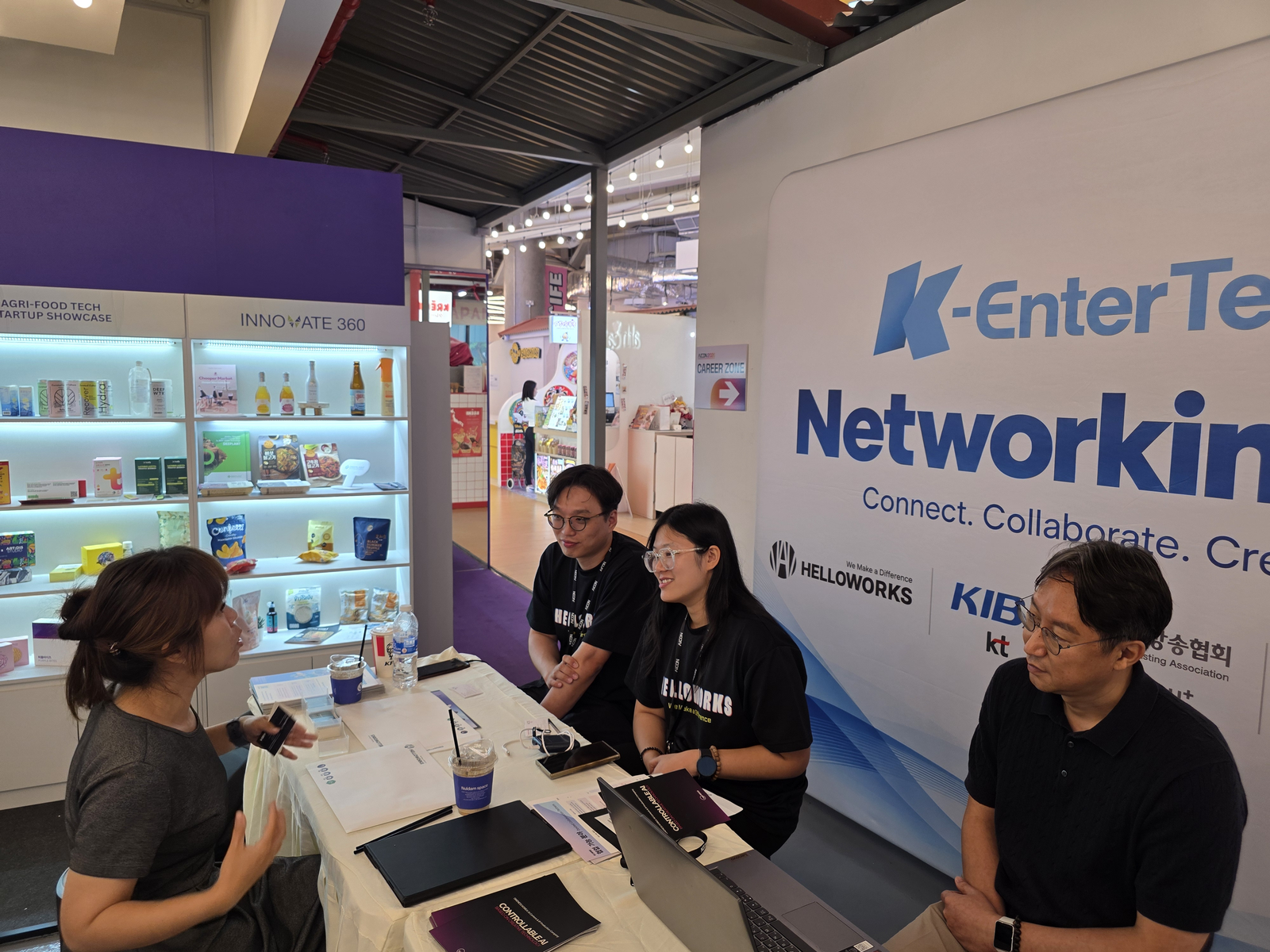
K-EnterTech Hub, an official partner of AICON 2026, ran the Korean pavilion (K-Content Village) and arranged the association’s visit. Quotations are from remarks at the meetings; the lunch address is quoted from the association’s published English script. Won-to-dollar conversions use 1,400 won per dollar.