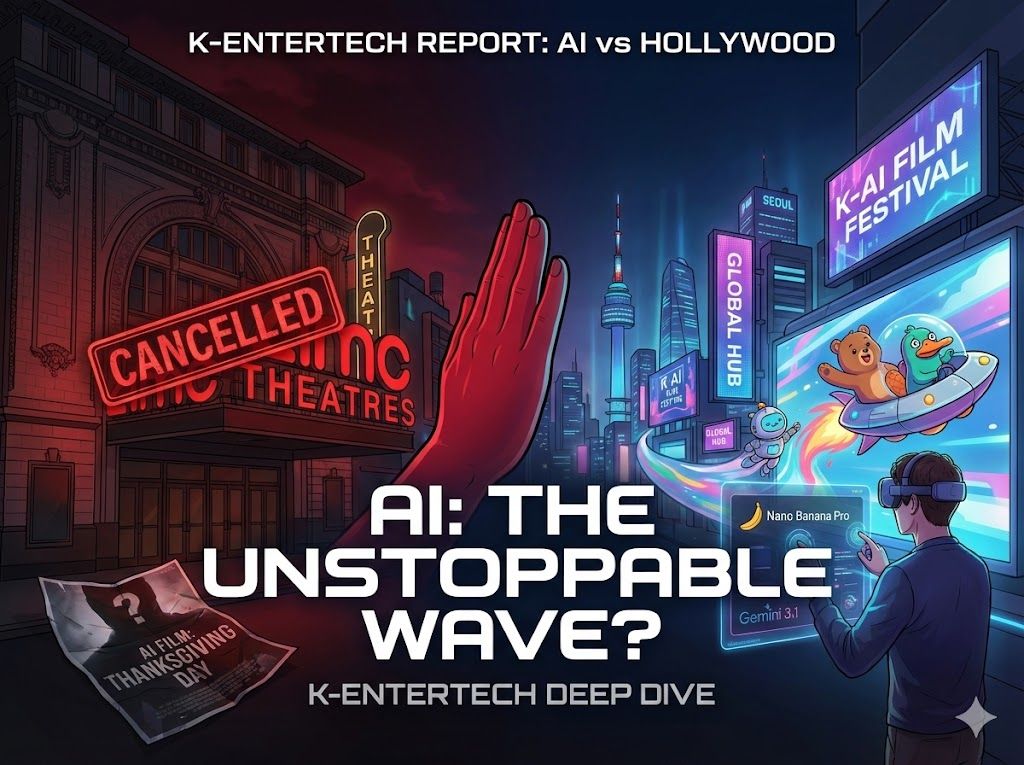
AMC 극장가 덮친 'AI 보이콧' 사태... 할리우드, AI와 공존의 딜레마에 빠지다
by
2026년 2월 19일
ARTIFICIAL INTELLIGENCE · MARKETING TECHNOLOGY · STARTUPS
Higgsfield wraps rival AI video models into a single marketer-friendly platform. Its bet: the real race isn't building the best model — it's building the fastest production infrastructure.
KEY TAKEAWAY Higgsfield has surpassed $250 million in ARR and reached a $1.3 billion valuation — not by building a better AI model, but by becoming the orchestration layer on top of all of them. The company's rise signals a structural shift: the AI video market is moving from a single-model quality race to a platform war over who controls the marketer's workflow.

A still from a Higgsfield AI-generated video.
The platform is used by brands and musicians alike, including Madonna, Will Smith and Snoop Dogg.
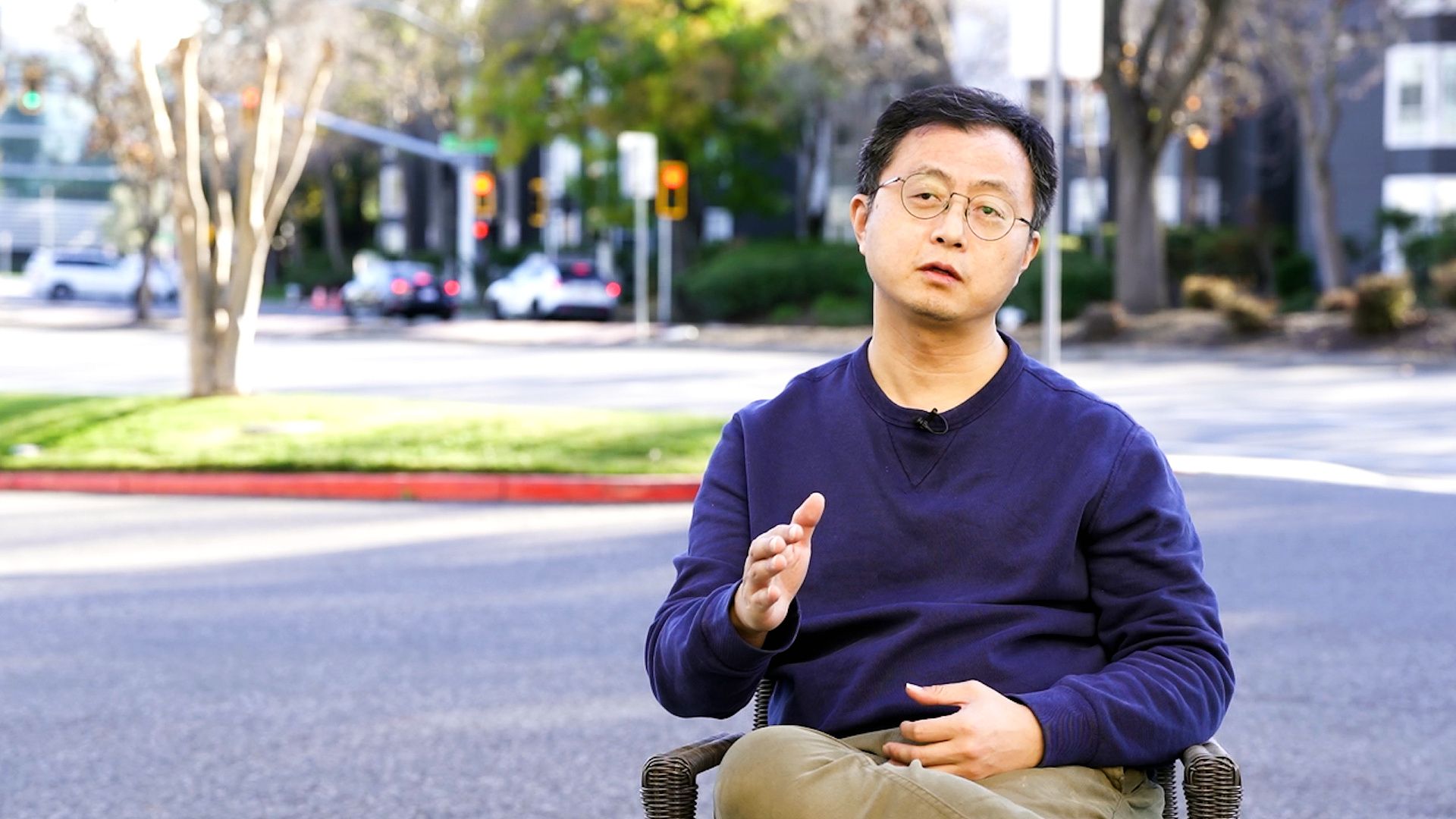
Alex Mashrabov didn't set out to build another AI company promising to revolutionize marketing. But watching culture move at internet speed from inside Snap Inc., where he led generative AI efforts, gave him a clear-eyed view of a structural problem: by the time a brand's campaign clears approvals, the moment it was meant to ride has already passed.
 Jung Han
That disconnect became the founding premise of Higgsfield, the two-year-old startup that is now valued at more than $1.3 billion after raising $80 million in a Series A extension that brought total funding to $130 million. The company has attracted more than 15 million creators to its platform in the past year and surpassed $250 million in annual recurring revenue — most of it driven by subscriptions.
The name borrows from quantum physics, where the Higgs field is the invisible force that gives particles their mass. In marketing, Mashrabov sees an analogous problem: brands have ideas and stories, but video is the only medium that gives those ideas weight online.
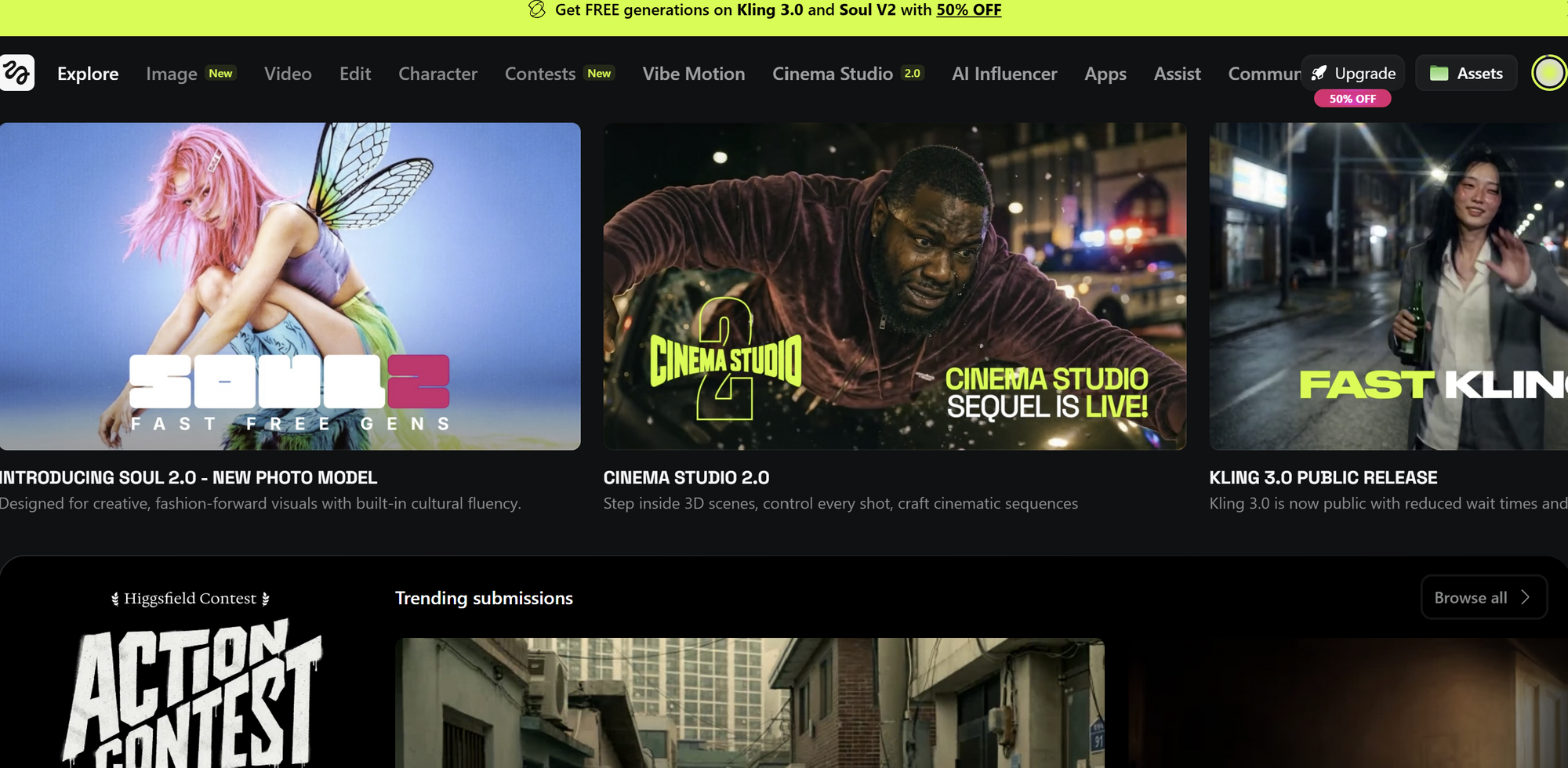
Unlike the growing roster of companies racing to release the next foundation video model, Higgsfield positions itself as an orchestration layer — a platform that integrates models from Google, Freepik and others, letting users choose the right system for a given prompt or creative goal. The company does not pre-train models from scratch; instead, it post-trains and fine-tunes using proprietary data.
That distinction has real strategic implications. Mashrabov doesn't measure Higgsfield against OpenAI or Adobe. His benchmark is ByteDance — the Chinese technology conglomerate behind TikTok and a growing stack of marketing and video tools including CapCut and its BytePlus cloud platform.
"CapCut is way more suited for marketers and creators than any other incumbent software, including Adobe."
— Alex Mashrabov, Founder and CEO, Higgsfield
The philosophy extends to how Higgsfield differentiates itself from consumer-facing tools such as Sora. Consumer products must drive generation costs toward zero to support mass scale, Mashrabov argues. Higgsfield is built for teams with budgets and deadlines, where velocity and throughput are the binding constraints. The platform is designed so that a single person can produce 30 to 40 seconds of on-trend content every day.
BY THE NUMBERS
The focus on velocity has caught the attention of major advertising agencies experimenting with where AI fits in modern production workflows.
At Code and Theory, Higgsfield functions as what Alex Foster, the agency's head of creative studio, describes as a rapid-prototyping engine. Storyboard frames and camera-movement animatics are built on the platform, with some prototypes graduating into final executions. "It lets our ideas become visible very fast," Foster said. "For clients, that's been a big game changer."
At WPP, one of the world's largest advertising groups, teams routinely run identical prompts across competing AI systems to find which produces the right creative outcome with the least friction. The question, an innovation executive at the company said, is no longer which model is best — it's which one produces the result with the least resistance. Higgsfield's stylistic presets, which generate editorial-style visuals such as high-contrast lighting and wide cinematic angles, reduce the guesswork for teams without deep prompt-engineering expertise.
Legal risk shapes the calculus too. Platforms like Adobe Firefly, designed to be commercially safe, are often used in early brand-asset development. Tools like Higgsfield are brought in later — for speed and creative control — rather than as a replacement for the full production ecosystem. "AI is still not at a stage where it's perfectly indistinguishable from live action," Foster noted.
MARKET CONTEXT: $500M AND COUNTING
Higgsfield has plans to expand into performance marketing, creating a feedback loop where advertising data informs which content variations are worth producing next. Mashrabov frames this as the inevitable direction: the platform that closes the loop between creative production and campaign performance will own the workflow.
In an increasingly crowded AI video market — one that attracted more than $500 million in new funding in 2025 alone — Mashrabov's bet is that marketers don't need another black box. They need a system that helps ideas gain mass fast enough to matter.
Mashrabov's promise to reduce 'production tax to zero' is not merely a cost argument — it is a claim about the nature of competitive advantage in modern brand marketing.
The winner of the AI video era will not be the company that builds the most capable model. It will be the company that gives marketers the infrastructure to act before the trend disappears. At a $1.3 billion valuation, the market is already placing its bet.
"Marketing technology obviously has not been very popular across Silicon Valley. AI is going to create a renaissance opportunity specifically for the companies that advertise on social media."
— Alex Mashrabov, Higgsfield CEO
Source: Trishla Ostwal, ADWEEK, "Meet the $1.3 Billion Startup Behind Madonna and Will Smith's AI Video," Jan. 28, 2026.


![[보고서]전통 언론사의 크리에이터 전략 대전환](https://cdn.media.bluedot.so/bluedot.kentertechhub/2026/02/0nwc9z_202602100212.png)