
At ICNX 2026, Studio Meta-K's Kim Kwang-jib remade a KRW 2 billion, eight-month commercial for KRW 30 million in two weeks; Hello Works' Koo Yong-nam says his short dramas have earned back about 30% of what they cost
Generative AI cut a Pizza Hut commercial from KRW 2 billion to KRW 30 million. Short-drama maker Hello Works said it has recouped 30% of its spend; producers keep 10–15% when a platform funds the show. Both companies said they now put AI savings into owning IP and co-production stakes.
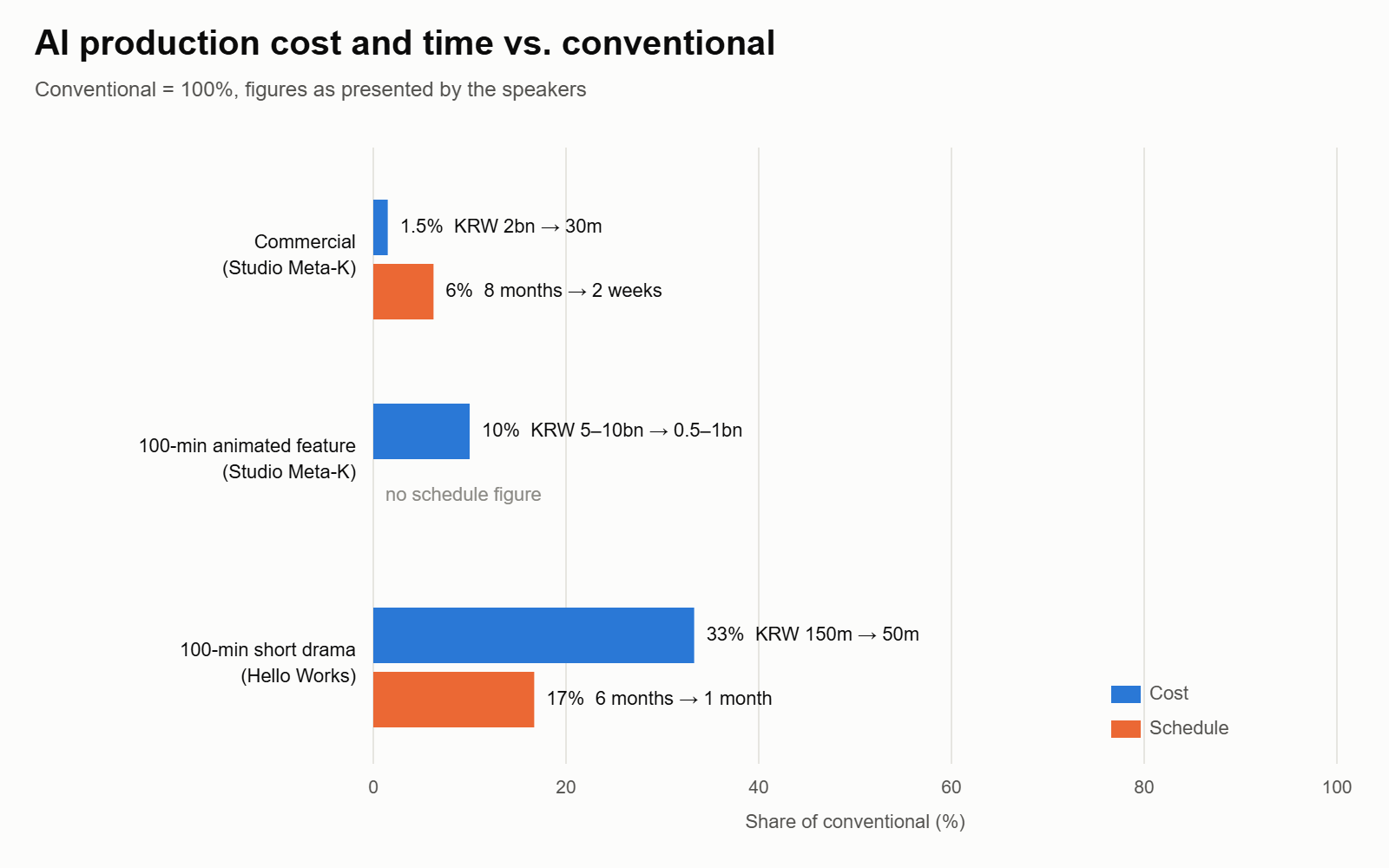
A Pizza Hut commercial that would have taken eight months and KRW 2 billion (about $1.49 million) to shoot was finished in two weeks for KRW 30 million (about $22,000) using generative AI. Kim Kwang-jib, CEO of Studio Meta-K (스튜디오메타케이), showed the project on Nov. 3 in Session 1 of ICNX 2026, the Incheon advanced-media conference at Songdo Convensia (송도컨벤시아).
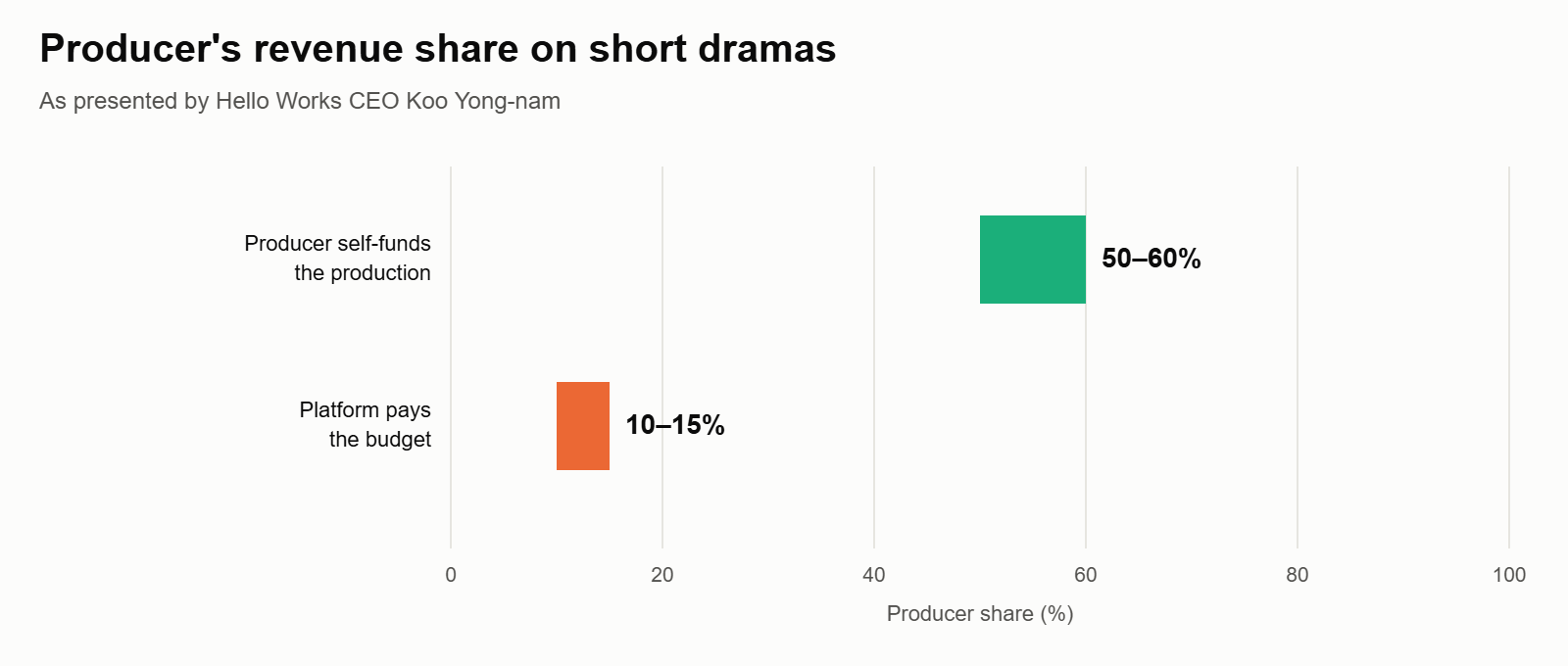
Koo Yong-nam, CEO of Hello Works (헬로웍스), who sat on the same panel, said his company has made four or five short dramas and recovered about 30% of the money it put in. A short-drama producer keeps 10% to 15% of revenue when a platform pays for the production, and 50% to 60% when it puts up the money itself. "We are bringing in an AI production system to raise cost efficiency and get past this," Koo said.
"Drama budgets have risen enormously over the past three or four years, and raising production money has become very hard," Kim said. At KOCCA's U-KNOCK 2025 event in the U.S. last November, he said K-drama budgets had more than tripled in three years.
In China, more than 221,900 new AI short dramas went live in the first half of this year, and 1,055 of them, or 0.48%, passed 100 million views, according to DataEye figures reported by Yicai. Neither Korean company is spending its AI savings on making more titles. Both are using the money to secure source IP and co-production stakes.
AI for the wide shots, cameras for the close-ups
Studio Meta-K generates wide crowd shots with AI and films only the lead actors' close-ups on an LED volume or green screen. Shooting the same scene for real would take more than 500 extras and 500 sets of costume, hair and makeup. An LED volume is a virtual-production stage that projects real-time backgrounds on giant LED walls behind the actors; it became widely known after Industrial Light & Magic built a 20-foot-high, 270-degree wall for Disney+'s "The Mandalorian."
The company used the method for battle scenes in KBS's (한국방송) "History Special" (역사스페셜) and crowd scenes in a baseball drama it is making with a broadcaster. On MBC's "Rookie Coach Kim Yeon-koung" (신인감독 김연경), the three match shots before Kim's close-up were made entirely with AI, and the newly launched second season also uses AI scenes. Studio Meta-K co-produced the Taiwan and Zico episodes of SBS Plus's "The Manly Man's Way to Travel" (상남자의 여행법), and its virtual singer recorded six songs for MBN's "Single Again 7" (돌싱글즈7). Footage from Japan and Taiwan, where drone permits are hard to get, is also generated.
Founded in 2022 as a drama and film IP developer, the company is led by a former Hollywood VFX producer of nine years who taught film at Seoul Institute of the Arts. Kim spoke at AI on the Lot at Amazon MGM Studios in Culver City in May and will speak at Asia TV Forum & Market in Singapore in December. "We use AI to cut costs, but we are steering the business toward being an IP holder, not an outsourcing shop," he said.
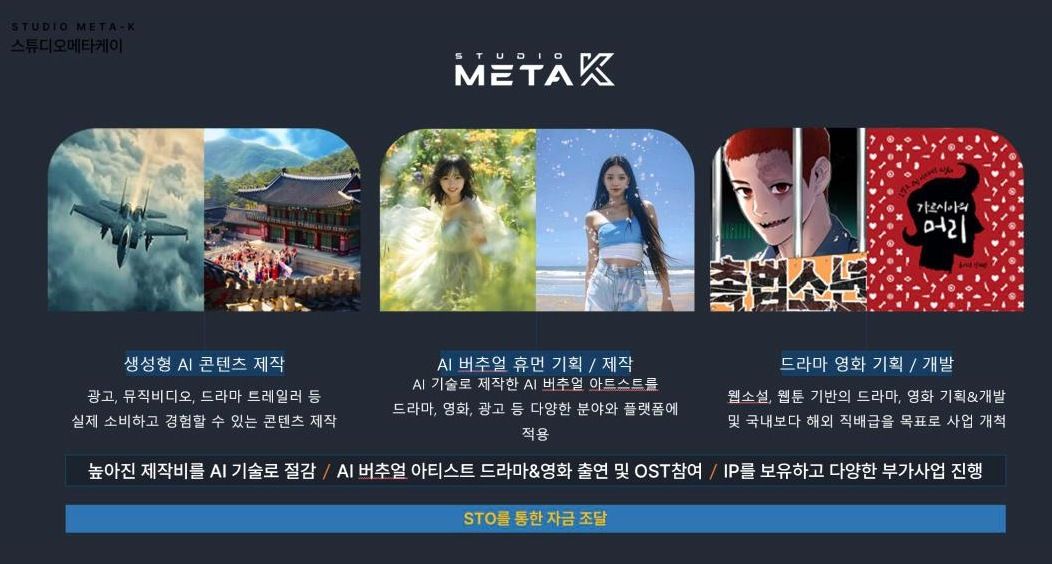
Studio Meta-K's work splits three ways: AI-made commercials, music videos and drama trailers; AI virtual artists who appear in dramas and ads and sing on soundtracks; and drama and film projects based on web novels and webtoons, aimed at direct overseas distribution rather than the Korean market. The company has also proposed raising money through a security token offering.
Kim said price-cutting has hurt the Korean market. "When we started AI video the year before last, we were the most expensive. Now so many companies have cut prices so far that the Korean market itself has become very difficult," he said. "If you use AI, it has to be for the expensive shots. A scene of someone drinking coffee in a café — just shoot it."
Every revision costs tokens: "Cut 100 shooting days to 30"
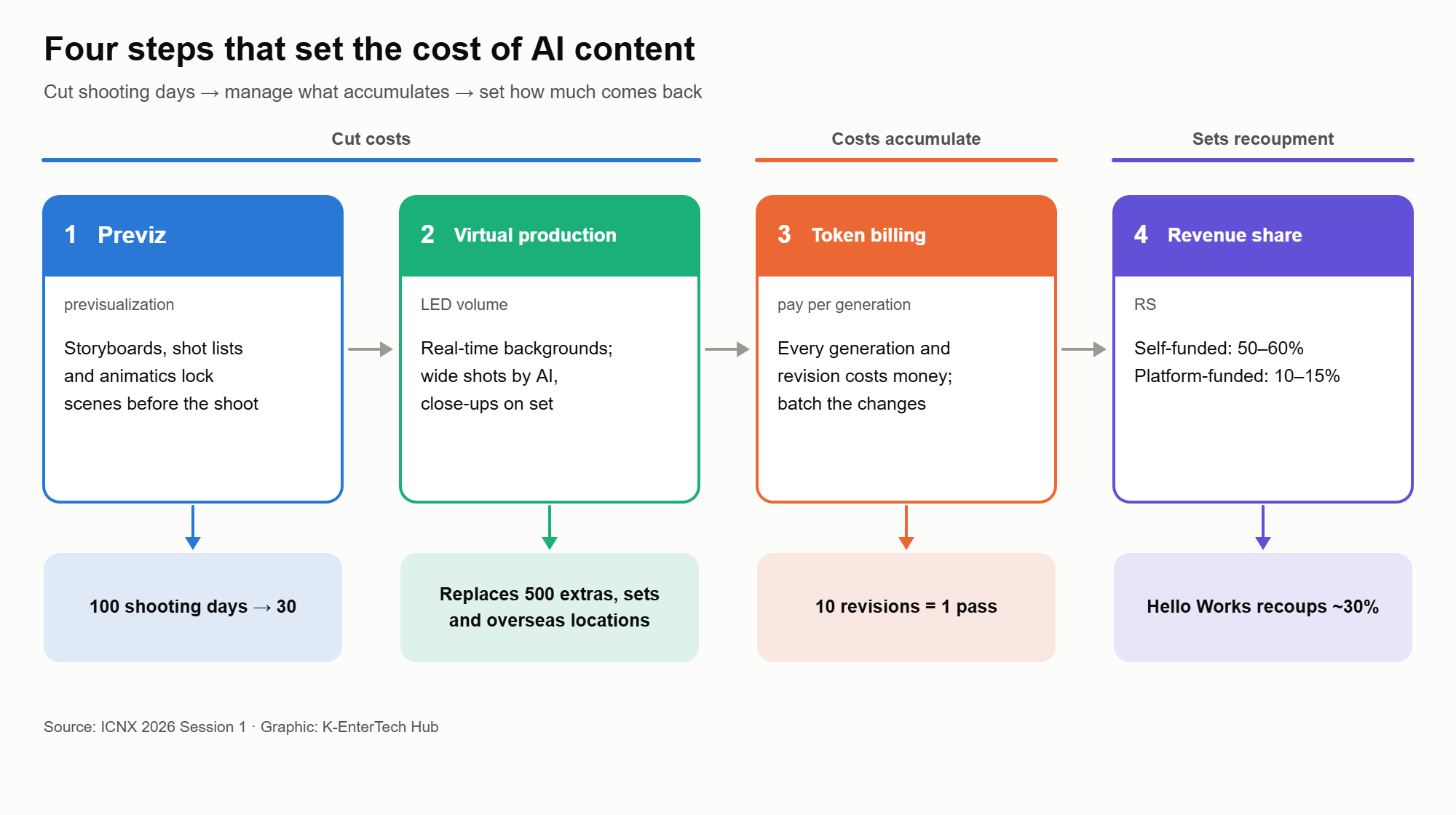
"To get high-quality footage, there are quite a few cases where it costs more than the legacy industry," Kim said. Generative AI services charge by the token, their unit of computation, so every fix is billed again. "You could make 10 changes in one go, but people fix things one at a time, and more money is wasted than you'd think," he said. Using the most expensive tools from the draft stage onward adds to the bill, he said.
Kim's advice is to use AI in previsualization, not in post-production. Previz locks scenes before the shoot with storyboards, shot lists and animatics. "You have to cut 100 shooting days to 30 with good previz to bring the budget down," he said. "If you shoot everything and only tweak things in post, it's hard to save money."
A Korean film that costs KRW 10 billion (about $7.46 million) competes with American films that spend KRW 200 billion (about $149 million). "The time has come to spend the full KRW 10 billion with AI and make it look like a KRW 200 billion film," Kim said. "But many companies are still using AI to shave off KRW 200 million or 300 million and keep the same quality."
A KRW 500 million animated feature: "Seopyeonje" in theaters next summer
Kim put the cost of a 100-minute animated feature at KRW 100 billion to 150 billion (about $75 million to $112 million) in the U.S. and KRW 5 billion to 10 billion (about $3.7 million to $7.5 million) in Korea. Studio Meta-K believes it can make one for around KRW 500 million (about $370,000). "At KRW 500 million to 1 billion, you can recoup to some extent even if the theaters aren't full," he said.
The first title is Im Kwon-taek's film "Seopyeonje" (서편제). The 120-minute original will be cut to 90 minutes and turned into animation while keeping most of the original cast's voices. Once the final look is set, production is due to wrap in the first half of next year for a summer release. "It is hard to market a brand-new IP made 100% with AI," Kim said; the company will remake well-known films and webtoons first and bring out original IP after that. On choosing animation, he said: "In live action, viewers notice the slightest oddity. Animation doesn't feel off."
Korean AI features have struggled in theaters. "I'm PoPo" and "Man in Hanbok" drew 781 and 640 viewers and left screens within two weeks, Korea JoongAng Daily reported.
In short form, the company is self-funding a 60-episode series of 90-second episodes, an adult take on something like "Zootopia." Kim said outside money would mean giving up revenue share. The series is made in English, and depending on the response it could grow into character branding, webtoons, games and a 90- to 100-minute feature. Studio Meta-K is in talks with U.S. producers on three projects; on one, it will join as co-producer when cameras roll next year and generate the large-scale scenes.
The company raised a KRW 3 billion (about $2.24 million) Series A from Korea Investment Partners and Timeworks Investment. In July it was named lead institution on two government R&D projects worth KRW 15.3 billion (about $11.4 million) over three years, and in August it picked Eugene Investment & Securities to lead its IPO. "We plan to finish fundraising by year-end and move aggressively next year," Kim said.
Platform-funded shows leave producers 10–15%; Hello Works has recouped 30%
Koo explained short-drama revenue share by who pays for production. A producer that funds a show itself takes 50% to 60% of revenue; one that takes the platform's money gets 10% to 15%. "In short form, if you take a production fee you don't get a revenue share. You have to burn your own money to get RS," Kim added. "And Chinese companies are hard to collect from."
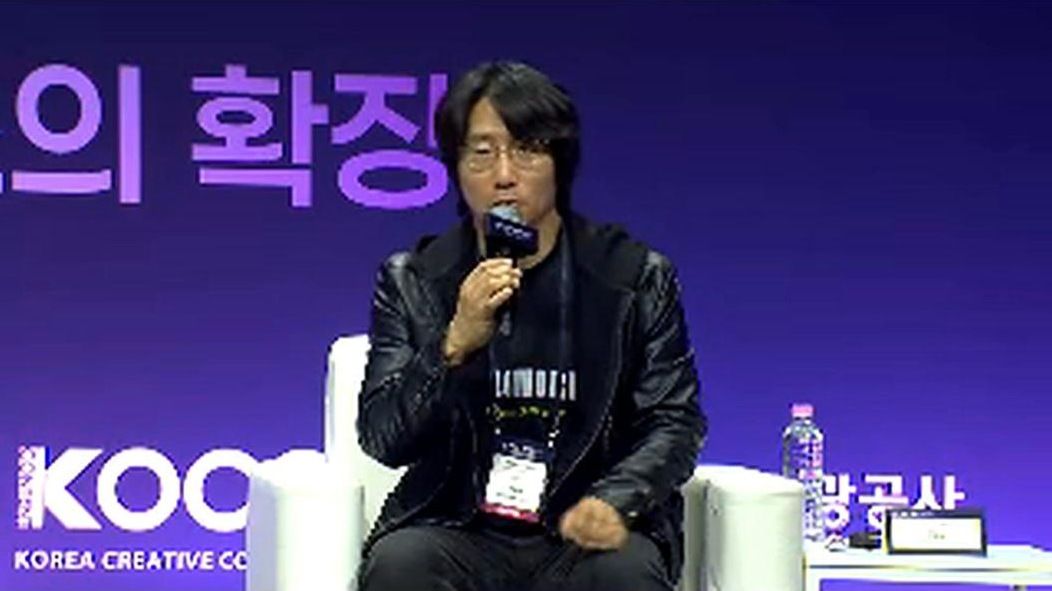
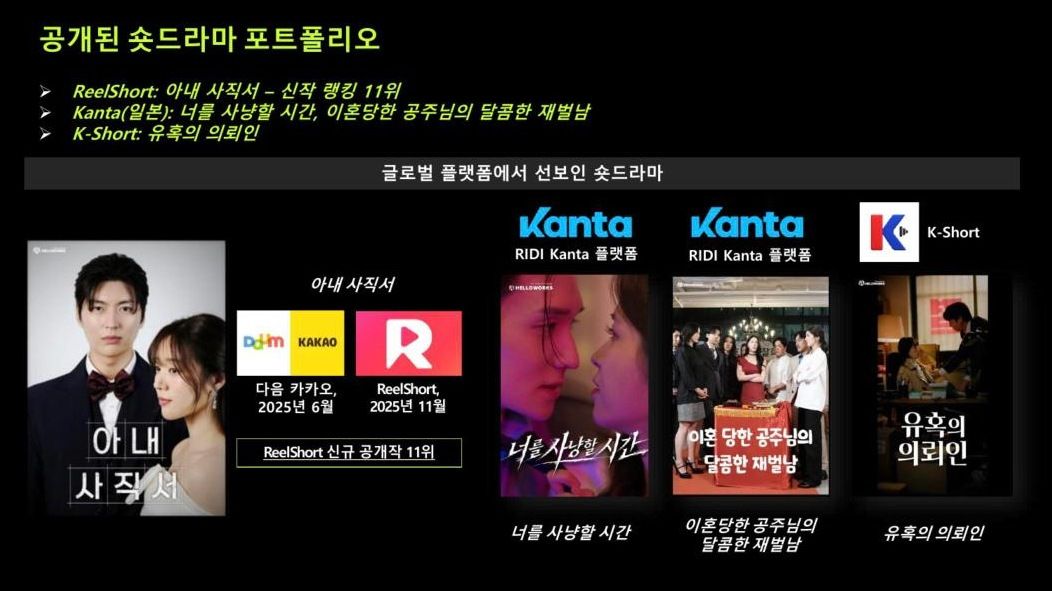
Hello Works started in 2018 as a film-script developer selling screenplay rights and has become an AI-based K-pop and K-content producer and publisher. "The Wife's Resignation" (아내 사직서) launched on Daum Kakao in June 2025 and on ReelShort that November, where it ranked 11th among new releases. On Japan's RIDI Kanta it has "Time to Hunt You" and "The Divorced Princess's Sweet Chaebol," and on K-Short "The Seductive Client." Co-productions with Japanese, Taiwanese and Singaporean companies are in preparation.
KRW 50 million for 100 minutes, one month from pitch to release
A live-action short drama used to cost Hello Works about KRW 150 million (about $112,000) and take around six months, Koo said. With AI, synopsis to publishing takes under a month. Token costs run about KRW 500,000 (about $370) a minute, so a 100-minute drama comes in at KRW 50 million (about $37,000). The company aims to cut total costs by 70%.
Each shot starts as a "standard cut card." GPT breaks the script into cuts, and each card records the cut number, location, characters, action, mood and lighting, and required assets. Art style, color and lighting are fixed at the start of a season; only location, characters, action and camera change from cut to cut. Claude structures the video prompts. ByteDance's Seedance 2.0 renders test cuts to check framing and motion, and Seedance 2.5 produces the final episodes. Finished work must pass checks on character and world consistency, tone and subtitle accuracy before delivery.
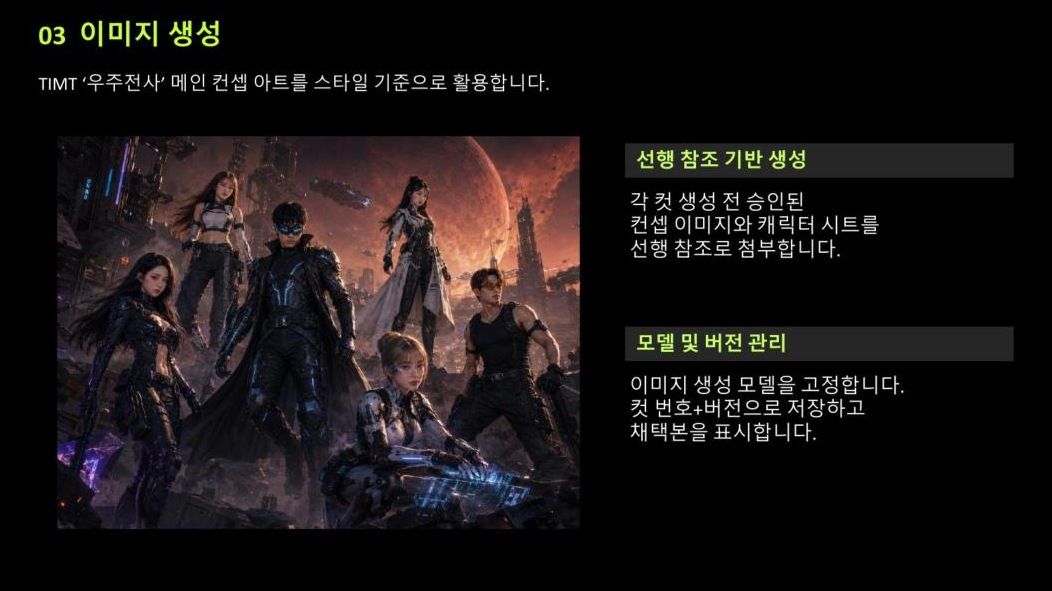
Hello Works has built four AI agents — for synopsis and script drafts, multilingual translation and dubbing, virtual-character creation and multiplatform publishing — and filed two patents related to multimodal LLMs. Romance dominates its 40-odd original IPs; demand is growing for sci-fi, horror and BL (boys' love), which it plans to make with AI. Its K-pop dance team TIMT (This Is My Time) has about 1.57 million followers, including 770,000 on YouTube, 600,000 on TikTok and 200,000 on Instagram, and its six members have been turned into space-warrior characters for cinematic videos, VR/XR stages and merchandise. "Bedroom studios and one-person directors are emerging," Koo said. "It's a chance for small producers to try creative things big studios can't."
"LiPie," a 1959 Korean sci-fi comic, presented in Hollywood and Singapore
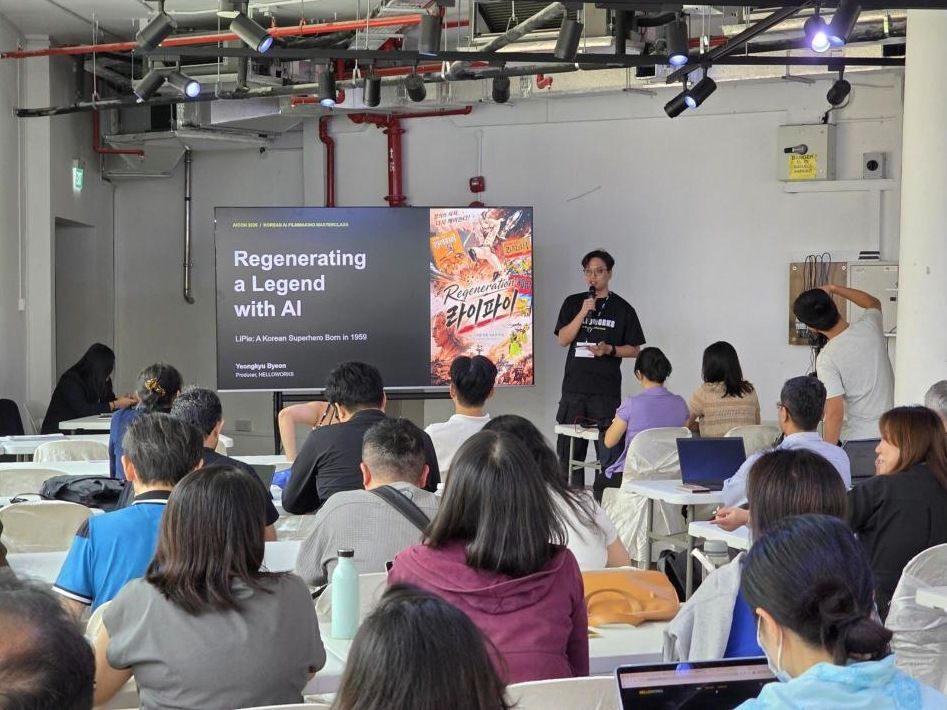
Hello Works' flagship IP is "LiPie" (라이파이), Korea's first sci-fi comic, published by Kim San-ho in 1959. In the original, the queen of a green planet sets out to conquer Earth after pollution and space junk destroy her world, and LiPie stops her with taekwondo. "The hero fights, but never kills his opponent," Koo said. The original also features flying saucers and a wireless communicator worn at the waist.
Hello Works will make an animated version before live action and launch first in the U.S. Following Netflix's "KPop Demon Hunters," it plans to combine K-pop and taekwondo to build several revenue streams. Kim San-ho is drawing the characters himself, with AI 3D modeling added on top. "Doing animation properly costs tens of billions of won, which small producers can't raise, so we saw a way to differentiate the IP by adapting an original," Koo said.
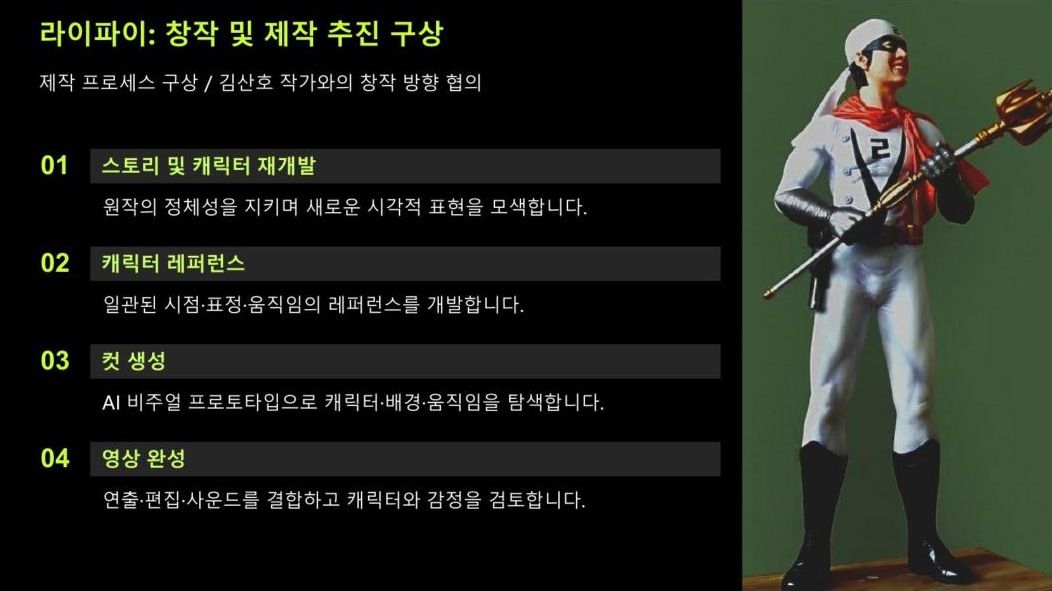
Hello Works presented the plan at the Korea session of the Global Stage Hollywood film festival at the TCL Chinese Theatre on Oct. 3. On Oct. 8, producer Byeon Yeong-kyu walked through the development process under the title "Regenerating a Legend with AI" at the Korean AI Filmmaking Masterclass at AICON 2026, held at SCAPE in Singapore. Working with Kim San-ho, the team rebuilds the story and characters and creates character references with consistent angles, expressions and movement. It then tests characters, backgrounds and motion with AI prototypes before adding direction, editing and sound.
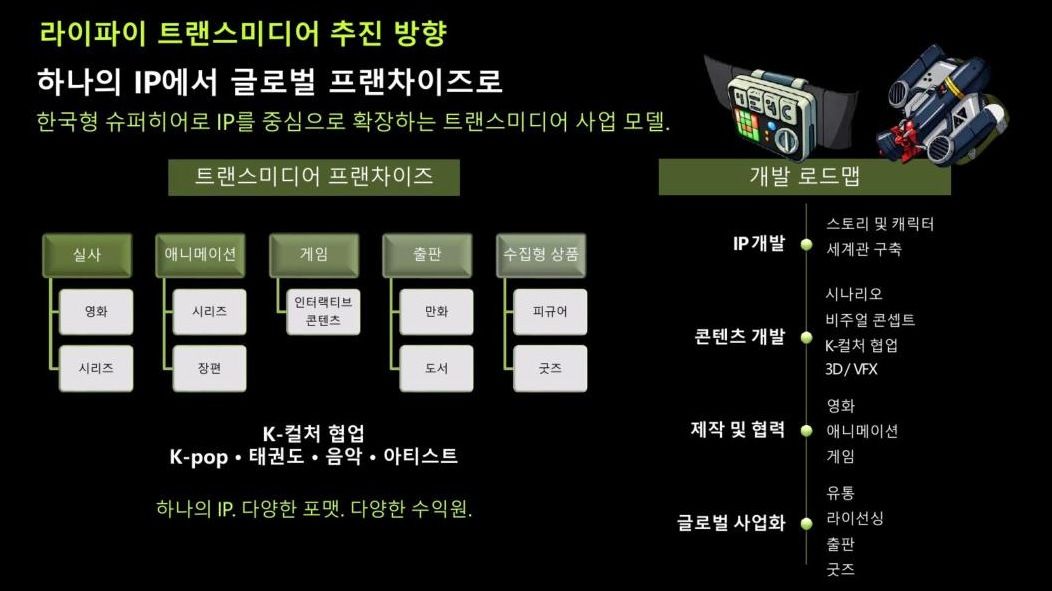
LiPie is planned for live-action film and series, animated series and features, games, comics and books, and figures and merchandise, tied to K-pop, taekwondo and music collaborations.
220,000 AI short dramas in China; 0.48% topped 100 million views
"China released 270,000 short dramas in the first half and makes a 100-minute one in five days," Koo said. The China Netcasting Services Association counted 122,000 AI-made titles among the 128,000 short dramas newly registered in the first quarter.
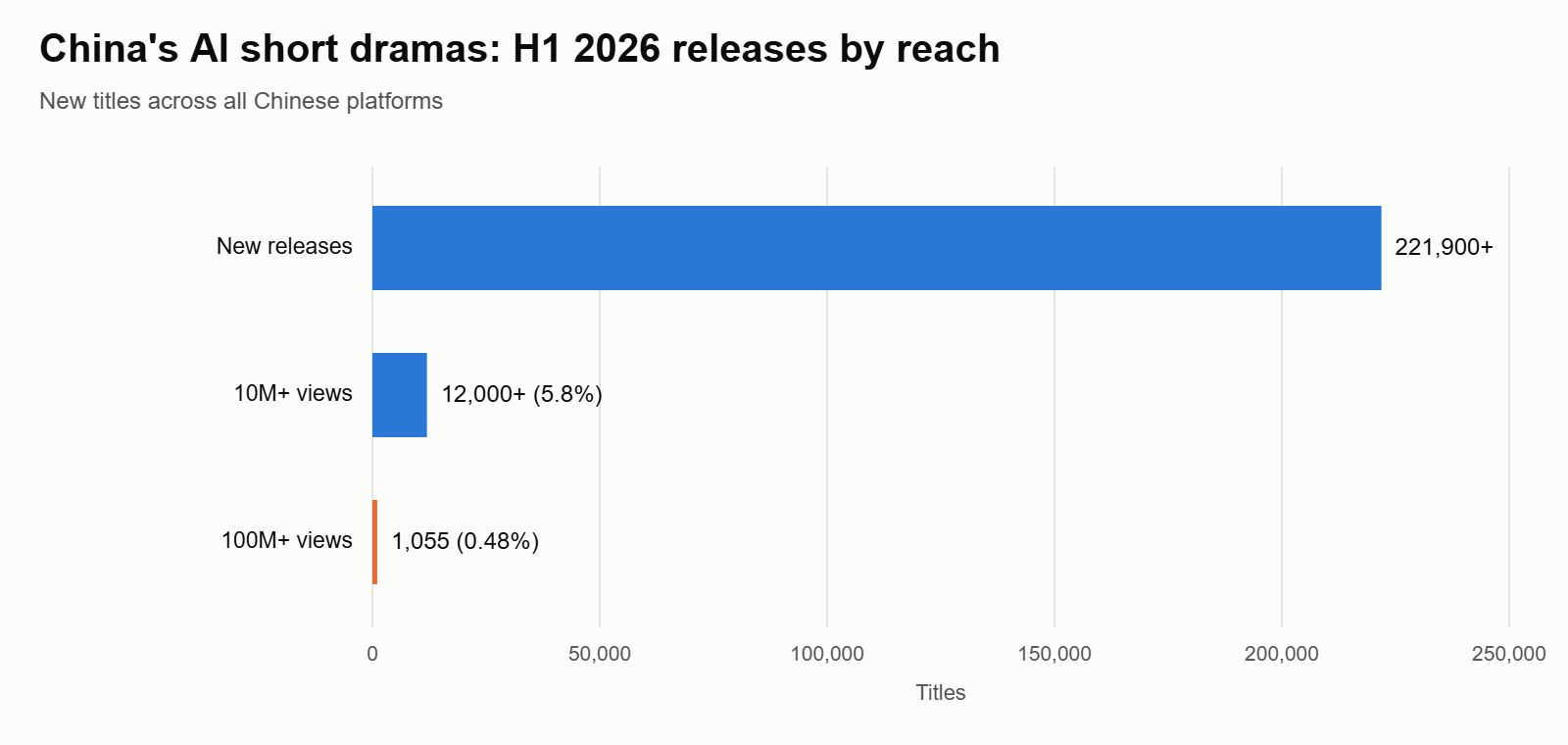
Of the more than 221,900 new AI short dramas DataEye tracked in the first half, about 12,000 (5.8%) passed 10 million views and 1,055 passed 100 million. Payouts have fallen too: an ordinary short drama that earned 800 to 1,000 yuan per 10,000 views now gets about 100 yuan, financial outlet Yicai reported. "A report from a few days ago says fewer than 3% are successes," Kim said. "Anyone can make content now, but competing will get much harder."
China's National Radio and Television Administration said the country's short-drama market passed 100 billion yuan (about $14 billion) in 2025, double the year before. Global in-app spending on short-drama apps rose 115% to $2.98 billion in 2025, Sensor Tower estimated. DataEye expects China's AI short-drama market alone to reach 40 billion yuan this year.
"Tools take months, film grammar takes years": hiring by portfolio
Most of Studio Meta-K's staff studied film and were then taught AI, Kim said. "You can learn AI tools in a few months, but it takes an AI engineer years more to learn editing, directing and film grammar," he said. "In the first two years of college, students shouldn't be allowed to use AI. They need the basics or they'll fall apart on set."
When hiring interns, Koo looks for a portfolio they made themselves from planning through directing and production, and for the ability to develop storyboards and directing ideas. Some formats still need cameras. "Documentary-style entertainment means meeting people and covering local culture and history, so live action is essential," Koo said; a show following K-pop idols on tour to Nevada is shot on location.
KBS and MBC Plus join AI engine project; Studio Meta-K signs on as co-producer
KBS, MBC Plus and KBS Media are partners in Studio Meta-K's government project, which is developing an AI engine trained on broadcast directing, camera composition and editing grammar, along with long-form video generation. Among short-drama platforms, Spoon Labs' Vigloo earned more than 70% of its first-half 2025 revenue overseas and opened an office in Los Angeles.
When a broadcaster or platform pays the whole budget, the money saved with AI does not stay with the producer; by Koo's numbers, the producer's share is 10% to 15%. Studio Meta-K joined "The Manly Man's Way to Travel" as a co-producer rather than an AI contractor, and it funds its short-form work itself. A broadcaster that signs co-production deals with AI studios can lower per-episode costs and share in overseas sales rights.
"Next year is a battlefield": AI video splits into premium and cheap
"If many companies started with AI this year, next year will be a battlefield," Kim said. "Features and animation are pouring out indiscriminately, but money isn't circulating, and many companies will collapse." Just as video split into high-end and low-cost after YouTube arrived, he expects AI video to divide into two markets.
"As AI gives people more free time, content consumption will explode," Kim said. "Whether quality content or low-quality content fills that demand is another question." Hello Works plans to add revenue next year from location-based and audience-participation content.
"AI is already on set," said moderator Jung Han (한정훈), CEO of K-EnterTech Hub. "Next year's investment will go to two kinds of content: what AI can't replace, and what AI can make for less."