
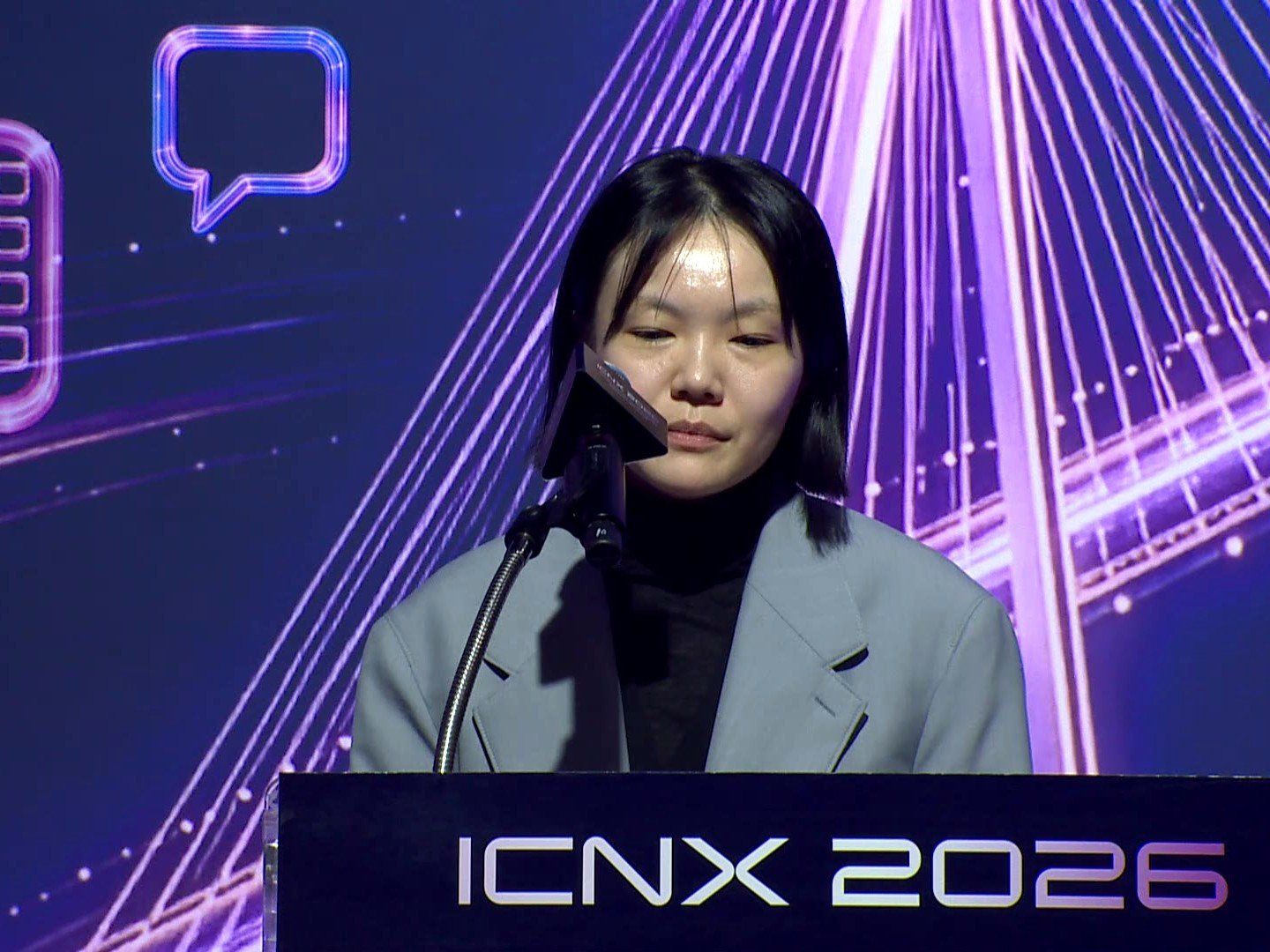
Hudson AI CEO Shin Hyun-jin at the ICNX 2026 Technology Showcase: “There is no dead content, only content that hasn’t reached a global audience”
Hudson AI CEO Shin Hyun-jin said at ICNX 2026 that dubbing costs 10x subtitles and AI can take long-tail K-content abroad. After Amazon’s AI-dub backlash, quality decides the market; Hudson is building an agentic workflow to cut human QC.
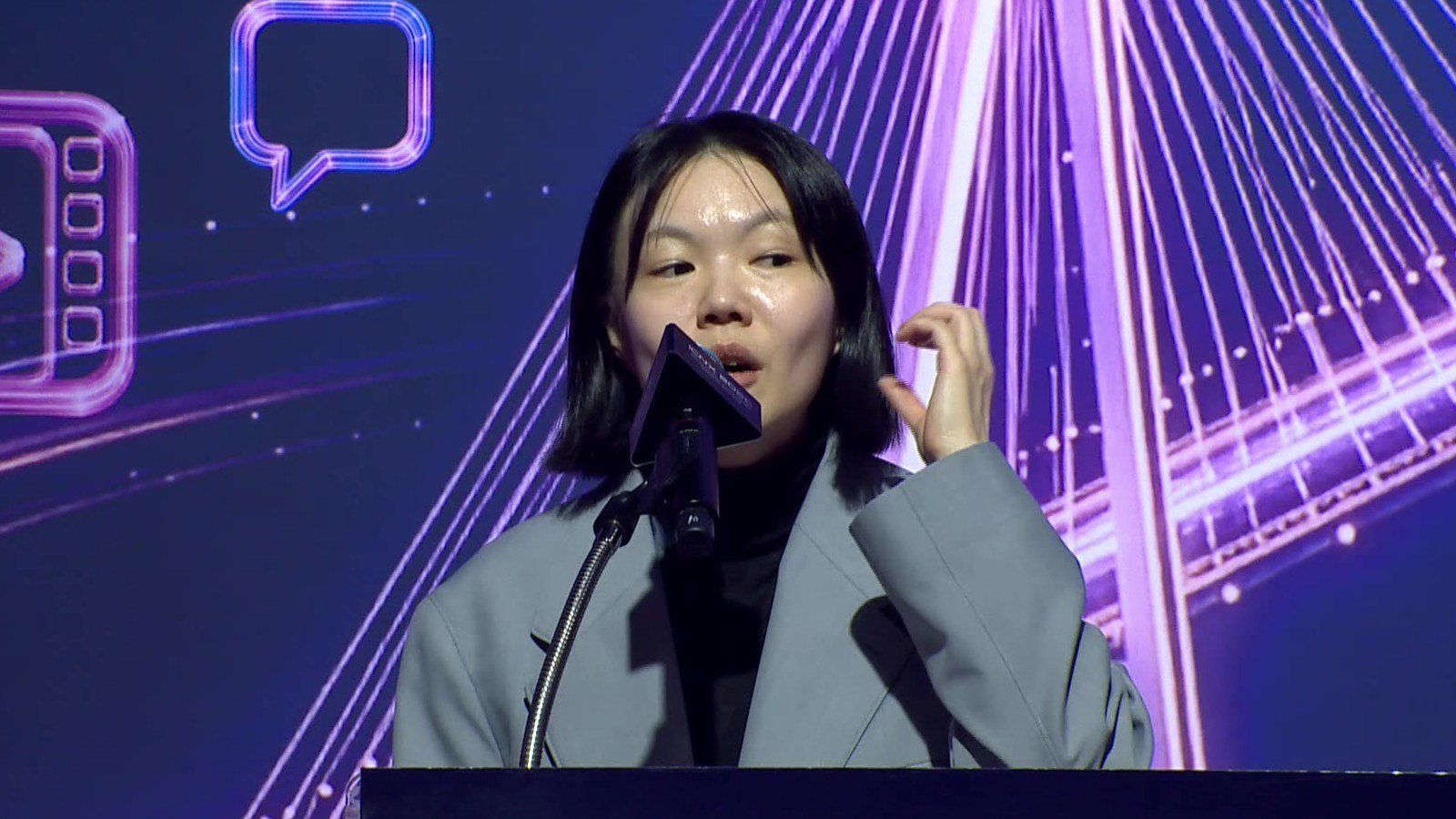
At the Technology Showcase of ICNX 2026, the Incheon Advanced Media Global Conference (인천 첨단미디어 글로벌 컨퍼런스), Hudson AI (허드슨AI) CEO Shin Hyun-jin (신현진) framed her talk around one idea: content in your own language. “What global viewers want is content that plays in a language they are comfortable with,” she said on Nov. 4 at Songdo Convensia (송도컨벤시아) in Incheon.
Founded in 2022, Hudson AI is an AI dubbing company specialized in media. It commercialized AI dubbing of feature films on SK Broadband’s Btv (SK브로드밴드 Btv) in 2023, and in 2025 dubbed KBO baseball games live for overseas viewers with LG Uplus (LG유플러스). In January it signed an MOU with Sinclair Broadcast Group to supply English and Spanish dubs to a K-content channel on U.S. broadcast television.
Dubbing costs 10x subtitles… long-tail content stayed home
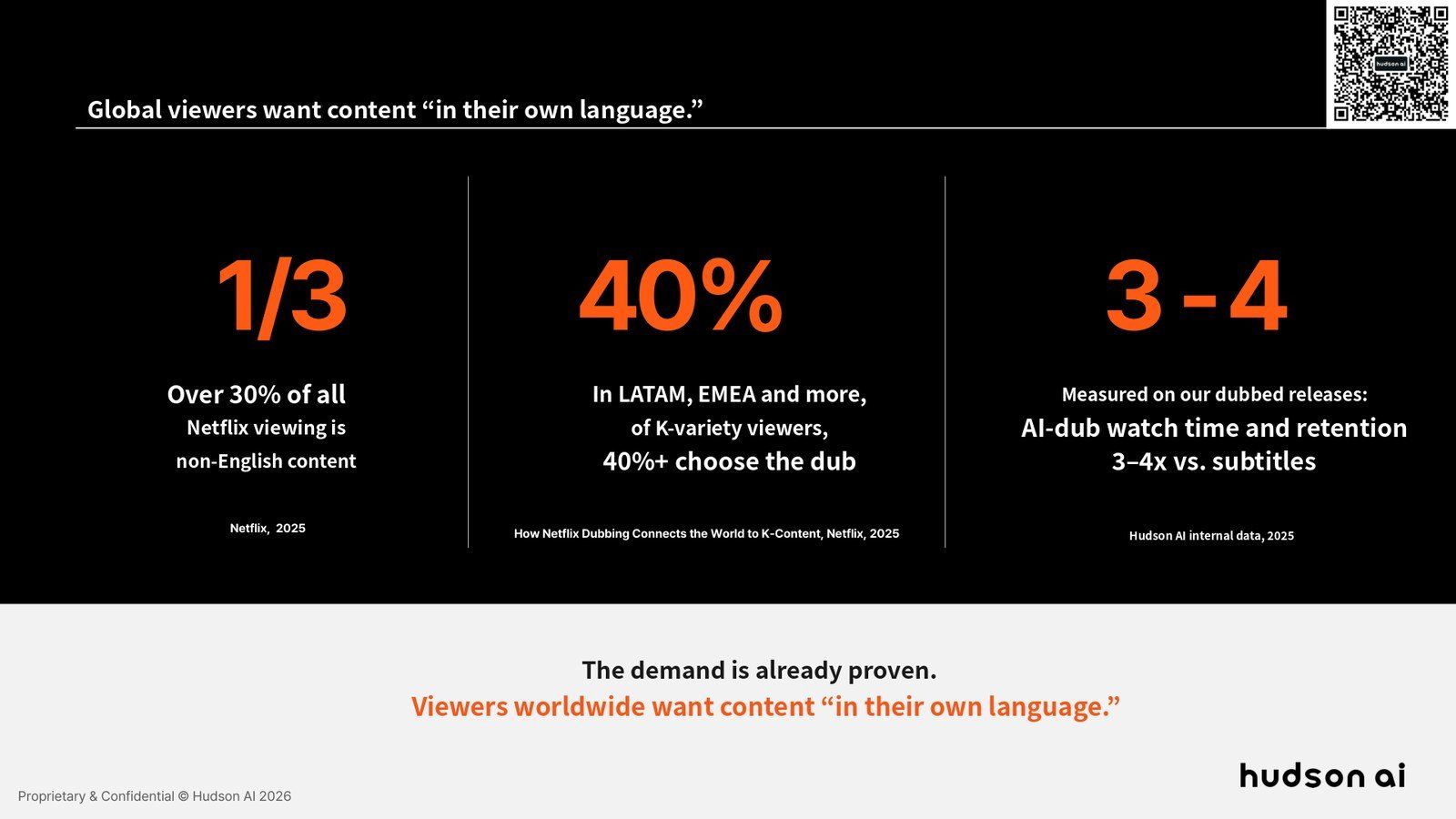
Shin opened with demand. More than 30% of all Netflix viewing is non-English content, and in Latin America and the Arab world more than 40% of viewers of Korean variety shows choose the dubbed version. On Hudson AI’s own channels, AI-dubbed versions drew three to four times the watch time of subtitled ones.
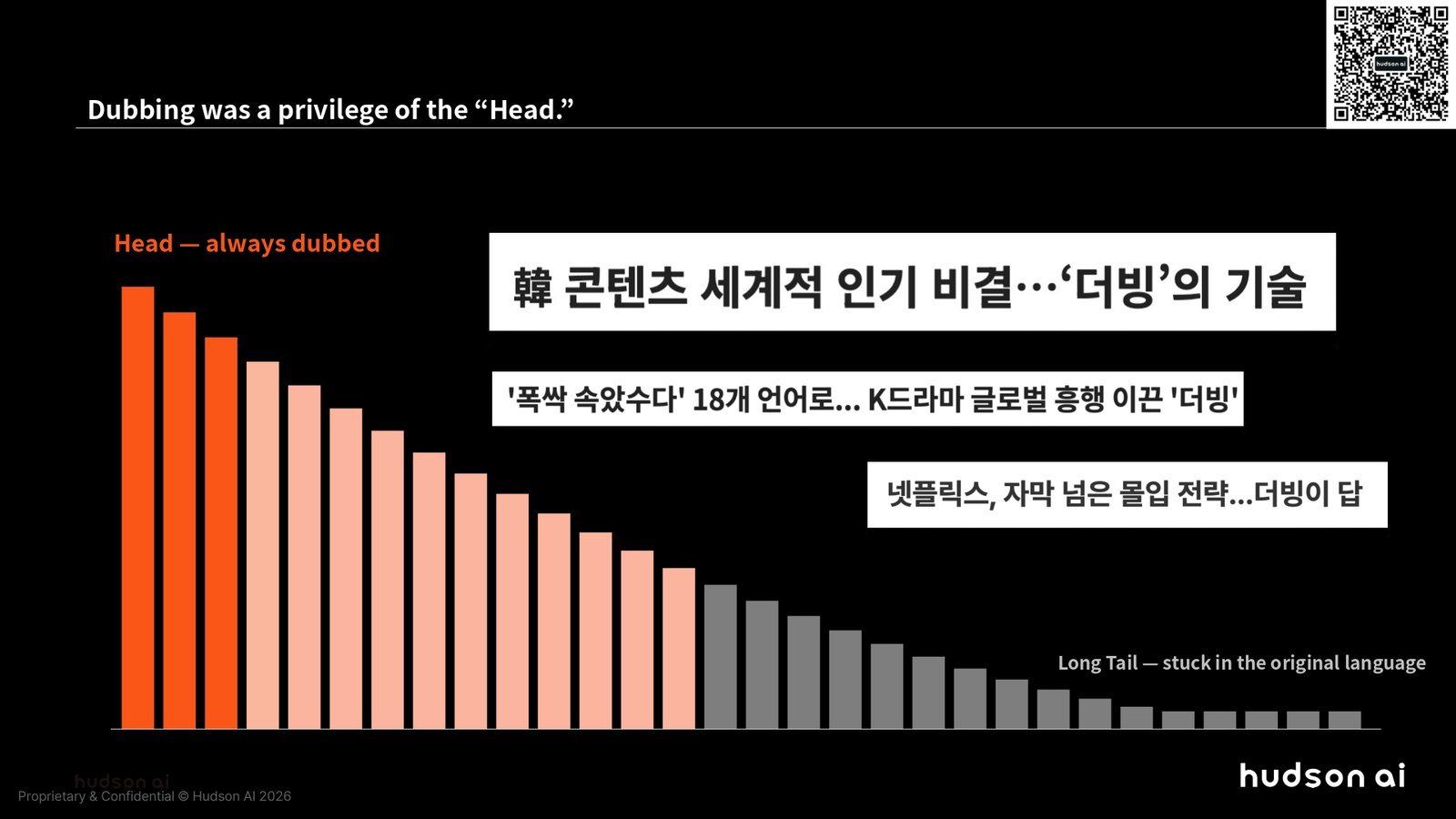
The problem is cost. Casting voice actors, translating and recording is “at least ten times more resource-intensive” than subtitling, Shin said. Dubbing therefore went to big titles at large companies such as Netflix, Disney and Amazon, while much Korean content shipped with subtitles only or was never localized at all. She cited Money Heist (종이의 집), made by Spain’s Antena 3, which reached No. 1 globally three days after Netflix re-edited and dubbed it, with 72% of U.S. viewers watching it dubbed. “There is no dead content,” she said, “only content that hasn’t reached a global audience.”
Amazon’s Banana Fish backlash… quality decides the market
Shin also addressed AI dubbing’s limits. In late November 2025 Amazon Prime Video added “AI beta” English dubs to anime including Banana Fish, drew heavy criticism over flat, emotionless delivery, and pulled them within days. “The question is no longer whether you used AI dubbing,” Shin said, “but how high the quality was.”
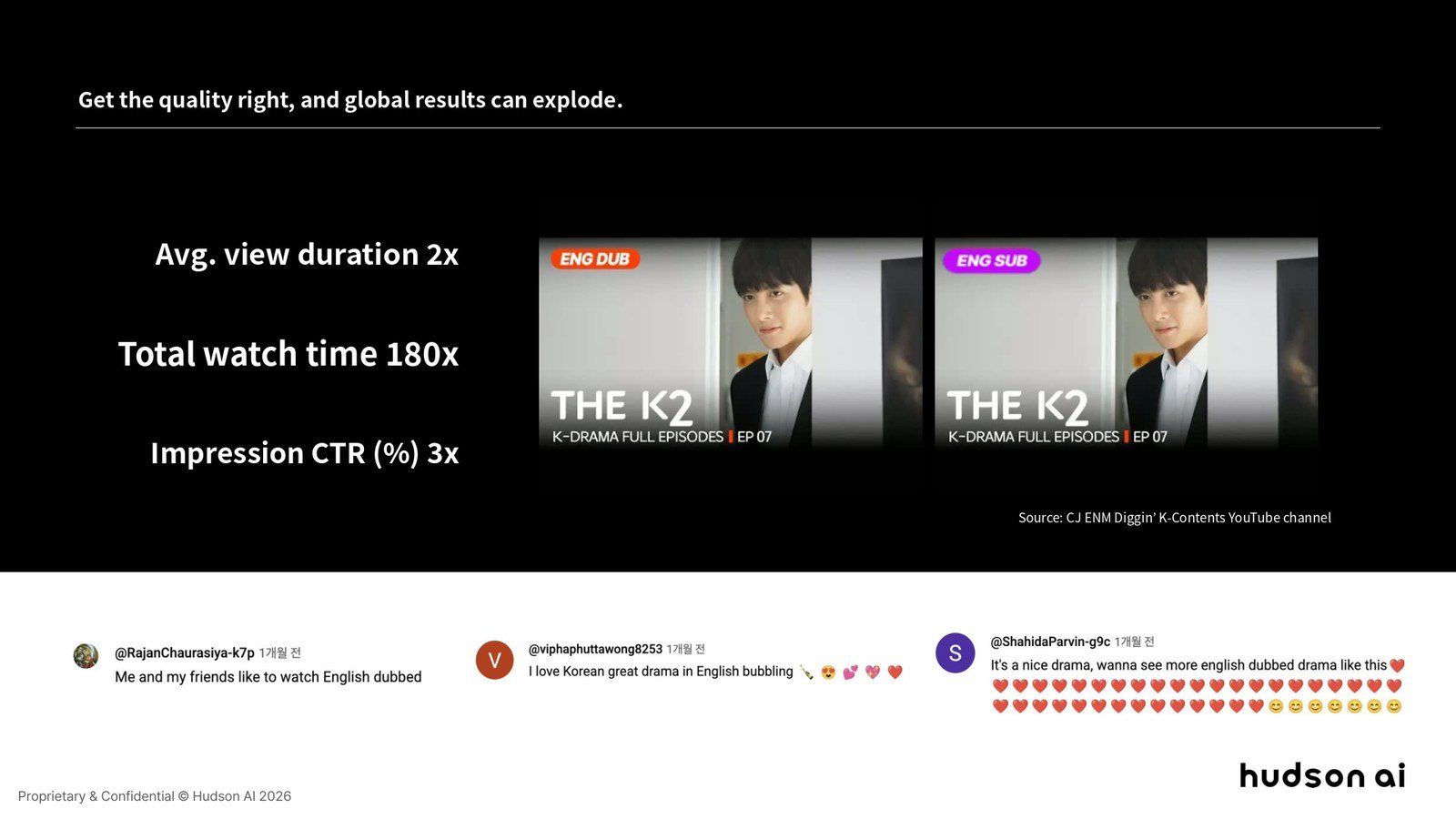
On the other side, she showed a project supported last year by Korea’s Ministry of Science and ICT (과학기술정보통신부), in which Hudson AI dubbed about 300 hours of FAST-channel content with CJ ENM. According to her deck, dubbed videos on CJ ENM’s YouTube channel recorded twice the average view duration, three times the click-through rate and 180 times the total watch time of subtitled versions.
Human QC is the bottleneck… an agentic dubbing workflow
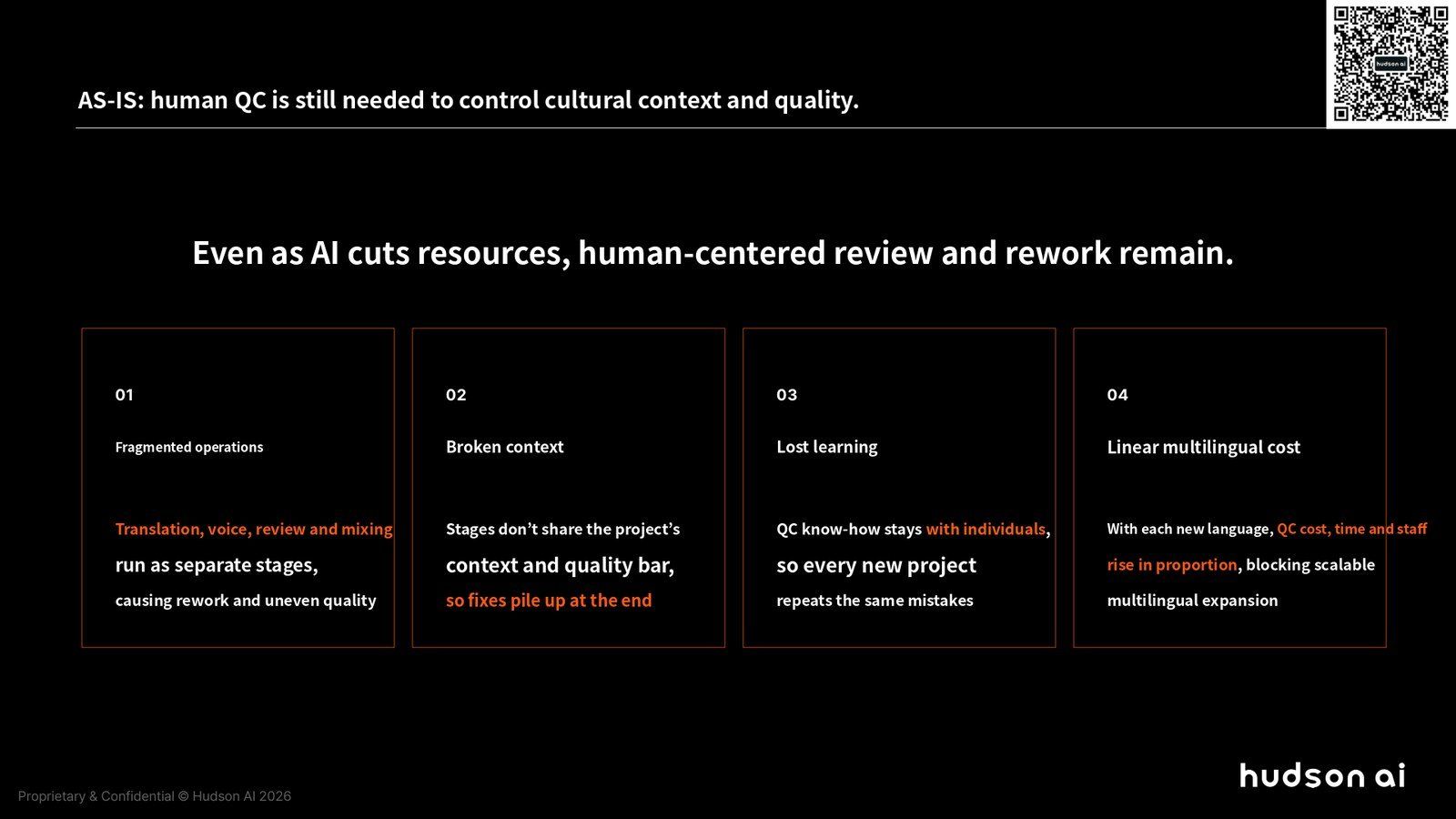
In Hudson Studio, AI identifies speakers, timing and emotion from an uploaded video and handles performance, direction and QC. It separates dialogue from background audio and performs it with emotion. But “even with AI, quality matters so much that a lot of human QC goes in to control context and quality,” Shin said. With translation, voice and review running separately, revisions repeat, and QC cost rises with every added language. Hudson AI is building an agentic dubbing workflow to remove that bottleneck.
Outlook: back catalogs become export products
“We want to help content travel beyond one country and be distributed around the world,” Shin said. When the cost barrier to dubbing falls, the drama and variety back catalogs held by Korean broadcasters and producers become programming for FAST channels and foreign broadcast stations. Public programs such as the ministry’s AI-dubbing K-FAST project are growing dubbing volume and overseas channel slots together. Quality remains the task. Providers with review standards that preserve honorifics and cultural context are likely to lead AI dubbing.
The full talk is available on the K-EnterTech Hub YouTube channel (@kentertechhub) in Korean, English, Japanese and Chinese editions.