
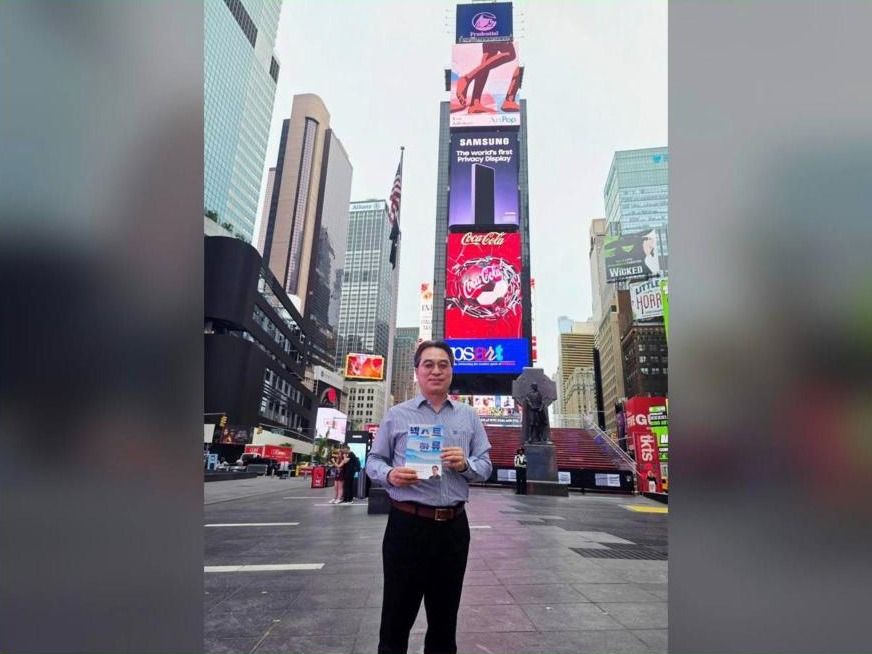
Samseog Ko (고삼석), a distinguished professor at Dongguk University (동국대학교), will deliver the Day 2 keynote on Nov. 4 at ICNX 2026, the Incheon Advanced Media Global Conference (인천 첨단미디어 글로벌 컨퍼런스), at Songdo Convensia (송도컨벤시아). His talk is titled “Coevolution of K-Content and AI: Why K-Content and AI Must Become One National Strategy.”
It is the only session on the ICNX 2026 program devoted to national policy. Ko sits on the social affairs subcommittee of the Presidential Council on National AI Strategy (국가인공지능전략위원회), advises the Speaker of the National Assembly on culture, broadcasting and ICT, and is a former standing commissioner of the Korea Communications Commission (방송통신위원회).
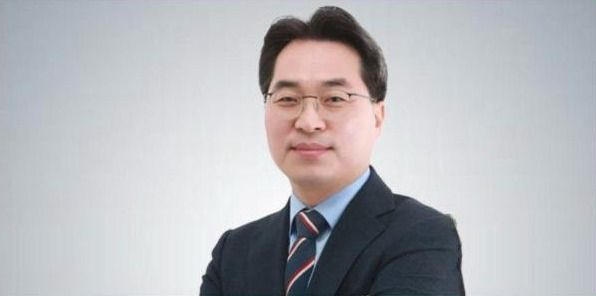
Samseog Ko, distinguished professor at Dongguk University. Photo: courtesy of Samseog Ko
From “why” to “what and how”: four parts
Ko says the question of why K-content and AI should converge has already been settled, so his talk centers on execution. It is built in four parts: how AI is reshaping the content industry, content AI transformation and global policy trends, Korea’s twin goals of becoming a cultural power and an AI power, and a global co-evolution strategy. He will compare how the United States, China and Britain connect content and AI before presenting a Korean approach. The specific proposals will be made public on stage.
490,000 Chinese micro-dramas in nine months
The shift is already visible in the numbers. China’s National Radio and Television Administration reported on Oct. 20 that 490,000 micro-dramas were released in China from January to September, 13 times the 2025 total. In Korea, the Korea Creative Content Agency (한국콘텐츠진흥원) put generative AI adoption among content companies at 32.1%, and the government wrote “AI-based cultural power” tasks into the Korea AI Action Plan finalized in February. Ko will address how content policy and AI policy should fit together against that backdrop.
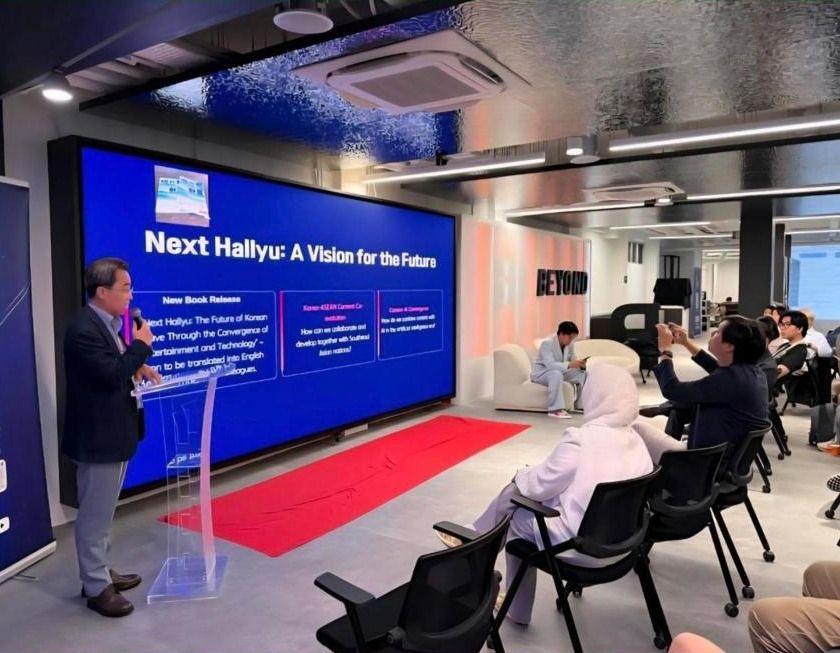
Ko presents Next Hallyu at an overseas lecture. Photo: Samseog Ko presentation materials
What to watch: co-evolution as policy
In Next Hallyu (넥스트 한류), published last year, Ko proposed moving beyond a make-in-Korea, sell-abroad model toward co-evolution, in which Korean and foreign partners plan, produce and share returns together. He has since presented the idea in Singapore, Malaysia, Japan, China and the United States. The question for Nov. 4 is how that framework translates into national policy, and what it asks of Korean broadcasters, studios and platforms. The English edition, NEXT KOREAN WAVE, comes out in the United States this month; K-EnterTech Hub translated it.
ICNX 2026 is hosted by Incheon Metropolitan City (인천광역시) and organized by Incheon Technopark (인천테크노파크) under the theme “Connecting Entertainment Tech, Expanding Business.” Details are at icnx.kr.