

At ICNX 2026, Douglas Montgomery contrasts Washimiya and Kamakura: shrine visits up fivefold and ¥3 billion in local benefit, versus 10,000 people at one rail crossing in four days
Douglas Montgomery compared two Japanese anime locations at ICNX 2026. Washimiya partnered with the rights holder and turned fan visits into annual income; Kamakura reacted late and absorbed the cost. He urged Incheon's K-Con Land to line up a local broker and nighttime entertainment first.
Douglas Montgomery, chief executive of Global Connects Media, laid out what it takes for a filming location to keep the money it attracts, speaking at a round table at the ICNX 2026 Incheon Advanced Media Global Conference at Songdo Convensia (송도컨벤시아) on Nov. 3.
He compared two Japanese anime locations. In Washimiya, Saitama Prefecture, the rights holder and the local business association worked together and shared revenue from goods and festivals. In Kamakura, Kanagawa Prefecture, the city stepped in only after the crowds had arrived.
"A partner shares the upside of a location. A backdrop just absorbs the cost," Montgomery said. "If you remember one thing, remember that. You want to be a partner, not a backdrop." His talk was titled "Backdrop or Partner?"
A former WarnerMedia vice president who spent 17 years at Warner Bros., Montgomery is a professor at Temple University, Japan Campus. He co-founded Global Stage Hollywood, a nonprofit film festival at the TCL Chinese Theatre, with his wife and serves as its executive producer, and he advises the data company Parrot Analytics on Asian markets.

Residents sue beneath the Hollywood Sign
His first example was Hollywood itself. The Los Angeles Times reported in late October that residents near the Hollywood Sign had filed a public nuisance complaint against the City of Los Angeles, Mayor Karen Bass and Councilmember Nithya Raman over tourist traffic, trash and human waste. The residents are seeking an injunction, not damages.
"It looks like Incheon wants to become a famous place for visitors and tourists," Montgomery said. "That's fine, but again, you want to be a partner and not just a backdrop. Even Los Angeles has this problem."
Washimiya: 90,000 New Year visitors became 450,000
Washinomiya Shrine in Washimiya became a backdrop in the 2007 anime Lucky Star. Visitors over the first three days of the New Year rose from 90,000 in 2007 to 450,000 in 2010 and held near 470,000 from 2011, Anime News Network reported, citing the Mainichi Shimbun. Washimiya merged into Kuki City in 2010.
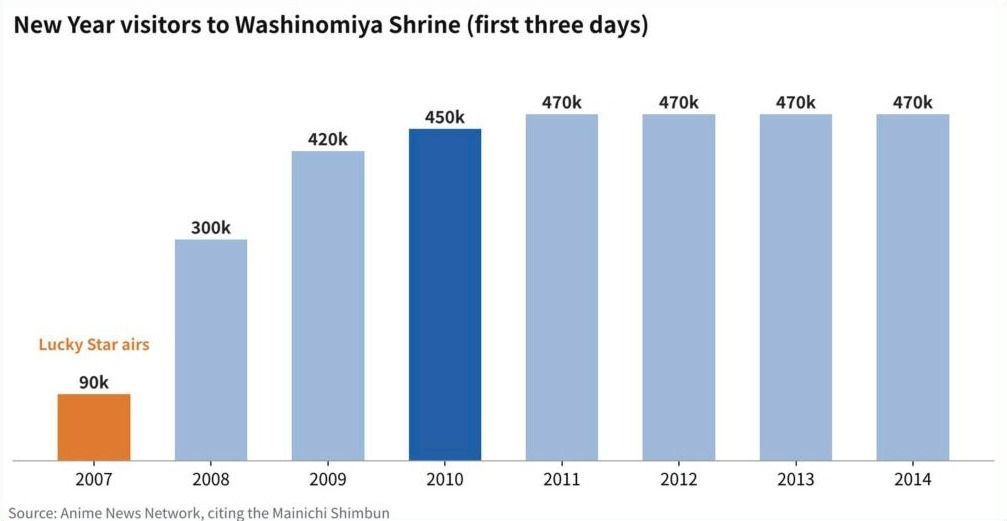
The local Commerce and Industry Association (상공회) brokered between the rights holder Kadokawa, the shrine, local shops and fans. Official local goods and fan events followed, and a Lucky Star portable shrine joined the town festival. The Development Bank of Japan put the local economic benefit over ten years at about ¥3 billion ($20 million).
"Because they partnered, they were able to manage the tourism a little better," Montgomery said. "But more important, Washimiya was able to share in the money generated by the tourism. This is 20 years old now, and it's annual revenue for Washimiya."
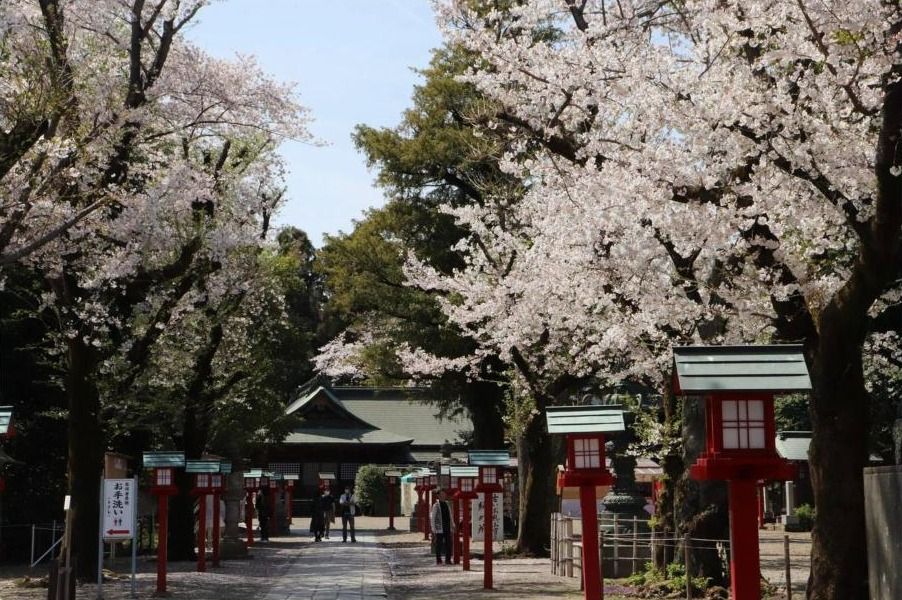
Kamakura: 10,000 people at one crossing in four days
The Enoden railway crossing by Kamakurakokomae Station is known from the opening of Slam Dunk. City data showed about 10,000 people visited that single crossing over four days in September 2025. Kamakura now posts guards daily, has installed cameras and set up an alternative photo spot in a nearby park.
When the city opened a hometown-tax crowdfunding campaign in October 2025 to pay for the measures, it raised ¥10,000 from a single donor in its first six days, Unseen Japan reported. Kamakura plans to charge a lodging tax of ¥300 per person per night from October 2027 and spend the expected ¥150 million a year on roads and public toilets, The Financial News reported on Aug. 28.
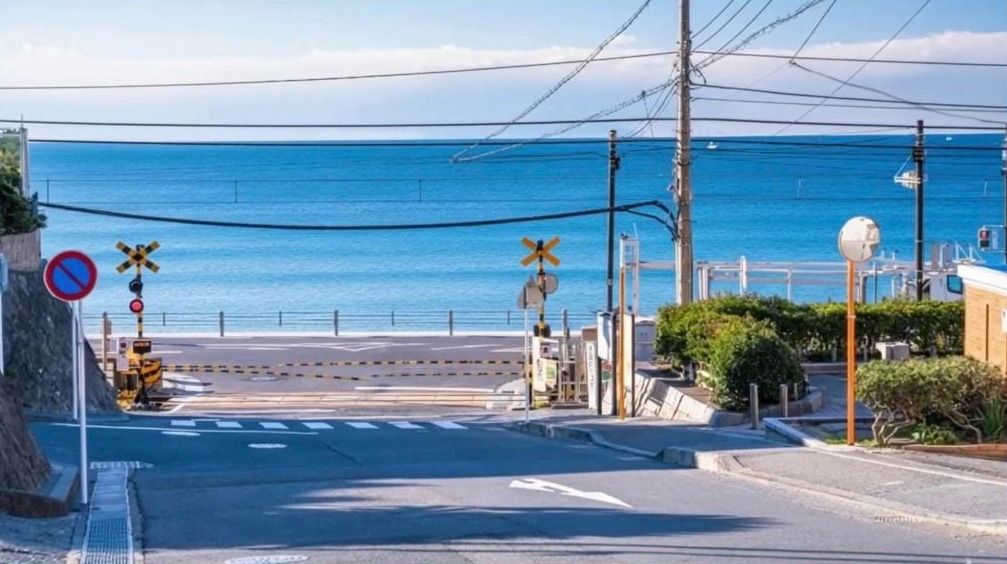
"Because the town wasn't involved with the anime and wasn't involved with the rights holders, there was no control over these people coming to take these photos," Montgomery said. "And there's also no benefit coming back to the town."
Korean content has added to Kamakura's load. After Netflix released the Korean drama Can This Love Be Translated? (이 사랑 통역 되나요?) in January, visitors from Korea, Indonesia and Myanmar crowded its locations around Gokurakuji Station and Goryo Shrine, bringing complaints about noise and unauthorized filming in residential streets, the Asahi Shimbun reported on March 31.
| Washimiya · partner | Kamakura · backdrop | |
|---|---|---|
| Local counterparty | Commerce and Industry Association | City reacting after the fact |
| Rights holder | Licensed local goods and events | No local tie-in |
| What visitors do | Buy, attend, carry the festival shrine | Take a photo, stand in the road |
| Outcome | An annual economy | An annual cost |
Montgomery's comparison of Washimiya and Kamakura. Source: Douglas Montgomery, ICNX 2026
Hollywood's Walk of Fame is run by local business
In Hollywood, the neighborhood took the partner's seat. Most production in Los Angeles happens around Hollywood, in Burbank and Culver City, Montgomery said, so the City of Los Angeles and the Hollywood Chamber of Commerce created the Walk of Fame to bring fans to the actual Hollywood. The Chamber still runs the industry's most photographed sidewalk, with studios and talent as its customers.
Global Stage Hollywood is a Chamber member. The festival screens more than 70 films for over 14,000 attendees, hosts Asian world premieres, and relies on local university volunteers and a Japanese bank as sponsor. In 2025 the Korean film Florence (플로렌스), starring Kim Min-jong (김민종), won three awards there.
"They came to Hollywood a week early and took lots of photos, lots of videos, did lots of interviews," Montgomery said of the Florence team. "When they came back to Korea, they used all this footage of how their movie premiered in Hollywood to help drive the business here in Korea. These partnerships can go both ways." On Oct. 3, K-EnterTech Hub hosted a Korea session at the same festival, with presentations by Millennial Works (밀레니얼웍스) and HelloWorks (헬로웍스).
'A commercial in perpetuity': The White Lotus went to Thailand
Montgomery pointed to HBO's The White Lotus. The production seriously considered Japan for season three but chose Thailand, which offered filming incentives, as Japanese producer Georgina Pope told a Tokyo International Film Festival panel in 2023.
"The Osaka Expo, that's a one-time event. It happened and now it's gone," he said. "When you do a film and a location is chosen, that can become a commercial in perpetuity."
In the panel discussion he added more cases. HBO's Tokyo Vice brought tourism and attention to the Shitamachi area where much of it was shot. "So absolutely, it can revive an area," he said. Warner Bros.' Crazy Rich Asians, he said, was largely filmed in Malaysia after the Malaysian government offered heavy subsidies, yet the story it told promoted Singapore. "That's probably something people would like to avoid in the future," he said.
K-Con Land aims for 50 million visitors; 'keep people here at night'
The Incheon Free Economic Zone Authority (인천경제자유구역청) is planning K-Con Land, a production, consumption and tourism cluster across six districts in Yeongjong and Cheongna. Its stated targets are 50 million visitors a year, ₩10 trillion ($7.5 billion) in content exports, more than 100 companies and 50,000 jobs. The authority commissioned an investment strategy and master plan studies in 2025.
"Having the airport located here is such a fantastic advantage," Montgomery said. "Fifty million visitors a year, I think that's the target, not the amount yet. But these are big goals and I definitely think it's possible." He listed five moves: name a local broker who can sign for shops, venues and residents; license the place with the rights holders; give fans a role through festivals and volunteering; make sure residents benefit first; and read demand data before visitors arrive.
Late in the discussion he raised one more gap. "You can find things during the day, you can produce a movie, but you need things to do at night," he said, so visitors stay in Incheon rather than moving on to the airport or Seoul. Fellow panelist Kim Spurgeon, director of Film Nevada, said the Inspire resort next to the airport was "something right out of Las Vegas' playbook."
Outlook: Structure before crowds
Montgomery's comparison table set out three differences. Washimiya's local counterparty was its business association; Kamakura's was a city reacting after the fact. Washimiya licensed local goods and events with the rights holder; Kamakura had no local tie-in. Visitors to Washimiya buy, attend and carry the festival shrine; visitors to Kamakura take a photo standing in the road. He summed up the outcomes as an annual economy and an annual cost.
The same question now faces Korea. Korean content is sending fans to locations at home and abroad, and as Kamakura shows, a Korean drama can become another city's tourism burden. K-Con Land is still at the investment and master-plan stage. By Montgomery's playbook, what Incheon needs to settle first is less the visitor count than who will sign with rights holders on behalf of shops, venues and residents, and what visitors will do after dark. He closed his talk with: "Be a partner from day one."