
ICNX 2026 Session 4: Jayce Tham calls short-drama apps "data companies," Lim Da-sol reports 65% repeat payment, Jeon Seung-hoon takes 2,000 Korean drama episodes to 10 countries
ICNX 2026 Session 4 asked where viewers pay after subscription. DEAR.AI's Jayce Tham covered pay-per-episode short drama, Modive's Lim Da-sol paid character chats, and MBC's Jeon Seung-hoon the FAST channel Series K. All named rights clearance and overseas ad sales as next hurdles.

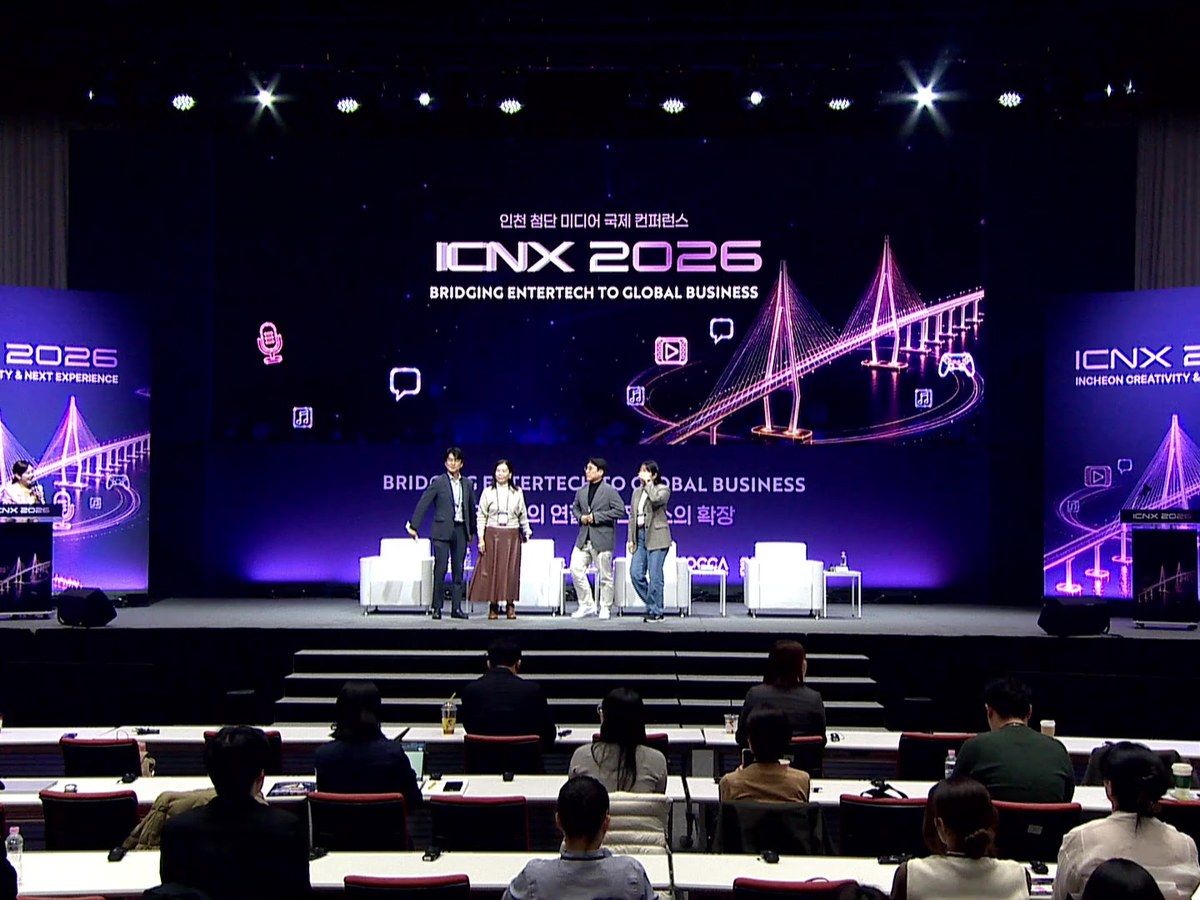
The question at ICNX 2026 Session 4 was where viewers will pay once the subscription fee is no longer enough. The 80-minute session, "Where Does Revenue Come From After Subscription? Pay-per-Episode Short Drama and Broadcasters' Shift to Streaming," ran on Nov. 4 at Songdo Convensia (송도컨벤시아) in Incheon.
Kim Kyung-oe (김경외), a professor at Yonsei University's Underwood International College, moderated. Jayce Tham, co-founder of CreativesAtWork and DEAR.AI; Jeon Seung-hoon (전승훈), head of planning at MBC and a director at Smart Media Rep (SMR, 스마트미디어렙); and Lim Da-sol (임다솔), CEO of Modive (모다이브), presented in turn before a panel discussion.
Subscription carries a churn problem. In a Korean survey Lim cited, 28.2% of recent paying Netflix users and 41.2% of Wavve (웨이브) users had cancelled at least once in the past six months. In the US, 34% of new sign-ups to premium streaming services came from people who had cancelled the same service within the previous year. Each speaker filled that gap differently: with episodes, with conversation, or with ad time.
| Short drama (DEAR.AI) | AI character chat (Modive) | FAST (Series K) | |
|---|---|---|---|
| Who pays | Individual viewer | Fan | Advertiser |
| For what | The next episode | Conversation with a character | Viewing time |
| When | Right after a twist | Between episodes | While watching |
| Key metric | User acquisition cost | Repeat payment rate | CPM and fill rate |
Three revenue models presented in Session 4. Source: K-EnterTech Hub, based on ICNX 2026 presentations
$0.18 an episode, and "even which side the slap comes from" is decided by data
Tham said vertical short-drama apps give away the first seven episodes, then end every one- to two-minute episode on a twist. To unlock the next, viewers pay coins, watch an ad or wait. A ReelShort episode costs about $0.18 (about 240 won) in virtual currency, or about $18 for 100 episodes.
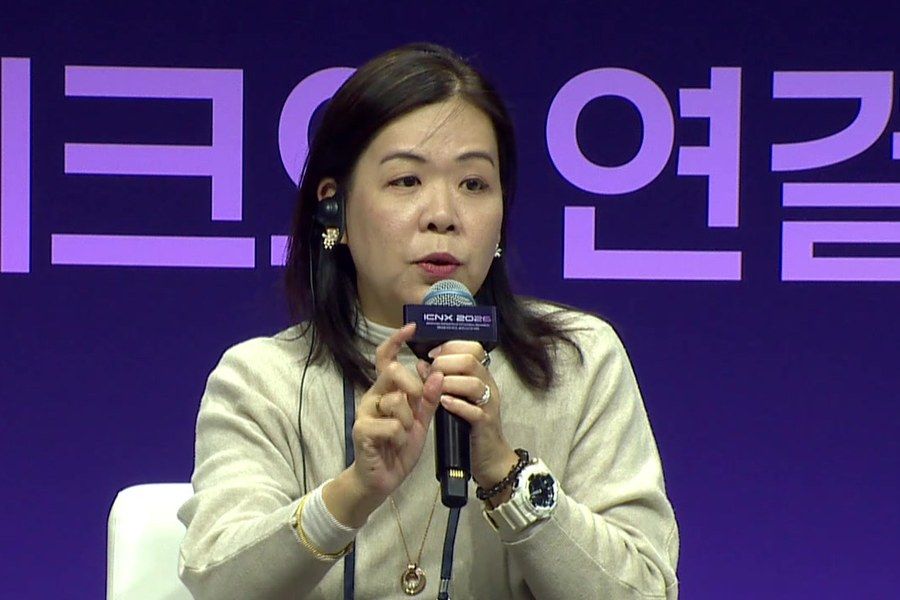
She described the apps as data companies, not content companies. "Even when you have a scene, whether you slap the person from the left or from the right makes a difference in terms of the audience reaction," she said. The apps are good at taking payment and expensive at finding viewers: Media Partners Asia estimates ReelShort spent about 55% of its 2025 revenue on marketing and user acquisition.
Moit: 65% of two-time payers pay again, usually after five to 10 turns of chat

Lim said drama audiences scatter once a series ends. "Producers call them migratory birds," she said. Modive's AI character chat service Moit (모잇) keeps them between episodes. Users of the Grand Prince Geumseong character from the film "The Man Who Lives With the King" spent an average of 5 hours 5 minutes a day with him, and in beta 65% of two-time payers paid a third time.
Free users tend to convert once a conversation passes five to 10 turns and they have worked through a small conflict with the character, Lim said. "On a blind date, if someone just agrees with everything, you don't want to meet again."
2,000 broadcast drama episodes on FAST, and a dubbed channel overtakes period drama

Series K, presented by Jeon, groups more than 2,000 episodes of KBS, MBC and SBS dramas into genre channels on FAST (free ad-supported streaming TV). Launched at the end of 2025, it is carried on Samsung TV Plus in about 10 countries. When the genre channel Edge switched from subtitles to full dubbing, its viewing overtook the period-drama channel Legacy. "Subtitles force you to keep your eyes on the screen, but with dubbing you can follow just by listening, so channel churn drops sharply," Jeon said.
Ad sales remain the hard part. "Sales is P times Q," Jeon said, naming CPM, inventory, view time and fill rate as the variables. "Selling it ourselves is better for margins, but Korean media lack the touchpoints to run an ad business in North America or Europe."
The next three years: fandom, one-source multi-use and branded storytelling
Asked for the biggest growth opportunity beyond subscription over the next three years, the panel split three ways. Lim chose fans who move first. Jeon chose one-source multi-use, pointing to Japan's production committees. "Each industry thought it could do everything well on its own, and we were stingy about opening up and partnering," he said.
Tham chose branded storytelling and "phygital" content that merges physical and digital space. "On average, everyone in Singapore has two mobile phones," she said, and brands want vertical dramas that hold attention. Asked where AI cuts costs, she answered: "If people don't want to watch, even if you can produce 100 hours, it's not going to amount to anything."
Outlook: rights clearance and overseas ad sales come next
The condition the three models share is rights. The Series K presentation noted that most Korean productions survive only as masters that merge music, subtitles and dialogue, which blocks localization. Modive built its service on official licenses that pay original creators. For broadcasters to put their libraries and characters to work in these models, clean versions and secondary-use rights have to be secured at the production stage.
Public support has shrunk. Korea's 2025 supplementary budget funded 20 AI-dubbed FAST channels with 8 billion won (about $6 million); disclosed 2026 support covers four flagship channels at about 920 million won (about $690,000). Jeon proposed that government and local authorities spend part of their overseas promotion budgets on K-FAST channel ads. The Korea Tourism Organization (한국관광공사) already runs a promotional short drama starring actor Park Bo-gum on Series K and other channels.

Kim closed by saying that K-content may look like it is thriving, but efforts to fix its revenue structure are under way, and "rather than leaving this to industry alone, the government should help solve the practical problems." Tham's last slide read: "Stop asking which model. Start asking whose moment this is, and who should pay for it."