
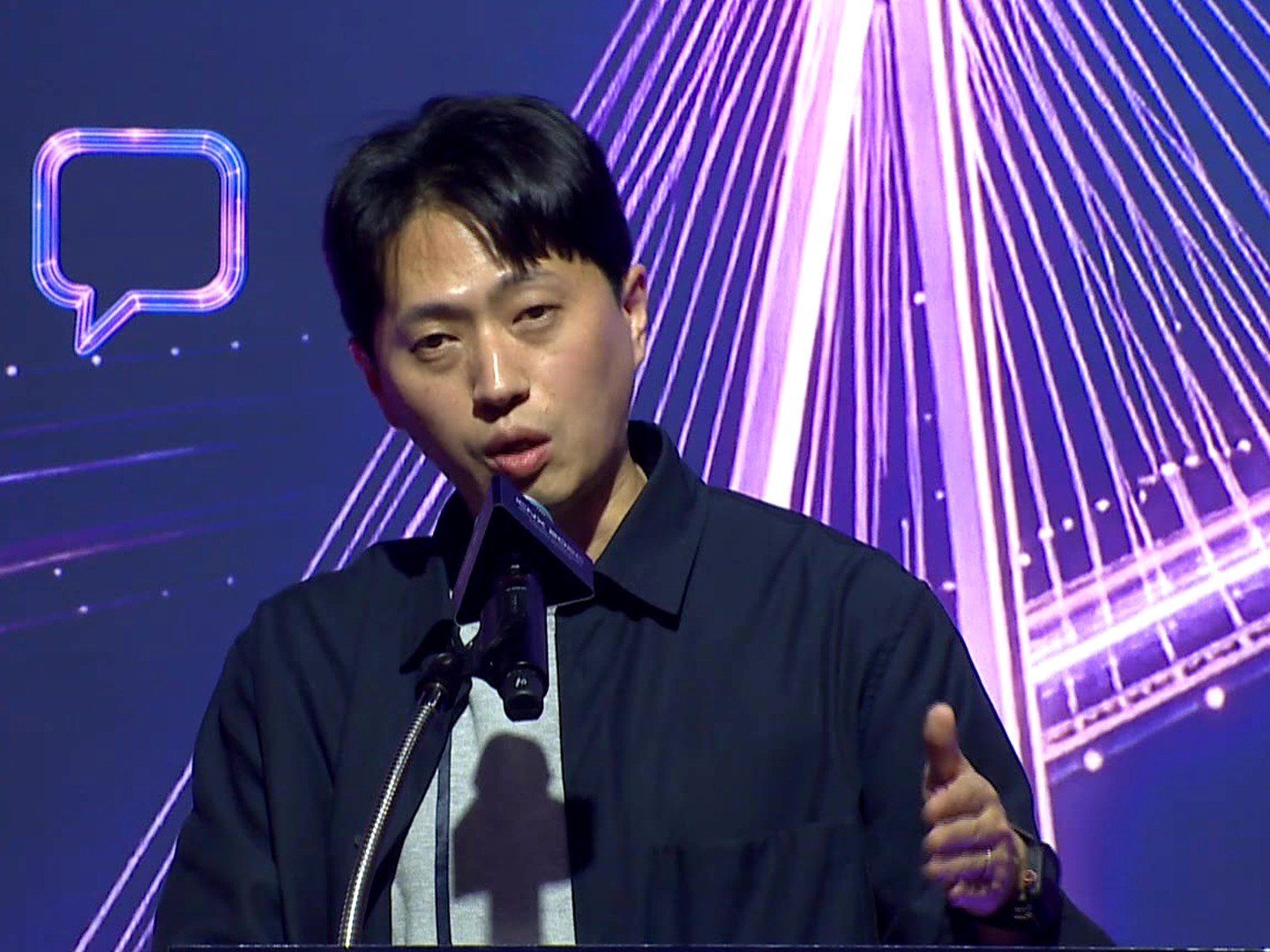
Lim Ju-young, head of Westworld’s technology lab, at the ICNX 2026 Technology Showcase: a lion that would take four months in CG was composited in one to two weeks
Westworld’s Lim Ju-young showed at ICNX 2026 how a TV-drama lion was made with AI source and VFX compositing in 1–2 weeks, versus four months in CG. Raw AI output can’t be delivered, he said, so AI must run inside the VFX pipeline.
The question the Technology Showcase at ICNX 2026, the Incheon Advanced Media Global Conference (인천 첨단미디어 글로벌 컨퍼런스), put on the table was how AI is changing the way content gets made. At the session on Nov. 4 at Songdo Convensia (송도컨벤시아) in Incheon, Lim Ju-young (임주영), who heads the technology lab at visual effects company Westworld (웨스트월드), answered it with a single lion.
“Visual effects is the field taking the biggest hit from generative AI,” Lim said. Founded in 2018, Westworld handled VFX for The Silent Sea (고요의 바다), Sweet Home (스위트홈), Exhuma (파묘) and Queen of Tears (눈물의 여왕). It runs a VFX studio, LED-wall virtual production, and a technology lab that builds AI tools for production.
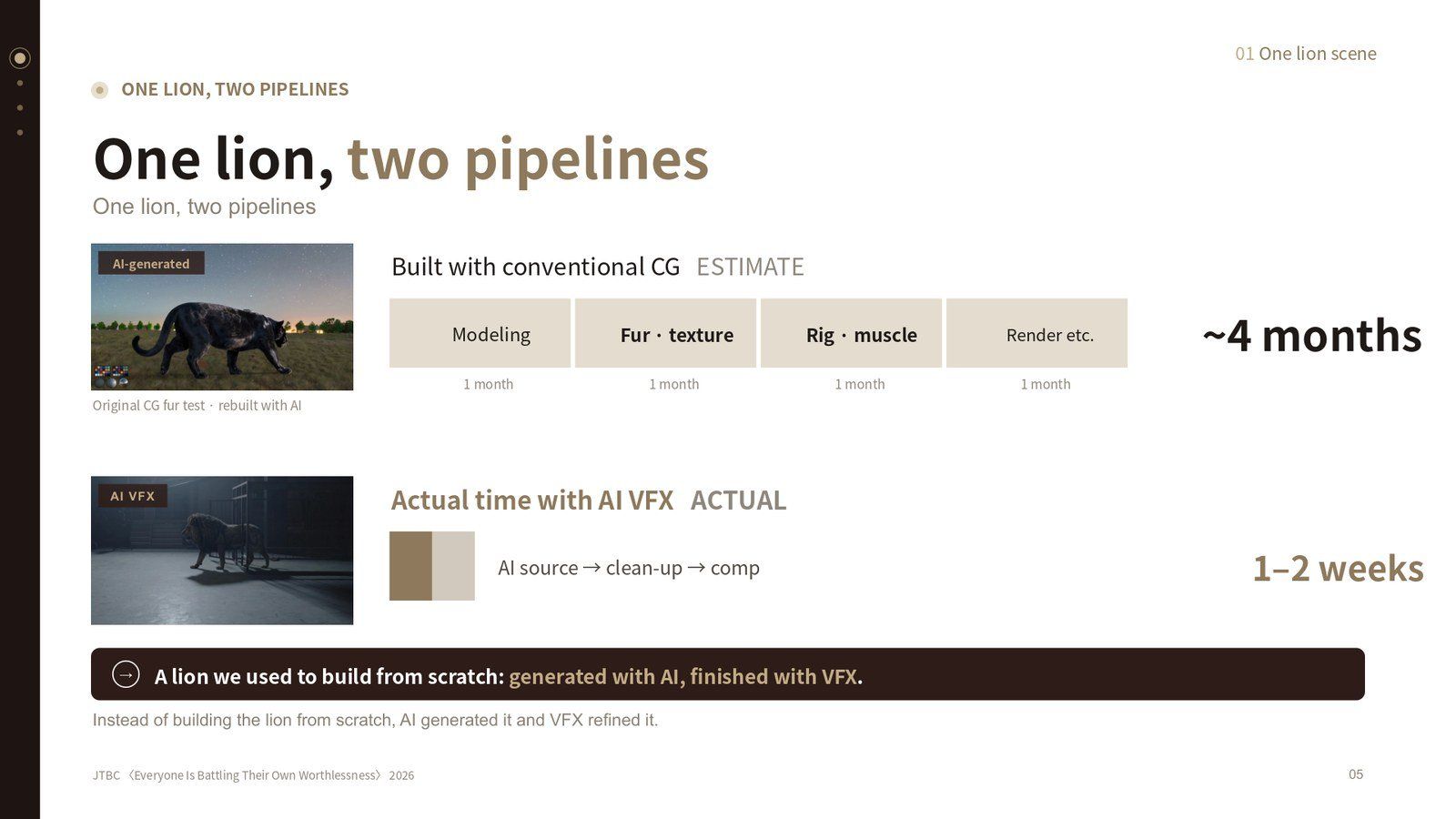
A four-month CG creature, done in one to two weeks
The centerpiece was a lion in this year’s JTBC drama Everyone Is Fighting Their Own Worthlessness (모두가 자신의 무가치함과 싸우고 있다). On a regular TV drama budget and schedule, a creature like that is close to impossible. Pointing to the jaguar in Netflix’s Genie, Make a Wish (다 이루어질지니), Lim said the CG work before compositing alone “takes more than four months and more than 30 artists.”
Westworld built its lion with AI instead. The team previsualized the lion’s movement with AI before the shoot and checked it with the director and actors, generated lion source footage with a separately trained AI model, and fixed fur, eyes, shape and frame-to-frame flicker. It then tracked the camera, locked the lion into the space, and matched light, color and shadow to the plate. According to the presentation, work that takes about four months of modeling, grooming, rigging and rendering in conventional CG was finished in one to two weeks.

AI breaks at 4K… “we generate sources and composite again”
Westworld does not let generative AI render whole shots. “If you feed an image or video to AI and regenerate the entire frame, fine details break or deform at 4K and above,” Lim said. “We can’t deliver that, so we keep repeating the cycle of generating sources and compositing them back.” The same process turns an autumn rock face into spring blossoms, a dry country road into snow, and adds crows that were not in the original plate.

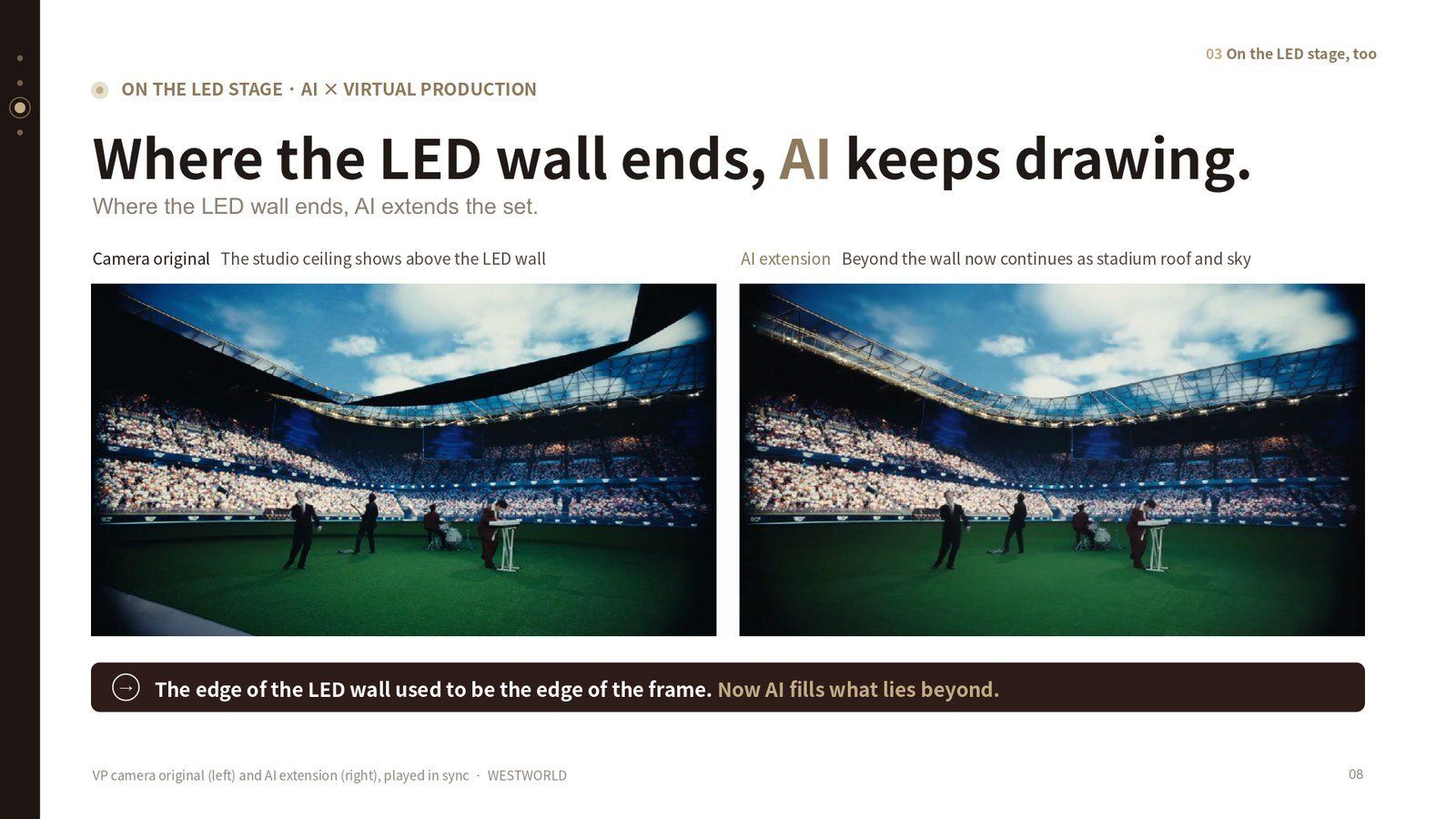
The approach carries over to virtual production. In a scene shot on an LED wall, AI extended the frame above the wall, replacing the visible studio ceiling with a stadium roof and sky. “AI doesn’t remove steps so much as let us reach work that used to take many people and a lot of time much faster,” Lim said.
Consistency, control, quality, rights… delivery standards decide
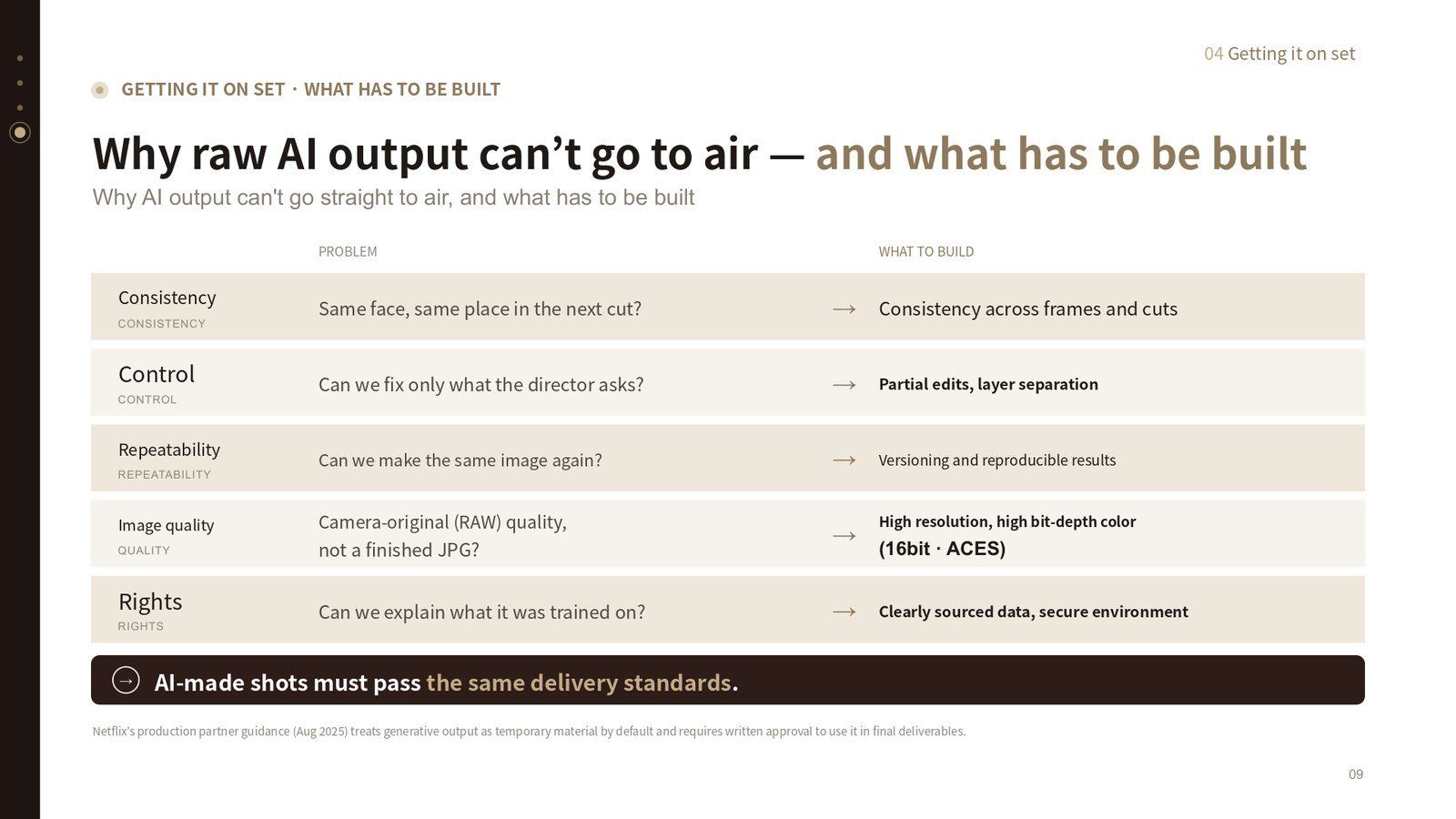
Lim listed four reasons AI output cannot be used as a final: consistency of faces and places across a two-hour film or a 12-episode series, control to change only what the director asks for, image quality at camera-RAW level, and rights to the training data. “Most of our clients are global streaming services, so whether generated output can be cleared for rights is a big issue,” he said.
Netflix’s generative AI guidelines for production partners, published in August 2025, treat generated material as temporary by default and require written approval before it appears in final deliverables. For Korean producers and VFX houses, using AI is not enough on its own; the pipeline has to clear the platform’s delivery standards.
Outlook: Korean VFX firms rebuild the pipeline itself
“A specialist VFX company like ours has to compete with AI companies and with the legacy pipeline at the same time,” Lim said, adding that Westworld is rebuilding its entire process, from source compositing to environment changes and 3D or 2.5D work, with minimal staff and AI, to bring production cost down to AI levels or raise output. “I don’t think only content made with generative AI will survive,” he said. “Shot-based content will continue, and we can be one pillar where AI and traditional VFX converge.”
For Korean broadcasters and drama producers, two changes arrive together. Ordinary TV dramas can now afford creature shots or seasonal changes, and only companies whose pipelines meet the rights and quality standards of global streaming services can deliver them. Westworld recently also handled VFX on director Na Hong-jin’s (나홍진) film Hope (호프).
The full talk is available on the K-EnterTech Hub YouTube channel (@kentertechhub) in Korean, English, Japanese and Chinese editions.