
STREAMING AND CONTENT STRATEGY
Dan Lin’s exit puts audience impact, talent relationships and release strategy on Peter Rice’s agenda

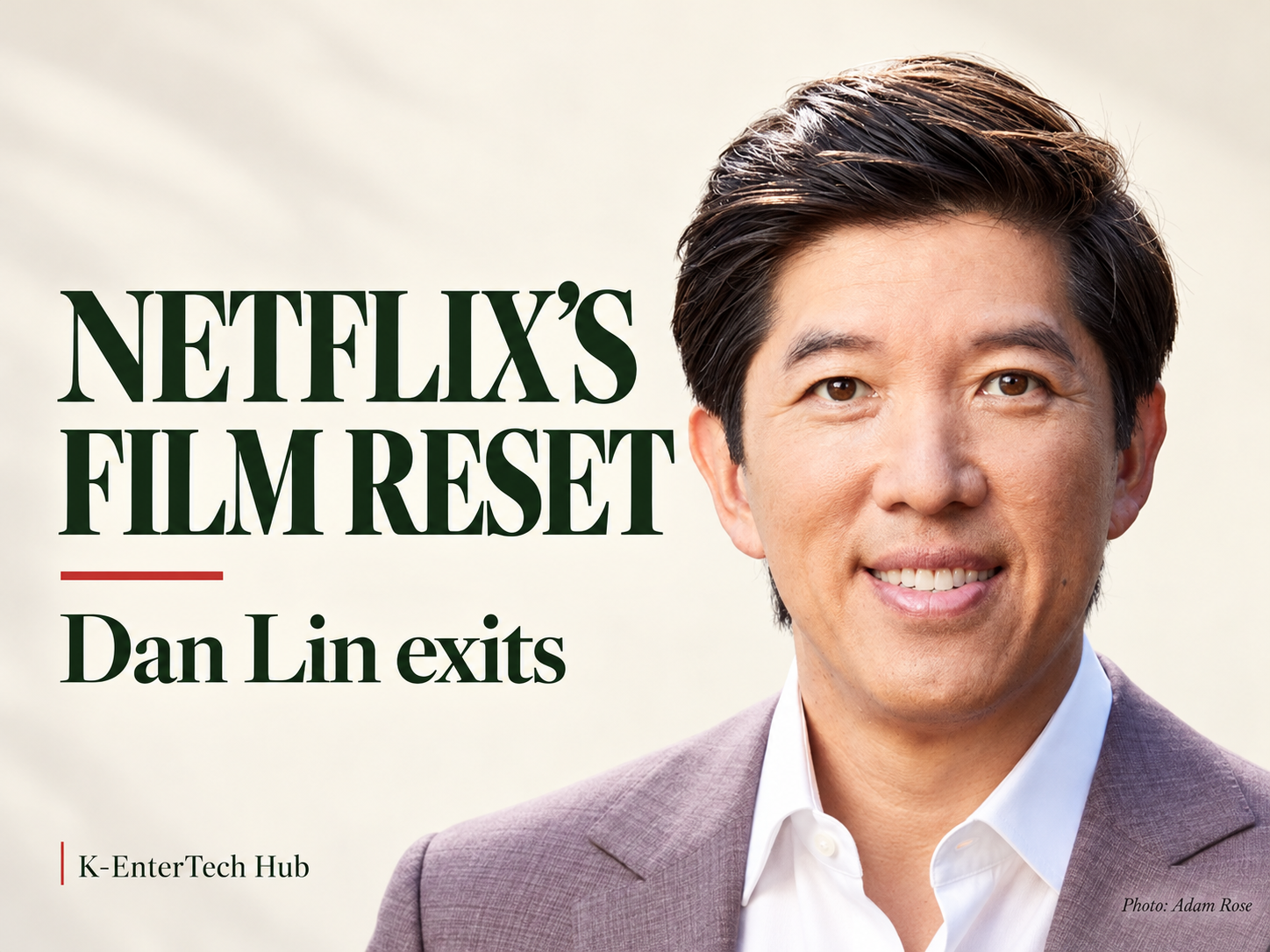
Netflix has removed the executive hired to bring greater discipline to its film business. Dan Lin’s departure, confirmed on October 19, follows the announcement of roughly 1,000 job cuts and the replacement of chief content officer Bela Bajaria. Together, the moves suggest that controlling the cost of the slate has become insufficient: management also wants films and series that give audiences a stronger reason to keep watching.
Peter Rice, the former Disney and Fox executive, takes over as chief content officer on October 26. He will oversee the film team until a successor to Lin is named. The immediate issue is how to produce more consequential hits while preserving the financial discipline that Lin was brought in to establish. Netflix has not announced that it is abandoning cost controls or cutting non-English programming.
A leadership overhaul before a new chief arrives
Lin joined Netflix in April 2024 as Scott Stuber’s successor. The founder of Rideback brought a producer’s record spanning The Lego Movie, It and Sherlock Holmes, as well as earlier studio experience at Warner Bros. His brief was to improve the overall slate while making spending more selective.
The latest changes unfolded quickly. The October 14 staff reduction, equivalent to about 6% of the workforce, was followed a day later by the announcement that Bajaria would leave. Film executives Doug Belgrad and Sheroum Kim were also among the departures reported during the restructuring. Rice’s appointment now brings global film, series, unscripted programming and live events under a new leader.
Rice’s background combines studio filmmaking with large television operations. His earlier tenure at Fox Searchlight included Slumdog Millionaire, Juno and Little Miss Sunshine. Netflix’s official announcement emphasizes both his experience operating at scale and his relationships with creative talent. That combination matters for a company seeking hits without losing control of a worldwide commissioning operation. Netflix appointment announcement
Fewer films still have to give viewers a reason to return
Lin reorganized the film division around genres rather than budget tiers. Action, fantasy, horror and science fiction sat alongside separate drama, thriller, family, comedy and romantic-comedy teams. The original report describes 15 executive departures during the 2024 reorganization and cites a New York Times tally of roughly 88 film approvals over two years.
The record was not uniformly weak. Happy Gilmore 2 and People We Meet on Vacation were among the audience successes cited in coverage of his tenure, while Train Dreams earned critical recognition. The more difficult question is whether a smaller slate can supply a dependable sequence of films with enough reach to sustain engagement across the service.
It also takes years to develop and release a film. Titles arriving during one executive’s tenure may have been commissioned by a predecessor. The failures and successes of the release calendar therefore cannot all be assigned to Lin personally. The industry test is whether Netflix can make its development, production and release decisions work together over several years. TheWrap on Lin’s tenure
A record film does not resolve the engagement problem
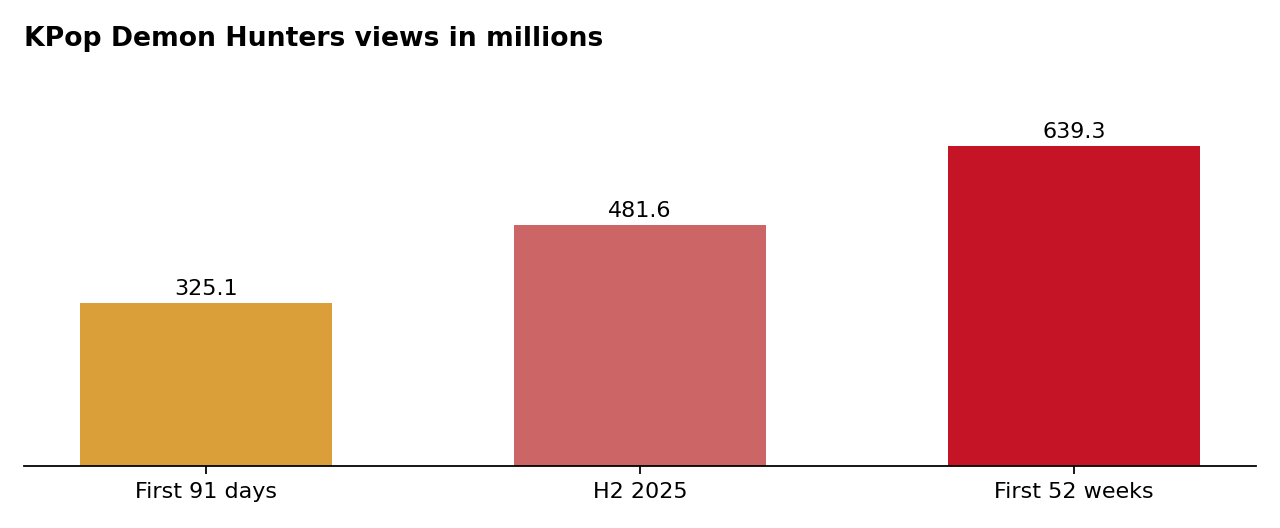
KPop Demon Hunters illustrates the scale of the opportunity. Sony Pictures Animation produced the film and Netflix released it on June 20, 2025. The source article records 325.1 million views in its first 91 days, 481.6 million during the second half of 2025, and approximately 639.3 million across its first 52 weeks.
These figures describe different, overlapping measurement periods; they must not be added together or read as successive quarterly results. Netflix calculates views by dividing hours watched by runtime, so the numbers are not a count of unique people. Its engagement report puts total viewing in the second half of 2025 at 96 billion hours. The accompanying industry coverage reports growth of about 2% year on year.
The contrast helps explain the pressure on management. One exceptional franchise can command worldwide attention without accelerating viewing across the entire catalog. A sustainable film strategy has to improve the performance of the broader slate as well as produce occasional record breakers. Netflix engagement report
Narnia brings the theatrical question back into focus
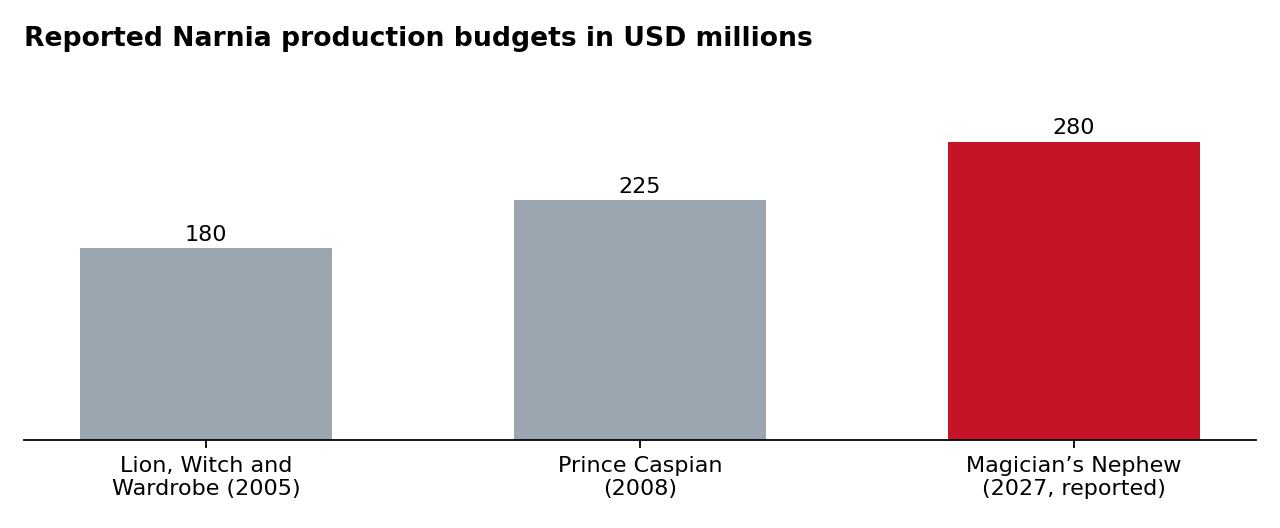
Greta Gerwig’s Narnia: The Magician’s Nephew is a major test of that strategy. The reported production budget is $280 million, or approximately KRW372.5 billion at the source article’s conversion rate. Its scheduled February 12, 2027 theatrical release precedes an April 2 Netflix premiere. A broad cinema release gives the project a different commercial and promotional structure from a streaming-only launch.
Reports of reshoots and disagreements involving Gerwig have attracted attention during the leadership transition. They do not establish that Narnia caused Lin’s dismissal. Netflix has not publicly confirmed that causal link. The project should be assessed through its eventual release, audience response and economics rather than treated as a completed failure before opening.
The wider question is whether theatrical exceptions become a more repeatable option. A cinema window can support awareness and talent relationships, but it also brings distribution costs, marketing commitments and scheduling constraints. Rice’s film background makes that issue relevant; it does not, by itself, settle Netflix’s future release policy. Variety reporting on Narnia and Lin
The market backdrop adds pressure but does not prove causation
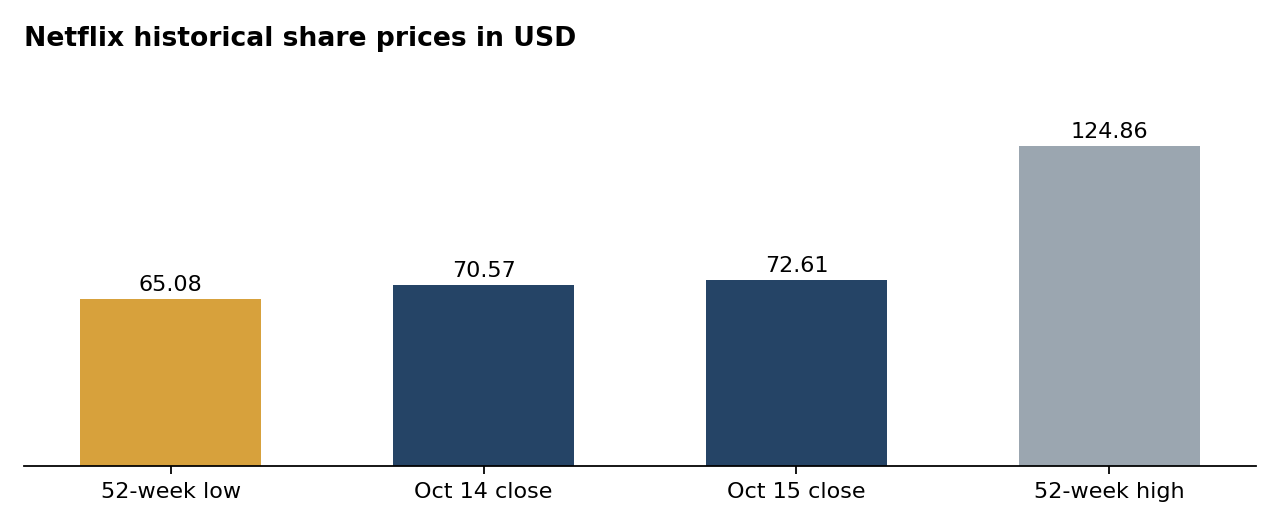
The source article places the reshuffle against a sharp decline in Netflix’s share price and the end of its pursuit of Warner Bros. Discovery assets. Its market snapshot records an October 14 close of $70.57, an October 15 close of $72.61, and a 52-week range of $65.08 to $124.86. These are dated reference points, not current quotes.
A declining share price reflects expectations about the company as a whole. It is not a direct measure of one executive’s film performance. The practical question for the incoming leadership is whether changes to content and operations can support durable audience engagement and revenue growth. Netflix’s October 20 US earnings release was still ahead at this article’s Korean publication time. Market reference in the source article
For Korea the next contracts matter more than the reshuffle
Netflix announced a $2.5 billion Korean content investment plan in April 2023, covering the following four years. At the source article’s illustrative exchange rate of KRW1,330.3 to the dollar, that is approximately KRW3.33 trillion. The announcement does not specify an automatic December 2026 expiry or establish the size of a successor commitment.
The Korean slate cited in the source includes 29 titles announced for 2026, with four original films: Pavane, Husbands, Mission: Cross 2 and Possible Love. Local investment should be judged through actual orders, budgets and licensing activity. Replacing the global content chief and film head does not by itself demonstrate that Korea’s budget or local approval procedures have changed.
KPop Demon Hunters also makes a distinction that Korean companies cannot ignore. Korean cultural material, Korean production participation and ownership of an international franchise are different economic positions. Its success does not automatically give domestic producers access to sequel or derivative rights. Music, live events, merchandise and local partnerships require their own agreements.
For producers and broadcasters, a stronger proposal will connect the creative concept to identifiable audience demand, a credible budget, a release plan and a clear allocation of rights. Where theatrical distribution is relevant, the parties will need to define windows, marketing obligations and the division of risk. Licensing, originals and co-production arrangements should be evaluated on their actual terms. Netflix Korean investment announcement
The first slate will reveal the direction
Rice’s arrival and the appointment of a new film chief will give the reorganization an operational shape. The important evidence will follow in commissioning decisions, talent deals and release commitments. Talk of a renewed focus on major hits is not yet a published budget plan for every territory.
Lin’s departure exposes the limits of a strategy evaluated mainly through efficiency. The next team must show that disciplined spending can also create films audiences seek out and franchises worth extending. For Korea, the consequence will be visible in which projects receive approval, how they reach viewers and what rights remain with the companies that make them. Screen Daily on interim film oversight