Regional AX Bridge @ Korea 2026 Interview
The first Regional AX Bridge @ Korea brings 20 companies through diagnostics, consulting and market testing to meet overseas buyers… "At the final stage we select on merit, not regional quota"
"The strength of companies based in the regions is in solving issues tied to a specialized domain with technology."
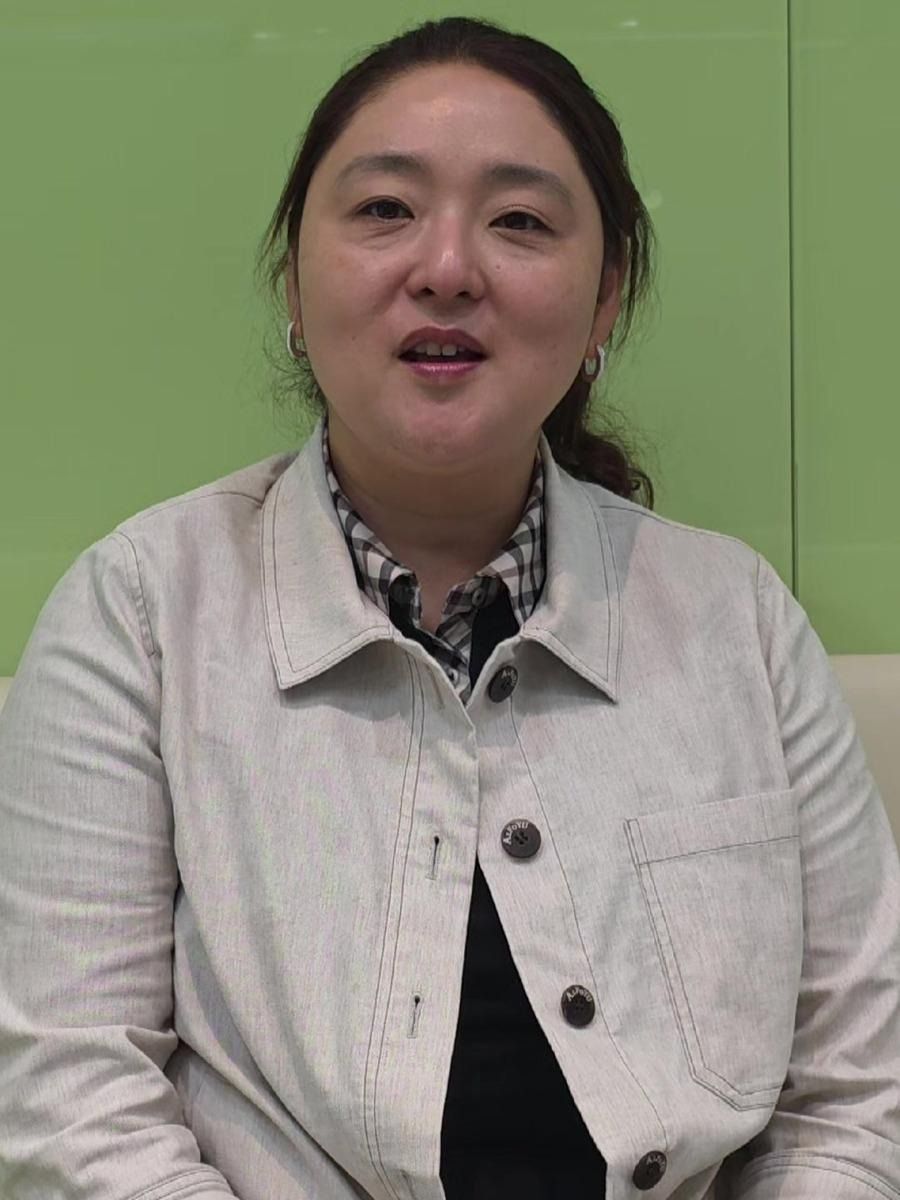
That is how Jung Su-jin (정수진), head of the regional AX division at the National IT Industry Promotion Agency (정보통신산업진흥원, NIPA), frames the competitiveness of Korean AI companies outside the capital. General-purpose AI alone is hard to differentiate in an overseas market; a company that has been solving problems bound up with an industrial site — manufacturing, agriculture, maritime, drones — is a different proposition.
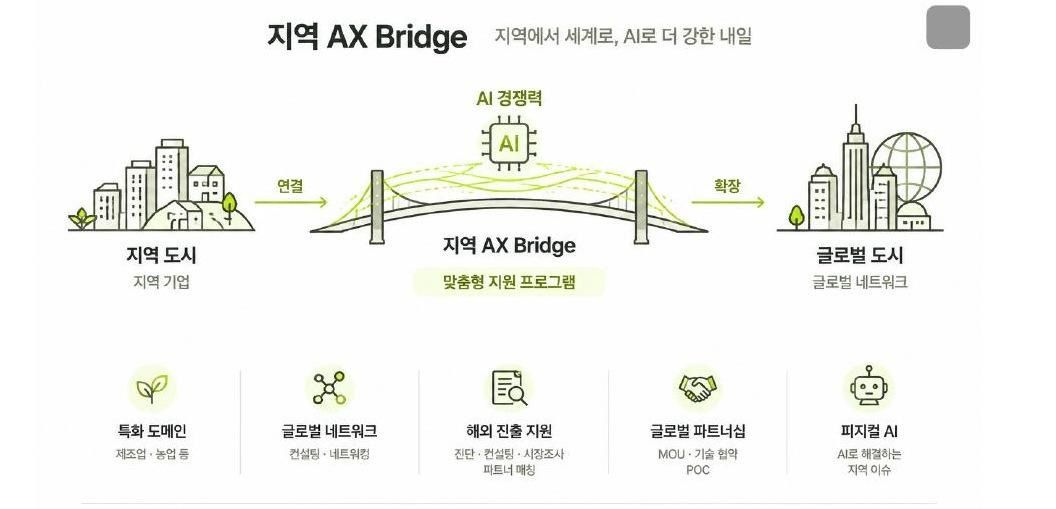
Regional AX Bridge @ Korea (지역 AX 브릿지@KOREA), which she is launching this year, starts from that premise. Rather than simply taking regional companies to overseas exhibitions, the design runs from company diagnostics and commercialization consulting through market testing, matching with overseas buyers and adopting institutions, and connection to NIPA's overseas offices.
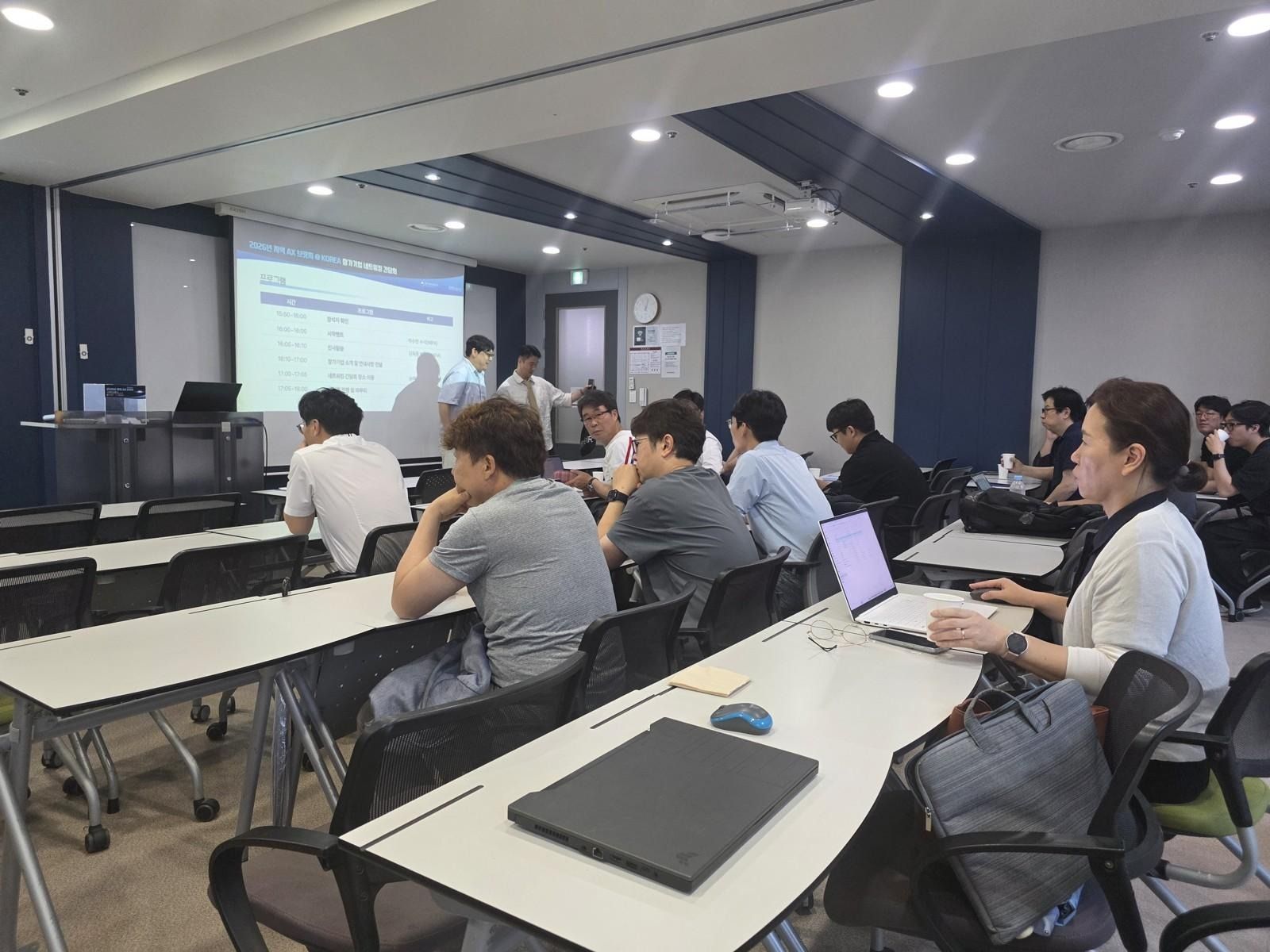
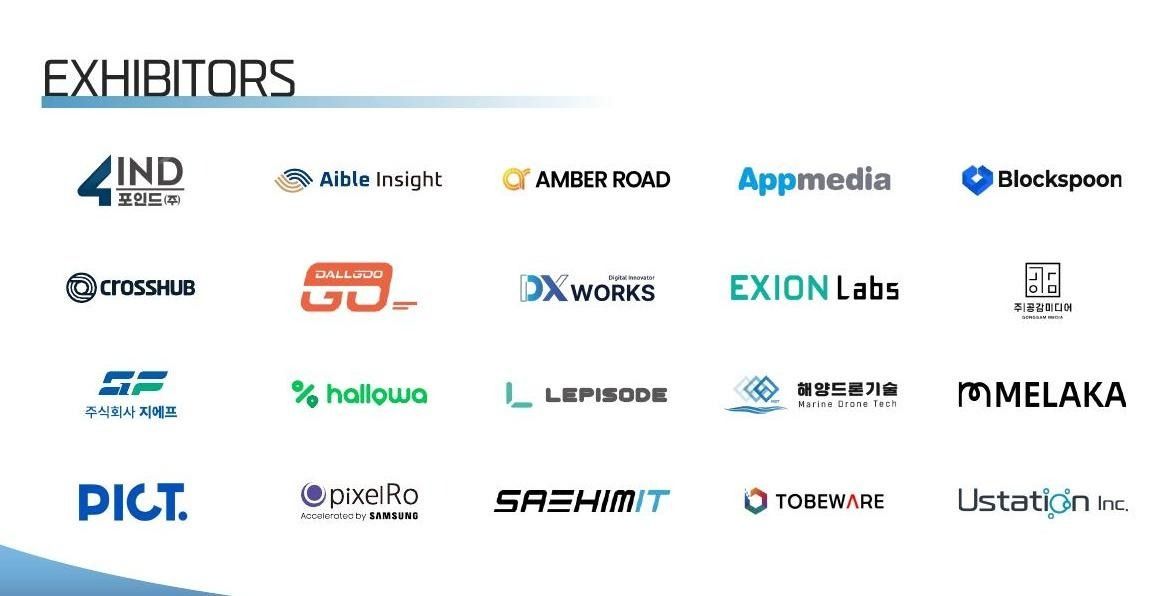
The first edition runs Oct. 13 and 14 on the second floor of COEX THE PLATZ (코엑스 더플랏츠) in Seoul. Twenty regional AI companies will present their technology and services and hold business meetings, and a contract and memorandum of understanding signing session is scheduled for the first day.
"The regional gap predates AX"
Jung said she was watching the regional gap in digital transformation before AX became a policy term. Software, digital technology and the people who work with them are concentrated in Seoul and the capital region, while the regions have had less of the foundation to internalize technology and fewer routes to find and apply what they need.
"IT and software went ahead somewhere first and the regions followed behind. But AI took off as a field very quickly. We thought the strategy had to be to build the foundation faster so the regions could follow immediately."
The regional AX division designs AX diffusion policy with local governments and regional institutions and connects the demands of regional industry to AI and digital technology. It is built on a planning team that generates new projects with local governments, a hub team handling the conversion of digital innovation hubs into AX innovation hubs and the Gwangju AI research complex program, and a diffusion team that works with regional institutions to turn support into revenue. Following the capital region's path exactly is not enough, Jung said; the industrial base and on-site problems each region has already accumulated have to sit at the center.
Showing the industrial cluster first — AI in Gwangju, displays and semiconductors in South Chungcheong, maritime industry in Busan, shipbuilding in Ulsan — also makes a company easier for an overseas partner to read.
"Introducing a company abroad as simply 'a Korean AI company' is too broad. You have to explain which region has which industry and what role this company plays in that value chain before the other side looks at it with any trust."
From trade-show trips to commercialization support
NIPA supported regional companies' participation in overseas exhibitions for about five or six years. As similar overseas-entry programs multiplied, the agency concluded that taking companies to a venue was not by itself producing the next stage of results.
Jung said the passive form of trade-show participation had to be left behind. What was needed instead was a structure that diagnoses what each company lacks, identifies who it should be meeting in the target market, and connects that to subsequent projects.
"I wanted to help regional companies acquire a global outlook and business sense. Where it helps, they should be able to connect to other projects and extend the business."
Regional AX Bridge is the first edition of a branded program. It begins with a company-level diagnostic: a company seeking overseas markets applies, its current position, technology and target market are examined, commercialization consulting and market research follow, and suitable partner candidates are identified before meetings, exhibition and business talks.
On the plan document's calendar, applications closed July 3 and selections were notified July 13; 20 diagnostic sessions ran from July 24 to Aug. 3; about five weeks of commercialization consulting run from Aug. 25 to Sept. 29; a market-viability test runs through September; and the main event follows in October. The regional recruitment notices listed buyer meetings, commercialization consulting and support for global meetups among the main forms of support.
The common gap Jung sees in the field is the force to move to the next stage.
"There are many companies with a good idea that have carried it as far as a working technology. Then they get stuck at commercialization or at entry into an overseas market. What matters is pointing out who needs to shore up what, and attaching the right expert."
NIPA draws on its own expert pool and outside networks for company-level advice and introductions; where its pool cannot answer a question, the agency finds an outside expert to match or relays an opinion. Jung acknowledged that the pool needs widening: as the industries and overseas challenges diversify, uniform consulting runs into limits.
"At the final stage, merit over regional quota"
In choosing the 20 participants, capability came before regional balance. Supporting regional companies is the original purpose, but dividing places by region makes it harder to pick out companies that can actually reach overseas business.
"The opportunity has to be open across the regions. But at the stage of doing outside business and reaching the final track, I thought it had to be judged strictly on merit."
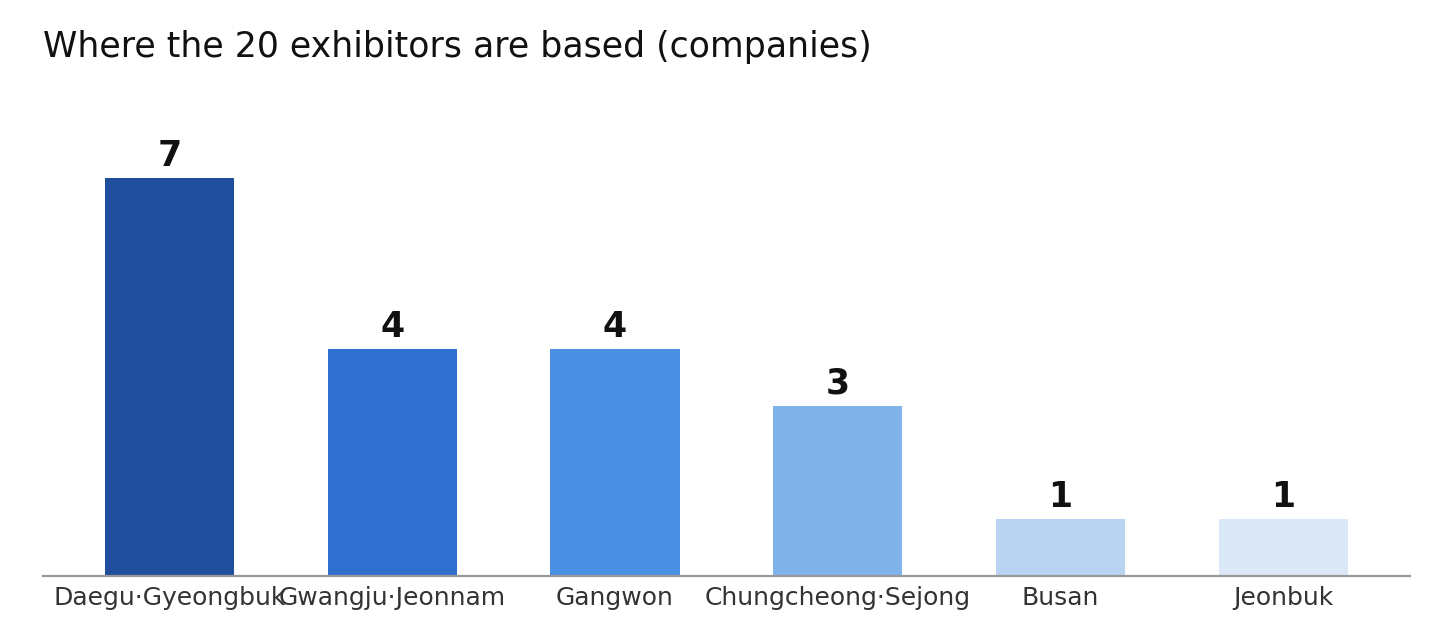
The list is seven companies from Daegu and Gyeongbuk, four from Gwangju and Jeonnam, four from Gangwon, three from the Chungcheong area and Sejong, one from Busan and one from Jeonbuk. Five were selected in Daegu alone, while some regions have one or two — the result, she said, of selecting on technology and business capability rather than distributing evenly.
As a first edition, the program was unfamiliar in the field. Companies wanted to know how it differed from existing exhibition and consultation support and what follow-on support they would actually receive. "At first some companies were unsure whether it would help," Jung said. "Through the briefings and programs, I think companies with real potential came in this year."
The October event is designed as a conference and networking floor as well as a business-meeting one, so regional companies and local government officials can take in AI transformation, sector use cases and global market trends in one place. Jung also noted how rigid networking remains in Korean business culture.
"In Europe and the United States, people in a similar line of work or with something the other needs meet naturally. In Korea that exchange is comparatively hard. It will not change overnight, but these settings have to keep being made for companies to build relationships and learn."
Results measured past the MOU
What Jung counts as a result does not stop at meeting numbers or an MOU signed on the floor. The test is whether an MOU with a counterpart, a technology agreement, revenue or a pilot discussion carries through into follow-on business.
"Interim checks tell me there are companies at those stages. For now it touches their commercial confidences, so I cannot give specifics. I hope we can describe several cases around the end of the year."
That is also why the event carries "@KOREA" in its name. Rather than Korean companies going abroad for one-off meetings, the design brings overseas buyers and adopting institutions into Korea to meet them. Companies that show potential are then connected to NIPA's overseas offices for follow-on partnerships.
NIPA has overseas bases in Silicon Valley, Singapore, Hanoi, Ho Chi Minh City, the United Arab Emirates and India, and added a New York desk in 2024, according to the agency. Jung said she wants Regional AX Bridge to be a gateway between those offices and the companies rather than a one-off event inside the agency.
"For companies that want to go global, we will create more chances to meet good partners by connecting them to our overseas bases. This should not be a single event; a company that confirms its potential here has to be able to take the next step."
She was not uniformly optimistic about how Korean AI companies are received abroad. Korea's AI capability is known, but with AI now a general-purpose technology, being Korean is not itself a reason to be chosen.
"In the end you need something distinctive. Finding a local partner matters, and the best approach is to look for a counterpart where the industry that region is pushing, the company's technology and the terms of collaboration line up exactly."
Where a field matches an industry a country or region is cultivating as policy — drones, maritime, agriculture — the odds improve, she said, because local investment, market understanding and a chance to run a demonstration come together.
Cross-border demonstrations and physical AI
The division is also preparing a scheme to fund cross-border proof-of-concept work involving seven regional hubs and the companies based at them — not only demonstrations through existing networks but small projects with overseas companies and adopting institutions newly matched to them. The scale, eligibility and timing are not yet fixed.
Jung recalled a Korean company with IoT technology for managing water quality in tanks that met a major local seafood company at a Southeast Asian exhibition and ran a pilot. Support ended once the introduction was made; backing the demonstration stage itself, she said, would improve the odds of entry.
"Rather than making the connection and stopping there, it matters to help them actually verify the technology on site. Demonstration experience is what makes the next contract and local business more likely."
Physical AI, the division's next assignment, is also tied directly to regional industry. Jung said the large research and development program developing and demonstrating physical AI for manufacturing processes in Gyeongnam and Jeonbuk moved into full operation this year.
The Jeonbuk and Gyeongnam physical AI program runs from 2026 to 2030 at a total of 1.4131 trillion won. The ministry and NIPA held a kickoff briefing on Sept. 16 at the Novotel Ambassador Dongdaemun in Seoul and shared the five-year roadmap. Jeonbuk receives 736.8 billion won to develop a physical AI software platform on which different robots and equipment collaborate, along with a demonstration complex in Wanju. Gyeongnam receives 676.3 billion won for precision control in manufacturing processes and a large action model (LAM) for human–AI collaboration, with Seoul National University, Kyungnam University, LG AI Research and Hanwha Ocean taking part.
"Physical AI comes down to field data," Jung said. Next year, she expects the priority to be collecting data specific to physical AI, verifying its quality and connecting it through to models and real deployment on site.
The division's budget is set to rise next year. What matters more than the increase, she said, is building a support system that reaches the point where a company actually needs it.
"Scattering budget does not make companies grow automatically. Working with regional institutions to find what a company needs and carry it through to revenue and business — that is what diffusion work is."
What Jung wants from Regional AX Bridge runs along the same line: not an event that shows regional technology once, but a channel carrying the experience accumulated in a specialized domain into global partnerships, demonstrations and revenue.