

At the 2026 Digital Business Partnership in Tokyo, the document AI company says it is in talks with major Japanese financial institutions two months after entering the market, and is courting Japan’s financial sector with contracts that put no limit on document types
Korea Deep Learning CEO Kim Ji-hyun said in Tokyo the company is in talks with major Japanese financial institutions and aims to earn 10%+ of next year’s revenue in Japan, backed by unlimited-document contracts, a top-ranked parsing model and its DEEP Agent platform.
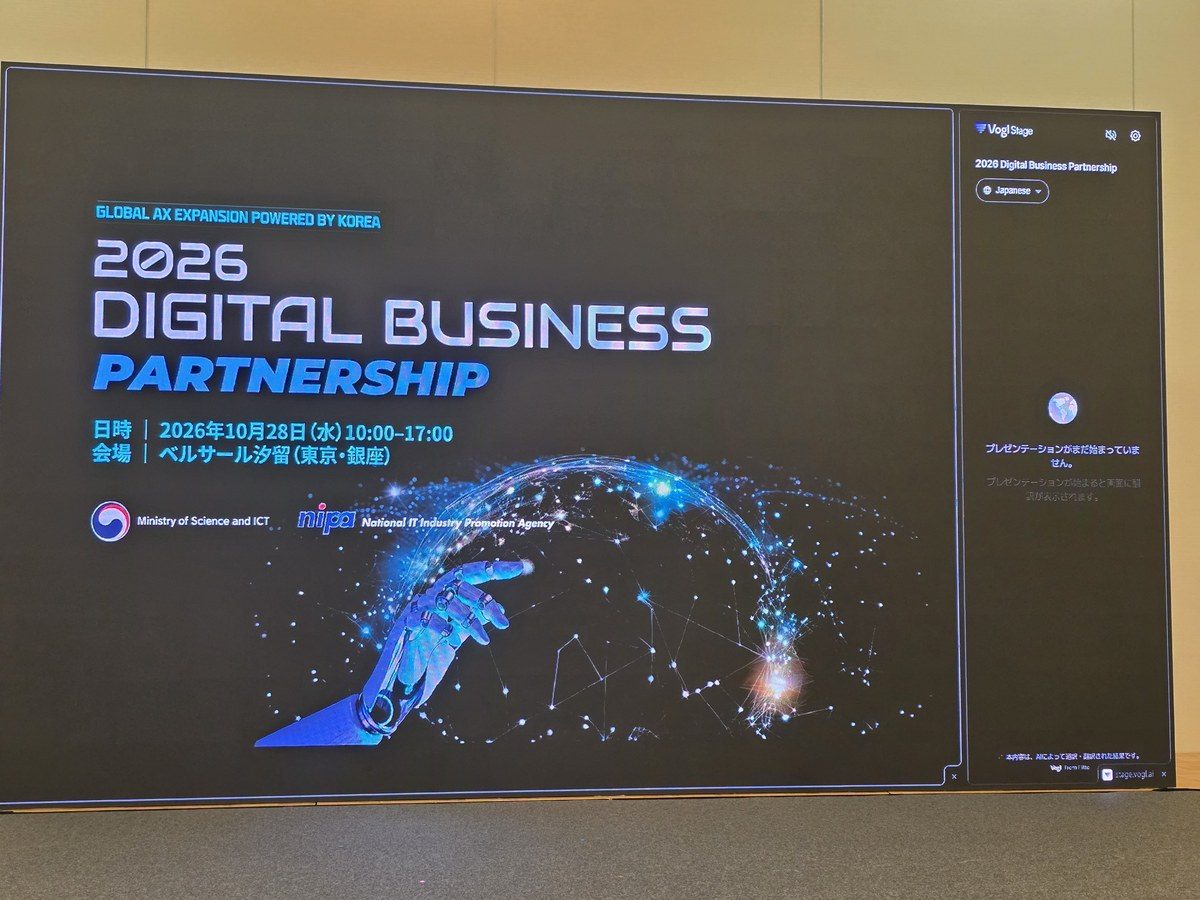
Korea Deep Learning (한국딥러닝), a Seoul-based document AI company, has picked Japan’s financial sector as its next market. “Our goal is to make at least 10% of next year’s total revenue in Japan,” CEO Kim Ji-hyun (김지현) said on Oct. 28 at the 2026 Digital Business Partnership at Bellesalle Shiodome in Tokyo. “That is a very conservative number.”
The company has been in Japan for a little over two months, and it is already talking to large lenders. “We are also in discussions with major Japanese financial institutions with which we have signed NDAs,” Kim said.
The event was a Korea–Japan business matchmaking program hosted by Korea’s Ministry of Science and ICT (과학기술정보통신부) and organized by the National IT Industry Promotion Agency (정보통신산업진흥원, NIPA). Korea Deep Learning was one of 20 featured exhibitors and took part in the AI software services category, showing Japanese buyers its document AI platform, DEEP Agent. The product layers a text-recognition engine, DEEP OCR, and a document-structure engine, DEEP Parser, on top of a vision-language model (VLM) the company built in-house.
| Item | Details |
|---|---|
| Founded | 2019, Seoul |
| Core product | DEEP Agent (DEEP OCR, DEEP Parser and an in-house VLM) |
| Customers | 80+ large Korean companies |
| Training data | 400 million+ images and documents |
| Impact | Up to 96% shorter document processing time |
| Performance | No. 1 in ParseBench VLM category (76.4); 1.2B-parameter model |
| Certification / channels | GS Certification Grade 1; listed on AWS Marketplace |
| Funding | Series A of 12 billion won (about $8 million), Dec. 2025; NVIDIA strategic partner |
Korea Deep Learning at a glance. Source: Korea Deep Learning
Reading 30 loan documents and flagging only the unclear fields… adopted by 80+ large Korean companies
At the booth, Kim used a bank loan application to explain the product. A corporate credit review can require close to 30 documents, and each bank formats even the same application differently. DEEP Agent pulls the required data regardless of layout, then sends only the uncertain fields to a loan officer for review. Once the officer signs off, the data moves straight into the bank’s system and on to the credit decision.
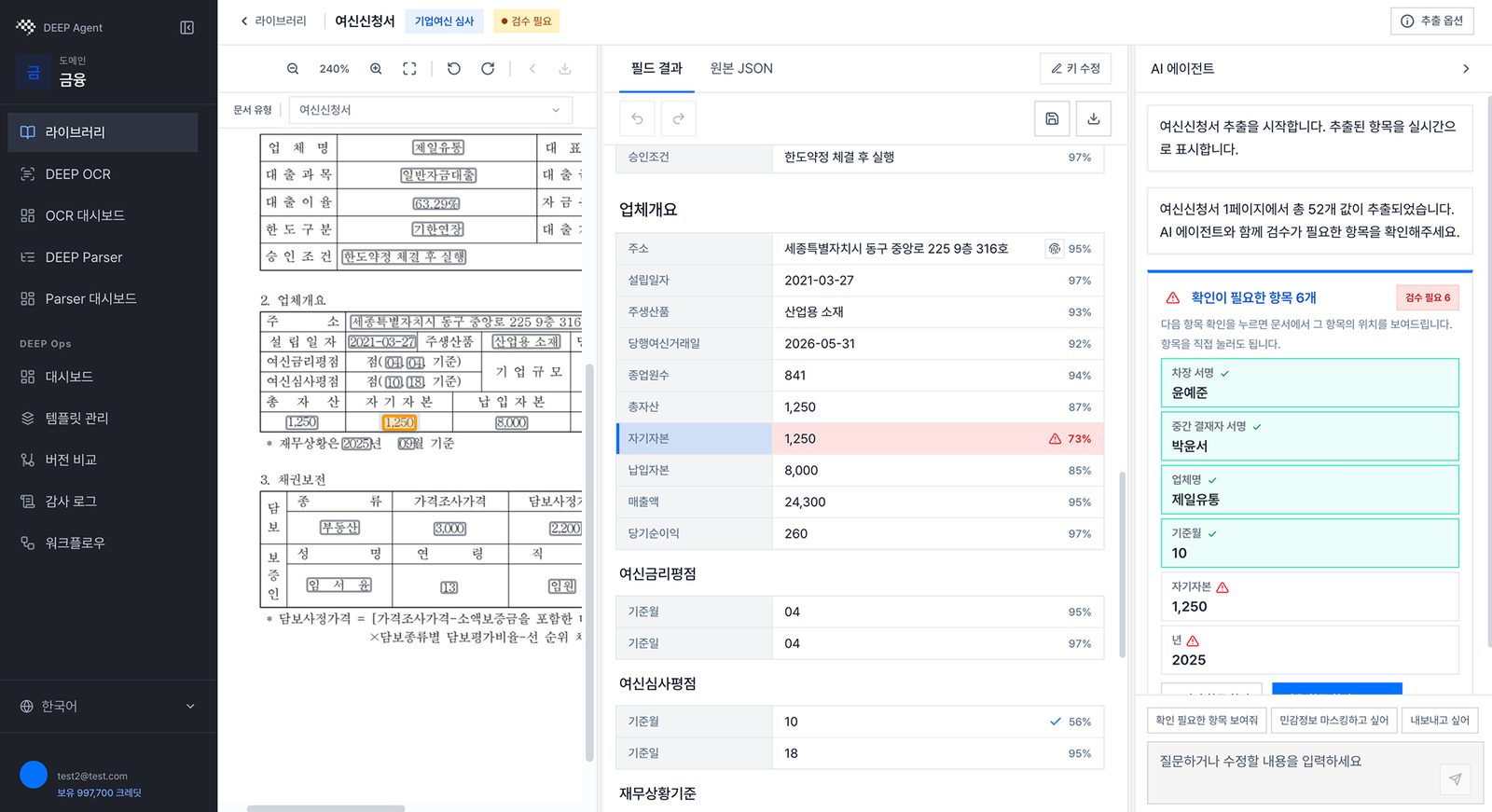
A human reviewer can spend close to an hour on a single corporate loan file, which caps output at about six files a day. DEEP Agent cuts that time sharply. More than 80 large Korean companies use Korea Deep Learning’s technology, and financial institutions make up a large share of them. The platform also proposes masking personal data on its own, a step banks treat as mandatory.
“Unlimited, whatever the document”… breaking per-document-type pricing
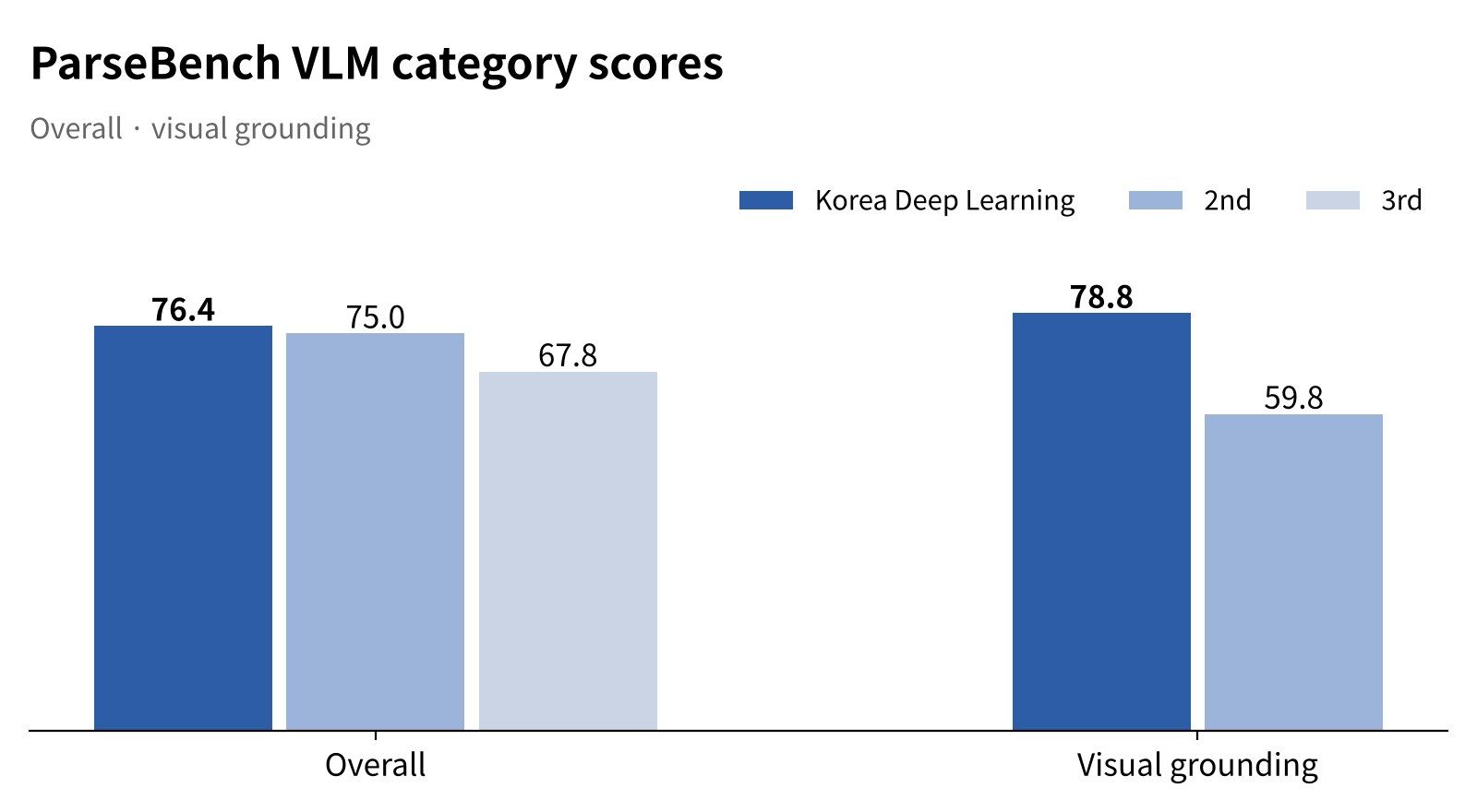
Kim pointed to two advantages. The first is model performance. Korea Deep Learning ranked first in the VLM category of ParseBench, a document-parsing benchmark run by LlamaIndex, with an overall score of 76.4. On visual grounding, which tests whether a model can point to where in a document its answer comes from, it scored 78.8, about 19 points ahead of the runner-up at 59.8. “We competed against models such as GPT, Gemini and Qwen and became the first Asian company to take first place,” Kim said. “In the document field, we are known for parsing without hallucinations.”
The second is how it sells. Document AI vendors typically contract for a fixed list of around 50 document types and price each one. When a new document is added to a loan review, the vendor has to develop for it again. Korea Deep Learning puts no limit on document types. If a business registration certificate becomes necessary, the user adds the document and types, “Extract the business number only.” No coding is needed.
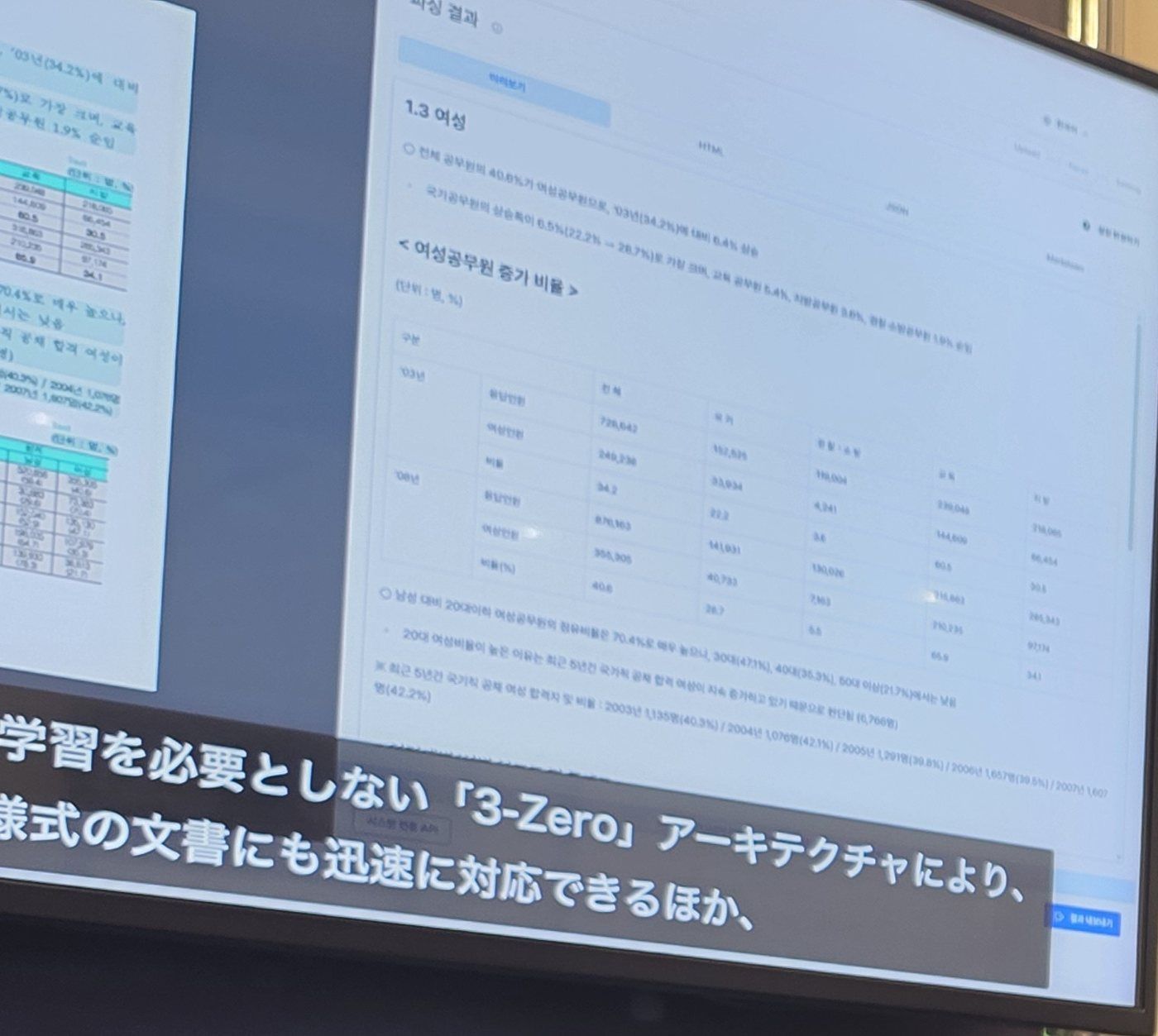
“You can put in any document,” Kim said. “I want to break the rules of the document AI market.” Kim compared the model to Netflix, which replaced pay-per-title with unlimited viewing for a monthly fee; Korea Deep Learning offers unlimited contracts instead of per-type fees. It sells three ways: on-premises, private cloud and SaaS. Financial institutions mostly choose on-premises, while education and trading companies tend to choose SaaS because it requires no servers of their own.
From AI that reads documents to AI that handles financial work… cross-checks, rule search and follow-up in one workflow
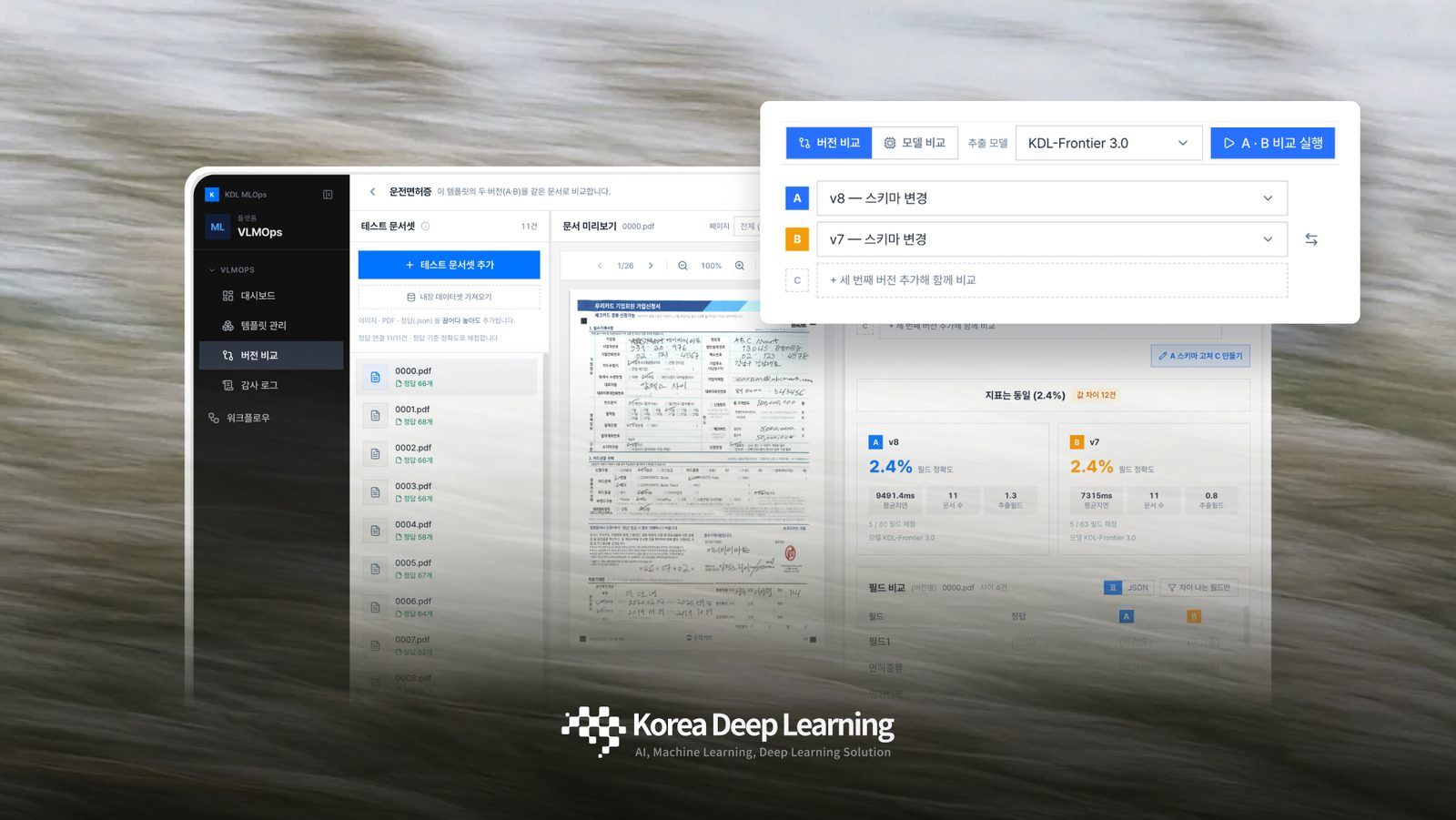
Korea Deep Learning is extending DEEP Agent from a document-recognition tool into an enterprise AI agent platform that carries work through to business decisions and execution. Beyond cross-checking and verifying information across multiple documents, the platform is being built to link retrieval-augmented generation (RAG) over a company’s internal rules and terms, support for staff decisions, and follow-up processing in a single workflow. When a business registration certificate, a bank-account copy and an application form arrive together, for example, it matches the business number, representative’s name and account details, and sends only mismatched or low-confidence cases to a staff member.
Each extracted value is shown with its location in the source document and a confidence score, and the AI’s reasoning and staff approvals and edits are kept on record. Users can give instructions in the AI agent panel, typing requests such as “show me the fields that need checking” or “mask sensitive data.”
To keep up when business rules change, the company added an operations layer, DEEP Ops. Staff can change extraction and verification criteria, compare results before and after the change on the same document set, and manage versions and history. Existing AI functions can be combined and reused for different tasks, so companies can widen automation without replacing their internal systems. Approved results flow into existing systems such as ERP and RPA. DEEP Agent has also been available as a software-as-a-service (SaaS) product since April.
Japanese clients arrive with PoC answer keys… “We clearly win in the same bids as Japanese firms”
Kim had heard that Japan was slow and demanding. What Kim found there was different. Japanese companies had already prepared documents and answer keys for proofs of concept and were looking for vendors that could pass the test. “All we had to do was show up and take the test, so things actually moved faster,” Kim said. “We enter the same technical bids as local Japanese companies, and our software, made in Korea, delivers overwhelmingly better results.”
Its track record in Korean finance is what it sells on in Japan. “Korea’s financial sector was really hard to break into because large incumbents were already established,” Kim said. “After holding on for six years, we built major references, and we took them to Japan and Singapore.” Some of the major Japanese financial institutions now under NDA asked for meetings first after hearing about systems Korea Deep Learning had built for large Korean companies.
Overseas, the company is focused on Asia, including Japan, Vietnam and Singapore. “We went there first because they are close, and the response was much faster,” Kim said.
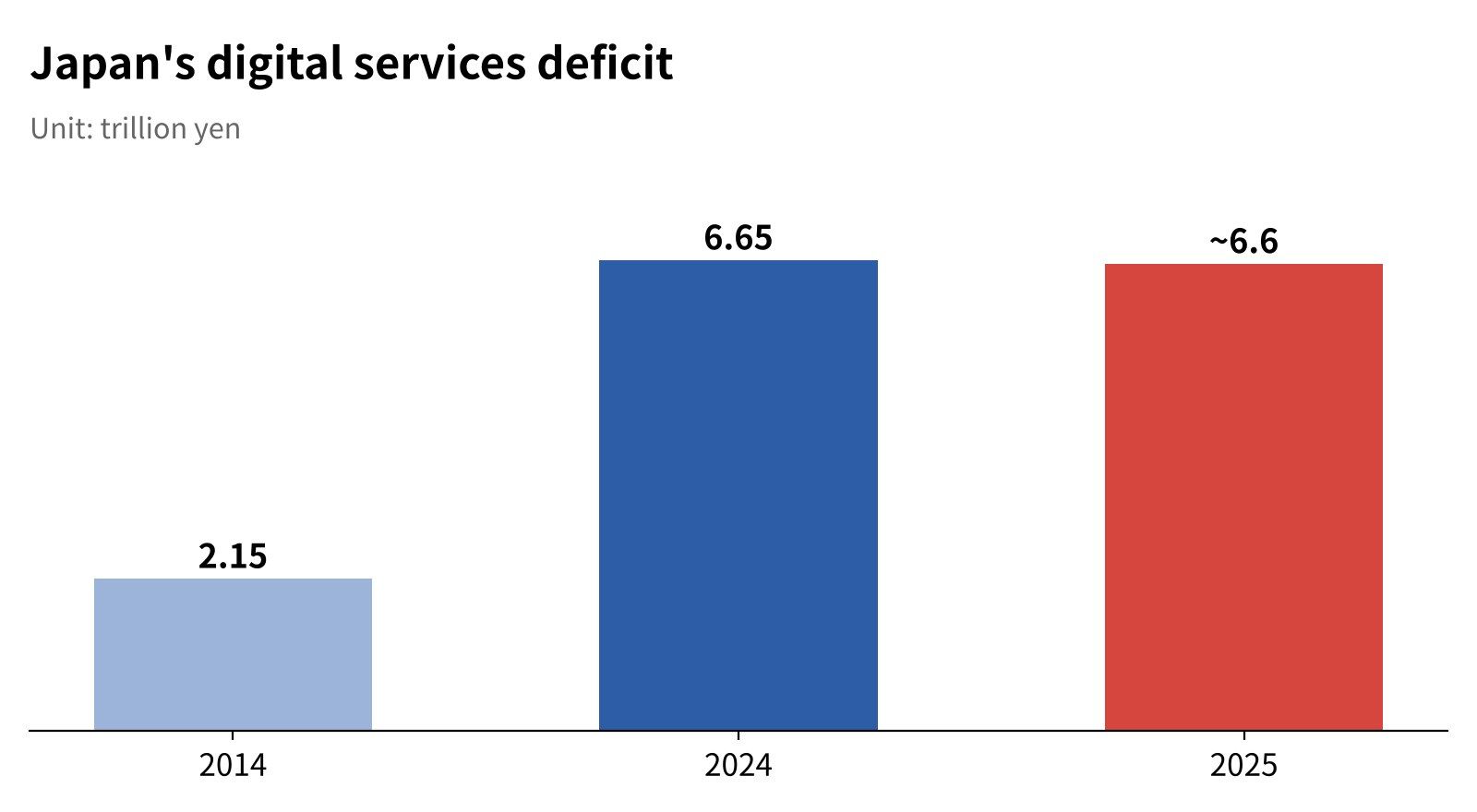
Japan relies heavily on foreign digital services. According to Mizuho Bank’s analysis of Ministry of Finance balance-of-payments data, Japan’s deficit in digital-related services more than tripled in a decade, from 2.1483 trillion yen in 2014 to 6.6507 trillion yen in 2024. The Ministry of Economy, Trade and Industry (METI) put the 2025 deficit at about 6.6 trillion yen.
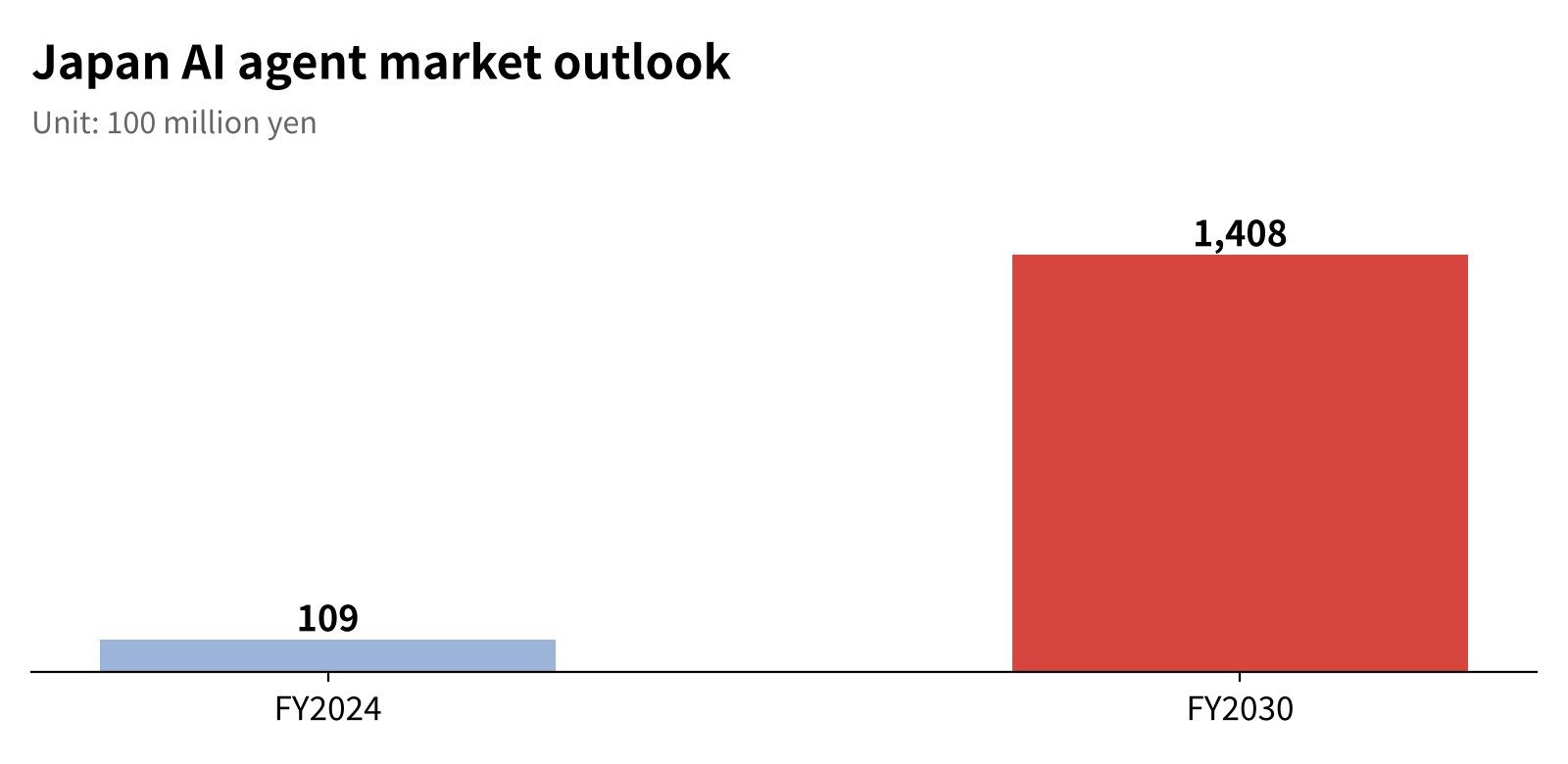
Demand for automation is rising at the same time. Japanese research firm Fuji Chimera Research Institute projects that Japan’s AI agent market will grow nearly 13-fold, from 10.9 billion yen in fiscal 2024 to 140.8 billion yen in fiscal 2030.
First-half document AI revenue up 3.4x… Japan targeted at 10% next year
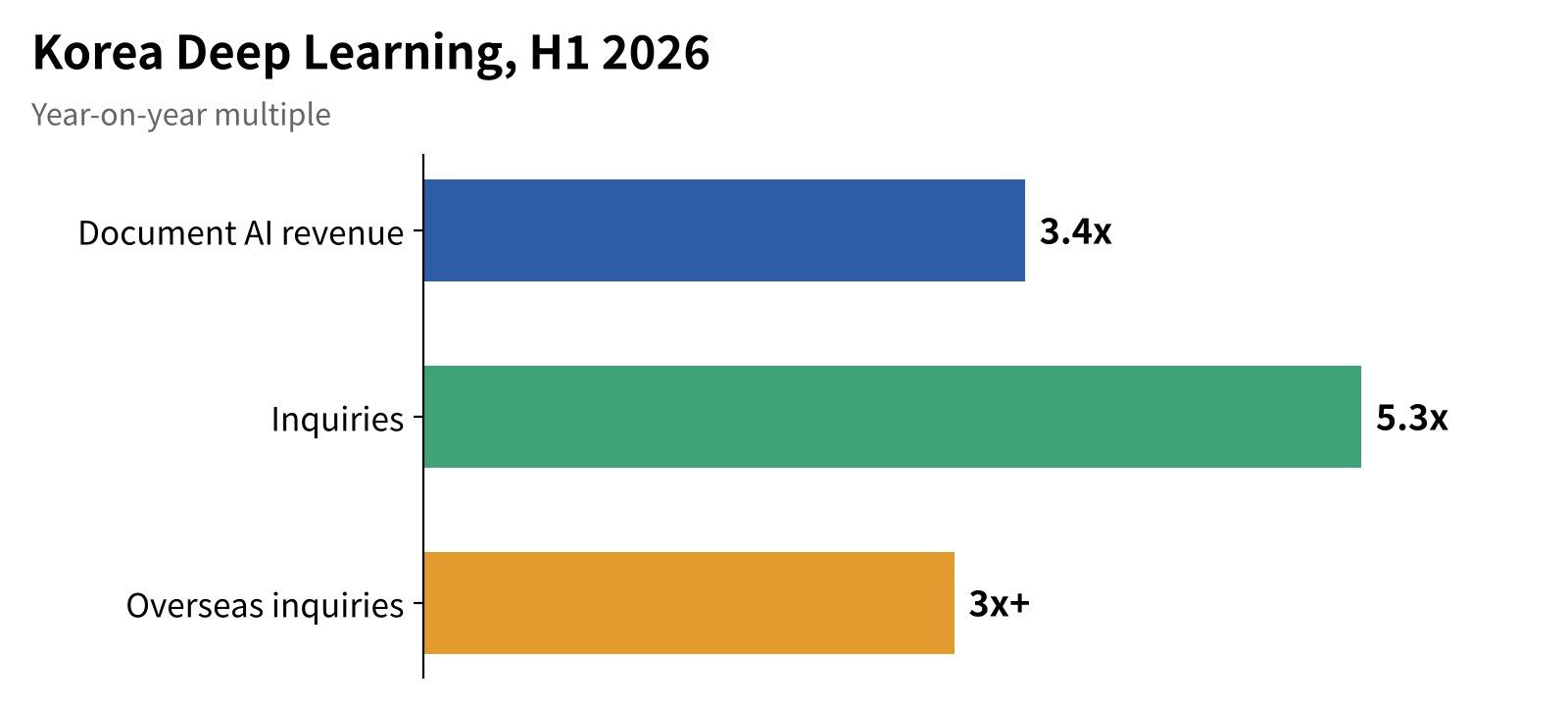
Korea Deep Learning’s document AI revenue in the first half of this year was 3.4 times the year-earlier level, a record. Inquiries rose 5.3-fold over the same period, and inquiries from overseas companies and institutions more than tripled. About 94% of revenue came from financial and public-sector work, and about 90% of projects were on-premises installations on customers’ own servers.
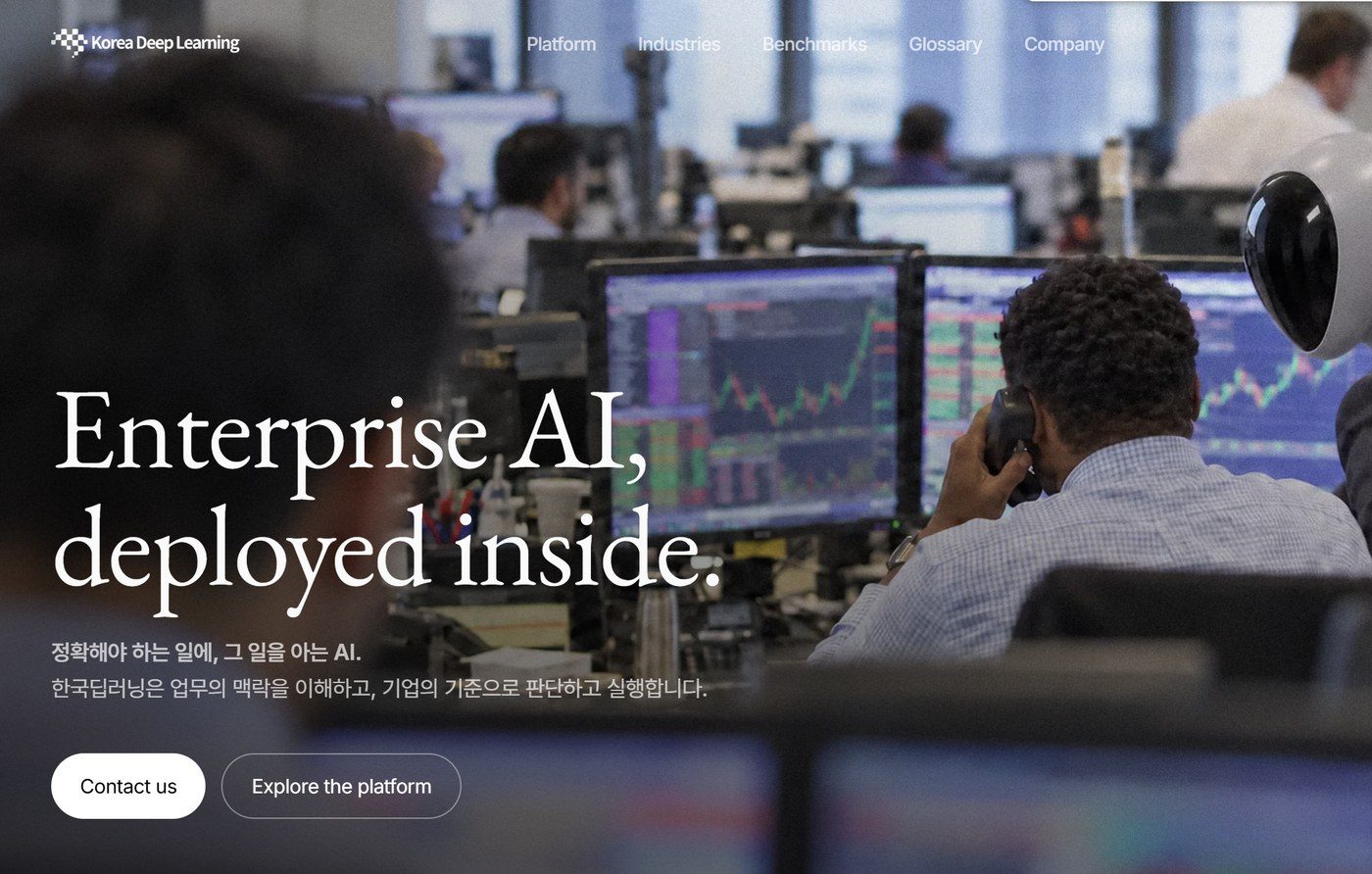
The company’s homepage leads with the line “Enterprise AI, deployed inside.” Korea Deep Learning raised 12 billion won (about $8 million) in a Series A round last December, and Kim was named to the Forbes Asia 30 Under 30 list this year. Kim, a software major, founded the company after watching AI papers flood academic journals and concluding that the field was changing direction rather than going through a passing fad.
Next year, the focus is Japan. “If the market keeps responding at this pace, the target could get bigger,” Kim said. “I want to concentrate on Japan.” Korea Deep Learning is taking part in technical bids at Japanese financial firms with its Korean finance and public-sector references, the DEEP Agent platform and its unlimited-document contracts, and plans to expand in Vietnam and Singapore the same way.