
Bloomberg’s “The Circuit” with Ted Sarandos: 1,000 jobs cut, a 7.7% share of U.S. TV time, and Korean shows watched by 80% of members
Netflix cut 1,000 jobs and replaced its content chief in October; co-CEO Ted Sarandos tied it to the U.S. hit rate. With YouTube winning viewing time, Netflix is betting on live sports, AI and Asian content instead of big deals. Korean shows reach 80% of members, while Korean drama output fell 30%.

Netflix cut about 1,000 jobs, roughly 6% of its workforce, in October and replaced its chief content officer and its film chief. It was the largest layoff in the company’s history. Bela Bajaria, who joined in 2016 and ran content for a decade, was succeeded by former Disney and Fox executive Peter Rice, and film chief Dan Lin also left.
Co-chief executive Ted Sarandos pointed to one reason: the U.S. hit rate. “The business is working everywhere in the world including the U.S.,” he said in “The Circuit with Emily Chang,” a Bloomberg Originals documentary released Nov. 18. “But we should be doing better in the U.S. than we were.” As Netflix has grown and matured, he said, the hit rate matters more, and leaders who suit one stage of the business may not suit the next.
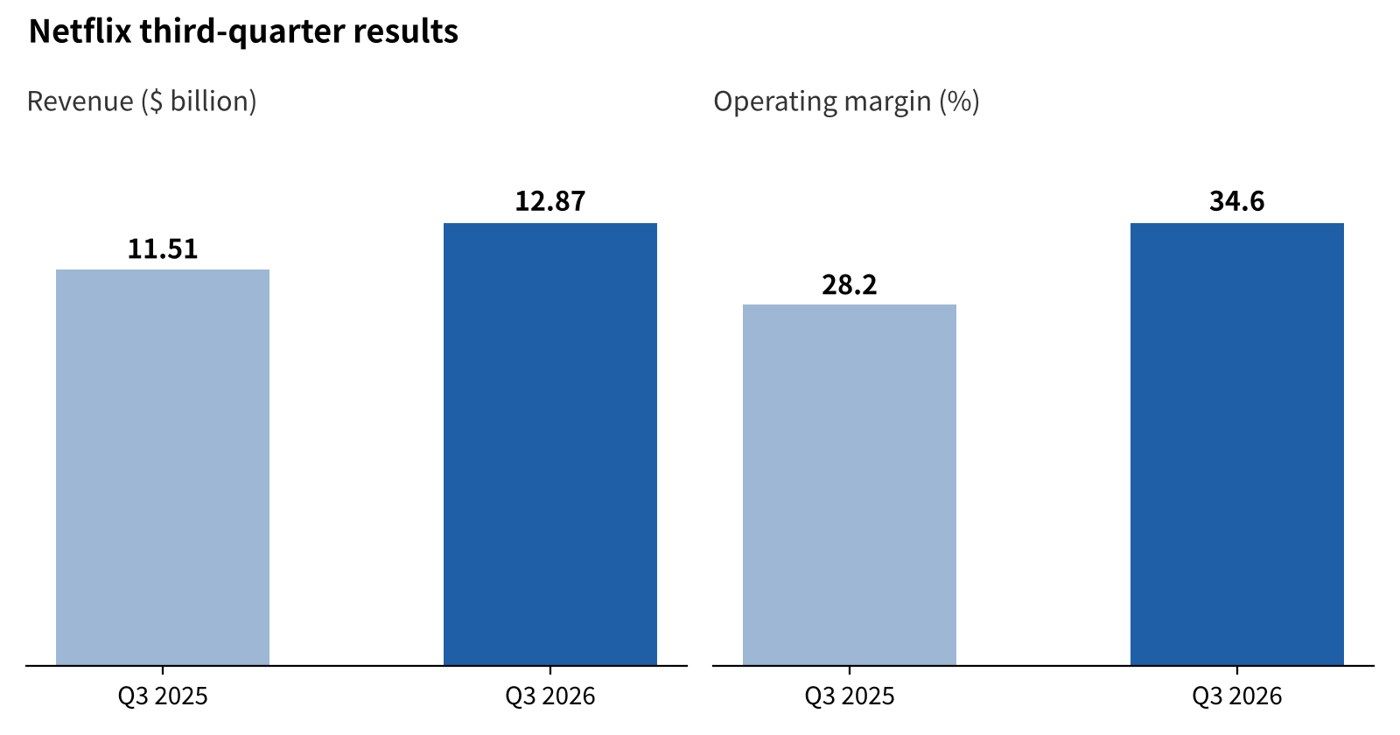
Netflix’s revenue and profit are rising. Third-quarter revenue grew 12% to $12.87 billion and operating margin rose to 34.6% from 28.2%, Netflix told shareholders.
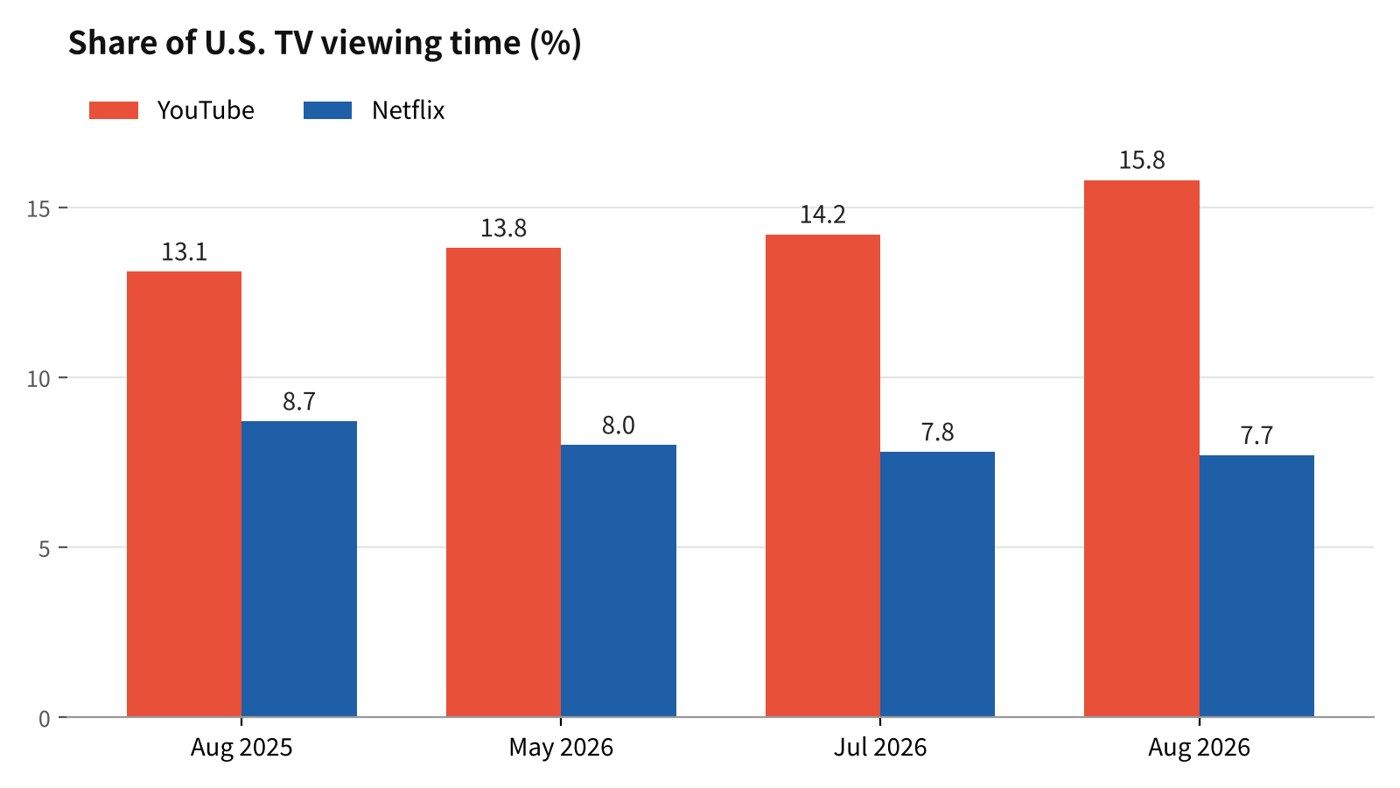
Its share of U.S. TV viewing, however, has fallen. In Nielsen’s August edition of The Gauge, published Oct. 22, YouTube took 15.8% of all U.S. TV time — more than double Netflix’s 7.7%. When Bloomberg first interviewed Sarandos in September, Netflix shares were 40% below their peak.
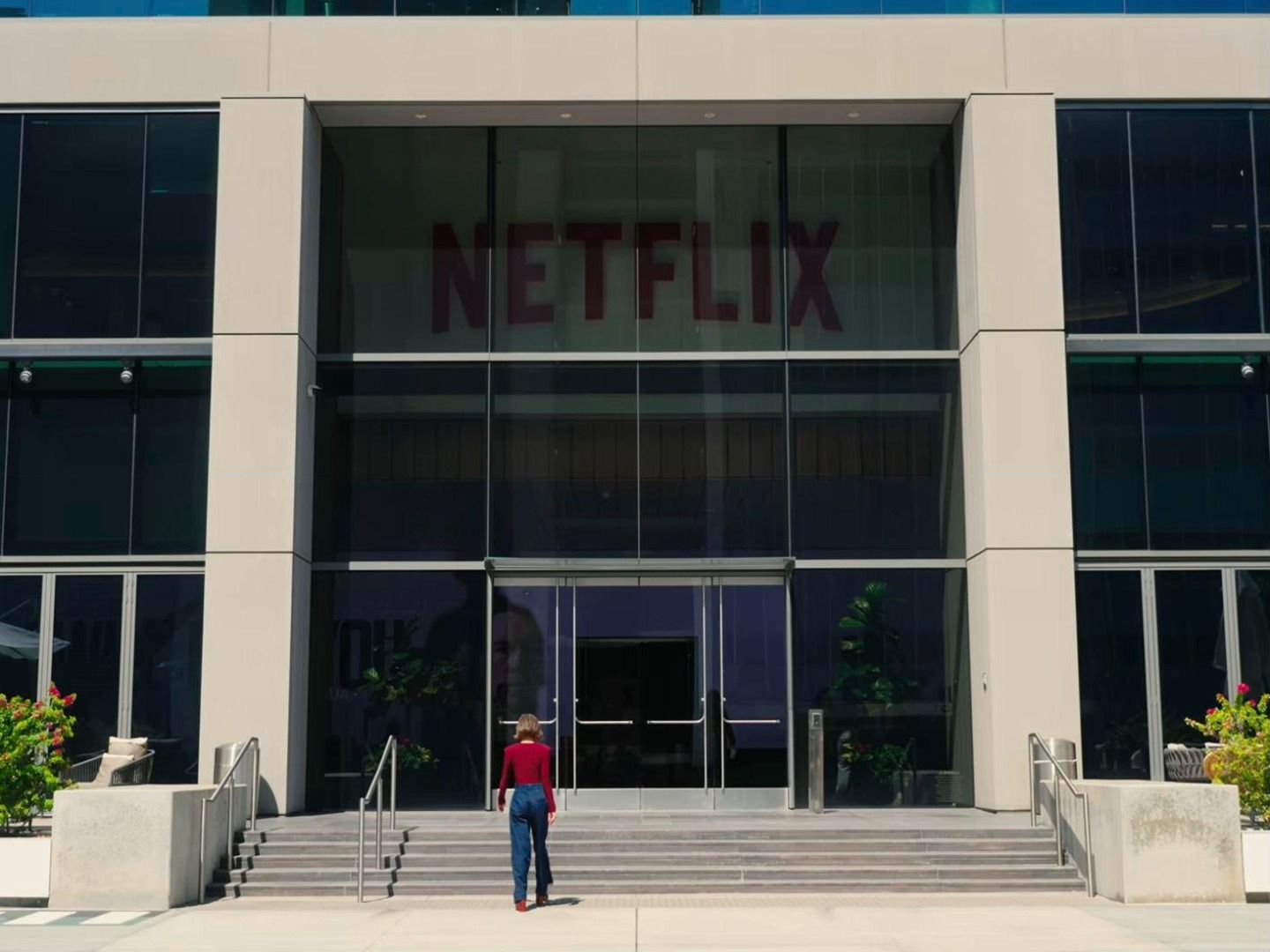
Since abandoning its $83 billion bid for Warner Bros. Discovery (워너브러더스 디스커버리) in February, Netflix has been looking for growth elsewhere. It is investing more in Asian content, building live sports from NFL games to a bid for World Cup rights, and in March bought InterPositive, the AI filmmaking company founded by Ben Affleck. Bloomberg’s documentary followed that shift from Netflix’s Los Angeles headquarters to the “Emily in Paris” set and Netflix’s 10th-anniversary festival in Seoul.
Q3 revenue $12.9 billion, 34.6% margin; Asia-Pacific growth slows to 12% from 21%
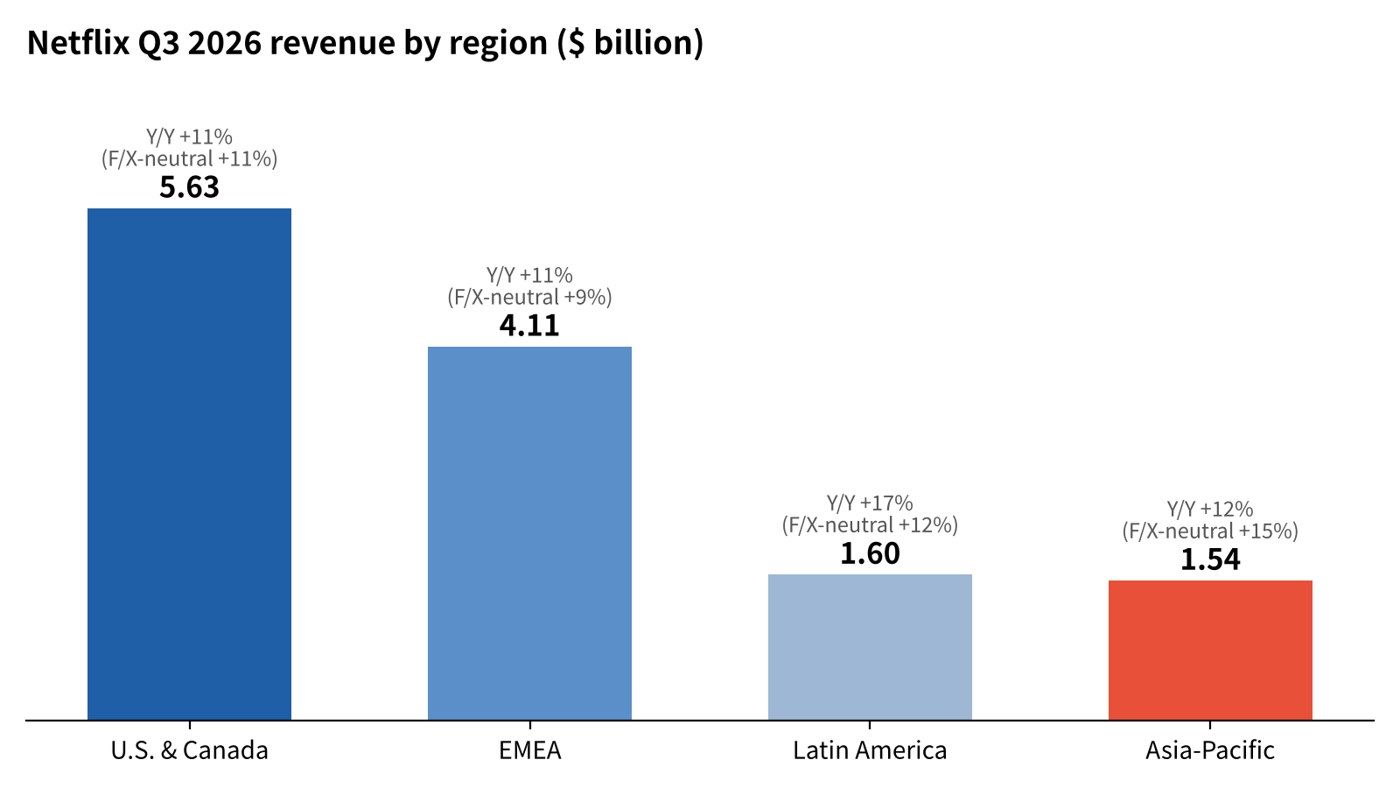
By region, Latin America grew fastest, with revenue up 17% to $1.60 billion, while the U.S. and Canada ($5.63 billion) and Europe, the Middle East and Africa ($4.11 billion) each rose 11%. Asia-Pacific, which includes Korea, grew 12% to $1.54 billion. Excluding currency moves it grew 15%, the fastest of the four, but the region’s growth rate has slowed each quarter from 21% a year earlier.
Profit grew faster than revenue. Net income rose 44% to $3.66 billion from $2.55 billion, and free cash flow was $2.88 billion. Netflix used that cash to buy back $4.8 billion of its own shares in the quarter, its largest quarterly repurchase.
| Metric | Q3 2025 | Q3 2026 |
|---|---|---|
| Revenue | $11.51B | $12.87B |
| Operating margin | 28.2% | 34.6% |
| Net income | $2.55B | $3.66B |
| Diluted EPS | $0.59 | $0.87 |
| Free cash flow | $2.66B | $2.88B |
Netflix third-quarter results. Source: Netflix Q3 2026 shareholder letter
The layoffs will show up in the fourth quarter. Netflix forecast revenue of $13.44 billion and a 26.0% operating margin, a figure that absorbs about 1.2 percentage points of severance costs. Slower-than-expected ad product rollouts led it to cut its 2026 advertising forecast to about $2.7 billion from roughly $3 billion, though it plans to bring its ad tier to 15 more countries, including nine in Europe plus Colombia, Peru and New Zealand, from March 2027.
Members watched more than 97 billion hours in the first half of 2026, a half-year record, but only 2% more than a year earlier, according to Netflix’s engagement report. Non-English titles, under 10% of viewing a decade ago, now account for more than a third, and Korean content is the largest share of that. The Korean series “Teach You a Lesson” (참교육) reached the global top 10 with 48.2 million views less than a month after release, and “The East Palace” (동궁) drew 21 million views in the third quarter. The stock traded at $63.94 on Nov. 11, less than half its split-adjusted 2025 high of $134.11.
An $83 billion bid for Warner, then a walk-away: “nice to have”
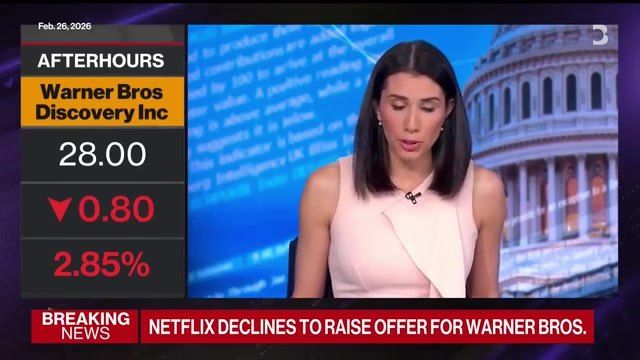
Netflix had agreed to buy Warner Bros. Discovery’s studios and streaming business. When Paramount Skydance raised its hostile all-cash offer for the whole company to $31 a share, Warner’s board declared it superior on Feb. 26 and gave Netflix four business days to respond. Netflix declined to raise its bid in less than two hours.
“We would have liked to have had the Warner Brothers studio,” Sarandos said. “But it was in that kind of nice-to-have category versus we’ll take it at any price and fight to the finish.” Asked whether the $83 billion deal looked like an attempt to buy growth, he said Netflix had not got where it is through major acquisitions and that its next growth would “continue to be pretty organic.”
That organic path began with a bet Sarandos and Reed Hastings made in 1999: that all entertainment would come into the home over the internet. “Now that seems pretty intuitive. In 1999 it was ridiculous,” he said. “That’s high risk, but we had a big prize if you could figure it out.” Raised in Phoenix as one of five children of an electrician, he got a job at a neighborhood video store after talking movies with its owner and was running a chain of stores by the time he left — “some combination of business school and film school.”
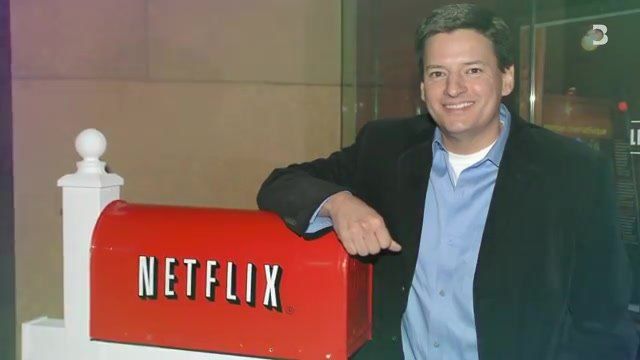
He joined Netflix in 2000, ran content for two decades and became co-CEO in 2020. Netflix became the N in FAANG along the way, but it is not part of the AI-driven Magnificent Seven. “Last year we grew 16%,” Sarandos said, calling it very profitable growth. If teams around the world keep delivering “the show that you can’t live without,” he said, there is plenty of room to stay on that path.
YouTube 15.8%, Netflix 7.7%: the fight for viewing hours
While YouTube’s share of U.S. TV viewing rose from 13.1% in August 2025 to 15.8% a year later, Netflix’s slipped from 8.7% to 7.7%, according to Nielsen. Bloomberg noted that viewers spend more time on Netflix originals than on all other major streaming services combined, but that it has been a while since Netflix had a new culture-defining hit and viewers tend not to stick with shows after the first season.
Netflix’s expansion into games, sports, podcasts, theatrical releases and experiences is a bid for that viewing time. Sarandos acknowledged that the new businesses are “competing with about 200 billion hours of watching,” a “steep hill to climb.” But podcasts are promising “because people are watching them when they normally don’t stream Netflix,” he said, and live sports “has been phenomenal,” so Netflix will bet more on both.
YouTube is now paying some creators millions of dollars not to work with Netflix. Sarandos’s response: “I think that a podcast is a modern talk show. … We draw these borders in ways that viewers don’t.” Asked whether he would rather have the next “Stranger Things” or the next MrBeast, he said: “Why not both?”
Top bid for 2030 World Cup U.S. rights: live sports to win back viewing time
Netflix now wants to take live sports to the World Cup. It submitted the largest bid for U.S. rights to the 2030 men’s tournament ahead of last week’s initial deadline, according to the Guardian and Axios, and is competing against Amazon and a joint bid from Fox and TelevisaUnivision. FIFA is reportedly seeking $1.5 billion to $2 billion for the combined English- and Spanish-language package. Disney, Paramount Skydance, NBCUniversal and Apple stayed out of early bidding.
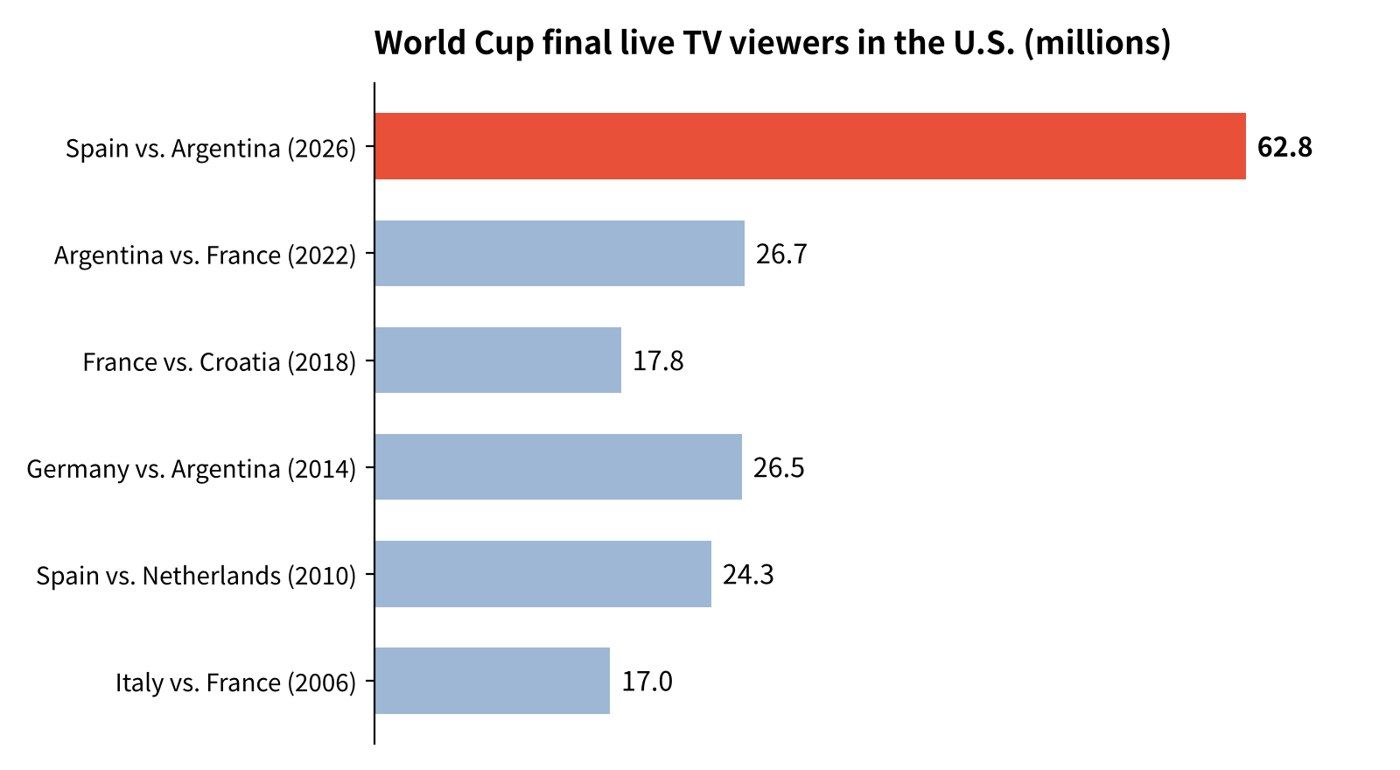
The 2026 final, carried by Fox in English and Telemundo in Spanish, drew more than 62.8 million U.S. viewers, the most-watched soccer telecast in American history and more than double the 2022 final’s 26.7 million, according to Nielsen. Netflix already holds U.S. rights to the 2027 and 2031 Women’s World Cups and the 2030 men’s rights in Spain and Andorra. Live sports, Netflix advertising president Amy Reinhard told Axios in June, are about “building those must-see, can’t-miss, going-to-be-talked-about moments” that drive viewing — and, with its ad forecast cut, a way to draw advertisers.
80% of members have watched Korean content: 200 titles with 80-plus producers

When Bloomberg’s crew reached Seoul in October, Netflix was holding “Netfljanchi,” a fan festival at the Oil Tank Culture Park (문화비축기지) marking ten years in Korea. Sarandos toured the National Museum of Korea (국립중앙박물관) the day before, viewing works that inspired “KPop Demon Hunters,” and then spoke at the festival on Oct. 24. What Korea does better than anywhere, he told Chang there, is “that kind of attention to production detail, production quality,” with food, fashion and music all coming together.
About 80% of Netflix members worldwide have watched Korean content, and four of the ten most-watched non-English series of all time are Korean. From 2016 through 2025 Netflix made more than 200 Korean titles with over 80 local production companies, and more than a third of its Korean titles from 2024 to 2026 came from first-time directors or writers. Between April 2025 and March 2026, Korean titles generated more than 12 billion viewing hours, second only to U.S. productions.
Minyoung Kim: “very transactional” didn’t work — so she went door to door
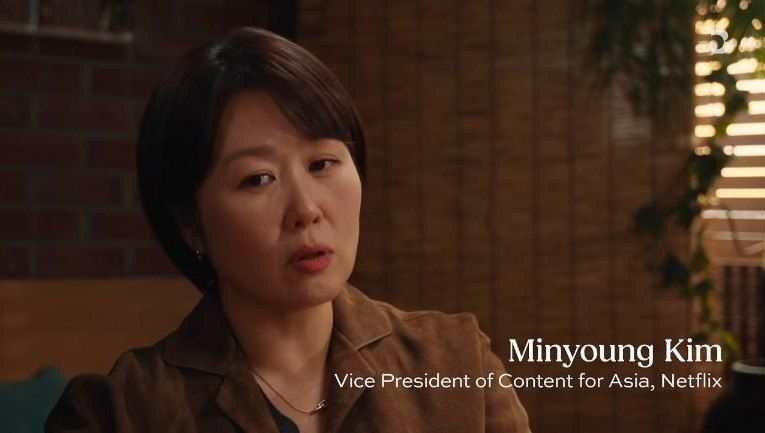
That success started with Korean studios giving Netflix the cold shoulder. Minyoung Kim (김민영), Netflix’s vice president of content for Asia, who has led the Korea business from the start, said the company’s early approach “was a little more of a Hollywood style and very transactional. In Korea, it’s really important to build that relationship before having that transactional conversation.”
So she went door to door with a laptop in her backpack, explaining to producers and creators what Netflix wanted to do, and spent many nights drinking soju and “bomb shots” with partners. Having a Korean tell Korean partners how much Netflix valued their content, she said, “coming from one of them was important.”

The same genre carries different weight in different markets, she said: “In a Western mystery traditionally, the emphasis is on who. In a Japanese mystery, often the emphasis is on how. In Korean crime mystery, a lot of the times it’s about why.” Korean romances tend to end happily, while those handled by her Chinese-language team are “always about sad ending.”
| Genre | Western | Japanese | Korean | Chinese-language |
|---|---|---|---|---|
| Mystery / crime | Who | How | Why | — |
| Romance | — | — | Happy ending | Sad ending |
Storytelling emphasis by region, as described by Minyoung Kim. Source: Bloomberg “The Circuit”
“Squid Game” also made it past internal doubts. “People only like watching death games with young people. They don’t like looking at older people, poor people play these games. But we were wrong,” Kim said. Audiences “want something that’s familiar, but in that familiarity, they want to be surprised.”

Asked what Asia needs to become the next Hollywood, she said: “I actually don’t aspire to be the next Hollywood. I hope that we can be our version of what we can be.” Korea has “a great pool of creators,” Japan is “an ocean of imagination” and Thailand’s production ecosystem “is really robust,” she said, and she hopes Netflix can connect them so the region can build a sizable, sustainable industry together.
A chef’s restaurant and a theatrical sequel: the Netflix effect in Korea

Sarandos calls the way shows drive travel and spending the “Netflix effect.” In Korea, Bloomberg visited the restaurant of Nara Yun, a contestant on season 2 of “Culinary Class Wars” (흑백요리사), a show some credit with drawing more diners to Seoul’s fine-dining scene.
“KPop Demon Hunters,” made in North America but drawing on Korean design and folklore, is Netflix’s biggest original film, with half a billion views by Bloomberg’s count. On the strength of that run, Netflix is softening its streaming-only approach and will give the sequel a “very broad theatrical release.” “Part two will be huge in theaters and big on Netflix,” Sarandos said.
“Who gets rich?” Korean drama output down 30% in two years

The Netflix effect has a downside. Sohee Kim (김소희), a Bloomberg News senior reporter who covers Netflix in Korea, said the flow of money into Netflix originals has raised “a fear that Netflix might control too much of the content pipeline in Korea,” and that its dominance “has grown immensely.” As a result, she said, money “dried up to the traditional creators and the studios behind Korean dramas and films,” leaving the industry to ask “whether this is a sustainable model.”
Working with Netflix is a point of pride for creators, and a global hit becomes national pride, she said, “but at the same time, some creators and studios have to give up valuable IP franchises because Netflix has immense power.” The creator of “Squid Game” did not initially share in the first season’s windfall. Asked who gets rich if a Korean producer makes the next “Squid Game,” Kim answered: “Netflix.”
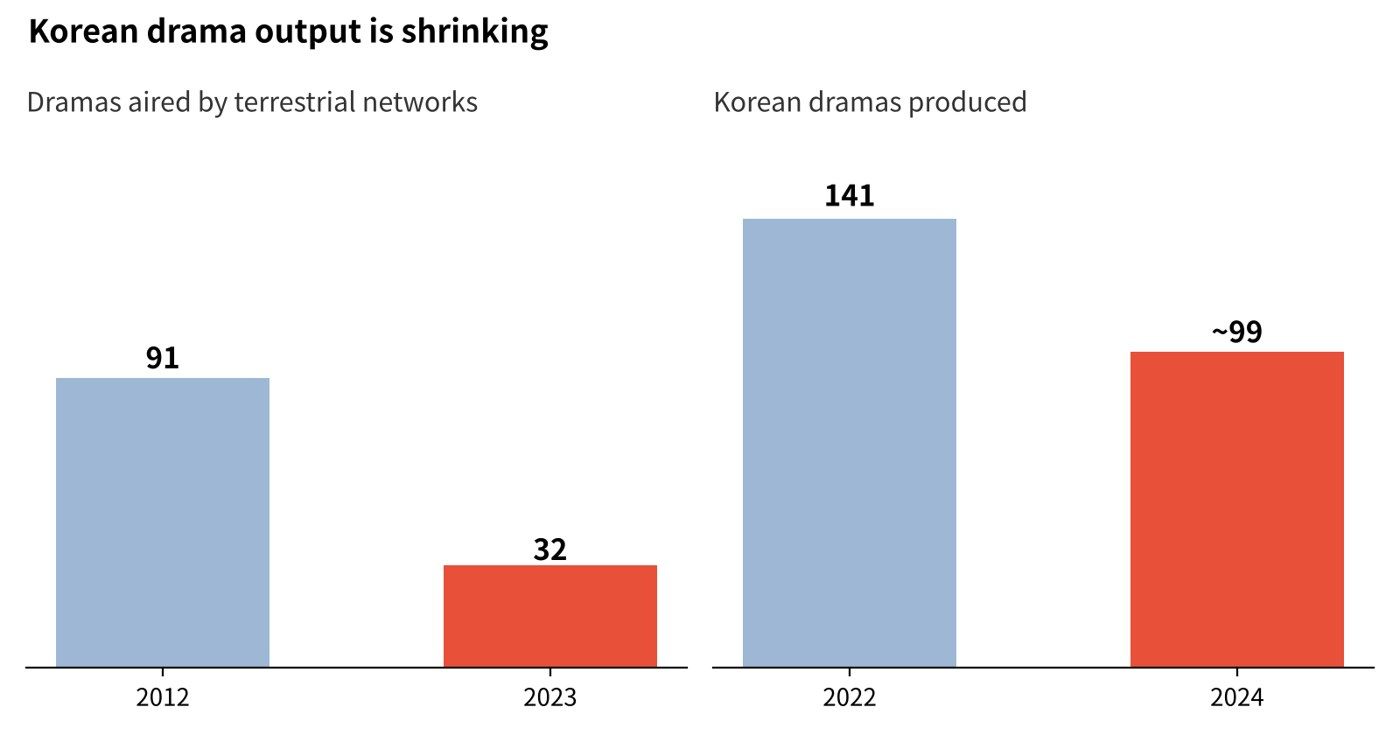
Korean producers have put numbers on the problem. Twelve industry groups, including the Korea Drama Production Association (한국드라마제작사협회), said on Nov. 4 that Korean drama output fell about 30% in two years from 141 titles in 2022, and dramas aired by terrestrial broadcasters dropped from 91 in 2012 to 32 in 2023. They blamed rising costs on global streaming services’ production practices and called for a 1 trillion won (about $690 million) investment program.
Broadcasters are airing fewer dramas because ad revenue is shrinking while costs climb. Terrestrial TV ad sales fell from 1.12 trillion won in 2011 to 310 billion won in the first half of 2026, while per-episode miniseries costs rose from 600–800 million won a decade ago to about 1.5 billion won. Writer Park Hae-young (박해영) of “My Liberation Notes” said the assistant writers she worked with can’t find jobs.
“We are still a little fraction of the TV time that our audiences engage,” Minyoung Kim said in response. On costs: “What we’ve enabled is the ability to dream bigger, have bigger vision. … All of our shows and all of our films that we film here, they’re all made with Korean producers, Korean writers, Korean cast. We’re not toe-dipping into the country. We’re part of the creative ecosystem here.”
At “Next on Netflix 2026 Korea” in January, Netflix pledged to keep investing, saying it would take on the risk and share the results with local partners. But Netflix owns the IP of its originals, so as titles like the “KPop Demon Hunters” sequel expand into theaters, experiences and merchandise, that revenue goes to Netflix. Korean producers have proposed that the 1 trillion won program fund titles made with local broadcasters and streaming services.
Up to 4% of Paris visitors: the “Netflix effect” and the Legion of Honor

Paris is the best-known example of the Netflix effect. “Emily in Paris,” created by “Sex and the City” creator Darren Star, mixes American and French actors, producers and crew, and as many as 4% of visitors to Paris came because of it, according to one study. Netflix says such effects have pumped $325 billion into the global economy.
Bloomberg visited the set on the day the series filmed its final scene. Star said releasing every episode at once was “like a bomb going off” for a writer who had always built cliffhangers to bring viewers back the next week. When Netflix entered France in 2014, the country’s film industry, which sets by law when films can move from cinemas to TV and streaming, called it a “tsunami.”
On overtourism, Sarandos said: “You make something so great that people want to see it. … How you manage that locally is really important.” To the charge that Netflix takes more than it gives, he said: “We always had to be the highest bidder for every new space we’ve gotten into in content.” When President Emmanuel Macron awarded him the Legion of Honor in September, Sarandos recalled, Macron “reminded me that nine years ago, Netflix was the devil.”
L.A. production down 46%: “about 30 productions coming up in California”
As production has gone global, film and TV production in Los Angeles has fallen 46% from pre-pandemic levels, and Netflix itself is building a hub in New Jersey. Sarandos said California has not been competitive on production incentives, calling the loss of concentration “a shame because the talent base is here.” Netflix has about 30 productions coming up in California, many in Hollywood.
“House of Cards” lost viewers at one minute: “We never reverse engineer a story”
Netflix’s recommendation algorithm has spent years learning viewers’ tastes, and Sarandos said the data is “mostly designed to help you find something.” Historical performance does not decide whether a show gets made, but it shows how big a show could be if it works. What Netflix will never do is “reverse engineer a story” or “be prescriptive to a creator.”
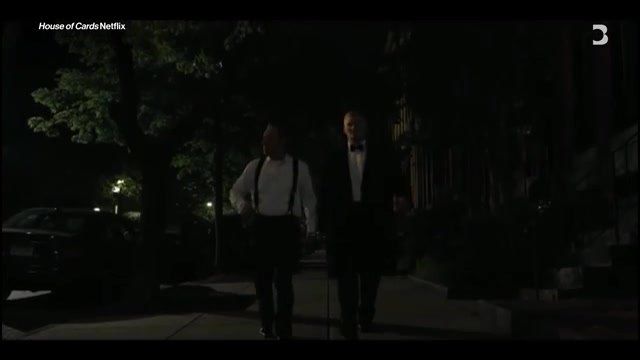
He cited “House of Cards.” In its first week many viewers quit at the one-minute mark, when Francis Underwood kills a dog and then turns to address the camera. Data alone would have said to change minute one, Sarandos said, “and what’s interesting is those two things define the show.”
InterPositive: director-specific AI models trained on a film’s own footage
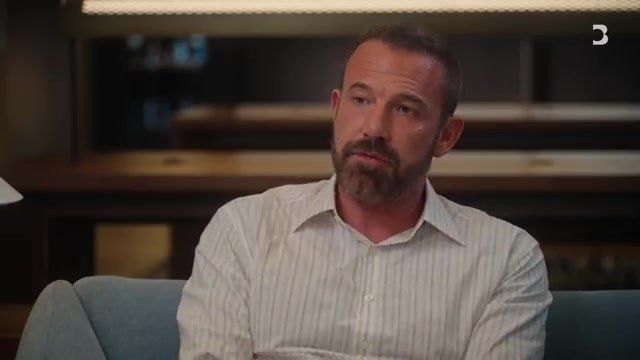
Netflix acquired InterPositive, which Affleck founded in 2022, on March 5. Terms were not disclosed; Bloomberg’s documentary puts the price at nearly $600 million. All 16 staff joined Netflix and Affleck became a senior adviser. “How does the elephant merge with the pebble?” he joked.
Fear led Affleck to start the company. His first thought on seeing text-to-video demos was “we’re finished,” but he soon learned that AI “is not magic. It’s numbers. It’s a probabilistic mechanism. It’s matrix multiplication, basically,” predicting the next token or pixel. So InterPositive trains on the footage a production shoots each day, learning that filmmaker’s aesthetic. “I didn’t want to build something that stole anything from anyone,” he said.
The tools handle costly visual-effects work: placing actors in new environments, removing stunt doubles and harnesses, and changing parts of the lighting without disturbing the whole frame. “This is not making movies from just typing something,” Affleck said. Netflix says it has used AI on about 300 titles, including Affleck’s October release “Animals,” the docuseries “The American Experiment” and the sports drama “Brazil 70,” but declined to show where — which Affleck likened to opening a magic show by pointing out the rabbits.
Elizabeth Stone, Netflix’s chief product and technology officer, expects AI to expand creativity, investment and opportunity as cameras, animation and visual effects did. “It’s not going to replace you. Someone who uses it better than you might,” she said. Netflix would rather make “more titles that are all amazing using the budget we have today,” even if a single task needs fewer people.
Outlook: matching the viewer’s mood — and an “infinite game”
What sets Netflix apart from free ad-supported services and social media, Sarandos said, is “the ambition of the storytelling.” Chasing everything people spend five seconds on will not win, he argued, and in “a world that is flooded with slop,” audiences will want more ambitious, more accomplished storytelling.
The AI use he highlighted is discovery. “We can make mistakes about how we present new things and bury things that you might be looking for,” he said. “When someone says there’s nothing to watch, it’s just that we’re not matching your mood state. … It’s in there.” New AI tools, he said, make it possible to change recommendations in real time based on what a viewer is watching.
His next big bets are AI and an audience demanding “a certain level of agency,” as betting and prediction markets have drawn viewers into live sports. In 20 years he expects immersive, interactive content alongside traditional films and fully generative-AI works. Another voice in the film’s closing exchange was more conservative: “It’s the same story that Shakespeare wrote in 1610. … We do need humans in the loop.”
Netflix expects 2026 revenue of $51.1 billion, up 13%, with a 31.5% operating margin. Peter Rice, who takes over Bajaria’s global remit across series, film, unscripted and live, inherits the job of lifting the U.S. hit rate, and decisions on Korean investment now run through his organization. Half of U.S. TV viewing is still linear, Sarandos noted. “No one has won the streaming wars,” he said. “The game isn’t over until you fold.”